

Wild cat
Rembrandt Bugatti was the pride of his famous family, says Adrian Dannatt. But although his sculptures of animals were instantly acclaimed, his affinity with humans was more problematic
Rembrandt Bugatti had everything necessary to become a legendary artist; an impressively resonant name, indeed two of them, famous family and friends and an early and tragic death. And that is before one has even begun to consider the purring, leonine potency of his actual art. For there are famous artists and then an even smaller category of legendary or mythic artists whose reputation is as much based on the rich anecdotage of their necessarily brief lives as their work; this ultimate pantheon includes, say, Caravaggio, Vermeer, Van Gogh, Schiele, Frida Kahlo, Jackson Pollock and Basquiat.

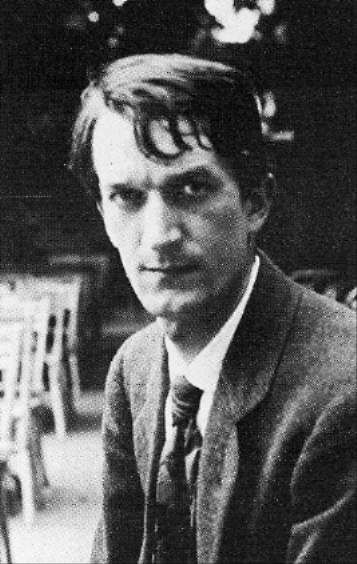
What's in a name? With a name like that, Rembrandt Bugatti had always been destined for greatness
What's in a name? With a name like that, Rembrandt Bugatti had always been destined for greatness
In this special galaxy of stardom suffering and illness, addiction, murder and suicide are all very welcome and Bugatti, despite being considered the leading sculptor of his generation took the radical decision to end his own life in 1916 aged only 31. In doing so he left behind an exceptional body, literally, of work which has steadily grown in importance, not to mention value, along with his reputation.
“Bugatti, despite being considered the leading sculptor of his generation took the radical decision to end his own life in 1916, aged only 31”
‘Rembrandt’ is itself no modest nomenclature and few famous artists carry the first name of another one, other than perhaps Michelangelo Antonioni. But his family name was also equally resonant as his father Carlo Bugatti was a celebrated furniture and jewellery designer, whose work was inherently sculptural, and who already had an international reputation. To add to such associative glory ‘Rembrandt’ had been given this name by his uncle, Giovanni Segantini, a major painter still revered as amongst the most important Italian artists of that era.

Born in 1884 in Milan, Bugatti essentially grew up in his father’s fecund studio and proved precociously talented himself, as is usually the way with such aforementioned mythic artists, surprising his father by leaving a fully-formed sculpture in his studio when aged only fifteen. This was of cows with their herder and such animal subject matter was to remain the core of Bugatti’s work for the next eighteen years of his busy practice. Indeed his stated aim was to become the greatest ‘animalier’ sculptor of his time; this term might now seem quaintly archaic but it defines one of the great strands of all art-making, stretching from the very first known images made by humans, hunting totems found on rocks and in caves, through the highly desirable work of Claude and François-Xavier Lalanne to the contemporary trophies of Koons.
“Bugatti's stated aim was to become the greatest ‘animalier’ sculptor of his time”
Continuing to work with his father at his atelier, Bugatti found success early and easily, showing at the Venice Biennale before he had turned twenty, followed by exhibitions in his Milan hometown and Turin. A major transformation, and certainly one of the most significant factors in Rembrandt’s career, came with the move of the entire family to Paris in 1902, then the very epicentre of the international art world. Here the young Bugatti met a truly transformative figure, Adrien-Aurélien Hébrard, the dynamic publisher and art dealer. For Hébrand ran his own eponymous foundry which became the centre of Bugati’s working life as his creative-collaborator and representative. The symbiotic relationship between sculptors and their foundries is a long strand in the DNA of art history, as personal as technical, and the Bugatti-Hébrand partnership proved amongst the most rewarding.
“Bugatti was at his happiest when alone with his beloved animals”
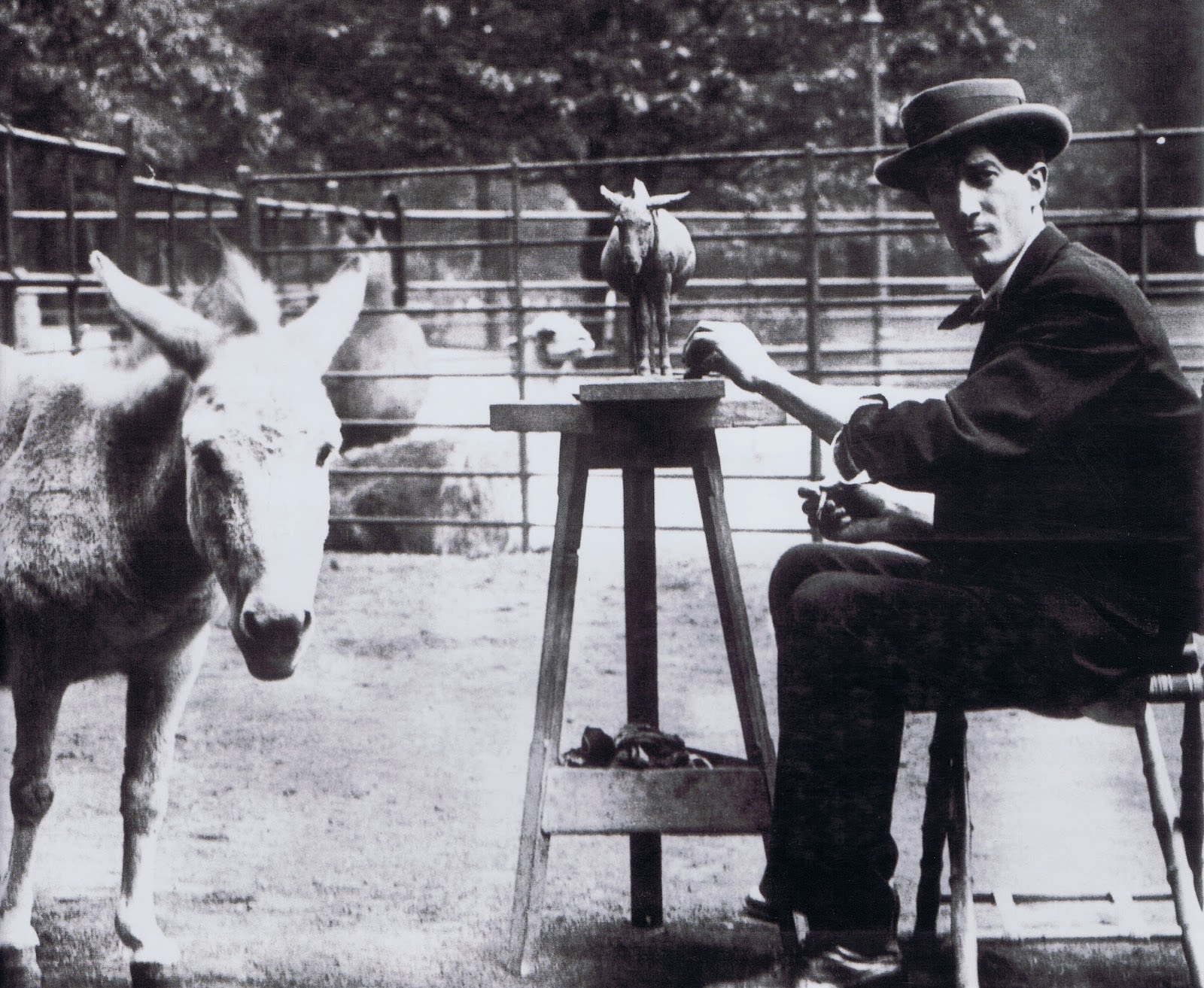
Bugatti had enormous success in his lifetime, winning numerous major prizes and international awards, his work regularly included in all the official salons around the world, and being honoured with his first official monograph in 1907 when still only an astonishing 23 years old. Bugatti was seen to represent both the new Italian art and the latest Parisian trends, with retrospectives everywhere from Antwerp to New York and even being granted the Légion d’honneur. But even so one can sense that perhaps Bugatti was at his happiest when alone with his beloved animals, whether in the Jardin des Plantes or Antwerp zoo, where he would model the animals from life, directly in front of them, sculpting freehand, and where he clearly connected, communicated, corresponded, with them all in some very fundamental mimetic if not metaphysical manner.

The three exceptional exemplars of Bugatti’s work in the current Bonhams' sale come from the richest period of his career, beginning in 1911 when Hébrard exhibited at their Paris space an ambitious menagerie of a hundred of his bronze animals and culminating in 1912 when he was officially invited to show his works in the Olympic Games.
The current trio coming up to auction demonstrate the full technical perfection for which Hébrard were celebrated and all the vivid energy, the sheer anthropomorphic symbolism of Bugatti’s singular skill. They may be of the smaller model-versions but that only makes their presence even more of an achievement, like any great sculptor Bugatti managing to increase the density of his modelling, intensify the plasticity of form, in reducing their scale.
“This wild cat manages to lope with as much menace as charm across some imaged veldt”

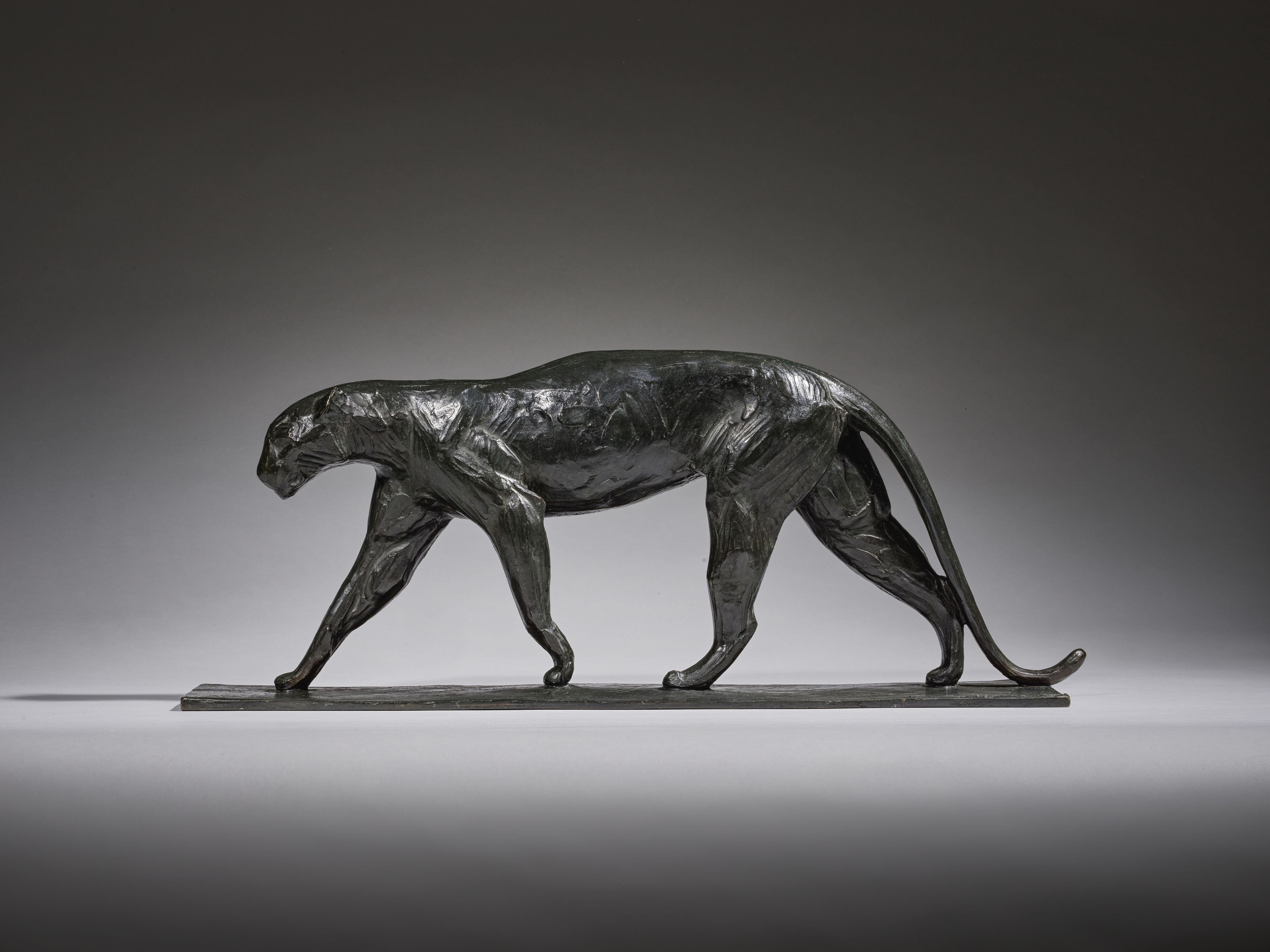
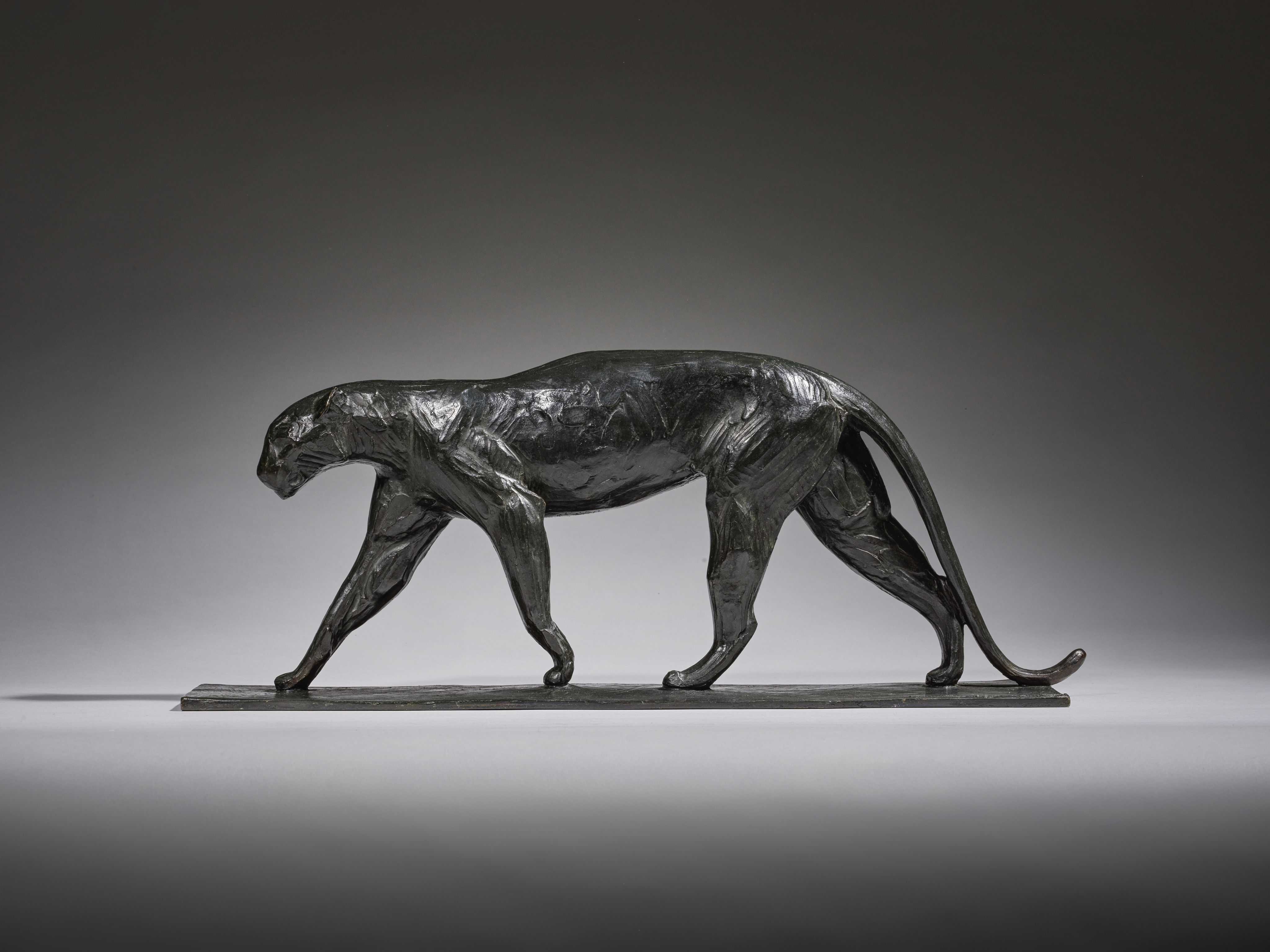
On the prowl: Petit léopard marchant (Conceived circa 1912 and cast by A.A. Hébrard in a numbered edition of 16.). Estimate £220,000-350,000
On the prowl: Petit léopard marchant (Conceived circa 1912 and cast by A.A. Hébrard in a numbered edition of 16.). Estimate £220,000-350,000
The Petit léopard marchant with its with nuanced black patina, that deeply luscious material glow, is a masterpiece in ‘negative space’ and interlocking elements, a triumphant embodiment of a highly complex bronze casting process; here this wild cat manages to lope with as much menace as charm across some imaged veldt, a wide open empty space which is ultimately the horizon of the artist’s imagination and one granted to every viewer to share. But the magic of this work is as much temporal as spatial, this wild cat seeming to pace past us out of the past, through our present presence and onward into the future again.
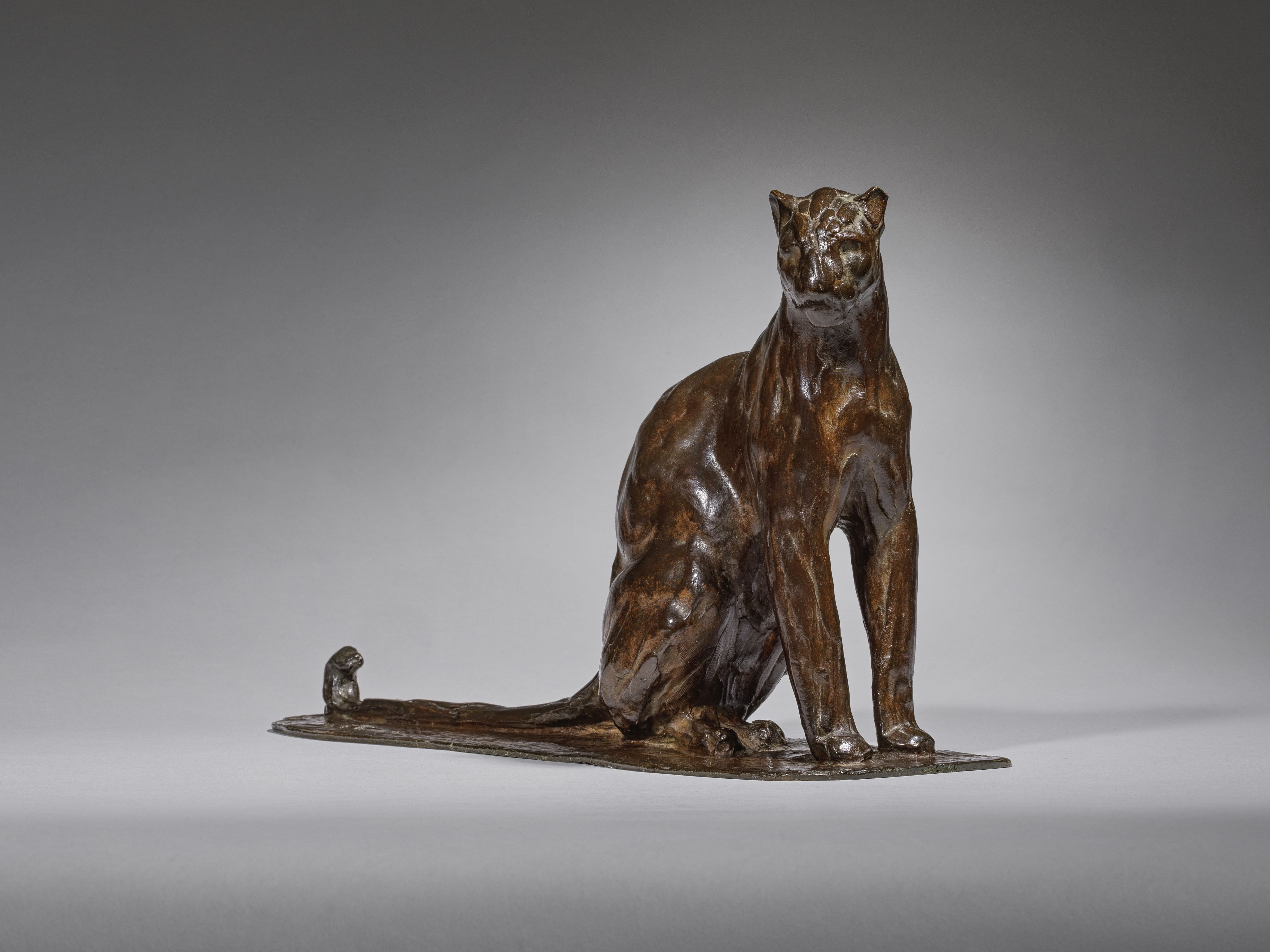
Likewise the Léopard au repos, ville de Paris, petit modèle conjours both a very specific time and place, the prewar Edwardian zoos of Paris where Bugatti would sculpt freehand the animals he so admired, and also the wider, longer, mythic essence of the leopard itself.
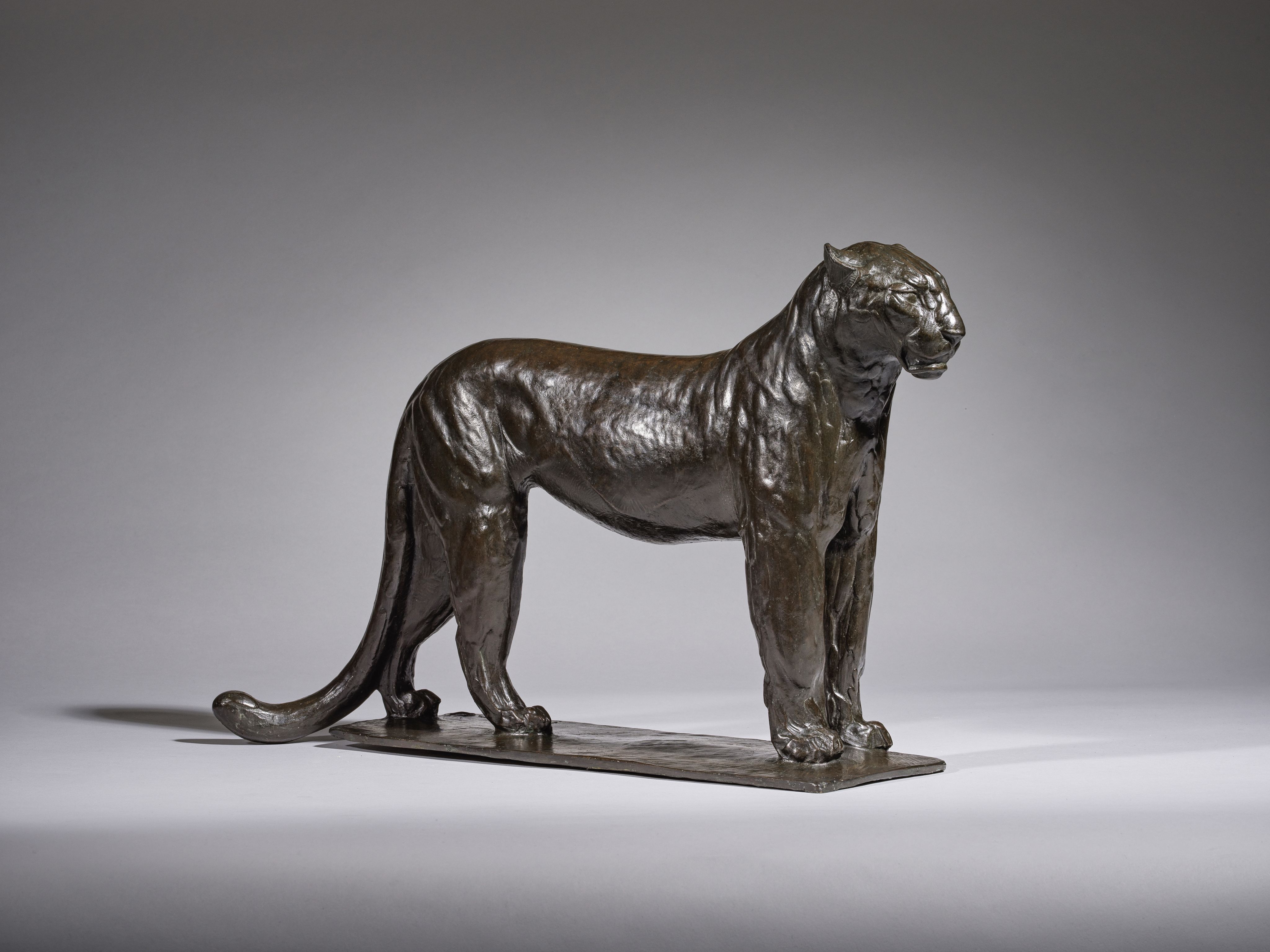
On guard: Léopard au repos, ville de Paris, petit modèle. Estimate: £180,000-250,000
On guard: Léopard au repos, ville de Paris, petit modèle. Estimate: £180,000-250,000
This leopard is so alert, so ready, so paused for action, awaiting whatever its destiny my bring, whether to be hunted or hunt in turn, to die or to kill, that it remains oblivious of the artist there sketching and forming its likeness; the animal is unaware of art, entirely outside the human system of memorialisation and monumental mimesis, and as such it exists in a singular temporality, only within that hot and steamy and stinky moment at the zoo, living solely for the next few seconds, frozen there in metal anticipation.
“This patient Puma concolor seems to exist out of time, any and every panther seemingly being the same panther from prehistory right up to the present”

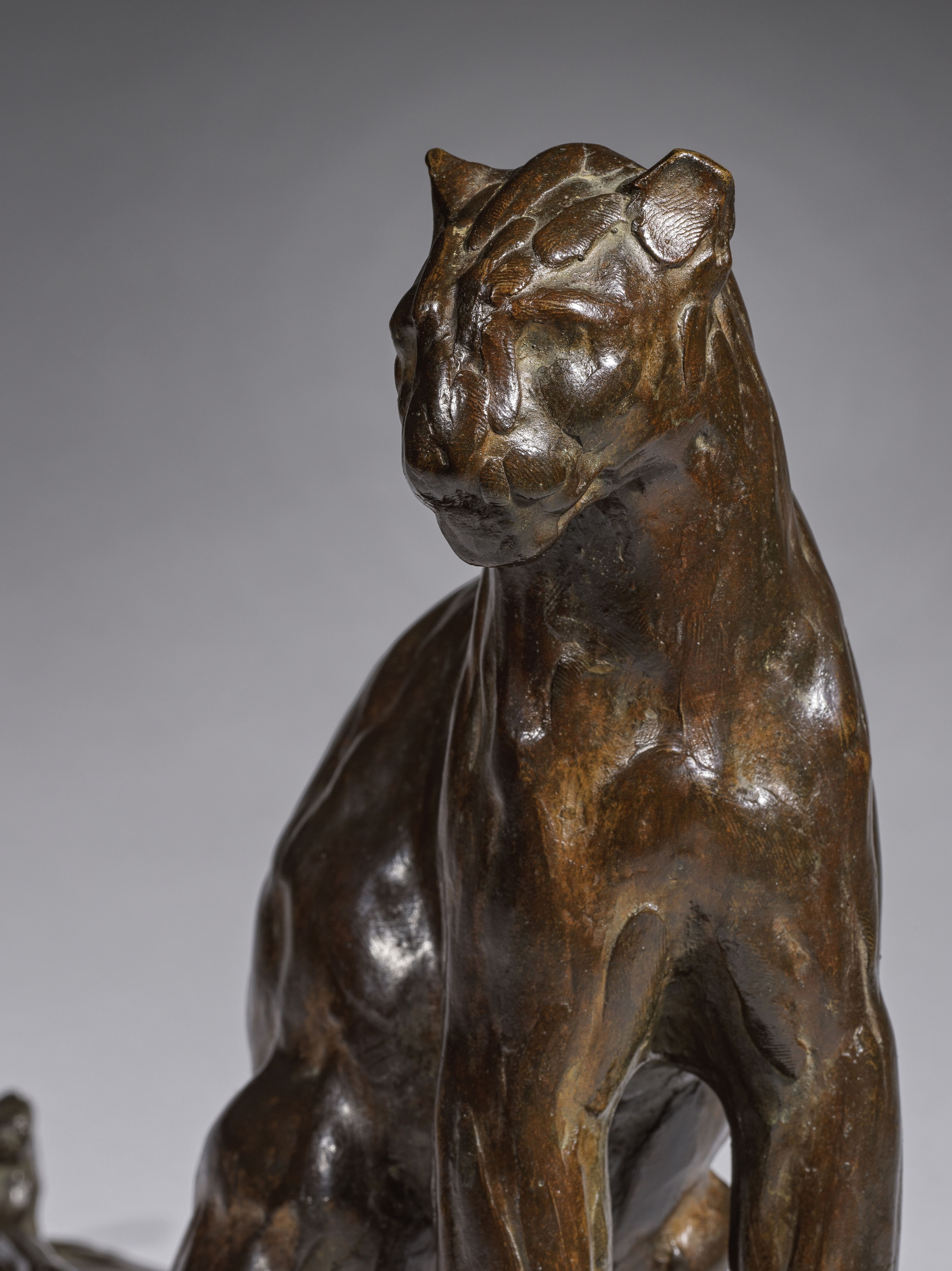
Immortal beauty: detail of Petite panthère assise. Estimate: £150,000-200,000
Immortal beauty: detail of Petite panthère assise. Estimate: £150,000-200,000
But the work for which Bugatti became best known were his inventive series of panthers, indeed his name became indelibly linked to that animal in the popular imagination. A prime example, Petite panthère assise, can be seen in London's 20/21st Century Sale in April, sitting there so knowingly, so expectantly, to watch us do its bidding. This patient Puma concolor seems to exist out of time, in the way that all animals manage by the continuity of their resemblance to defy the logic of mortality and temporality, any and every panther seemingly being the same panther from prehistory right up to the present. This sleek feline exemplar of art’s ability to conquer time has an added resonance in that it belonged to the late Alain Delon, whose proud spirit not to mention physical beauty resonates so richly with the panther itself. For even the most celebrated film star must eventually cease to exist, being human, whilst the wild animal and the work of art, the cast bronze cat, continue seamlessly into an immortal eternity.
Adrian Dannatt’s most recent book is Doomed and Famous: Selected Obituaries.
20th/21st Century Art Evening Sale | New Bond Street, London | 2 April 2025
For enquiries, contact Hannah Noel-Smith on hannah.noel-smith@bonhams.com or +44 20 7468 5814
Read more...
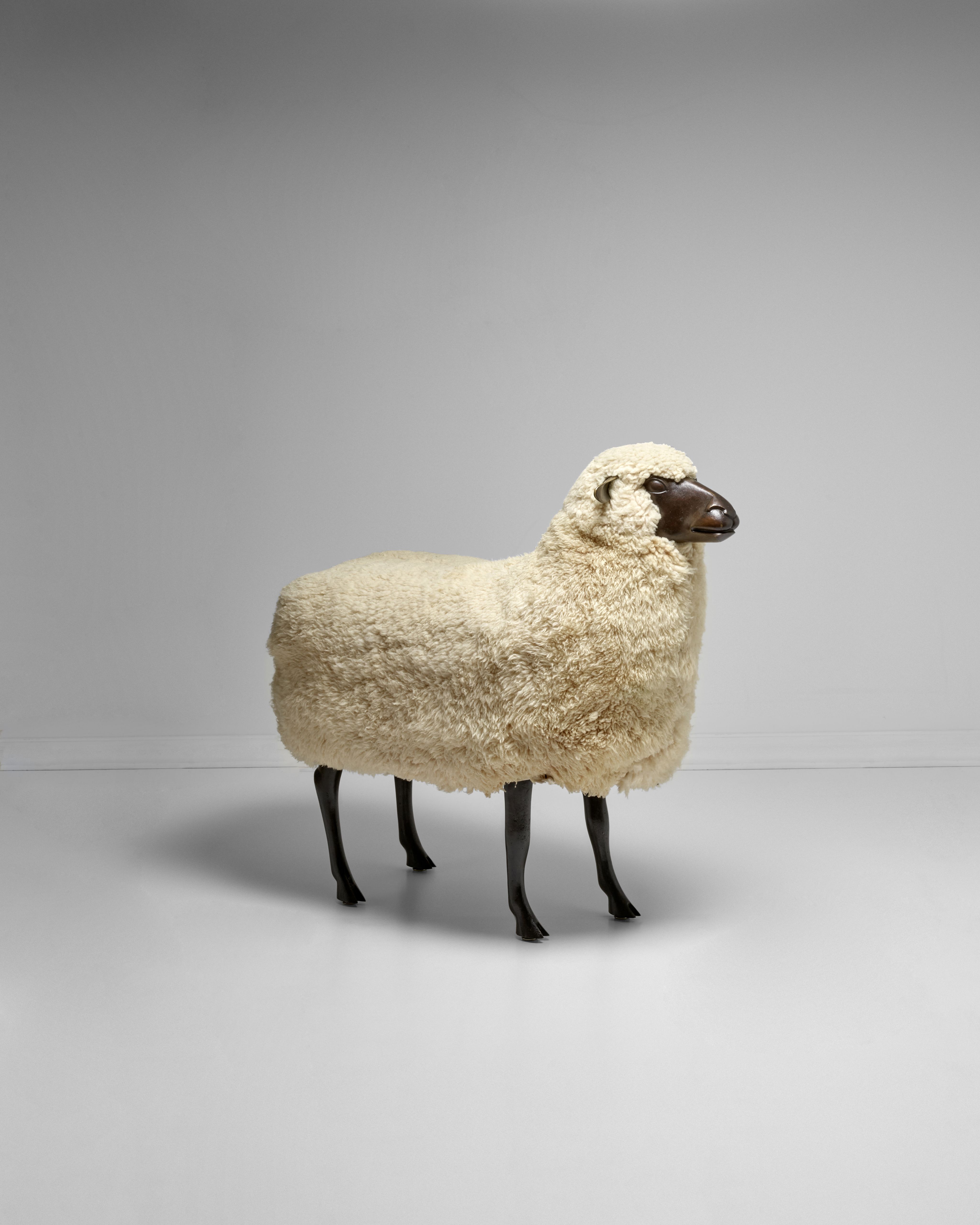
Animal magic
FX and Claude Lalanne made sheep furniture and sculptures that literally stopped the traffic. No wonder the smart set flocked to them, says Adrian Dannatt
Like father, like son
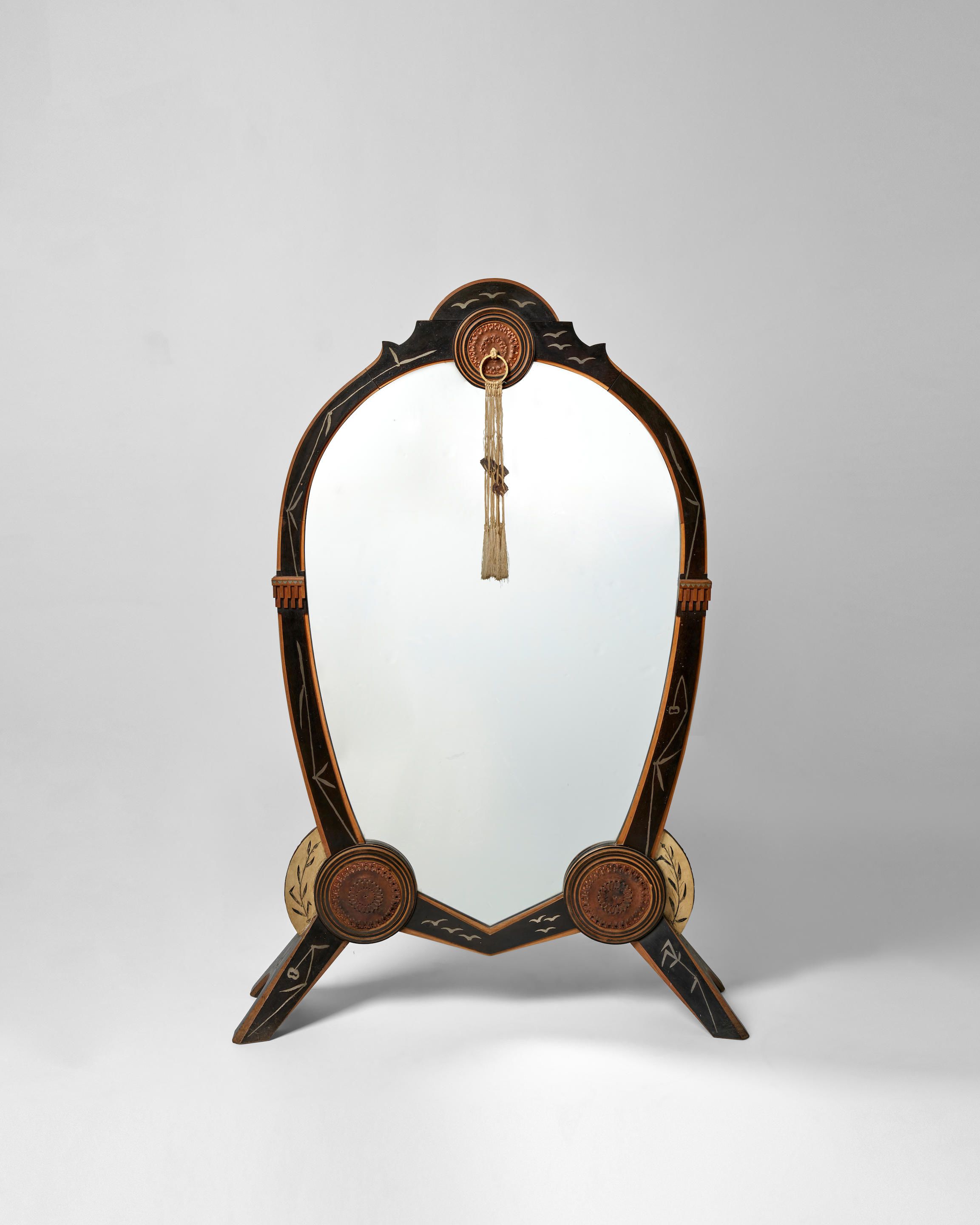
The Bugattis' claim to fame in the history of European design is unmatched. It all started from patriarch Carlo’s beginnings as a furniture designer in Milan

 Built with Shorthand