
A Visual History of Sculpture
Specialists' Top Picks
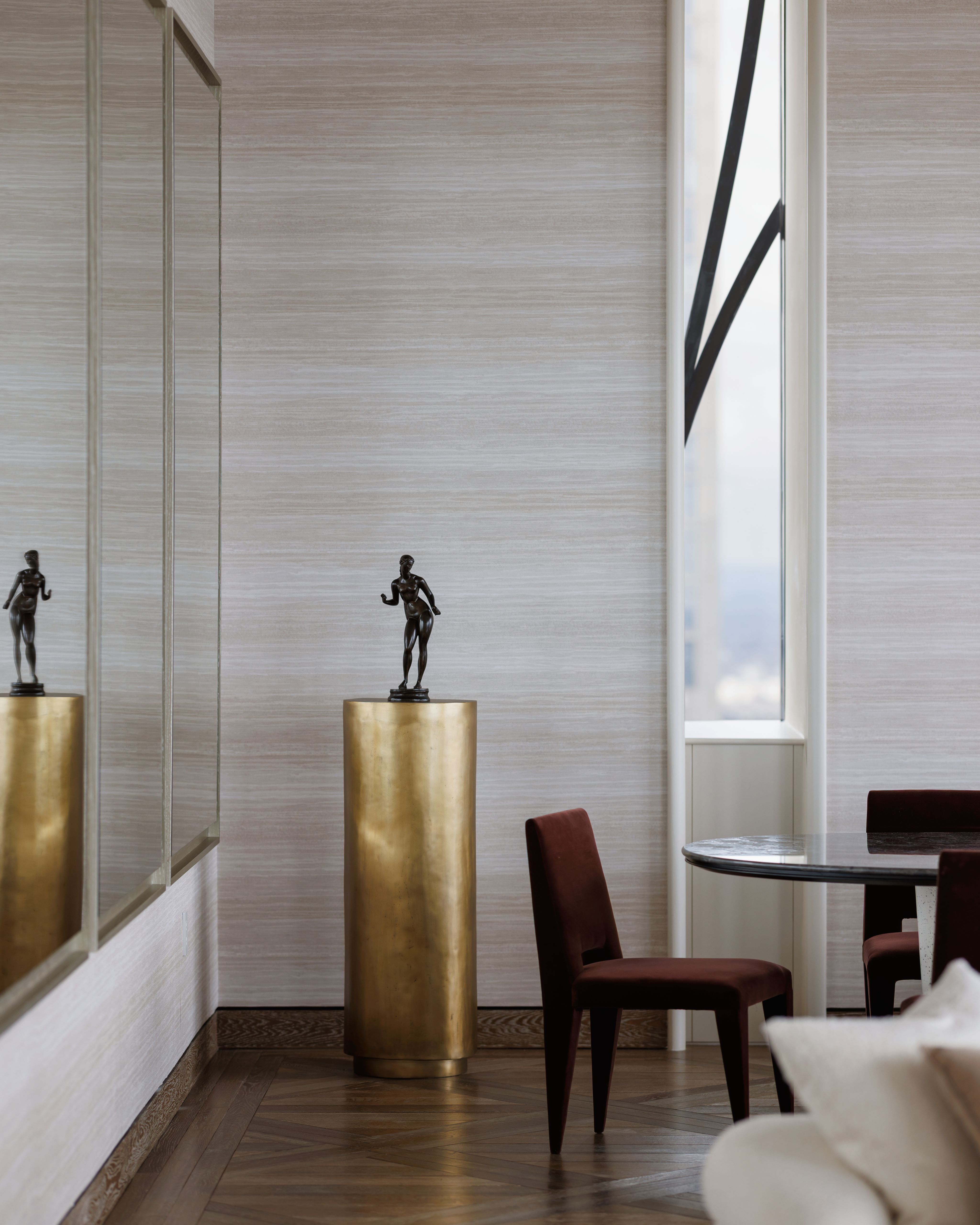

Our November 20th and 21st Century Art Week auctions trace an incredible lineage of sculpture. The timeline begins with Auguste Rodin and his iconic Le Baiser, a masterwork with palpable humanity that signaled a break from classical restraint. It ends with Jeff Koons’ Balloon Venus Dolni Vestonice, a complete reimagining of the earliest known sculptural depictions of the human form, refracted through a flawless mirror-finish surface.
Between these two poles, the sculptures featured in our 20th & 21st Century Art auctions chart more than a century of innovation and redefinition of the human form. From Nadelman's stylized elegance, Dubuffet's graphic playfulness, and Benglis's sensuous materiality, the story of modern sculpture unfolds.
Read on for our specialist's top sculptural works, coming under the hammer 18 - 20 November.

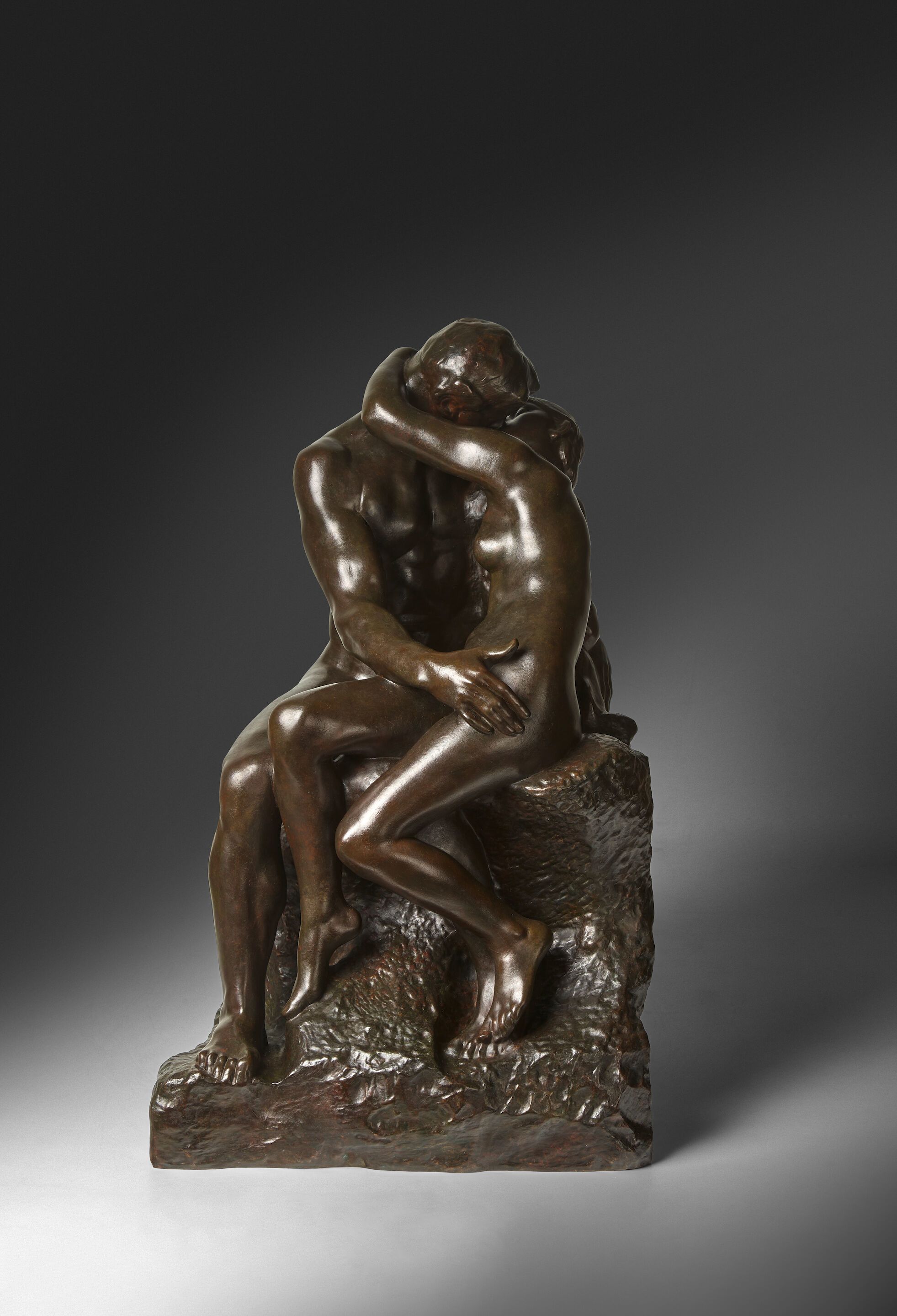
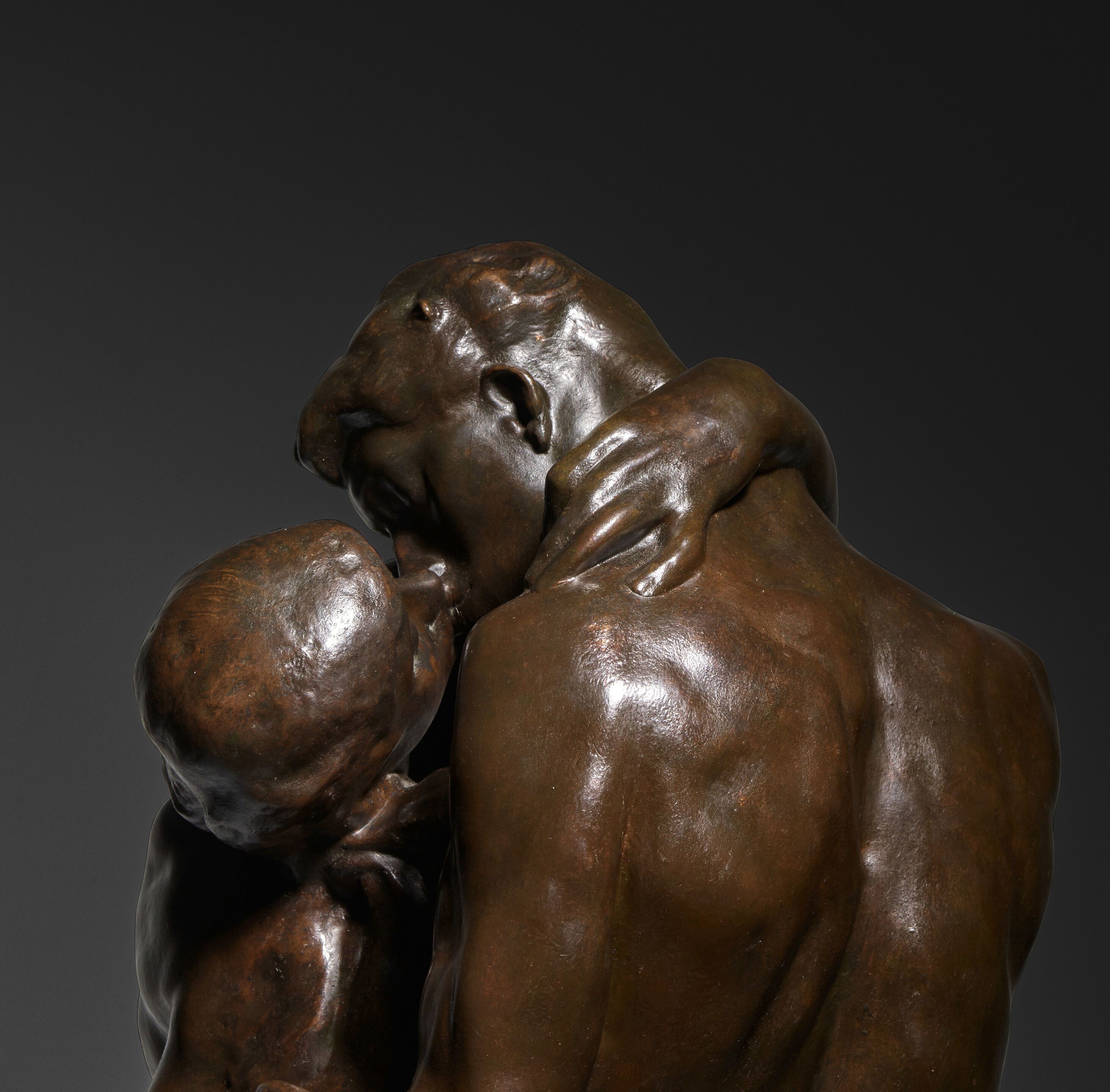
Auguste Rodin, Le Baiser
Among the pantheon of Auguste Rodin's masterpieces, Le Baiser (The Kiss) stands as one of the most celebrated icons of modern sculpture. An embodiment of sensuality and emotional truth, Le Baiser captures love at its inception; an instant suspended between innocence and abandon. The work's timeless appeal lies in its duality: at once tender and erotic, idealized and modern.
The story that inspired the bronze originates in Dante Alighieri's Inferno, which recounts the tragic tale of Francesca da Rimini and Paolo Malatesta, whose first kiss sealed their fate. When their forbidden love was discovered by Francesca's husband, they are murdered mid-embrace and condemned to the second circle of Hell.
Rodin first conceived the work as part of La Porte de l'Enfer (The Gates of Hell), a monumental bronze portal comissioned by the French government in 1880. When the embrace was deemed too tender for the drama of La Porte, Rodin removed it, later reintroducing it as a freestanding sculpture.
Le Baiser bridges the 19th and 20th centuries, fusing classical ideals with modern emotional depth. Through it, Rodin distilled the essence of passion: raw yet refined, temporal yet eternal.


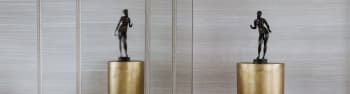
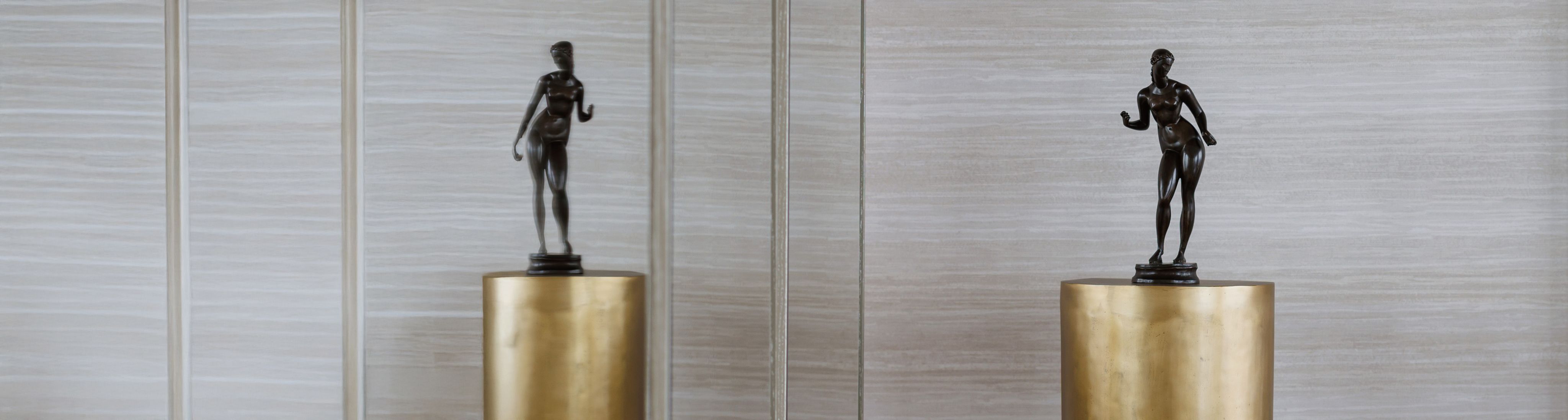
Elie Nadelman, Standing Female Nude
Produced at the height of Elie Nadelman's formative years in Paris, Standing Female Nude resides prominently between classical aesthetic principles and the rise of modernism.
In 1908, Nadelman was producing a series of heads and female figures that defined his early style, revealing his interest in reducing form to clean, continuous contours and stylized geometry.
By the time Nadelman sailed to New York in 1914, he had forged an artistic identity deeply rooted in classical tradition. Standing Female Nude, through its clarity, restraint, and elegance, exemplifies the principles that would guide him throughout his career.
Within a broader context of twentieth-century sculpture, Nadelman’s work occupies a world between Rodin’s expressive realism and the emerging abstraction of the Post-War period. Nadelman utilized the lexicon of antiquity as a guide to uncover the beauty found in the essentials of form, laying the groundwork for generations of sculptors who sought to reconcile modernism and the traditions of antiquity.



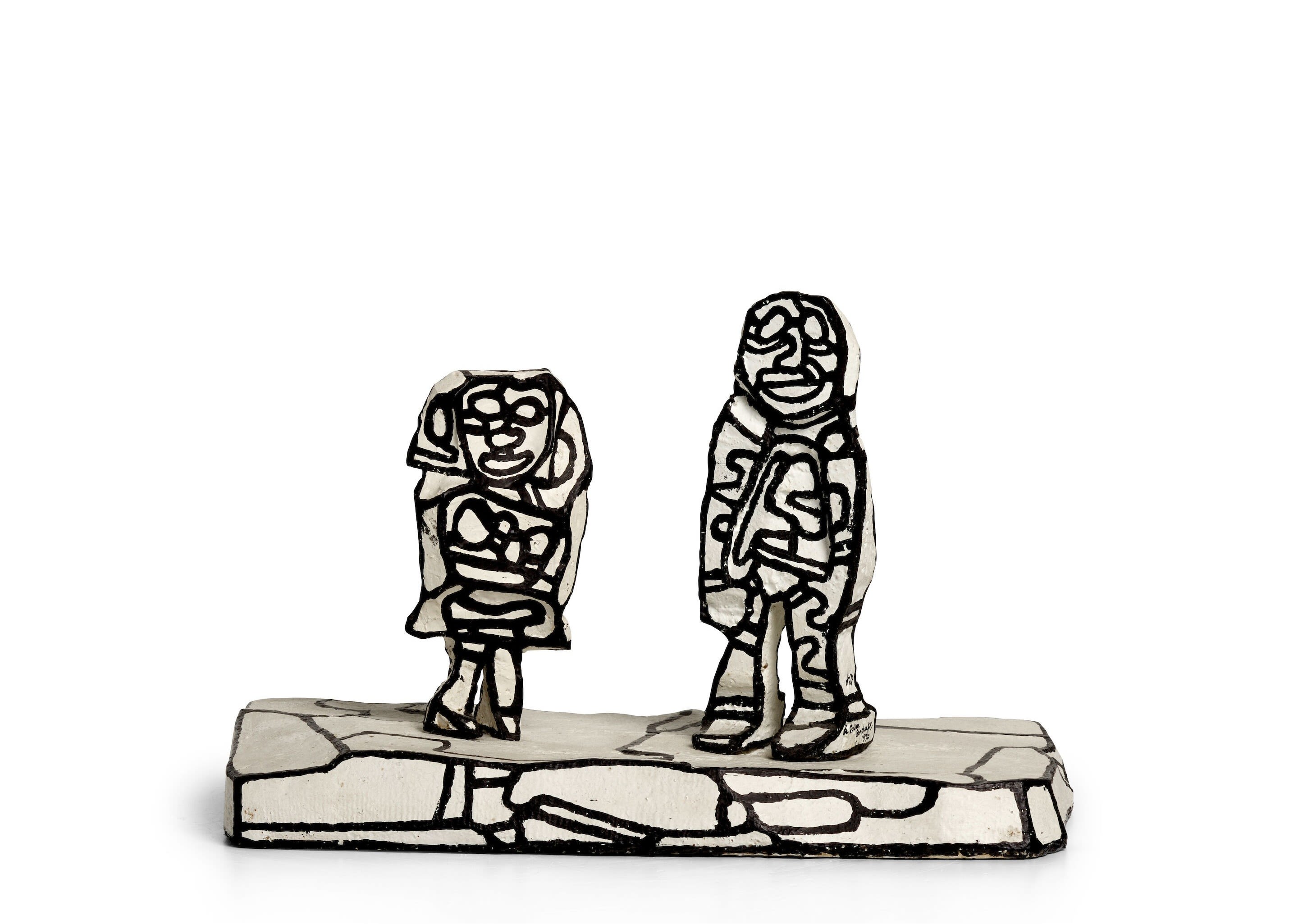

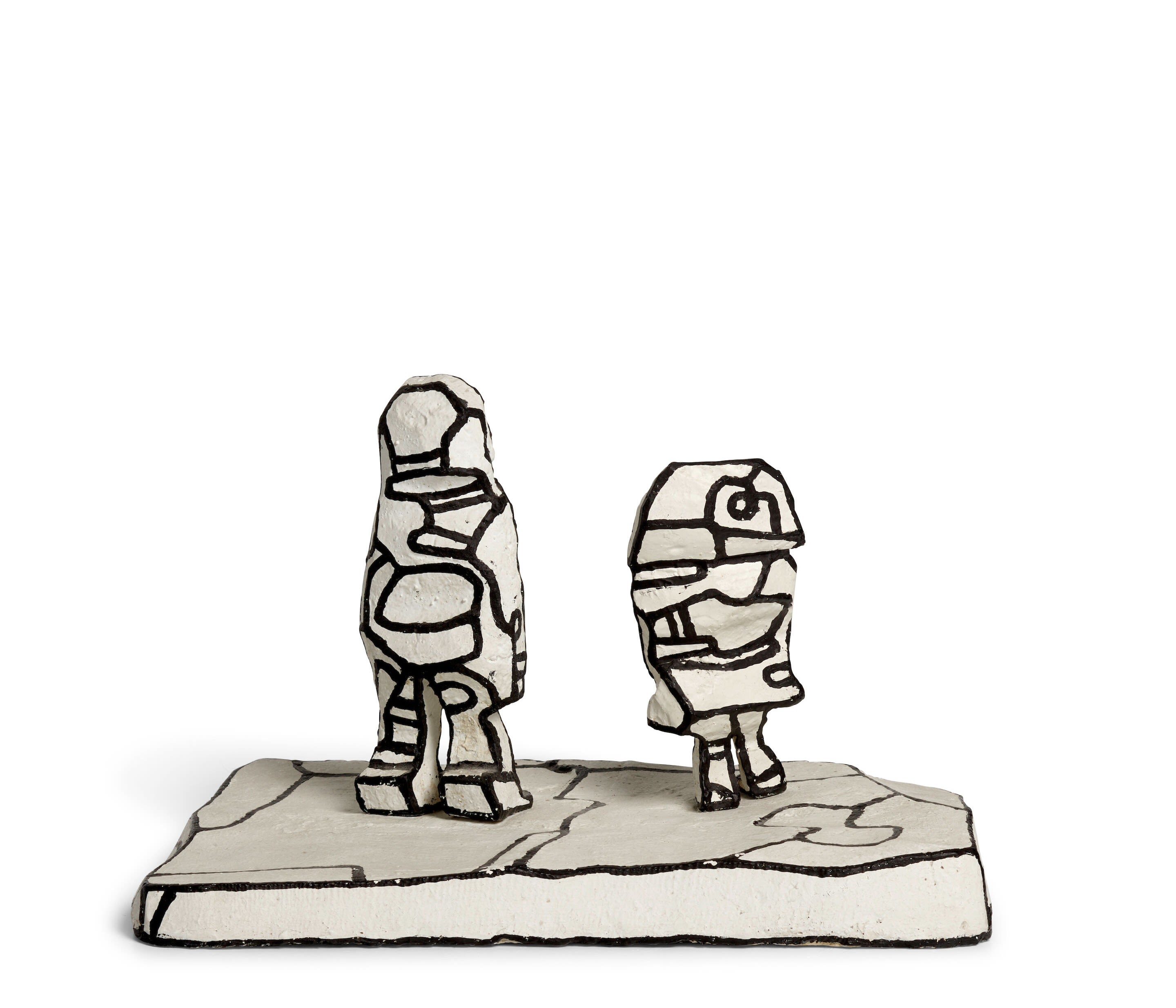
Jean Dubuffet, Promeneuse et promeneur
Promeneuse et Promeneur is an exceptionally elegant and rare example of Dubuffet's foray into sculpture. The work belongs to his L'Hourloupe cycle, one of the artist's most celebrated passages of work created between 1962 to 1974, which saw his expansion into sculpture and architecture.
In the present work, Dubuffet translated the spontaneity of his drawn line into three-dimensional form, embodying the central premise of L'Hourloupe: that art could give form to thought itself, imagining a novel universe of forms and meaning. The subjects, outlined in his distinctive black tracery against a paper-white ground, appear as drawings conjured into being.
Emerging in the wake of World War II, Dubuffet's aesthetic was a rebellion against academic refinement, and a celebration of the raw and slightly absurd.
Formerly in the collection of Nina and Gordon Bunshaft, Promeneuse et Promeneur endures as a striking expression of Dubuffet’s vision on a wonderfully concise scale.
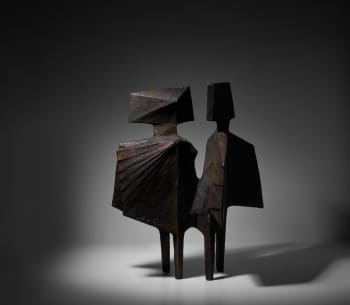
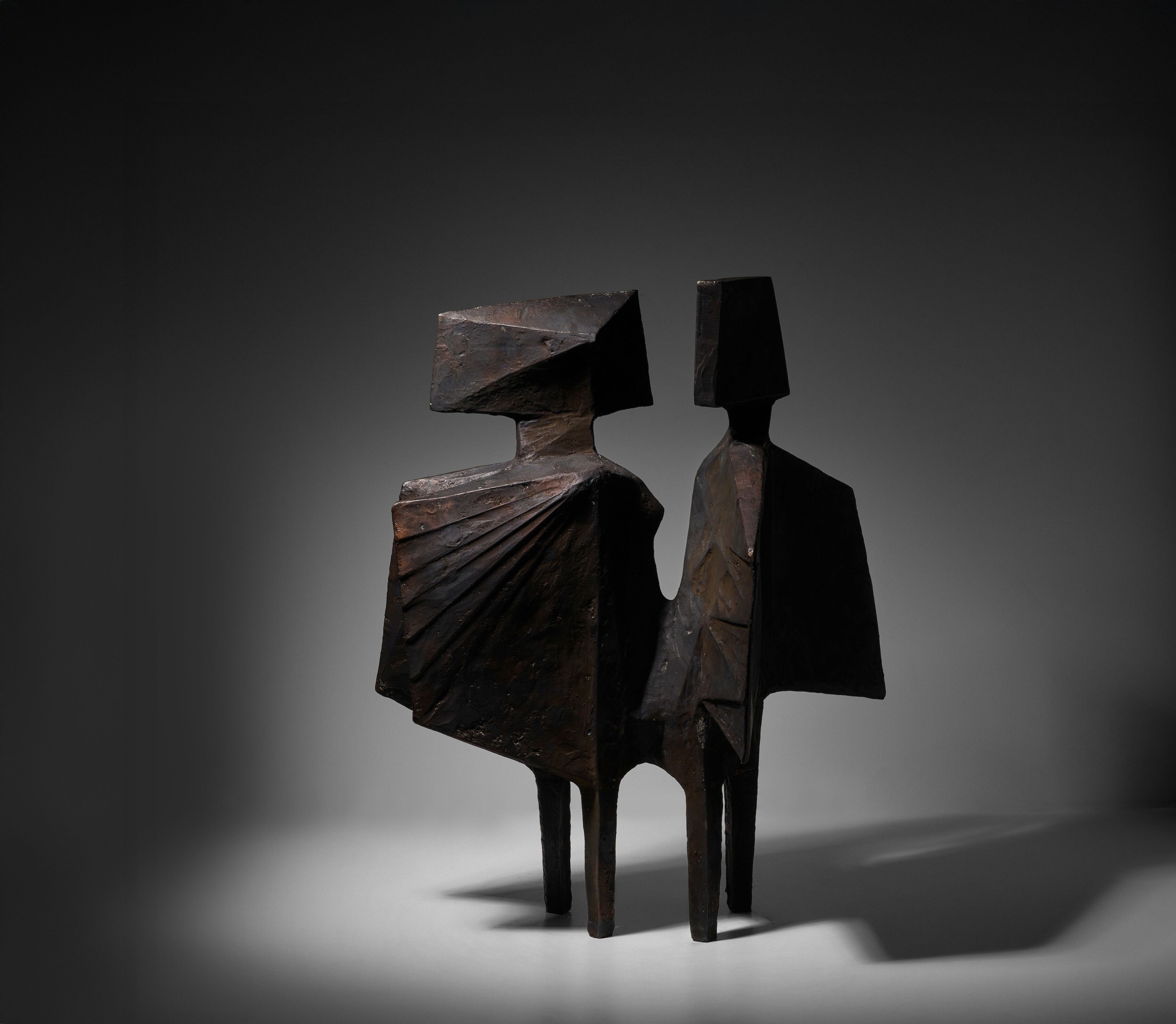
Lynn Chadwick, Conjunction XIV
Conceived in 1970, Conjunction XIV exemplifies Chadwick’s ongoing exploration of human connection and spatial tension through sculptural form. Forged in bronze, its sharply articulated planes and intersecting geometries establish a dialogue between mass and void, embodying the psychological distance and silent communication between figures—a recurrent motif throughout the artist’s oeuvre.
By the early 1970s, Chadwick had refined a visual language that distilled the human figure into abstract, architectonic structures. In Conjunction XIV, the two forms evoke both intimacy and isolation. This sense of balance and restraint reflects the artist’s fascination with the dualities of human existence: connection and separation, stability and fragility, presence and absence.
Cast in a small edition of six, Conjunction XIV represents a pivotal example of Chadwick’s mature period, in which he achieved a synthesis of expressive abstraction and structural precision that would define his legacy as one of Britain’s foremost post-war sculptors.


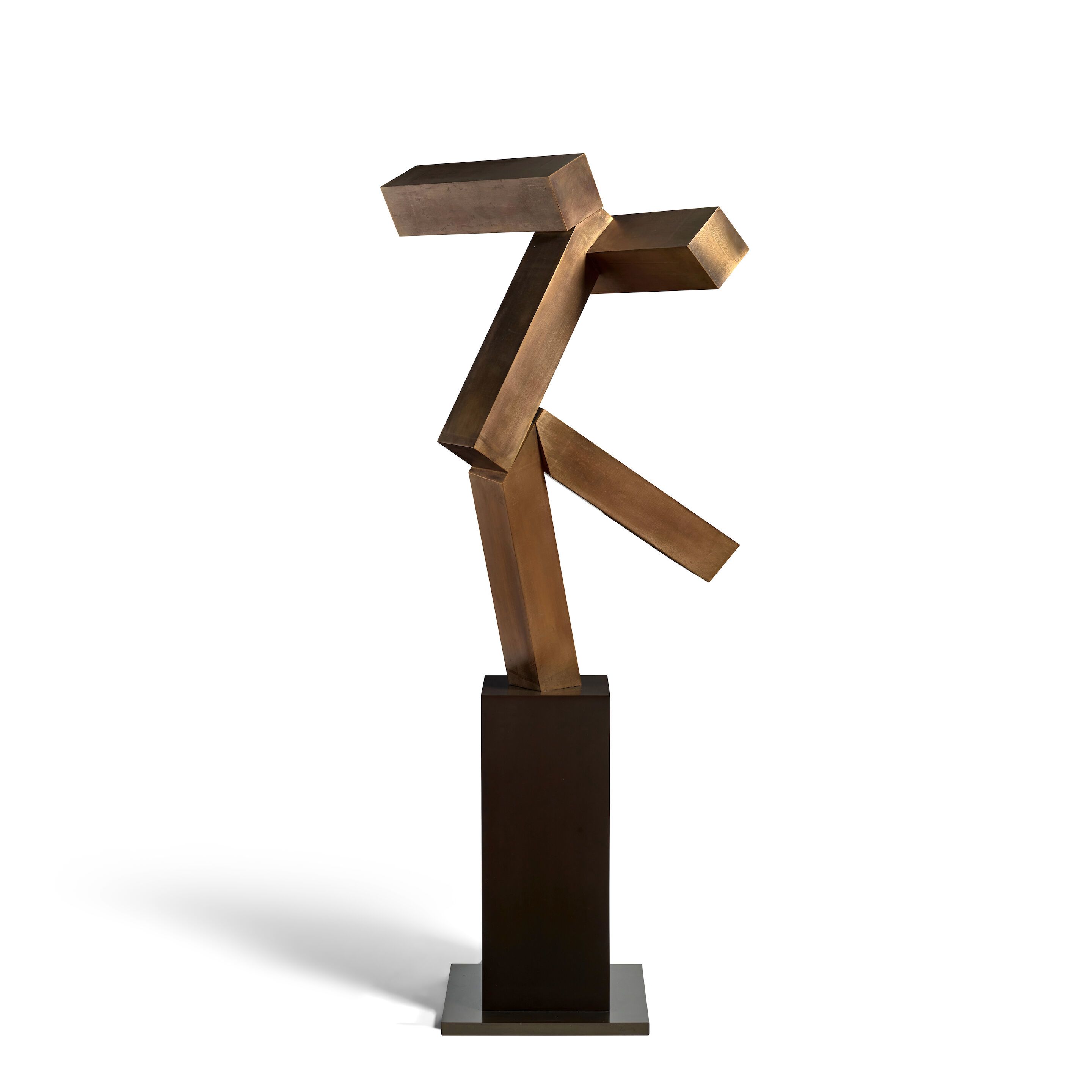
Joel Shapiro, Untitled
One of America’s most preeminent artists, Joel Shapiro pushes the boundaries of sculpture with a cast bronze form that blurs the line between abstraction and figuration. Shapiro distills the body into minimal blocks that somehow retains their dynamic quality.
Shapiro’s innovative manipulation of medium transcends the formal limits of Minimalism, redefining figuration through movement and energy.
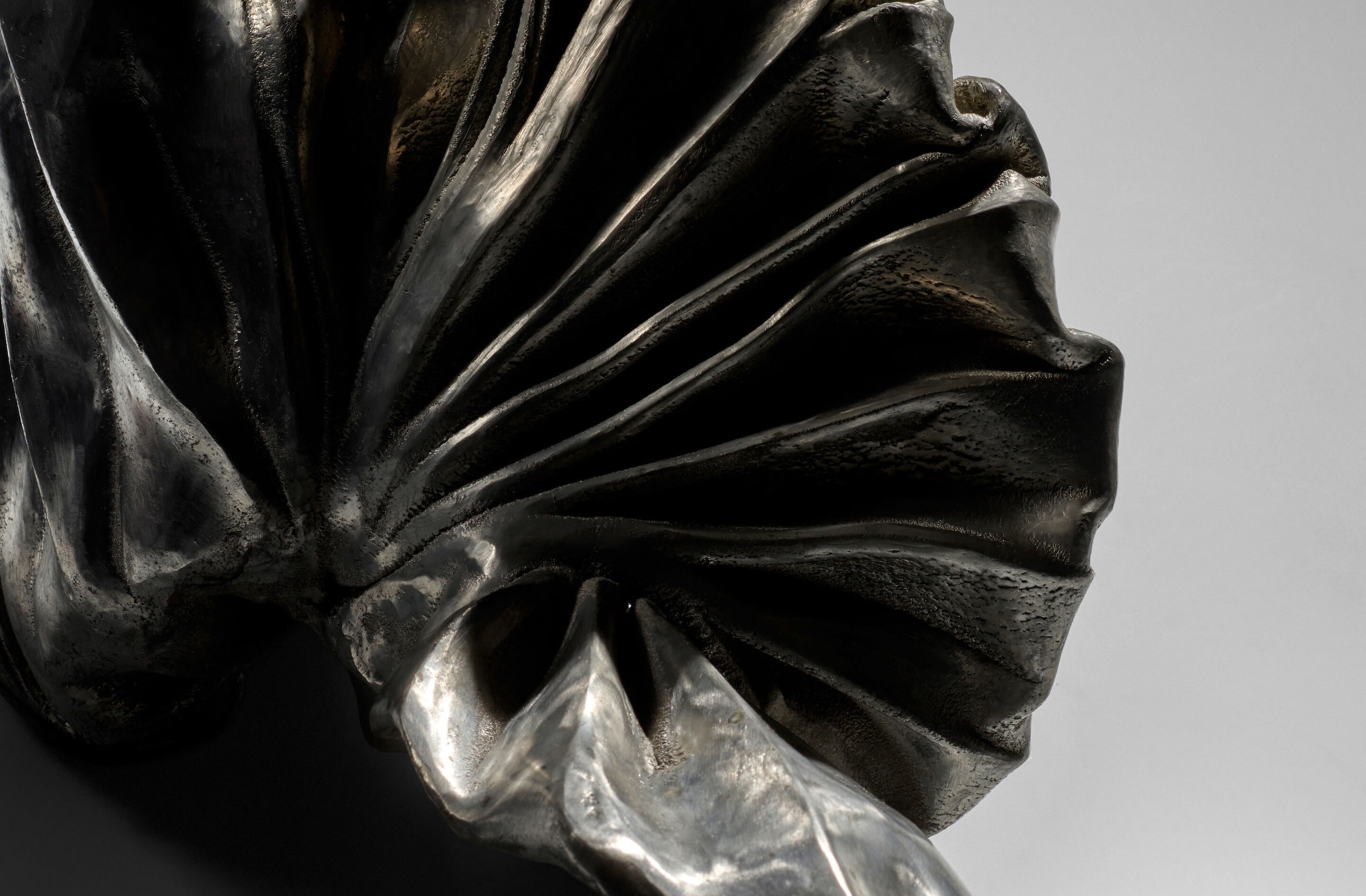
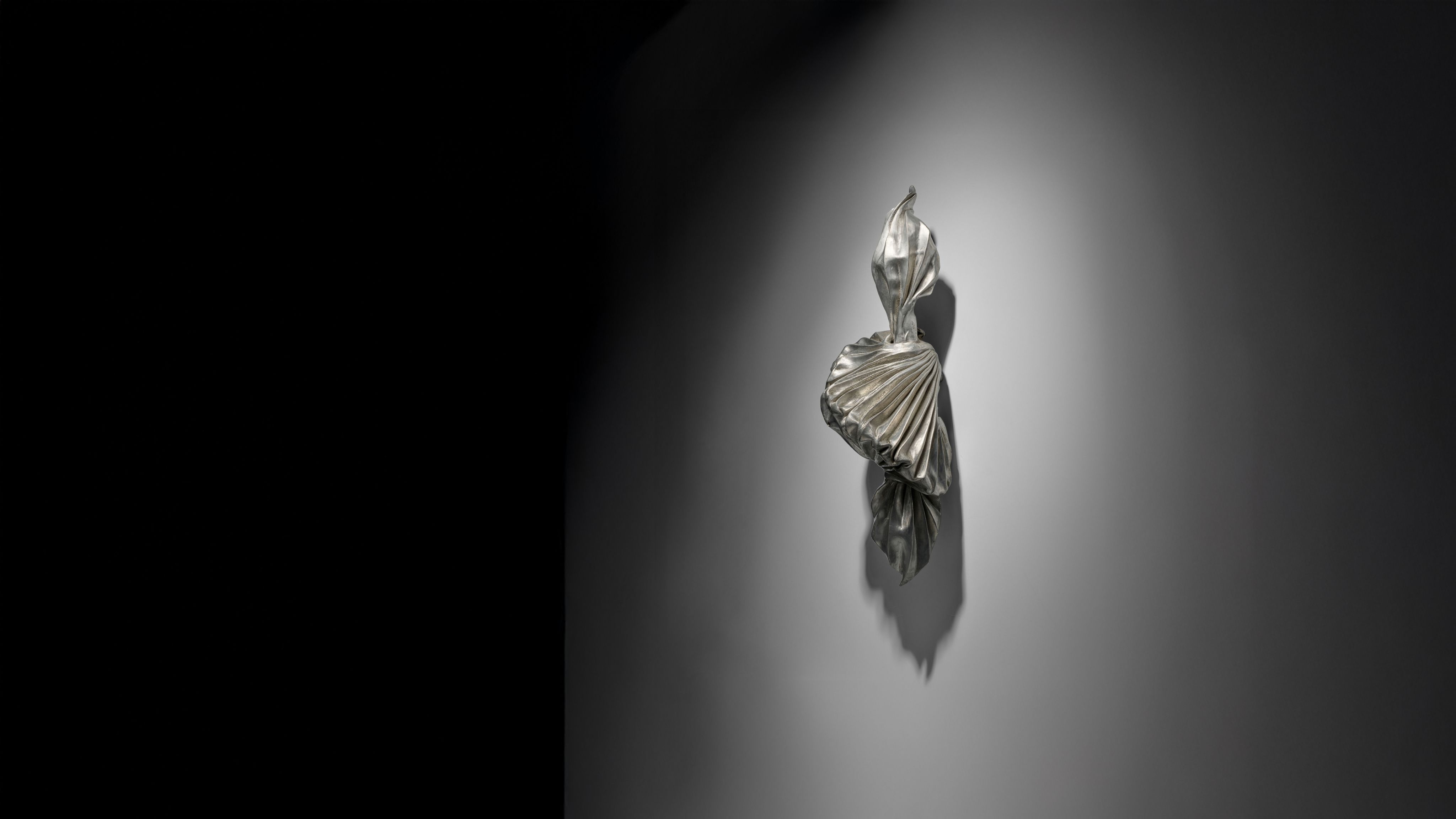
Lynda Benglis, Mask II
Artist Lynda Benglis has been long celebrated for her organic, almost primal sculptures, using material as a stand in for the human form. The engagement with drips, folds, and dazzling reflections of light play a critical role in her exploration of the senses, an exploration that comes from both making and viewing her sculptures.
Emerging in the 1970s amid the rise of feminist and process art, Benglis transformed malleable materials into expressions of sensuality. Her works extend the conversation begun by Rodin and Nadelman into a new corporeal language of fluidity and liberation.


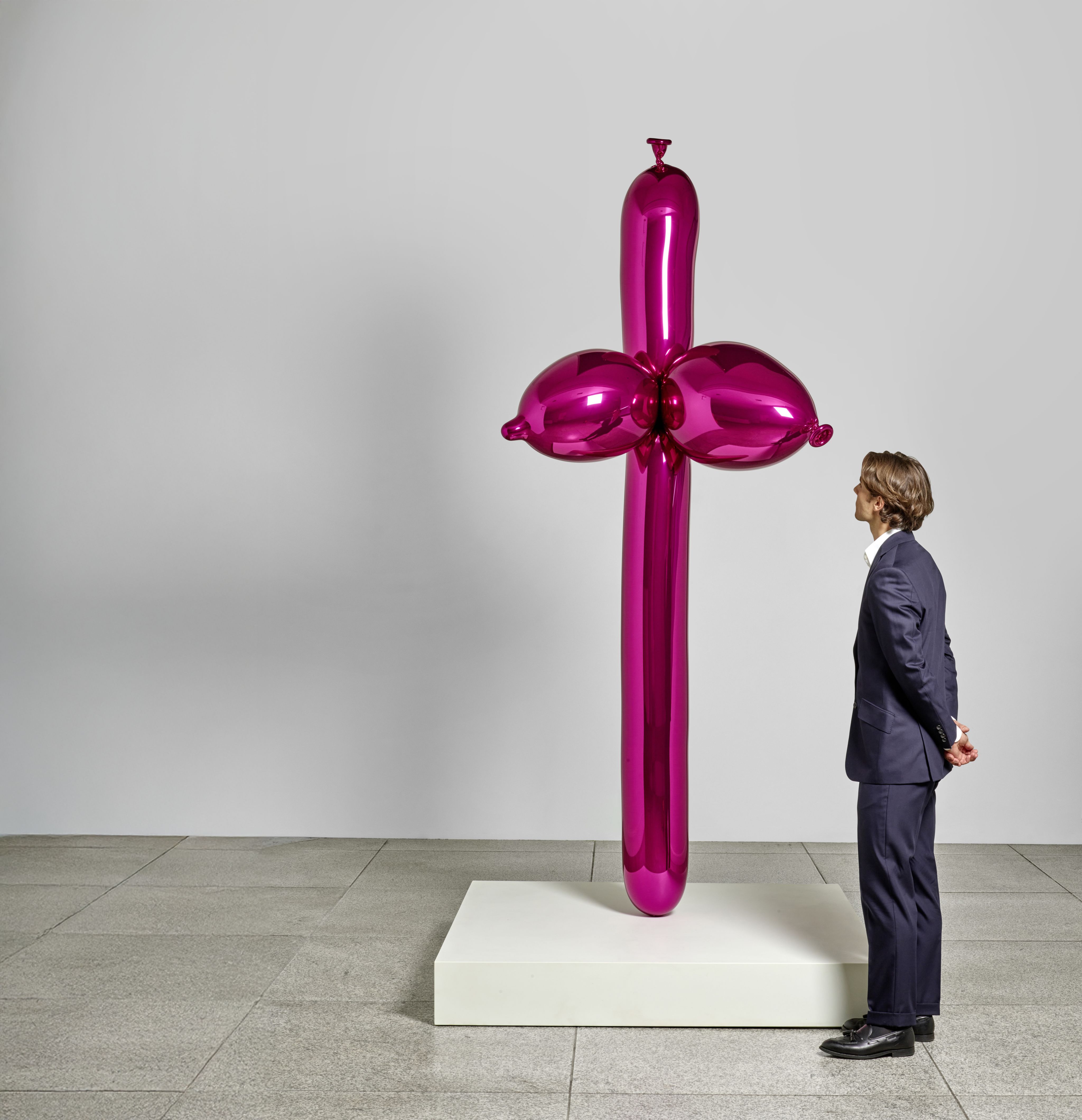


Jeff Koons, Balloon Venus Dolni Vestonice
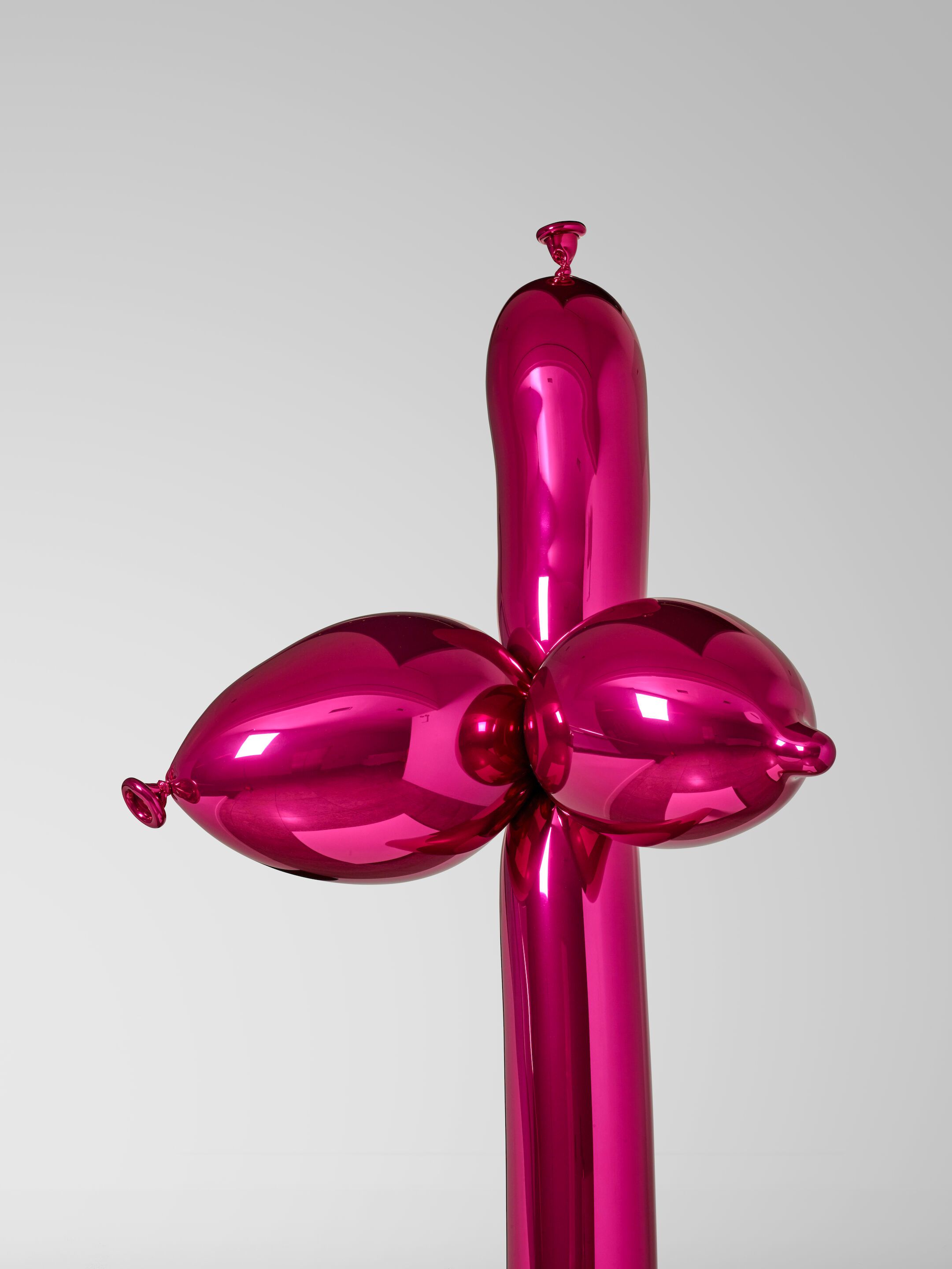
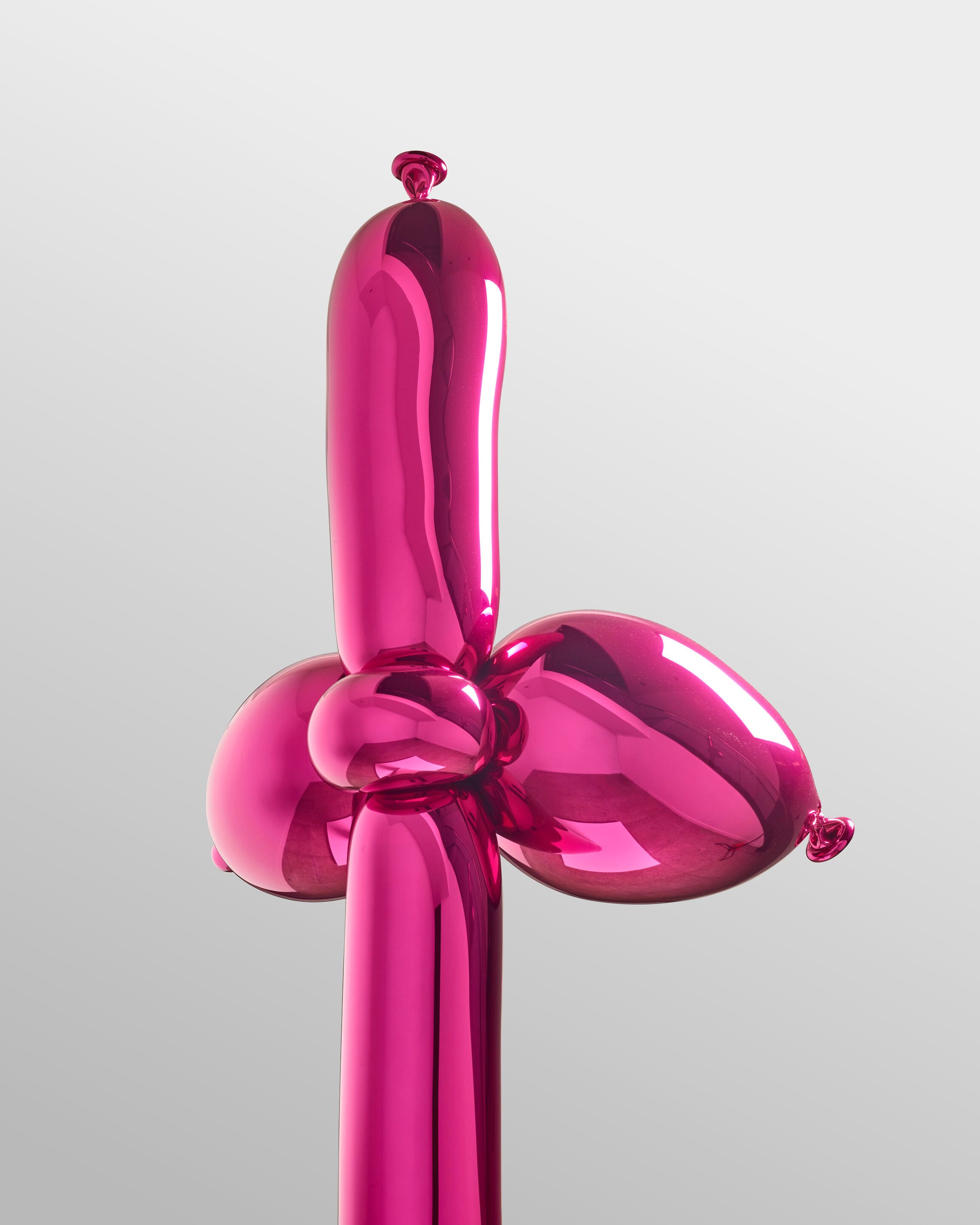
Jeff Koons occupies a singular place within the history of late 20th century and early 21st century art. Few have more audaciously embodied the contradictions of Postmodernism; its embrace of the readymade, its fascination with surface, and its entanglement with popular culture and human history. A monumental example of his famed stainless steel balloon sculptures, Balloon Venus Dolni Vestonice, encapsulates these tensions. By reimagining one of the earliest known sculptural depictions of the human form through the industrial precision and chromatic exuberance of contemporary fabrication, Koons transforms an artifact of prehistory into a gleaming emblem of the 21st Century.
The work references a venus from Dolní Věstonice, a Paleolithic figurine discovered in the Czech Republic and dating to approximately 30,000 BCE— among humanity's oldest surviving representations of fertility and the female form. Koons's version, by contrast, is monumental in scale and rendered in stainless steel coated with a chromed magenta finish.
Koons's Balloon Venus has a spiritual intensity that speaks to the depth of the human condition. Like the idols of antiquity, it confronts the viewer with the spectacle of beauty and selfhood.
 Built with Shorthand