
Under The Hammer
Fine Decorative Arts
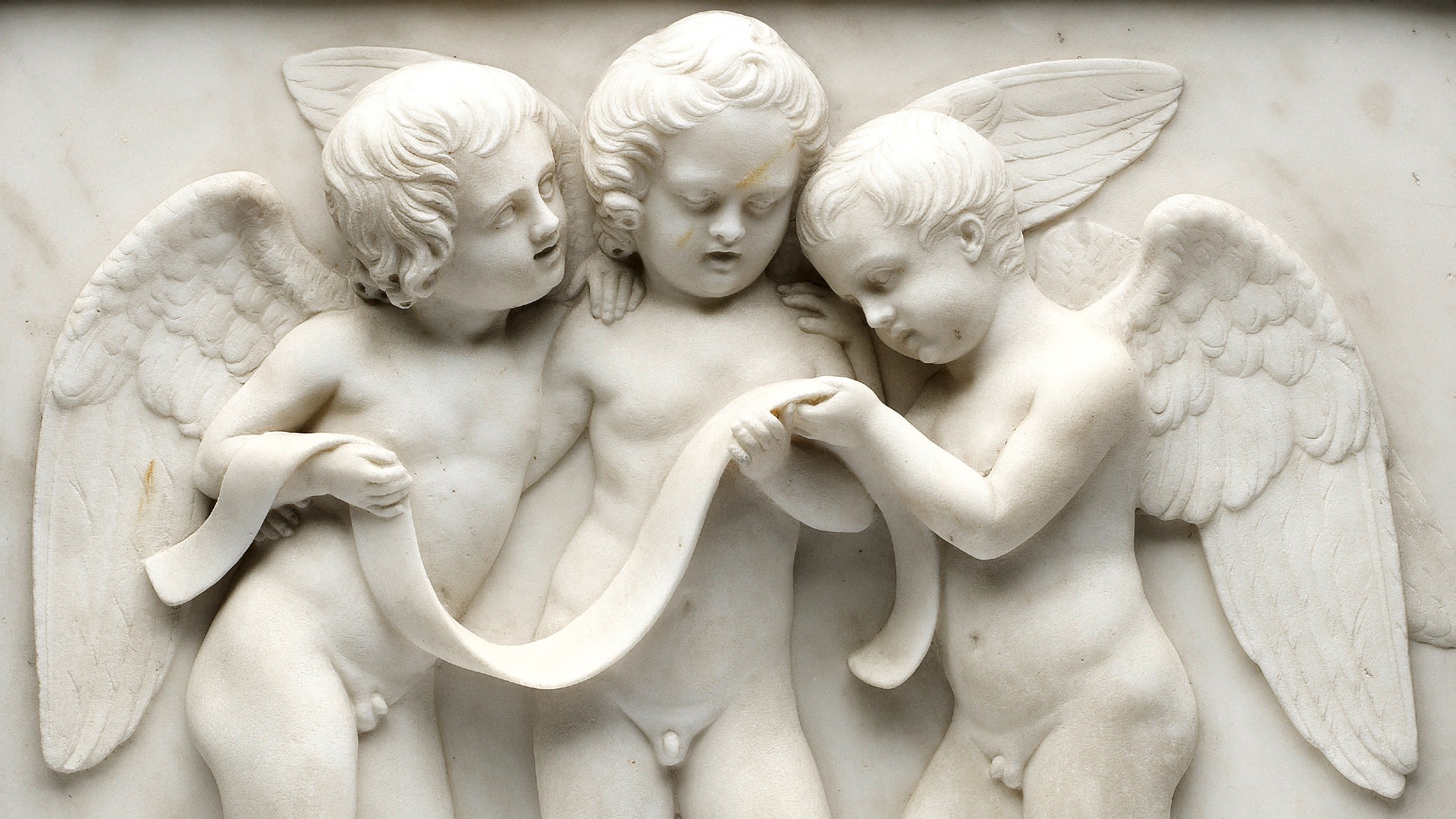


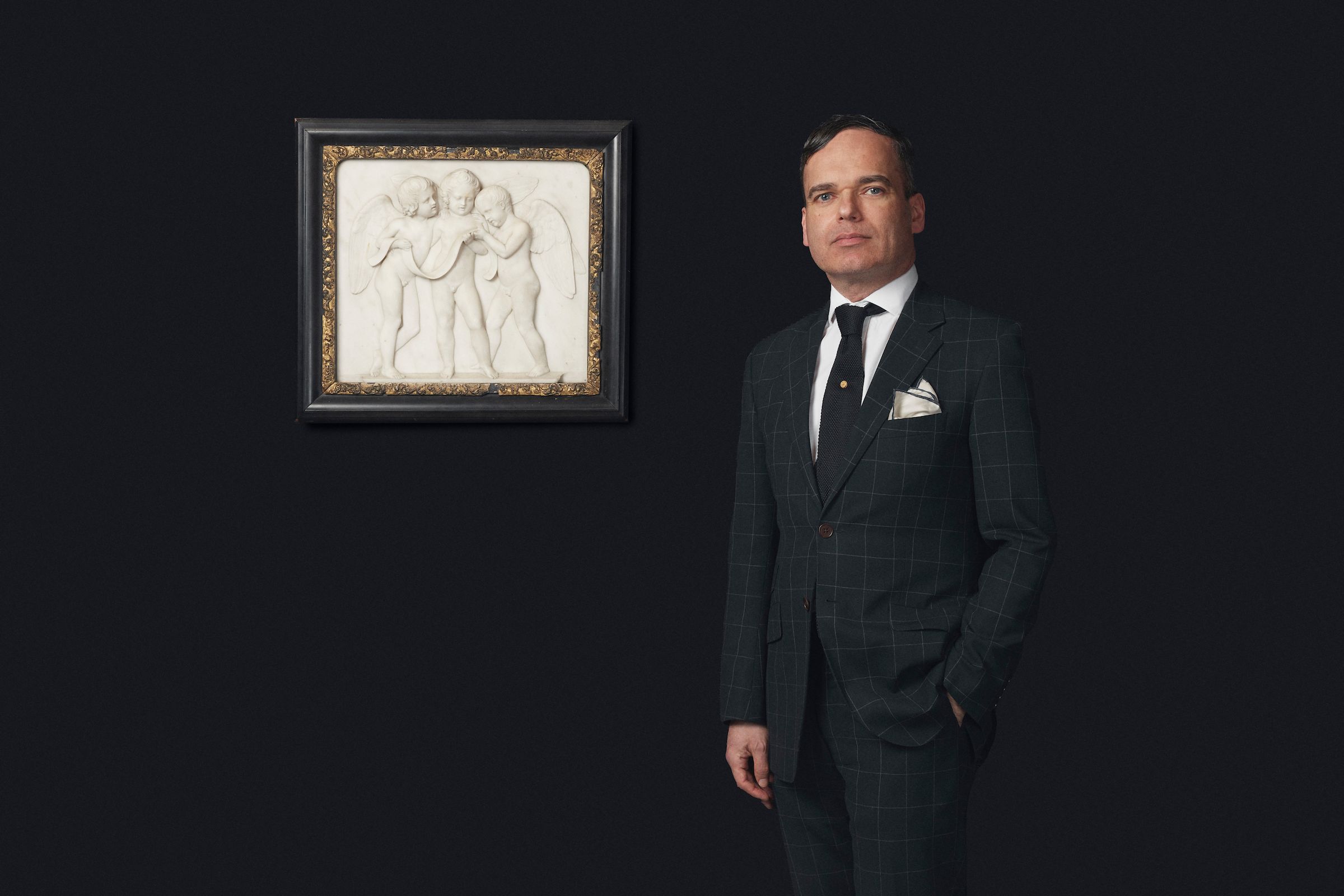
Michael Lake, Specialist, Sculpture and Works of Art with lot 23, a rare and important signed Carrara marble bas-relief plaque of 'The Genii Of Music Singing' by Bertel Thorvaldsen.
Michael Lake, Specialist, Sculpture and Works of Art with lot 23, a rare and important signed Carrara marble bas-relief plaque of 'The Genii Of Music Singing' by Bertel Thorvaldsen.
Our Fine Decorative Arts sale taking place at New Bond Street on 17 November 2021 includes an exquisite selection of furniture, sculpture, silver and more. Here, our specialists select their top picks from the upcoming auction.
Lot 36
A Large Pair Of George IV Silver Salvers, 1827.
Cecile Shannon, Specialist in the Silver Department: 'The reason I am choosing to highlight this pair of impressive silver salvers by the Crown Jewellers ‘Garrards’, is because of their fascinating provenance. While researching the ‘Ramsbottom’ coat of arms engraved onto each tray, it was evident that John Ramsbottom (1778-1845) was an archetypal monied English gent, being a Whig MP for Windsor between 1810 and 1845.
When he commissioned these silver salvers in 1827 and had them emblazoned with his crest, you can imagine that they would have taken pride of place in the dining room of his manor house 'Woodside' in Old Windsor, Berkshire - fabulous things to impress the neighbours. It is then the story becomes interesting as ‘Woodside’, a large detached manor house with 37 acres (15 ha) of gardens, was originally built in the 1500s for Henry VIII's surgeon, a site chosen in order that the occupant could be summoned by an emergency flag flown at Windsor Castle.
The 1828 Visitants' Guide to Windsor Castle and its Vicinity described ‘Woodside’ as "having a very commanding appearance", surrounded by a "handsome park", and noted that it was "situated on the gentle declivity of a hill stretching from the Great Park to the Thames". The house subsequently burnt down and has been rebuilt three times in total, most recently in 1947 in a style described as "post war mock Georgian".
Let’s fast forward to the present day, when I discovered that the present owner of ‘Woodside’ is the one and only Sir Elton John! Sir Elton has lived in the mansion with its romantic gardens and original 18th century orangery since 1975, and it is his principal residence, living there with his husband David Furnish and their two sons. So just imagine, John Ramsbottom and Sir Elton John walk in each other’s footsteps around the grounds of ‘Woodside’ – what a fascinating connection and so unexpected!'

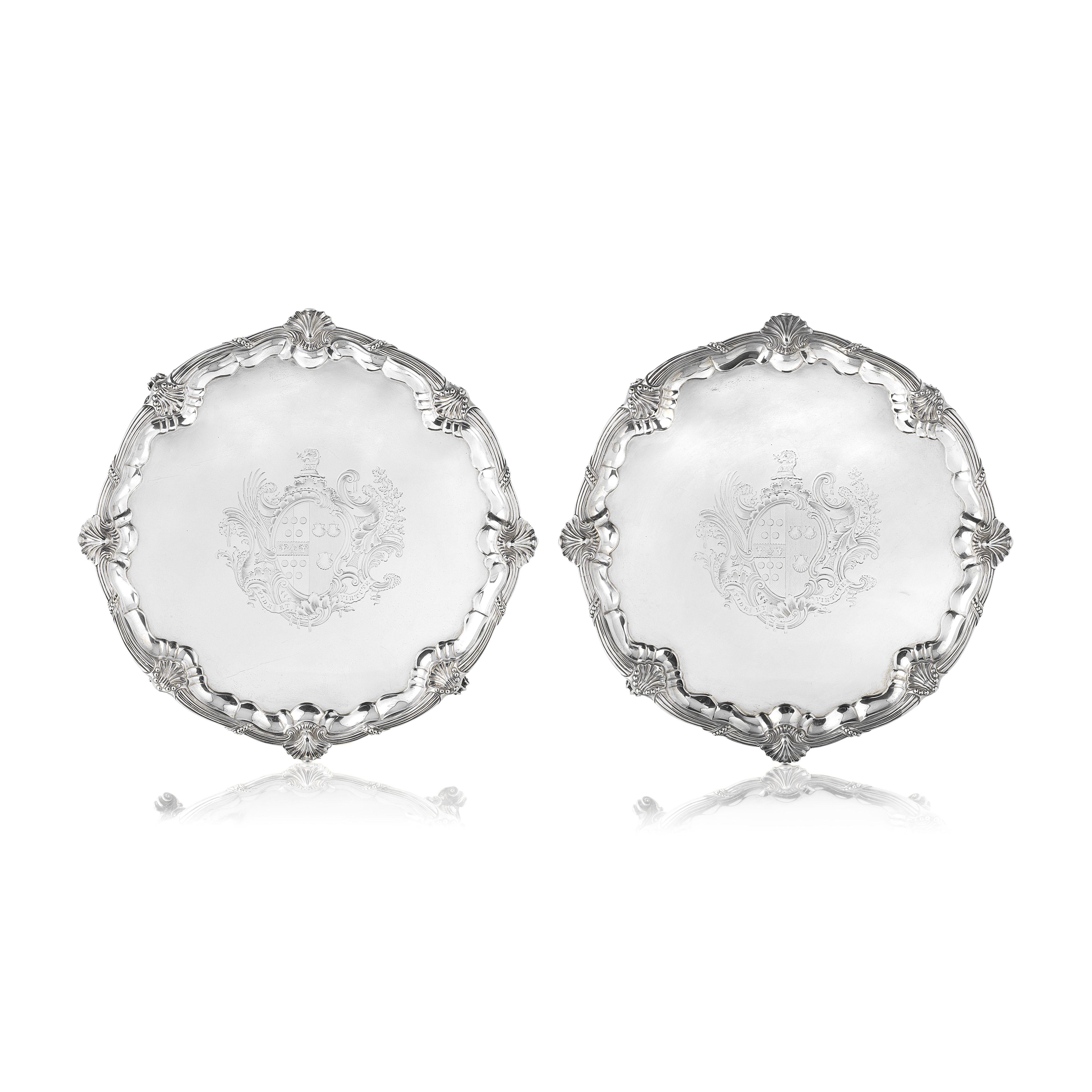
Lot 36. A Large Pair Of George IV Silver Salvers, Robert Garrard, London 1827, Also Stamped Garrards, Panton Street, London (2). Estimate: £ 4,000 - 6,000.
Lot 36. A Large Pair Of George IV Silver Salvers, Robert Garrard, London 1827, Also Stamped Garrards, Panton Street, London (2). Estimate: £ 4,000 - 6,000.
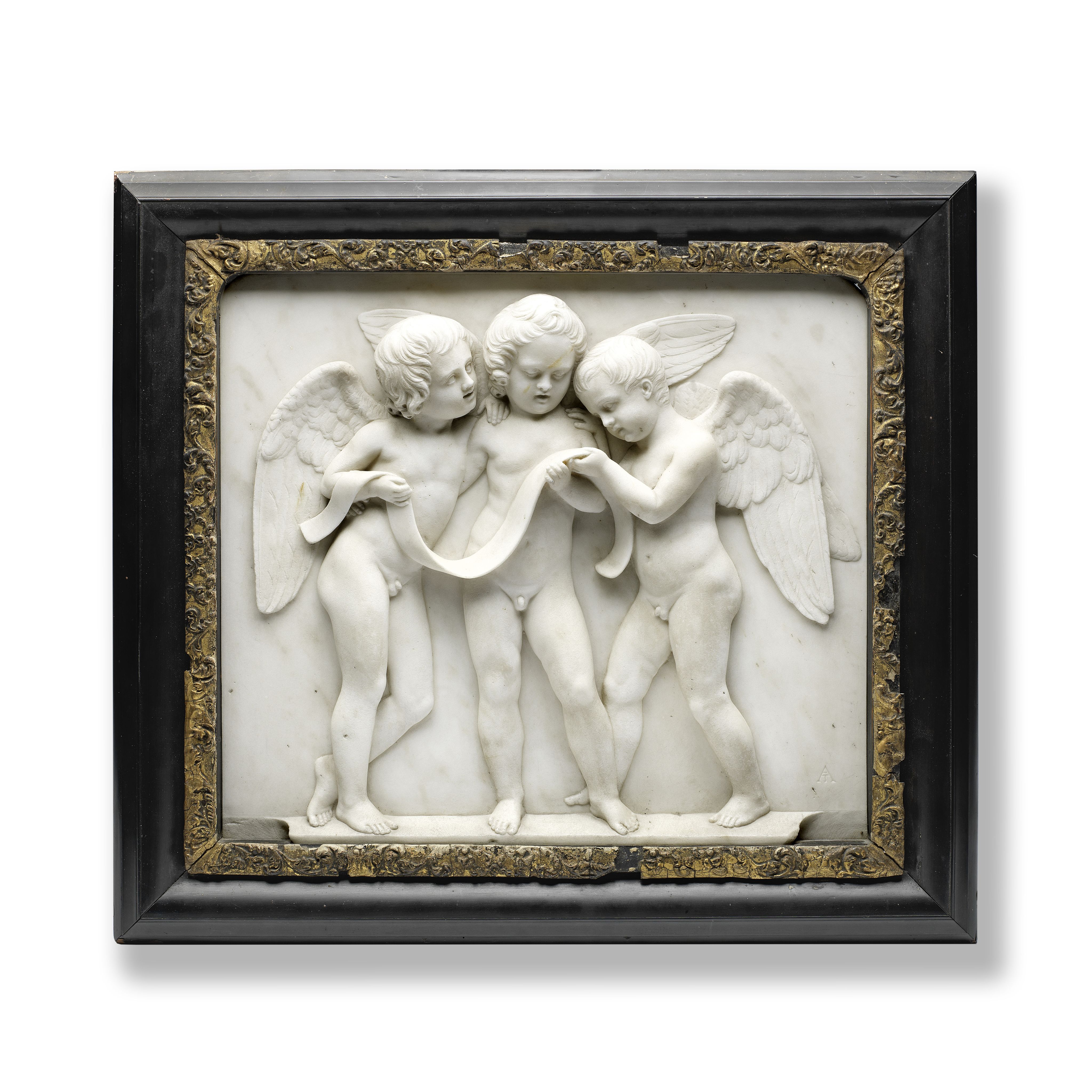
Lot 23. Bertel Thorvaldsen (Danish, 1770-1844): A Rare And Important Signed Carrara Marble Bas-Relief Plaque Of 'The Genii Of Music Singing', Executed Rome, Circa 1833-6. Estimate: £ 60,000 - 80,000.
Lot 23. Bertel Thorvaldsen (Danish, 1770-1844): A Rare And Important Signed Carrara Marble Bas-Relief Plaque Of 'The Genii Of Music Singing', Executed Rome, Circa 1833-6. Estimate: £ 60,000 - 80,000.
Lot 23
Bertel Thorvaldsen, A Rare and Important Signed Carrara Marble Bas-Relief Plaque Of 'The Genii Of Music Singing'.
Michael Lake, Specialist, Sculpture and Works of Art: 'This rare, signed marble plaque depicting musical putti or ‘Genii’ by the Danish sculptor Bertel Thorvaldsen is a very special piece and may possibly have been acquired by the Acland family of Killerton House, Devon when they visited Italy in 1835-6.
An artistic superstar of his day, Thorvaldsen’s output was often compared to that of the Italian master Antonio Canova when he became the foremost artist in his field after the latter’s death in 1822. However as Thorvaldsen seldom signed his works, this marked plaque is a rare find. Probably executed in Rome sometime between 1833 and 1836, it is marked with the sculptor’s monogram AT, suggesting it may have been an important acknowledgement to the recipient, as the other two known examples of this charming subject which are housed in major Scandinavian public collections, are unsigned, making it apparently unique.
Thorvaldsen is known to have reserved his signature for works that had some real significance for him and it may well be that he signed this plaque out of gratitude, possibly to Sir Thomas Dyke Acland or his son, as the family were known to have connections to the sculptor and moved in the elevated circles which allowed them to introduce him to other wealthy patrons such as the young English collector, Lord Norton who originally owned one of the two unsigned plaques of the same subject.'
Lot 15 & 16
An Unusual Flemish Religious Tapestry and A Vibrant Flemish Religious Tapestry.
Helena Gumley, Specialist, Carpets and Rugs: 'It is all about the borders! Lot 15, and in fact the following lot, depict episodes from the same Old Testament story and co-incidentally share the same pattern for the elaborate borders. It is important to note that both lots come from different vendors so it is rather serendipitous that they are going to be sold alongside each other.
The zoological border not only helps us date the piece more specifically but shines a light upon tapestry production in the low countries in the 16th century. The delightful border pattern is based on an example ordered by Philip II of Spain which was destined for a specific set of tapestries depicting the life of Noah. The celebrated weaver, Willem de Pannemaker (ca.1510-1581), raised objection to this border - saying it was too hard to weave. Unluckily for him - it was a border that would be used for another fifty years!
The border on lot 15 and lot 16 shows colourful birds in flight to the top, animals amid a verdant landscape to the shorter flanking sides and a watery landscape to the bottom. Interestingly the pattern for these borders were so jealously guarded by Philip's specially designated officials in Brussels that when Margaret of Parma asked to borrow them for her own set of tapestries she was denied access.'

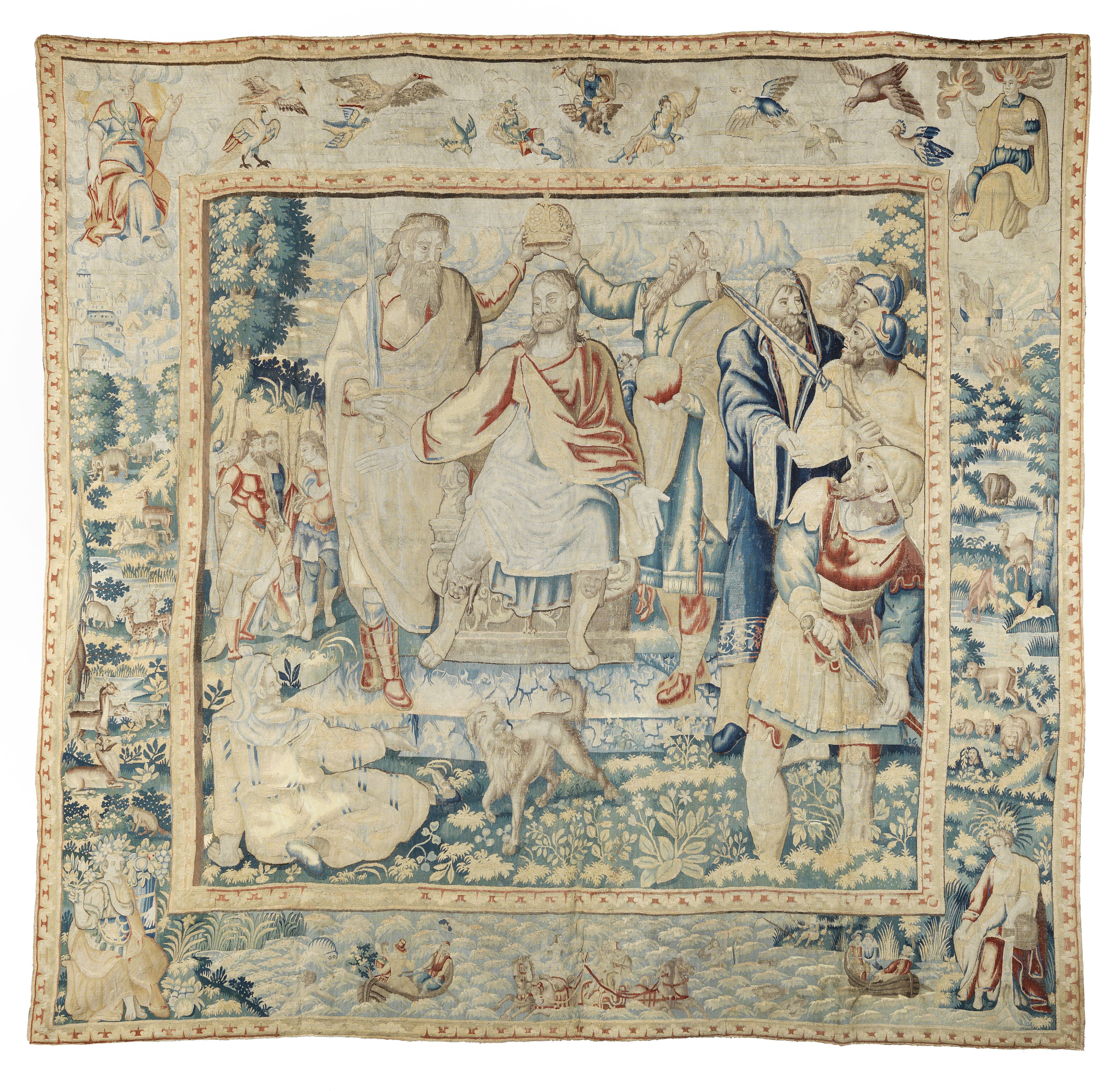
Lot 15. An Unusual Flemish Religious Tapestry, Probably 16th Century. Estimate: £ 25,000 - 30,000.
Lot 15. An Unusual Flemish Religious Tapestry, Probably 16th Century. Estimate: £ 25,000 - 30,000.

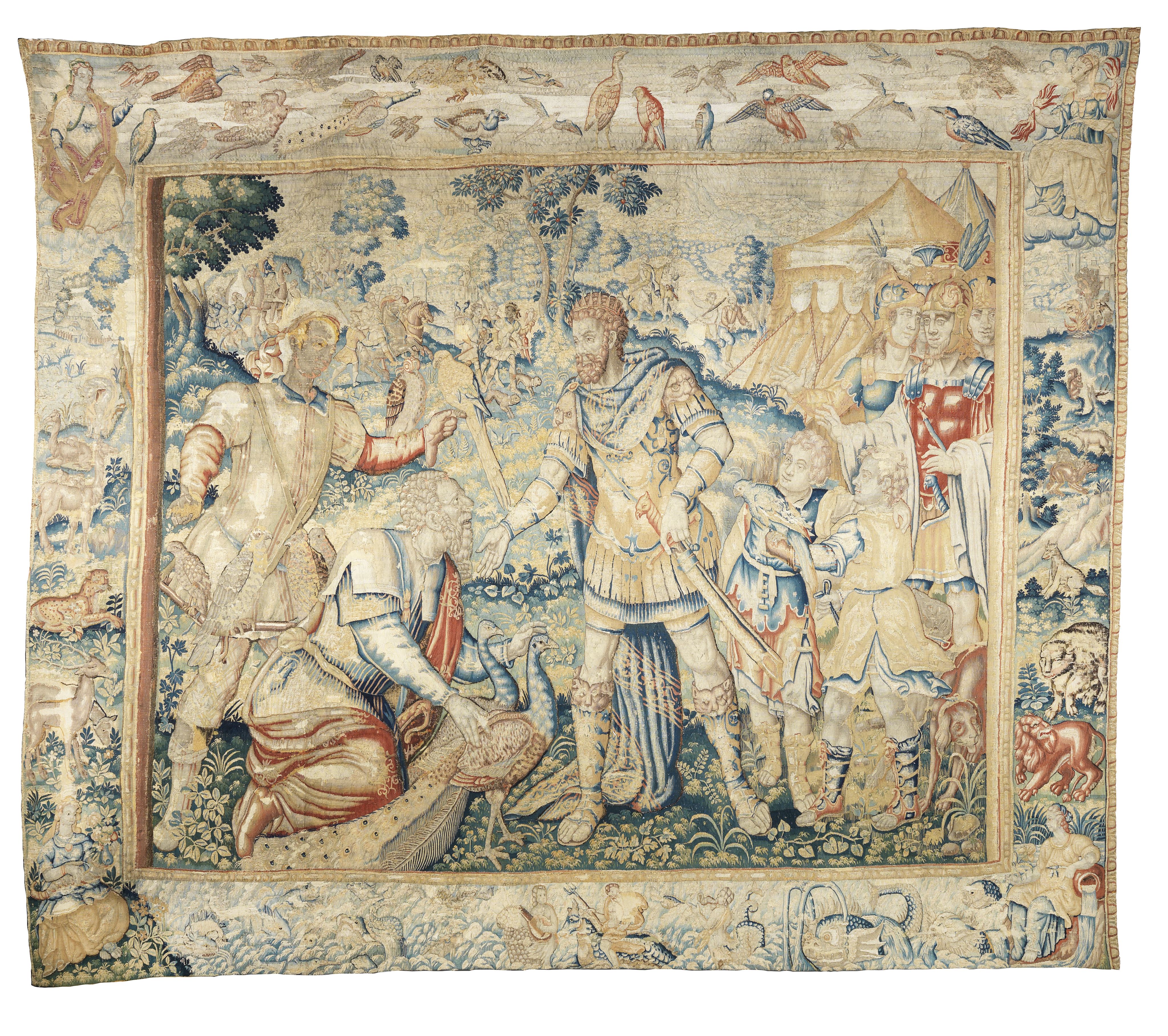
Lot 16. A Vibrant Flemish Religious Tapestry, Probably 16th Century. Estimate: £ 15,000 - 20,000.
Lot 16. A Vibrant Flemish Religious Tapestry, Probably 16th Century. Estimate: £ 15,000 - 20,000.
Lot 34
A French Late 19th Century Ormolu Mounted Kingwood, Rosewood And Vernis Martin Meuble A Hauteur D'appui.

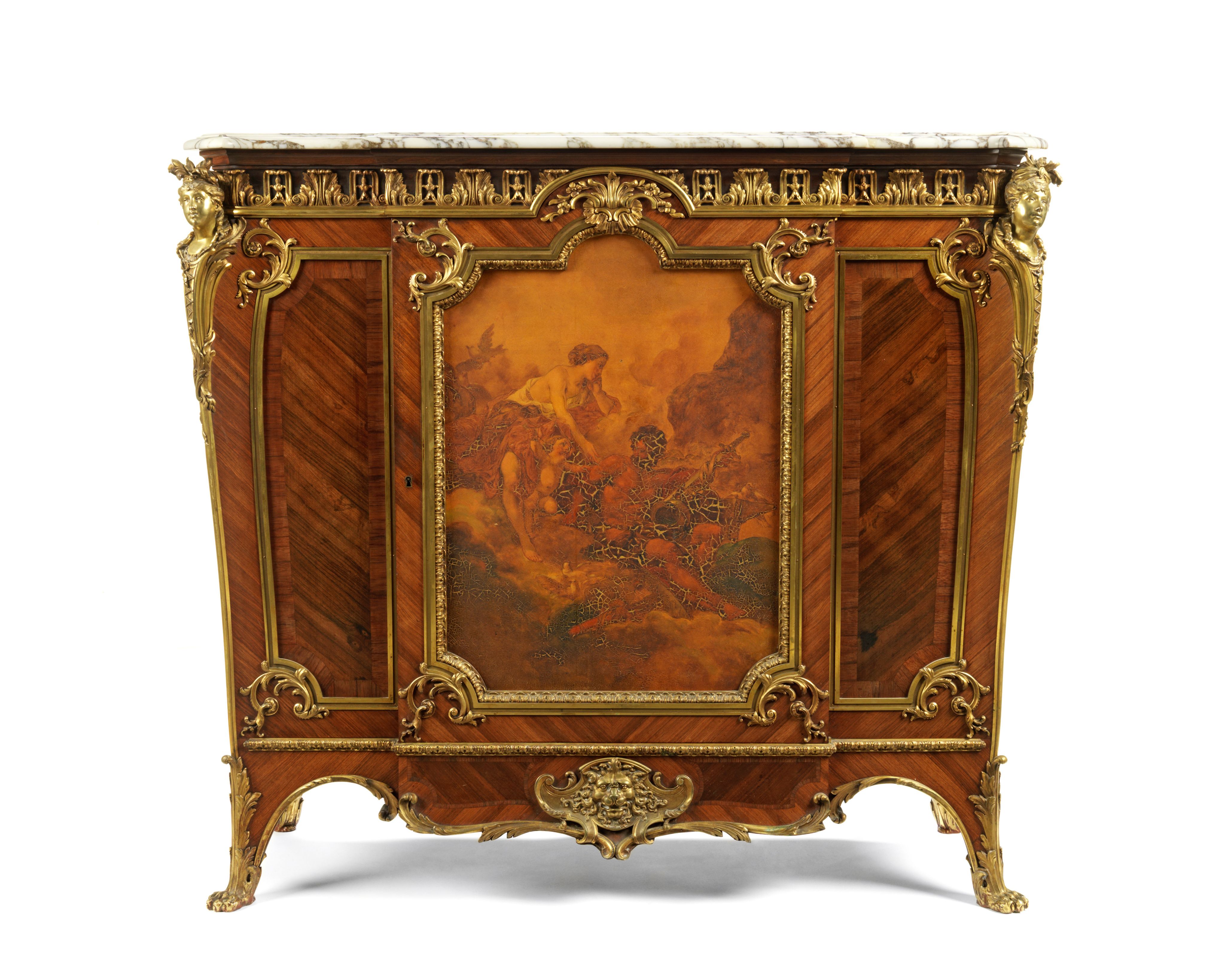
Lot 34. A French Late 19th Century Ormolu Mounted Kingwood, Rosewood And Vernis Martin Meuble A Hauteur D'appui, Either By Maison Krieger Or Joseph Emanuel Zwiener. Estimate: £ 20,000 - 30,000.
Lot 34. A French Late 19th Century Ormolu Mounted Kingwood, Rosewood And Vernis Martin Meuble A Hauteur D'appui, Either By Maison Krieger Or Joseph Emanuel Zwiener. Estimate: £ 20,000 - 30,000.
Thomas Moore, Specialist, Furniture: ‘This Meuble a Hauteur D’appui is a relatively rare example of a French piece of such proportions, produced during the latter part of the 19th century, which incorporates a large Vernis Martin panel.
The fine kingwood and rosewood veneers are accentuated by the supreme quality of the ormolu mounts. Together these elements combine perfectly with the monumental decoration which portrays a classical subject. The panel itself depicts Venus accepting upon behalf of her son Aeneas the armour made by Vulcan in his forge, whilst Cupid and a putto are shown in attendance.
Although a couple of related 19th century cabinets employing Vernis Martin scenes of an almost identical classical theme were executed by Henry Dasson, this particular model is much closer to those examples known to have been made by Joseph-Emmanuel Zwiener and the Maison Krieger firm.
I personally love the powerful presence and elegant proportions of this piece of furniture, whilst admiring the incredible craftsmanship and highly skilful creativity that must have been involved in its design and execution. It is without doubt an absolutely stunning item which would almost certainly be a talking point within any home.’


 Built with Shorthand