
Under the Hammer
Islamic Arms & Armour:
Top 5 Picks from The Mohammed Khalil Collection
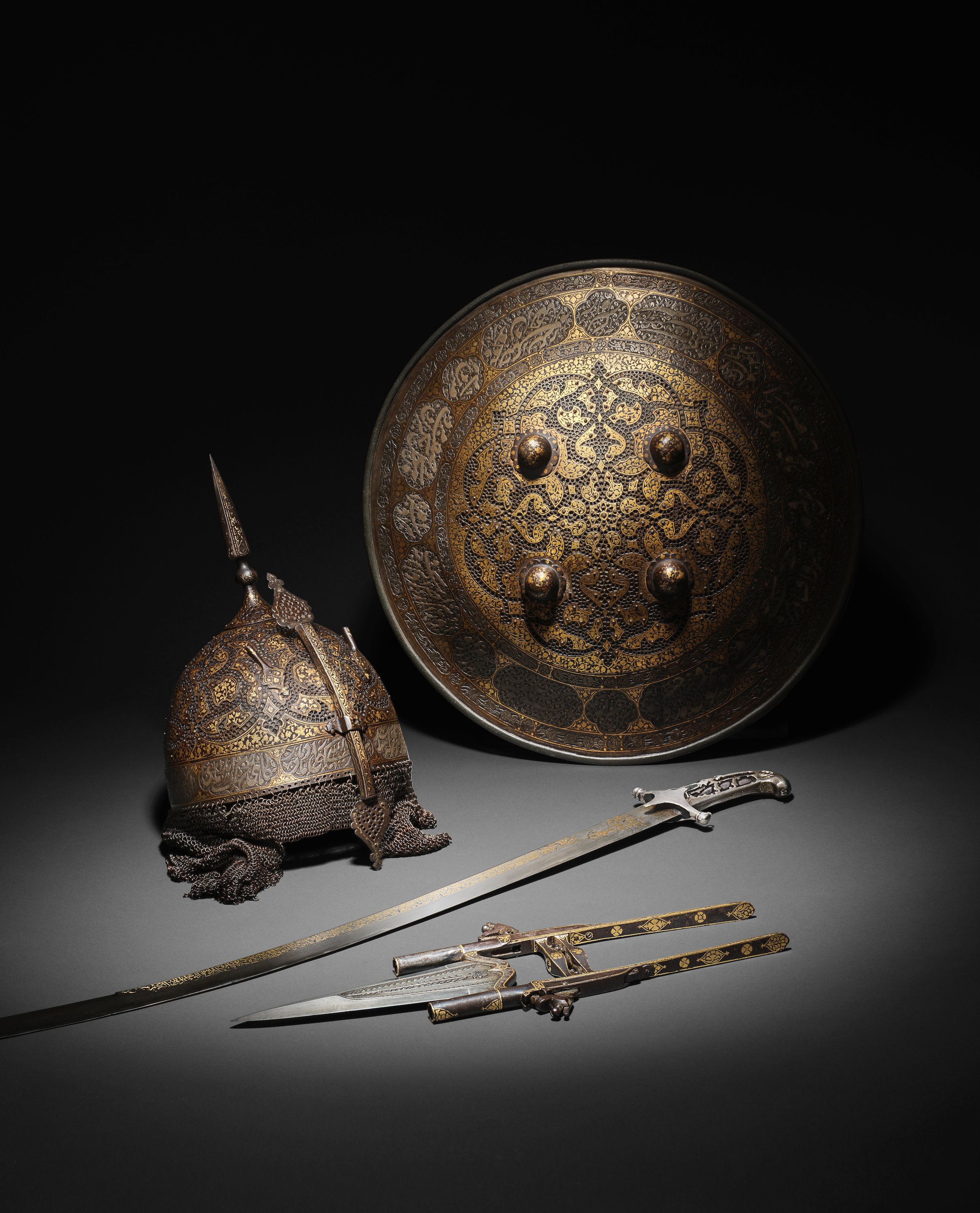

Our upcoming auction Forged in Faith: The Mohammed Khalil Collection of Islamic Arms and Armour on 21 May in London features a selection from one of the most distinguished collections of Islamic arms and armour ever assembled by a private collector.
Formed over 20 years, the Mohammed Khalil Collection is a labour of love which gives a striking account of the prominence of arms and armour in the craft tradition of Islamic civilisations.
Here, Cataloguer Gabriella Fernandes highlights some of her favourite lots from the sale.
Lot 28
A fine gold-inlaid watered-steel push dagger (katar), India, 17th/18th century

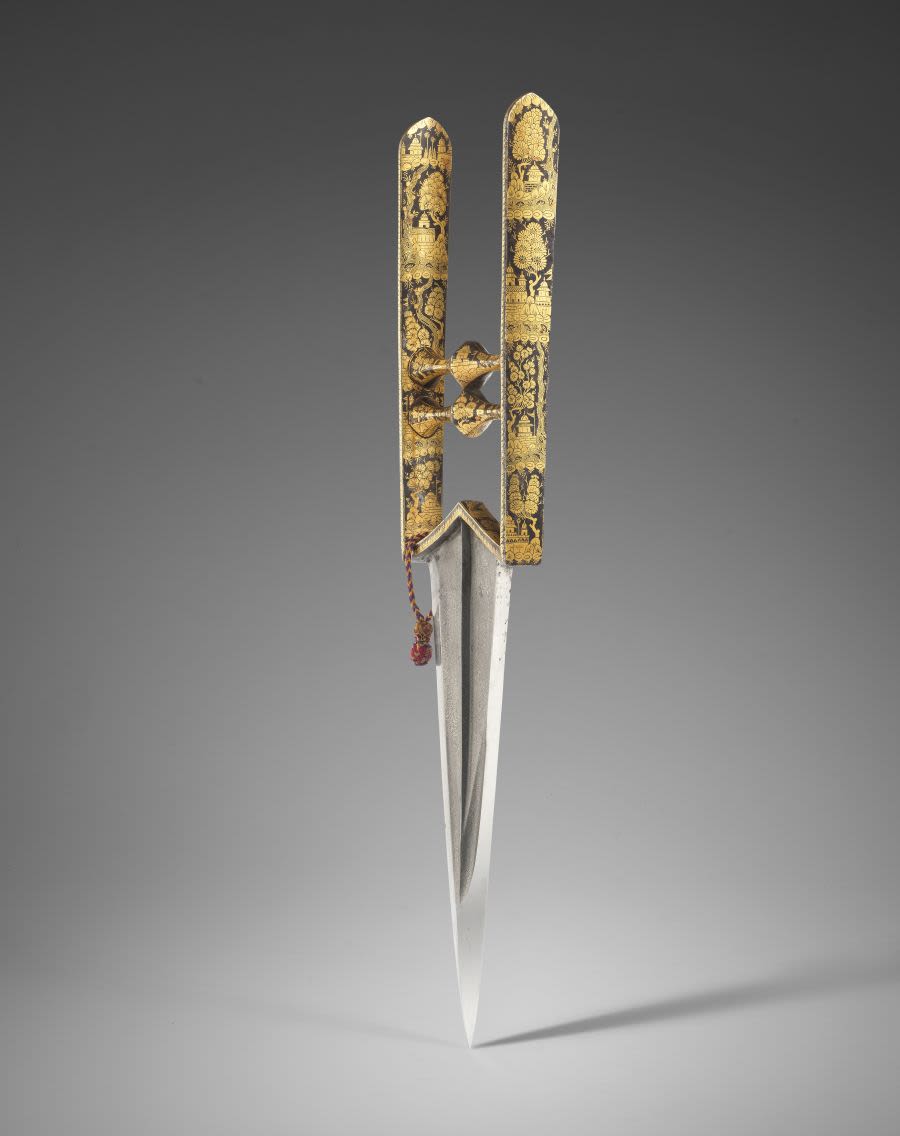
A fine gold-inlaid watered-steel push dagger (katar) India, 17th/ 18th century. Estimate: £20,000 - £30,000.
A fine gold-inlaid watered-steel push dagger (katar) India, 17th/ 18th century. Estimate: £20,000 - £30,000.
Push daggers (katars) were a popular form of weapon throughout India. Also known as jamadhar (death tooth), they were used in close combat, their thick points designed to puncture armour. Ornate gold and gem-set katars were an indication of the wealth and status of the highest members of society; such katars are often represented on the personage of royalty and courtiers in 17th – 19th century Indian miniatures.
This particular katar is remarkable due to its exceptionally fine gold-inlaid decoration. Depicting pavilions in a landscape connected by meandering streams, the decoration exemplifies the Mughal preoccupation with nature and conjures images of palaces and cool leisure gardens, the beautiful and serene scenes providing a sharp juxtaposition to the function of the weapon itself.
Lot 40
A rare ‘Ganja-jamuna’ mail suit reputedly from the armoury of Maharao Raja Ram Singh of Bundi, Rajasthan, India, circa 1860

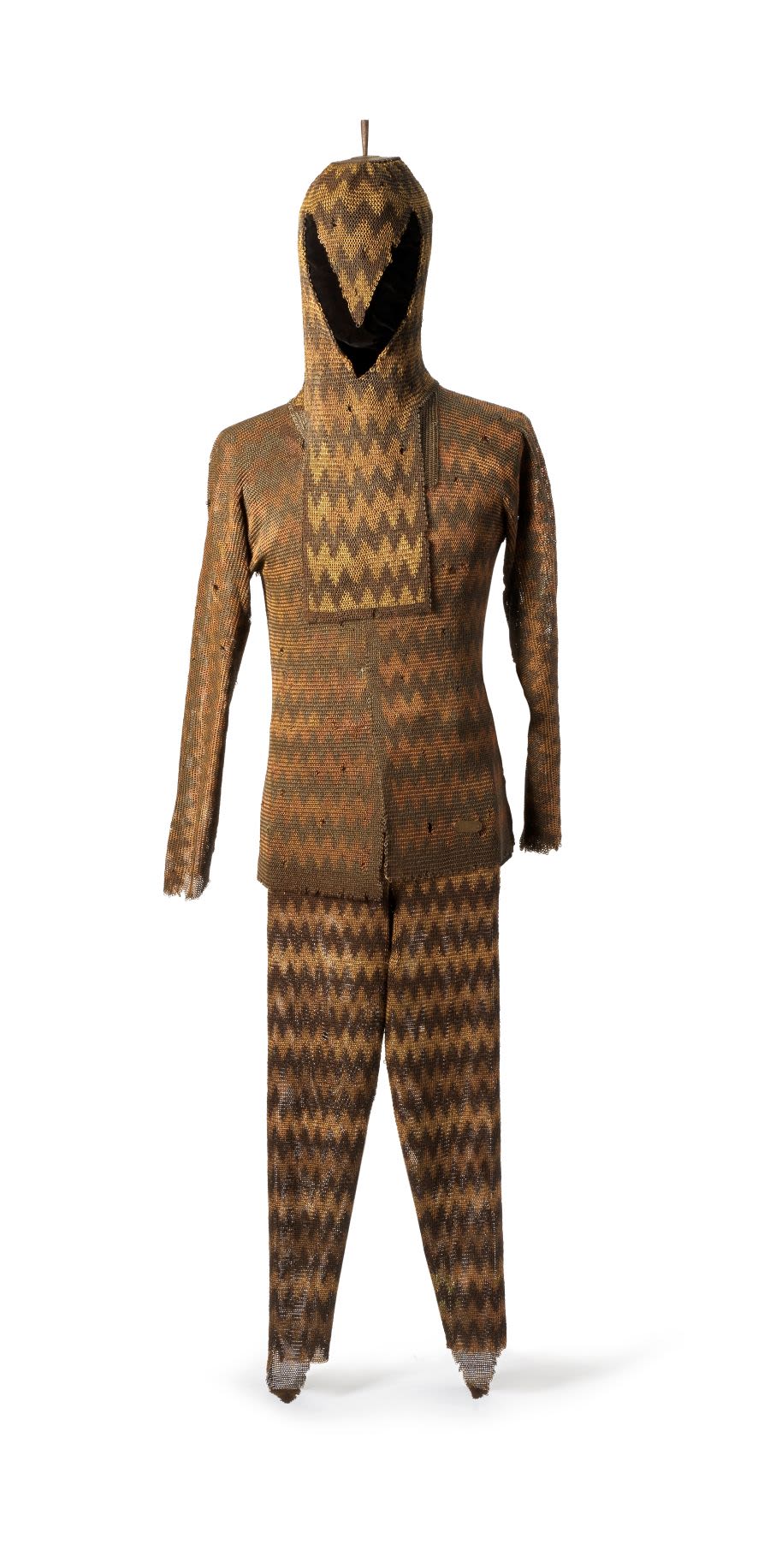
A rare 'Ganja-jamuna' mail suit reputedly from the armoury of Maharao Raja Ram Singh of Bundi (reg. 1821-1889) Rajasthan, India, circa 1860. Estimate: £25,000 - £35,000.
A rare 'Ganja-jamuna' mail suit reputedly from the armoury of Maharao Raja Ram Singh of Bundi (reg. 1821-1889) Rajasthan, India, circa 1860. Estimate: £25,000 - £35,000.
The striking zig-zag patterning of this mail suit is a fine and rare example of a technique known as ‘Ganga-Jamuna’, which uses contrasting metal rings to represent the churning waters at the confluence of two of India’s most sacred rivers, the Ganges and the Yamuna. The use of thousands of these small rings means that the suit is extremely flexible and light, resulting in a beautiful yet also highly functional piece of armour. The mail suit is also notable in that it bears a brass plaque with the name of Maharao Raja Ram Singh of Bundi (reg. 1821–1889), indicating that it belonged to the armoury of the ruler.
Stay updated with our auctions. Sign up to receive your weekly newsletter of global auctions, stories and more. Subscribe now
Lot 41
A rare gold koftgari steel combination percussion pistol push dagger (katar), India, 19th century

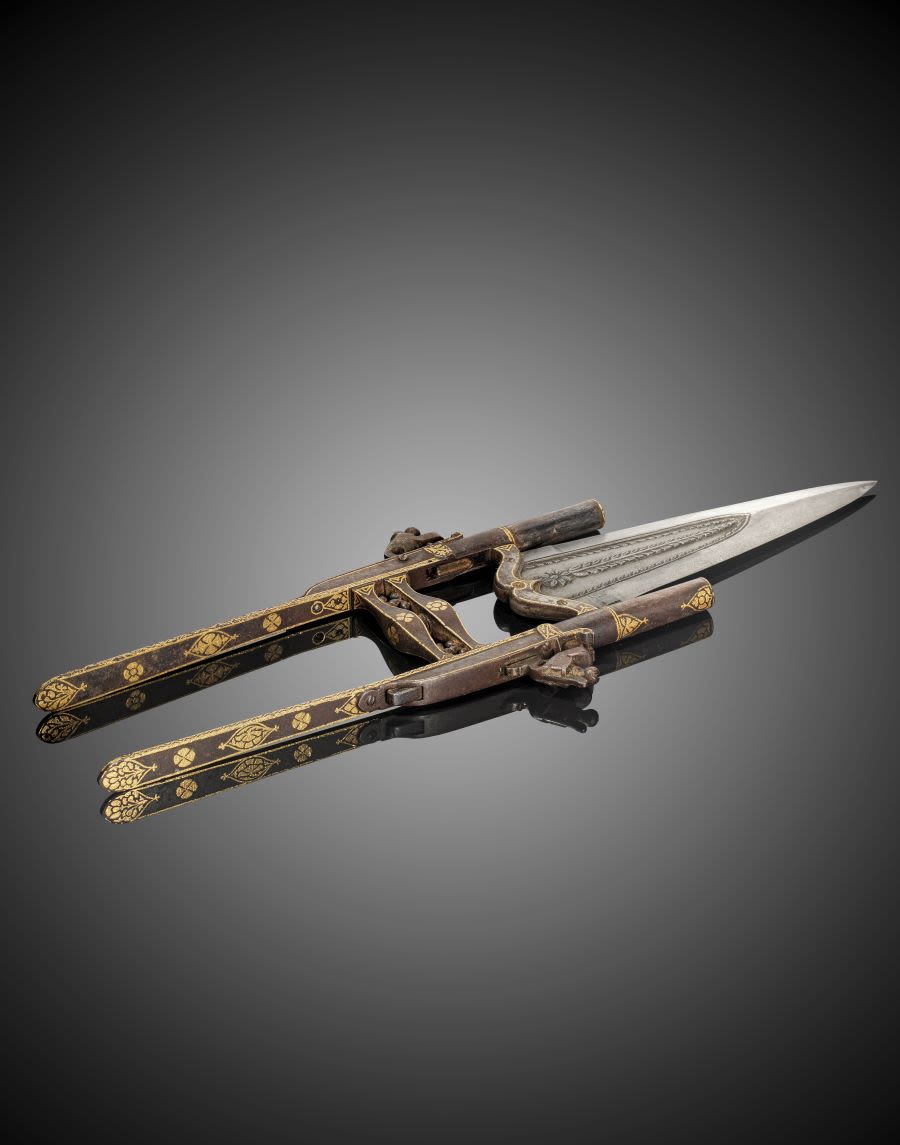
A rare gold koftgari steel combination percussion pistol push dagger (katar) India, 19th century. Estimate: £15,000 - £20,000.
A rare gold koftgari steel combination percussion pistol push dagger (katar) India, 19th century. Estimate: £15,000 - £20,000.
This extremely rare katar combines the deathly armour-piercing tip of the push dagger with twin percussion pistols, resulting in a formidable weapon at both close and longer range.
The blade of this unusual weapon relates to katars produced in Bundi during the 19th century, the ruler Maharao Raja Ram Singh (reg. 1821–1889) having presented a similar example to King Edward VII, the then Prince of Wales, whilst he was on tour in India in 1875–76, now in the Royal Collection.
Lot 33
A fine horn and gilt-brass mounted officer’s sword (kilij) in the Tipuesque Fashion, India, circa 1800

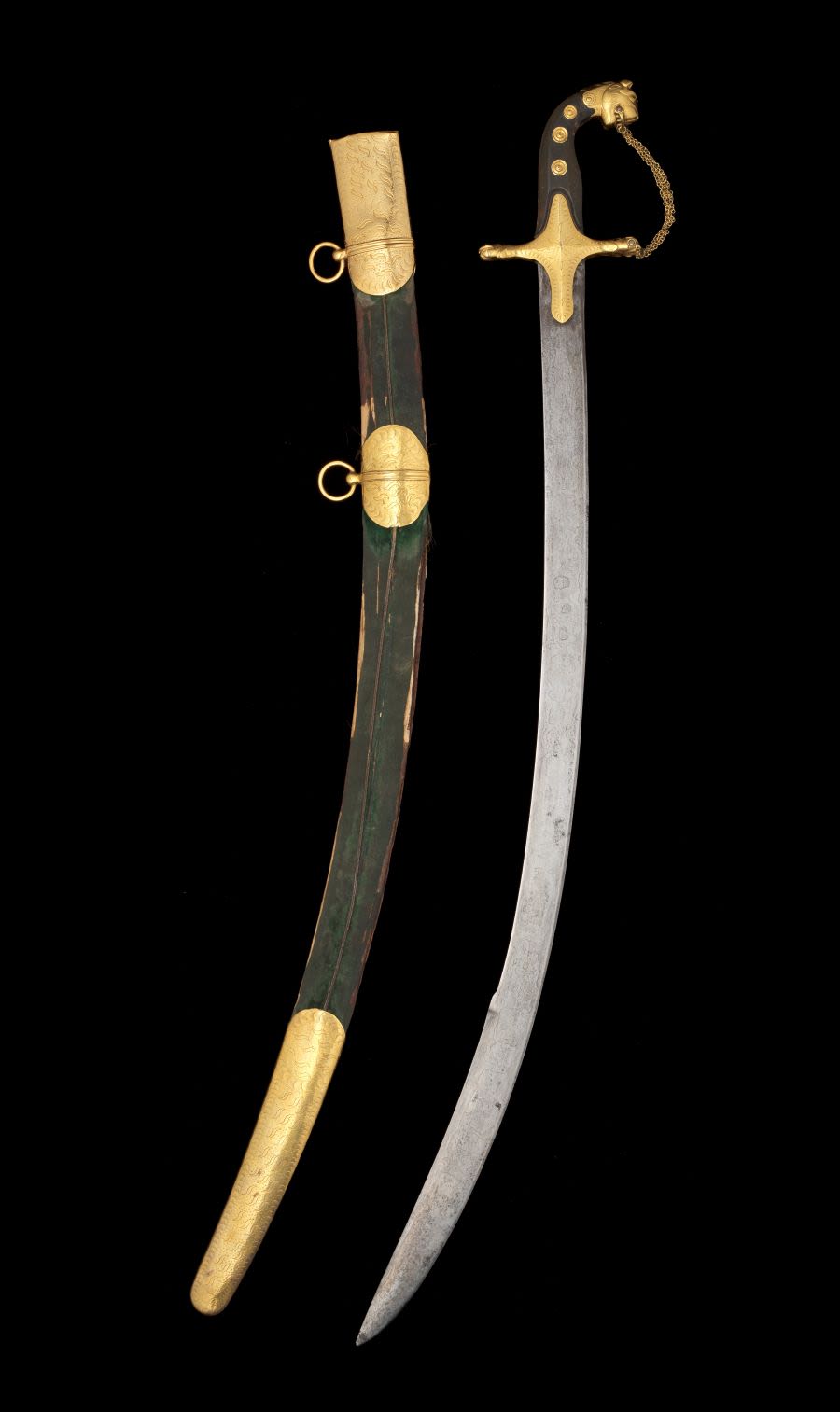
A fine horn and gilt-brass mounted officer's sword (kilij) in the Tipuesque Fashion India, circa 1800. Estimate: £45,000 - £55,000.
A fine horn and gilt-brass mounted officer's sword (kilij) in the Tipuesque Fashion India, circa 1800. Estimate: £45,000 - £55,000.
Having defeated Tipu Sultan, The Tiger of Mysore, at Seringapatam in 1799, the victorious British proceeded to distribute the recovered arms and armour along with the rest of the objects they found.
This sword was likely made for an officer who, having failed to acquire a sword from the Seringapatam loot, decided to commission his own using the captured swords for inspiration. It therefore features elements commonly found on weapons related to Tipu, whose personal emblem was the tiger, including bubri (tiger-stripe) motifs and a pommel in the form of a tiger head. As such, the sword provides a fascinating insight into the importance and status of ownership of one of the Seringapatam weapons.
Lot 8
A fine Ottoman gold-inlaid watered-steel sword (kilij), Turkey, the blade 16th century, the hilt 17th century

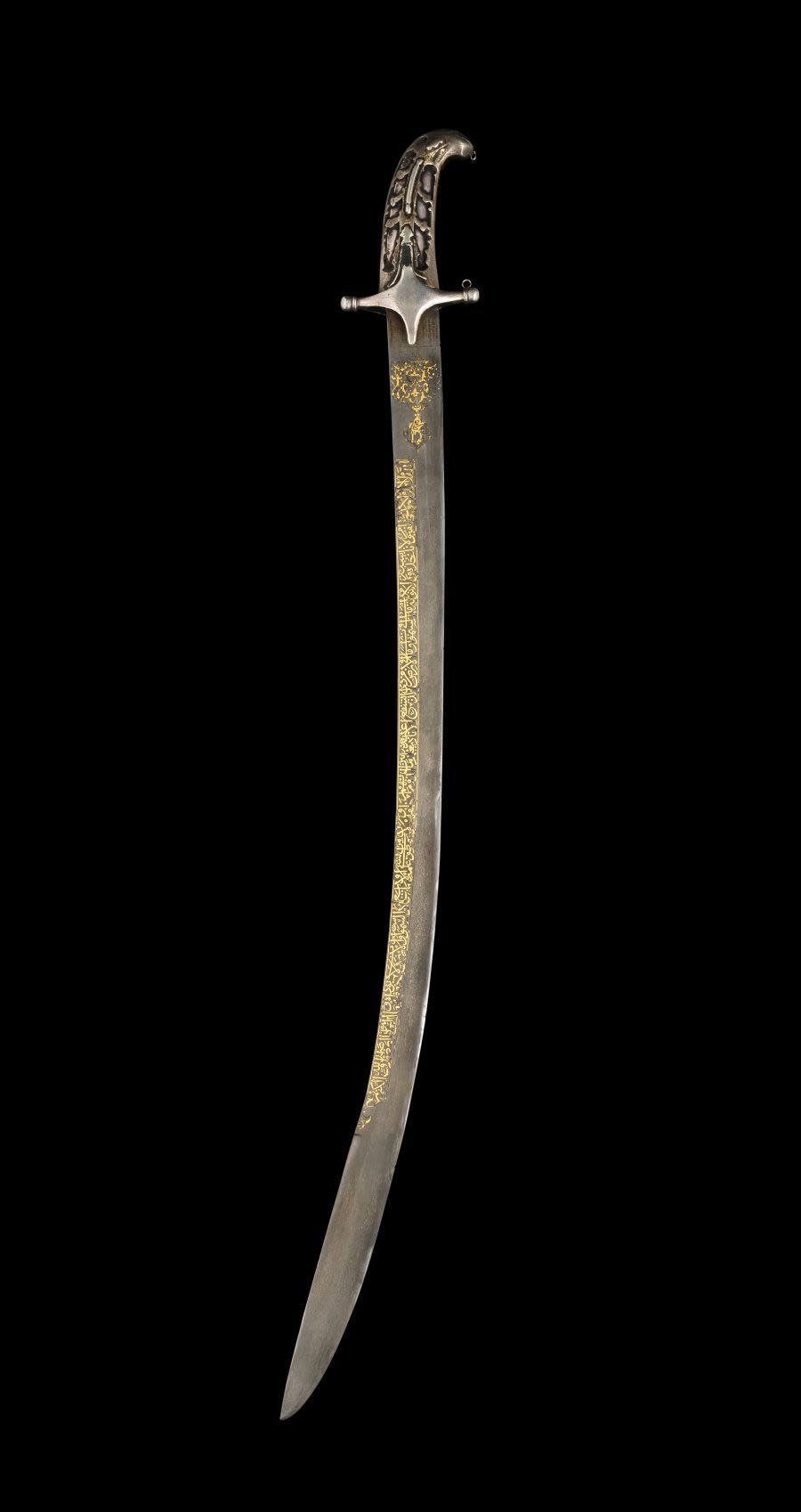
A fine Ottoman gold-inlaid watered-steel sword (kilij) Turkey, the blade 16th Century, the hilt 17th Century. Estimate: £60,000 - £80,000.
A fine Ottoman gold-inlaid watered-steel sword (kilij) Turkey, the blade 16th Century, the hilt 17th Century. Estimate: £60,000 - £80,000.
The variety, quality and condition of the gold-inlaid decoration on the blade of this sword marks the piece as an exceptional example of 16th century Ottoman craftsmanship.
The inscription running along the spine follows a long-standing tradition dating back to the early Mamluk period of incorporating long panels of text, the calligraphy on our sword having been executed in elegant thuluth script. The sword combines this text with inscription-filled cartouches and sweeping arabesques, all within a finely watered steel blade, resulting in an extraordinary piece of Ottoman weaponry.
Register to bid in Forged in Faith: The Mohammed Khalil Collection of Islamic Arms and Armour
This extraordinary collection showcases rare examples from some of the most influential Islamic kingdoms, including the Mamluk, Seljuk, Ilkhanid, Ottoman, Safavid, and Mughal dynasties. Browse all lots and register to bid today.
For the latest news and auction highlights, follow @islamic_indian on Instagram
 Built with Shorthand