
Unamused
Max Ernst was never short of a prodigiously gifted muse. But Marie-Berthe Aurenche seems particularly unworthy of neglect, writes Mark Hudson

A striking young woman looks back at us, wide-eyed yet quizzical, as she cradles in the crook of her arm the head of one of the most influential artists of the 20th century: Max Ernst. He, in turn, has his arm around the neck of photographer Lee Miller. She sits sprawled on top of her fellow snapper Man Ray – at that time, her lover – who took this now iconic photograph.
The latter three are, of course, all household names, pivotal figures in one of the great 20th-century art movements: Surrealism. But it’s the person at the head of this self-consciously absurd human chain who commands our attention, the young woman with the big, clear eyes and bob of tousled curls. She’s the one who seems to be dictating what’s happening. But who is she?
Born in 1906, Marie-Berthe Aurenche was a painter and a highly visible figure on the Paris Surrealist scene in its late Twenties/early Thirties heyday, and from 1927 to 1936 she was married to Max Ernst. As Margaret Hooks observes in her fascinating study of Ernst’s many amorous attachments – Surreal Lovers: eight women integral to the life of Max Ernst – Aurenche became for the Surrealists the embodiment of that peculiarly French concept, the “femme enfant”: the child-woman, who “whether 20, 40 or 60 retains the radiant grace of childhood.”
Yet in recent years, with long-neglected 20th-century women artists steadily emerging from the shadows of history to assume ever-greater prominence in our sense of that pivotal era, Aurenche has barely been mentioned. To take one notable example, The Milk of Dreams – the official exhibition at the 2022 Venice Biennale – took its starting point from a display of work by lesser-known women Surrealists. Its title came from a children’s book by the British painter Leonora Carrington. While Carrington was long regarded as a peripheral Surrealist, notable mainly for her relationship with Max Ernst (yes, another one), her significance is now widely recognised. Aurenche, meanwhile, was nowhere to be seen.

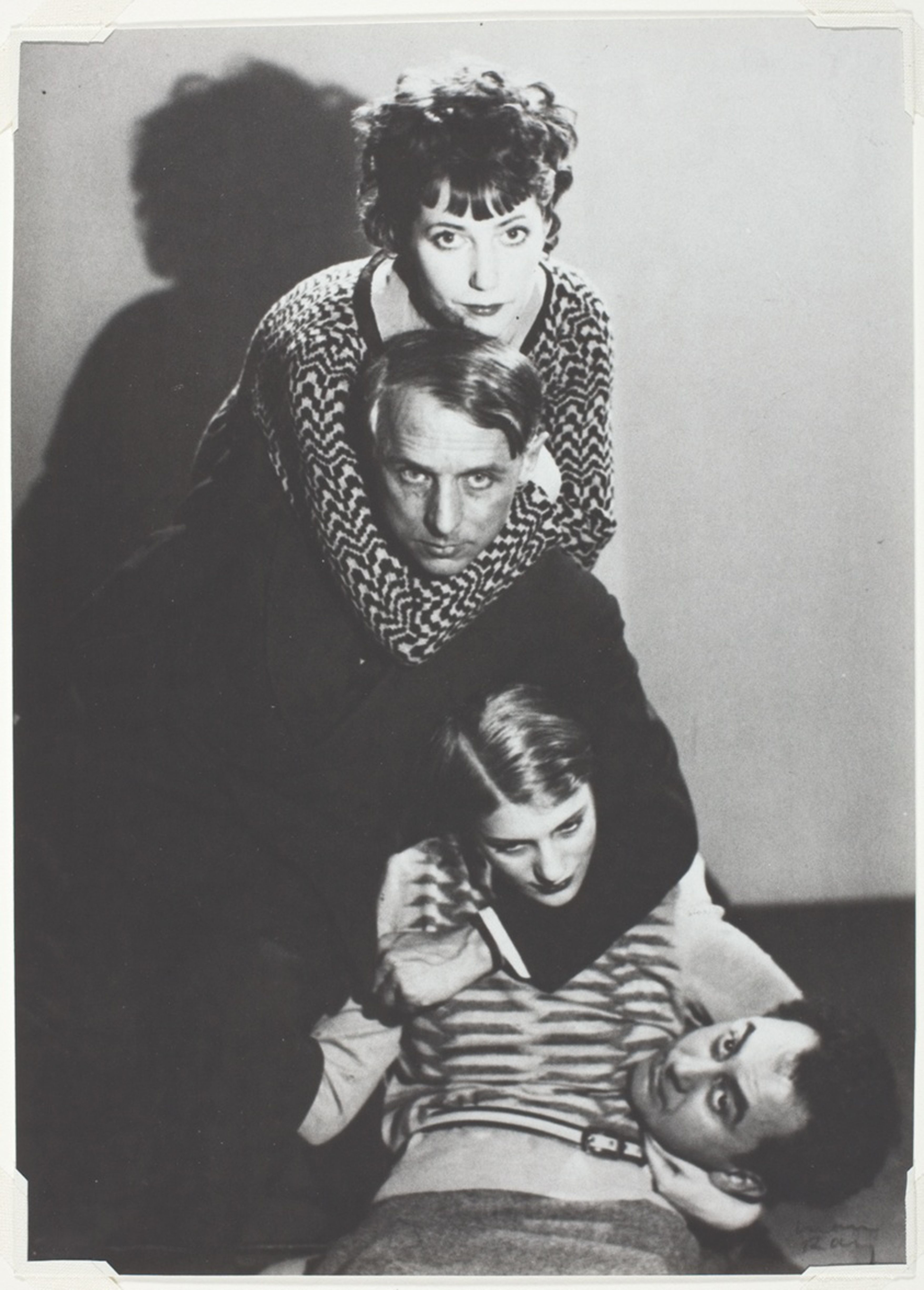
Group portrait of (from top to bottom) Aurenche, Ernst, Lee Miller and Man Ray, who took the photograph c.1931-33. Photo: © Getty Images / Artwork: © Man Ray 2015 Trust / DACS, London
Group portrait of (from top to bottom) Aurenche, Ernst, Lee Miller and Man Ray, who took the photograph c.1931-33. Photo: © Getty Images / Artwork: © Man Ray 2015 Trust / DACS, London

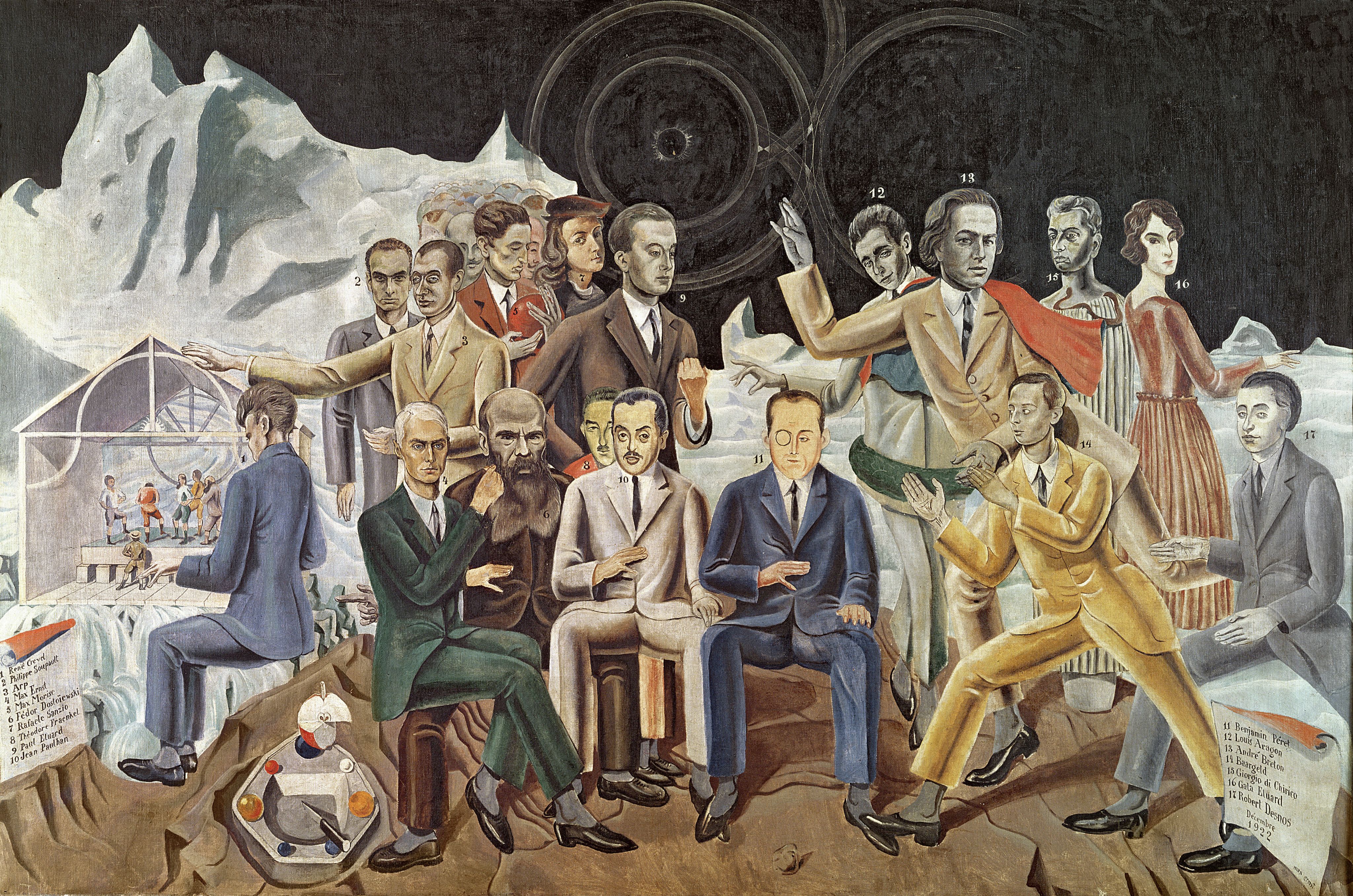
Max Ernst, Au Rendez-vous des amis, 1922. Photo: © Bridgeman Images / Artwork: © ADAGP, Paris and DACS, London 2022
Max Ernst, Au Rendez-vous des amis, 1922. Photo: © Bridgeman Images / Artwork: © ADAGP, Paris and DACS, London 2022

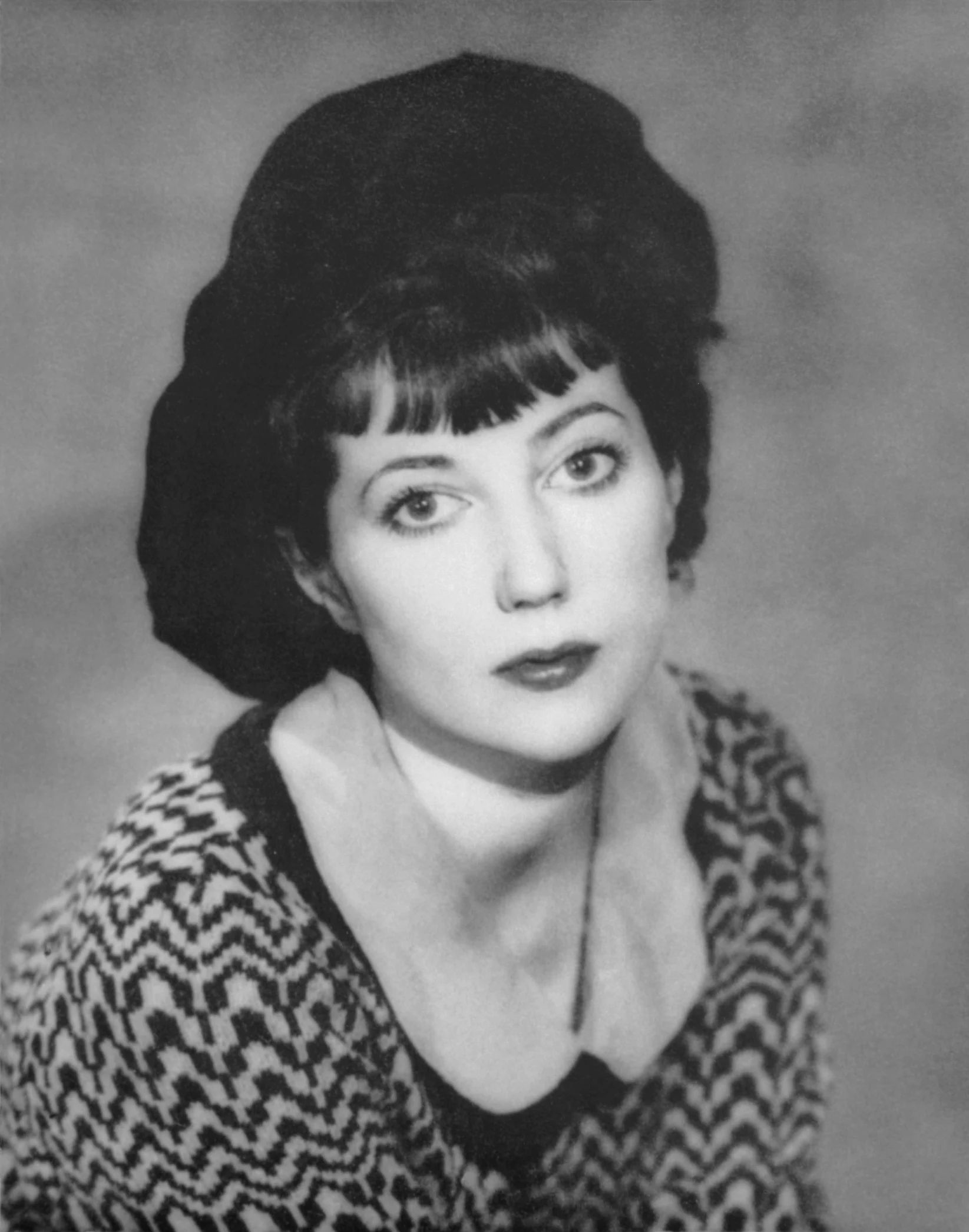
Man Ray, Marie-Berthe Aurenche, 1930. Photo: © manrayphoto.com Artwork: © Man Ray 2015 Trust / DACS, London. Image : Telimage, Paris
Man Ray, Marie-Berthe Aurenche, 1930. Photo: © manrayphoto.com Artwork: © Man Ray 2015 Trust / DACS, London. Image : Telimage, Paris

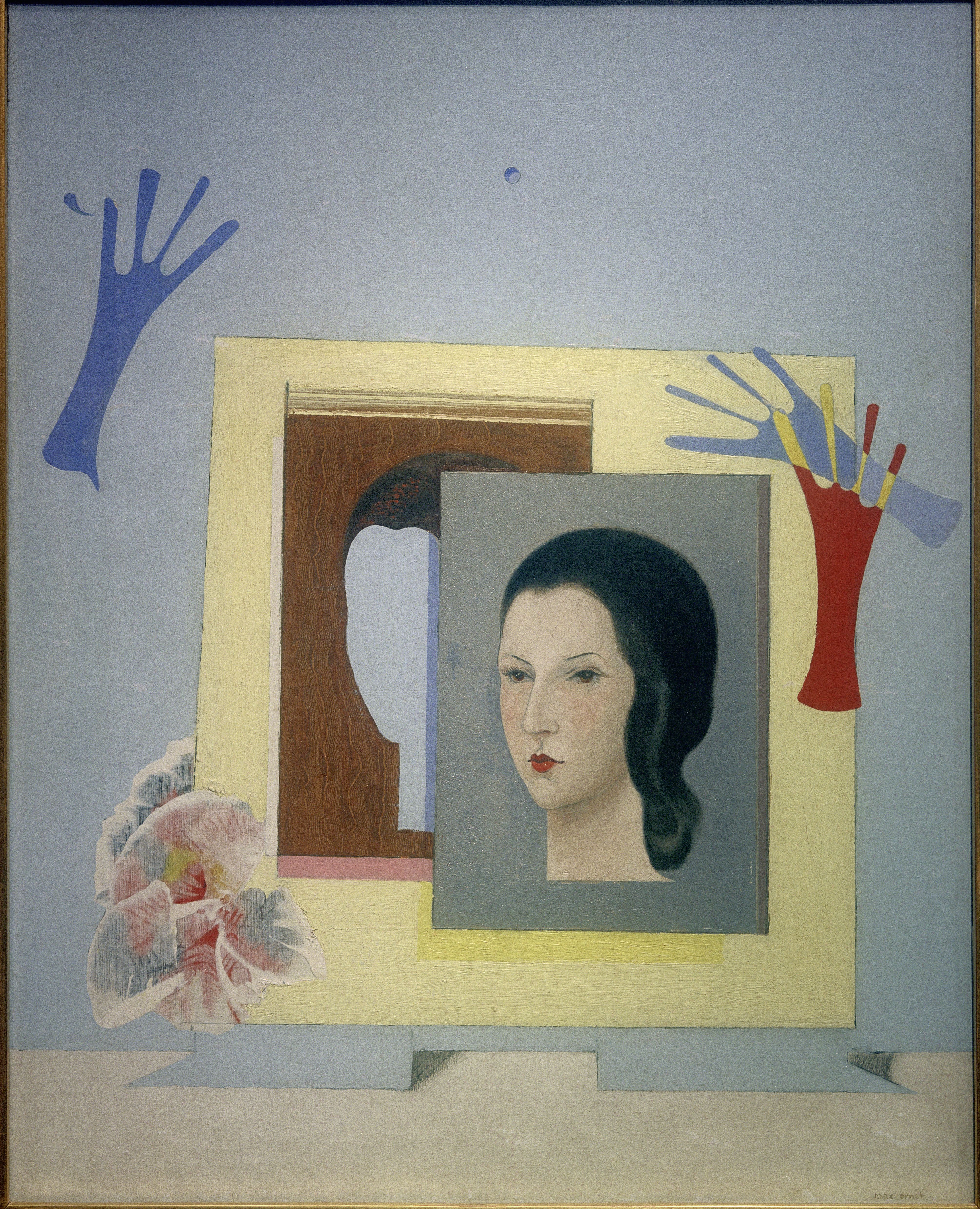
Max Ernst, Portrait of Valentine, 1932. Private collection, Vienna.
Max Ernst, Portrait of Valentine, 1932. Private collection, Vienna.
Indeed, considering her prominence on a scene whose every event has been endlessly raked over in books and films, remarkably little information is available about Aurenche. The few paintings attributed to her, mostly impressionistic still lives, offer few clues.
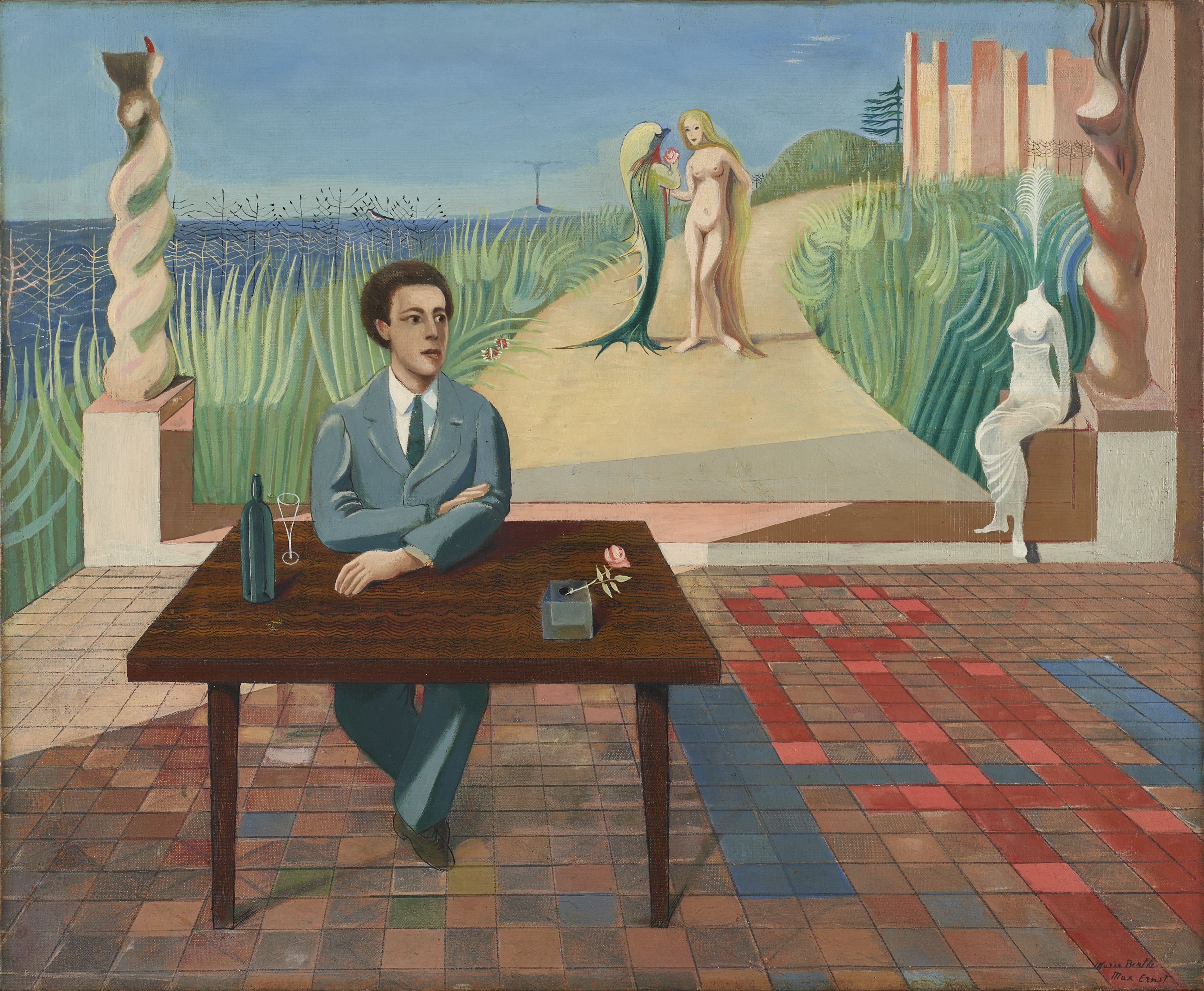
Now, however, Bonhams Cornette de Saint Cyr is offering in its Paris sale La Révolution Surréaliste in March, an enigmatic portrait of the movement’s formidable founder André Breton, a work that has changed its notional authorship four times since it was painted in 1930. It is now understood to be a collaborative work – “of mutual complementation and expression” – created on equal terms by Aurenche and Ernst. It’s a painting that tells us a great deal about its creators and their tormented relationship.
Max Ernst is the most elusive and enigmatic of the Surrealists. His aquiline features and inscrutable half-smile give little away in photographs. And where fellow luminaries such as Dalí, Magritte and Man Ray each have an instantly recognisable signature style, Ernst – the movement’s great formal innovator and conceptualist – is hard to pin down, as he jumps between forms and mediums: sinister collage, frottage, grattage – laying a paint-smeared canvas over a textured object and scraping it to create interesting and unexpected surfaces – as well as painting and sculpture.
His emotional life followed a similarly freeform pattern of marriages and affairs with some of the key women artists of the 20th century (Méret Oppenheim, Leonora Carrington, Dorothea Tanning, Leonor Fini), as well as with the most influential collector of the era (Peggy Guggenheim).
At the time of his first meeting with Aurenche in 1927, Ernst was nearing 40, divorced from his first wife, the German art historian Luise Straus, and on the rebound from a bruising ménage à trois with the poet Paul Éluard and his wife Gala – later Mrs Salvador Dalí.
Aurenche was a 19-year-old gallery assistant, a fun-loving and vivacious dropout from convent school with a wilful streak, hanging around on the fringes of the Surrealist scene.
Ernst was immediately entranced, and the pair plunged into a passionate relationship. Aurenche’s father, a conservative civil servant, horrified that his still under-age daughter had taken up with an “atheist pornographer” twice her age, called the police. Ernst and Aurenche escaped to a remote village in western Brittany, but Ernst was soon writing to the father begging for his daughter’s hand in marriage. They were married in April 1927 in the fashionable church of Notre-Dame des Prés – a huge compromise on the part of the vehemently anti-clerical Ernst. His son Jimmy, then seven, observed his father’s patient devotion to his new wife when the pair visited Cologne, noting in his memoirs that Aurenche reminded him of the “exotic waterbirds I had seen at the zoo, with her green eyes that were fast-moving, yet gentle.”
When asked in a report on ‘Surrealist Research on Sexuality’ if he believed in monogamy, Ernst, the great proponent of free love and the undermining of all bourgeois norms, replied, “Yes, without any doubt.”
Yet within a mere two years of their marriage, Ernst was hitting the gossip columns for “abducting” another under-age woman, Florence Pitron. While Aurenche closed the affair down as soon as she became aware of it, it marked the start of a pattern of behaviour that was to come close to destroying her.
Ernst, for all his espousal of avant-gardism in every area of life, can appear brutally indifferent to the emotional needs of others. Yet he was often generous in encouraging his partners’ artistic ambitions, and frequently collaborated with them.
In their painting Loplop Paradise, Aurenche depicts Ernst in the role of his self-invented “shamanic guide” Loplop, Father Superior of the Birds – he was obsessed with birds. He looks far younger than his 40 years, smartly suited with enormous blue eyes. In the background, a bare-breasted young woman – looking very like Aurenche – rises out of tropical vegetation that is reminiscent of the dense forests in Ernst’s paintings, but less threatening. Surreal beings – a friendly lion and a tiger with a man’s head – look on. Ernst’s contribution to the painting isn’t easy to pick apart at this distance in history.
But the painting that comes closest to the ideal of genuine collaboration is the Portrait of André Breton. The formidable founder and leader of the Surrealists – who famously expelled members for the slightest infringement of the movement’s tenets, however he chose to define them at any given moment – is shown seated at the seaside and in a disarmingly serene mood.
When first exhibited at the Galerie Pierre Colle in Paris in 1933, the painting was presented as Aurenche’s sole work. Breton claimed it was by both artists in an essay in 1960, but later – in 1965 – attributed the picture solely to Ernst. That judgment was upheld in a 2004 exhibition in La Coruña. Now, however, the painting has been confirmed as a collaborative work by Dr Jürgen Pech, director of the Max Ernst Museum in Brühl.

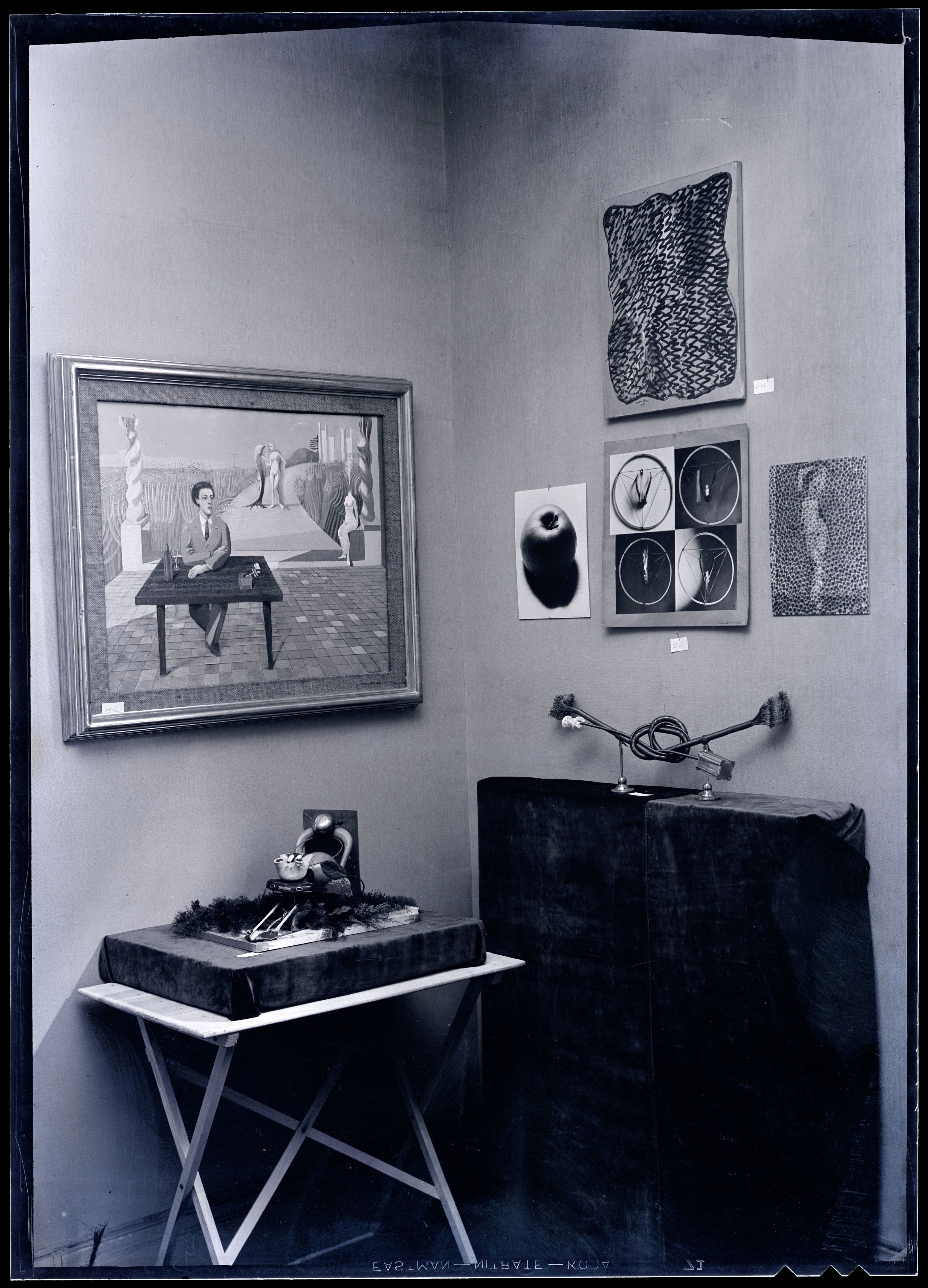
Man Ray (1890-1976), Exposition surréaliste à la Galerie Pierre Colle, 7-18 June 1933. Photo: © Centre Pompidou, MNAM-CCI, Dist. RMN-Grand Palais / image Centre Pompidou, MNAM-CCI Artwork: © Man Ray 2015 Trust / DACS, London
Man Ray (1890-1976), Exposition surréaliste à la Galerie Pierre Colle, 7-18 June 1933. Photo: © Centre Pompidou, MNAM-CCI, Dist. RMN-Grand Palais / image Centre Pompidou, MNAM-CCI Artwork: © Man Ray 2015 Trust / DACS, London

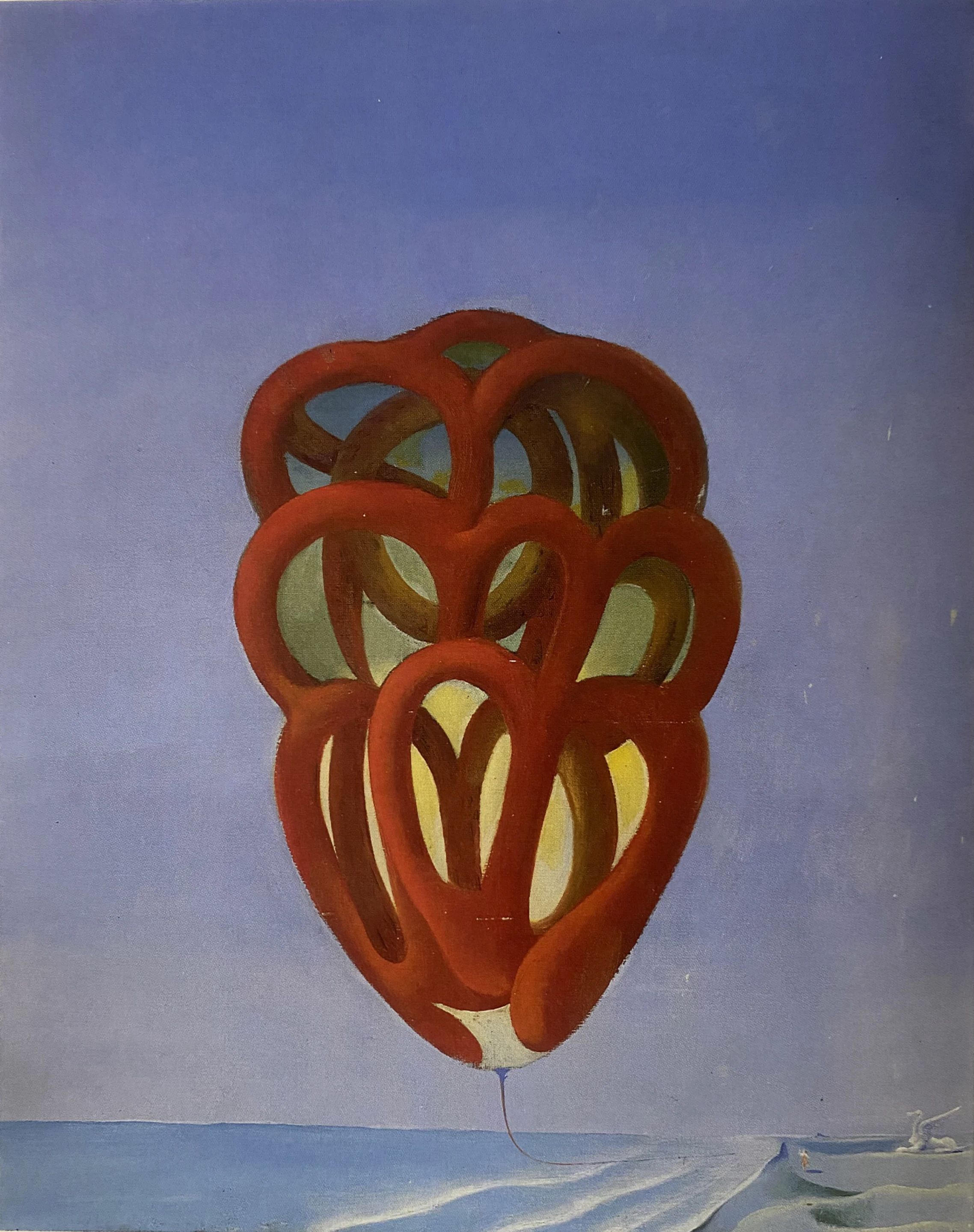
Ernst and Aurenche’s oil painting Ballon-Coeur, 1930
Ernst and Aurenche’s oil painting Ballon-Coeur, 1930

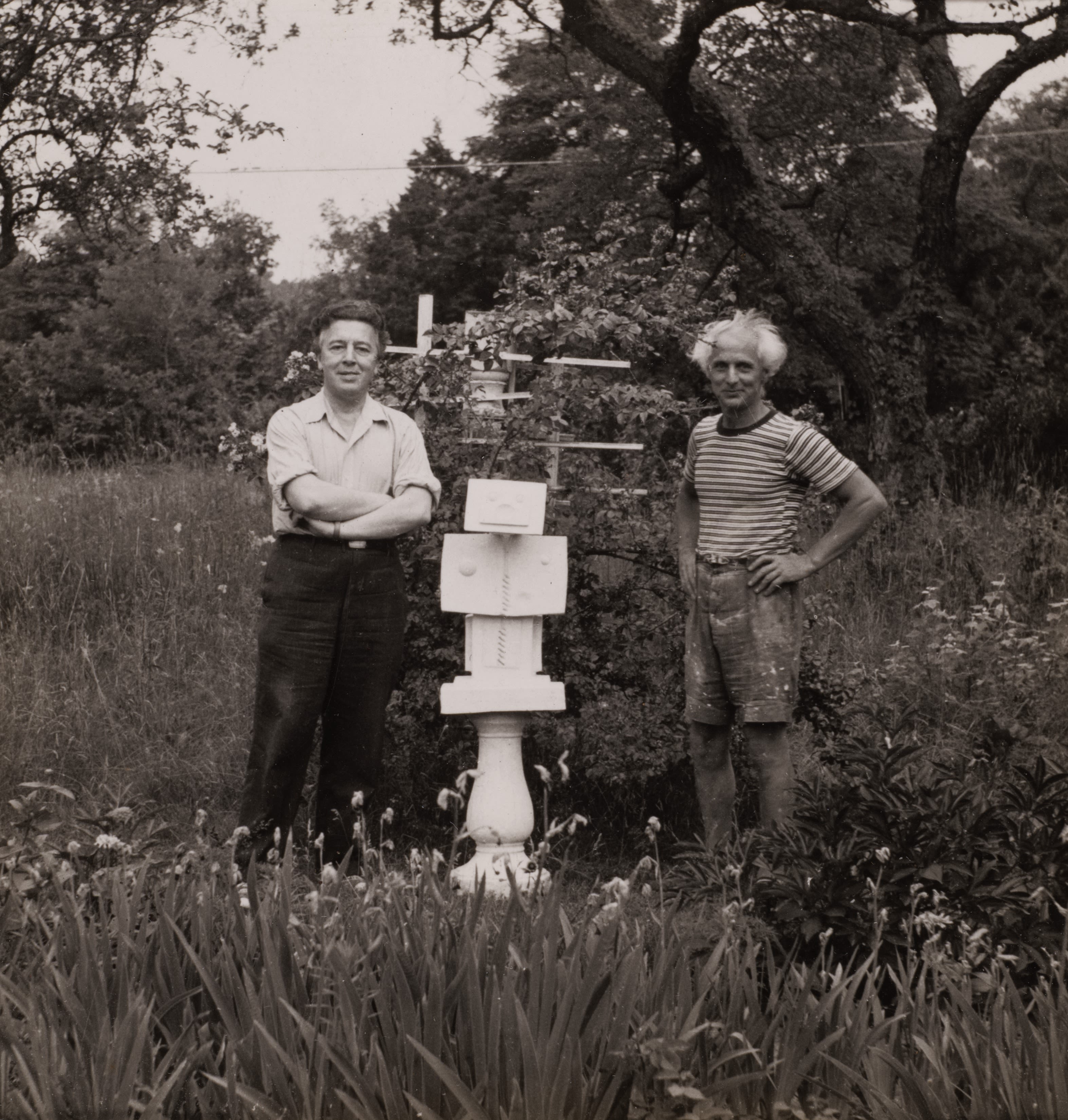
André Breton (1896-1966), André Breton, an anxious friend and Max Ernst, 1945. The Art Institute of Chicago, US. / Photo: © Bridgeman Images
André Breton (1896-1966), André Breton, an anxious friend and Max Ernst, 1945. The Art Institute of Chicago, US. / Photo: © Bridgeman Images
While Breton criticised Ernst for allowing Aurenche to “nanny” him – doubtless for having the impertinence to object to his rampant womanising – Aurenche enjoyed a surprisingly warm relationship with this notoriously tricky character. It was certainly far more straightforward than Ernst and Breton’s creatively productive, but often tetchy, involvement.
The anomalous calm of the painting’s composition and atmosphere feels, then, very much Aurenche’s creation. Rather than dominating the proceedings with his monstrous ego, Breton sits calmly at a table in the painting’s middle ground, on a tiled terrace before a sun-drenched Mediterranean headland. Surreal beings, including a naked blonde woman and a bird-fish figure, both believed to be by Ernst, confer on a path far behind Breton, while a headless woman sits on a pediment beside one of two twisting columns. Yet these presences aren’t ominous, as we’d expect in a painting entirely by Ernst: the headless figure feels more statue than cadaver. Breton – in his smart grey suit, with wine bottle and glass on the table in front of him – looks off to the right with a quizzical expression, drawn, Pech believes, from a 1927 photograph by Henri Manuel that was illustrated in Breton’s 1928 novel Nadja, which ends with the sentence “beauty will be CONVULSIVE or will not be at all.”
There’s nothing remotely convulsive, however, about Portrait of Andre Breton. While Breton’s expression – Ernst’s work, Pech tells us – suggests a faint, pensive vulnerability not present in Manuel’s photograph, this is a Surrealist idyll that evokes, for all its quirky touches, a sense of timeless quasi-classical harmony, rather than tormented dislocation. It’s an image of the Surrealist founder painted by one of the movement’s great artists in tandem with his new wife, who is directing the proceedings, as an expression of love, friendship and collective creativity.
The idyll didn’t, of course, last. Aurenche longed for children, lapsed into depression and had a crisis about her lost Catholic faith after her mother’s death.
Ernst, who already had a son, was vehemently opposed to starting a family, maintaining that Aurenche was “ruining everything”.
He embarked on affairs with two leading surrealists: the Swiss artist and photographer Méret Oppenheim and the Italian painter Leonor Fini. Both women had the sense to break free of these liaisons. But Aurenche’s behaviour became increasingly erratic.
When Ernst travelled to London for his first British solo exhibition at the Mayor Gallery in 1937, he at least had enough residual feeling for Aurenche to phone her and urge her to join him for the opening. But when Aurenche arrived at Victoria Station, Ernst and his friends were horrified at the drained and hollow figure limping towards them in a slashed dress, beneath which she was clearly not wearing anything else. When quizzed about her state, Aurenche muttered about being unworthy and having “defiled” herself, and begged for the services of a French-speaking Catholic priest for confession. Responding to Ernst’s horror at starting a family, she had had a botched abortion that destroyed her uterus, leaving her unlikely ever to have children. With her faith and future lost, she was on the verge of total collapse.
Her discovery, however, that Ernst was involved with yet another talented painter who was barely an adult, Leonora Carrington, made her fight back. There were fights in some of Paris’s most famous cafés, with Aurenche throwing cups, spoons and anything else to hand. Ernst, meanwhile, pressed for a divorce in his native Germany – which is surprising given his pariah status under the Nazis as a ‘degenerate’ artist. Aurenche, who made two suicide attempts, would never recognise the legality of this ruling. But, either way, her relationship with Ernst was over.
Aurenche’s finest moment came in the Second World War, when she took up with the great Russian Expressionist painter Chaïm Soutine, whose principal appeal seems to have been that he was “consistently kind and gentle”. She found Soutine shelter from the occupying German forces, encouraged his art and stood by him when he died of a perforated ulcer, while on the run from the Gestapo in 1943.
Aurenche herself lived on until 1960, taking unsuitable lovers, drinking too much and making one last unsuccessful attempt to prove she was still married to Ernst, before succumbing to cirrhosis of the liver – not suicide as has widely been claimed.
Aurenche’s tragedy is summed up in a comment from the woman who is often regarded as her nemesis, Leonora Carrington, quoted by Margaret Hooks in Surreal Lovers: the suggestion that “several women in the surrealist movement had a somewhat ‘crazy’ persona thrust upon them by their male counterparts.” Yet, for all that she had insanity effectively forced on her, Marie-Berthe Aurenche did produce at least one remarkable – and admirably sane – painting.

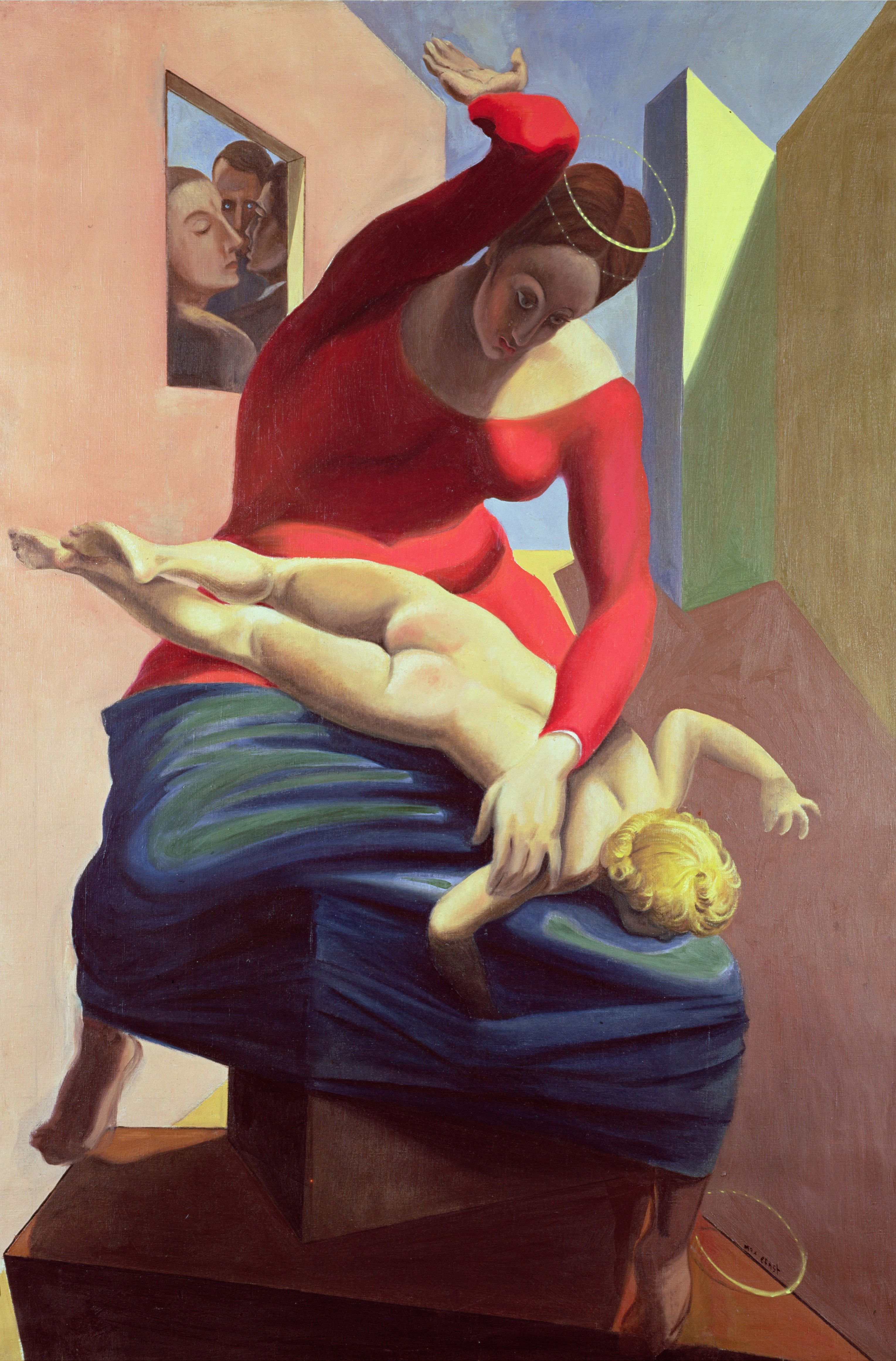
Max Ernst, La Vierge corrigeant l’enfant Jésus devant trois témoins: André Breton, Paul Éluard et le peintre, 1926. Photo: © Bridgeman Images / Artwork: © ADAGP, Paris and DACS, London 2022.
Max Ernst, La Vierge corrigeant l’enfant Jésus devant trois témoins: André Breton, Paul Éluard et le peintre, 1926. Photo: © Bridgeman Images / Artwork: © ADAGP, Paris and DACS, London 2022.

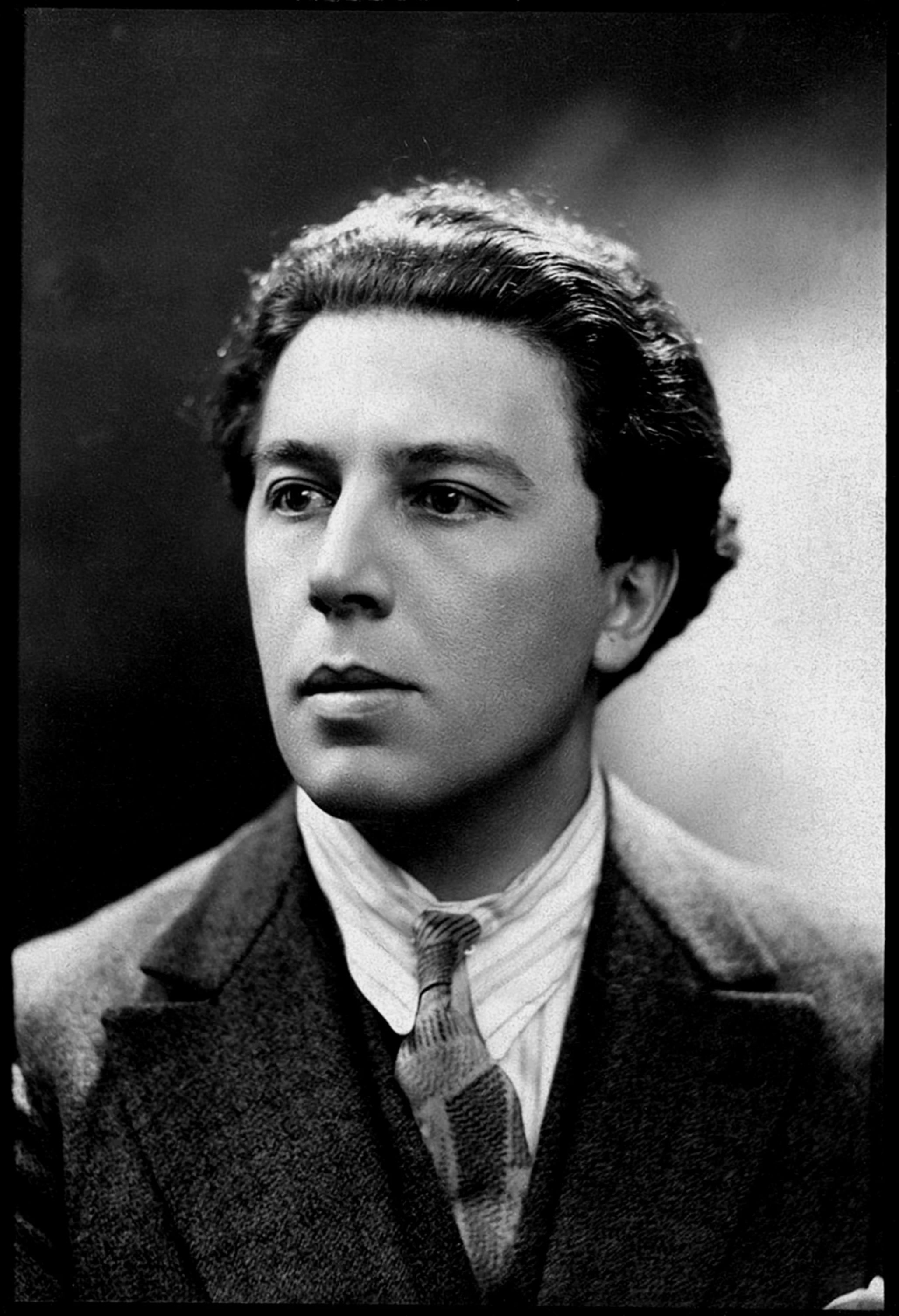
Photograph of André Breton. Photo: © akg-images
Photograph of André Breton. Photo: © akg-images

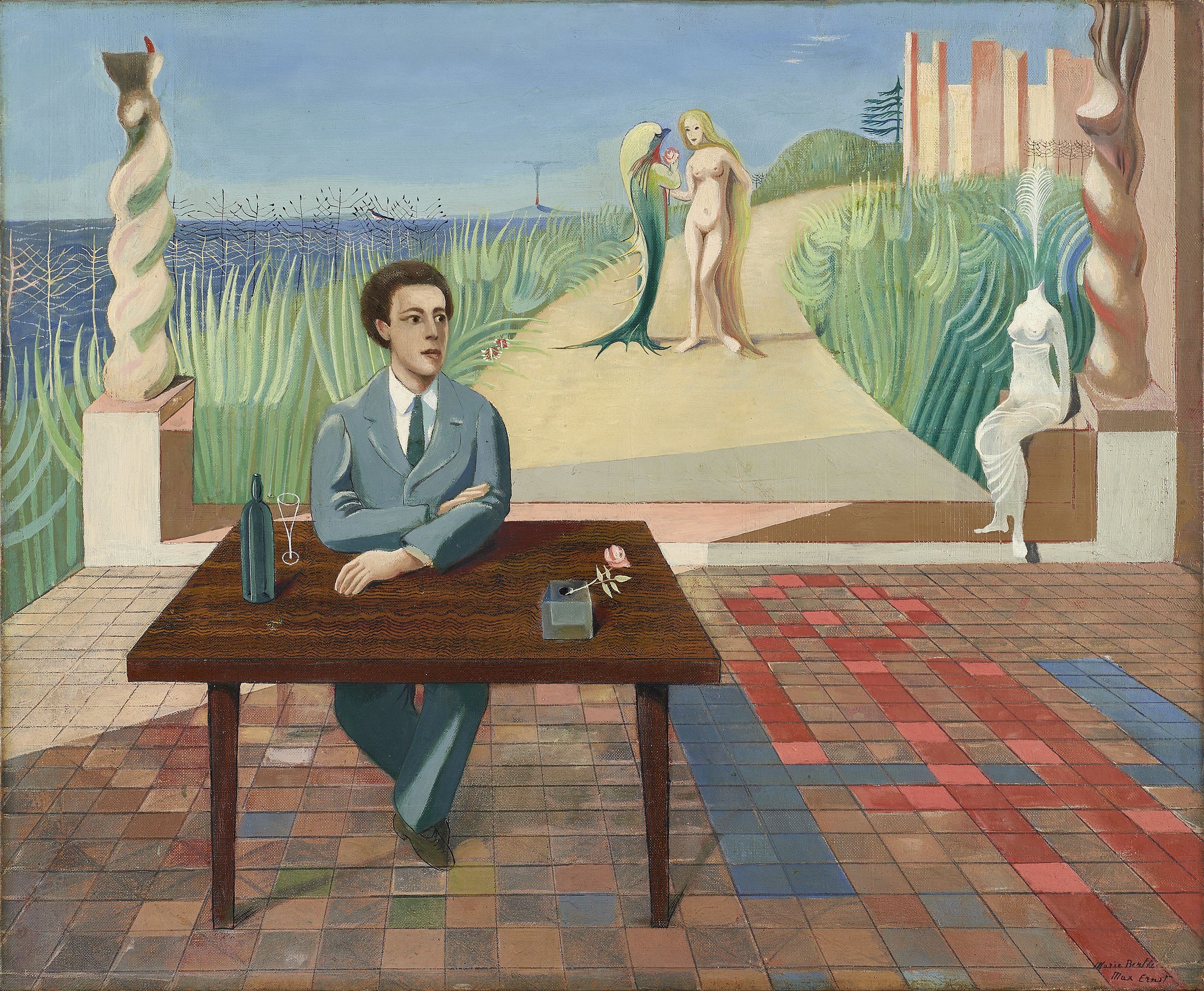
Max Ernst (1891-1976) and Marie-Berthe Aurenche (1906-1960) Portrait d’André Breton, 1930. Estimate: €400,000 - 630,000 (£350,000 - 550,000)
Max Ernst (1891-1976) and Marie-Berthe Aurenche (1906-1960) Portrait d’André Breton, 1930. Estimate: €400,000 - 630,000 (£350,000 - 550,000)
Mark Hudson is chief art critic of the Independent.
La Révolution Surréaliste
Browse all artworks in our upcoming auction on 29 March in Paris. For enquiries, contact Emilie Millon on +33 1 42 61 10 10 or emilie.millon@bonhams.com
 Built with Shorthand