
Time Travelling Tartan: From Westwood to Outlander

This summer, Outlander: The Auction lands at Bonhams in London, as the eighth and final series of the hit television show is released. Props and costumes from the franchise will go on display in our New Bond Street galleries, with a live auction scheduled for 5 August and an online sale open for bidding from 20 July-5 August. Ahead of these sales, we examine one of Outlander's most important costume elements, as fashion historian Jonathan Faiers charts the storied history of tartan, through royal symbols, to clan rivalries and its adoption by contemporary designers.
Tartan and our understanding of time, whether historic or contemporary, are inextricably linked. We think of tartan as ancient, as traditional, as an enduring symbol of Scottish culture, as classic and indeed as timeless. This last description most often used when discussing tartan in fashion, where no matter what season or designer, tartan is typically defined as neither in nor out of fashion, but a constant source of inspiration for fashion designers no matter what their aesthetic.
From Vivienne Westwood, who used both traditional tartans and designed her own in striking non-traditional colourways and Alexander McQueen’s use of his own McQueen tartan to explore the radical and subversive possibility of tartan’s striking grid patterns, to the more traditional and classic use of the pattern in the hands of designers such as Ralph Lauren who often includes tartan as part of his preppy style collision of traditional fabrics, and of course brands such as Burberry with its distinctive Nova check signifying traditional British style.
Tradition and subversion
From this brief roll call of designers we can see immediately how uniquely adaptable tartan is as a pattern, a pattern that appears to move with ease between subversion and tradition, rebellion and conformity, a true textile of contradiction, that transcends both time and space. It is this time-travelling ability that makes tartan such a vital component of the success of Outlander.
Its ability to collapse time and hurtle the characters on screen, and indeed viewers, back and forth through time, turning tartan into a form of textile transporter signalling both the past and present, and using its own complex history to spotlight crucial turning points in the storyline, in which the audience become immersed. The plot lines of oppression, political intrigue and doomed romance that feature in Outlander, are echoed in tartan’s own complicated and often troubled histories.
The origins of tartan are elusive and remain today the subject of heated academic debate, and any attempt to locate the ‘first’ tartan or to establish it as a uniquely Scottish pattern, is met with opposition by textile historians at pains to point out that checked cloth patterns exist all over the world and that the simplest way to introduce decoration in woven cloth is through the introduction of different coloured warp and weft, a process that can be found amongst indigenous weaving traditions all around the globe and from the earliest times.

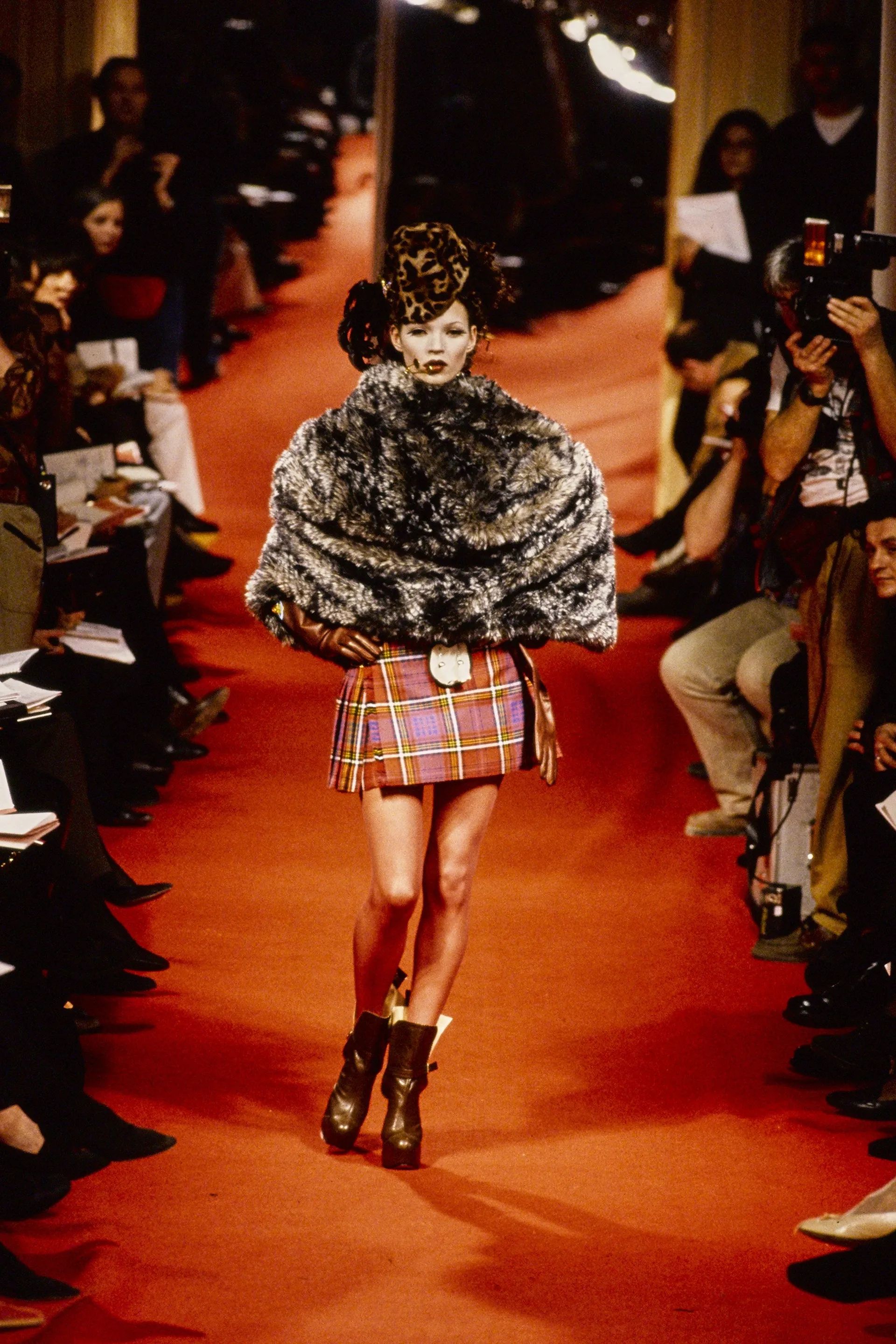
Kate Moss walking in Vivienne Westwood's AW 1993 Anglomania catwalk show. Photo: Condé Nast Archive. Getty Images.
Kate Moss walking in Vivienne Westwood's AW 1993 Anglomania catwalk show. Photo: Condé Nast Archive. Getty Images.

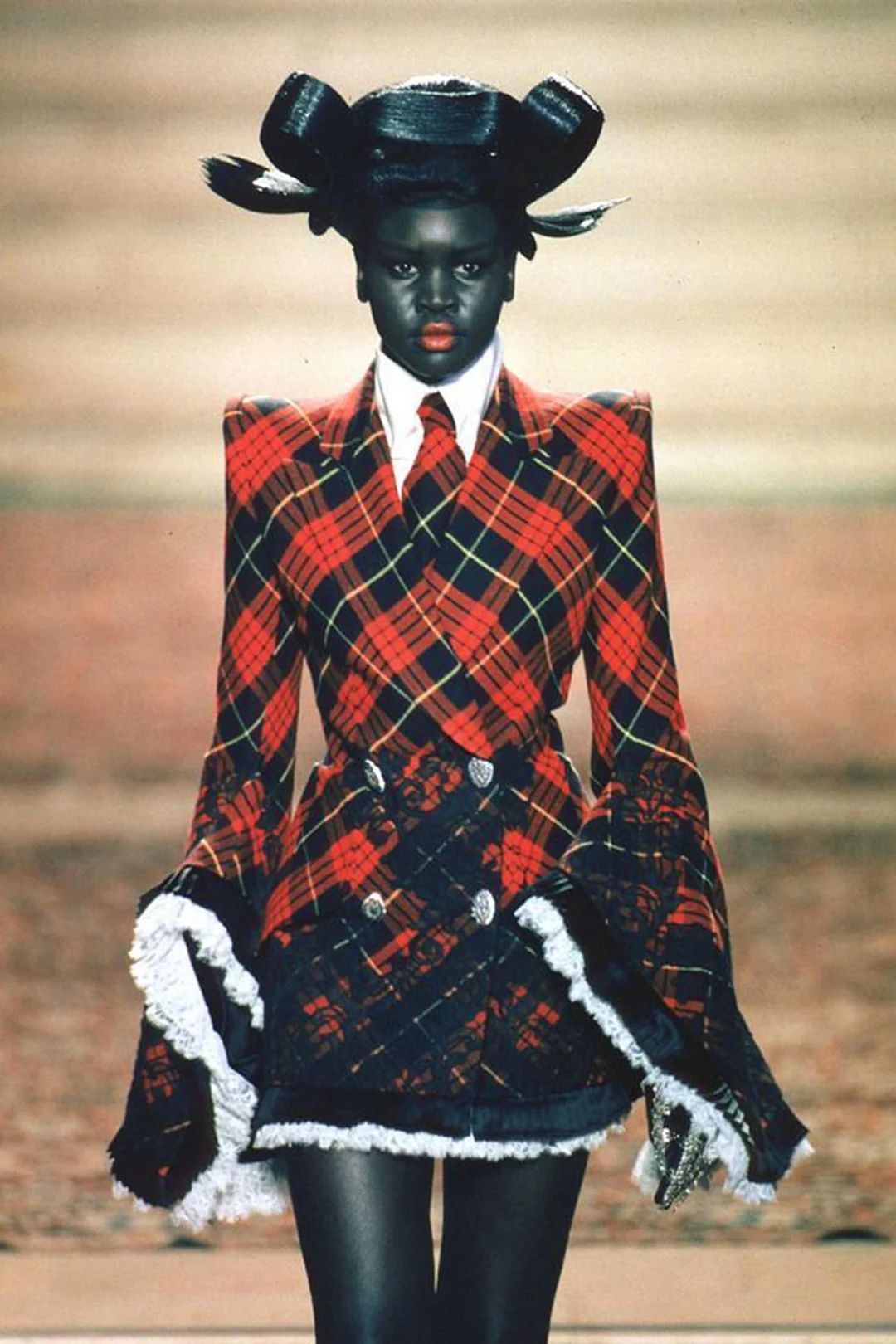
Alek Wek in a Clan McQueen tartan tailored jacket dress by Alexander McQueen.
Alek Wek in a Clan McQueen tartan tailored jacket dress by Alexander McQueen.

For many the so called Falkirk Tartan, a fragment of a simple two colour check or shepherd’s plaid as these simple patterns are known, dating from the 3rd century CE, acted as ‘proof’ for many of tartan’s Scottish origins, but as previously stated two-colour check woven textiles have been produced by many different cultures.
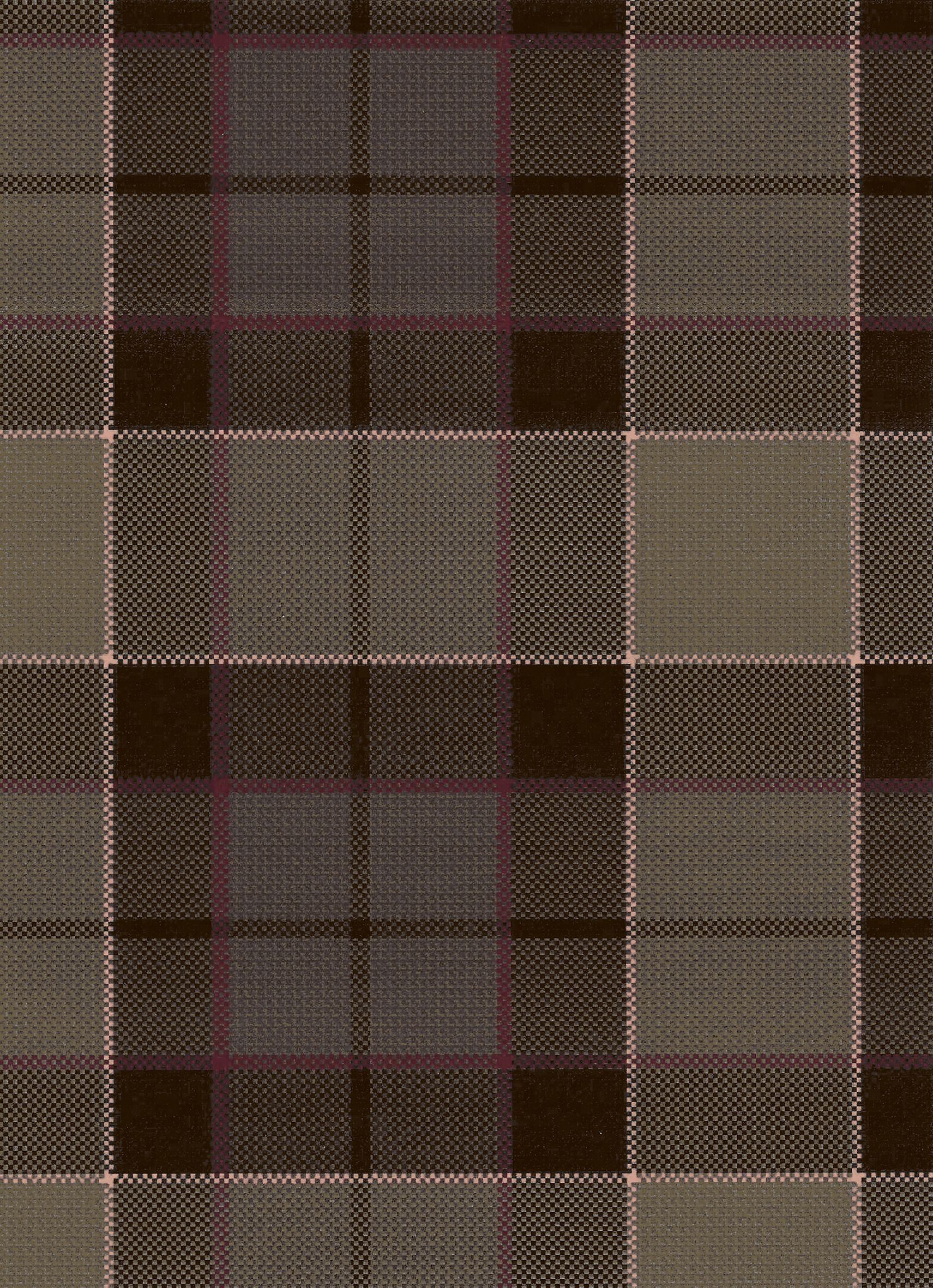
More recently the Glen Affric tartan, discovered in a peat bog in the 1980s and woven in earthy brown, green, red and yellow tones dating from 1500-1600 CE is now widely believed to be the first existing piece of true Scottish tartan. This tartan pre-dating the Jacobite-era tartans created for Outlander, nevertheless, is representative of the hand woven, coarser and muted colour ways that inspired the meticulous research undertaken by one of Outlander’s original costume designers Terry Dresbach.

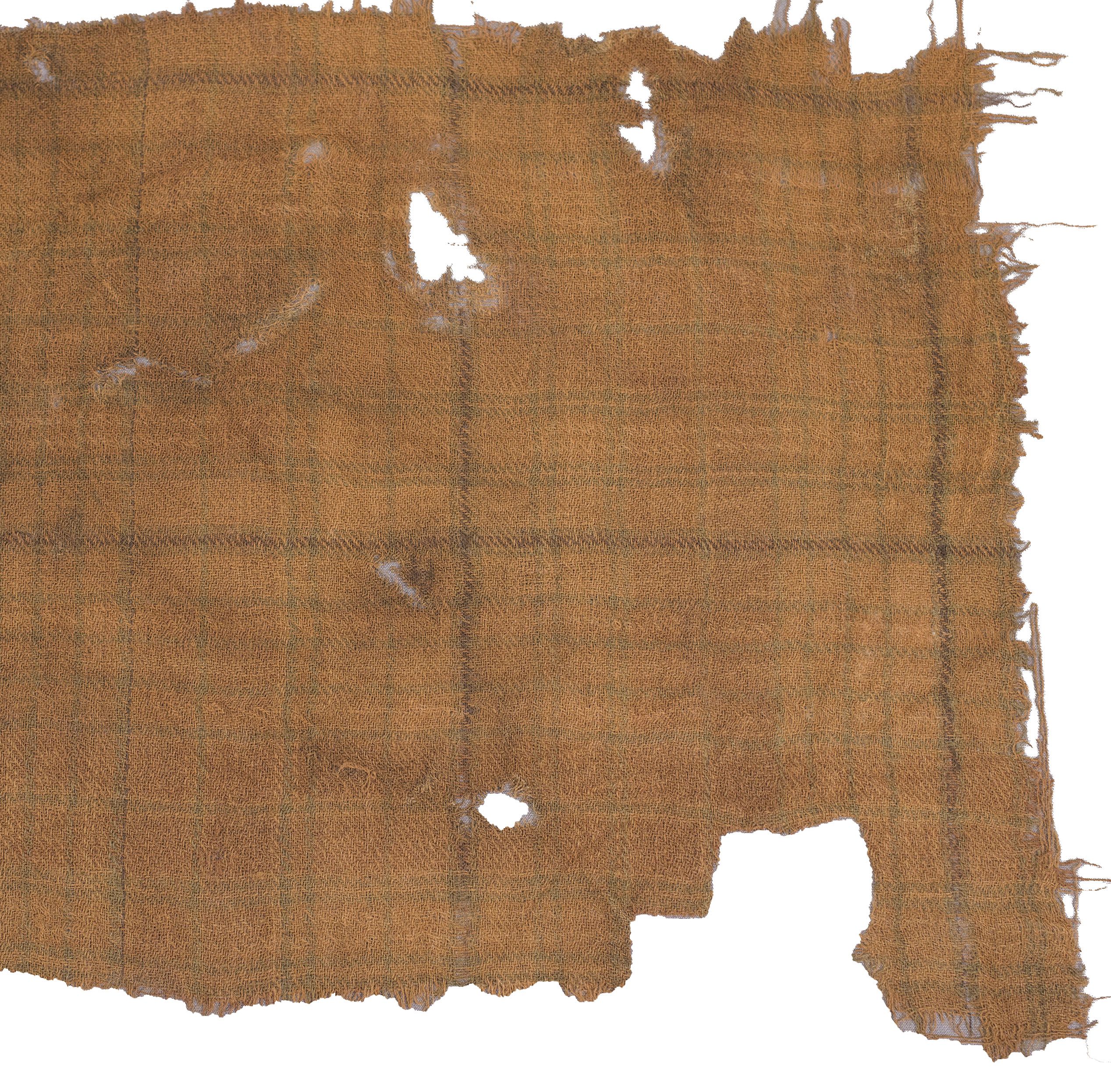
The Glen Affric Tartan. Image courtesy V&A Dundee.
The Glen Affric Tartan. Image courtesy V&A Dundee.

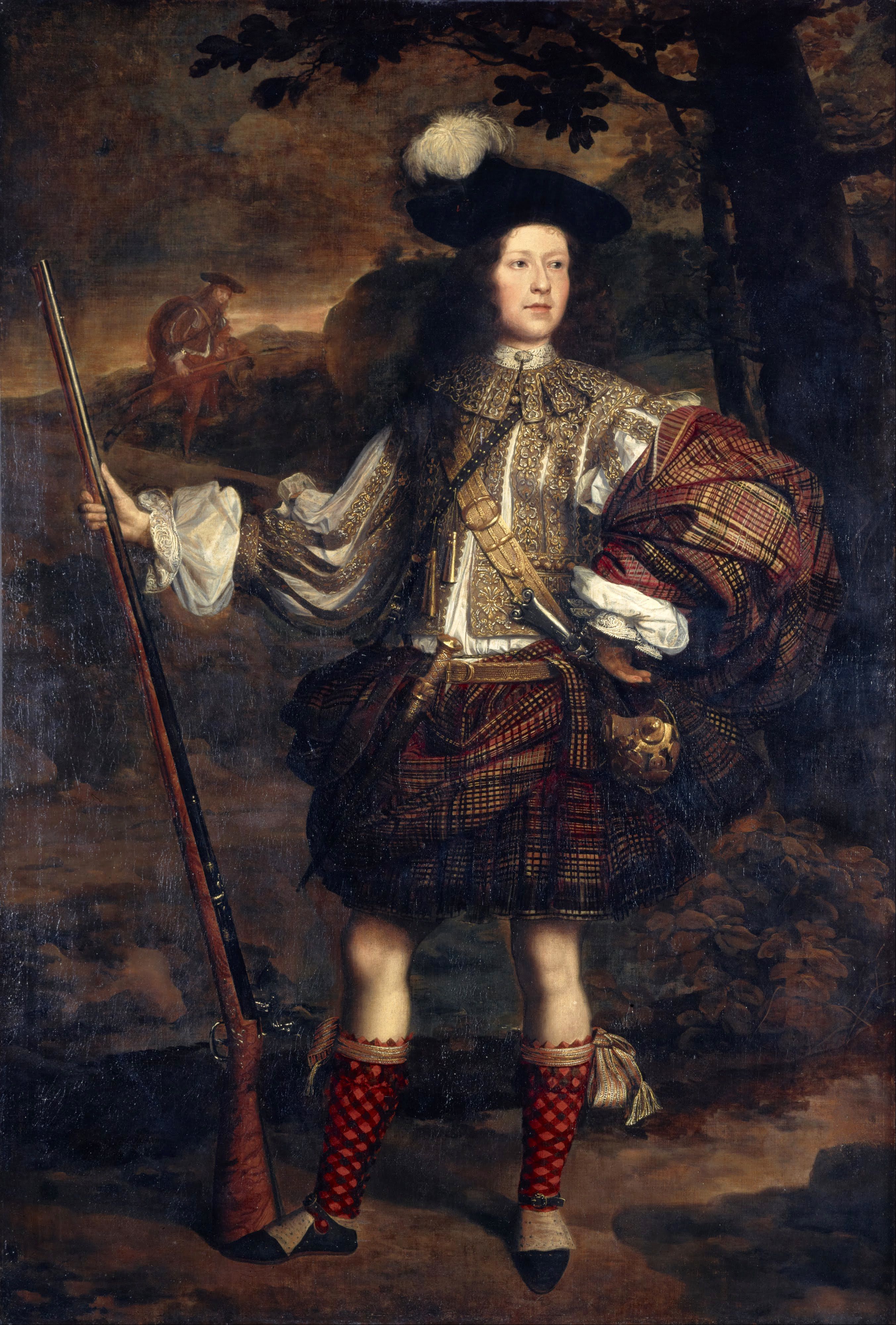
John Michael Wright, A Highland Chieftain: Portrait of Lord Mungo Murray, 1683. National Galleries of Scotland Edinburgh.
John Michael Wright, A Highland Chieftain: Portrait of Lord Mungo Murray, 1683. National Galleries of Scotland Edinburgh.
Although evidence exists of more expensive, brighter, imported dyes being used for some early tartans, Dresbach’s decision to produce tartans using indigenous Highland dyestuffs obtained from naturally occurring plant species conforms closely to pioneering tartan research carried out by authors such as Gordon Teall of Teallach and Philip D. Smith Jr. and their work District Tartans.
This book proposed that alongside clan tartans where the specific arrangement of different colours of different widths that make up a tartan’s check (or ‘sett’ as it is officially termed) is associated with a specific clan, there also existed district tartans worn by people living in the same area using the products of the same weavers who in turn employed local dyes and preferences in their cloth.
For Outlander Dresbach designed and had woven a number of tartans, based on muted, more sombre, earthy coloured variants, often known in tartan terminology as ‘ancient’ or ‘weathered’, of the existing ‘Fraser’ and ‘MacKenzie’ tartans, which today are typically much brighter in colour palette.
These especially designed Outlander tartans have been registered and recognised by the Scottish Register of Tartans where they are listed with the accompanying registration notes ‘Created for the television series Outlander. Ancient and weathered colours were used to simulate the natural wools and dyes available in the time period of the story.’

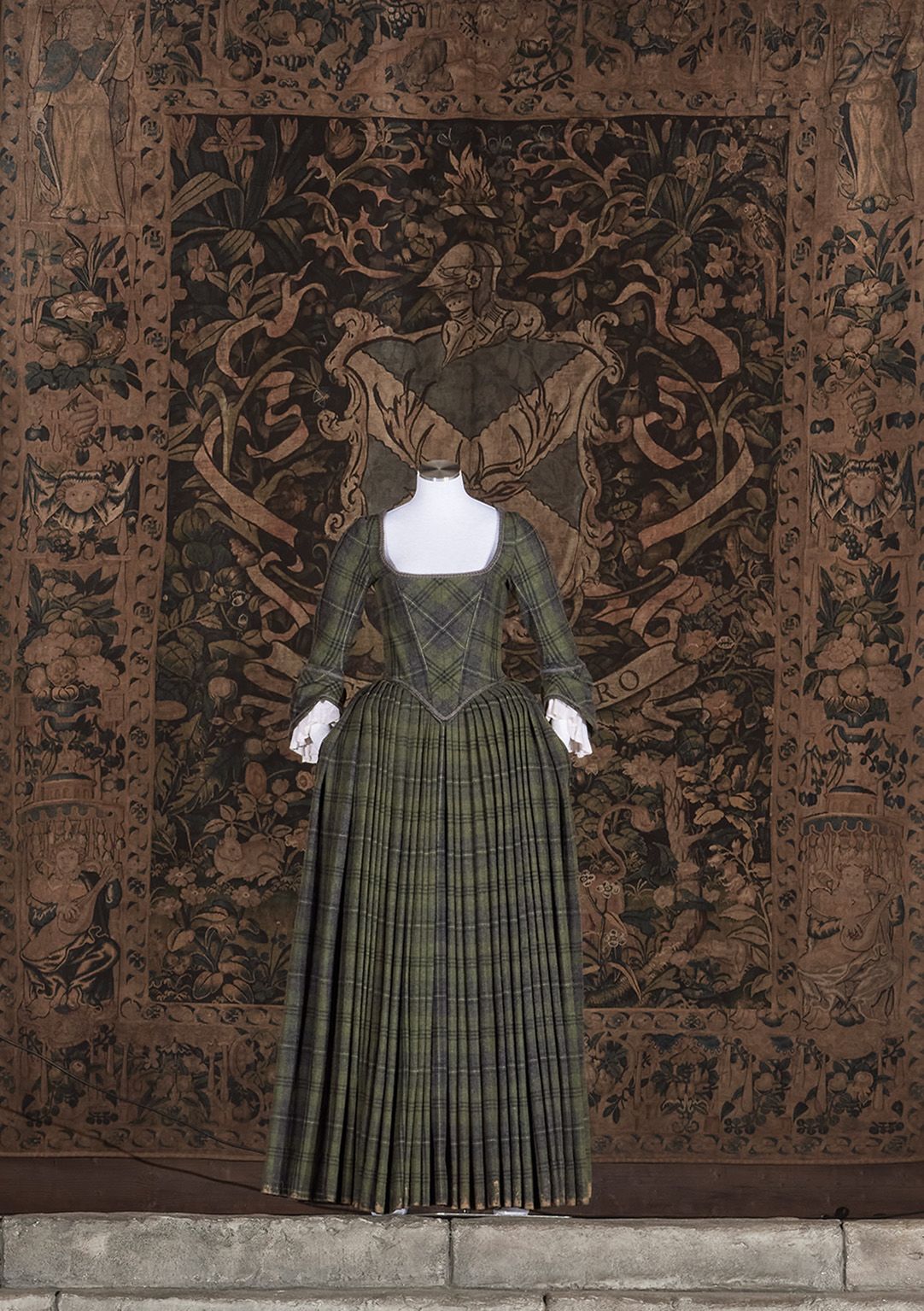
Lot 24, Claire's tartan corseted dress, Season 1, Episode 12, 'Lallybroch'.
Lot 24, Claire's tartan corseted dress, Season 1, Episode 12, 'Lallybroch'.

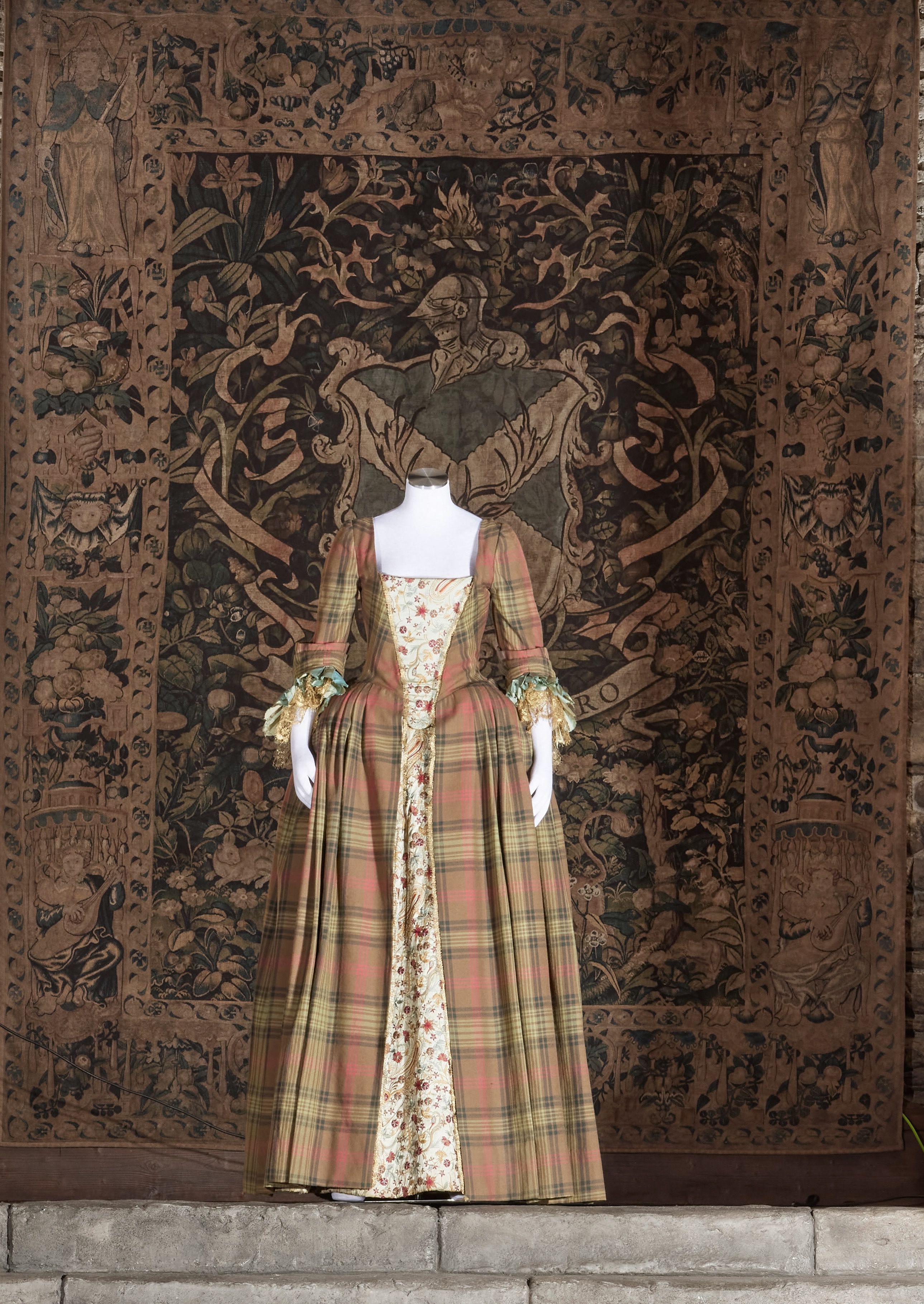
Lot 15, Tartan and embroidered dress, worn by Claire to the Clan Gathering Season 1, Episode 4, 'The Gathering'.
Lot 15, Tartan and embroidered dress, worn by Claire to the Clan Gathering Season 1, Episode 4, 'The Gathering'.
"Outlander has drawn not only on tartan’s ability to represent contradictory attitudes, but also to transcend time itself, transporting wearers and viewers back and forth through different ages."

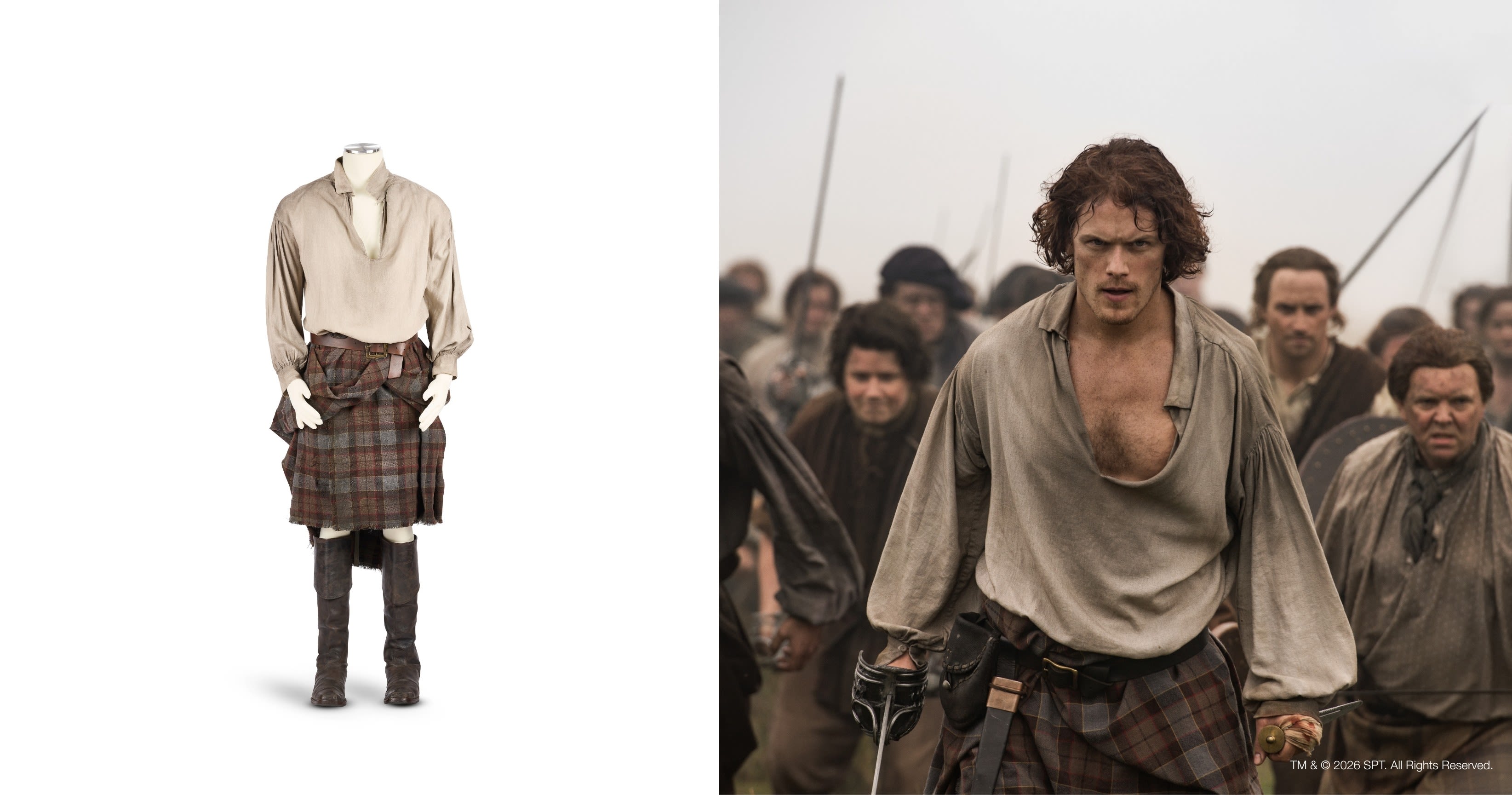
Jamie's costume worn at The Battle of Culloden. Season 3, Episode 1, 'The Battle Joined'. Estimate: £1,500-2,000.
Jamie's costume worn at The Battle of Culloden. Season 3, Episode 1, 'The Battle Joined'. Estimate: £1,500-2,000.
The pivotal moments in Outlander’s narrative and indeed in the history of tartan itself, occur in the years leading up to the Battle of Culloden in 1746 which saw the final defeat of the Jacobite rebellion. Following the battle, the Act of Proscription was passed as an attempt by the English to regulate Scottish Highland culture and thus eradicate any further possibility of resistance to English rule.
Amongst the various proscriptions was the banning of wearing tartan, an act which forever afterwards endowed the wearing of tartan with a sense of rebellion, resistance and sedition, something Vivienne Westwood and Malcolm McLaren were fully aware of when championing tartan as the livery of punk and naming one of their shops Seditionaries. On closer reading the Act only banned adult Highland men from wearing tartan, not women or children and the Act was largely ineffectual and unenforceable, nevertheless tartan’s subversive cachet was from this moment on, firmly established.

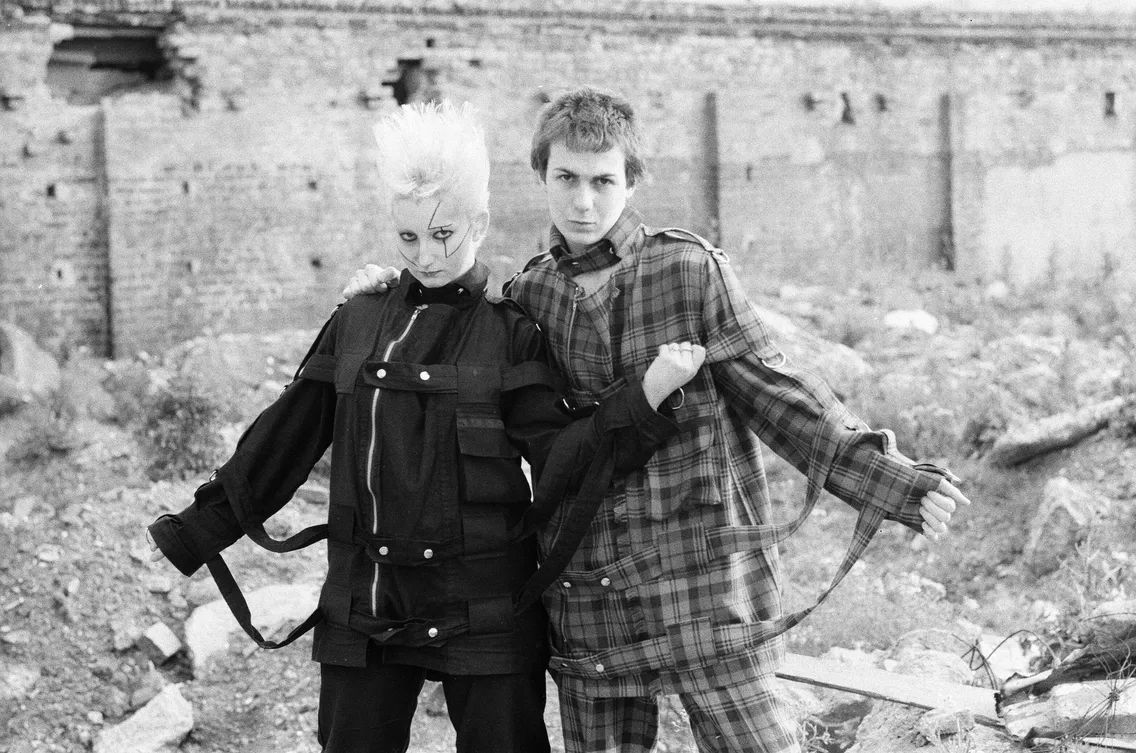
Jordan and Simon Barker wearing punk fashion from Seditionaries. Courtesy The Vivienne Westwood Archive.
Jordan and Simon Barker wearing punk fashion from Seditionaries. Courtesy The Vivienne Westwood Archive.
Fashion, of course, has always been attracted to what is decreed off limits, confrontational or to be worn only by a select group, and so the Act had the instantaneous effect of catapulting tartan onto the global fashion stage, and transforming what was an indigenous Highland craft into fashionable attire for Scottish Lowlanders, Jacobite sympathisers and those who understood the romantic associations of wearing the livery of the doomed Bonnie Prince Charlie. Subsequent years saw tartan reinvited as a traditional Royal textile boosted by the tartan theme park created by Queen Victoria and Prince Albert at Balmoral, cementing tartan’s duality as a fashionable cloth both traditional and revolutionary.
Across Time and Space
Outlander is one of many productions that have drawn not only on tartan’s ability to represent contradictory attitudes, but also to transcend time itself, transporting wearers and viewers back and forth through different ages. Vincente Minnelli’s 1954 film version of Brigadoon, portrayed inhabitants suspended in a sort of 'tartan coma' awakening every 100 years in tartan inflected with mid-century Hollywood glamour. More recently, time defying tartans worn in the 1986 cult classic Highlander.
On film and television, tartan has frequently journeyed to outer space. In the 1969 episode of the original Star Trek, The Savage Curtain, we see the Enterprise’s chief engineer, Scotty, donning a full kilt, sporran and belted plaid, teamed with Starfleet style zip-fronted jacket. At the request of Captain Kirk, his officers don full dress uniform to honour a visit by a reanimated Abraham Lincoln, a perfect example of tartan’s ability to transcend time, space and logic. As fanciful as this last example may seem, 1969 also saw tartan fly to the moon itself when astronaut Alan Bean carried aboard the Apollo 12 mission a square of MacBean tartan, and then onto the lunar surface, with the swatch of tartan tucked into his kit as he explored the Ocean of Storms.

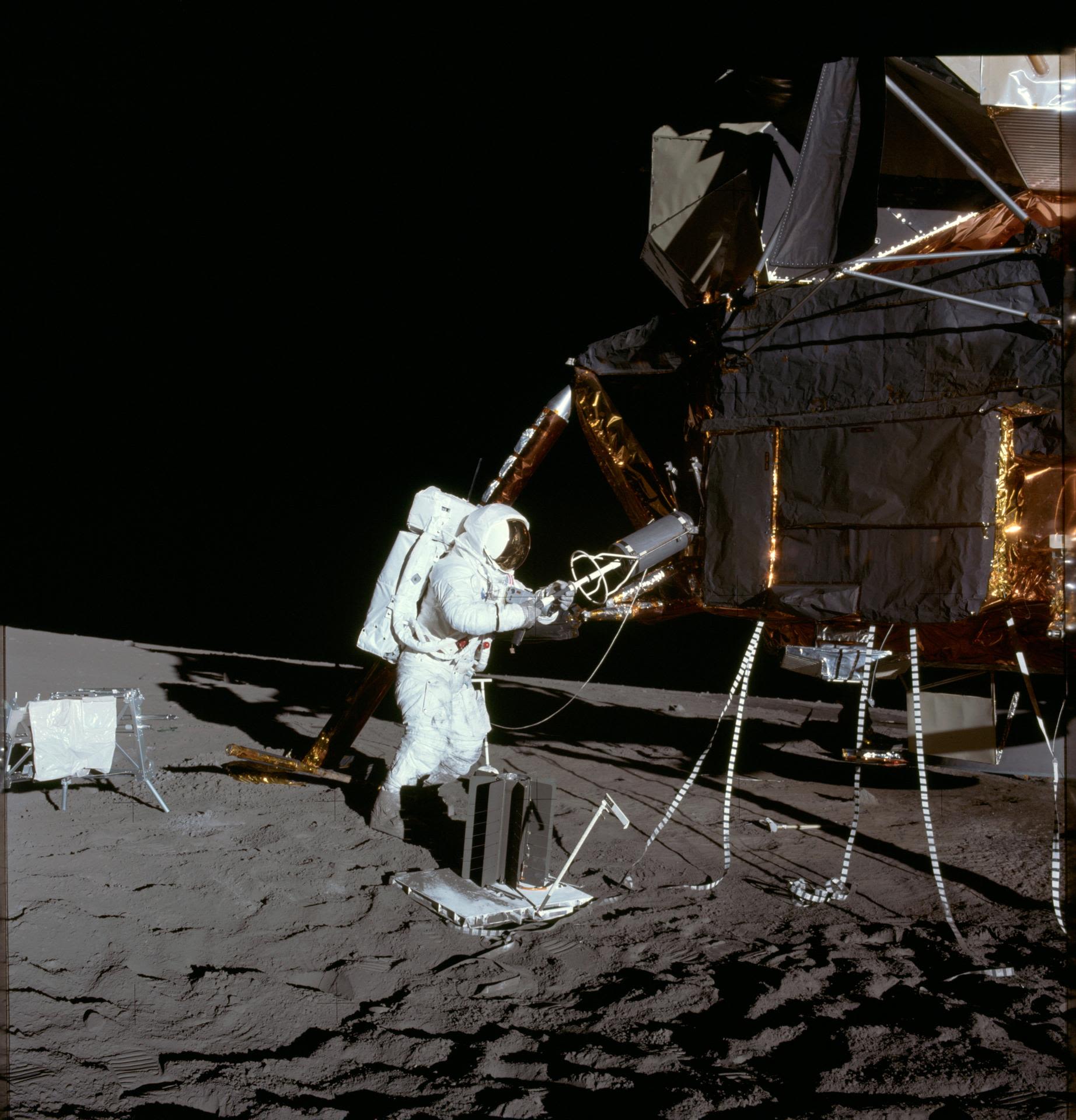
Alan Bean walks on the moon on the Apollo 12 mission with a square of MacBean tartan in his spacesuit, 1969. Image Nasa/Rex/Shutterstock.
Alan Bean walks on the moon on the Apollo 12 mission with a square of MacBean tartan in his spacesuit, 1969. Image Nasa/Rex/Shutterstock.
The phenomenal success of Outlander, while certainly in part due to the captivating script, cast and production design, is owed to the attention to detail in the costume design, with garments that convey its sense of time-defying romance so powerfully. Through their meticulous research and creativity, costume designers Terry Dresbach, Trisha Biggar and Nadine Powell brought the story threads carefully to life, allowing viewers to immerse themselves in the narrative. As we look back on the origins of this hugely significant cultural motif, we are reminded of the symbols this cloth has conveyed, when worn by royals and rebels alike, and immortalised on screen.
With thanks to Sony Pictures Television and Starz.
All Outlander images: TM & © 2026 Sony Pictures Television Inc. All Rights Reserved

 Built with Shorthand