
The Stein Way

In 1935, on the way back from his journey to Tahiti, Henri Matisse paid a visit to the eccentric collector Albert Barnes in Philadephia. When he arrived, the great artist remarked to Barnes and his guests that he knew no English. “I only know the expression ‘son of a bitch’,” he went on. “I learned it from Sarah Stein.” But a smattering of colloquial American slang was the least of the debts he owed to the woman who was perhaps the most perceptive of all his early collectors and supporters.
One of the turning-points of Matisse’s career – and, in truth, for the course of modernist art – came from a visit to Room VII of the annual Salon d’Automne in 1905.
There, works by a number of younger and more adventurous painters – among them André Derain, Maurice de Vlaminck, Henri Manguin and Matisse – had been grouped together, thus intensifying the outrage expressed by conservative critics and members of the public. What had previously been no more than a circle of friends with similar ideas was suddenly seen as a movement.
On looking round the room and seeing a conventionally academic sculpture surrounded by all these canvases with their heightened colours and bold brushstrokes, the writer Louis Vauxcelles quipped “A Donatello surrounded by wild beasts!” And so these painters acquired a name: Les Fauves.
Initially it seemed as if all Matisse had gained from the show was notoriety and execration. His finances, often in a worrying state, began to seem alarming; his self-confidence, much less buoyant than the face he presented to the world, started to sag. Then a telegram arrived. It was from an expatriate American named Leo Stein and his sister Gertrude, offering to buy the picture that had caused the greatest outrage, Matisse’s Woman with a Hat, for 300 francs (200 less than the asking price). Matisse was inclined to accept, but his wife convinced him to hold out for 500. A few days later, a second telegram arrived, raising the Steins’ bid to the full amount.

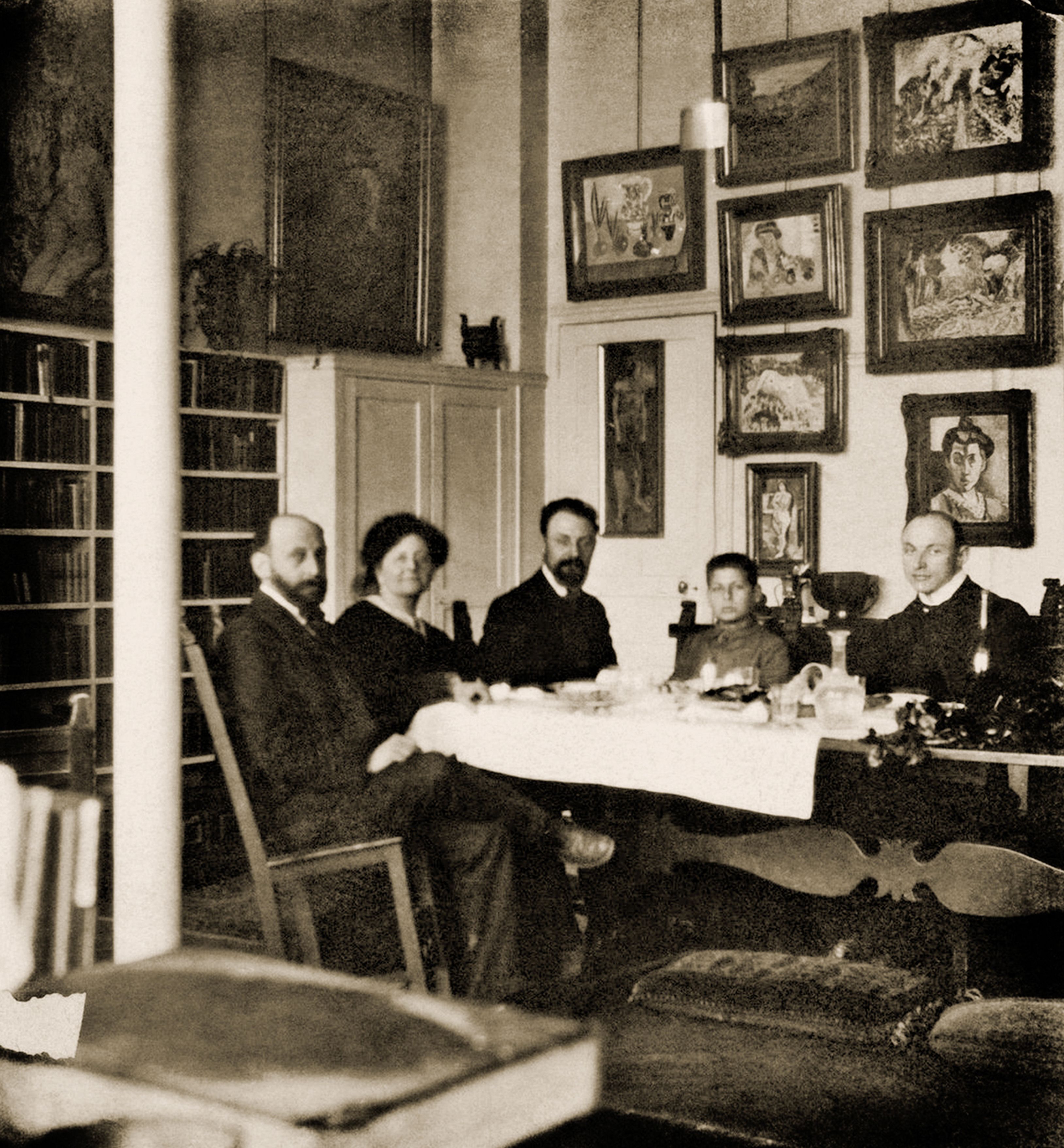
The Steins with their collection of works by Matisse, including Nu (femme) debout or Standing Nude
The Steins with their collection of works by Matisse, including Nu (femme) debout or Standing Nude

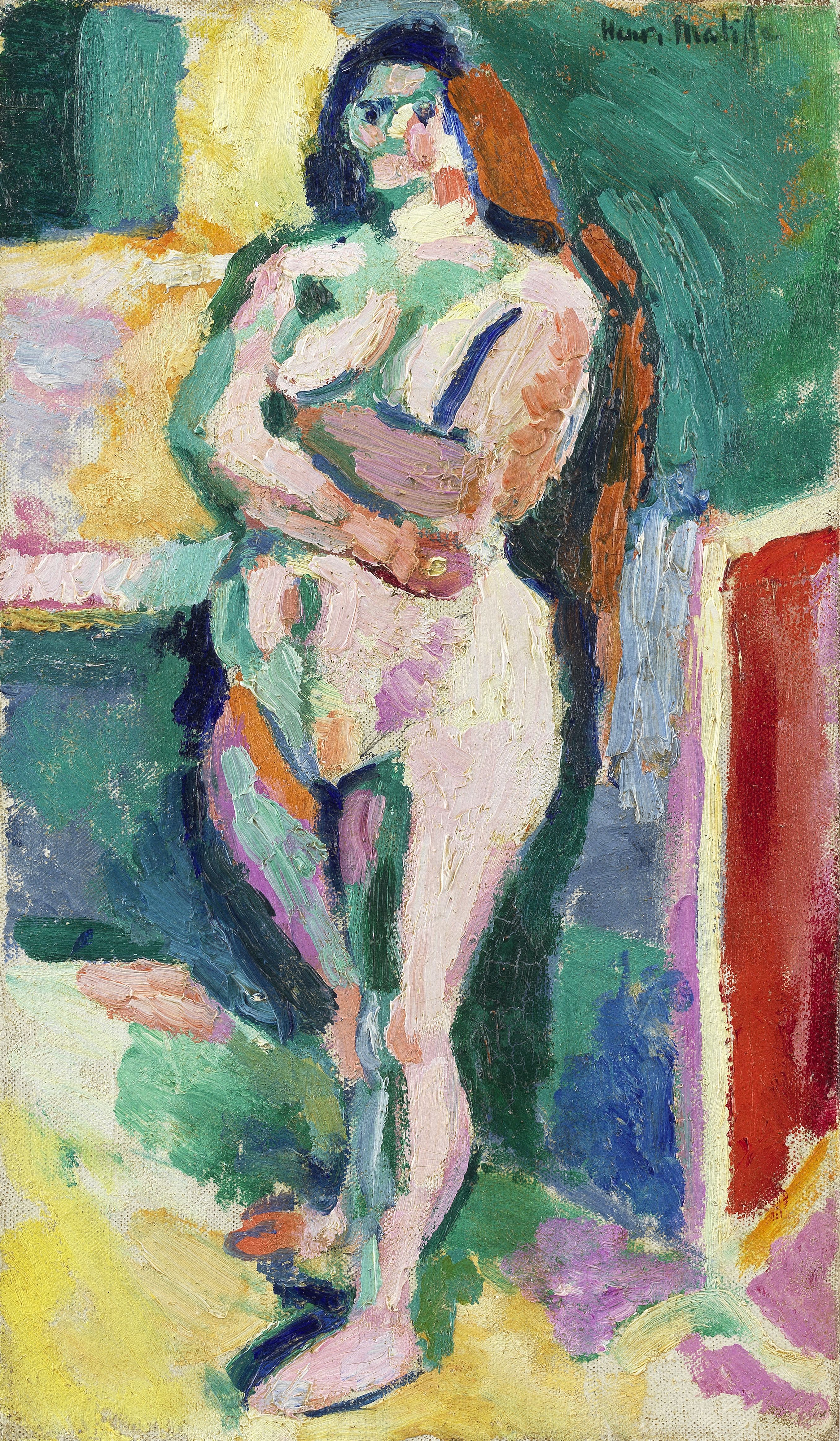
Lot 10. Henri Matisse, Nu (femme) debout, also titled Nu près du paravent. Estimate £1,800,000 - 2,500,000.
Lot 10. Henri Matisse, Nu (femme) debout, also titled Nu près du paravent. Estimate £1,800,000 - 2,500,000.

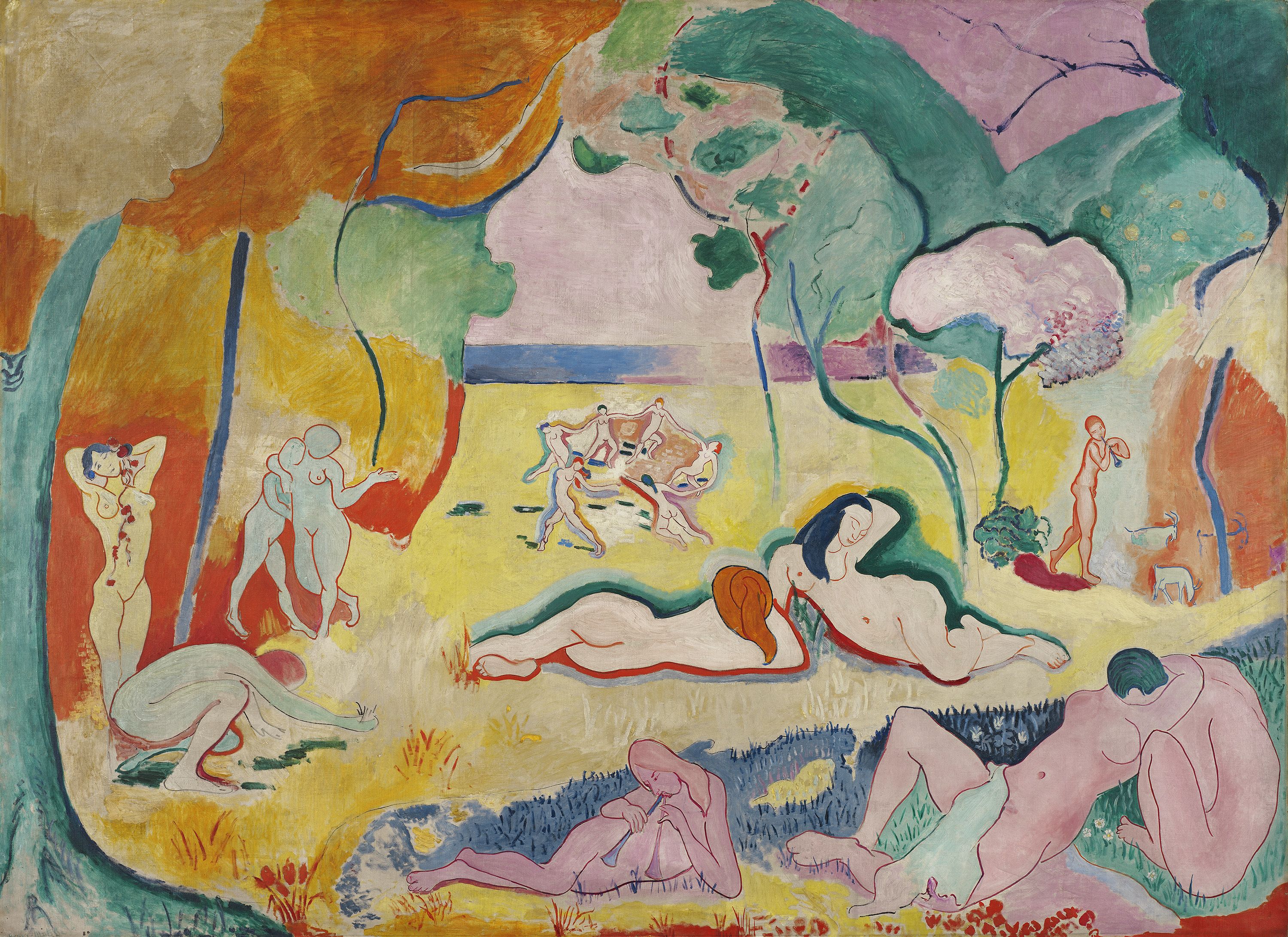
Matisse’s Le Bonheur de Vivre (The Joy of Life) was first displayed in 1906 at the Salon des Indépendents – to much controversy.
Matisse’s Le Bonheur de Vivre (The Joy of Life) was first displayed in 1906 at the Salon des Indépendents – to much controversy.

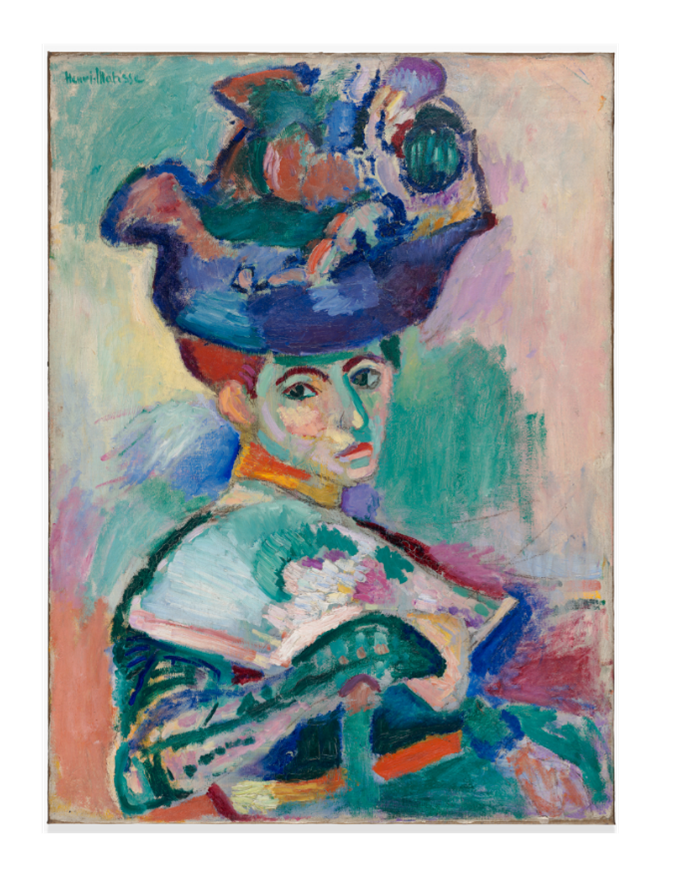
Matisse’s Femme au Chapeau (Woman with a Hat) from 1905 depicts Matisse’s wife, Amélie
Matisse’s Femme au Chapeau (Woman with a Hat) from 1905 depicts Matisse’s wife, Amélie

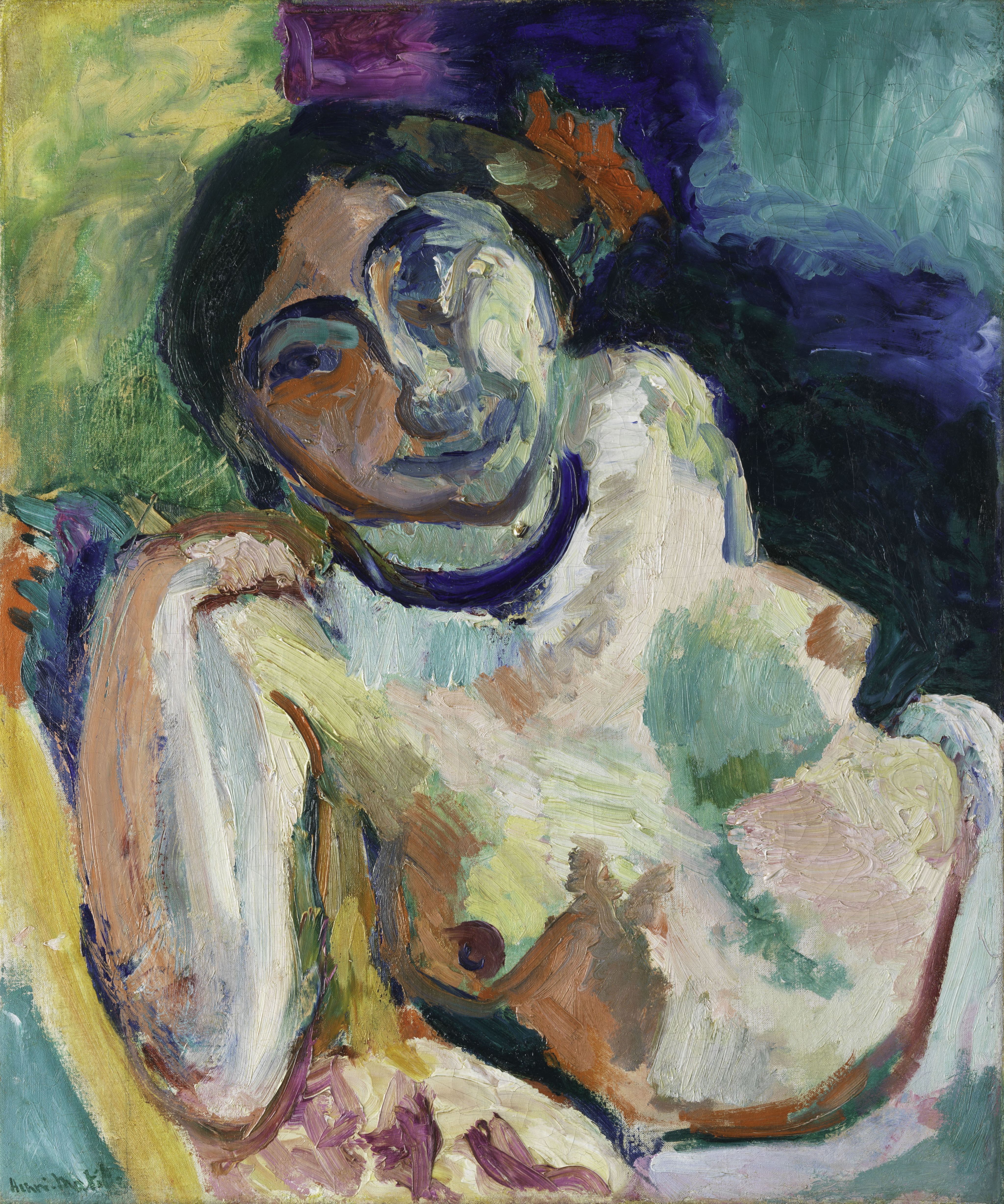
Bought by Michael and Sarah Stein, Matisse’s La Gitane (The Gypsy), 1905
Bought by Michael and Sarah Stein, Matisse’s La Gitane (The Gypsy), 1905
It seems the person who had made the crucial leap and embraced this alarmingly novel painting was actually neither Gertrude nor Leo (who admitted that the Woman with a Hat had first struck him as “the nastiest smear of paint I had ever seen”). It was their sister-in-law Sarah (1870-1953). At that moment, the family became collectors of great importance.
It was agreed among the family that Leo and Gertrude should buy the Woman with a Hat, because Michael and Sarah could not afford it. But they did buy another, smaller picture: Nu (femme) debout (or Standing Nude, sometimes known as Nude before a Screen). This work, offered by Bonhams in London’s November Impressionist and Modern Art sale, therefore has an important historical position. According to Hilary Spurling, the artist’s biographer, it was always known in the Matisse family as “the Steins’ first purchase”.
Of all the Steins, Sarah was the one who truly mattered to Matisse. He was quite explicit about this. Years later, he stated emphatically that Sarah was “the one who had the instinct in that group”. She was the one, Matisse felt, who had “a sensibility which unlocked the same thing in him”.
The Steins were not rich, which is why they had to get out of the market for Matisse when a truly wealthy rival – the Russian textile magnate Sergei Shchukin – came along a couple of years later, but they were comfortably off. The family was of German-Jewish ancestry (as were Sarah’s family, the Samuels). Their parents had died young leaving their five children with a modest but sufficient fortune (Simon and Bertha, the remaining two Steins, stayed in the United States and failed to make any impact on cultural history).
A guest staying with Sarah and her husband, Michael, remembered regular visits to the Salon to stand in front of Woman with a Hat. “The young painters were just laughing themselves sick about it”. But there stood Leo, Michael and Sarah, ‘very impressed and solemn about it’. Some 40 years later, Sarah told a young friend, Stanley Steinberg, that the picture ‘overwhelmed her with its beauty of colour, intensity of form, and the deep spiritual feeling it evoked”.

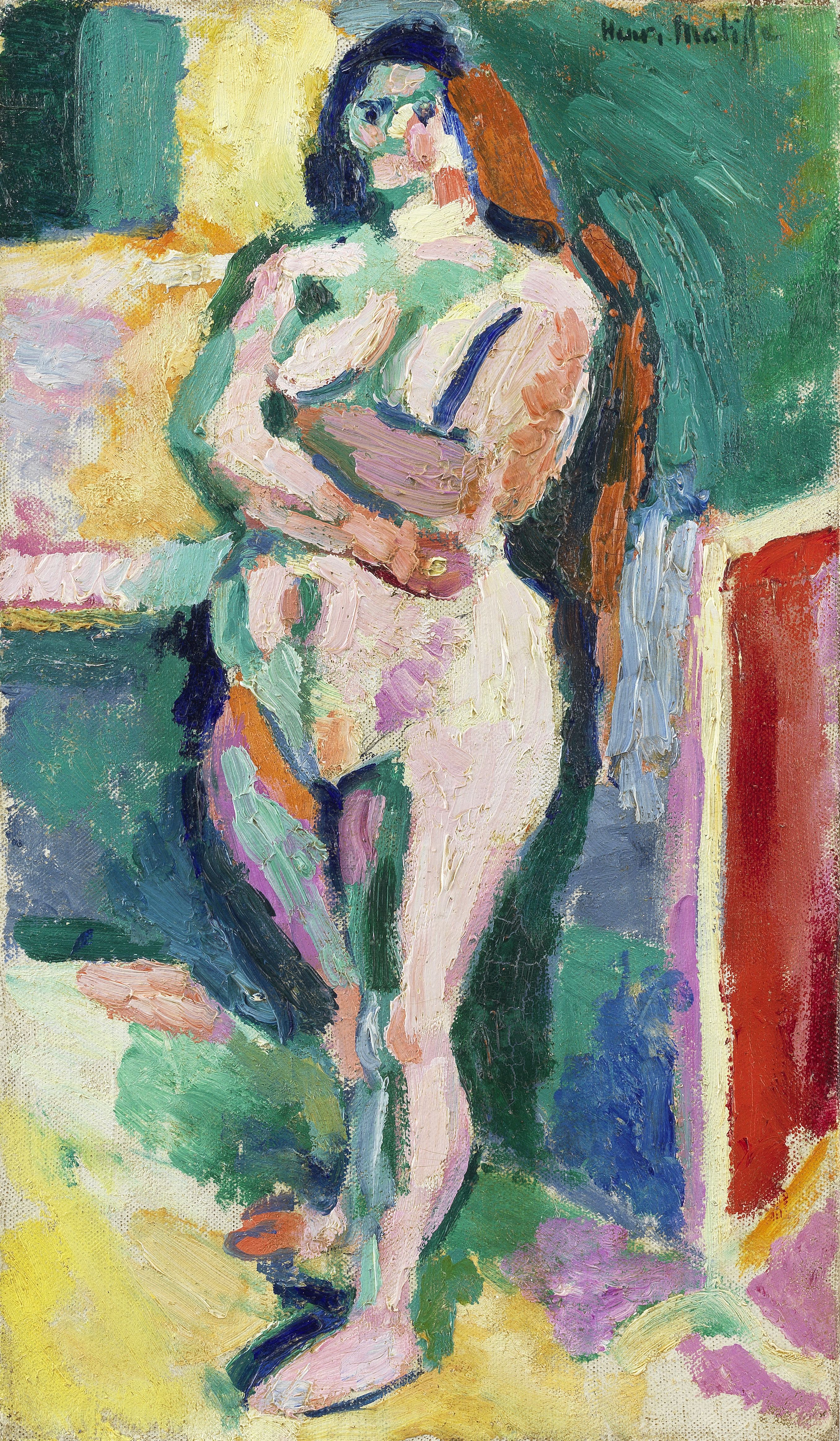
It must have been similar qualities that drew her to the little Standing Nude, so vigorously brushed, earthy, powerfully drawn and in every way unlike the traditional canon of female beauty. In a sense, perhaps she saw herself. When she saw these early Fauve works by Matisse, Sarah told Steinberg, she “felt transformed” and “more in touch with her own humanity”.
Unlike her brother-in-law Leo, Sarah was not a Harvard-educated intellectual. But she had mixed in an artistically stimulating circle on the West Coast, counting Isadora Duncan and the dancer’s brother Raymond among her friends, as well as Robert Louis Stevenson’s widow Fanny. Her relative lack of cultural preconceptions (there were no notable European paintings in the city of San Francisco at that date, except a single Millet) probably left her more open to the new than Parisian pundits.
Confirmation that Sarah had a remarkable eye, if not a business touch, came from the dealer Ambroise Vollard: “I would let Mme Stein buy any work of art for me”, he confessed, “but I would never let her sell a single painting for me.” The business-head in the family belonged to her husband Michael. He was the one who sailed back to San Francisco the following year to stabilise the financial position of the Steins following the city’s earthquake of April 1906.
The Steins’ money came from investments in San Francisco streetcar stock and property left to them by their parents. With some 80 per cent of the city destroyed by the earthquake and subsequent fires, this cash flow was obviously in danger. The Steins might have been almost ruined, as Matisse wrote to his friend Manguin, gloomily because they were his principal patrons. Fortunately for them and for modern art, the Steins’ incomes survived.
Sarah, who accompanied Michael on this trip, brought with her the first three works by Matisse ever to be seen in the US, among them Standing Nude (in the months following the Salon, she and Michael had quickly bought several more of his pictures).
Even before she arrived in San Francisco with Standing Nude packed in her valise, she had taken a friend from Baltimore named Etta Cone to visit the painter in his studio. Eventually Etta, with her sister Claribel, assembled one of the greatest collections of Matisse in America.

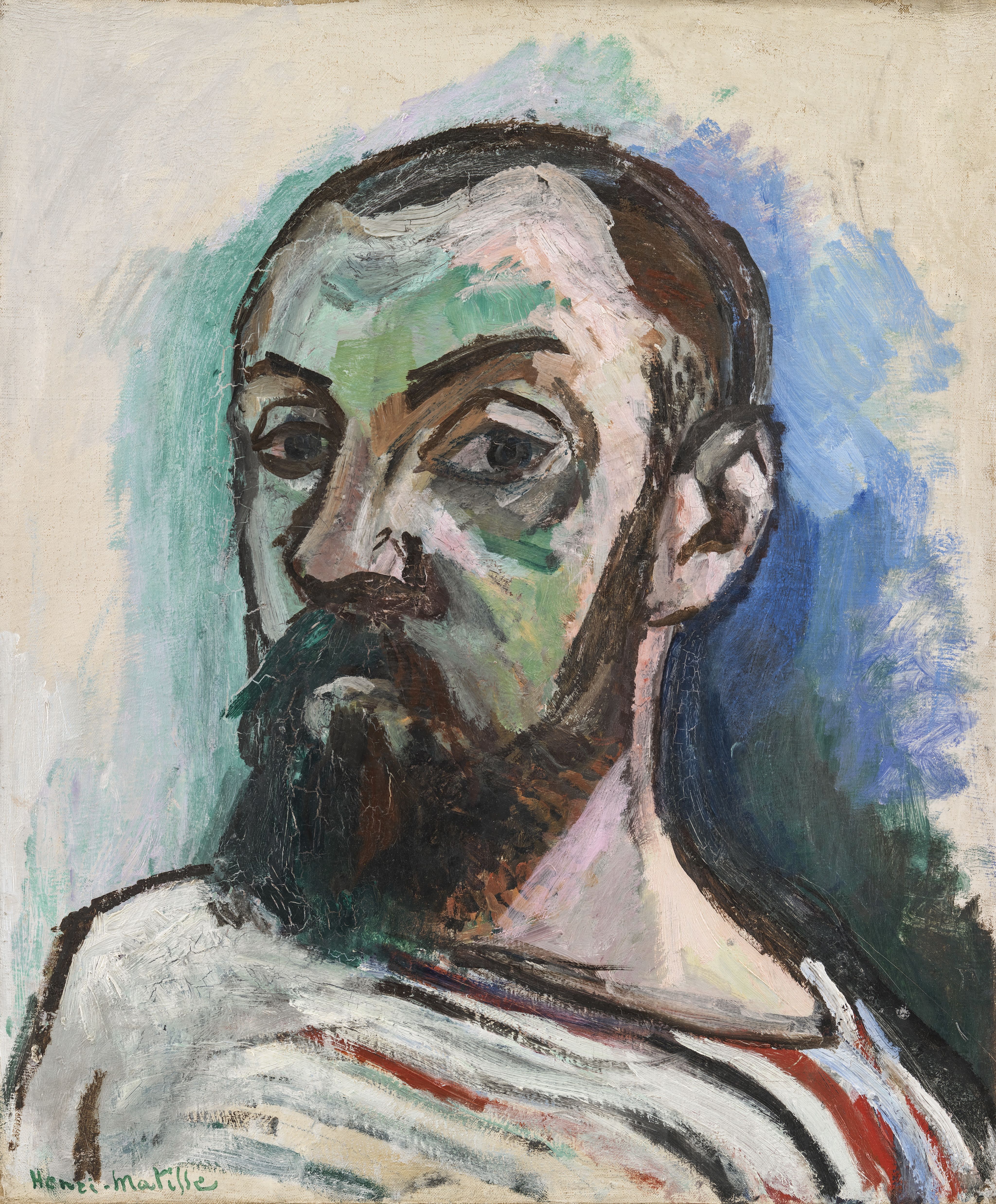
This rare self-portrait by Matisse (Self-portrait in a Striped Shirt, 1906) was also in the Steins’ collection
This rare self-portrait by Matisse (Self-portrait in a Striped Shirt, 1906) was also in the Steins’ collection

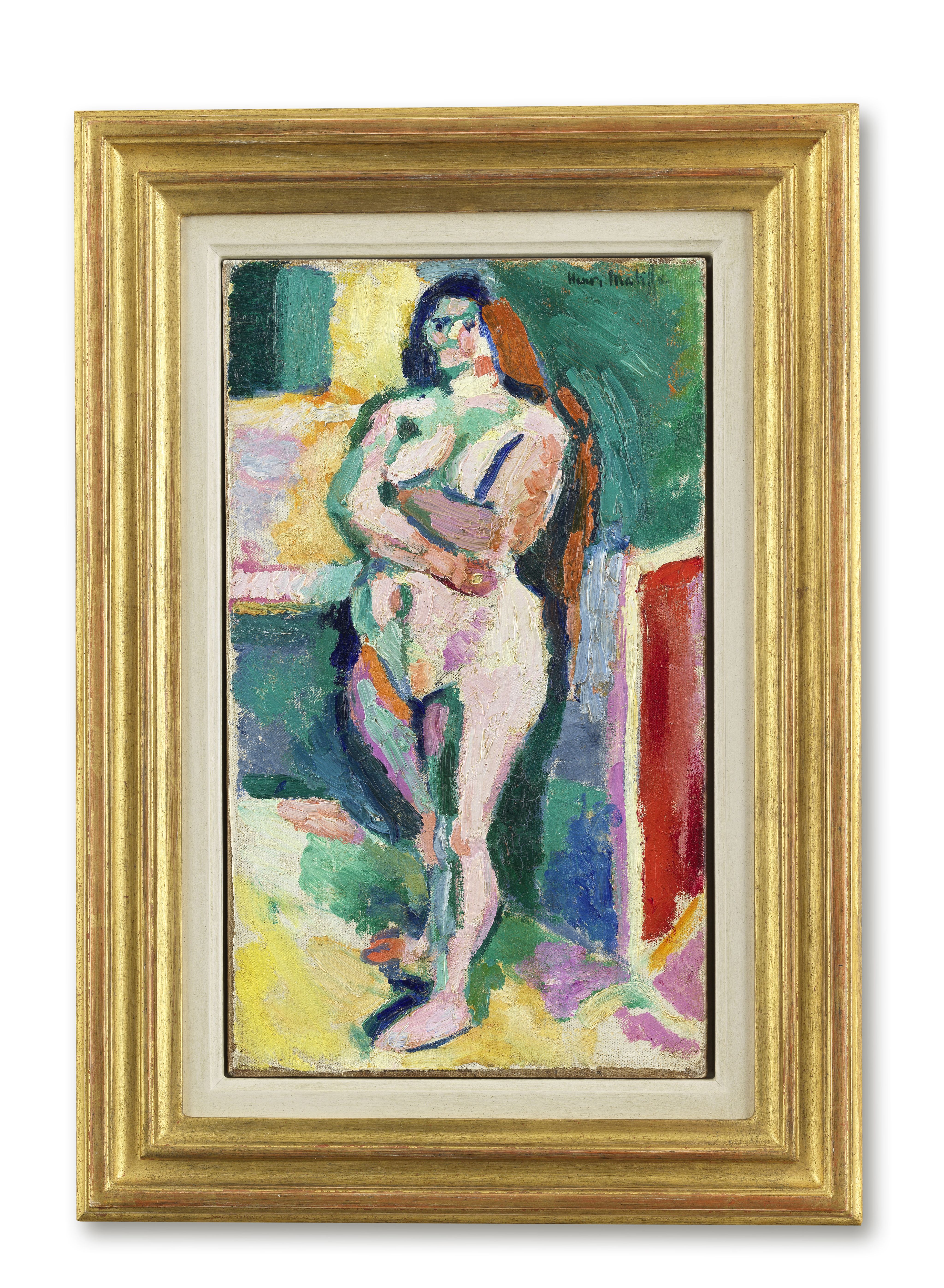
Lot 10. Henri Matisse, Nu (femme) debout, also titled Nu près du paravent. Estimate £1,800,000 - 2,500,000.
Lot 10. Henri Matisse, Nu (femme) debout, also titled Nu près du paravent. Estimate £1,800,000 - 2,500,000.

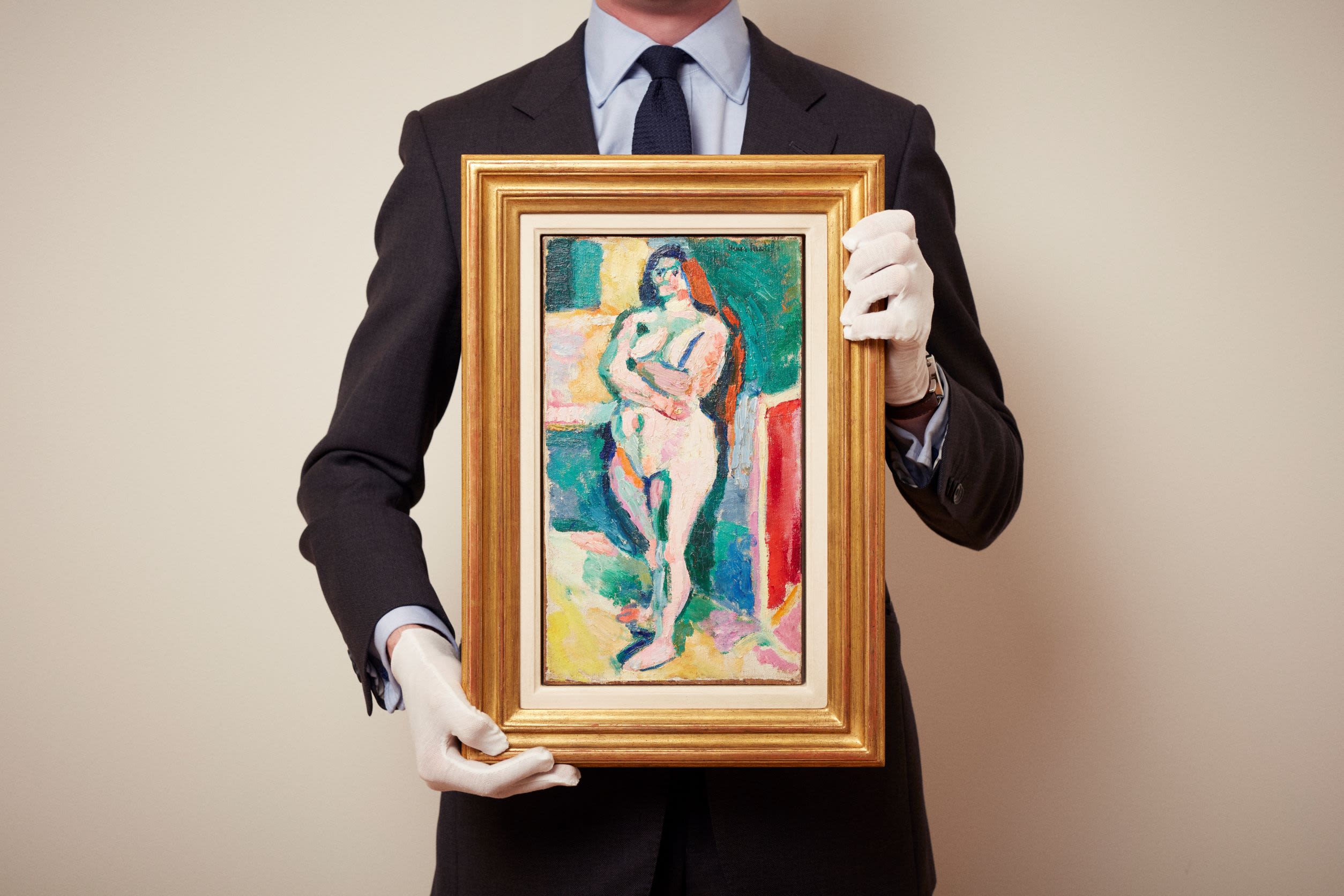
Lot 10. Henri Matisse, Nu (femme) debout, also titled Nu près du paravent. Estimate £1,800,000 - 2,500,000.
Lot 10. Henri Matisse, Nu (femme) debout, also titled Nu près du paravent. Estimate £1,800,000 - 2,500,000.
Michael was the only one of the Stein siblings who ever held a job (as superintendent of the Market Street Railway). But, in 1903, he was persuaded to give it up to join Leo and Gertrude, who were already living in Paris. He, Sarah and their son Allan came for a year, but couldn’t bear to leave. Eventually, they stayed for more than 30 years. They lived on the third floor of a former Protestant church on the rue Madame (Leo and Gertrude’s celebrated lodging was at 27 rue de Fleurus, near the Luxembourg Gardens).
Both apartments became crammed with masterpieces of early 20th-century painting. But whereas the walls at 27 rue de Fleurus were covered with works by a variety of artists, including great Picassos, Michael and Sarah concentrated on Matisse. Photographs of the rue Madame apartment show his works hung one above another, up to four or five high. There were 12 major pictures on one wall alone, including Standing Nude.
The commanding sensibility behind the collection was undoubtedly Sarah’s. Michael was happy to leave the buying to her. Steinberg, who talked to her in depth during the 1940s, concluded that Sarah and Matisse were “kindred spirits”. The painter would bring works to her “in bundles” according to Theresa Ehrman, the Steins’ nanny, and “Sarah would tell him what she thought of things, sometimes rather bluntly”.
Matisse would “always seem to listen and always argue about it”. Sarah in turn paid close attention to what he said to the students at the art school which she herself attended as a student. Her notes on his teaching are an important early document of Matisse’s thought.
Steinberg, who was training as a psychoanalyst when he knew Sarah, was intrigued by her relationship with Matisse. But, he wrote, “whether it had been a physical one was never clear to me”. Whatever the truth, their alliance was crucial to the artist at a certain point, and Standing Nude – the first painting by Matisse that she owned and one of the earliest to catch her attention – was an emblem of it.
Steinberg was “startled” when he saw the picture for sale in a Los Angeles art gallery. It was the first hint he had had that Sarah was obliged to sell off her collection to pay debts. It must have been a sad moment for her when she was parted from it. For his part, when she returned to the United States in 1935, Matisse wrote, “it seems to me that the best part of my audience has gone with you”.
Martin Gayford’s latest book is Spring Cannot Be Cancelled: David Hockney in Normandy.


 Built with Shorthand