
The heart of life
For Sir Terence Conran the home was “the temple of the soul”. Nicholas Foulkes looks at the designer’s revolutionary legacy through his personal collection coming for sale at Bonhams
Photograph by Julian Broad
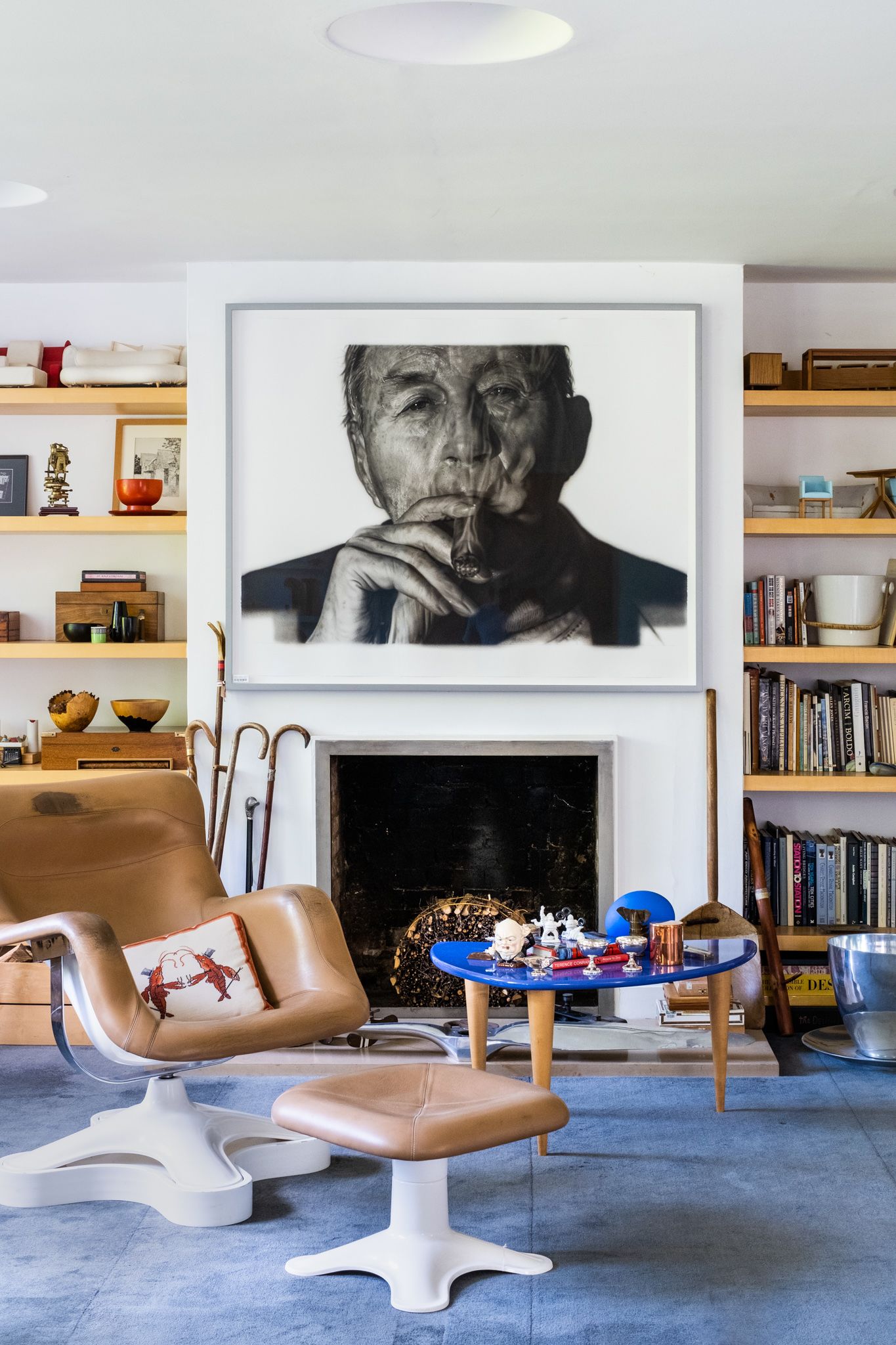

“I never think that people die”, Andy Warhol observed. “They just go to department stores.” I have the same feeling about the late Sir Terence Conran. The profusion of objects at Barton Court, the great British designer’s country house, are just so charged with his personality. Surely he is just at the Conran Shop, adjusting a display? Perhaps he is presenting a prototype, or explaining his views on merchandising with that familiar quiet forcefulness? It takes conscious effort to understand that he will not soon back into the room, ignite a Hoyo de Monterrey Epicure No.2 cigar, pour himself a generous glass of recondite French eau de vie that tastes to the uninitiated like pear-flavoured petrol, and settle into the white fibreglass and tan leather of his favourite Karuselli chair.
That Karuselli chair is the creation of Finnish designer Yrjö Kukkapuro. It appeared in 1964, the year in which Sir Terence opened his first Habitat store, his first bold move in conjuring not so much a world as an entire planetary system of interlinked worlds of retail, design, gastronomy, education, manufacturing, books, branding and urban regeneration.
For half a century, Barton Court – a largely Georgian manor house near Hungerford, whose contents are offered for sale by Bonhams at New Bond Street in December – was the solar centre of the Conran universe. According to his widow Vicki, when he came across Barton Court in 1971 its owners were thinking of demolishing it. “It had been previously occupied by a prep school and it needed a huge amount of work. As one of his friends said, it smelt of smacked bottoms.” And yet, out of this unpromising material, he made a laboratory for living.

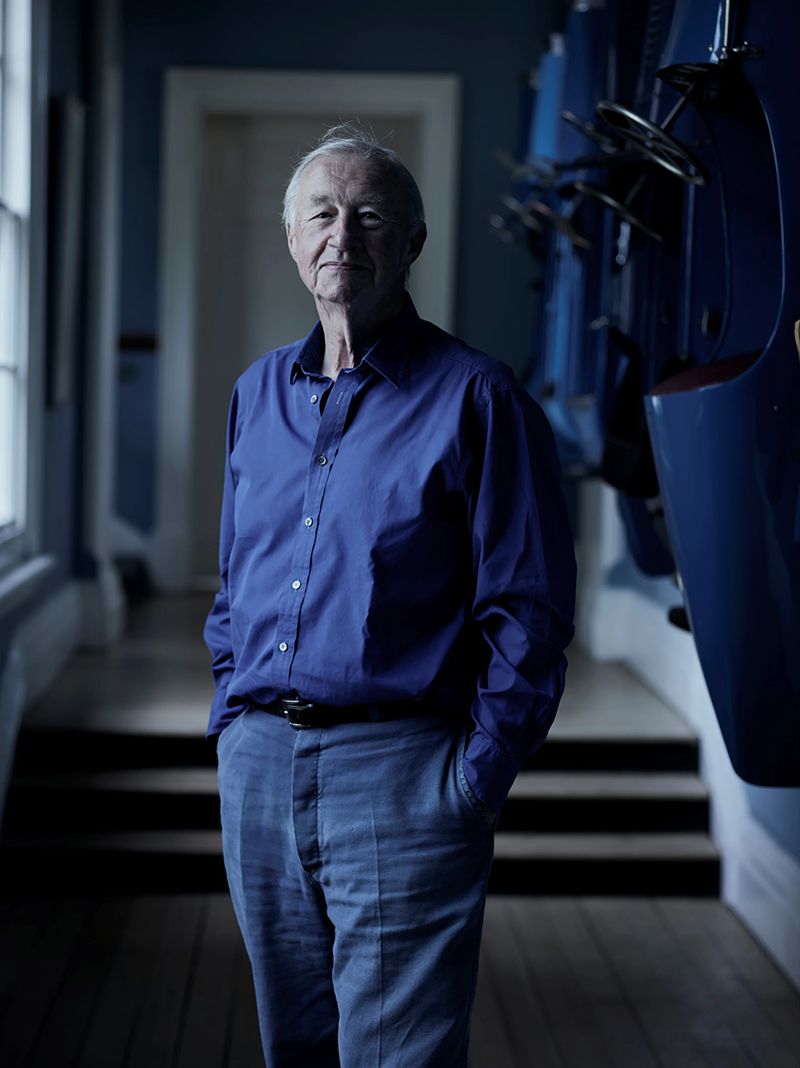
Legendary designer Sir Terence Conran © Julian Broad
Legendary designer Sir Terence Conran © Julian Broad

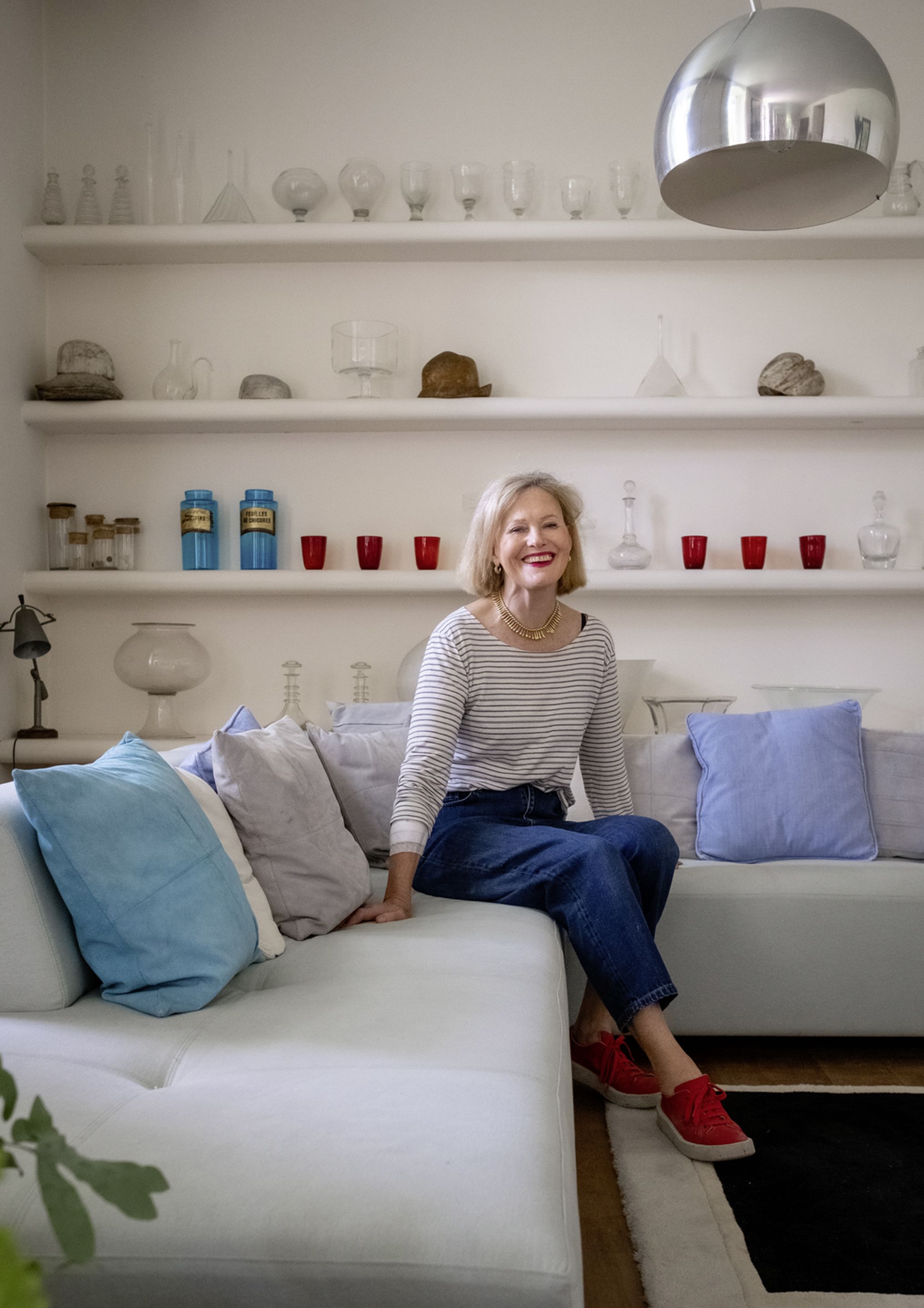
Vicki Conran, who lived at Barton Court with her husband, Sir Terence for 35 years
Vicki Conran, who lived at Barton Court with her husband, Sir Terence for 35 years
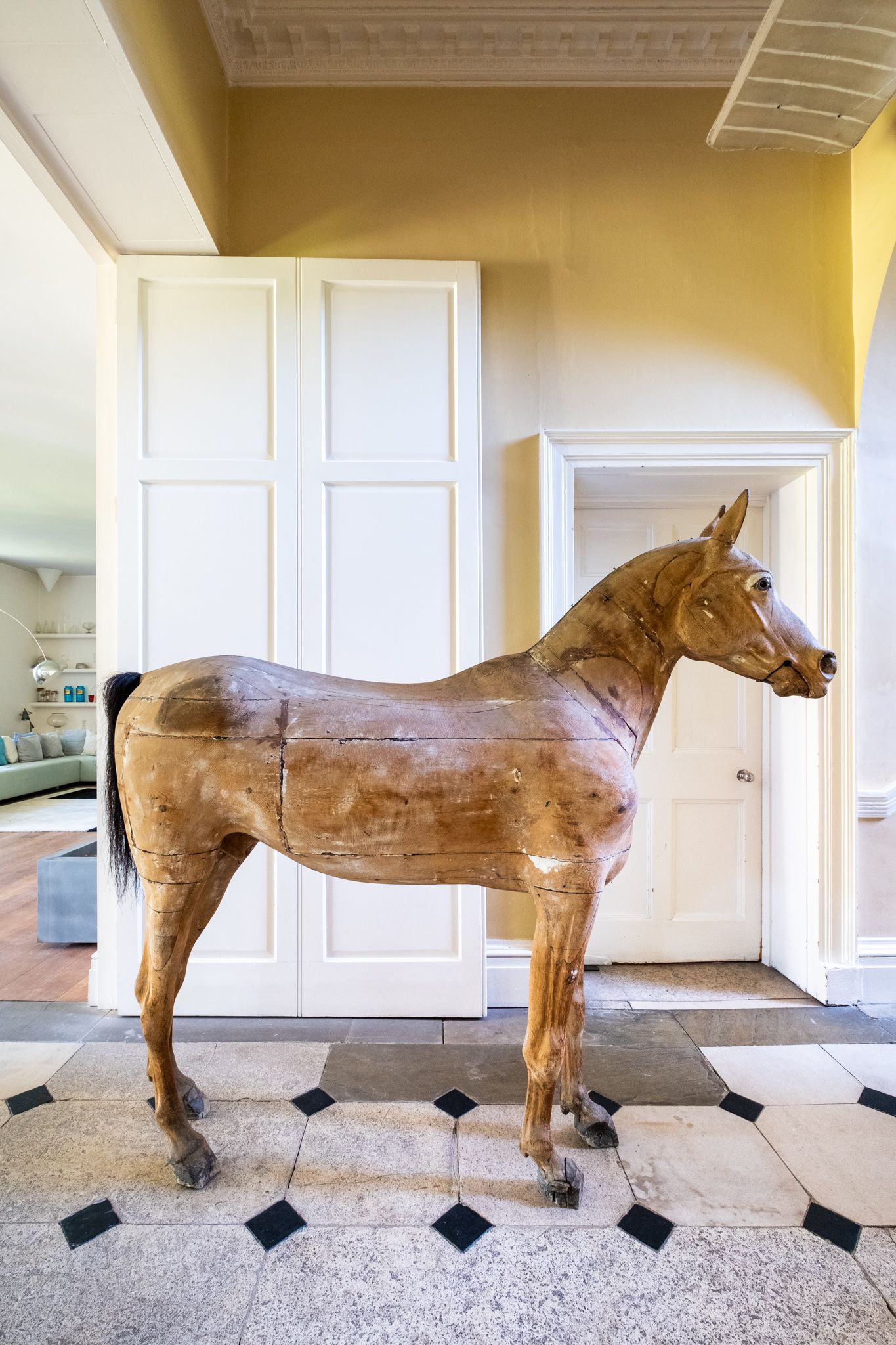
A saddler’s model of a pony, French, early 20th century. Estimate: £1,500 - 2,500
A saddler’s model of a pony, French, early 20th century. Estimate: £1,500 - 2,500
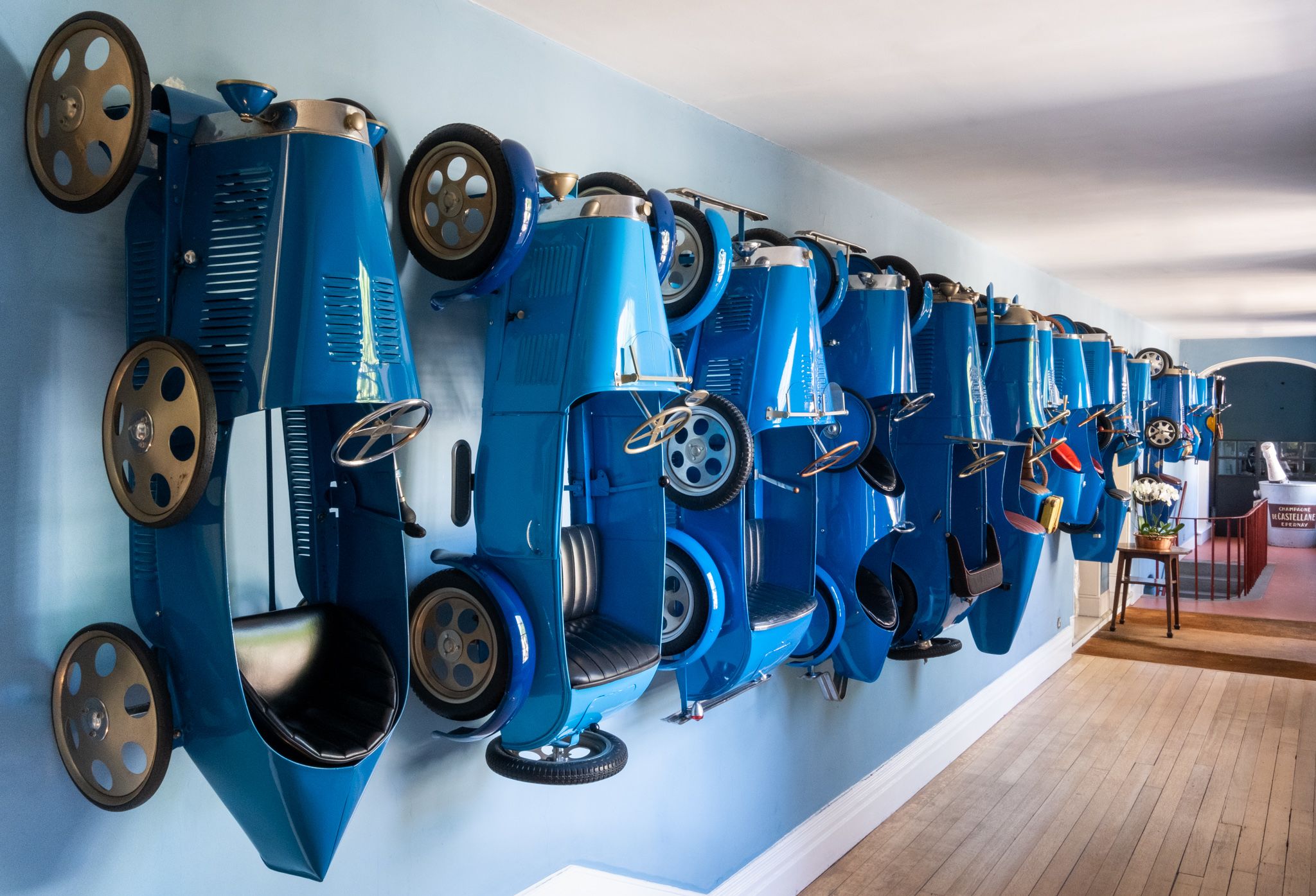
Conran hung his beloved Bugatti model cars on the wall like paintings
Conran hung his beloved Bugatti model cars on the wall like paintings
In 1984, he and Sean Sutcliffe opened Benchmark: furniture-making workshops located in Barton Court’s outbuildings. They created furniture for private clients and public institutions, but for Terence it was like having a prototyping workshop within a few steps of his study. After matutinal coffee and cigar, he would start drawing, and by the end of the day a skilled craftsman could be at work on a maquette. Thanks to the proximity of Benchmark, much of the furniture for Barton Court… was made at Barton Court.
“He liked the fact that it was a big house with big rooms,” remembers Vicki fondly, “and he filled it up with everything.” The size meant that he could acquire entire collections, like the Bugatti pedal cars that he hung on the walls as if they were three-dimensional paintings. “They came from an old boy in France who lived in a château somewhere and had collected them.” But when the time came for him to downsize, his Bugattis had to go. “He didn’t want to break them up, but anyone he approached would say, ‘I’ll have one or two’. Nobody had said they’d have them all until Terence took the lot. The old boy was thrilled.” Now, after a couple of decades on the walls of a Georgian manor house, the Bugattis are on the move once more.
This sale is important because it tells of the inner man, the private person, and reveals more about Terence than perhaps he would have realised. These were objects not acquired with posterity in mind, nor for any project in particular, but because in one way or another they spoke of aspects of Terence’s character. As such, they are witnesses to the breadth and depth of his interests, interests that at times seemed all-encompassing.

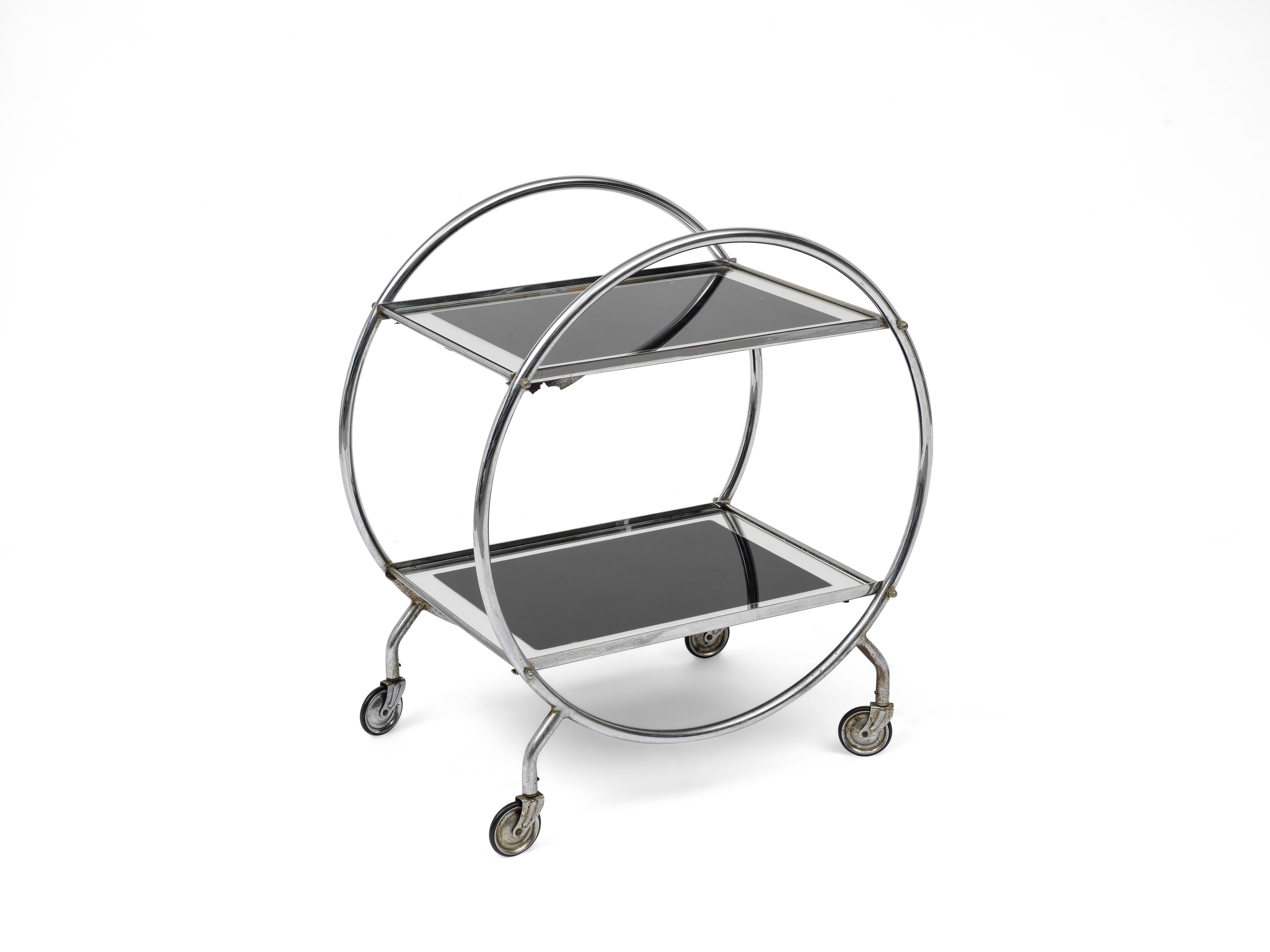
An Art Deco chromium tubular-framed cocktail trolley, circa 1935. Estimate: £500 - 700
An Art Deco chromium tubular-framed cocktail trolley, circa 1935, 68cm wide x 46cm deep x 79.5cm high (26 1/2in wide x 18in deep x 31in high). Estimate: £500 - 700
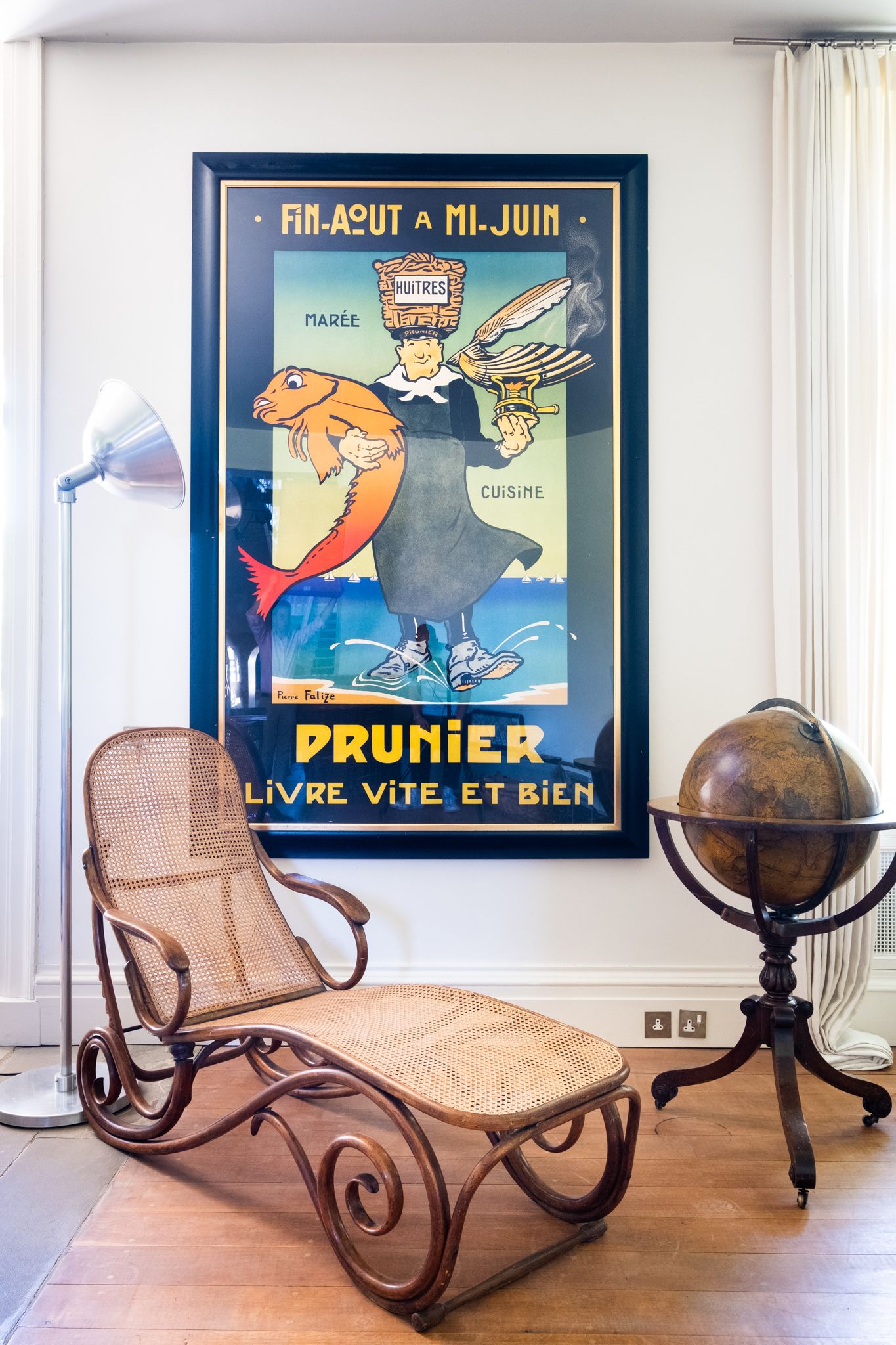
A Thonet caned beech bentwood chaise longue, model number 9702, circa 1890. Estimate: £600 - 1,000
A Thonet caned beech bentwood chaise longue, model number 9702, circa 1890. Estimate: £600 - 1,000
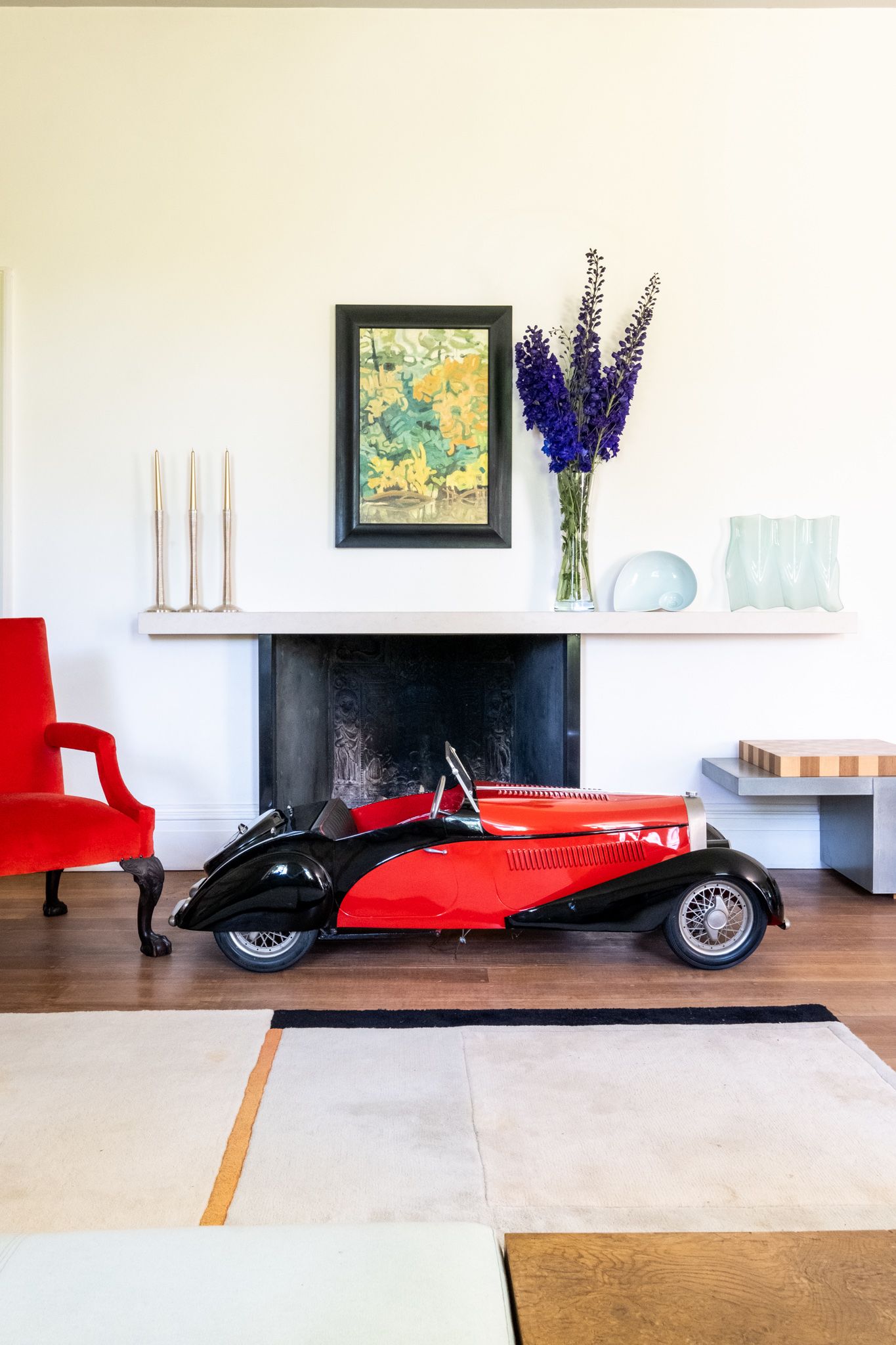
A two-seat Bugatti Type 57 pedal car by Eureka, French, circa 1939, 174cm long overall. Estimate: £1,800 - 2,400
A two-seat Bugatti Type 57 pedal car by Eureka, French, circa 1939, 174cm long overall. Estimate: £1,800 - 2,400
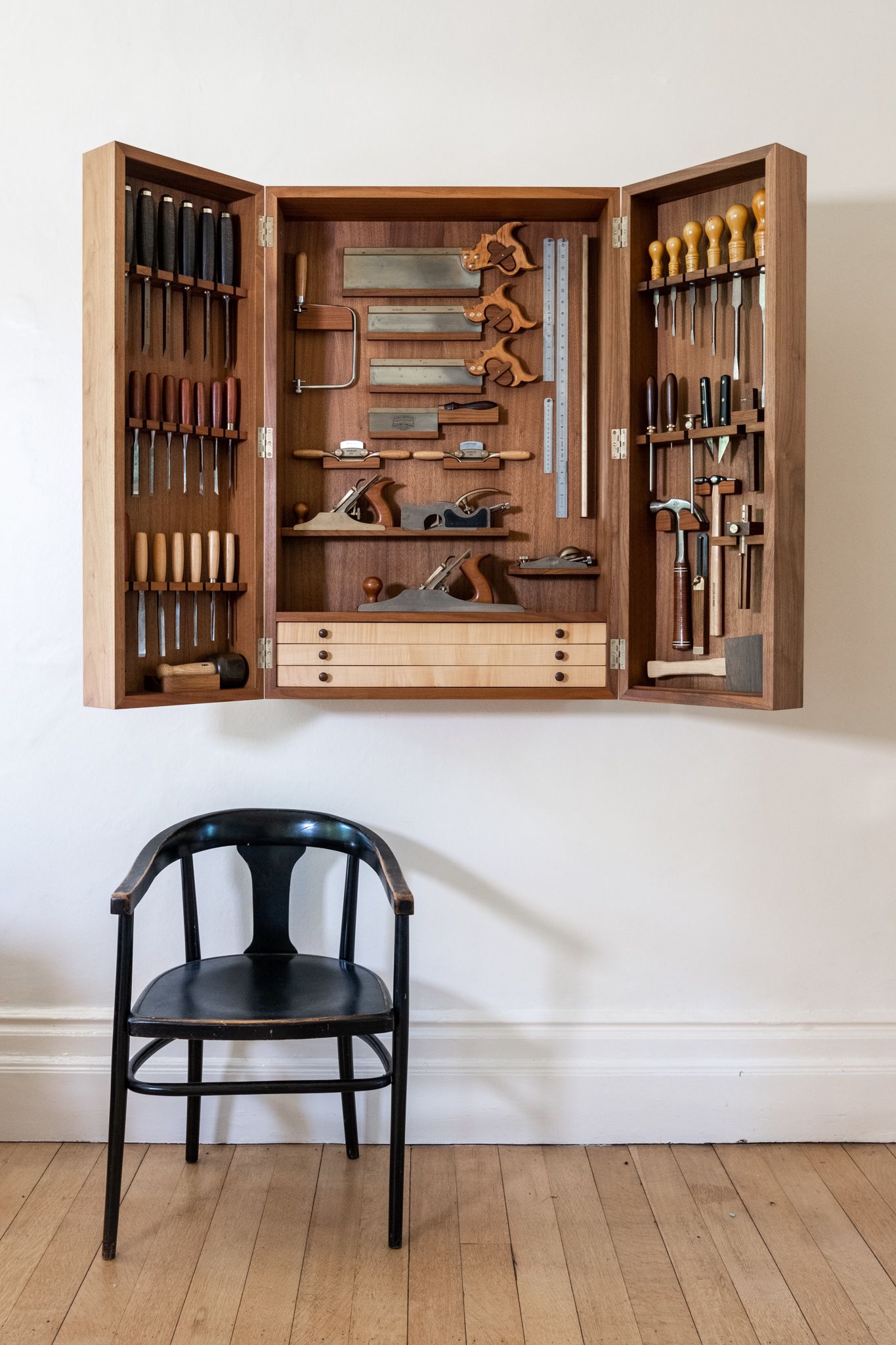
A wall mounted walnut veneered and geometrically inlaid tool cabinet made by Benchmark Furniture for Sir Terence Conran Estimate: £3,000 - 4,000
A wall mounted walnut veneered and geometrically inlaid tool cabinet made by Benchmark Furniture for Sir Terence Conran Estimate: £3,000 - 4,000
I cannot remember a world before Conran: like Habitat, I was born in 1964. I do recall the sense of wonder that accompanied visits in the early 1970s with my parents to Habitat, where we encountered such exotica as the chicken brick. Later, with Storehouse plc, Terence created a retail giant that entered the FTSE 100. During the 1990s, I wrote restaurant reviews for the Evening Standard Magazine; so, in the years after Terence opened Bibendum in 1987, I had a ringside seat from which to observe his transformation of eating out in Britain. And I followed the Design Museum around London until it settled in its permanent home on the border of Holland Park.
Given the scale of his achievements, the epithet ‘national treasure’ seems tweely inadequate. He was a national monument. The image of the man entered the public consciousness: wreathed in a benign nimbus of fragrant smoke from his perennial cigar, which seemed genetically attached like a sixth digit, a smile playing on his lips, his shirt a shade of cornflower so associated with him it was known as Conran Blue, he will forever be as the portrait photograph depicts him at the start of this feature.

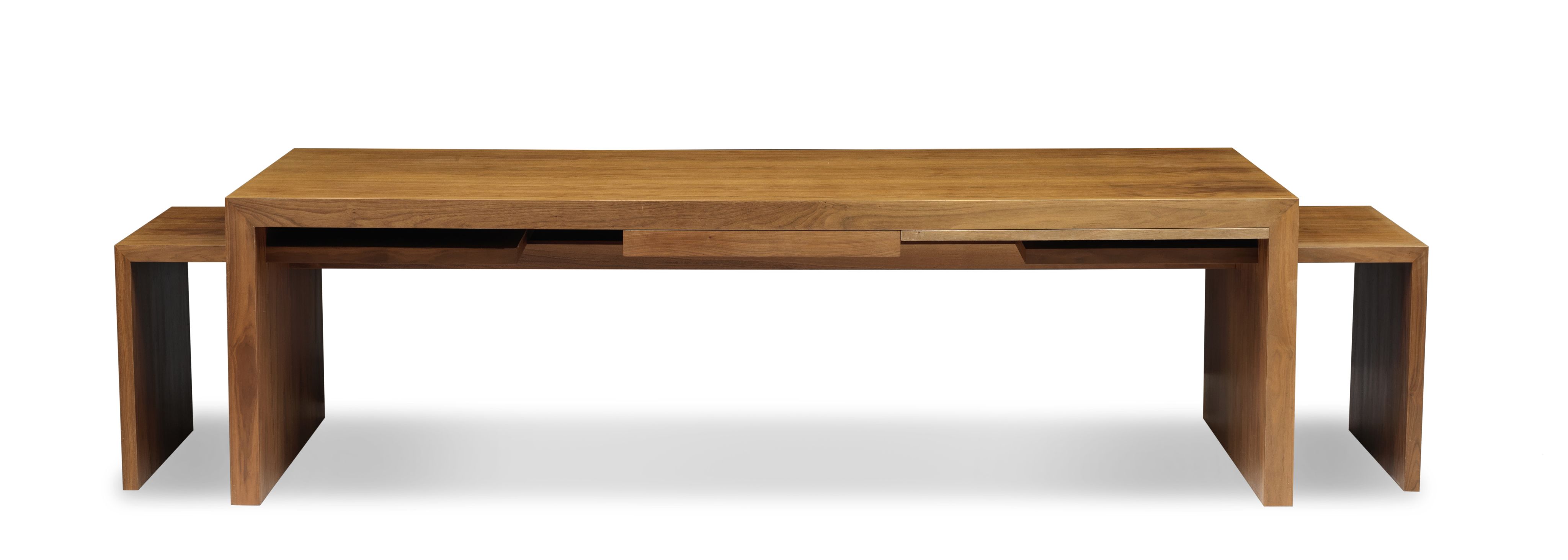
Sir Terence Conran’s desk, designed by Sir Terence Conran, made by Benchmark Furniture. Estimate: £3,000 - 5,000
Sir Terence Conran’s desk, designed by Sir Terence Conran, made by Benchmark Furniture. Estimate: £3,000 - 5,000
If he did not invent design, he certainly dragged it out of the factory and workshop and brought it into the light. He did much to shape modern Britain, his influence reaching well beyond the objects he designed, or the shops, restaurants and museum he opened. Having been a young man in drab-and-dreary, Spam-sandwich Britain – “No way to live,” he once said – he spent his life making sure that future generations were at least aware of another way of living, a way that, more often than not, was to be found on the other side of the English Channel.
He was a metonym for an educated British Francophilia that genuflected at the altar of foie gras and TGV trains. He once remarked of France that “this country taught me not only how to live, it also taught me how to eat.” If France was his religion, then he was like a mighty Old Testament prophet, leading his people to a land of zinc-topped bars, crusty bread and ripe cheese. Each visit was a pilgrimage, each meal in one of its restaurants a spiritual renewal. Although France existed, it took Terence to reinvent it as a paradisiacal land where there were always slivers of black truffle slipped between the skin and breast of cooked chicken, and a bottle of good Burgundy at hand.
The Daily Mail journalist Craig Brown once joked that before Terence there were no chairs and there was no France. It is easy to see how Sir Terence was a gift to those who would mock him, but in truth his ambitions and his appetites were writ so large that they barely needed the exaggeration of satire. Terence was all about scale and abundance: to realise that one only had to see him seated at the desk of his own design, with dimensions that would make many a billiard table feel inadequate.

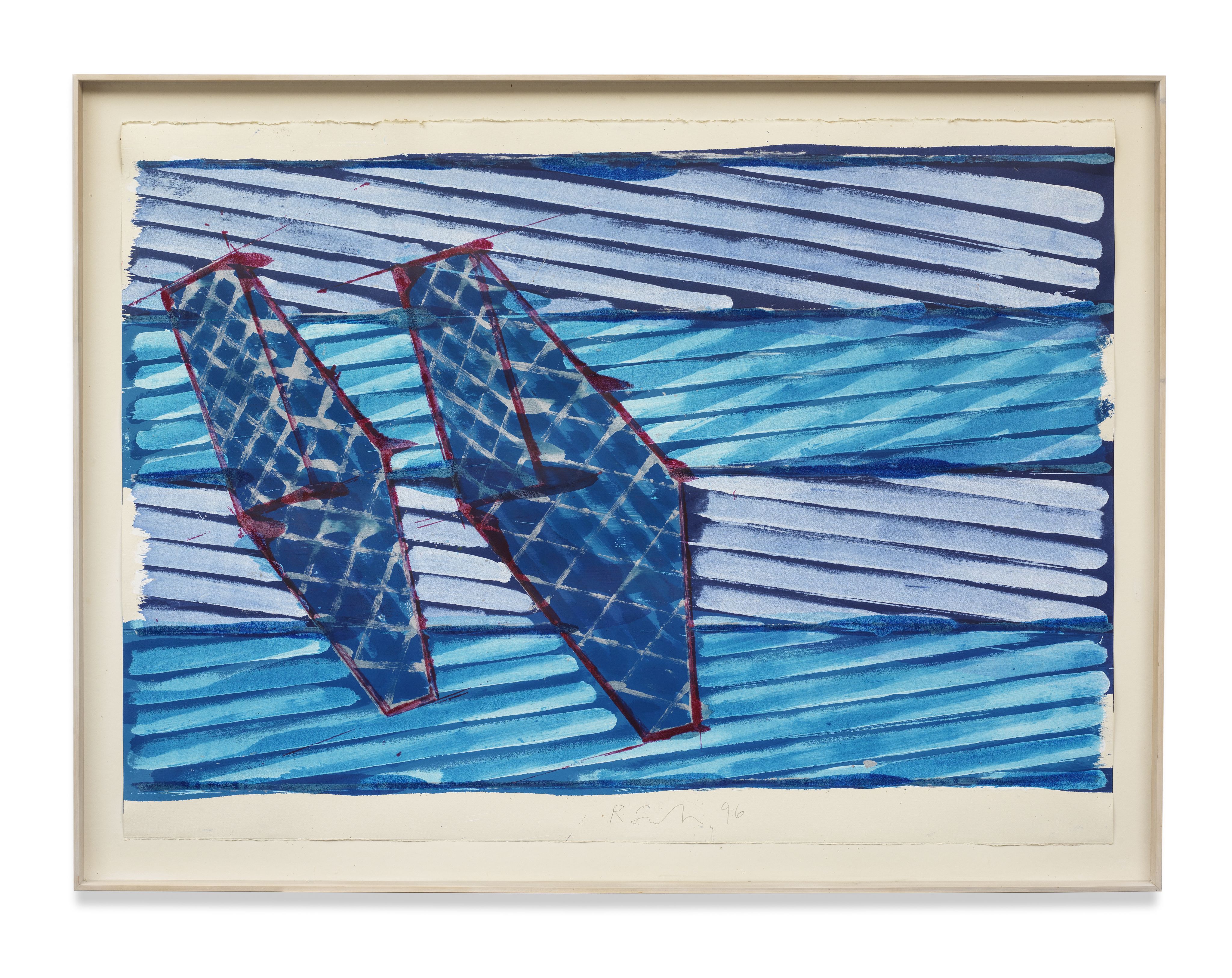
Richard Smith (British, 1931-2016), No 8 - Freeze the Boxes, 1996. Estimate: £1,500 - 2,000
Richard Smith (British, 1931-2016), No 8 - Freeze the Boxes, 1996, signed and dated in pencil, monotype in colours, 117 x 160cm (46 x 63in). Estimate: £1,500 - 2,000
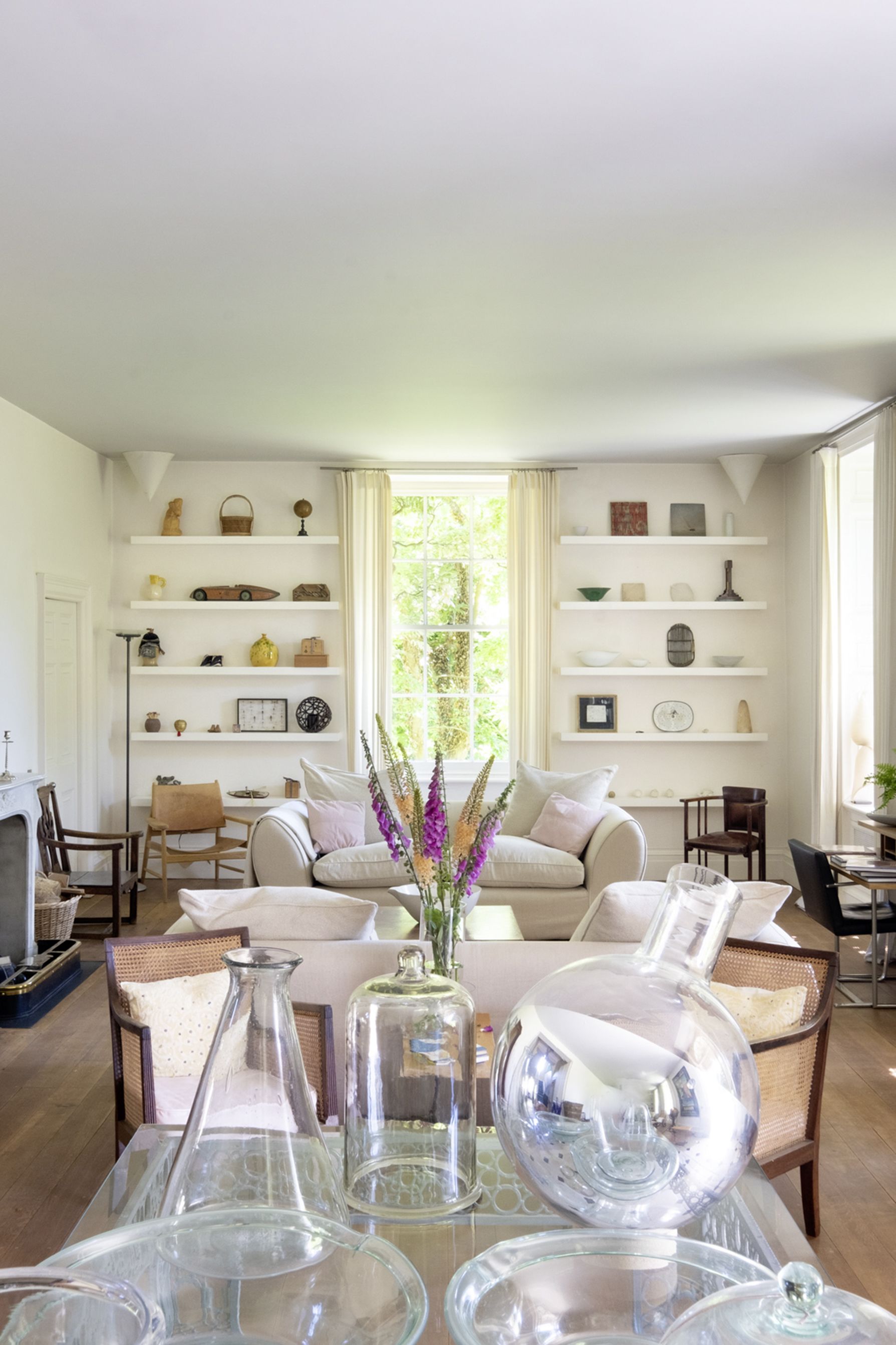
The range of ephemera Conran arranged in ‘shelfscapes’ demonstrates his unique perspective and wide frame of reference
The range of ephemera Conran arranged in ‘shelfscapes’ demonstrates his unique perspective and wide frame of reference
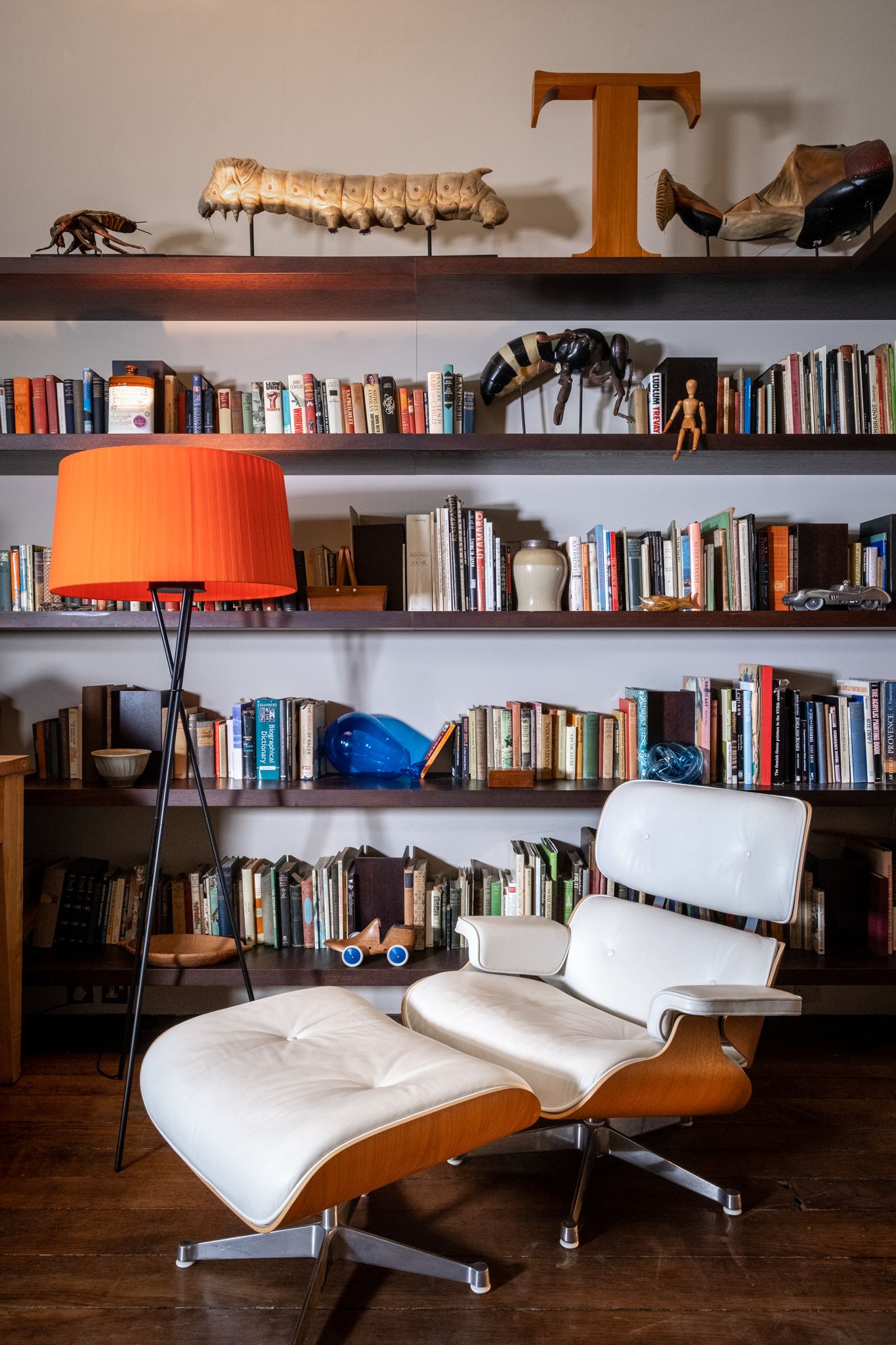
A white leather and walnut Eames Lounge Chair and footstool by Vitra from the Conran Shop. Estimate: £800 - 1,200
A white leather and walnut Eames Lounge Chair and footstool by Vitra from the Conran Shop. Estimate: £800 - 1,200
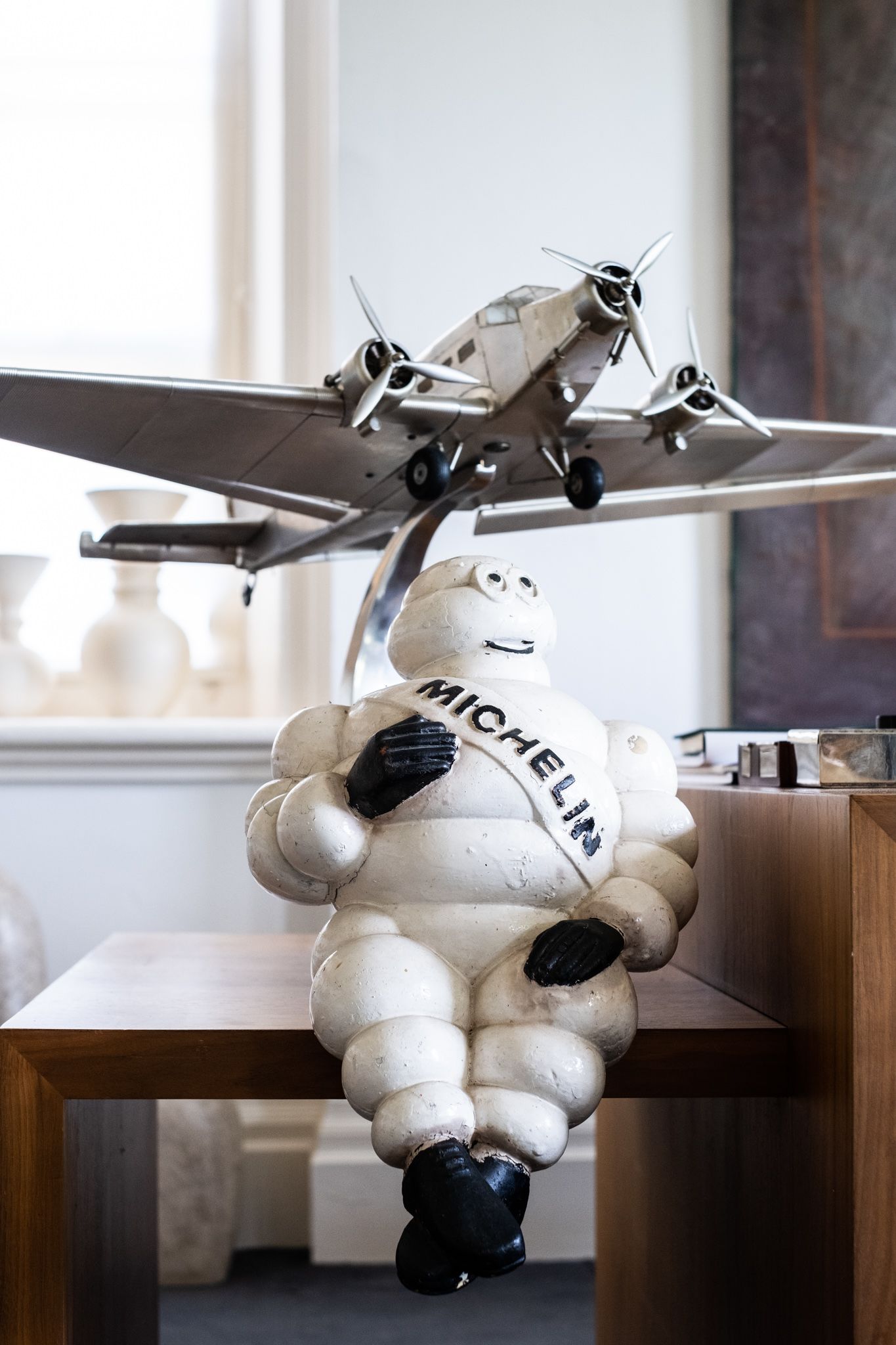
Figure of Bibendum from a group of Bibendum and Michelin-related items and memorabilia. Estimate: £400 - 600
Figure of Bibendum from a group of Bibendum and Michelin-related items and memorabilia. Estimate: £400 - 600
It was a similar sense of scale and abundance that he liked to capture with his restaurants, and he would delight in returning triumphant from some French flea market with such items as a comically oversized bottle and ice bucket advertising De Castellane champagne. “The idea was to put it into the entrance of a restaurant,” explains Vicki. “And very briefly it was in a restaurant, but it got in the way, so we got it at home, and it was fantastic. Whenever we had a party, we would put it out. He liked it because it looked generous – this huge, huge bottle had a generosity and a quirkiness that he liked.”
I was with Terence in Havana in 2007 when he acquired an even more quirky object. We were at the closing dinner for the annual cigar festival, the highlight of which is a charity auction of special boxes of cigars. In the early days of the festival, these tended to be large boxes signed by Fidel Castro, but as time passed the lots became more adventurous: imagine Bernini’s Elephant and Obelisk reinterpreted by Monty Python as a cigar humidor integrated into a bath chair that looks like a vessel out of Pirates of the Caribbean. While it broke every rule of the Bauhaus, and transgressed most conventions of good taste, Terence got it into his head that this cigar-stuffed pachyderm would be perfect for Floridita, a Cuban-themed bar and restaurant he was planning to open in Soho, and he got carried away into six figures on the bidding. But, like the champagne bucket, this baroque cigar trolley found itself retired to Barton Court.
Over the years, Barton Court filled with objects initially intended for shops or restaurants, and the stories behind them offer a privileged glimpse into the way Terence’s interests kaleidoscoped to give birth to new objects. Typical is a pair of triangular and curvilinear bedside tables that were fathered by a promotional ashtray for the French aperitif Byrrh.
“Terence loved that ashtray. He had a couple of them, and their shape inspired him to make a pair of bedside tables,” remembers Vicki. “They were prototyped, and he took them to a Conran Shop merchandise meeting, where he used to roll up with loads of stuff that he had found or designed. The meetings were very democratic and sometimes they said ‘no’.” The Byrrh tables were casualties of that democracy. “And so, we ended up with the prototypes in the house.”

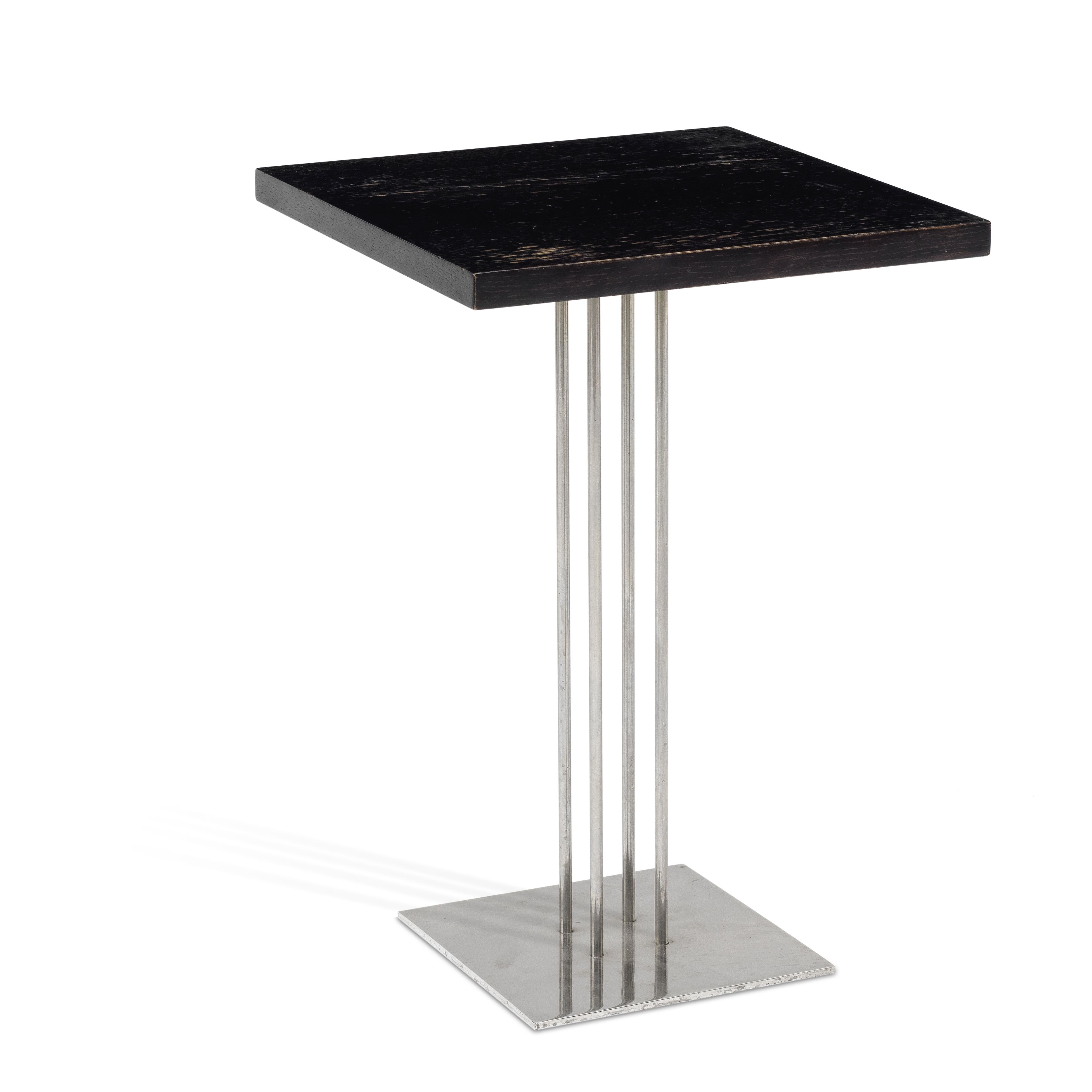
An ebonised oak and chromium steel 'Concorde' table. Designed by Sir Terence Conran for the British Airways Concorde Room at JFK Airport, New York. Estimate: £300 - £500
An ebonised oak and chromium steel 'Concorde' table. Designed by Sir Terence Conran for the British Airways Concorde Room at JFK Airport, New York. Estimate: £300 - £500
A trove of idiosyncratic objects and prototypes, Barton Court was also a store of memories. Visitors to the Design Museum will be familiar with The Head of Invention, the monumental Eduardo Paolozzi sculpture in front of the museum. During the early 1950s, Paolozzi taught textile design at the Central School of Arts and Crafts, where Terence Conran was one of his students. They became friends, sharing a workshop in Bethnal Green and an interest in food: Paolozzi made the young Conran his first squid risotto with black ink and “it was like nothing I’d ever tasted”. Later, Paolozzi would work for Conran, and they remained lifelong friends, as demonstrated by the personally dedicated lithographs that covered the walls of Barton Court.
The Paolozzis are offered in the sale, along with other often highly personal pieces, such as Patrick Caulfield’s 10 Chairs Designed Blind, drawn while the artist was blindfolded one evening as an after-dinner game, or a collection of clay heads sculpted by Paolozzi, Conran and Bacon – pieces bearing witness to moments of light-hearted relaxation snatched from the business of life. While far from canonical, such works illuminate the lives of artist and owner in a way that is only possible for intimate objects loaded with emotion and memories.
What emerges from this biography in objects is a man whose vision was as omnivorous as his appetites. He was an aesthete possessed of a uniquely refined mind and at the same time a gourmand with a robust appetite for the better things that life has to offer. But even though he lived life to a fullness that would have polished off a lesser constitution long ago, there was also a monastic rigour about the way he lived. He surrounded himself with objects of quality, banishing the meretricious, the ugly and the otiose. I don’t think it too much to say that he believed in the moral power of design – that, in surrounding themselves with better things, men and women become better people. In that sense, Barton Court and the things in it were as important to him – and to history – as Kelmscott Manor was to William Morris.

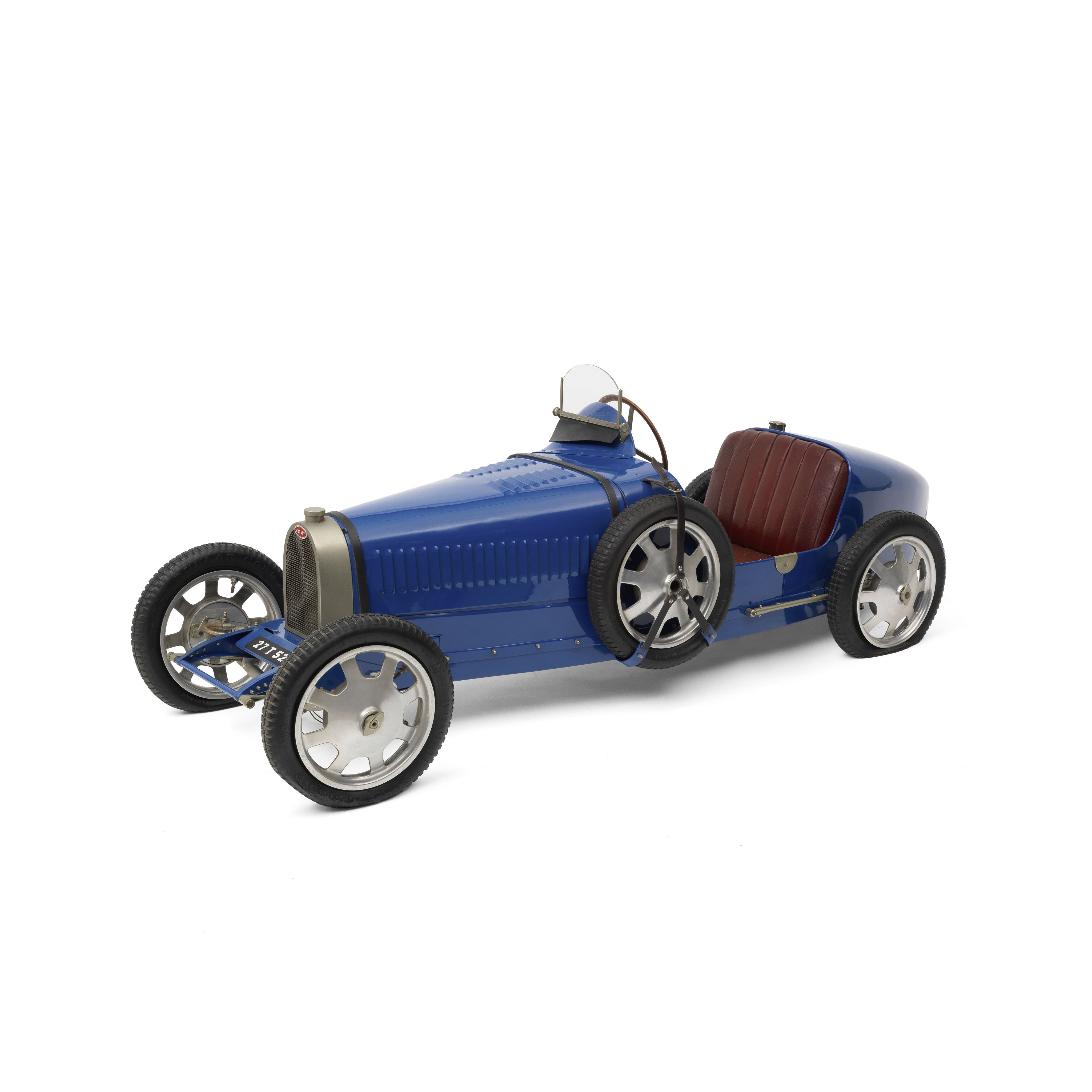
A replica Bugatti Type 52 Bebe electric child’s car, circa 1980. Estimate: £6,000 - 8,000
A replica Bugatti Type 52 Bebe electric child’s car, circa 1980. Estimate: £6,000 - 8,000
Nicholas Foulkes is a contributing editor to Vanity Fair and author of more than 20 books.
 Built with Shorthand