
The clock is ticking

Impassive clock! Terrifying, sinister god, whose finger threatens us and says: Remember!” So wrote the poet Charles Baudelaire in 1857 as the relentless, convulsive march of modernity thrust ever more timekeepers into our homes and pockets. A century later, the first line of George Orwell’s Nineteen Eighty-Four – “It was a bright cold day in April, and the clocks were striking thirteen” – was a bracing reminder of the power these deceitful devices can hold over us. But the sentiment was ancient. Two millennia earlier, the Roman playwright Plautus had a character exclaim, “The gods damn that man who first discovered the hours, and – yes – who first set up a sundial here, who’s smashed the day into bits for poor me!”
Time has governed our lives for longer than we might think, and our literature, music, film, art and sculpture have always reminded us of this truism.
In Thea von Harbou and Fritz Lang’s 1925 book and 1927 film Metropolis, time hangs heavy over the heads of the workers. Joh Fredersen, the city’s master, runs a network of decimal clocks, synchronised to the huge master clock in his lofty office overlooking the city. But it does not reflect the passage of time: it controls it. “In this room, which was at the same time crowned and subjugated by the mighty timepiece, the clock, indicating numbers, nothing had any significance but numbers.”
Time speeds up for the tycoon Fredersen, but down in the bowels of the city’s machine room, clocks slow down, then stop, then go backwards. His son, Freder, having taken on a worker’s shift, cries out, “Father! Father! Will ten hours n e v e r end??!!”

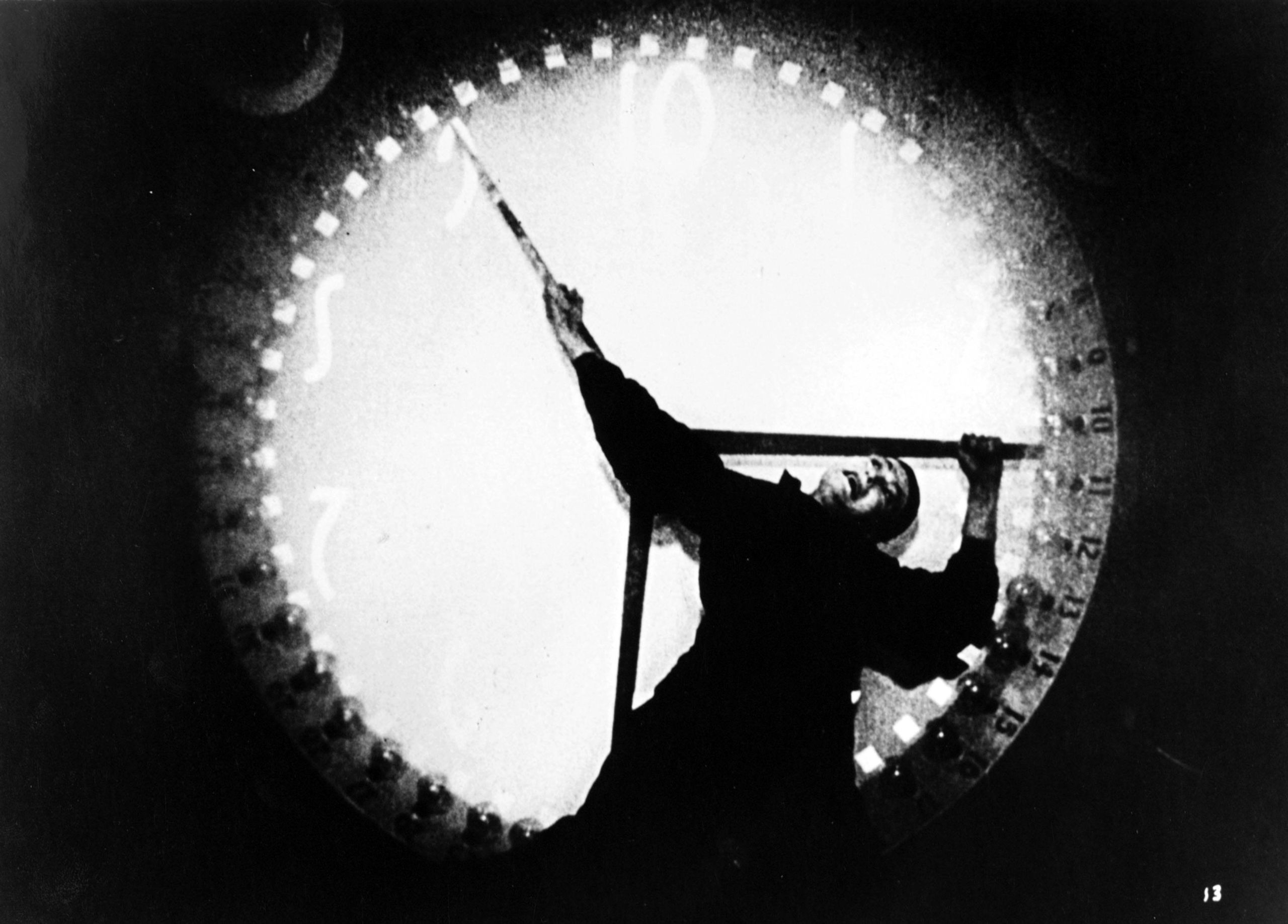
A scene from Fritz Lang’s dystopian film Metropolis, made in 1927
A scene from Fritz Lang’s dystopian film Metropolis, made in 1927

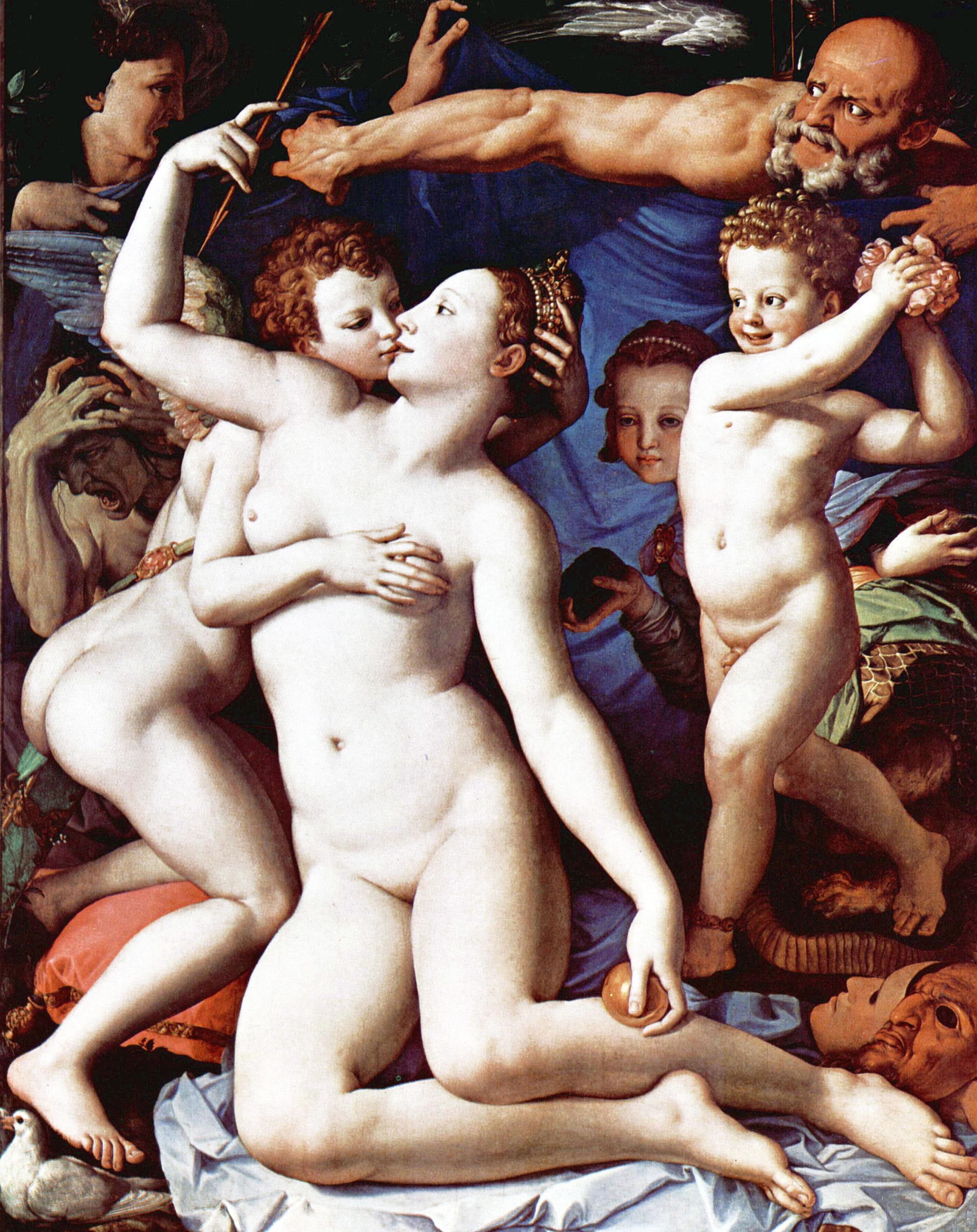
An Allegory with Venus and Cupid by Bronzino, with Father Time hovering overhead
An Allegory with Venus and Cupid by Bronzino, with Father Time hovering overhead

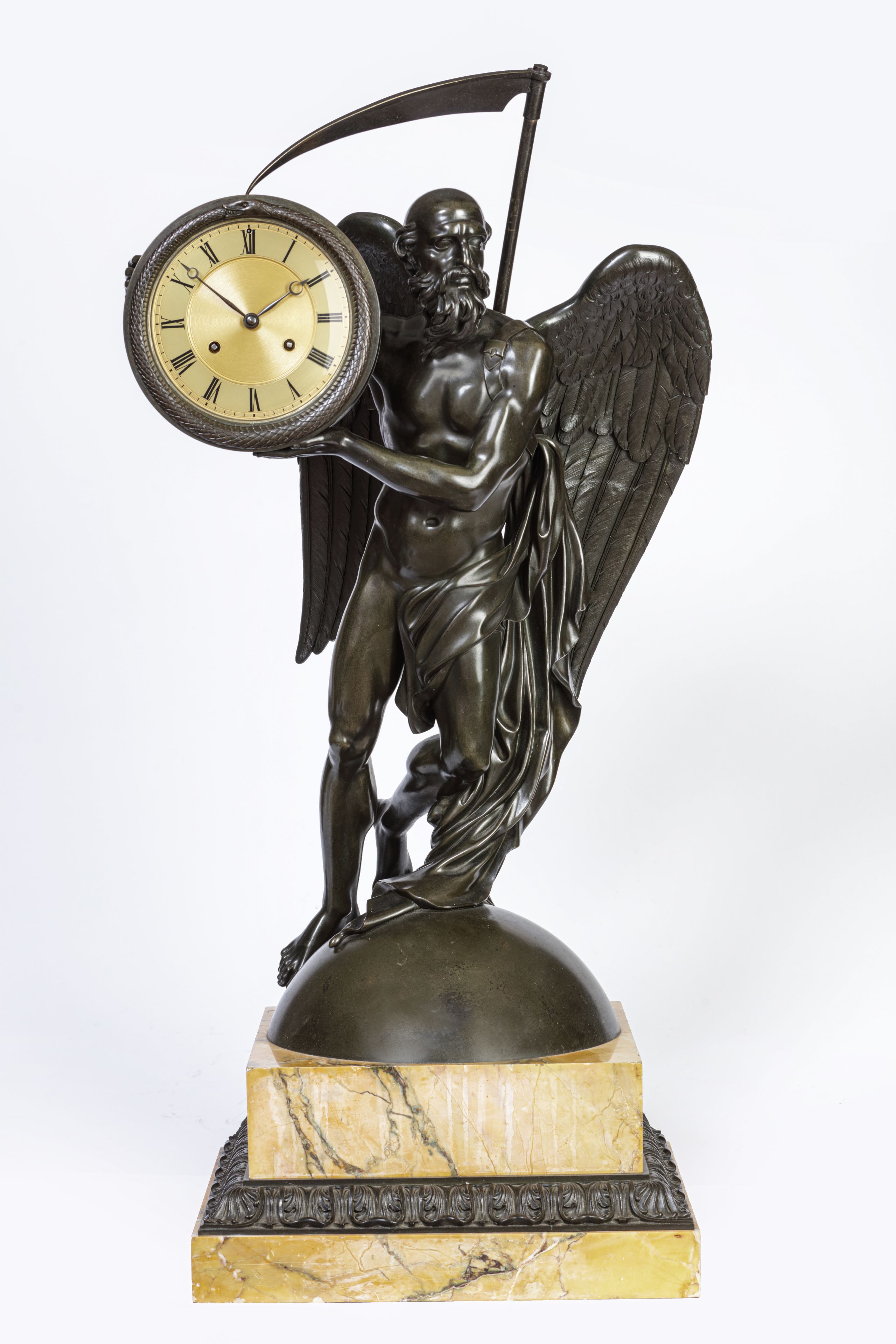
Lot 83. A Large Second Quarter of 19th Century French Patinated Bronze and Giallo Antico Marble Figural Mantle Clock of One Month Duration, Probably by Denière, the movement signed for Denière-Paris and with suppliers stamp for Pons, € 4,000 - 6,000.
Lot 83. A Large Second Quarter of 19th Century French Patinated Bronze and Giallo Antico Marble Figural Mantle Clock of One Month Duration, Probably by Denière, the movement signed for Denière-Paris and with suppliers stamp for Pons, € 4,000 - 6,000.
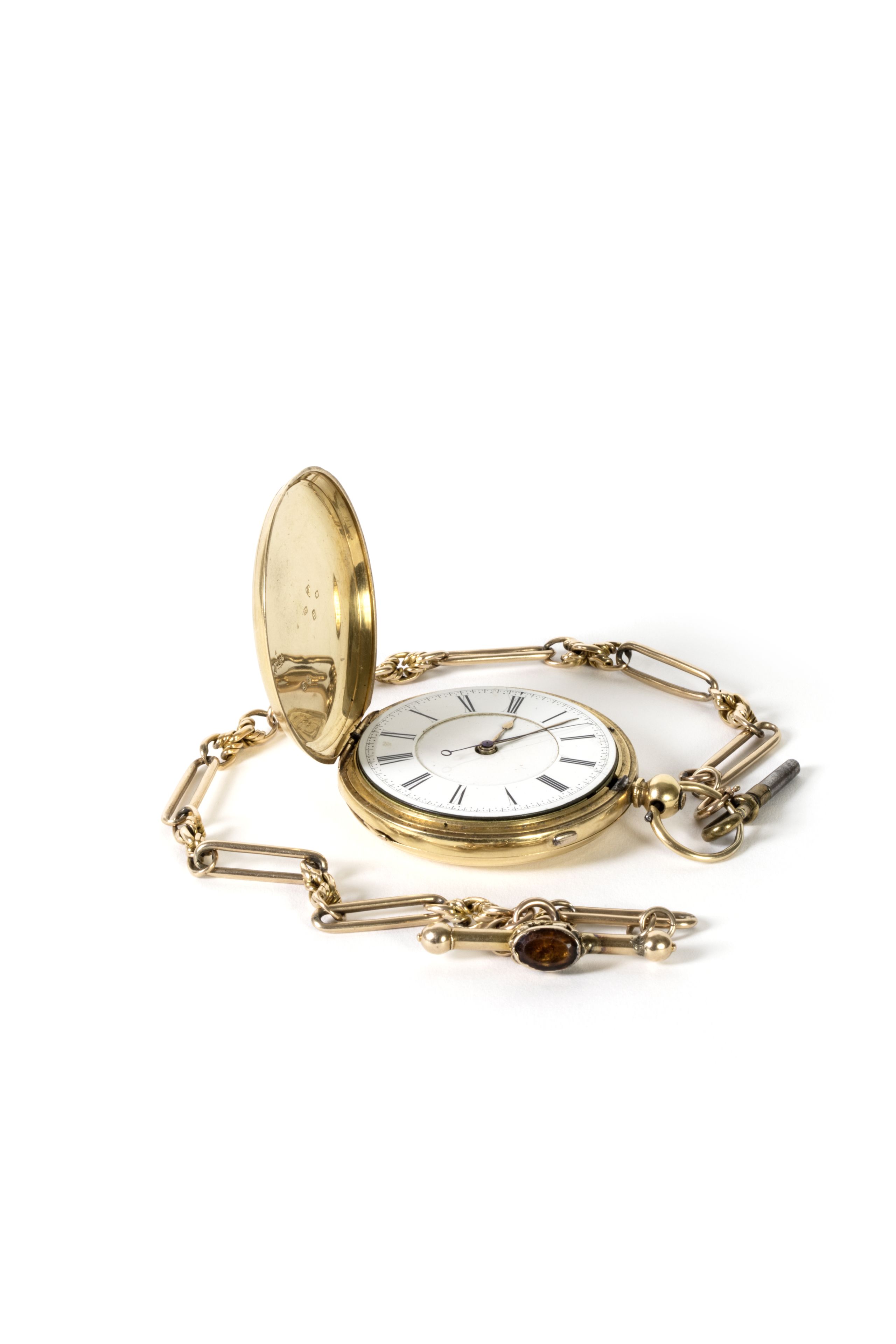
Lot 69. J. Hargreaves & Co, Liverpool, Of Historical and Literary Interest, An 18K Gold Key Wine Full Hunter Pocket Watch Described in James Joyce's Ulysses, Chester Hallmark for 1881, € 50,000 - 80,000.
Lot 69. J. Hargreaves & Co, Liverpool, Of Historical and Literary Interest, An 18K Gold Key Wine Full Hunter Pocket Watch Described in James Joyce's Ulysses, Chester Hallmark for 1881, € 50,000 - 80,000.
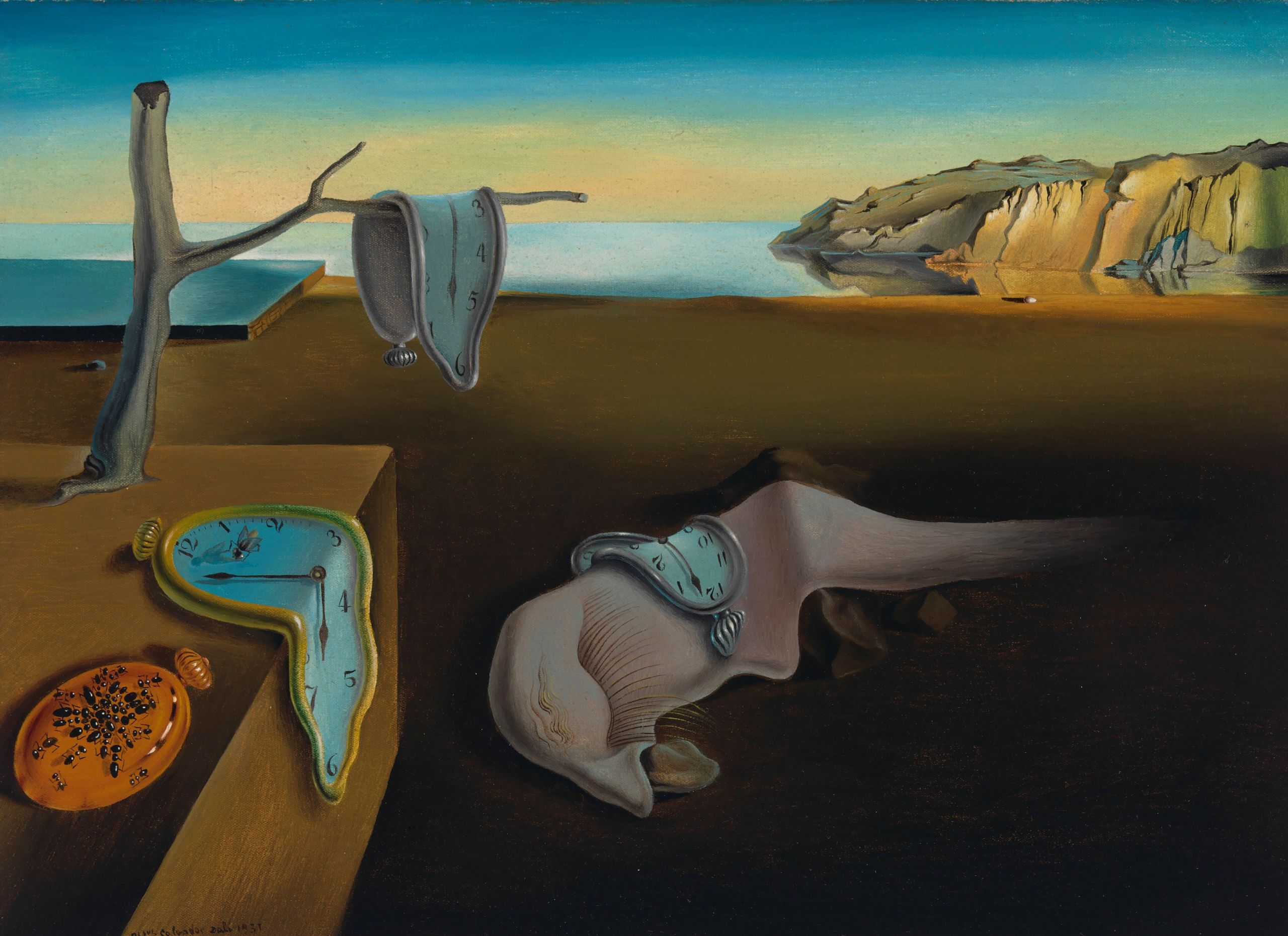
Von Harbou started writing Metropolis in 1924, just five years after Albert Einstein published his world-shaking theory of general relativity, which proposed that high clocks run faster than lower ones. Salvador Dalí’s The Persistence of Memory, with its ironic melted watches (a “bleak and infinite dreamscape”, in the words of New York’s Museum of Modern Art), was painted in 1931, four years after Metropolis. Critics have suggested it represented the new Einsteinian temporal relativity, though Dalí denied it.
We have always looked to clocks to measure out our lives. In James Joyce’s 1922 novel Ulysses, cemetery caretaker John O’Connell “hung his thumbs in the loops of his gold watch chain” as he spoke softly to mourners. The watch that belonged to O’Connell (a real-life character) is being offered in the Time is Precious Sale at Bonhams Paris this November. Watches, like other horological technologies, are memento mori – reminders of our own mortality. “Fancy being his wife”, thought Joyce’s character Leopold Bloom. “Come out and live in the graveyard. Dangle that before her. It might thrill her first. Courting death…” But it comes for us all, in the end.
It is the simple hourglass that has symbolised the passage of time, and its inevitable end, for the longest. In 1338, the Sienese artist Ambrogio Lorenzetti painted what is the oldest-known depiction of an hourglass. Part of The Allegory of Good and Bad Government, a series of frescoes in Siena’s Palazzo Pubblico, it sits in the hand of Temperance, who looks at it with concern, indicating that the sands of time are running out.
Soon, the hourglass had taken on two new identities besides Temperance. First was as a 15th-century symbol in the hands of a winged, bearded Father Time. Then, in the 1530s, Hans Holbein pressed an hourglass into the skeletal hands of grinning, ever-present, danse macabre skeletons. Memento mori – remember that you must die: a reminder, as if post-pandemic societies needed one, that time waits for nobody.
Pieter Bruegel the Elder’s brightly coloured, meticulously detailed, and truly horrifying The Triumph of Death, painted in the 1560s, wiped the smiles off the faces of the skeletons. In Bruegel’s sickening scene, hourglasses are weapons. Soon, these modest timekeepers joined guttering candles and rotting fruit in ‘vanitas’ pictures on the walls of 16th- and 17th century homes in the Netherlands and elsewhere. The words from Ecclesiastes 1:2 translate as follows: vanity of vanities, all is vanity.
Depictions of the cruel passage of precious time were not confined to art galleries, public buildings, or the homes of prosperous, pious merchants. In windswept graveyards across Scotland and Ireland, hourglasses crudely carved on to rude headstones attempt to weather the ravages of time to this day. And, lest we conclude that these symbols represent a past world of virtue and vice, then let’s observe the banners, placards and graffiti of today’s environmental protestors seeking to reverse species extinction and climate crisis. The symbol we see is an hourglass.
But it’s not all bad. For as long as time has been represented, its cruelties have been resisted, and today, around the world, slow, kinetic sculptures and musical scores invite us to look deeper and longer at time.
On New Year’s Eve 1999 (or, rather, 01999, if we are truly to believe in our future), a mechanical clock began to tick in a waterside building on San Francisco’s Presidio. Named the Clock of the Long Now, and made by engineers at the Long Now Foundation, it is the prototype of one designed to run for 10,000 years – currently under construction inside a Texas mountain. The same day, Longplayer, a musical score that will play without repeating for 1,000 years, began to sound from a historic lighthouse on London’s River Thames. It is the work of Jem Finer and it can now be heard, already two per cent of the way through its cycle, in listening posts around the world

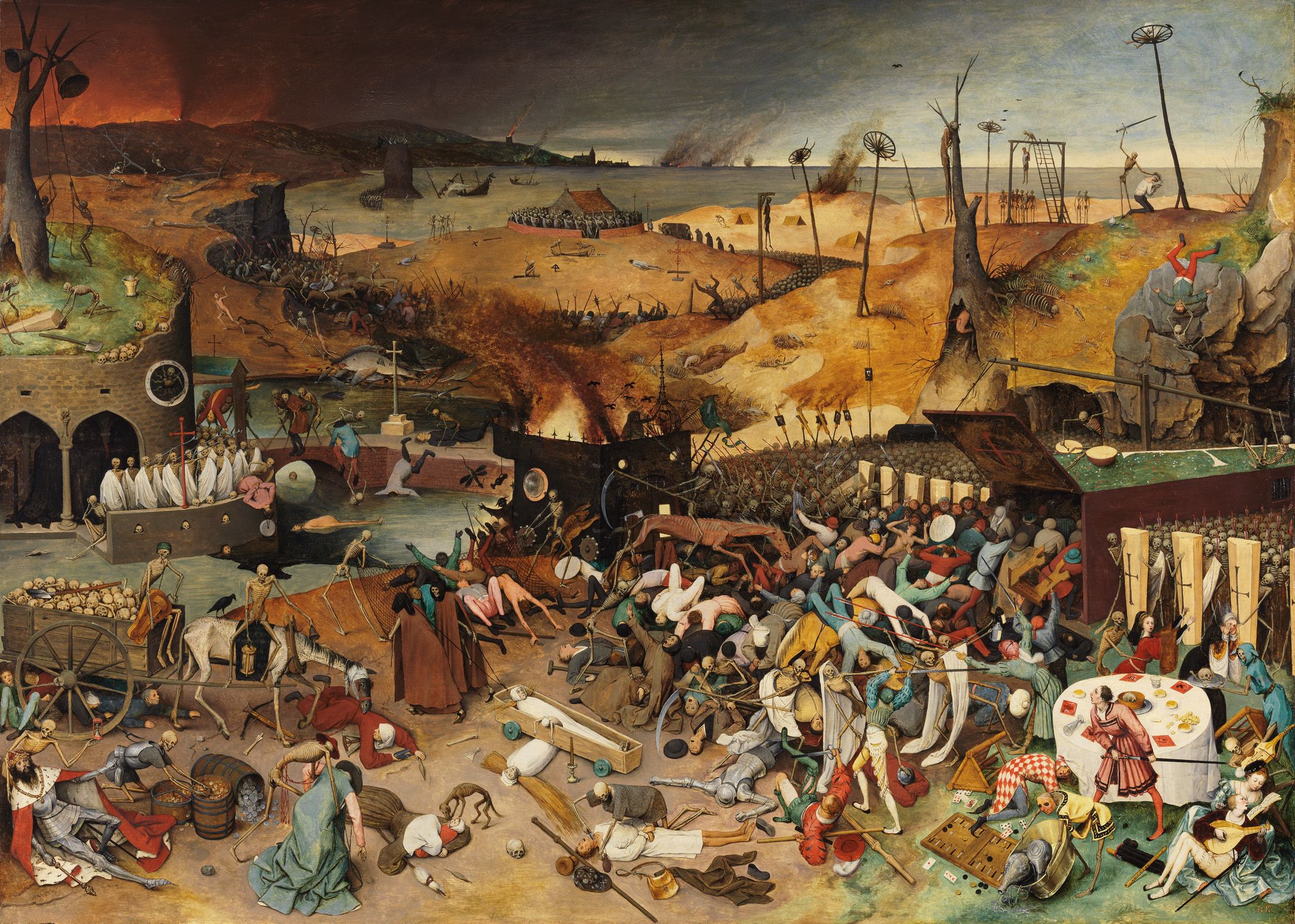
The Triumph of Death by Pieter Bruegel the Elder
The Triumph of Death by Pieter Bruegel the Elder

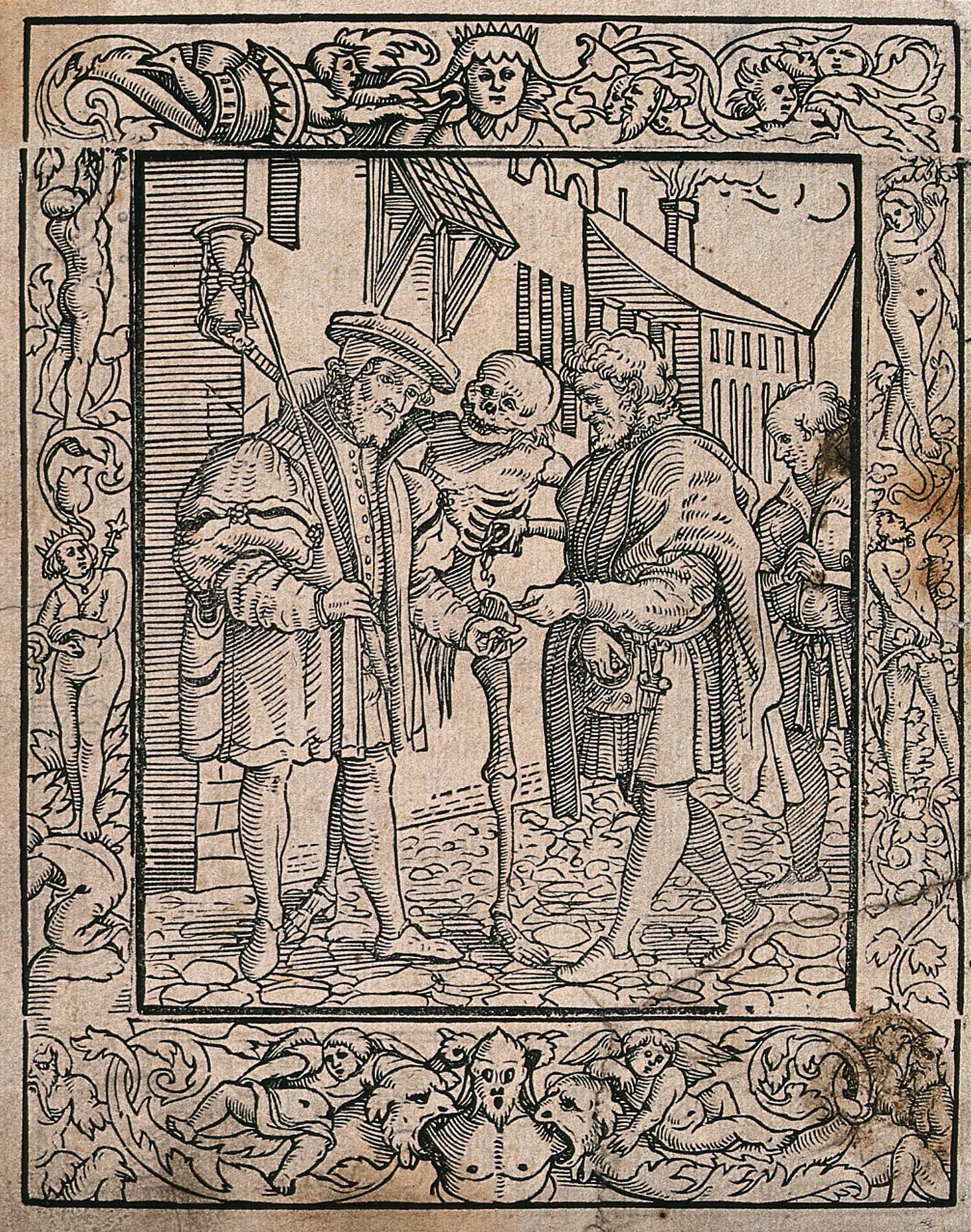
Dance of Death: The Advocate by Hans Holbein
Dance of Death: The Advocate by Hans Holbein

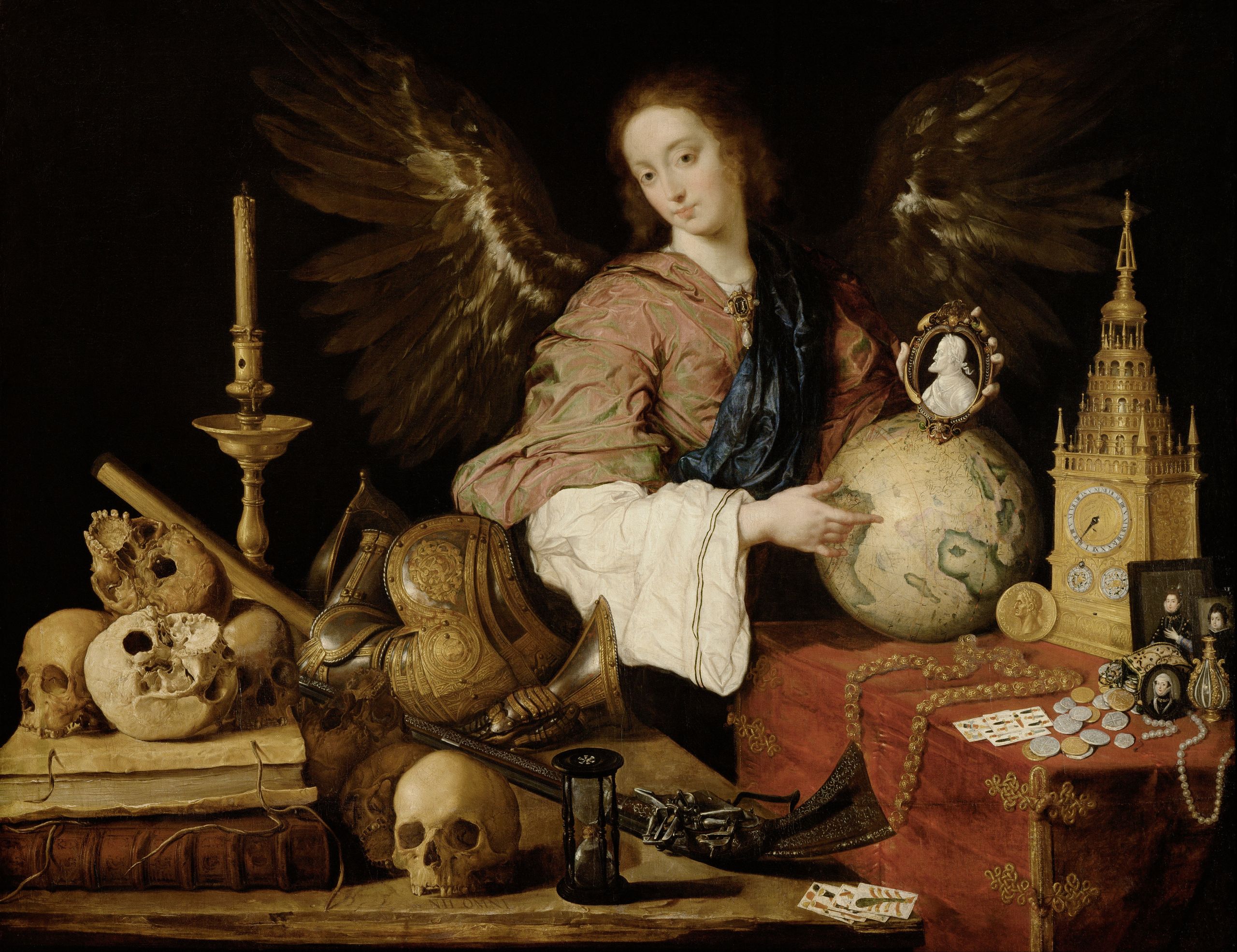
Allegory of Vanity by Antonio de Pereda
Allegory of Vanity by Antonio de Pereda

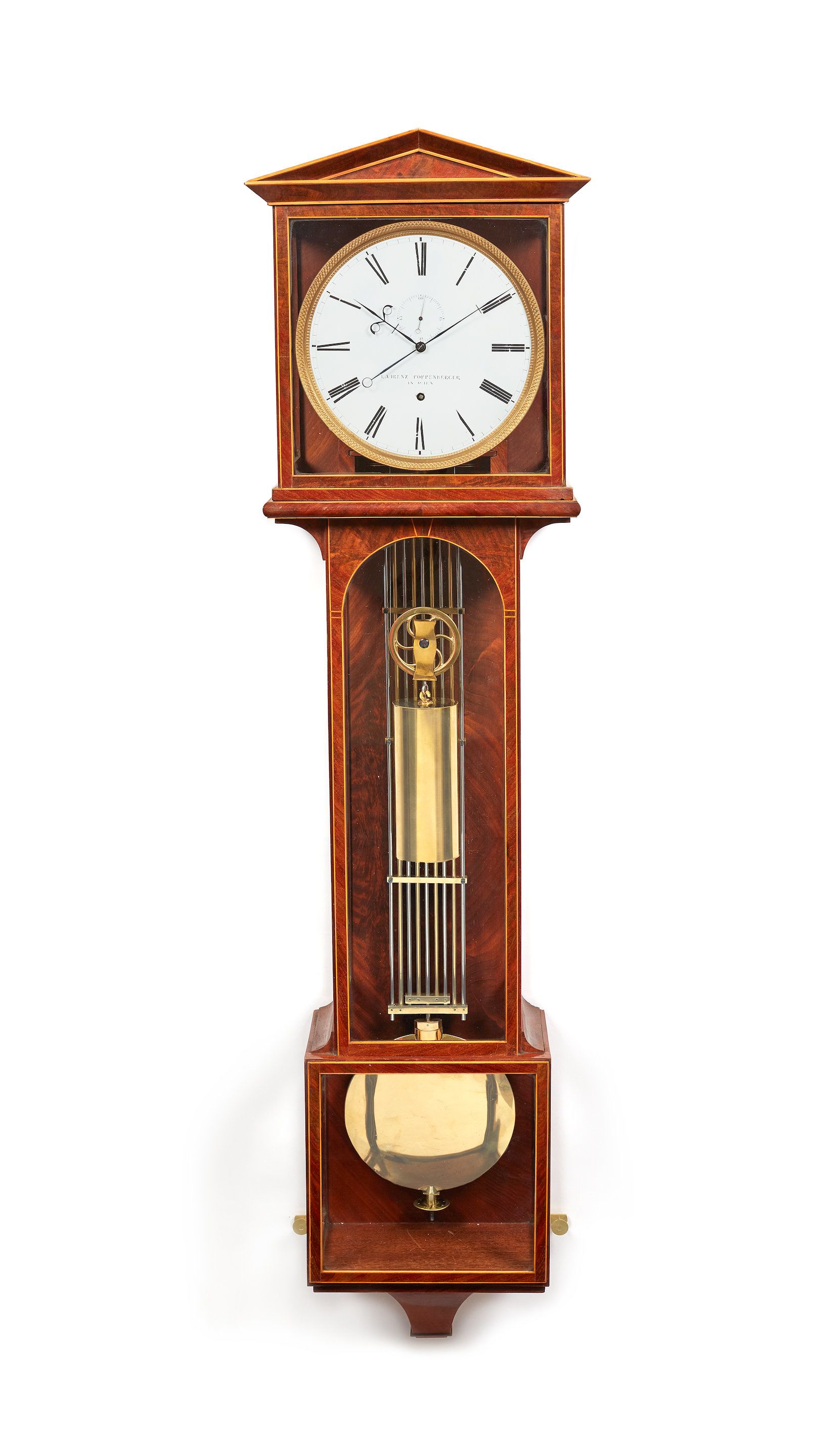
Lot 67. A Fine and Rare Second Quarter of the 19th Century Austrian Maple-Strung Mahogany 'Lanterndluhr' of Six Months Duration, Laurenz Poppenberger, Vienna, Circa 1835,€ 38,000 - 45,000.
Lot 67. A Fine and Rare Second Quarter of the 19th Century Austrian Maple-Strung Mahogany 'Lanterndluhr' of Six Months Duration, Laurenz Poppenberger, Vienna, Circa 1835,€ 38,000 - 45,000.
Time and music are, of course, one and the same, which makes clocks and their ticks ever-present in our musical lives. The Clock – Symphony No.101 in D Major, begun by Joseph Haydn in 1793 – delighted listeners with its metronomic beat. The same year, composers at Cambridge University arranged George Frideric Handel’s aria in Messiah – “I know that my Redeemer liveth” – to strike the bells of the University Church of Great St Mary’s. These Cambridge chimes were heard by Edmund Beckett Denison as a young student; in later life, as a clockmaker, he imported the tune into his masterwork, the Great Westminster Clock, with its hour-bell ‘Big Ben’. Now the redesignated Westminster chimes sound Handel’s aria across the globe.
Sometimes, though, it is worth seeking out singular timekeepers, as opposed to those that make their presence heard worldwide. Longplayer was by no means Finer’s last word on time. One wet, misty November morning, 15 years ago, I went walking in King’s Wood, a 1,500-acre forest in Kent. Among the trees, I found Score for a Hole in the Ground, Finer’s musical installation that has an indeterminate duration and form, contrasting with Longplayer’s precisely defined future. Atmospheric moisture collected in a dewpond falls into a seven-metre-deep hole, striking suspended percussive instruments. The music that results is funnelled up through a COR-TEN steel ‘trunk’ topped by an HMV style gramophone horn, the height of a mere sapling compared with the mature trees nearby. This music is slow and soft. Time passes at a different rate. This clock helped me take a breath and listen.
And that, surely, is the point. Time is precious. Our time is precious, and the story of time is the story of us. Wherever we look, whatever we read or hear, we see clocks. But they show us not just the passage of time but the inventive spirit of the artists, makers, musicians, philosophers and writers who have long urged us to pay attention, to live better lives, and to imagine longer futures. Times pass, the deeds remain. Clocks – and those who represent their power – help us remember this. They are windows into our very souls.
David Rooney is a writer and curator. His latest book, About Time: A History of Civilization in 12 Clocks, was published in June 2021.
 Built with Shorthand