
Revolutionary Art
.
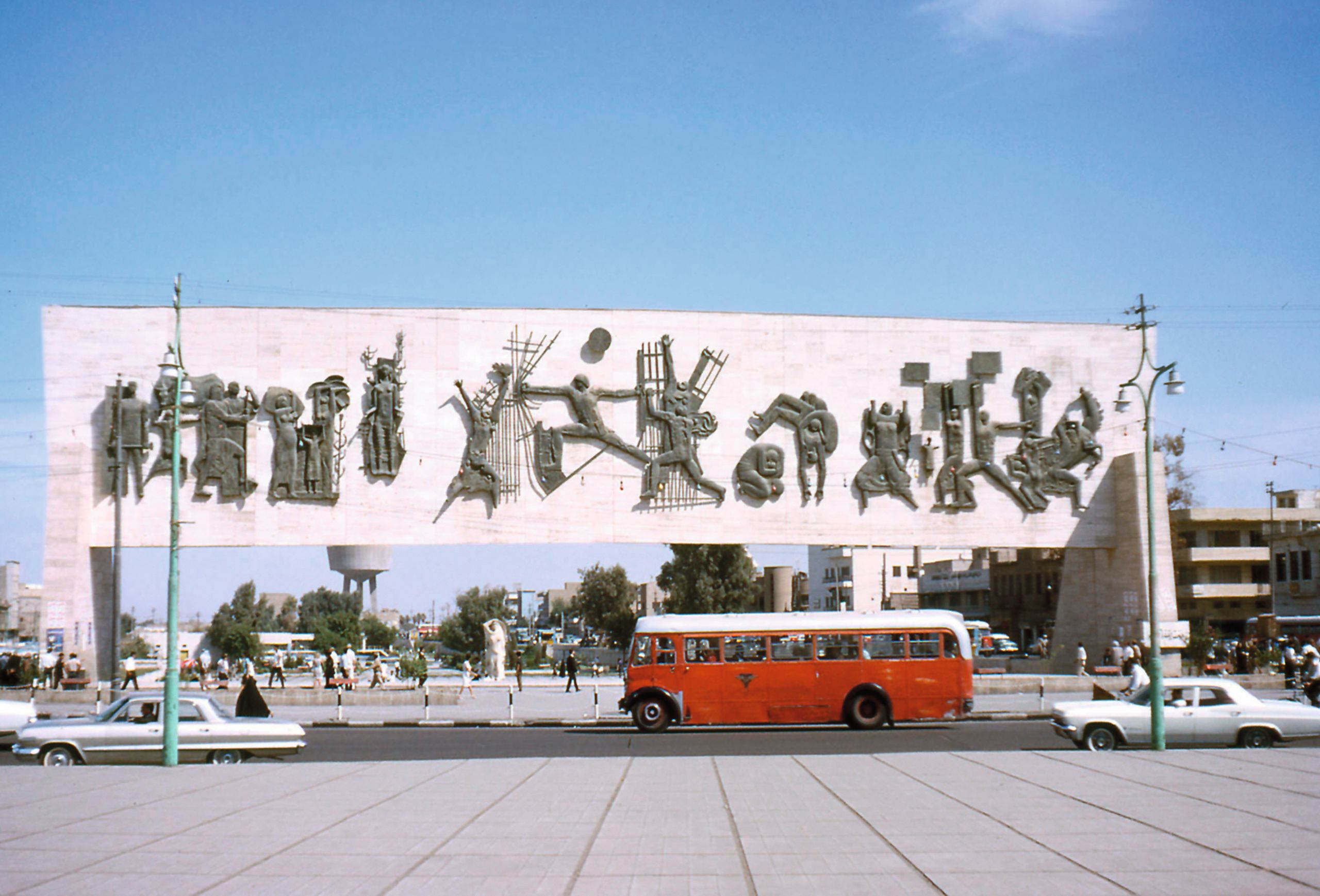

In 2004, with Baghdad in ruins following the invasion that toppled Saddam Hussein, the Iraqi Interim Government undertook a project that might, under the circumstances, have appeared eccentric, even perverse: the restoration of a monumental sculpted frieze in the city’s central Tahrir Square. The 50m-long Freedom Monument was, however, no mere civic adornment. It was of great symbolic, cultural, even moral importance to the Iraqi people. In fusing elements from the Babylonian past with international modernism, Jewad Selim – ‘father of Iraqi modern art’ – created a work that, in the words of public works minister Nisrin Mustafa al-Barwari, “reminds us of the good part of Iraqi history, the potential for Iraqis, and the wealth of art and culture that exists in this country”.
The Freedom Monument was an epic work, the realisation of which is widely believed to have killed its creator. In a sequence of dramatic bronze reliefs, Selim depicted scenes from the 1958 revolution, which – as it was perceived at the time – had freed the country from foreign domination.
In the Modern & Contemporary Middle Eastern Art sale in June, Bonhams will offer works showing radically different sides of this pivotal Middle Eastern modernist, providing a very different viewpoint on his oeuvre from the heroic public sculpture of the Freedom Monument. Women Waiting (1943), painted during the Second World War when Selim was grounded in Baghdad after having studied in Paris and Rome, is a small and loosely painted vignette of life in the city’s seedy back alleys. It offers a bitterly critical view of the position of women in Middle Eastern society. Mother and Child, created around 1950 after a sojourn at London’s Slade School of Art, is a severely abstracted sculpture that touches on one of the most enduring and universal of human themes.
These dramatically different responses to the female form are the work of an artist whose career is well-documented, but who remains something of an enigma; an artist whose trenchant views on the role of art in the then-developing Middle East are still frequently quoted, but whose relatively small oeuvre seems to dart impulsively, not only between painting and sculpture, but between styles, forms and historical eras.
Born in Ankara, Turkey, in 1919, into an Iraqi upper-middle-class family of international outlook, Selim was an artist who lived and worked between cultures and traditions, not only between the Middle East and the West, but between the tolerant, secular culture that thrived in the Middle East’s great urban centres – certainly for a privileged elite – after the break-up of the Ottoman Empire following World War I and the militant Arab nationalism that arose in the 1950s.
Selim’s father, an officer in the Ottoman army, was a skilled amateur painter in the Western academic tradition, the rudiments of which he had picked up not in Europe, but at the officers’ training school in Istanbul. Selim’s siblings and family friends all practised art in one form or another. Yet he stood out as a remarkable talent. A sculpted bust of King Faisal I, the Iraqi monarch installed by the British in 1921, produced at the age of just 12, saw Selim earmarked for a government scholarship to study abroad. At the time of his embarkation for studies in Paris in 1938, he seems still to have seen art as a matter of successfully imitating European models.

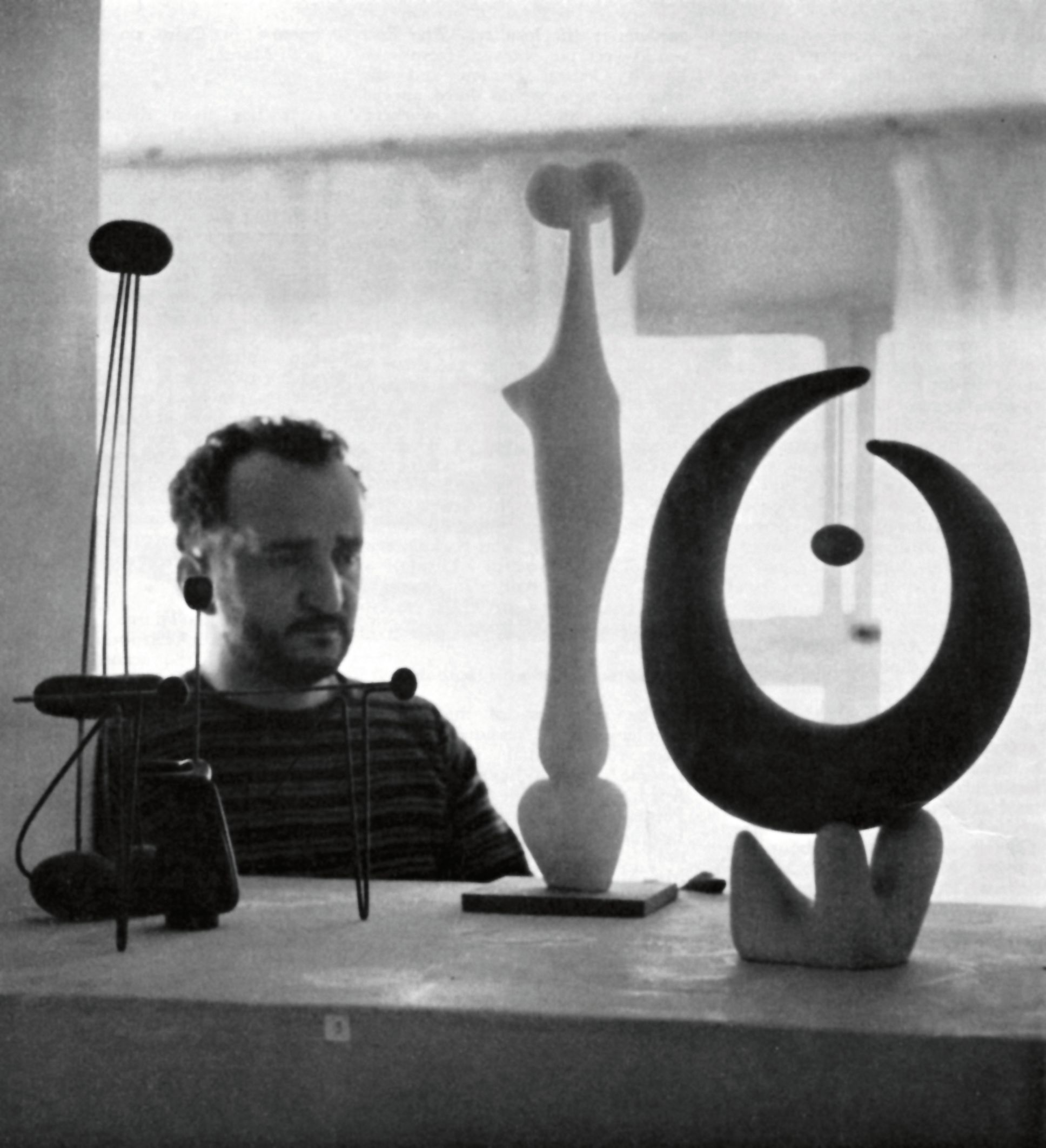
Selim in his studio, with Mother and Child to his right
Selim in his studio, with Mother and Child to his right

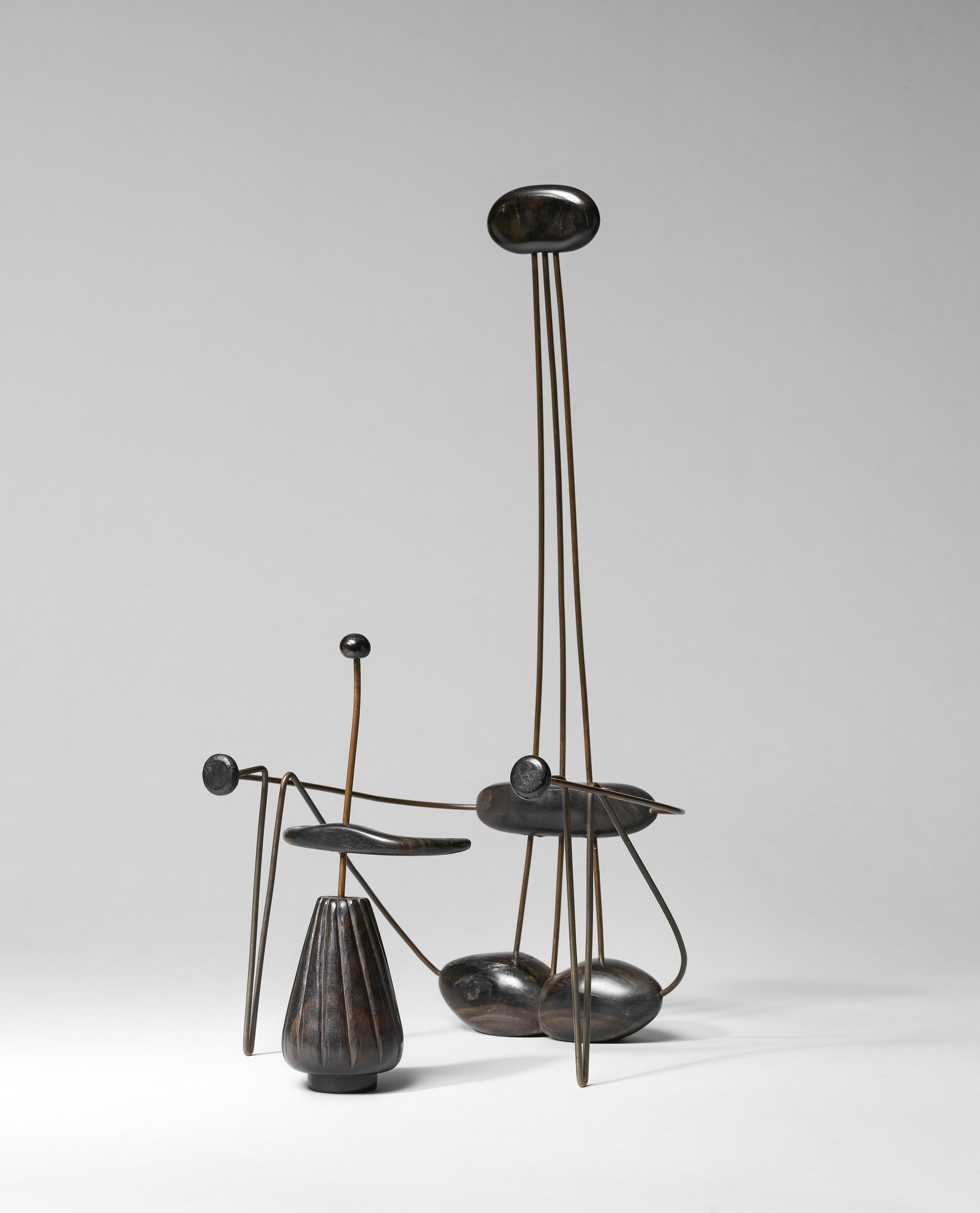
Lot 15. Jewad Selim, Mother and Child. Estimate: £60,000 - 100,000 ($80,000 -130,000)
Lot 15. Jewad Selim, Mother and Child. Estimate: £60,000 - 100,000 ($80,000 -130,000)
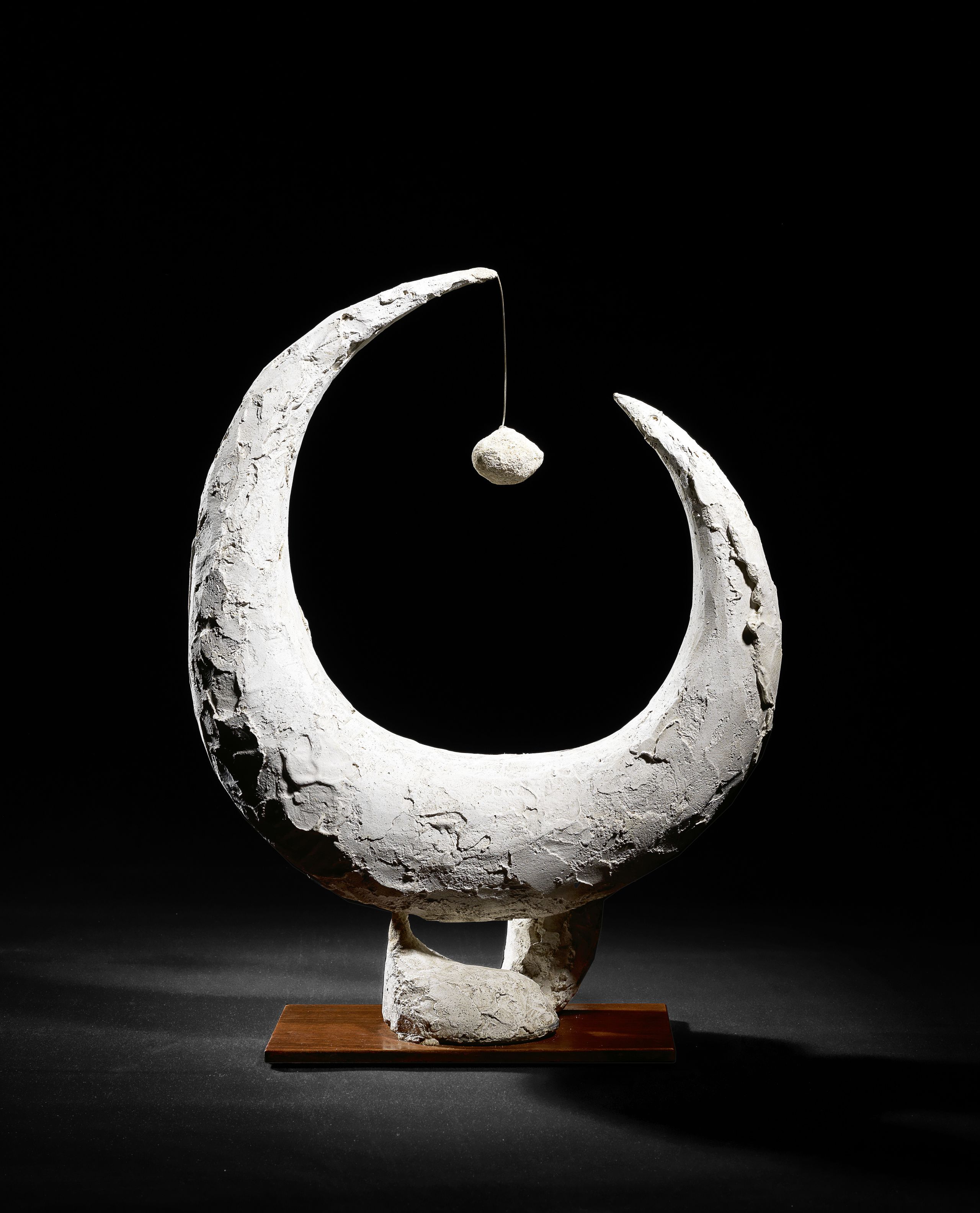
Lot 16. Jewad Selim, Motherhood . Estimate: £40,000 - 60,000 ($50,000 - 80,000)
Lot 16. Jewad Selim, Motherhood . Estimate: £40,000 - 60,000 ($50,000 - 80,000)

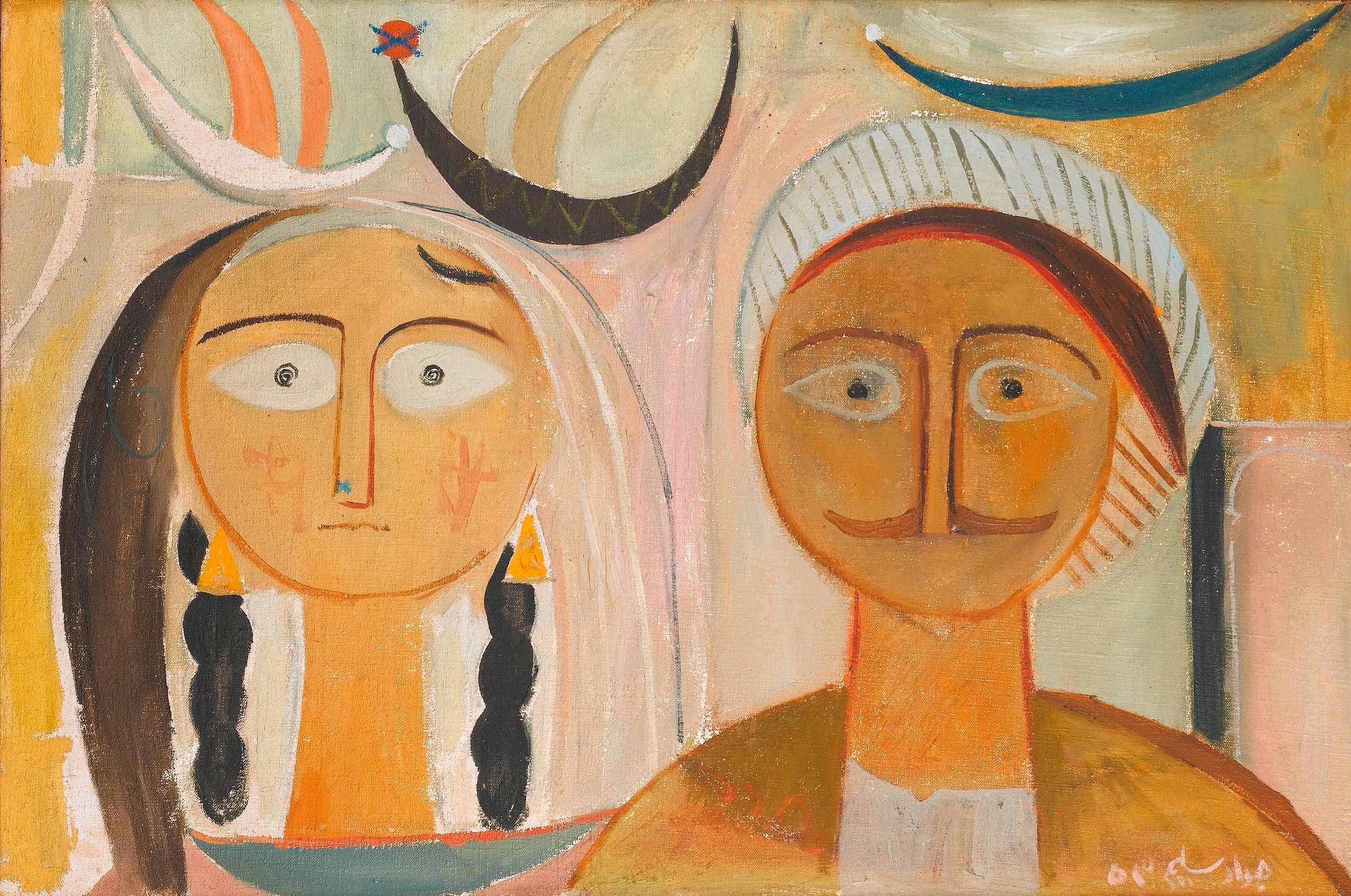
Young Man and his Wife, Selim’s 1953 self-portrait with his wife Lorna
Young Man and his Wife, Selim’s 1953 self-portrait with his wife Lorna
Indefatigably curious, open-minded and defiantly apolitical despite – or perhaps because of – living through a period of massive and often violent change in the Middle East, Selim arrived in Paris, aged 19, without a word of French. But he rapidly picked it up on the hoof, focusing on the technical requirements of his sculpture course at the École des Beaux Arts, while also taking in developments in the Capital of Modernism in his scarce spare time. He had barely settled in Paris before the imminence of World War II forced a move to Rome, where he had to start again in another foreign language.
If the experience of drawing from the nude – unimaginable in Iraq – and meeting fellow-students from all over the world made a huge impression, it is difficult to piece together precisely what he gleaned from his time in the world’s art capital, Paris, beyond a particular admiration for the post-Impressionist Pierre Bonnard and the less-likely figure of Aristide Maillol, the relatively conservative, classically inspired French sculptor.
Nonetheless, by the time of his return to Iraq in 1940, and the creation of Women Waiting in 1943, his attitudes had clearly been massively shaken up – certainly so, if we compare the raw, provisional feel of Women Waiting, with its prostitute figures sprawled in alienated indolence, and the slick and self-conscious Romanticism of his 1938 pastel Salome, one of very few of his pre-Europe works to survive.
Selim had been charged on his return with setting up the sculpture department at the newly created Baghdad art school. He also worked part-time as a restorer at the archaeological museum, in a period when large numbers of ancient Mesopotamian artefacts were being unearthed, shedding light on Iraq’s period as the ‘cradle of civilisation’. The latter experience fired his belief that Iraqi modern art should look to the richness of Iraqi visual traditions. Yet there seems little consciousness of that stately monumentality in the brutalised, scrawled quality of the two Women Waiting paintings – and it is particularly difficult to imagine that the artist who created them can have thought of himself as principally a sculptor.
In the second of two brothel scenes painted in close succession, Selim shows a half-naked young woman sprawled on a patterned carpet in a state of apparent distress, while another woman looks blankly on through a barred window. The boldly patterned composition, with its compressed rectangular spaces, nods to traditional Middle Eastern miniature paintings, while the loose but vigorous handling of the forms brings to mind European modernists such as Picasso and Matisse. Both of these artists created Romanticised images of Middle Eastern women: Picasso in his interpretations of Delacroix’s Women of Algiers, Matisse in his many images of naked ‘odalisques’ in idealised oriental settings.
While there is no suggestion that Selim intended his work as a critique of European orientalism, the mood of stupefied languor that characterises Western views of the Middle Eastern domestic world is painfully skewed. These women, forced into prostitution by economic circumstances, have nothing to do but wait for their male clients, just as women in the everyday, respectable world cannot act for themselves, but must ‘wait’ to be passed from father to husband.
If Selim didn’t go quite so far as to claim that Iraq was a prison for women, and society at large an immense brothel – as he might have done had he painted it 30 years later – such inferences feel inescapable in what is, by any standards, an extraordinarily radical painting to have been produced by a 24-year-old painter living in a conservative Islamic society.
That these provocative works did not scandalise staid Baghdad was down to the tiny scale of the city’s avant-garde scene. In the absence of a suitable gallery, Selim’s first one-man show took place in the house of the leading architect Said Ali Madhloom, from whose family collection the second Women Waiting painting is offered. It was barely seen by the public at large at the time.
A three-year scholarship to London’s Slade introduced Selim to his wife, fellow Slade-student Lorna Hales, the mother of his two daughters and a tireless supporter and proponent of his work; and it introduced him to a range of new influences. Taking tutorials with Henry Moore, he began focusing again on the female form, producing finely crafted, quasi-classical nudes very much in the idiom of Aristide Maillol. These were closely followed by more rough-hewn, organic figures, inspired – like Moore – by African sculpture, seen at the Horniman Museum, and ancient art from the British Museum, where in the great Assyrian and Babylonian friezes he saw a far more spectacular array of Iraqi art than he ever had in Baghdad.
In Mother and Child – created in 1953, shortly after his return to Iraq – Selim takes one of Moore’s most characteristic subjects in a different direction again. Moore frankly admitted he had a mother-obsession, and Selim’s own mother, by all accounts a formidable figure, was a powerful influence on him, the source of a preoccupation he considered “inexhaustible”. Yet, rather than imitate the robust and reassuring contours of Moore’s female figures, Selim strips his mother and child back to a severely abstracted, spindly essence. Unprecedented in the Middle Eastern art of the time, Mother and Child is redolent of the so-called ‘Geometry of Fear’ sculptors, whose skeletal organic forms dominated British sculpture in the 1950s. One of their leading lights, Reg Butler, had also taught Selim at the Slade.
Selim was, at this time, standing Iraqi culture on its head. As head of sculpture at Iraq’s Institute of Fine Arts, he urged young artists to look simultaneously to their own traditions – from ancient Sumerian wall reliefs to the marvellous miniatures of the 13th-century painter Yahya al-Wasiti – and to cutting-edge international art. And through the creation of the country’s first modern art movement, the Baghdad Modern Art Group, he launched a blistering attack on the tameness of Iraqi artistic tastes, making himself for a time unpopular with the Iraqi establishment. Then, having established a distinctive painting style dominated by strong, rounded forms derived from ancient Abbasid ceramics – a manner much imitated by other Middle Eastern artists – he abandoned painting altogether, to focus on sculpture.
The commission for the Freedom Monument, celebrating the 1958 ousting of the Hashemite monarchy that had been imposed by the British, was the great event of Selim’s career, but fraught with tensions from the outset. Selim resisted pressure to include the glorified image of the revolution’s leader Major-General al-Karim Qasim, no doubt at the cost of immense stress to himself. The casting of the massive bronze reliefs took place in Florence, since Iraq had no foundry, over-running Qasim’s unrealistically tight deadline three-fold.
“This piece will kill me,” Selim told the ever-loyal Lorna early in the project, a prediction that proved painfully accurate. He collapsed of a heart attack and died on 23 January 1961, aged just 42.
Selim is a fascinating figure whose short career embodies many of the Middle East‘s most painful contradictions: an avowedly apolitical artist, he created a monument to the very revolution that crushed the cosmopolitan culture which had nurtured him. Yet, in synthesising his country’s multiple cultural traditions while simultaneously looking to the wider world, he lived out the possibilities of that “good part of Iraqi history”, setting a precedent for unfettered experimentation that still feels potent to many Middle Eastern artists today.
Mark Hudson is former chief art critic of The Daily Telegraph

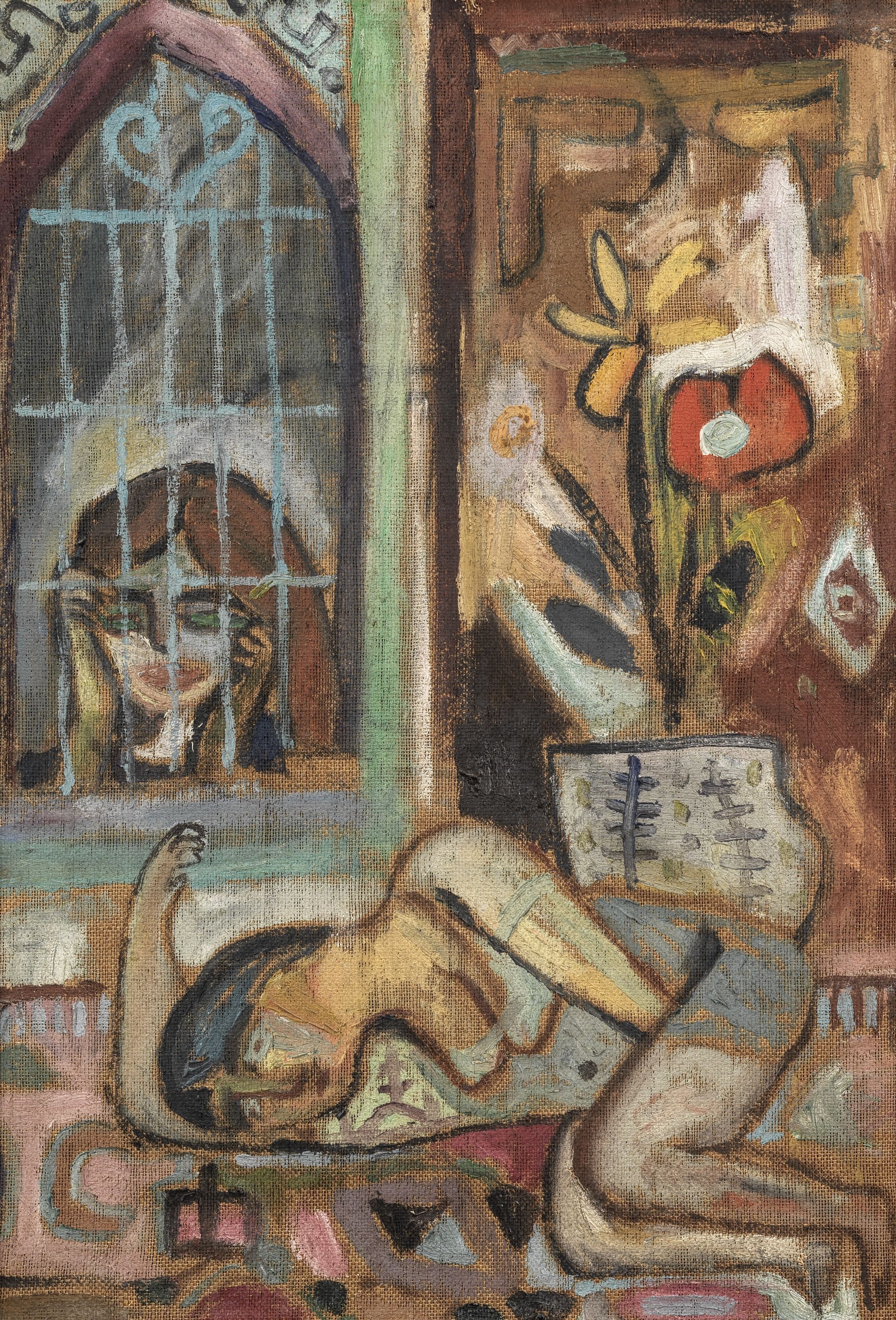
Lot 19. Jewad Selim, Woman Waiting. Estimate: £100,000 - 150,000 ($130,000 - 200,000)
Lot 19. Jewad Selim, Woman Waiting. Estimate: £100,000 - 150,000 ($130,000 - 200,000)

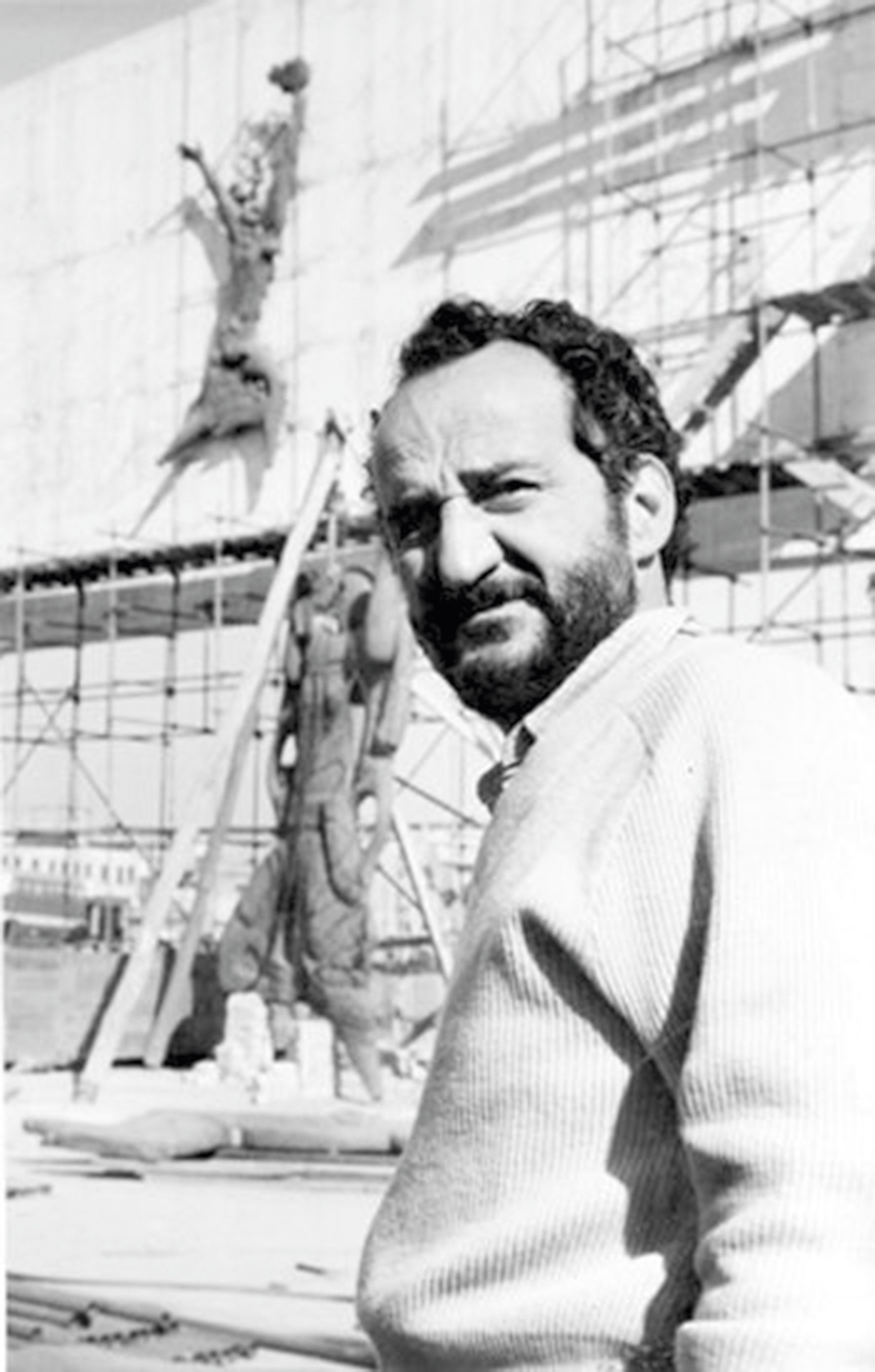
Jewad Selim in front of the public monument that killed him
Jewad Selim in front of the public monument that killed him


 Built with Shorthand