
Real Madrid
The director of the breathtaking Royal Collections museum gives Paul Richardson a behind-the-scenes tour of Madrid’s newest cultural treasure
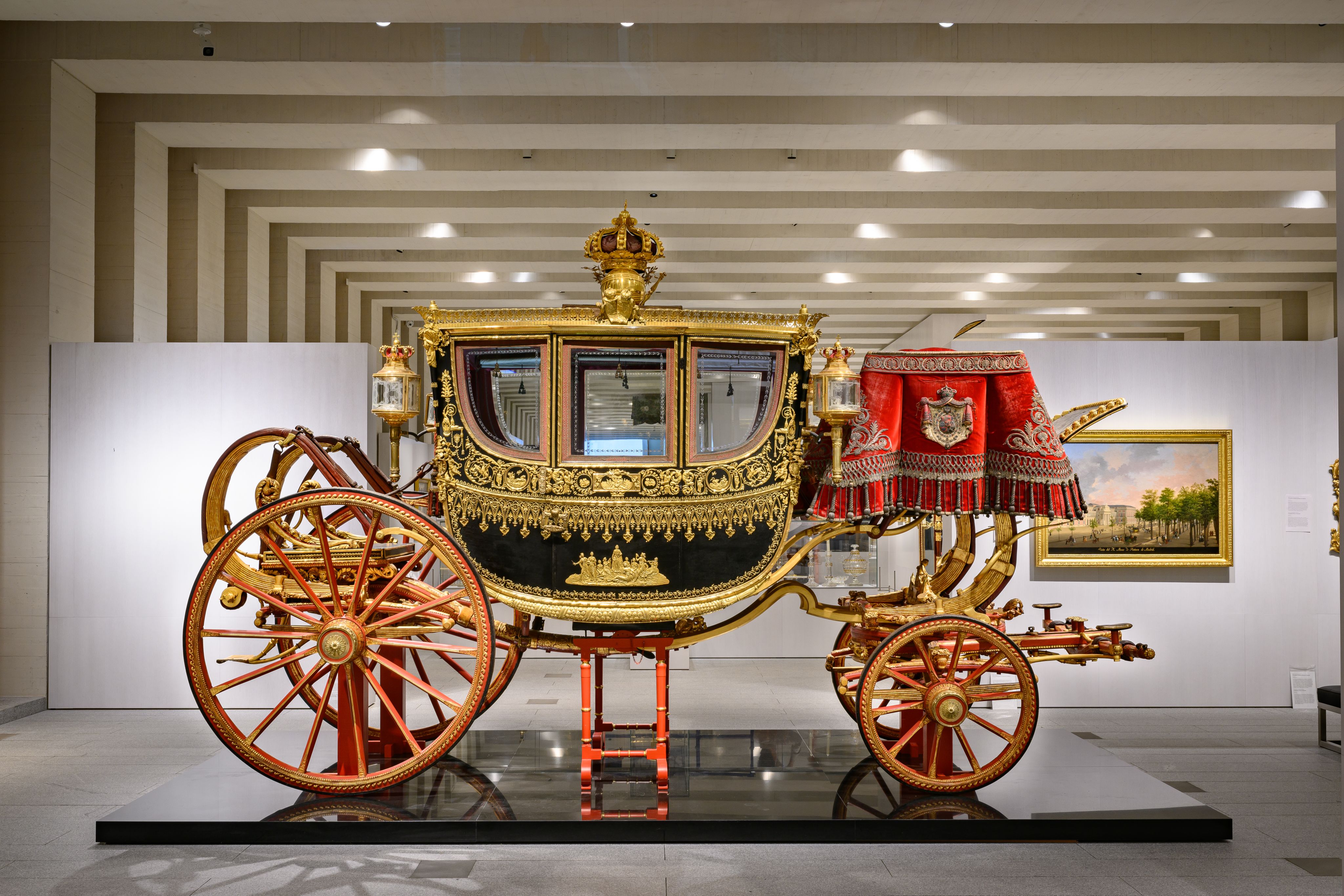

Madrid isn’t badly off for museums. Among the total of more than 50 are such top-flight treasure houses as the Thyssen-Bornemisza, the Reina Sofía, the Royal Academy of Fine Arts, and a slew of smaller establishments from the delicious Sorolla house-museum to the aristocratic collections of Lázaro Galdiano and Cerralbo. The cherry on this richly flavoured cake, it goes without saying, is a pinacoteca that must surely be counted among the world’s half-dozen greatest: the Prado.
If all this were not enough to confirm Madrid as a museum city with few rivals, the Royal Collections museum, which opened in June, may be the tipping point. It is being called “Spain’s most important museum project in decades”. This sounds like exaggeration, yet the quality of both the building – by architects Emilio Tuñón and Luis Moreno Mansilla – and its contents, showcasing the Spanish monarchy’s vast accumulation of art and antiques, is superb.
The location of the new museum is an assertion of its place in the cultural landscape of the city. Perched alongside the cathedral and Royal Palace on an escarpment overlooking the Sabatini Gardens, the Manzanares river and the Casa de Campo Park, it occupies a prime spot in what might be described as ground zero of historic Madrid.
In contrast to the florid neo-classicism of cathedral and palace, the building’s minimalist forms in light-grey granite are so easy on the eye as to be almost self-effacing. That said, with no less than 40,000 square metres of exhibition space and a budget of €167m, this is a project on the grandest scale.
The Royal Collections has had a long and complex gestation. First adumbrated in 1998 under the government of José María Aznar, for the next quarter-century it was repeatedly held up by political and bureaucratic wranglings, financial crises, and a pandemic – not to mention the discovery of a key section of Madrid’s original 9th-century Arab fortifications, now preserved and attractively displayed as a constituent part of the museum. As building work ground to a halt again and again, many madrileños wondered if it would ever see the light of day.

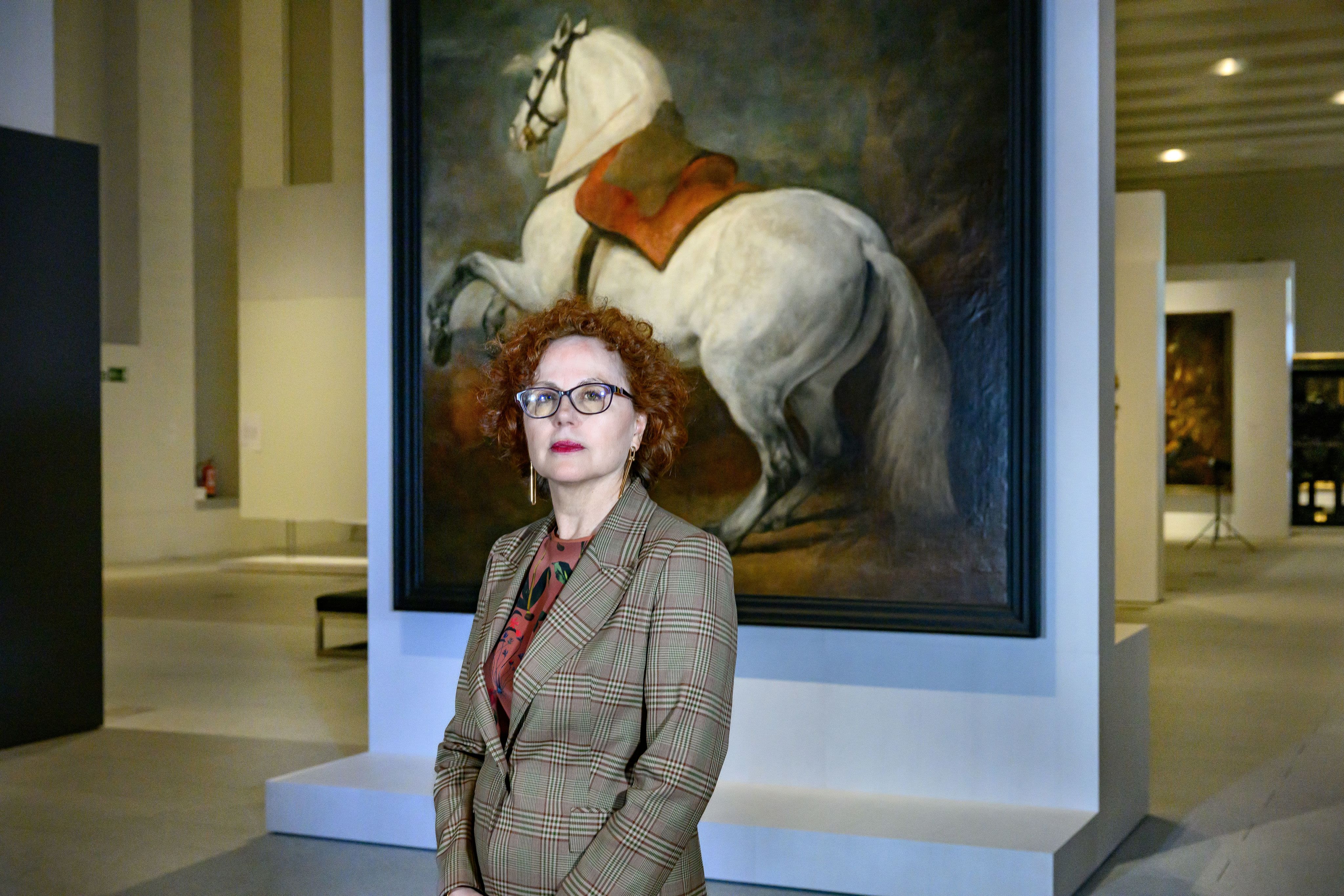
Leticia Ruiz, director of the Royal Collections museum, in front of Velázquez’s White Horse
Leticia Ruiz, director of the Royal Collections museum, in front of Velázquez’s White Horse
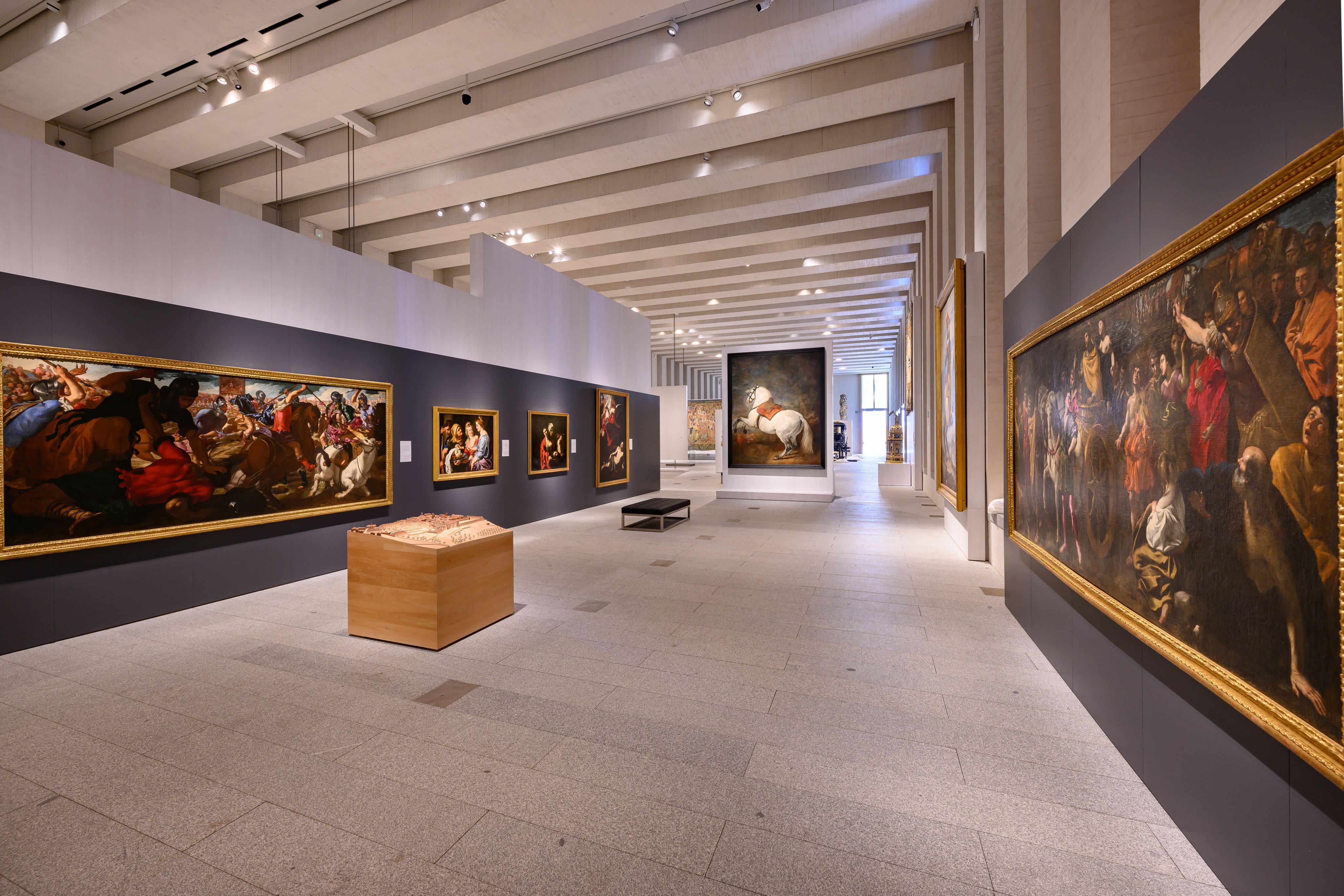
The galleries dedicated to ‘los Austrias’ (the Habsburgs)
The galleries dedicated to ‘los Austrias’ (the Habsburgs)
The result, we can reveal, has been worth the wait. With a month to go before opening day, Bonhams Magazine was granted an exclusive preview of the gallery by its director Leticia Ruiz, a distinguished curator whose CV includes 21 years as head of Spanish Renaissance painting at the Prado.
Ruiz greets me in the reception area, where a string of words in black letters stands out against the stone wall above the ticket office. These are the names of the 23 ‘royal places’ (sitios reales), ranging from palaces and country houses to convents and monasteries – from which the museum’s exhibits are drawn. (El Escorial, Aranjuez and the Monastery of Yuste are three that hispanophiles may recognise.) Like our British royals, Spanish monarchs have habitually amassed enormous hauls of precious things. But while in Britain these goods and chattels are Crown property, in Spain they belong to the nation under the designation Patrimonio Nacional (‘national heritage’). “So the museum’s assets derive from the Royal Collections, but they pertain to the Spanish people,” explains Ruiz.
If the halls of the Gallery seem particularly agreeable and well-ventilated, this is thanks to the 5-metre ceilings and to the building’s sophisticated air-conditioning system, which modulates temperature and humidity according to the nature of the work displayed. Deploying a discreet combination of granite, concrete, glass and oak, Tuñón and Mansilla’s building could never be accused of attention-seeking, unlike certain other blue-chip art museums we could mention. Not least, the architects have neatly overcome the formidable challenge of attaching the structure to what is essentially a 34-metre rock face, creating various levels on which the museum’s narrative unfolds in historical progression.
Of the museum’s three major exhibition floors, two offer a semi-permanent overview of the major Spanish royal dynasties and their gorgeous stuff: A for ‘Los Austrias’ (that is, the Habsburgs) and B for the Bourbons. I sit with Ruiz on a padded bench close to a stupendous oil painting (it looks vaguely familiar) while the director details the exhaustive process of choosing just 650 pieces from the estimated 170,000 held by Patrimonio Nacional in the various ‘royal places’ across the country.
In Ruiz’s opinion, the greatest Habsburg art collector was Philip IV, whose Titians and Velázquezs formed the nucleus of what would become the Prado Museum. “He was a king who was very much aware that what he had inherited from Philip II was one of the best picture collections in Europe at the time,” she tells me. “But Philip II himself had very good judgement as a collector. His taste was for Flemish painting, in which he took after his grandmother Isabel la Católica, and also Titian and the Venetian School. The nudes, he took to his palace at El Pardo. The religious paintings went to El Escorial.”


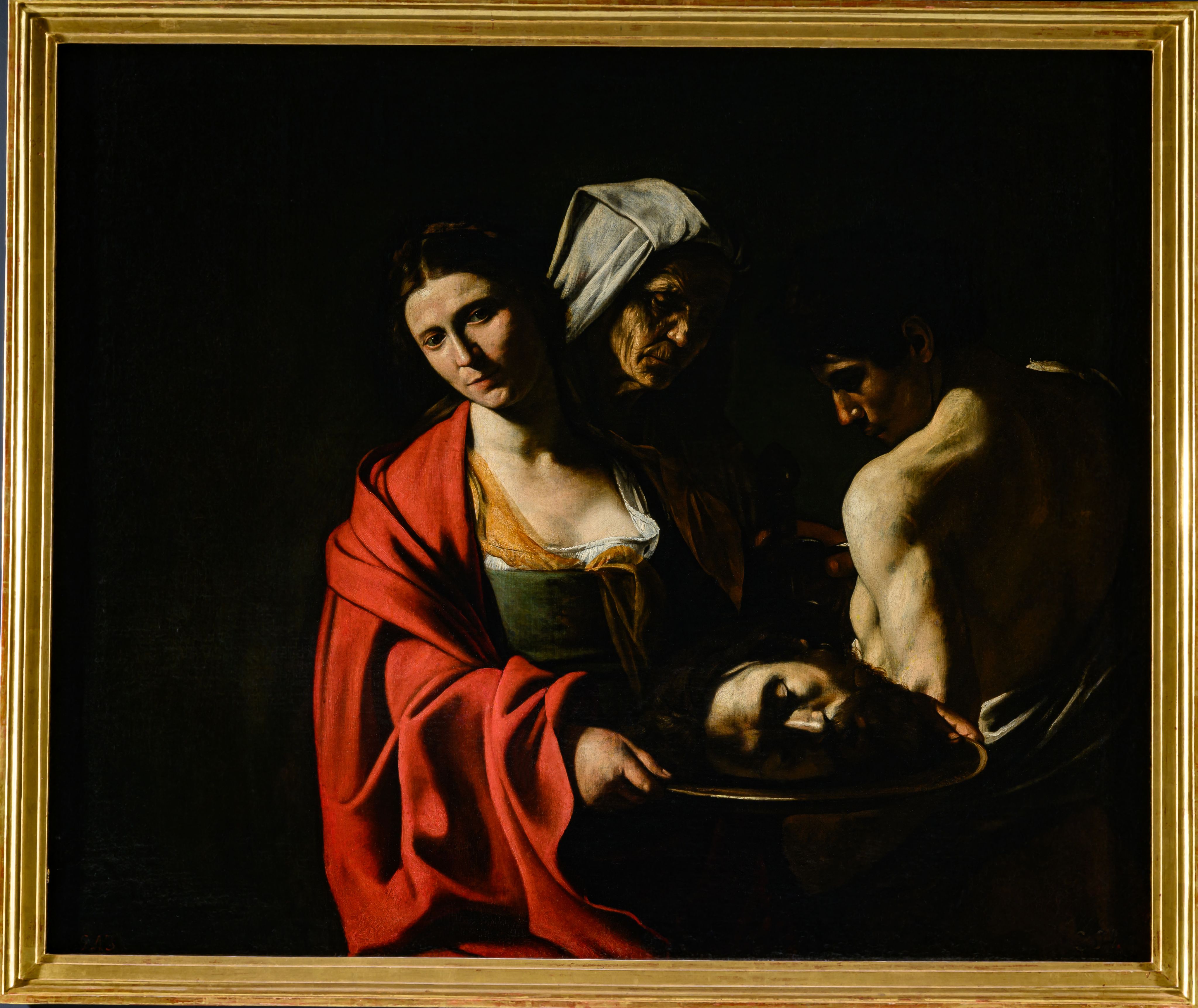
Caravaggio’s Salome with the Head of John the Baptist
Caravaggio’s Salome with the Head of John the Baptist
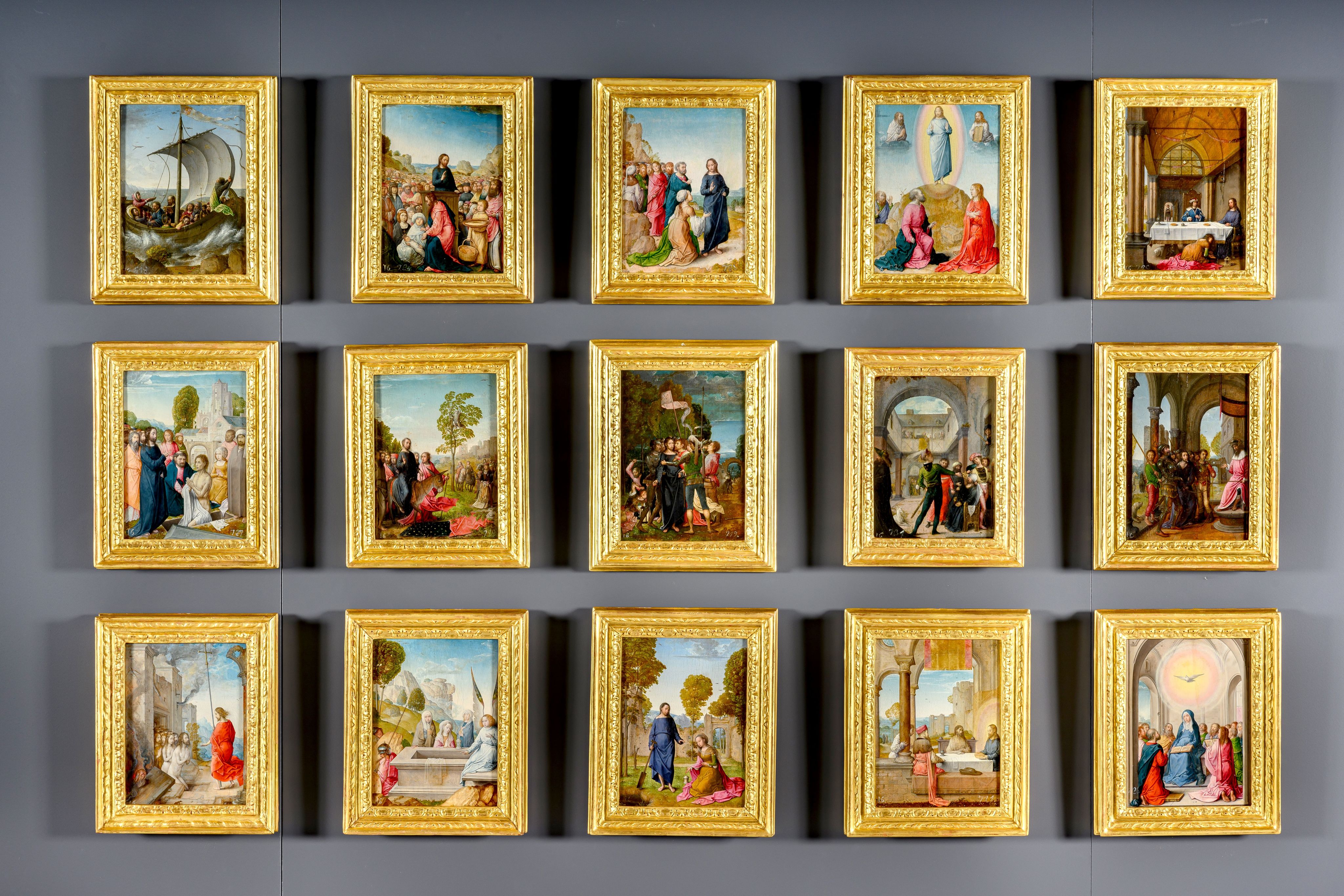
A good number of the pieces on show here were brought in from the Royal Palace just across the way – such as the polyptych of Isabel la Católica (dated 1496-1504) by Juan de Flandes and the mysteriously riderless White Horse by Velázquez, undoubtedly two of the museum’s biggest draws. As Ruiz and I are talking, I realise the painting beside us is none other than Caravaggio’s Salome with the Head of John the Baptist, a glorious work in moody chiaroscuro dating from the last year of the painter’s life. It was last hung in the Royal Palace, Ruiz says, in a less than ideal situation. “Here it looks divine, and shares a space devoted to Philip IV, which is absolutely the context of the work,” she says.
Many hail from further afield. El Greco’s Adoration of the Name of Jesus was formerly at El Escorial, while the great tapestry Encounter of Abraham and Melchizedek, designed by Rubens for Philip II’s eldest daughter Isabel Clara Eugenia, is from the Monastery of the Descalzas Reales in downtown Madrid – whence it must return for Holy Week. (A certain amount of tact was required, says Ruiz, to persuade some of the ‘royal places’ to part with ‘their’ treasures, even if only temporarily. “But as soon as we open and they see how well the pieces are being looked after, I’m sure they’ll approve,” she confides.)
Through the tall windows can be seen the gardens of the Campo del Moro and the rolling woodlands of the Casa de Campo beyond. Ruiz reminds me that this large public park was once a royal hunting ground.
We take off on a brisk stroll through the museum’s airy halls, with the director pointing out some personal favourites – like the set of massive 17th-century Solomonic columns, slathered in gold and lapis lazuli, which were among the first pieces to be installed and were restored in situ.
The museum’s displays are nothing if not multifarious. Our progress takes us past clocks, fine china, furniture, garments and photographs from the remarkable collection of the 19th-century queen Isabel II. “It’s a museum of museums. There’s a little bit of everything and something for everyone,” agrees Ruiz. Even children, I dare say, will find things to entertain them and fill them with awe. The extraordinary all-black carriage belonging to Mariana of Austria, wife of Philip IV, is an object of such Gothic gloom and grandeur it seems to have come straight out of a Tim Burton movie.
The genius of Ruiz’s curation lies in her juxtaposition of pieces to make an artistic or historical point, often by cutting across genres. The immediacy of these connections certainly packs a punch. A giant 16th-century Flemish tapestry (“We have the finest collection of tapestries in the world,” she remarks en passant) shows Emperor Charles V reviewing the troops in Barcelona, attired in what was said to be his favourite suit of armour. Meanwhile, on a plinth a few steps from the tapestry, stands the armour itself: quite a coup de théâtre.
On Floor B, which is devoted to the Bourbon dynasty and its acquisitions, my guide singles out an exquisite commode by Matías Gasparini (commissioned by Charles III), describing it as “the Sistine Chapel of cabinet-making”. The huge ‘dessert’ or table centrepiece The Glories of Spain was carved in marble for the Bourbon king Charles IV in 1802, and last used at the wedding banquet of the current Spanish monarch Philip VI. “The king and queen have visited twice to see how the works were progressing. They asked a lot of questions; I believe they’re delighted with the museum. When they saw the ‘dessert’ installed as an exhibit here, the king said he remembered it perfectly.”

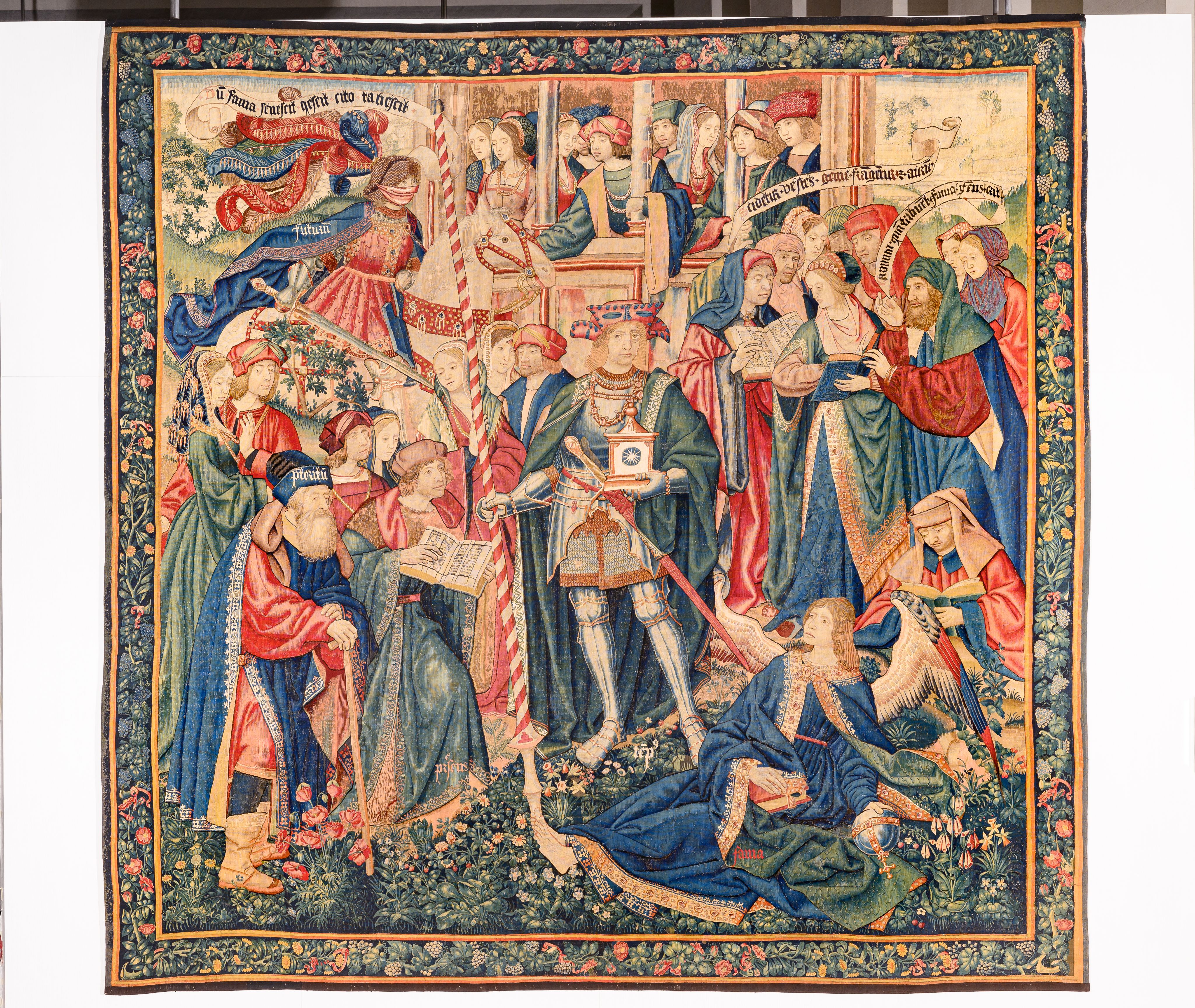
16th-century tapestry The Triumph of Time
16th-century tapestry The Triumph of Time


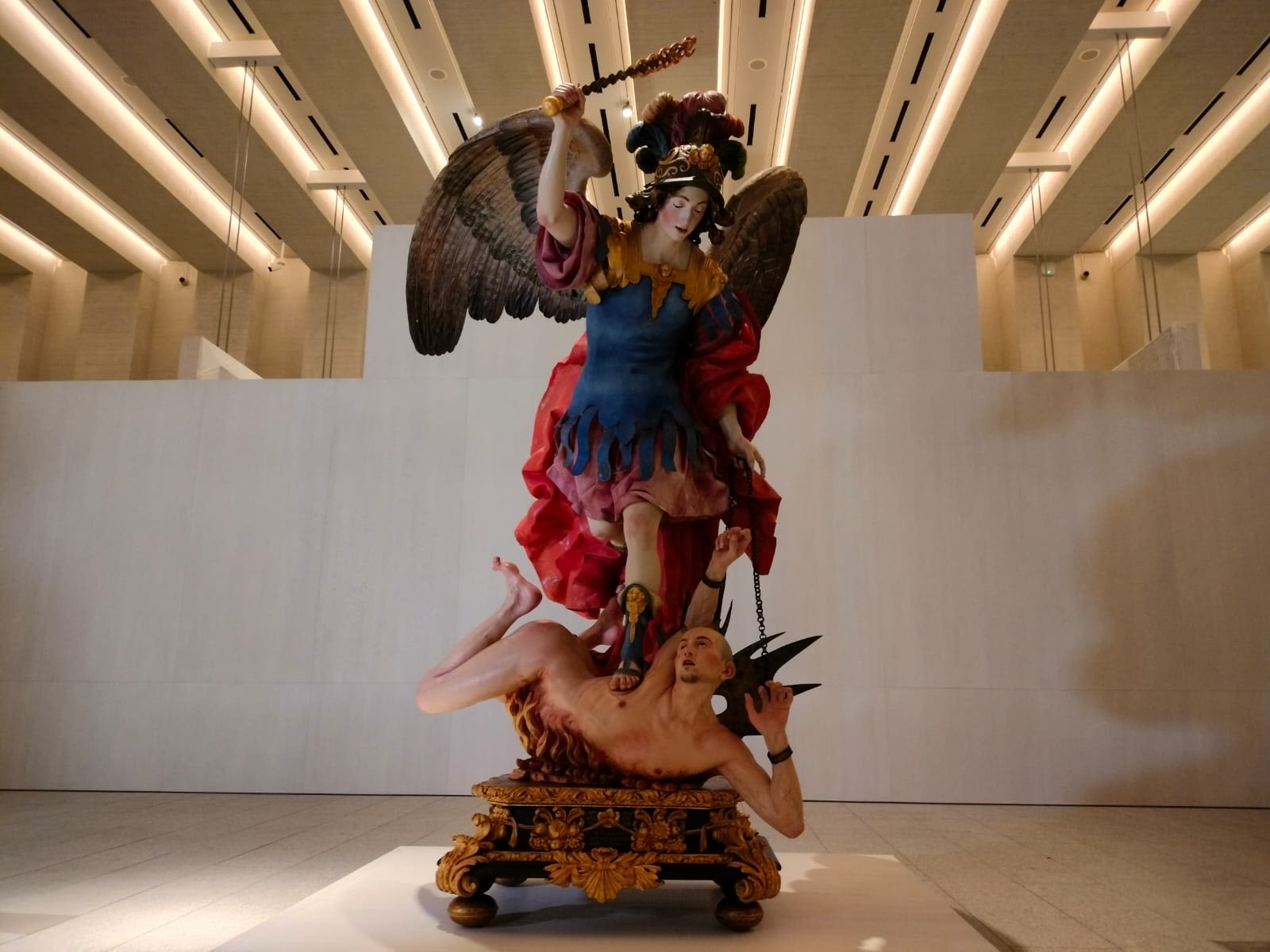
La Roldana’s Archangel St Michael Conquering the Devil
La Roldana’s Archangel St Michael Conquering the Devil
A piece close to the director’s heart is The Archangel St Michael Conquering the Devil, the masterpiece of Luisa Ignacia Roldán (‘La Roldana’), official sculptor at the court of Charles II and among the first Spanish female artists to achieve professional recognition. The sculpture, made of pinewood painted in vibrant rococo colours, is of a size (2.6 metres) and intricacy that it had to be winched into place by a team of 20 technicians.
We stand back to admire the sheer visual force and expressivity of this woman’s work, the vivid depiction of the youthful, loutish devil, and the curiously feminine features of the saint. The Archangel was tucked away at the back of the church in El Escorial, little appreciated. Now the work, fully restored and stunningly displayed, can be seen in a new and revelatory light. “This was for me the most exciting of all the arrivals – to see the angel make his last flight into the gallery,” remembers Ruiz.
Outside, under dazzling sun, tourists queue round the block for the Royal Palace. The new museum, it is confidently predicted, will soon take its place beside the Prado and Thyssen-Bornemisza as a must-see, with staff bracing themselves for 1.5 million visitors in the first year. The Gallery of the Royal Collections is important as a palimpsest of changing historical taste and a shop window for the immense artistic wealth of the Spanish royal sites. As its director observes, it “shows the best, most positive aspect of the relationship between art and power”. It deserves attention, not least, for its elegant resolution of a complex architectural conundrum.
Perhaps the most powerful effect of the new museum, however, is the way it reconfigures the cultural geography of Madrid, pulling the centre of gravity westwards from the Paseo del Prado. “What it does is bring the Royal Palace, cathedral and Gallery together as a single artistic nucleus,” says Ruiz. “Remember we are also very close to the Liria Palace, the Cerralbo Museum, the Descalzas and Encarnación monasteries, the Basilica of San Francisco El Grande with its Goya frescoes… so we’re directly on the site of Madrid’s 9th-century foundation, but also right at the centre of a new cultural axis for the city.”
Paul Richardson writes for the Financial Times and Daily Telegraph. His books on Spain include A Late Dinner and Our Lady of the Sewers.
Stay updated with our auctions
Sign up to receive your weekly newsletter of global auctions, stories and more from Bonhams and our sister companies.
 Built with Shorthand