
Peter Layton–
At the Heart of Glass
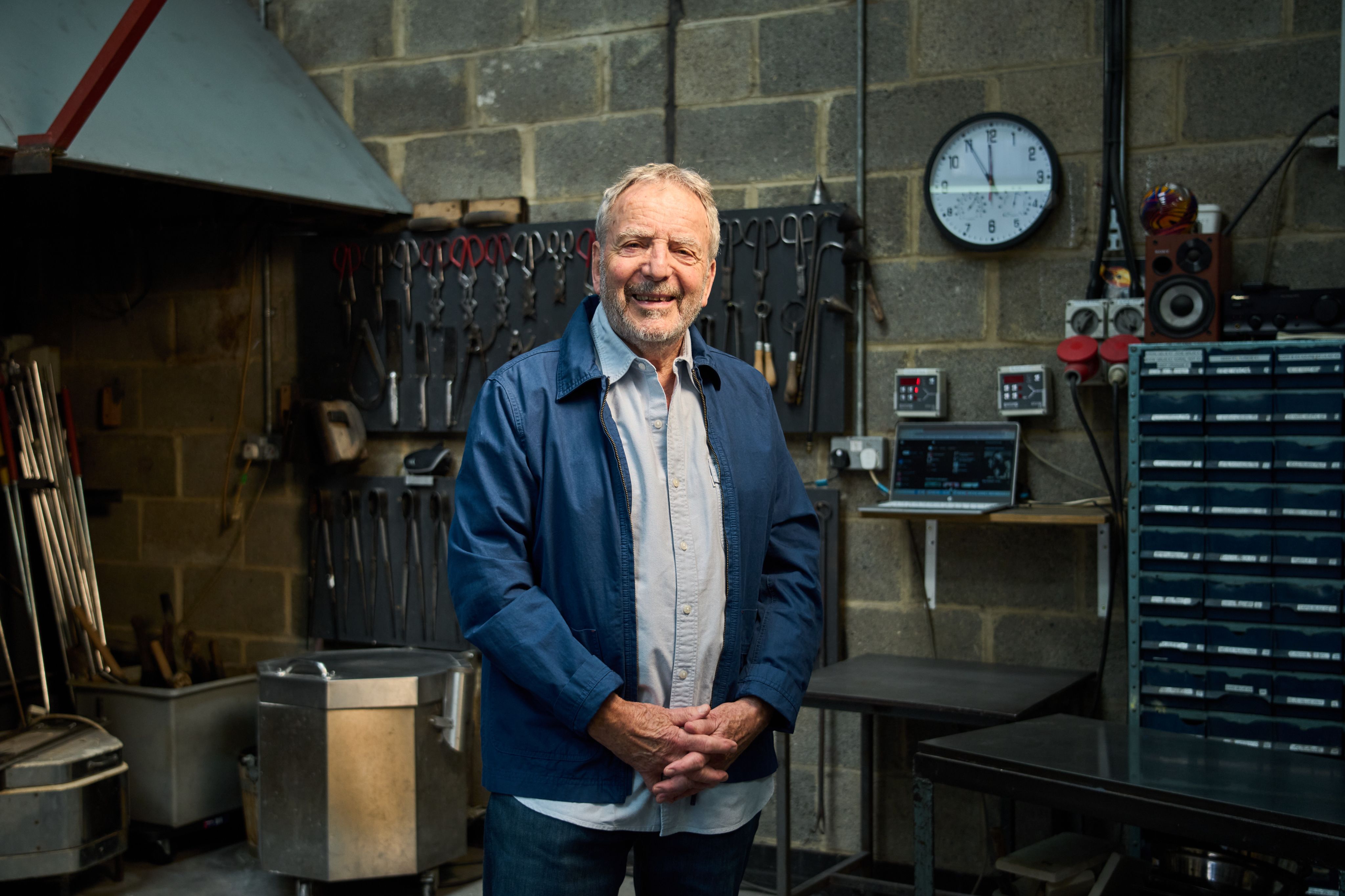

London Glassblowing has been at the forefront of creative innovation and production since 1976, when Peter Layton opened the doors to his gallery and workshop. A visionary in his field, Layton has partnered with Bonhams on The Art of Craft, a sale that celebrates the mastery of contemporary glass art.
Tell us about your journey to where you are now...
I was born in Prague in 1937 and soon became a refugee. My parents apparently were on the last train out of Prague before the war began – a miracle really!
My grandfather had been a colleague and contemporary of Sigmund Freud and had his own sanatorium south of Vienna. By 1939 he was settled in Bradford in Yorkshire which is where I grew up, going to grammar school. After adventures in the wool trade, the local industry, and elsewhere, I went to Bradford Art College, a few years behind Hockney whom I knew quite well growing up.
How did you start glassblowing?
Two years there were followed by three at the Central School of Art and Design in London studying Ceramics under some of the leading ceramicists of the day, including Gordon Baldwin, Ruth Duckworth and Dan Arbeid. Graduating in 1965 I got a job teaching at the University of Iowa helping to run the ceramics department, and while there I participated in a summer semester course in Glassblowing.
It was very early days in the Studio Glass Movement, our teacher, who was seldom there, knew little more than we did, though he was a graduate of Harvey Littleton’s first glass degree course at the University of Wisconsin. I had a bad burn after only a few days and thought that that was the end of my glassblowing career. The truth is I was already hooked as I later discovered.
In 1968, I returned to the UK, to teach ceramics in various art colleges, but as I said before, by then I was besotted by the medium and eventually, having befriended Sam Herman at the Royal College, and with whom I was involved at the Glass House in Covent Garden for a while, I decided to establish my own studio in Rotherhithe, in an old towage works on the banks of the Thames.
"people often fear that glass is fragile, but there are thousands of pieces that have survived for millennia."


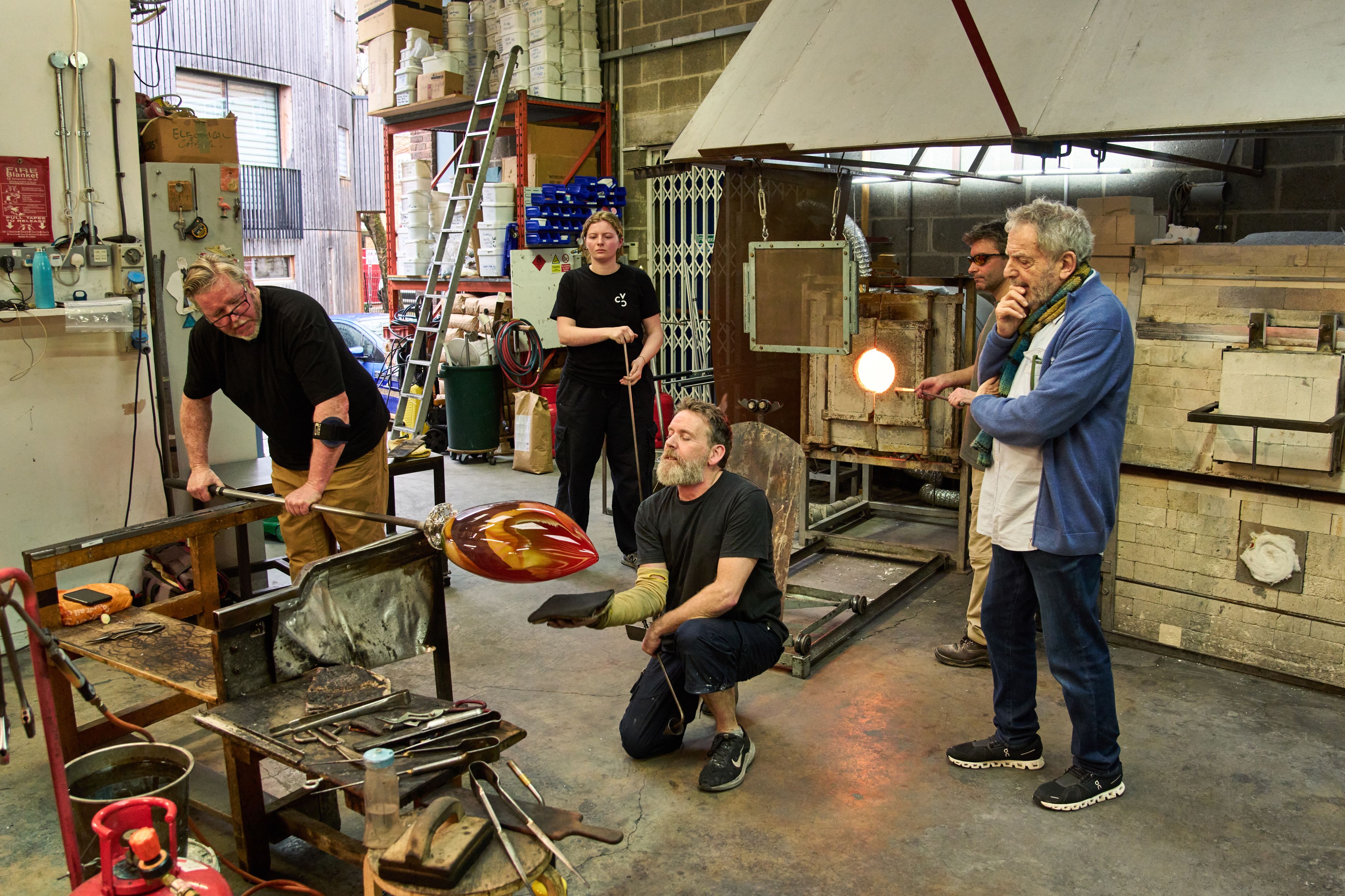
Peter Layton and the team in the studio. Photograph: Alick Cotterill.
Peter Layton and the team in the studio. Photograph: Alick Cotterill.
What's the most rewarding thing about your craft?
The things that I enjoy most about this extraordinary and magical medium are its fluidity and the speed at which you have to work. The process is endlessly challenging and fascinating; the spontaneity of decision-making required in the expressive use of this molten material, the teamwork involved, and of course the speed at which you can achieve a result.
Opening the annealing oven to see what you have made during the previous work session can result in excitement and ecstasy or frequently in disappointment – but then it’s on to the next piece in the continuing effort to make the perfect piece of work.
"The things that I enjoy most about this magical medium are its fluidity and the speed at which you have to work."
Peter Layton
What is the thing, person or place that inspires you most?
This is forever changing and evolving. I’m a beachcomber from way back and a great deal of my work has been based on natural phenomena I have found or seen, sometimes on my travels. I’m also inspired by the works of other artists whom I admire. Among my heroes are the sculptors, Brancusi, Noguchi, Arp and others, and painters such as Van Gogh, the vitality of whose brushwork and colours I admire. Also David Hockney, Howard Hodgkin, Klimt, Monet, and so many more.
What has been your biggest challenge in your career?
The biggest challenge of all is survival as an artist craftsman, through all the difficulties and economic adversity, running beside one’s passion for making. If we're considering most challenging project? There are a couple I could mention... Firstly; Janus, a very large suspended metal and glass sculpture in the vast atrium of a cruise liner. And secondly, a 2.5 meter high glass pyramid that I constructed from glass bars at an international symposium in the Czech Republic.

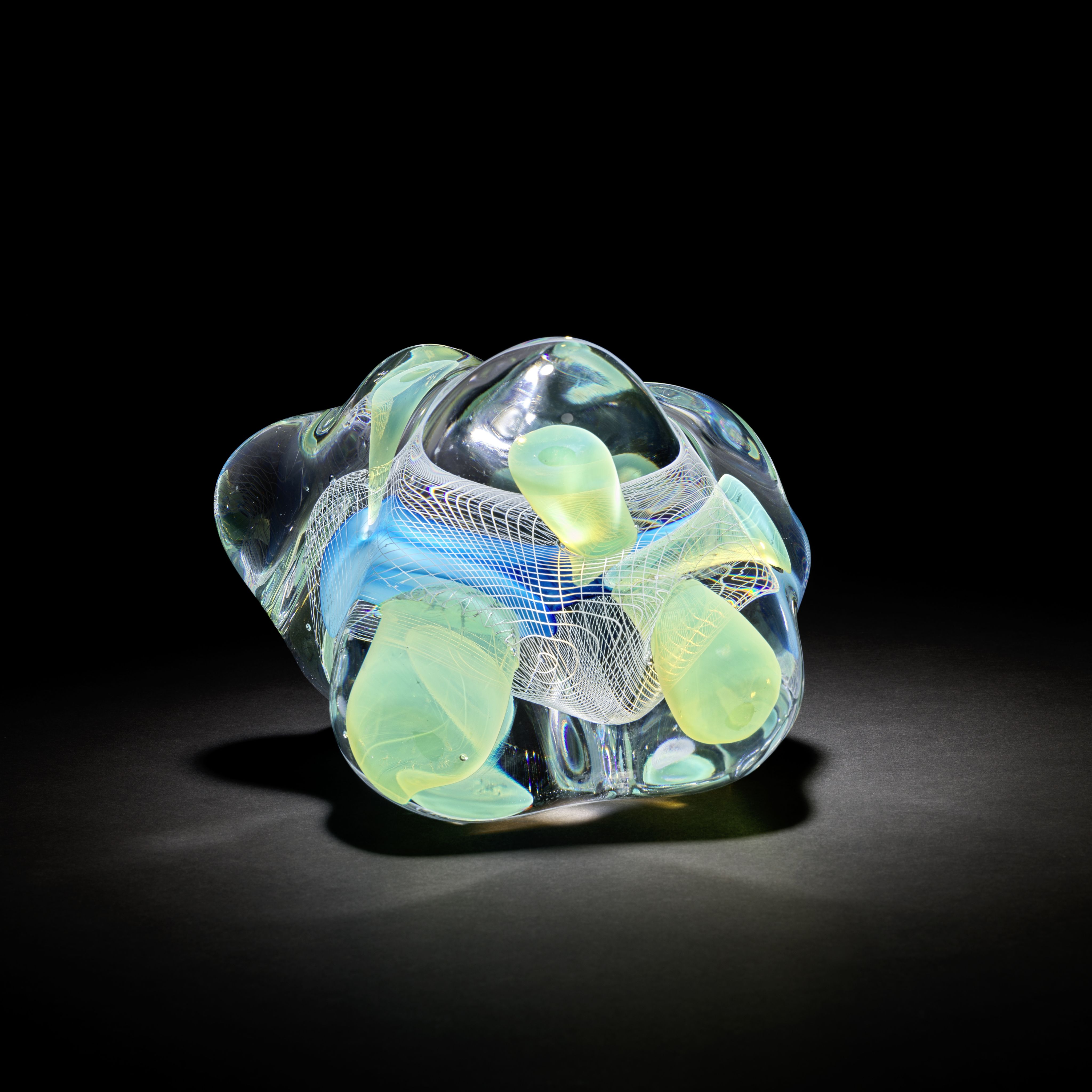
Peter Layton, Burano Cloud with Lightning, 2017. Estimate £3,000-4,000.
Peter Layton, Burano Cloud with Lightning, 2017. Estimate £3,000-4,000.
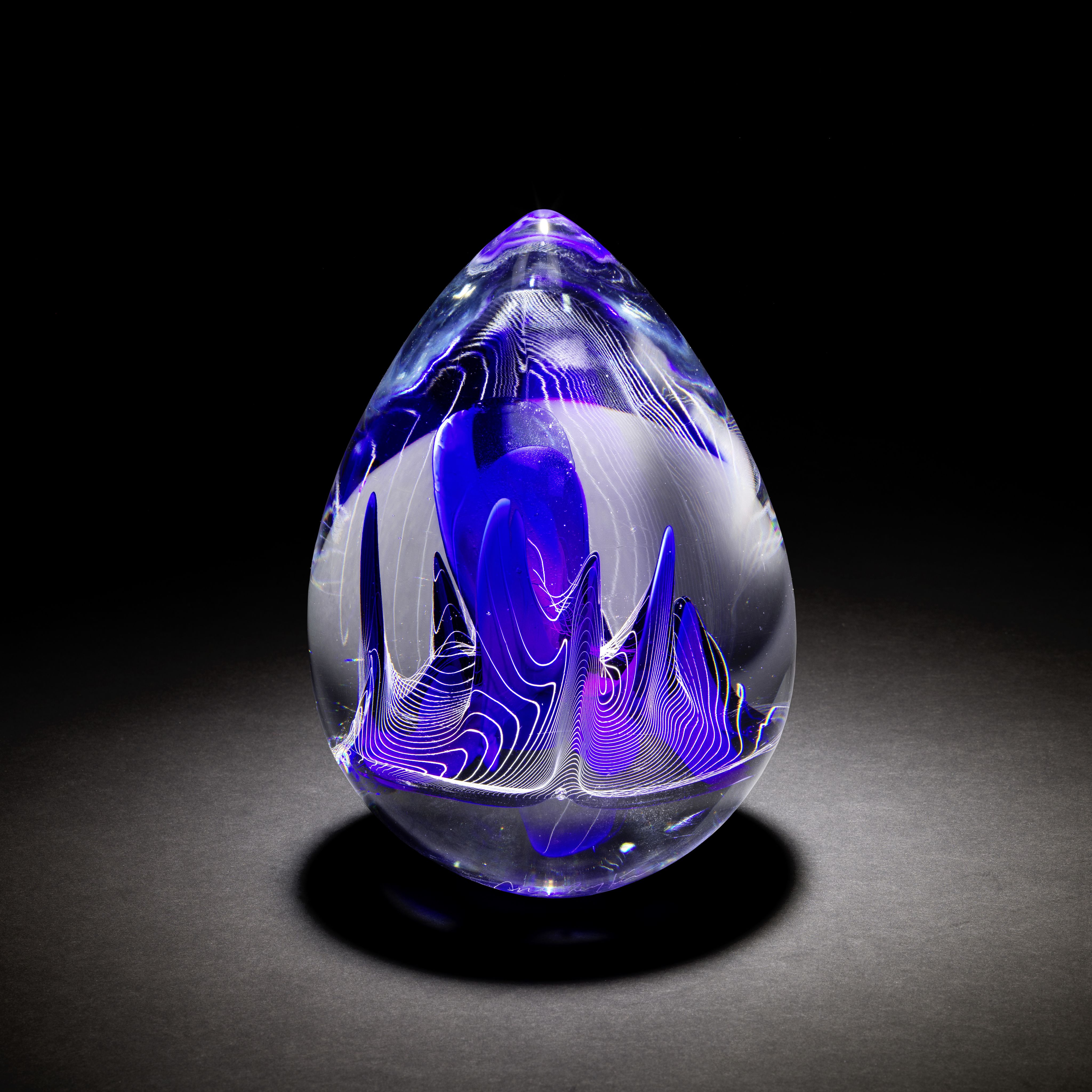
Peter Layton, Lunar Landscape, circa 2018. Estimate £2,500-3,500.
Peter Layton, Lunar Landscape, circa 2018. Estimate £2,500-3,500.

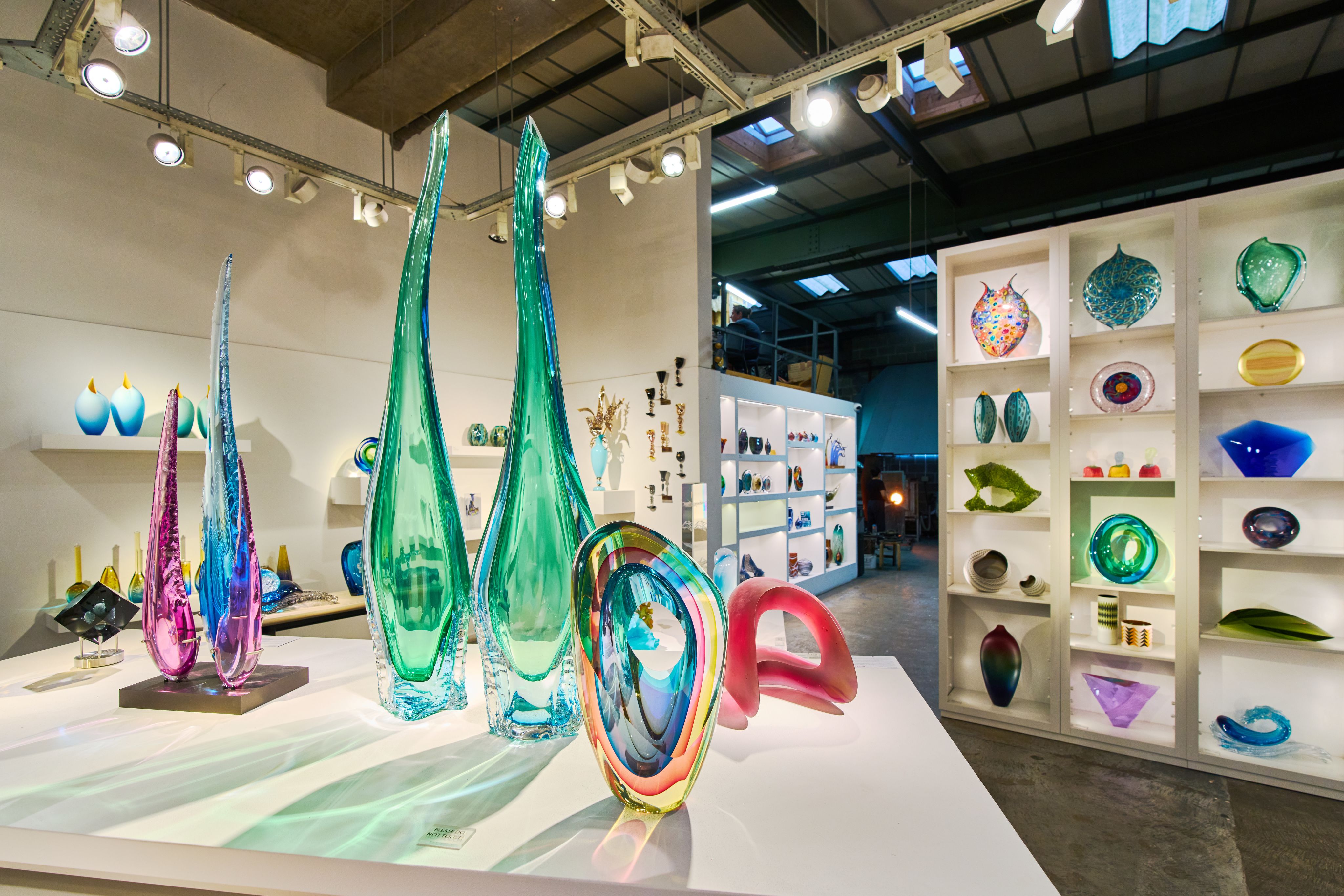
The London Glassblowing gallery, with studio visible in the back ground.
The London Glassblowing gallery, with studio visible in the back ground.
Do you have any advice you would give to your younger self?
Try to find the right medium through which to express yourself as early as possible. It took me over 40 years to find glass, which despite being so difficult and costly to work, is the one I love most and seems the right fit.
What is important to consider when collecting art glass?
Collecting can be obsessional. Mine is trying to find the perfect pebble as inspiration. Regarding glass collecting, people are often put off by the fear that glass is fragile, but of course there are thousands of pieces that have survived for millennia, so its longevity is proven.
The Art of Craft
13 – 22 May 2025 | starting at 12:00 BST
Online | London
Stay updated with our auctions
Register with Bonhams to follow your favourite collecting categories and get email alerts when new auctions open for bidding. Subscribe here.
 Built with Shorthand