
A Masterpiece of Light
and Texture
Nicolas de Staël, Composition, 1951
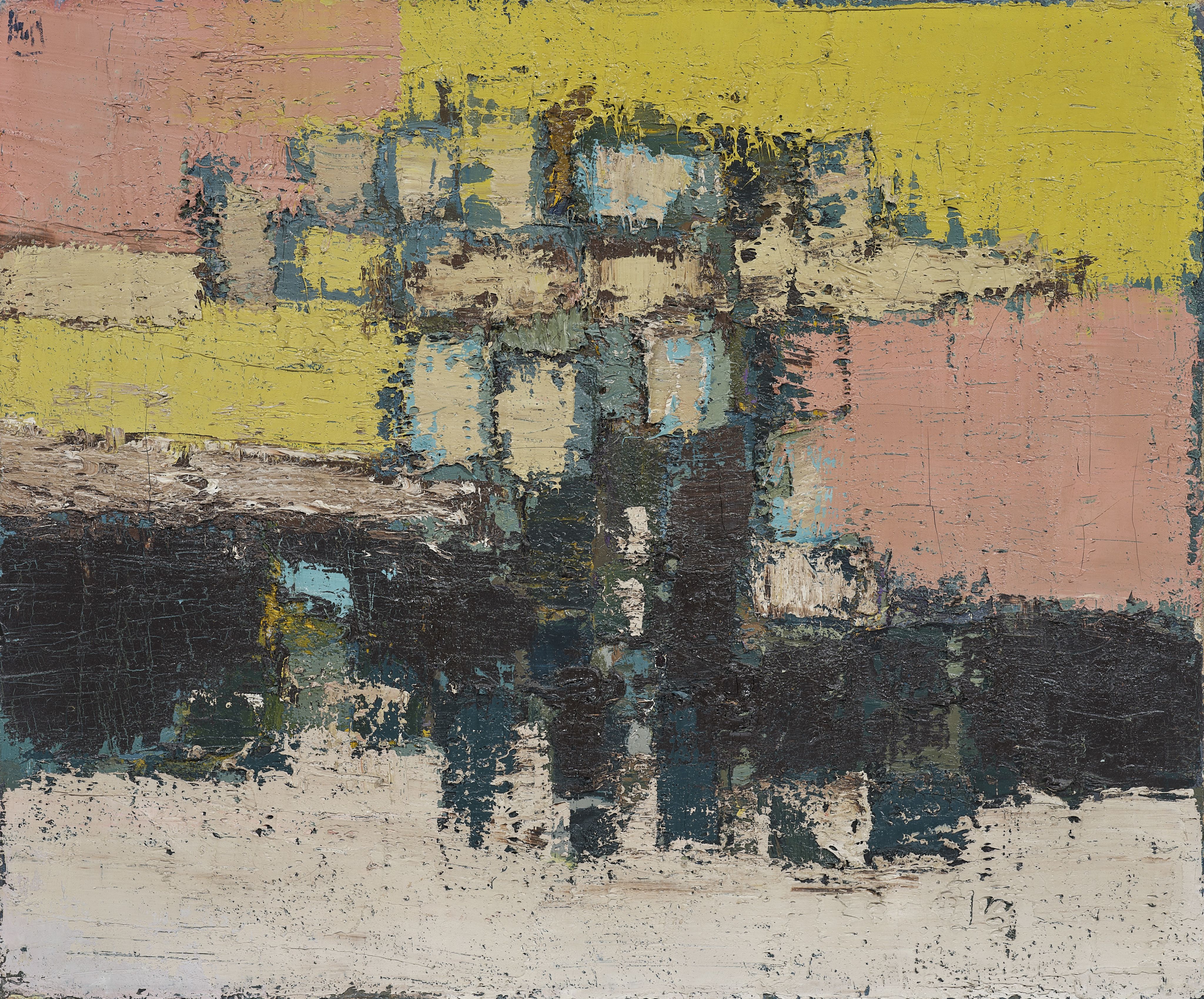

“De Staël's unique way of layering paint is so meticulous, it's as if he was sculpting light.”
Nicolas de Staël’s work Composition 1951, presented in Post-War and Contemporary Art auction in Paris on 5 December, is marked by an inherent grace that invites contemplation.
Created in 1951, it exemplifies a pivotal moment in de Staël’s career, blending abstraction with the early signs of a return to figuration that would define his later work.

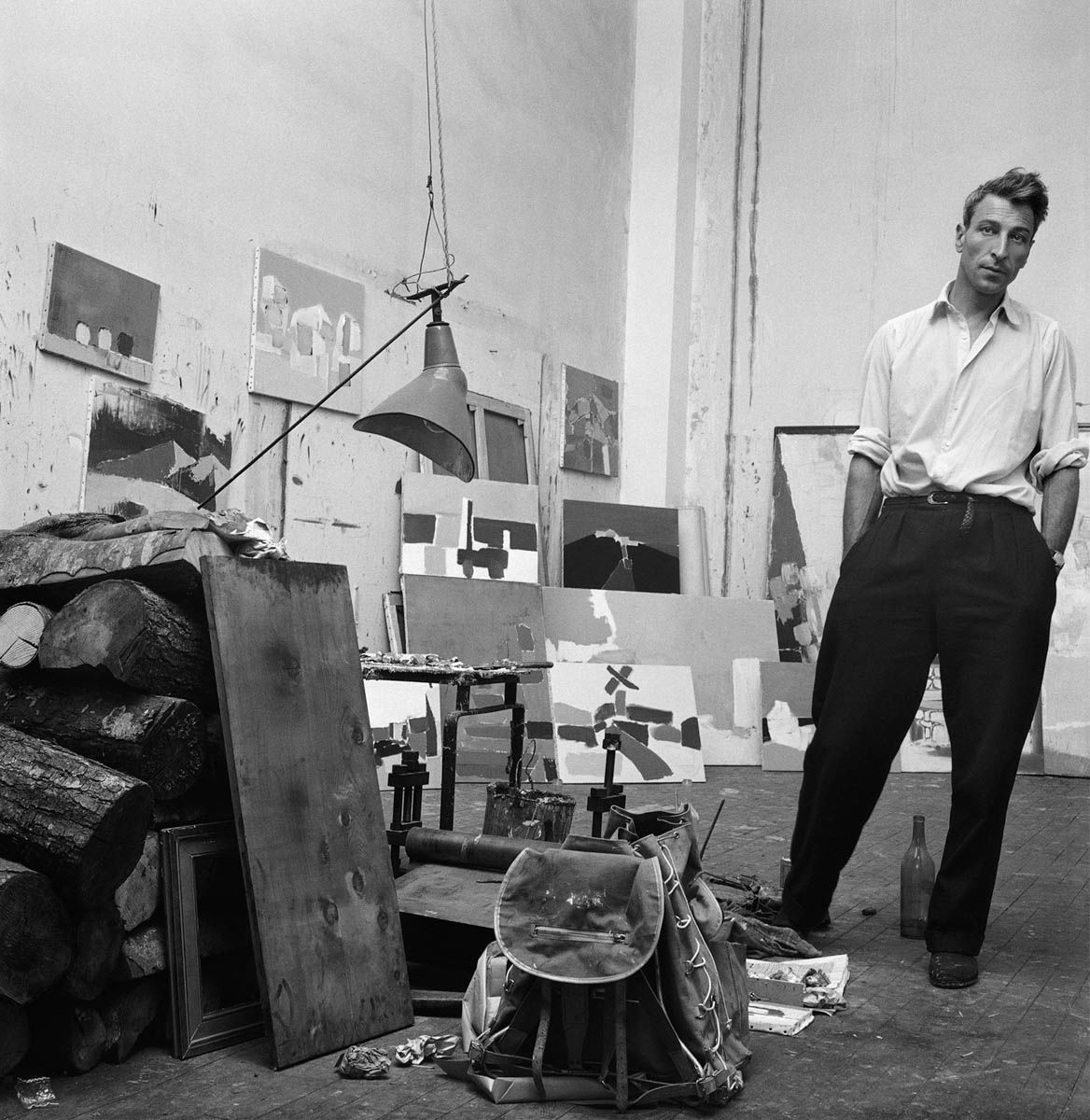
Nicolas de Staël in his studio, 1954, Copyright: © MAP / Rèunion des Musèes Nationaux
Nicolas de Staël in his studio, 1954, Copyright: © MAP / Rèunion des Musèes Nationaux
A Moment of Transition
Composition is a perfect embodiment of de Staël’s signature style — constructed yet diffuse, earthy yet refined. The layers of thick, textured paint, carefully applied in sweeping strokes, give the work a sense of dynamic movement.
The brushstrokes and color choices seem to suggest a landscape without explicitly depicting one. There’s an impression of distant rooftops, possibly inspired by de Staël’s admiration for the mosaics of Ravenna, which were exhibited in the Musée National des Monuments Français in 1951. This blurring of abstraction and figuration marks a crucial turning point for de Staël, as he began to reintroduce figuration after years of abstract expression.

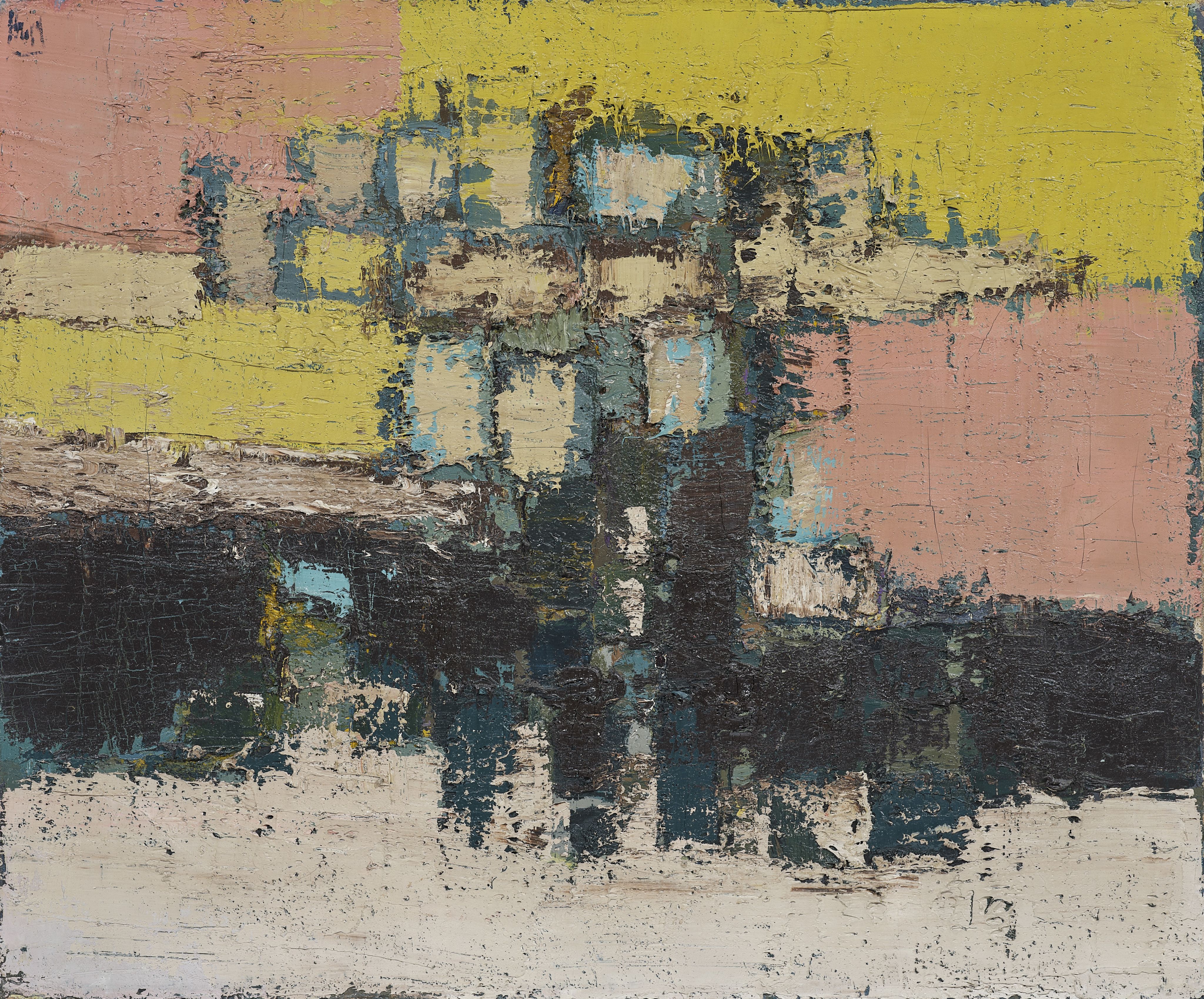
Nicolas de Staël, Composition, 1951
Nicolas de Staël, Composition, 1951
Not a Typical Landscape
In conventional landscape painting, the external environment typically serves as the catalyst for the work. The artist's gaze is directed outward to the natural world, where the landscape becomes the source of inspiration and impulse. However, de Staël’s approach in this work takes a different direction. His engagement with the canvas transcends the external world, as he becomes deeply immersed in the act of painting itself within the confines of his studio. In this context, the landscape does not emerge from a pre-existing impulse but as a consequence of the artist's internal process. It is an autonomous creation, not dictated by external reality, but emerging organically from the artist’s interaction with the medium. It blurs the boundaries between representation and abstraction, while also alluding to the artist’s renewed interest in figuration.
The Light in de Staël’s Art
De Staël’s ability to capture light is one of the defining features of his work, and in this painting, it is almost tangible. The varying layers of paint allow light to permeate the canvas in subtle, shifting ways. This fusion of form and light, while still abstract, invites the viewer to experience the painting not just with the eyes but with a deeper, almost sensory engagement.
A Pivotal Moment in de Staël’s Career
1951 was a turning point for de Staël, as his paintings began to find their place in major institutions, including the Museum of Modern Art in New York. His exploration of form and color would have a major influence on future generations of artists.
This painting stands as a testament to the delicate balance de Staël struck between abstraction and figuration, light and shadow, creating a work that continues to resonate with viewers today. Through its texture and composition, it speaks to the artist's unique ability to capture fleeting moments of beauty and emotion, leaving behind a legacy as delicate and profound as the works themselves.
Nicolas de Staël’s work will be showcased alongside other prominent pieces in the Post-War and Contemporary Art auction on December 5 in Paris.
Contact us
Sabine Cornette de Saint Cyr
Head of Post-War and Contemporary Art at Bonhams Cornette de Saint Cyr in Paris
Sabine.CSC@bonhams-csc.com
 Built with Shorthand