
Maurice de Vlaminck,
La forêt
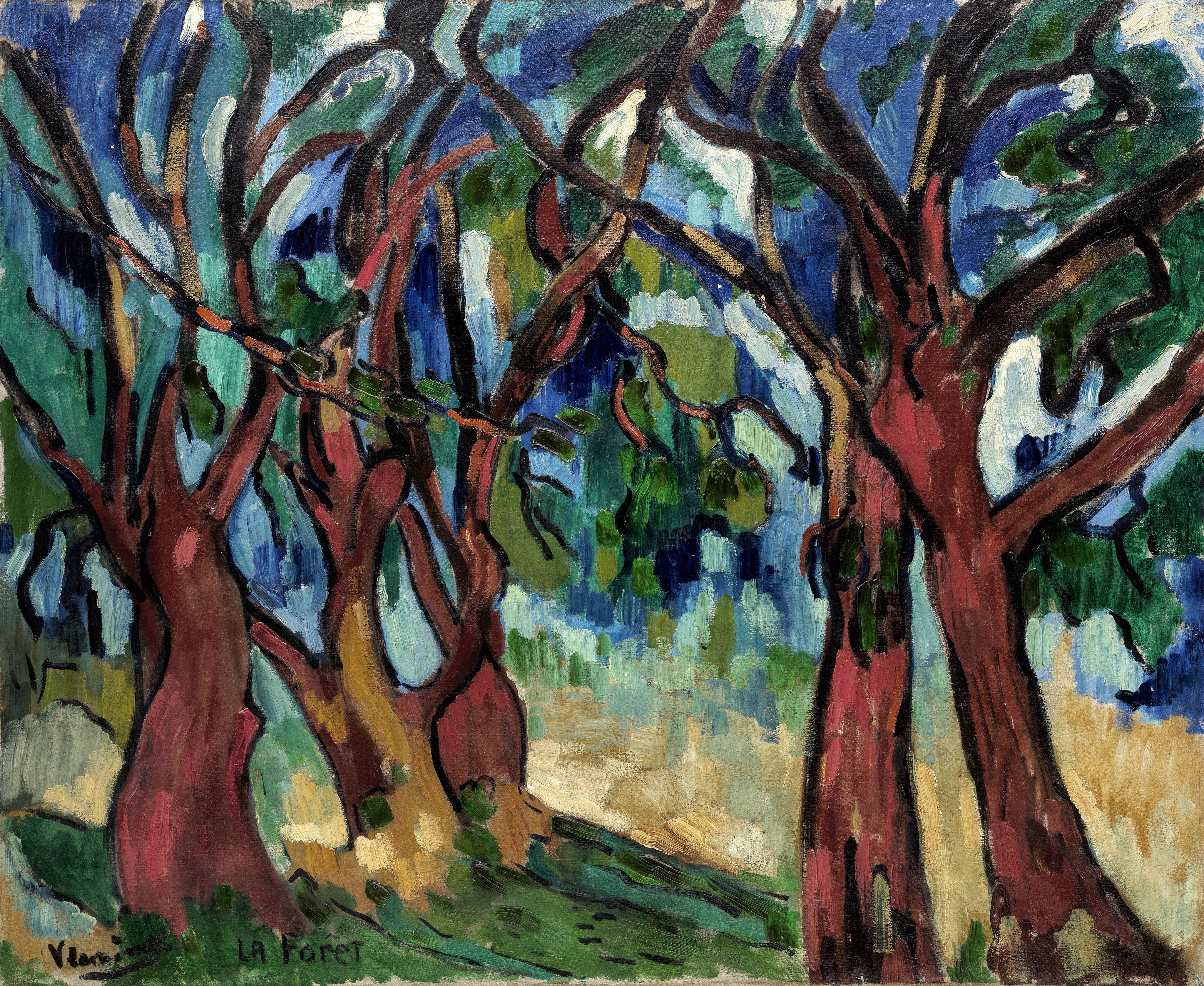

We are delighted to be offering Maurice de Vlaminck's
La forêt in our forthcoming Impressionist & Modern Art auction on 12 October 2022.
'When painting I experienced a source of joy, a constantly renewed pleasure, an intense cerebral excitement... I was in communion with the sky, the trees, the clouds, with life... An unceasingly renewed but fleeting illusion... It was precisely that appearance, continually renewed, always ungraspable that I worked furiously at capturing, at fixing on the canvas in greens, yellows, blues and reds.'
Unseen in public for almost a century, La forêt is a luminescent example of Maurice de Vlaminck's liberal and emotional presentation of colour and the evolving modernisation of his style. The work also has a history as rich as its palette, traversing the shifting tides of European art collecting and dealing in the 20th century. Passing through the hands of Daniel-Henry Kahnweiler, Alfred Flechtheim and Paul Cassirer, before being taken to London following the rise of Nazi Germany, the provenance trajectory of the present work encapsulates some of the most fundamental developments in the history of art and of the world.
The exciting provenance and history of La forêt is matched only by its relevance to Vlaminck's artistic development in 1907, as we are presented with a perfect maelstrom of ideas and narratives from that moment. Working his pigment onto the canvas, in places directly from the tube, Vlaminck utilised the Fauvist method of enhancing the hues and their tonal effect by leaving areas of the primed canvas untouched. On one hand, this thick, hurried application of paint was a triumphant exclamation of rebellious liberation, and on the other, his rhythmic, controlled brushwork marks an incessant questioning of the interpretation of space, a Cézannian examination that Vlaminck relays in the constructed tree trunks and pathway into the background.
La forêt is a fine example of the culmination of Vlaminck's fiery Fauve development, with the influences from Van Gogh evident in his sculptural surfaces and experimentation with colour, but also of a newly discovered Cézannian inspiration, which redefined his own personal idiom. He found a new sense of calm to soften his palette and his rebellious, tempestuous temperament.
It is no understatement to say that La forêt marks a momentous placeholder in the canon of twentieth century art. A cherished family painting which descended through the generations over the course of around 100 years, La forêt is a truly rare work of art, brimming with art historical and personal importance, paralleled by its rich and evocative palette.

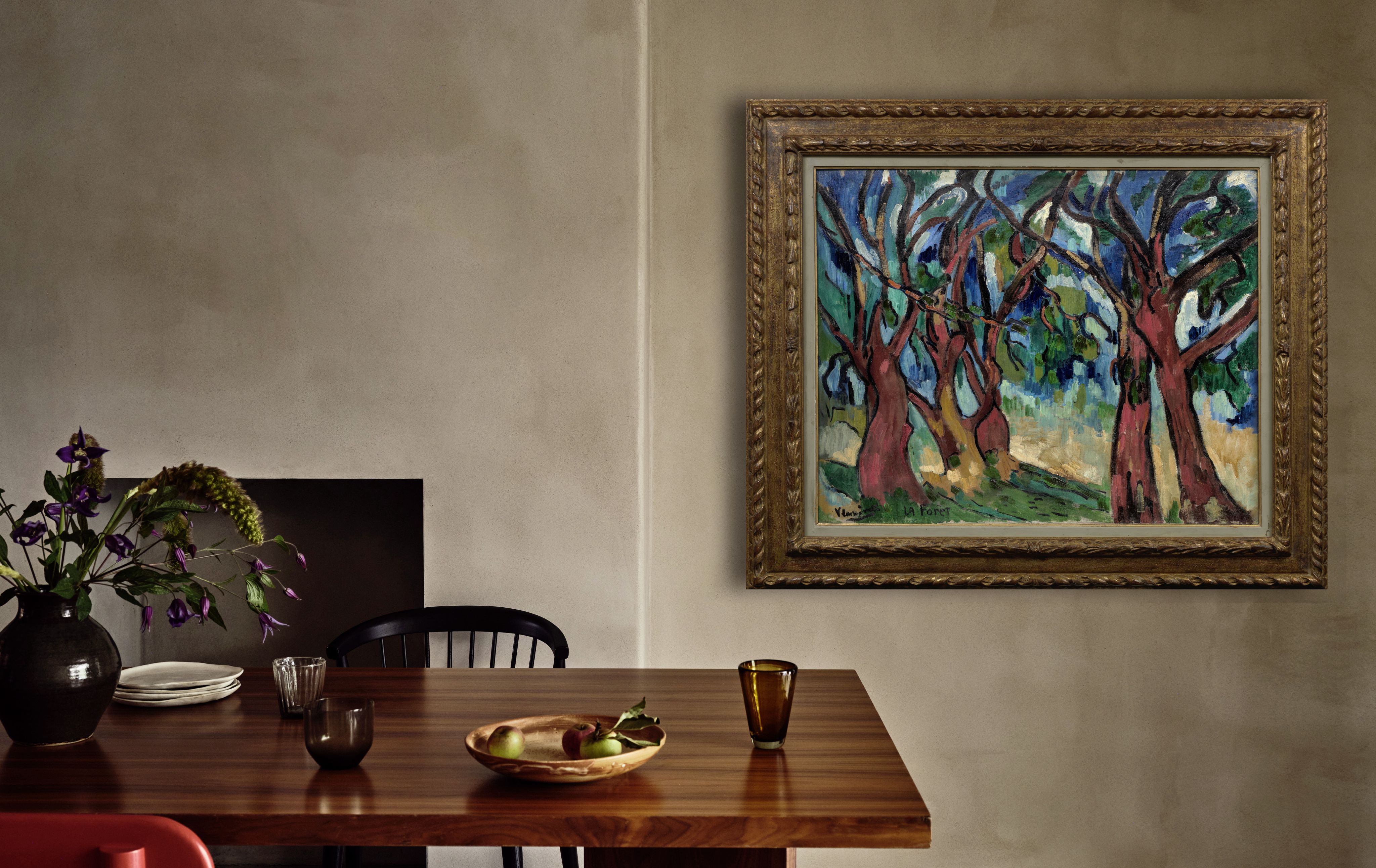
Lot 13. Maurice de Vlaminck (1876-1958), La forêt. Estimate: £700,000 - £1,000,000
Lot 13. Maurice de Vlaminck (1876-1958), La forêt. Estimate: £700,000 - £1,000,000


 Built with Shorthand