
Invisible cities
Maria Vieira da Silva painted the metropolis – but they are cities of the mind more than the eye, says Rachel Spencer
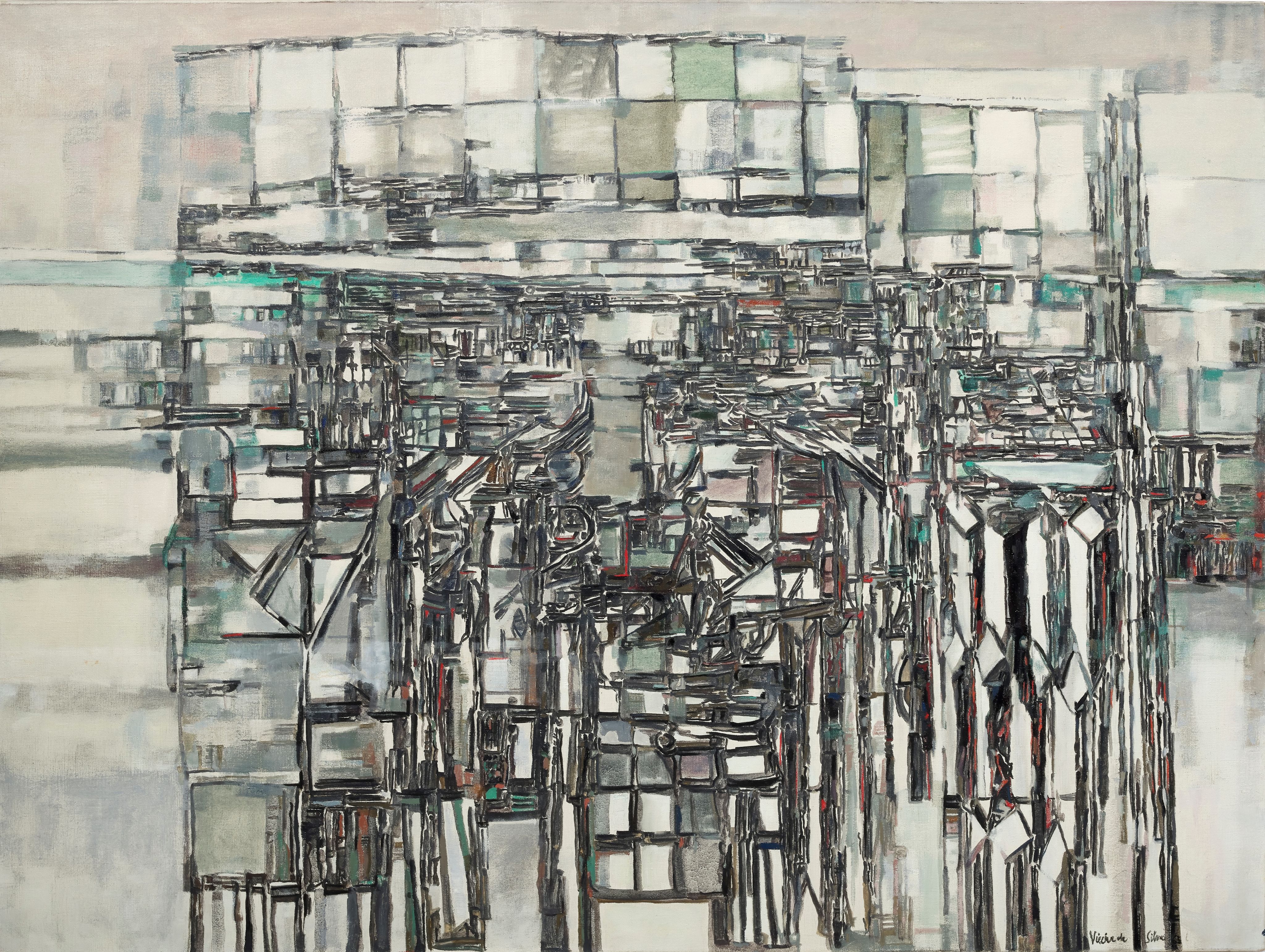

With the Industrial Revolution, the metropolis took on new significance. As factories and shops lured workers from the countryside cities became at once seductive and sinful, pulsating with the promise of profits yet also home to want and despair. Charles Baudelaire encapsulated this fabulous, flawed new world in the figure of the flaneur. “For the perfect flâneur, for the passionate spectator, it is an immense joy to set up house in the heart of the multitude, amid the ebb and flow of movement, in the midst of the fugitive and the infinite.”
No spectator was more passionate, nor captured that fugitive, infinite ebb and flow more sensitively, than the Portuguese artist Maria Helena Vieira da Silva. Born in Lisbon in 1908, she would live not only in the Portuguese capital but also in Paris and Rio de Janeiro. Her experiences of all three cities are stamped on her oeuvre, their weft threaded through the warp of the fantasy metropolises coursing through her imagination.
By the time she died in 1992, Vieira da Silva’s soaring, swooping, urban shape-shifters were present in prestigious collections including those of MoMA, Tate, the National Gallery of Canada and the Centre Pompidou. Major retrospectives of her work had been held at the Gulbenkian Museum in Lisbon and Paris’s Grand Palais. She had painted André Malraux, made stained glass windows for a Reims church, illustrated Plato’s Symposium and created a tapestry for the French Embassy in Lisbon.
One of the finest encomiums to Vieira da Silva’s talent came from her friend, the French poet René Char, who wrote that she held “‘tight in her hand, among so many loose hands, without firmness or need, something that is at once the light of the earth and the promise of a seed. [...]. In her work, we are no longer weighted down and passive. We are in touch with our own mystery, our obscure glow..."

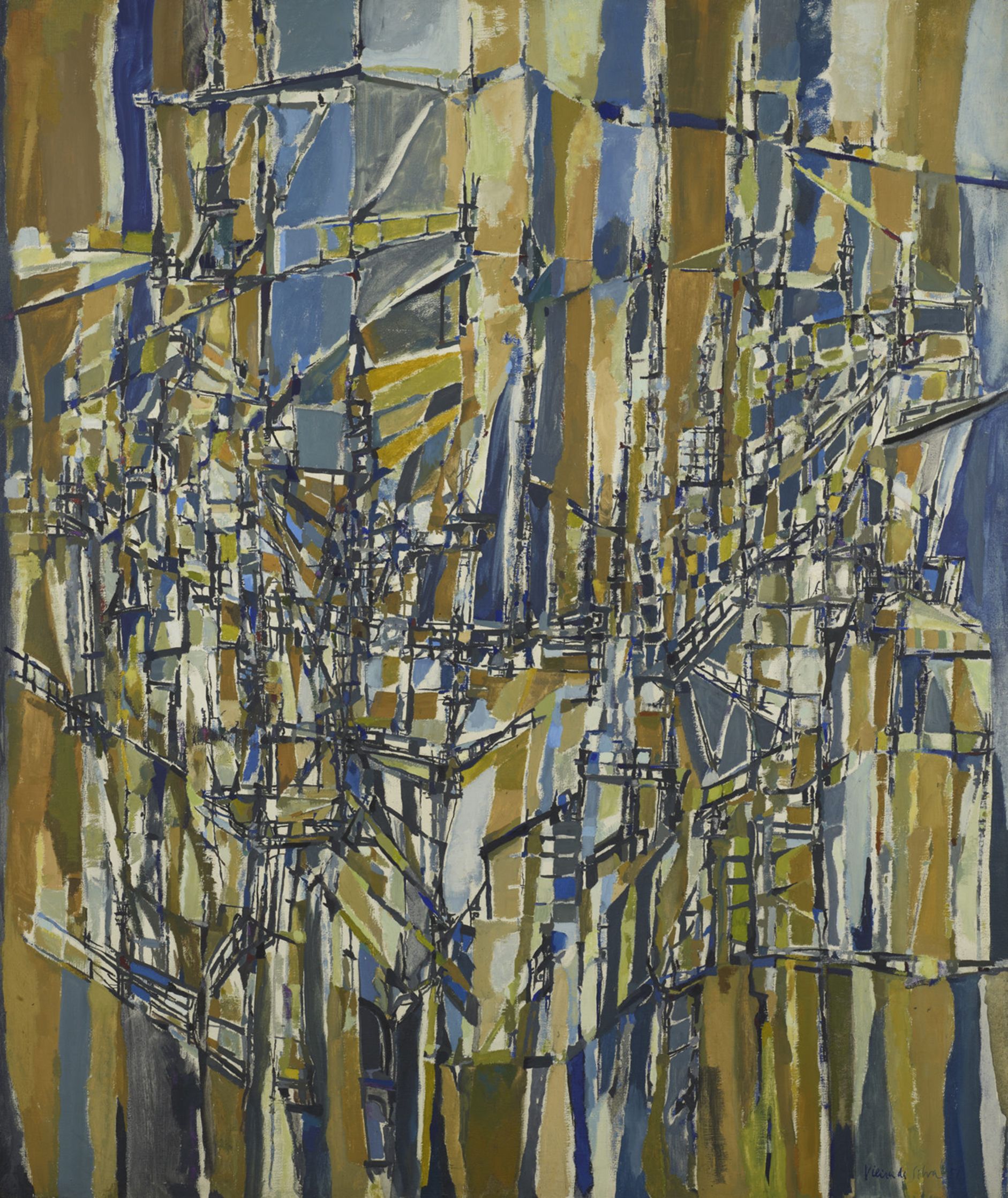
Maria Helena Vieira da Silva, La ville suspendue (Hanging City), 1952 © Musée cantonal des Beaux-Arts de Lausanne
Maria Helena Vieira da Silva, La ville suspendue (Hanging City), 1952 © Musée cantonal des Beaux-Arts de Lausanne

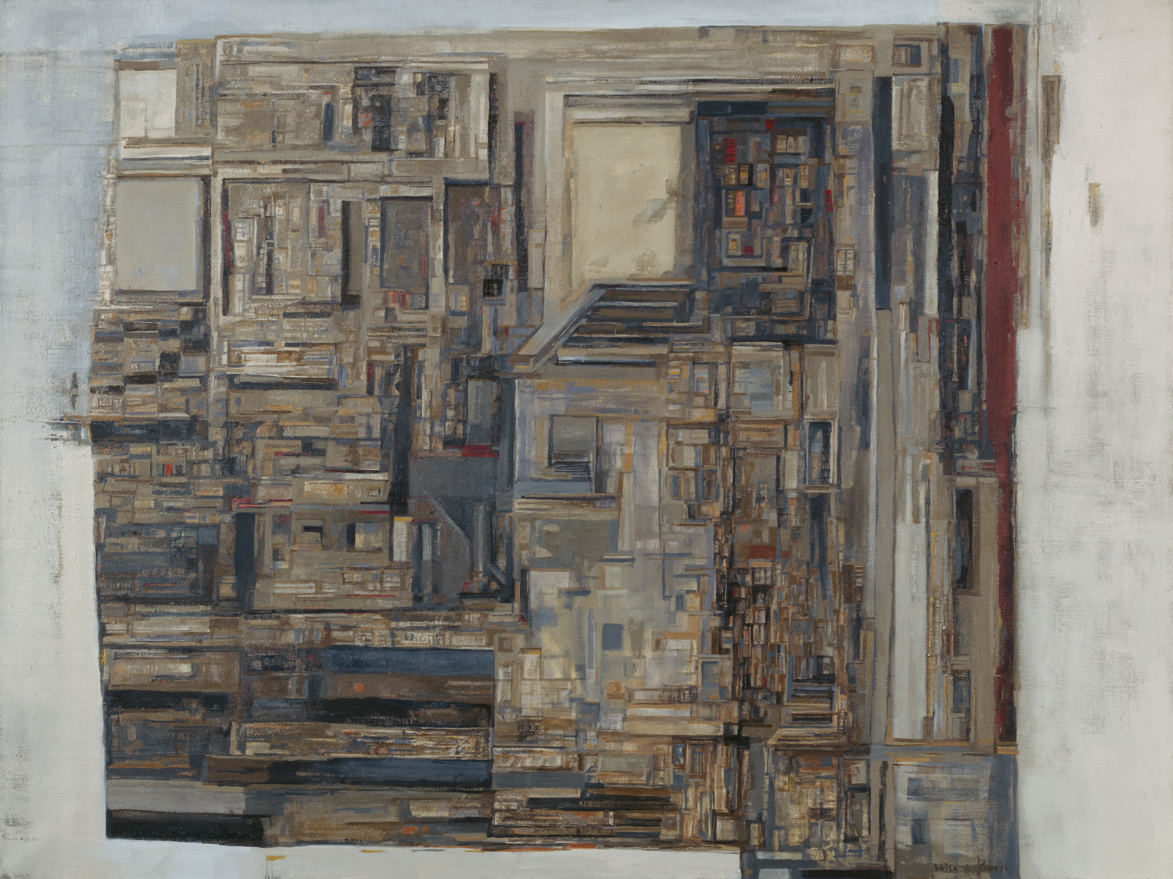
Vieira da Silva’s Le sommeil in the collection of Centre Pompidou © Centre Pompidou, MNAM-CCI, Dist. RMN-Grand Palais Philippe Migeat
Vieira da Silva’s Le sommeil in the collection of Centre Pompidou © Centre Pompidou, MNAM-CCI, Dist. RMN-Grand Palais Philippe Migeat
Now Bonhams Cornette de Saint Cyr has a rare opportunity to offer a significant oil painting by Vieira da Silva. Entitled La Ville Fermée (The Closed City), it was painted in 1965. By then the painter was settled in Paris, after a spell in Rio de Janeiro during the Second World War. With impressive shows behind her in Paris, her career was reaching its zenith, and her marriage – to fellow painter the Hungarian Árpád Szenes in 1929 – remained a nourishing, solid bedrock.
Yet La Ville Fermée speaks of a sensibility as familiar with sorrow as joy. In the subtle neutrals – greys, browns, blacks – that were becoming her preferred palette, the painting is a city of the mind more than the eye. Its dense matrix, a breathless warren of narrow, compressed cells exhaling into hazy, luminous territories at the borders, evokes a crazed, unmappable cartography of incarceration where freedom is dreamt rather than realised.
Perhaps moments of suffocating melancholy are inevitable when an artist has loved and lost multiple homes. The 1960s was a moment of reflection for Vieira Da Silva. A year after she painted La Ville Fermée, she entitled a work Memoire. In hues of white and silver, it was a more open, optimistic image than the work at Bonhams, yet it moved Pierre Wat, in a text to accompany a solo show of Da Silva at Waddington Custot gallery in 2019, to write: “Lisbon, the Lisbon before the war would never come back. So what could the artist do? She could paint her loss at the same time as she painted what had been lost. Not seeking in vain to reconstruct what no longer existed but rather to build a new place, a pictorial place [...] where loss would become the very stuff of life.”
If it was Lisbon that haunted Vieira da Silva to the end of her days, it’s little wonder. Her youth, as the grand-daughter of an important newspaper founder and daughter of a diplomat, was one of culture and privilege. During the First World War, the city was a magnet for artists of all persuasions. Vieira da Silva attended performances of the Ballet Russes. But when she returned to her native city in 1939, having fled Paris with Szenes (who was Jewish) for fear of Nazi occupation, her reception appears to have been dusty. Portugal refused her application for nationality – which she had renounced when she married Szenes – and work she made for the Portuguese World Exhibition of 1940 was censored and destroyed. That same year, she made Lisbonne, a small gouache street scene where bitter-orange and ochre buildings are dulled by grey and brown windows and the inhabitants seem alien and temporary as ghosts. Yet Lisbon brought happier recollections too. Portugal’s radiant azujelos tiles played a rousing chord throughout Da Silva’s oeuvre. Explicit references included The Tiled Room, 1935. In the collection of London’s Tate Gallery, it’s a hypnotic, undulating chamber whose walls flow through glowing squares and lozenges to evoke the interior of a jewel-bright mollusc shell.
Working in an expressive abstract style in mid-century Europe, Vieira da Silva is inevitably grouped with artists such as Georges Mathieu, Pierre Soulages and Nicolas de Staël who were part of the movement known as Tachisme or Art Informel.
But her repetitive use of small, angular cubes and lines, and lack of gesturality, sets her apart from this genre. In truth her paintings – which often feel as if a Borgesian labyrinth has been threaded through a Haussmanesque grid to create a space at once orderly and infinite, locked-down and frontierless – owe more to the influence of Cubism. Vieira da Silva squeezed and flattened the chunky facets of Braque and Picasso until she had created her own set of motifs. With these quirky, malleable building blocks, she constructed her urban architecture of endless streets, perilous gutterings, slanted pavements and vistaless windows.
Crucial too was the existentialist fever that burned through the French capital during her years in Paris. She was friends with Alberto Giacometti who spoke of his moment of Damascene revelation when he saw Boulevard Montparnasse – “as if I’d never seen it before, a complete transformation of reality, marvelous, totally strange [...] with the beauty of the Arabian nights” – after leaving a movie theatre.
Da Silva too excavated her painting out of a desire to make sense of humanity’s presence in a potentially alien world. Sometimes including identifiable figures – ballerinas, harlequins and card players – in her works she once wrote that she watched the street “looking at the people walking or going by on different devices, at different speeds...” and tried to image “the invisible threads that are pulling them. [..] see the cogs that make them move. It seems to me that this is perhaps to some extent what I strive to paint.”
Vieira da Silva died in Paris in 1992 having presided over the inauguration of the Árpád Szenes-Vieira da Silva Foundation in Lisbon which would keep her memory and that of her beloved husband alive in the city she loved.
Yet if anywhere resembles her oneiric, Piranesian vistas, it may be Italo Calvino’s Zaira. The great Italian writer imagines an urbis which consists of the “relationships between the measurements of its space and the events of its past [including] the height of that railing and leap of the adulterer who climbed over it at dawn; the tilt of a guttering and a cat’s progress along it as he slips into the same window”.
Impossible, ineffable, heart-catchingly imaginative, such invisible cities are nevertheless places we have all visited and to which we long to return.
Rachel Spence is an arts writer and poet based in the UK and Italy. Her latest book, a collaboration with the photographer Giacomo Cosua, is Venice Unclocked (Ivory Press, 2022).

 Built with Shorthand