

Boy wonder
Alexander Norman tells of signs and wonders in the search for the reborn Dalai Lama
It was a Water Bird year – 1933, according to the Western calendar. At once began the careful scrutiny of signs and wonders that both presaged and attended the longed-for return of the Precious Protector, Holder of the White Lotus, and emanation of the peerless Bodhisattva of Compassion manifested by the Dalai Lama. The Great Thirteenth Dalai Lama, Thubten Gyatso had chosen to leave his body for the temporary Tushita paradise, before returning once more in his next incarnation, and it was incumbent on his bereaved people to begin the search for their reborn leader.
For the best part of five years, the most accomplished spiritual masters in the land – pre-eminent among them the young, wonder-working mystic Reting Rinpoche, recently appointed Regent of Tibet – worked unstintingly, first to determine where they should look and then to identify correctly from among the several possible candidates their efforts had disclosed. Early in the process, a rumour took hold that an infant seen by the Panchen Lama – who is recognised by a majority of Tibetans as the second most important incarnation in the land – was highly promising and worthy of closer examination. He turned out to be the one who would subsequently be confirmed to be the authentic rebirth of the Great Thirteenth.

One might ask why, if these supreme beings have such powers, they do not identify themselves? Why do they not proclaim themselves through miraculous deeds? This would be to miss the point. The process of identification and official recognition, culminating in the child’s public enthronement, is a key part of the Dalai Lama’s recurrent ministry. Its absence would change the very character of his office. Instead of being a role in which his subjects participate, drawn together in bonds of mutual care and affection, the Dalai Lama would become, in effect, a god who ruled by diktat rather than a human being who rules by consent, as mediator between the mundane and the supramundane realms.

It is our great good fortune that the British civil servant who was appointed to represent his government at the forthcoming enthronement of the new Dalai Lama in Tibet’s capital Lhasa on 22 February 1940, understood clearly the significance of the event he was about to witness. It would be a moment, all too brief, when gods gathered with men in humble obeisance at the feet of the one who – not sent but of his own volition – comes among sentient beings to be their refuge.
'One might ask why, if these supreme beings have such powers, they do not identify themselves?'
Sir Basil Gould, then Political Officer for Sikkim, Bhutan and Tibet, was deeply interested in the culture of this most reclusive of nations. Not only did he compile several books about the Tibetan language but, on this occasion, set about documenting, in a work of unique importance, the process by which the incoming Dalai Lama was recognised and his identity confirmed. More than that, he personally met each of those involved and, most importantly for us today, arranged for portraits of each of them to be painted by the outstanding young Indian artist Kunwal Krishna. These portraits are to be offered at Bonhams New Bond Street in June as part of the Collection and Archive of Sir Basil Gould sale.

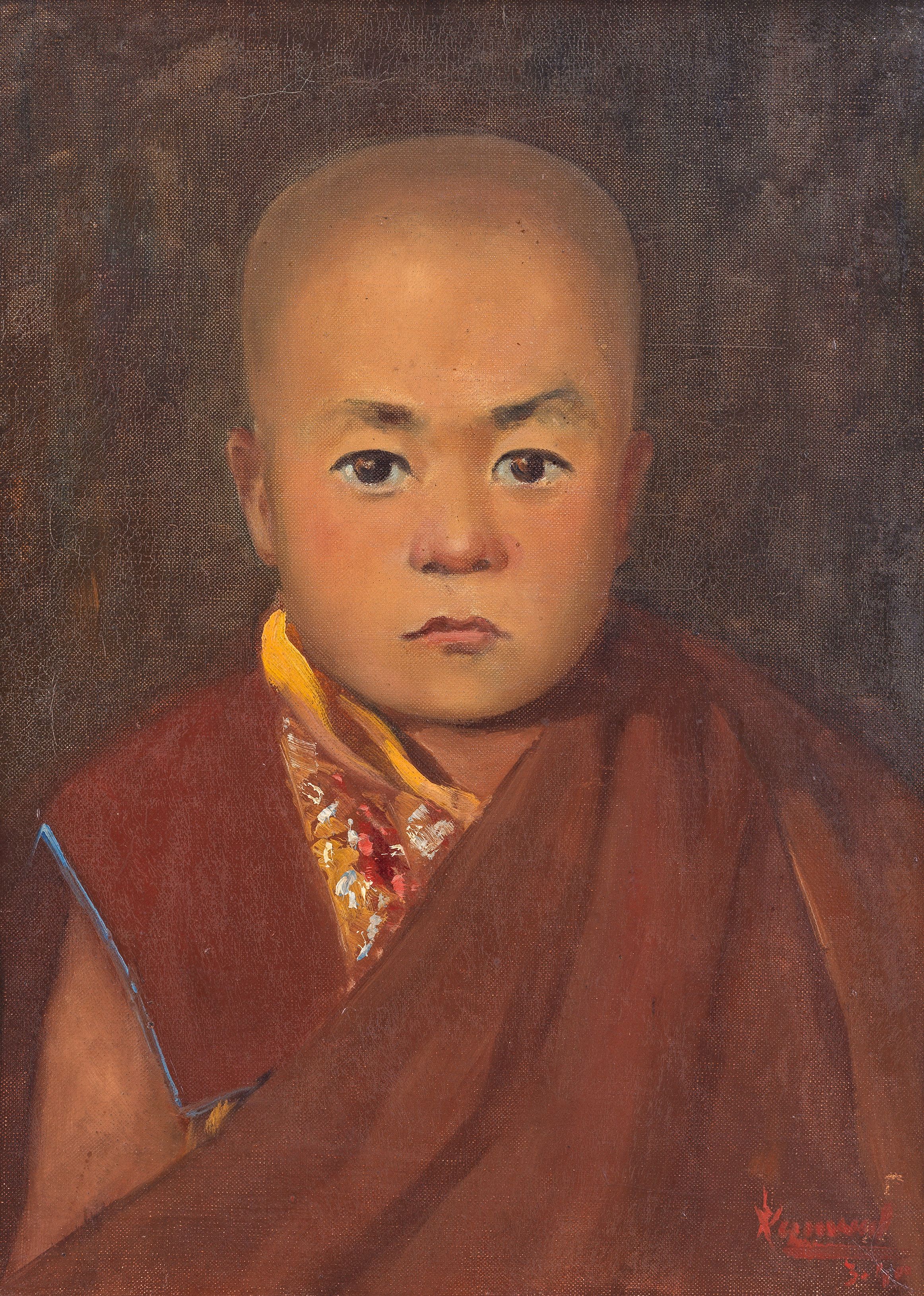
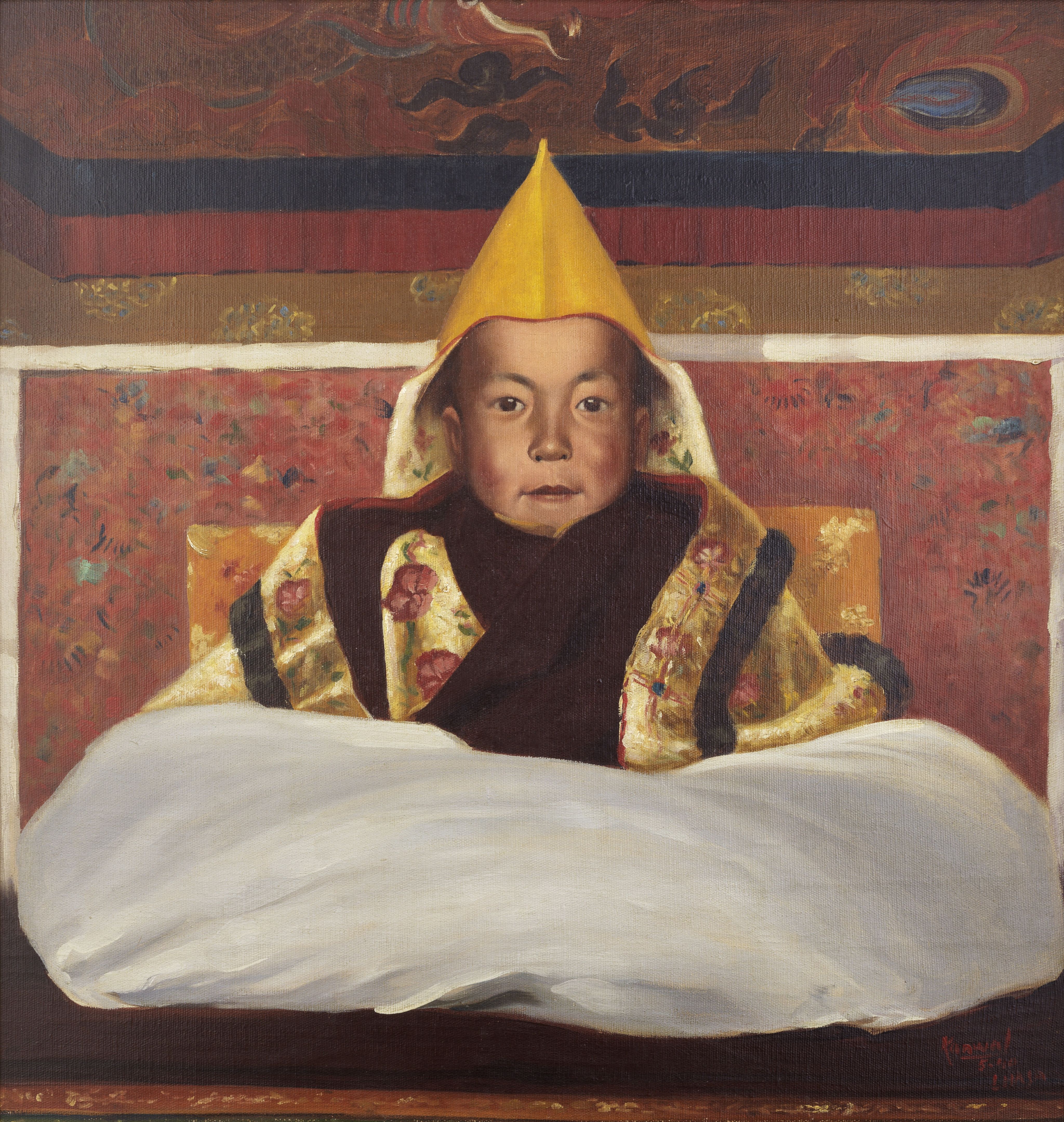
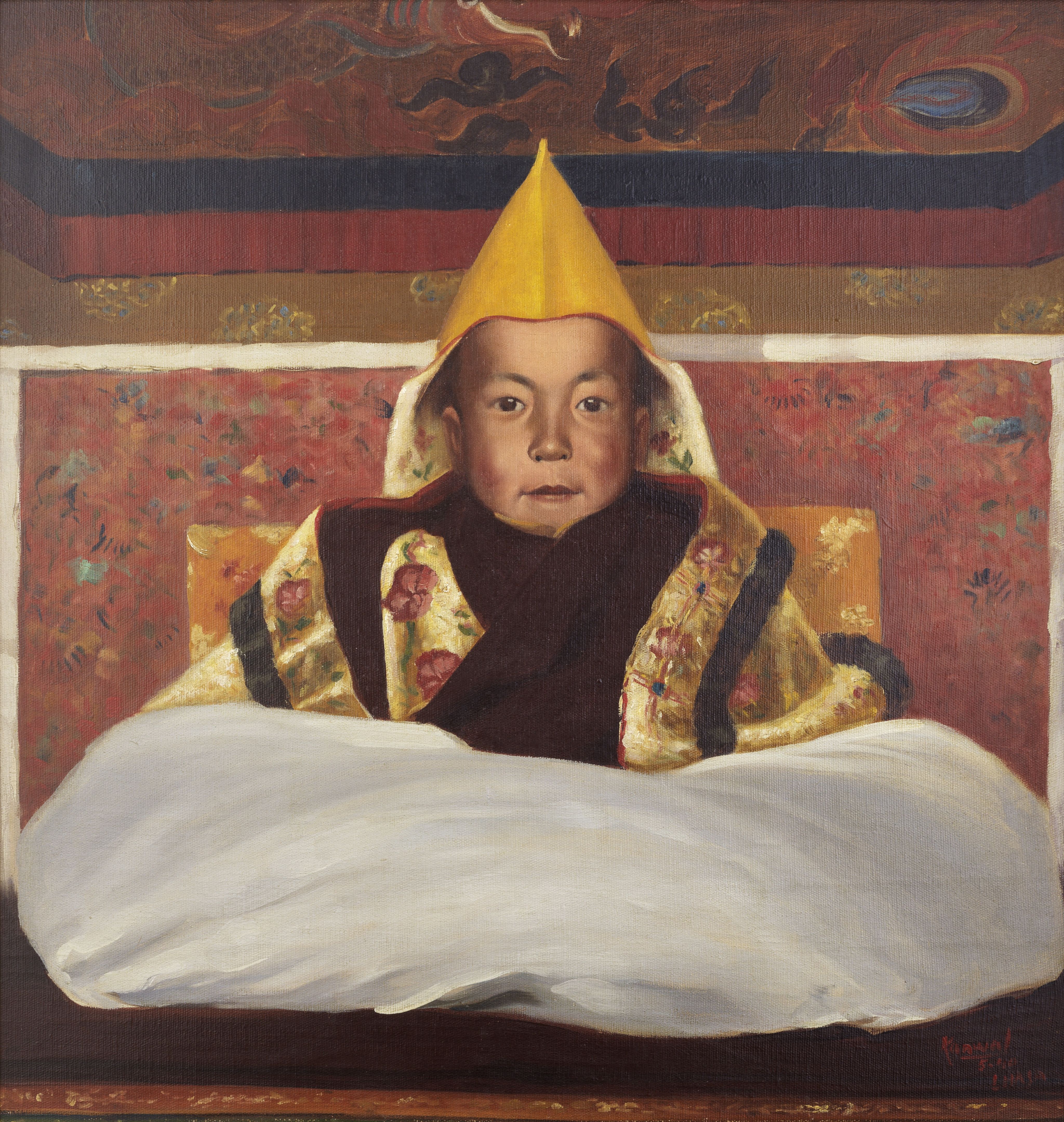
When we contemplate these pictures, we are brought as close as we are able to participating in the events the sitters themselves experienced. In an important sense, we are brought into communion with the sems rgyud, the mind stream, of each of them. This is clearest in the portrait of the child Dalai Lama himself, where Kunwal Krishna seems inspired by his subject to a mastery of his medium that arguably he was never to reach again.
Gould’s written account of the young boy’s identification, first published in New Delhi in 1941 as A Report on the Discovery, Recognition and Enthronement of the Fourteenth Dalai Lama of Tibet, gives us the most intimate glimpse of the process ever undertaken. Read in conjunction with the account of Keutsang Rinpoche, one of the Tibetan officials most closely involved, we are brought close to the mystery that has for centuries fascinated and sometimes appalled outsiders. The 18th-century Italian missionary Father Ippolito Desideri, as just one example, was convinced the system of identifying reincarnations was a work of the devil.

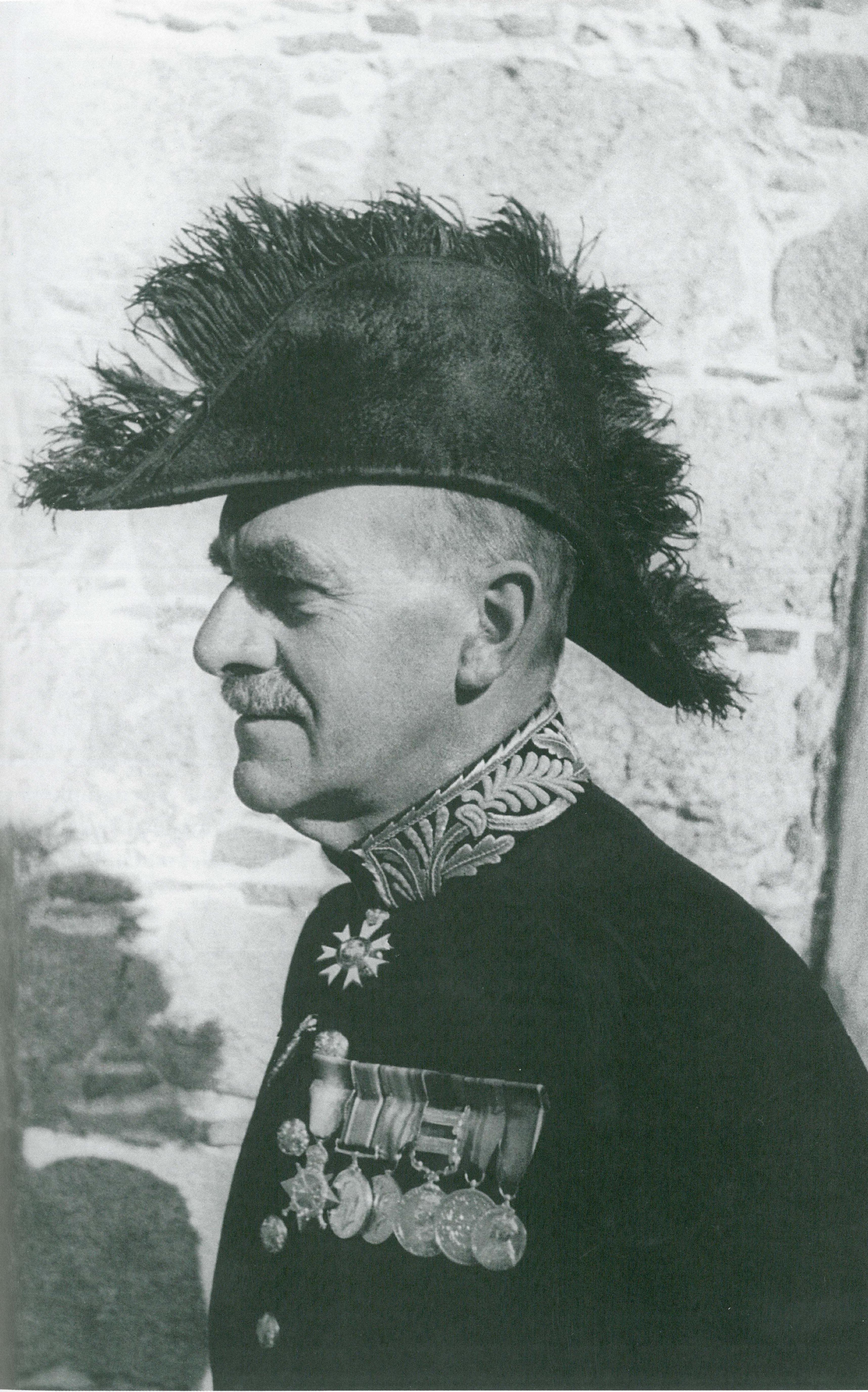
Sir Basil Gould, the Political Officer for Sikkim, Bhutan and Tibet who was appointed to represent the British government
Sir Basil Gould, the Political Officer for Sikkim, Bhutan and Tibet who was appointed to represent the British government
The very first indication of where the search for the new Dalai Lama should begin was the slight movement of the shrouded corpse of the Great Thirteenth. As was customary, he sat in state, wrapped in gauze, in a chapel in the Potala Palace, before his entombment in a memorial stupa. It was noticed that his head dipped slightly in an easterly direction. By itself, this was not necessarily of significance to the search for the new incarnation, but, taken with various other signs, a clear picture began to emerge. An unusual star-shaped fungus appeared at the base of a pillar standing to the north-east of the shrine where the Great Thirteenth sat. Under some stairs at the eastern end of the area where public discourses were held outside the Jokhang, Tibet’s holiest temple, some snapdragons bloomed unexpectedly. Then, too, some unusual cloud formations were, on one occasion, seen on the horizon. Together, these signs in nature seemed to suggest an eastern approach. What was needed now was greater precision: more than a thousand miles separate Lhasa from what was then considered to be its eastern border with China.

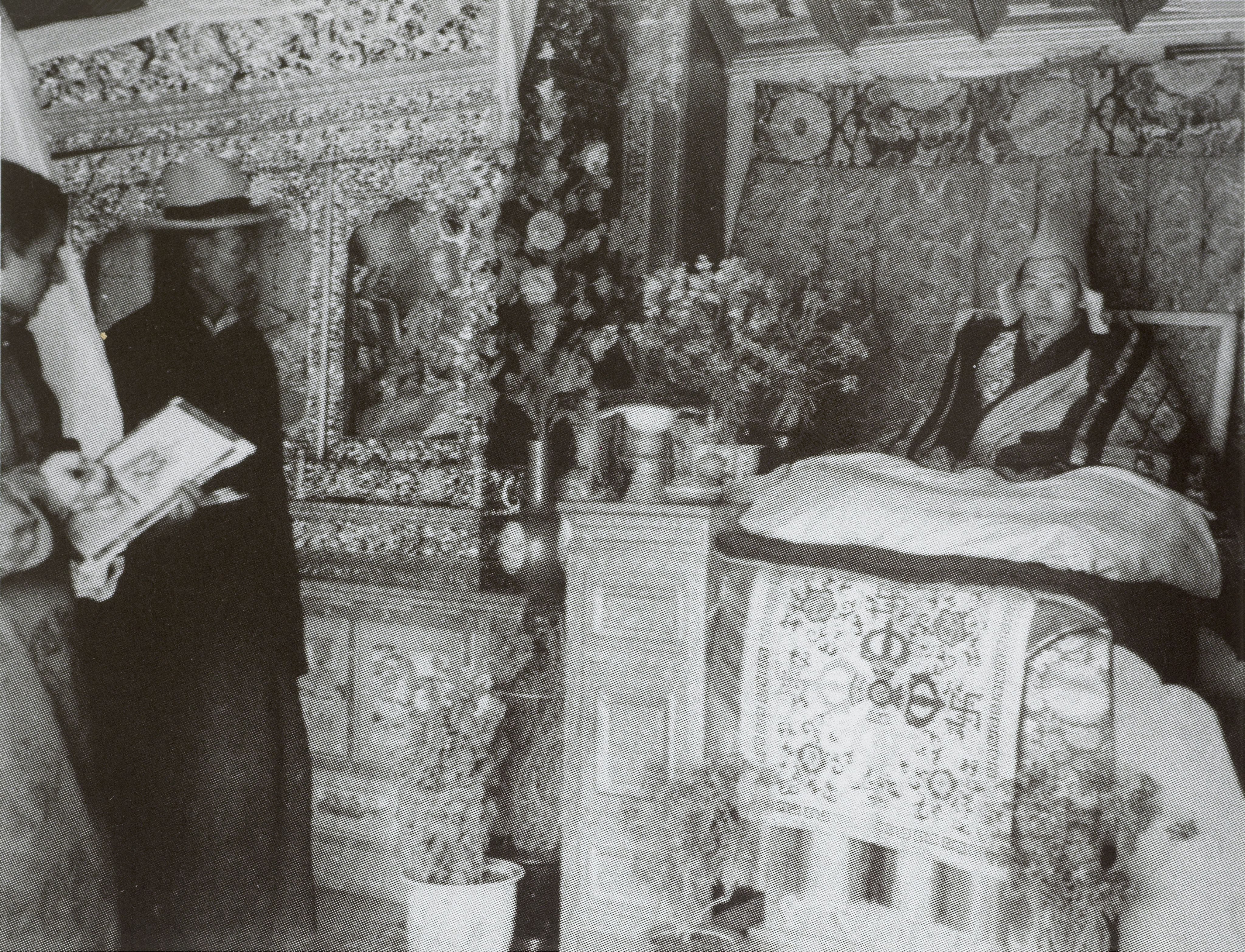
Krishna Kanwal at work
Krishna Kanwal at work
In the hope – indeed, expectation – of obtaining a more fine-grained picture of where the searchers should look, the Regent undertook the prescribed pilgrimage to the lake in southern Tibet known as the earthly abode of the Glorious Goddess, Palden Lhamo, the protector deity of the Dalai Lamas. A fearsome being, her iconography depicts her as having a dark blue body. In her right hand, she brandishes a club over the spilled brains of those who have broken their promises to her. In her left, she holds a skull cup brimming with the blood of her enemies. With half-open mouth, she is seen chewing on a human corpse. Her three red, round eyes gleam with lightning, while from her mouth come cries that sound like thunder. Her blazing yellow hair stands on end, while her beard flames with fire. On her head, she wears a diadem of five skulls, while round her neck is draped a garland of 15 freshly severed heads. Small wonder that the Victorians were convinced that Tibetan Buddhists actually worshipped the devil. But this was completely to misunderstand the tantric worldview of which the protector deities are a key feature. As in the mystical practices of Western alchemy, the profane is transmuted into that which is sacred: her real enemies are not humans, but the emotions that assail them.

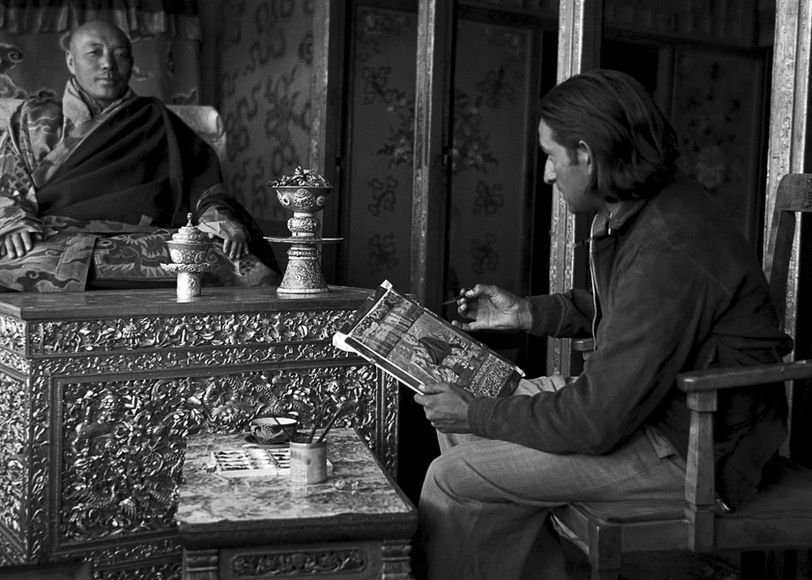
Tradition holds that it is from her that, subsequent to the appropriate sadhana (committed spiritual practice), come the visions that will direct the seer in the quest for the new incarnation. The young Regent was duly granted three successive signs, seeing them among the waters of the lake. In the first, he saw, clearly formed, three characters of the Tibetan alphabet.
'The 18th-century Italian missionary Father Ippolito Desideri, as just one example, was convinced the system of identifying reincarnations was a work of the devil.'
The next of his visions showed a three-storey monastery with several striking features: its second storey was painted turquoise and its top storey adorned with a golden roof, and there was a path threading eastwards in the direction of a low hill. The third vision was of a single-storey building with a blue roof and guttering of unusual shape. Having carefully noted the contents of his visions, the Regent retired to his shrine room and took each in turn as the object of his meditations. He concluded that the first of the letters that he had seen indicated the ‘A’ of Amdo, the easternmost of Tibet’s three major provinces, and that the second corresponded to the ‘K’ of Kumbum, the great monastic foundation of Je Tsongkhapa, spiritual father of the dgelugs tradition to which the Dalai Lamas belong.

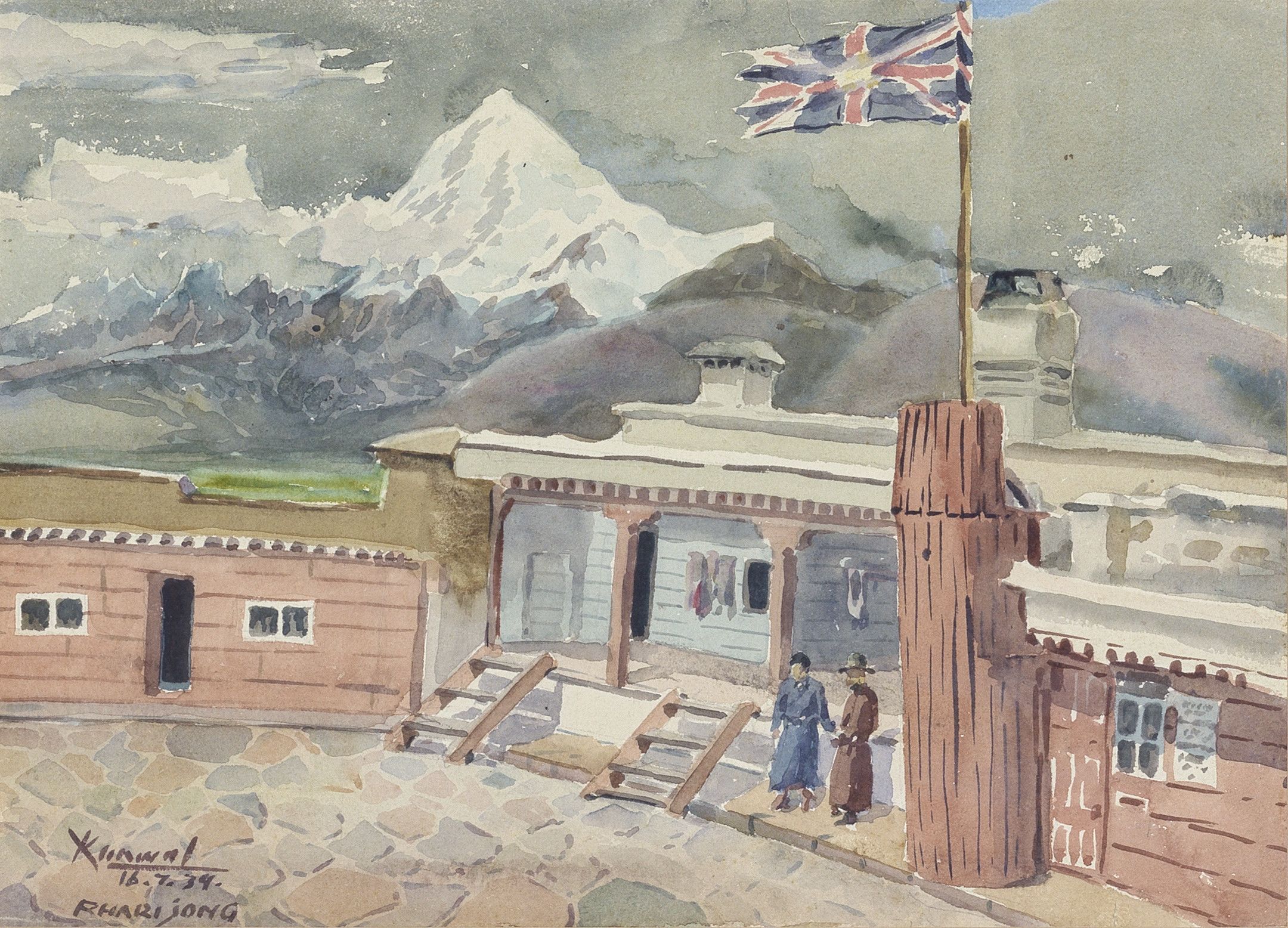
Krishna Kanwal (Indian, 1910-1993), The British residence bunaglow, Pagri (Phari), Tibet. Estimate: £3,000-5,000.
Krishna Kanwal (Indian, 1910-1993), The British residence bunaglow, Pagri (Phari), Tibet. Estimate: £3,000-5,000.
The Regent ordered that a search party consisting of three senior lamas be dispatched at once. This was not without opposition from some quarters. Surely, the argument ran, the Dalai Lama would not choose to be reborn in an area so far from the Holy City. And had not a stallion from the late ruler’s stables recently broken loose and bolted to the house of an infant from the Great Thirteenth’s own family? That infant’s cause was being promoted a number of influential people. The Regent was adamant: the boy should be sought in the east. His orders were understood to have been divinely corroborated, when the oracle at Samye monastery took off his breastplate while in trance and handed it to the search party’s leader, Keutsang Rinpoche. It surprised no one that Rinpoche subsequently found everything just as the Regent had foretold.

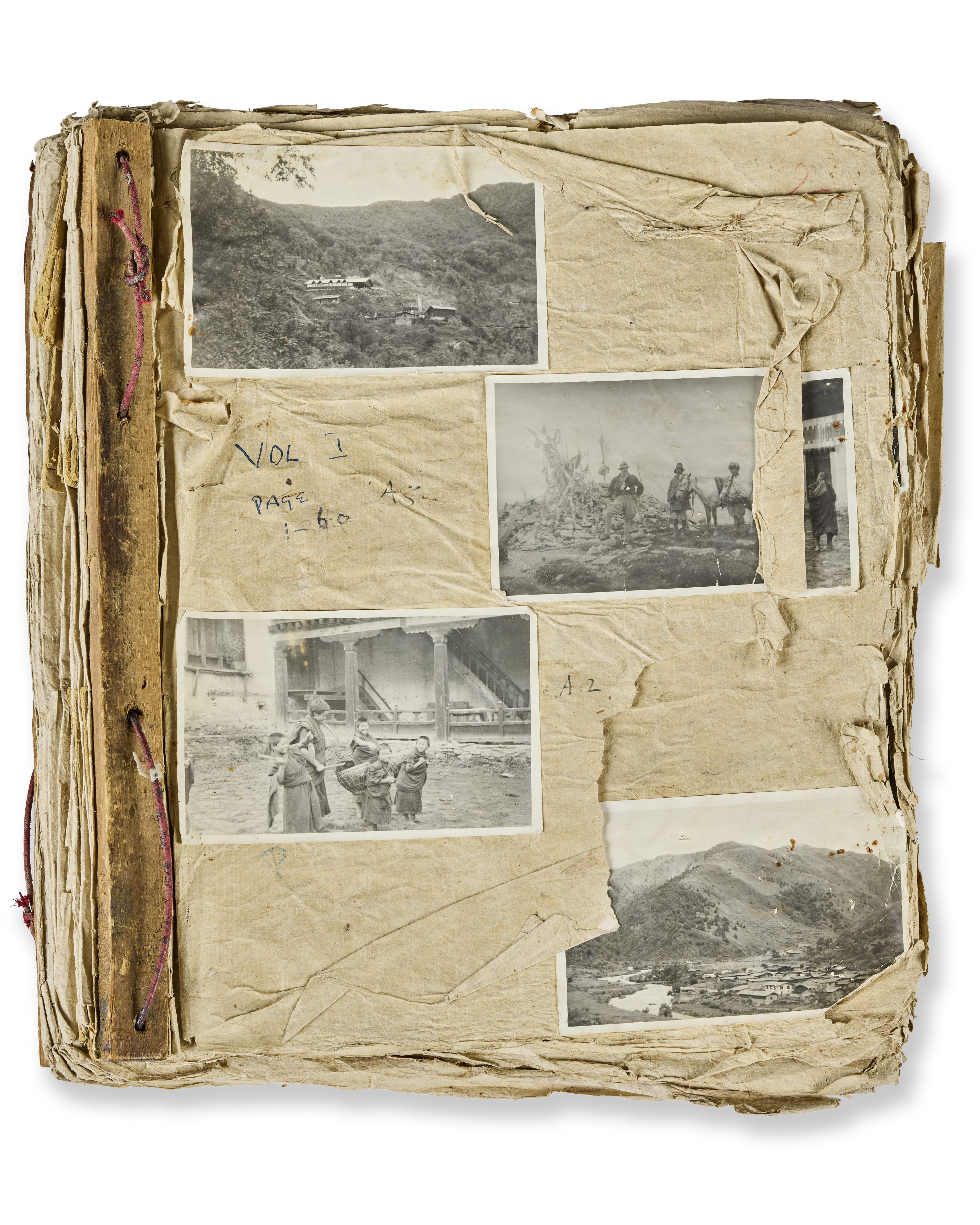
Seven large draft photograph albums from Sir Basil Gould's 1936-1937 British Mission to Lhasa. Containing approximately 1515 photographs. Estimate: £20,000-30,000.
Seven large draft photograph albums from Sir Basil Gould's 1936-1937 British Mission to Lhasa. Containing approximately 1515 photographs. Estimate: £20,000-30,000.
Still more persuasive was the behaviour of the child himself, whose conduct, Rinpoche reported, ‘was extraordinarily profound for his age’. But the severest test was yet to come. This consisted in an interview at which the candidate was presented with a collection of items, some of them belonging to the Great Thirteenth, some not, from which he must choose those that had been his in his former life – no mistakes allowed. With mounting joy, Keutsang Rinpoché watched as the little lad chose correctly his predecessor’s ritual drum and eating bowl. But then – disaster – he picked up a walking stick that had belonged to an associate, but not to the Dalai Lama himself. For a moment, it looked as if all was lost. The child examined it carefully, then put the stick down and picked up the correct one. Afterwards, it was remembered how, in fact, the Great Thirteenth had made a gift of the first stick from among several that he owned.
'When we contemplate these pictures, we are brought as close as we are able to participating in the events the sitters themselves experienced.'
It would be another year before the identification of the boy could be announced in public. When it was, great was the rejoicing all over the Buddhist world – we must not forget that the Dalai Lama is an object of devotion for all who follow the Mahayana Buddhist tradition, not just Tibetans. Of course, the rejoicing was greatest in Tibet, and many thousands of people turned out to welcome him when at last he arrived at the plain outside Lhasa where, newly erected, stood the Macha Chenmo – the Great Peacock, a tented encampment brought out to welcome the returning Precious Protector.

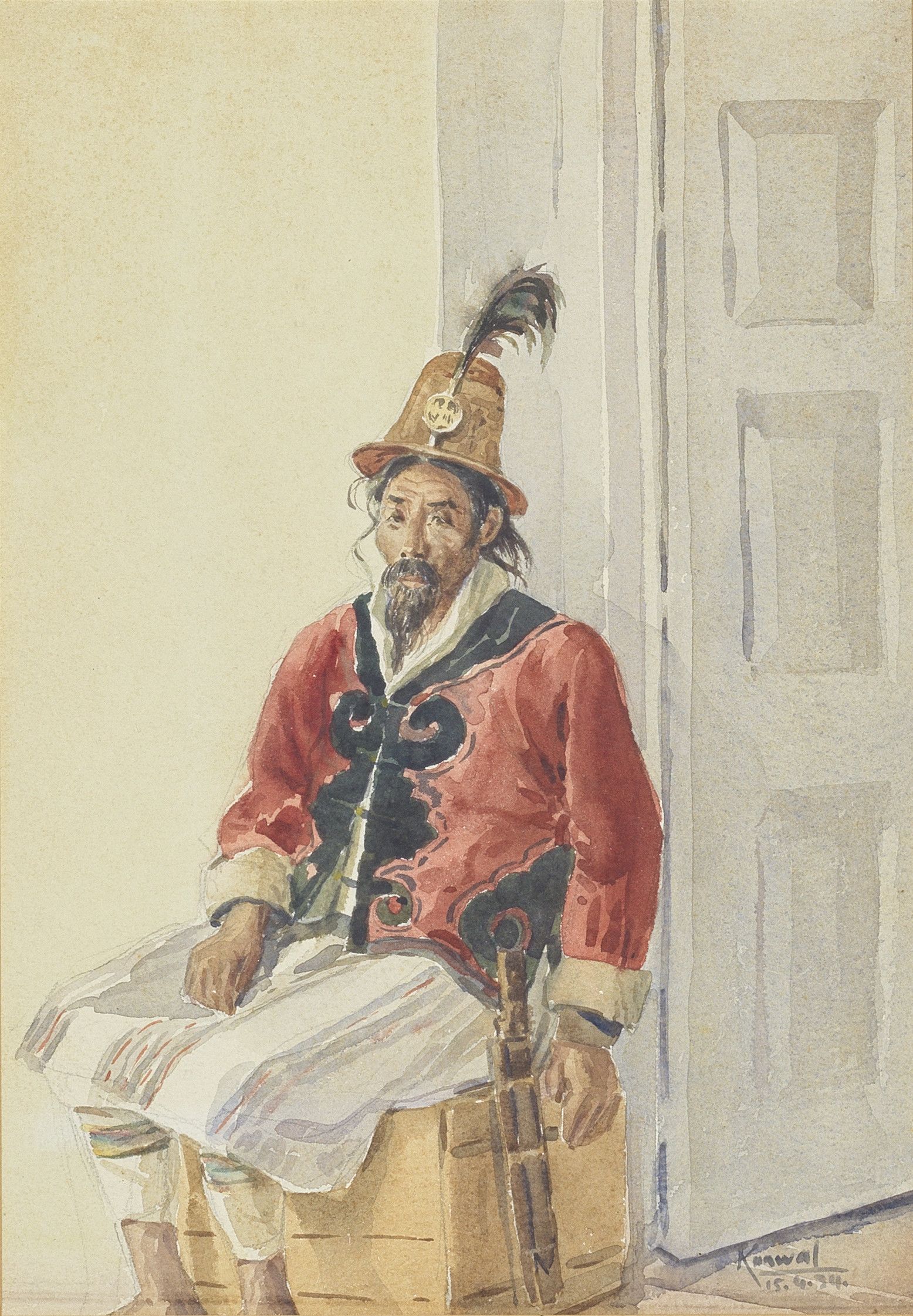
Krishna Kanwal (Indian, 1910-1993), Portrait of a Lepcha orderly. Estimate: £3,000-5,000.
Krishna Kanwal (Indian, 1910-1993), Portrait of a Lepcha orderly. Estimate: £3,000-5,000.
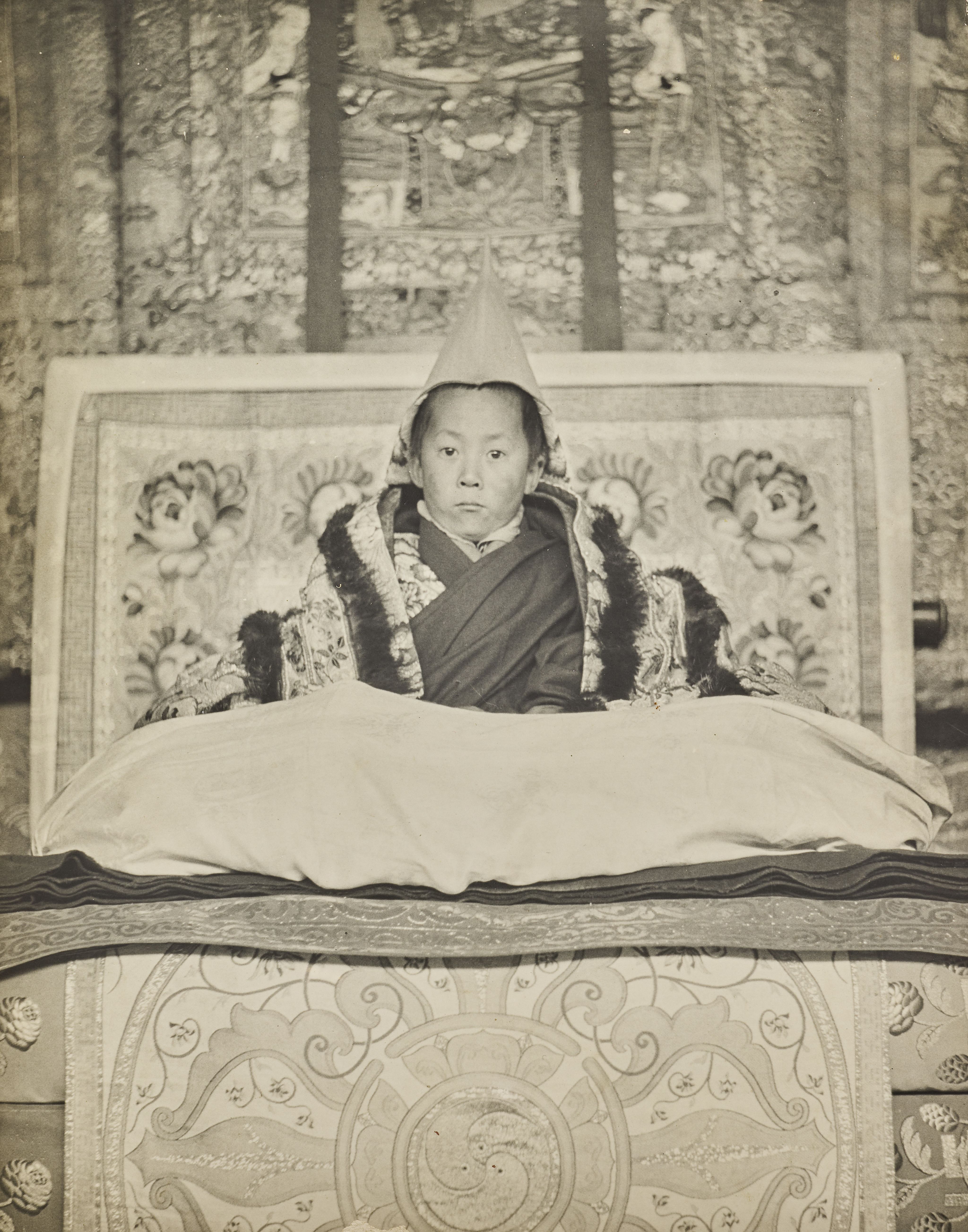
When Gould himself was finally presented to the child Dalai Lama, he noted “a solid, solemn but very wide-awake boy, red-cheeked and closely shorn… seated high on his simple throne”, adding “I soon realised the truth of the report that the child appears to recognise the associates of his predecessor. I noticed the steadiness of his gaze, the beauty of his hands, and the devotion and love of the Abbotts who attended him. All seemed to be aware that they were in the presence of a Presence.”
Those who have enjoyed the privilege of meeting the Dalai Lama in person will say the same thing of him, even in old age. It is precisely this that Kunwal Krishna’s portraits capture: the sense that all those close to the Dalai Lama are touched by him in some indefinable yet concrete way. The portrait of the child is thus a manifestation of the Divine, and in front of it we too find ourselves in the “presence of a Presence”.
Alexander Norman has written a number of books about the Dalai Lama, whom he first met in the 1990s.
Kanwal Krishna (1910 - 1993)

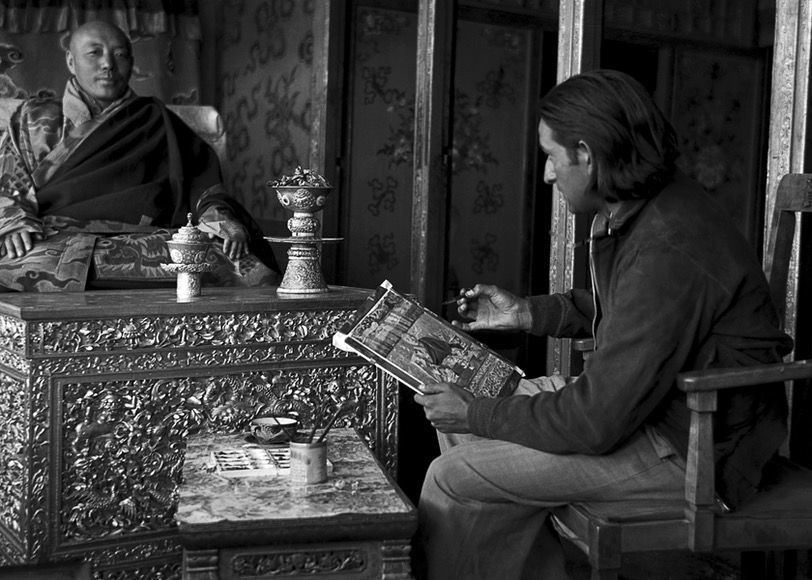
Kanwal Krishna was born in Kamalia (pre-Partition Punjab) and described his life as that of a “wandering gypsy.” In the 1950s, he stood out among artists exploring landscape painting as a modernist genre. His travels to places like Tibet, Kashmir, Europe, and Afghanistan deeply influenced his work. In 1945, Krishna and his artist-wife Devayani were invited by Sir George Cunningham to travel through Afghanistan and the Khyber Pass to paint the landscapes and life of the region. He was one of the first Indian artists to visit Tibet, where he gained special permission to attend the Dalai Lama’s coronation, which he documented through paintings and film—creating some of the earliest visual references of the area’s life and landscapes.
Known for his mastery of perspective, Krishna’s art featured unique angles and depth. A skilled printmaker, Krishna greatly influenced Indian artists and was associated with prominent art groups like the Delhi Silpi Chakra and Lalit Kala Akademi.
Highlights from the forty watercolours from Krishna's 1939-1940 visit to Lhasa
Depicting the ceremonies, dignitaries and enthronement of the Dalai Lama

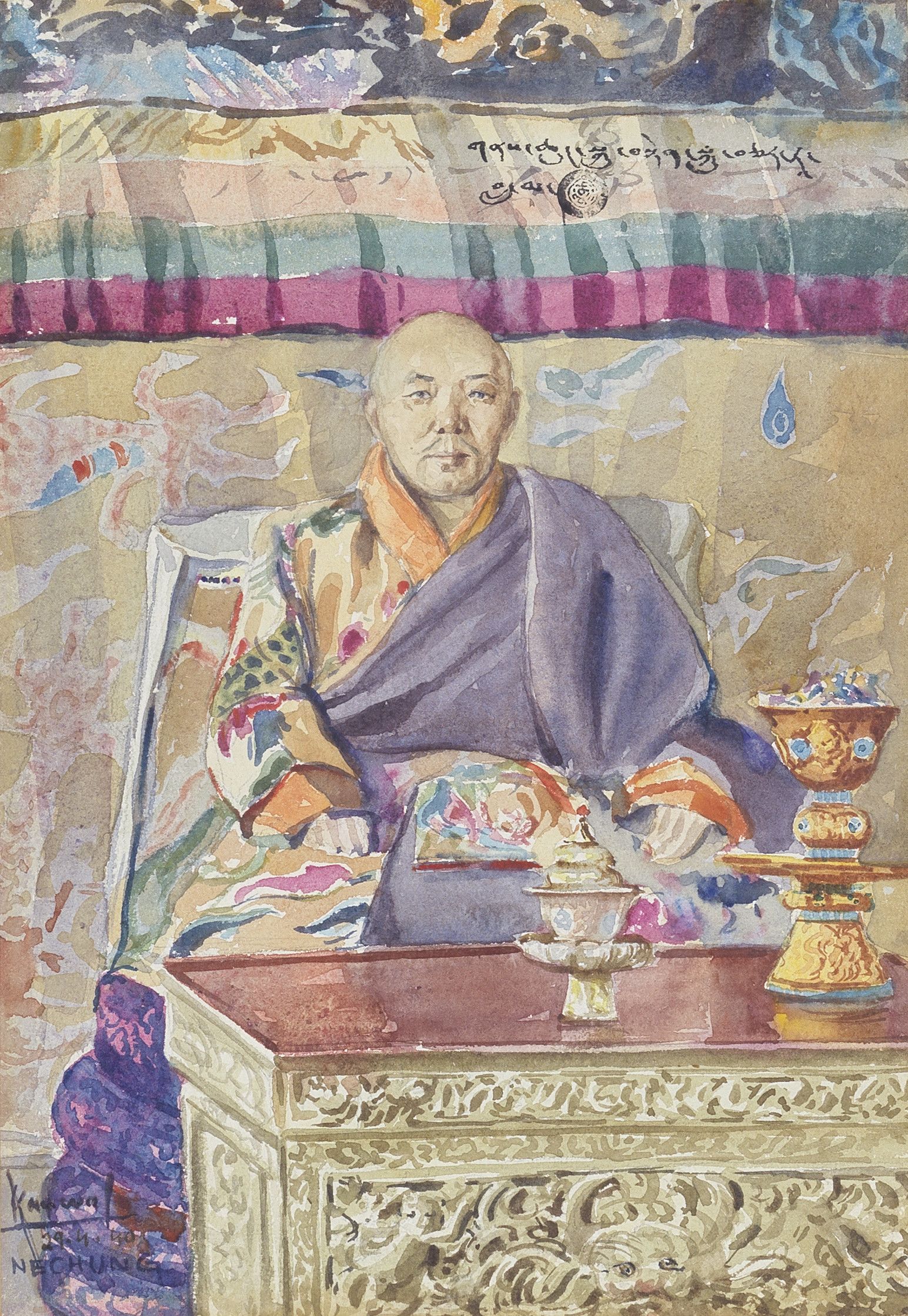
Portrait of Nechung Oracle
The practice of divination is absolutely central to the Tibetan tradition in general and to the Dalai Lama institution in particular. Even today, the Dalai Lama will consult one of several oracles for advice on all major decisions, whether of a political or a spiritual nature. Of them all, the Nechung Oracle is the most important. It was Nechung who played the principle role in the identification of the Dalai Lama. It was Nechung, too, who provided crucial guidance with respect to the Dalai Lama's eventual flight from Lhasa into exile in India.

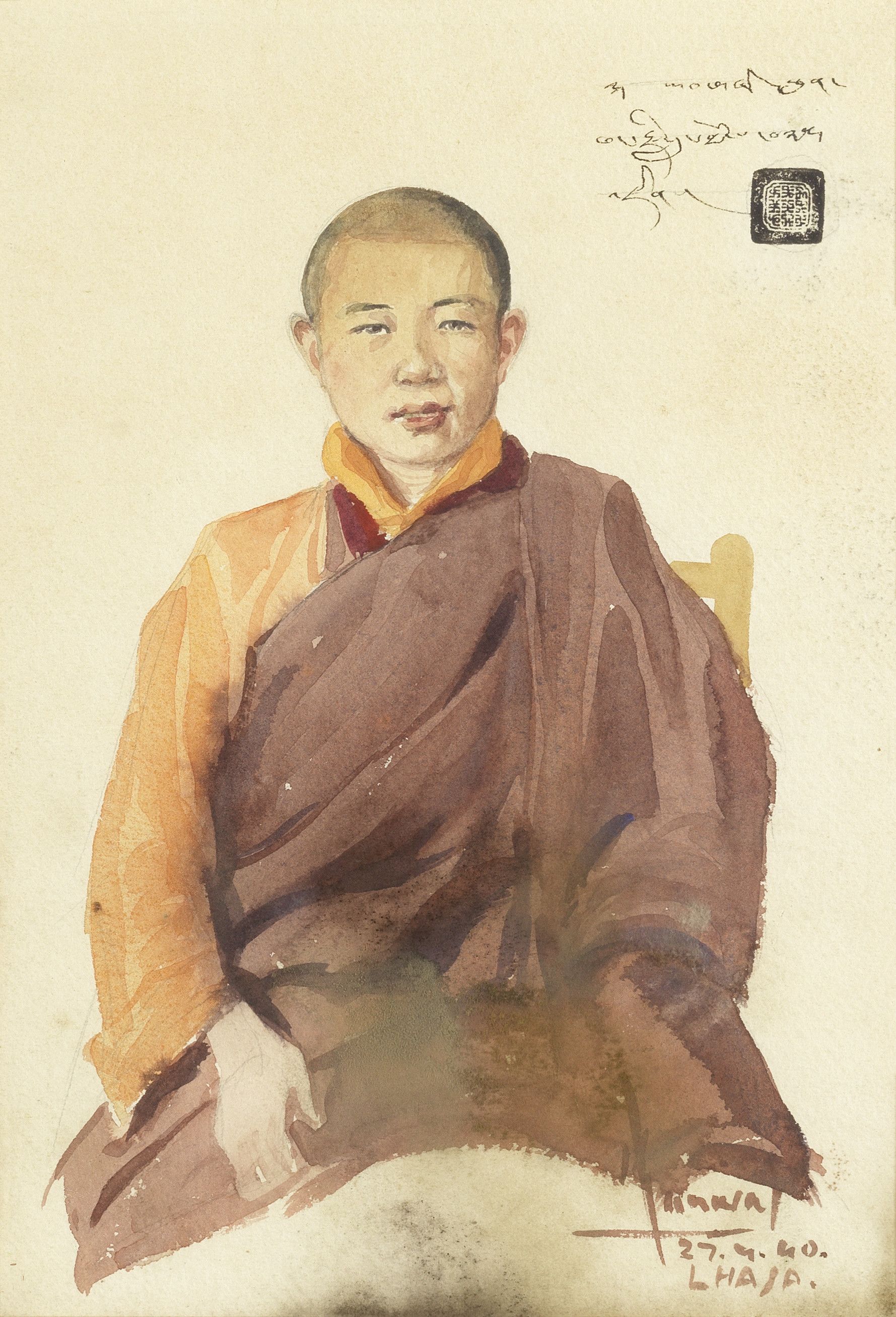
Portrait of Jedrung Phumkang
Son of Phumkang Kung and half-brother of Phumkang-Se. Jedrung Phumkang was reputedly one of Reting Rinpoché's male lovers. When Takdra Rinpoché assumed the Regency, one of his first acts was to dismiss Jedrung Phumkang from his post as a monk official, though he continued as a member of Reting Rinpoché's's own official secretariat.

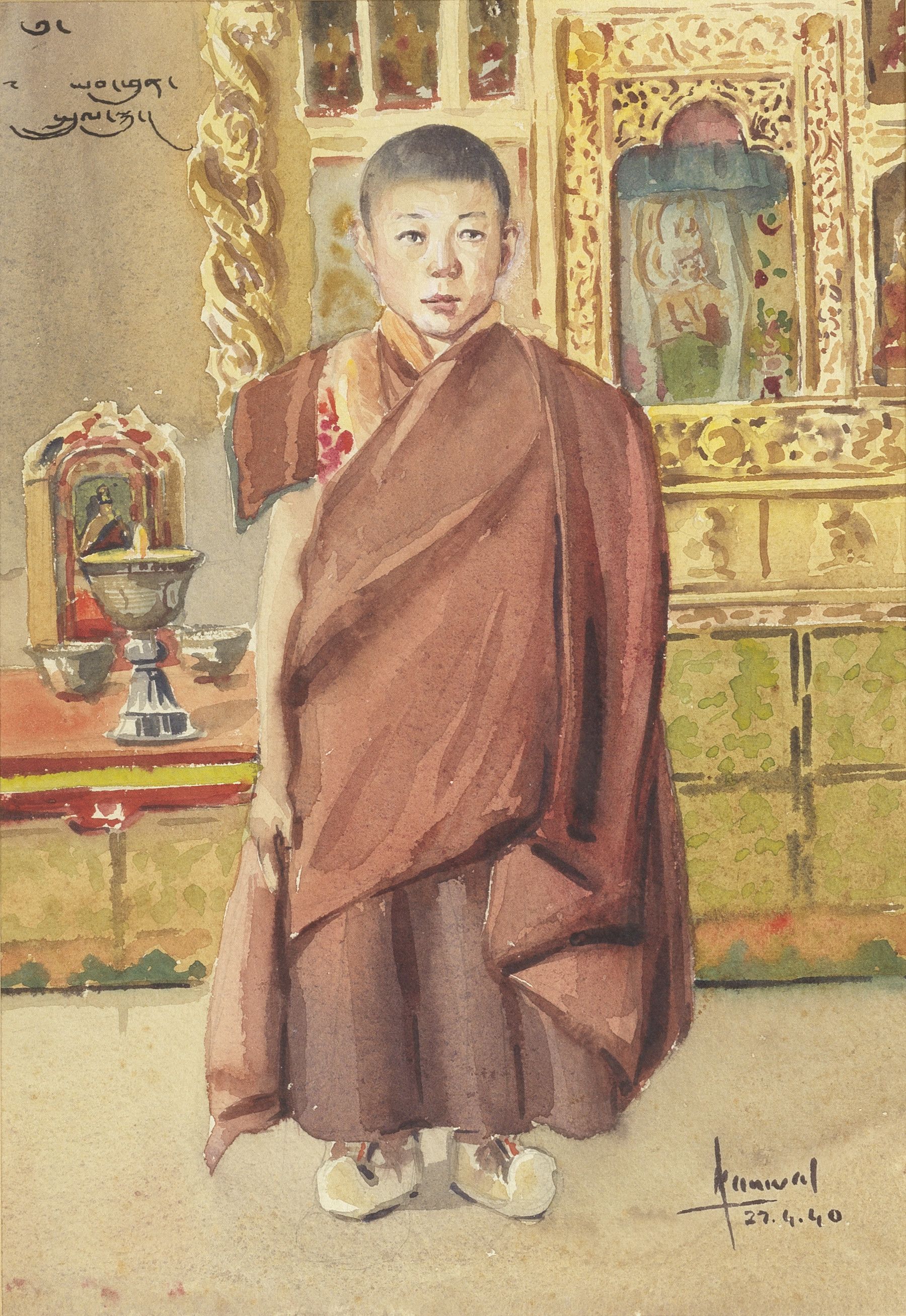
Portrait of Yab-Phun Tulku
From the inscription with his Tibetan name, we can tell that this young monk was a member of the Phunkang family, the one into which the Eleventh Dalai Lama had been born. The word tulku (correctly, sprul sku) means 'the basis' and refers to the individual sentient being's mind stream as basis for the manifestation of a highly evolved spiritual master - one who is able to choose the manner and timing of their rebirth, a privilege only of the most accomplished practitioners.

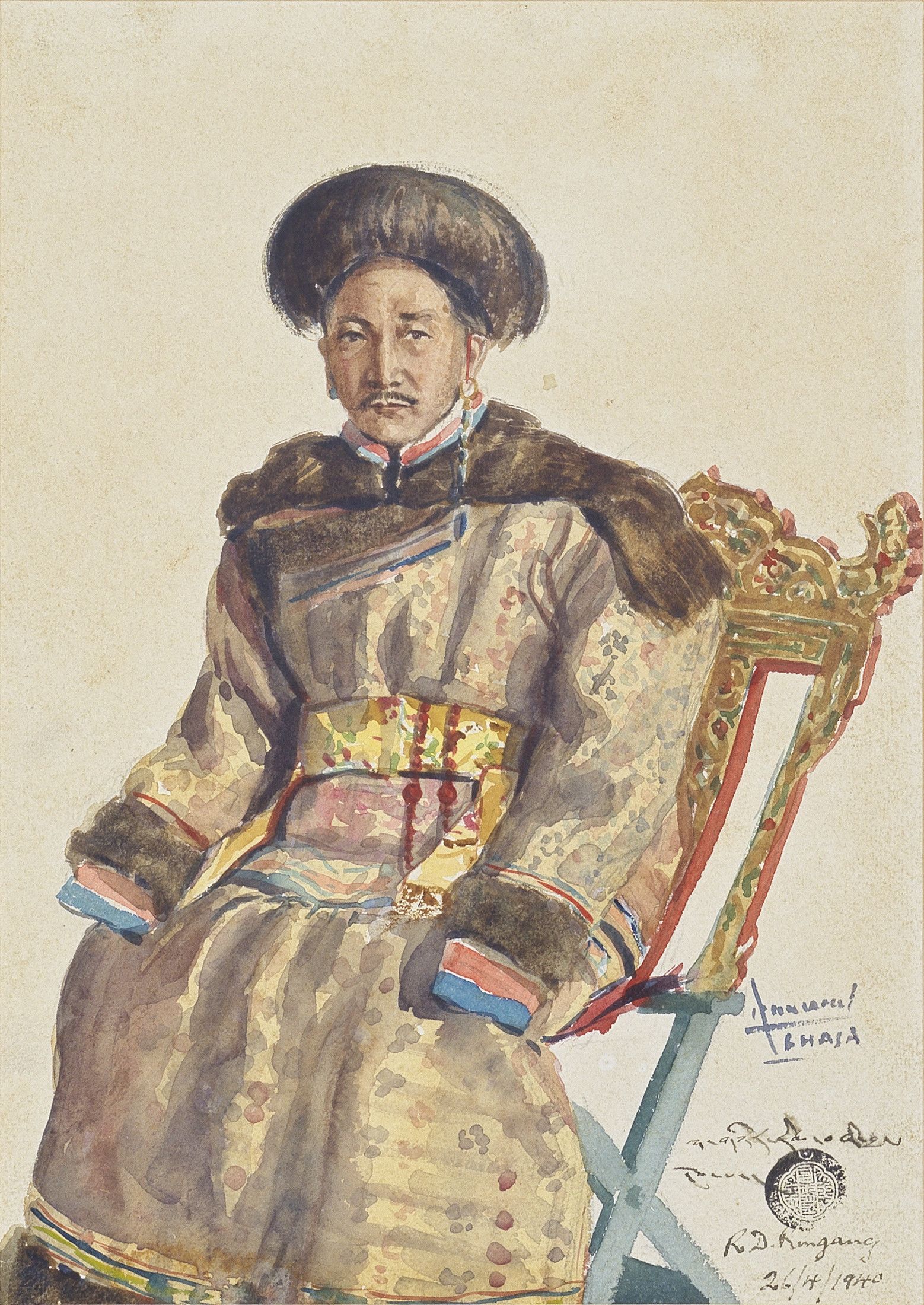
Portrait of Kusho Changngopa "Ringang"
The most successful of four boys sent to Ruby School at the behest of the Great Thirteenth Dalai Lama, he was responsible for installing the first electrical plant in Lhasa. This was not universally approved. One senior monk official complained that, ever since, the winters in the capital were not properly cold any longer.

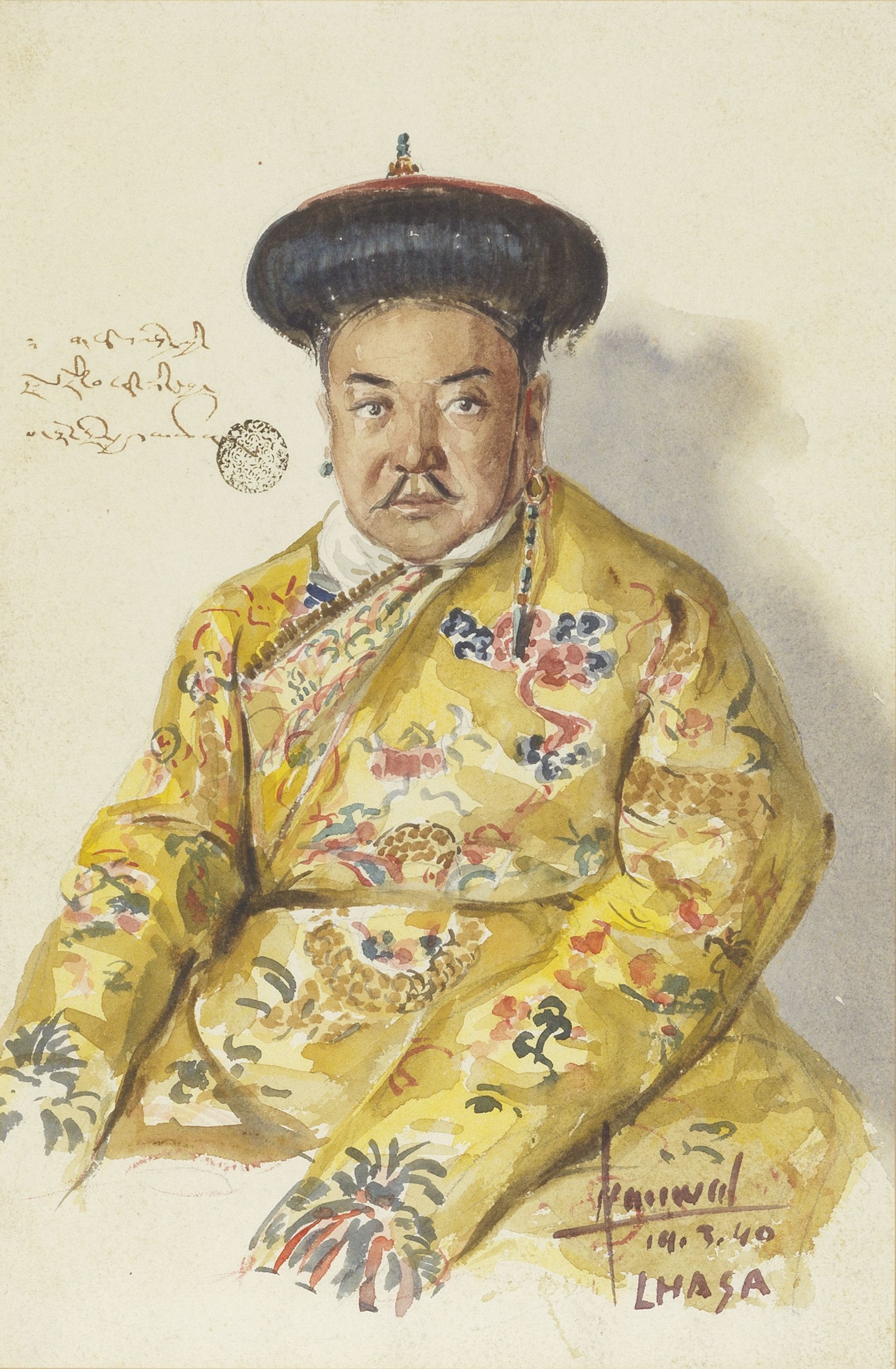
Portrait of Kushi Dongia
According to Gould, Kushi Dongja held the "most important District charge (i.e. governorship) in Tibet" who showed "by excellence of the arrangements for the journey from Gyantse onwards; and by the provision of a large and smart guard of honour the high esteem in which His Majesty's the king Emperor's government was held by the Tibetan government."
The Collection and Archive of Sir Basil Gould CBE | New Bond Street, London | 5 June 2025
For enquiries, contact Giles Peppiatt on giles.peppiatt@bonhams.com or
+44 (0) 20 7468 8355
Read more...
Cycle of life
Jules Speelman has collected Chinese and Himalayan works since he was 18. In May, many of these masterpieces smashed estimates in two auctions marking his 80th birthday. Emma Crichton Miller asks how it all began
Collecting South Asian art
After La Terre achieved an impressive £3.3m in the Modern & Contemporary South Asian Art sale in November 2024, Specialist Priya Singh talks us through the key South Asian artists to watch out for, and why now is the time to buy
 Built with Shorthand