
Collecting 101
5 Things to Know About Italian Glass


Spanning over 1000 years, the rich history of Italian glass is intertwined with ancient civilizations as well as some of the most cutting-edge names in fine art, architecture, and design. Here specialist Dan Tolson gives us a brief introduction to the main artists and designers working in glass from the 1920s to 1970s and offers invaluable advice for collectors.
This guide is illustrated with lots offered in our upcoming upcoming auction, Tutti I Colori: A Century of Modern Italian Glass on 9 June in New York.
1.
Murano, Venini & the History of Glass
Murano has been the unparalleled centre for glassmaking for almost two millennia. There is nowhere else in the world that comes close to the expertise and innovations that have emerged from the Venetian island, many of which are rooted in techniques first discovered in Ancient Egypt, Persia and Rome.
Glassmaking was initially located on the mainland, but due to the risk of fires, the entire industry was moved to the island of Murano and the artisans were forbidden from leaving or sharing their ideas with outsiders. This restriction acted as a kind of pressure cooker, encouraging an environment of collaboration (and plagiarism) among rival firms and guaranteeing the preservation of ancient techniques as well as the development of new innovations that continues to this day. Nevertheless, several artisans did escape during the 16th century to pursue opportunities elsewhere and as a result established glassmaking workshops in the United Kingdom, the Bohemia, and Germany.
The single event that profoundly changed an ancient industry was a decision made by Paolo Venini, director of the legendary Venini workshop, in 1959 to invite a young 24-year-old fiber artist from Pennsylvania called Thomas Stearns to the island to design a series of works for the firm. Stearns, an outsider who didn’t speak a word of Italian, would spend the next three years on the island designing and creating a small number of works with the workshop’s chief maestro ‘Checco’ Ongaro. Ongaro didn’t speak any English either and the two often clashed, but despite these challenges they found a working relationship that resulted in the creation of some of the most sublime works to ever come out of Murano. This earned Stearns the gold medal for his designs at the Venice Biennale in 1962, however, on hearing that the artist behind the works was not Italian the panel of judges immediately retracted the award.
As well as developing the perception of glassmaking into an art form, Stearns also helped open Murano up to architects, artists and designers from other parts of Italy and beyond which resulted in a creative renaissance for the island.
2.
Artists & Innovators
As a result of Paolo Venini’s wide ranging scope in inviting major artists and designers to the island, from 1920 to around 1970 Murano witnessed seismic artistic and technical advancements on a scale not seen before or since – in fact, some of the skills that had been developed during that period have now been lost. Every one of these collaborations led to works that pushed the boundaries of the ancient craft of glassmaking.
Venini’s story begins with the foundation of the glass making firm of V.S.M. Cappellin Venini & C. by Milanese Lawyer Paolo Venini and antiques dealer, Giacomo Cappellin in 1921. Venini and Cappellin hired the acclaimed painter Vittorio Zecchin as the firms first artistic director. Zecchin’s genius was his ability to reinterpret glass forms from the Italian renaissance into finely blown, refined monochromatic boldly modern forms, occasionally with the application of iridized surfaces derived from the use of tin or titanium vapors, known as soffiato. This new design vocabulary formed a solid foundation upon which Zecchin’s immediate successors at Venini, Tomaso Buzzi and Carlo Scarpa would further develop to new heights of technical and artistic innovation and modernity.
The renowned architect Carlo Scarpa can be singled out in particular as further developing this approach of adaptation that arguably led to him making an incalculable contribution to the future direction of Murano. Scarpa was artistic director of MVM Cappellin following Giacomo Cappellin’s split from Paolo Venini from 1921 to 1931, and then of Venini itself from 1932-1947.
Sculptor Napoleone Martinuzzi was also hired by Venini to bring his formidable creative vision to the design of glass vessels and objects and began working with the ‘pulegoso’, ‘soffiato’ and ‘incamiciato’ techniques which resulted in bold and elegant designs.
Fulvio Bianconi’s arrival at Venini in 1947 as a freelance designer heralded a new direction for Venini; as an artist, illustrator, advertising graphic designer, window designer and caricaturist he brought a fresh and playful artistic sensibility to the firm. In his early years at Venini this began with the whimsical designs of Commedia del’Arte figures and fazzoletto vases, but later moved into the realms of abstract expressionism with his acclaimed Pezzato and abstract Macchie series. This highly successful and prolific period that helped bring Venini to a global audience ended with his exploration of industrial techniques in order to produce a small number of works in his Scozzese series, works that are perhaps more akin to contemporary sculpture than to the ancient craft of glass making.
3.
Styles & Techniques
During the second half of the 20th century the craftsmen of Murano sought to adapt both ancient and modern glassmaking forms and techniques in order to produce an entirely new visual vocabulary. Some of the most famous works from this period include the brightly coloured murrine works that were a modern riff on the ancient Roman technique of fusing patterned canes together to create a vessel. We also find the new technique of ‘pezzato’, or patchwork, by designer Fulvio Bianconi, whereby squares of brightly coloured glass are fused together into the form of a vessel; the ‘fasce’ technique employed in designs by Paolo Venini and Bianconi which involves applying coloured stripes of glass to a vessel; and the ‘mezza filigrana’, an ancient method whereby impossibly fine threads of a coloured glass are suspended within the body of a glass vessel.
Bianconi and Venini also revived the ancient technique of ‘zanfirico’ which again used delicate threads of opaque glass to produce a pattern within the glass body that resembled fine lace. During the 1950s, Scandinavian glass, which was characterised by clear or polychrome vessels in sculptural forms, began to gain popularity and in response to this Paolo Venini devised the commercially successful ‘incisi’ series of vessels in strikingly modern forms and bold colours borrowed from Pop Art, incised with the finely wheel-carved horizontal lines from which the series takes its name. At this time Gio Ponti also designed a series of elegantly extruded works, employing brightly coloured fused canes of glass, as well as decorative bottles that utilised the ‘incalmo’ technique whereby two bodies of glass, either opaque and translucent or of complementary colours, are fused together as one.
4.
The Market for Murano
While the major names of the 20th century can achieve record prices at auction, collectors should not be put off. Many also designed smaller, more affordable works that were easy for tourists to purchase and take home with them. While we tend to think only of the exceptional 20–25 inch versions of Bianconi’s iconic ‘fazzoletto’ design which sell for around $5000, Venini also produced a smaller model that was only around 2 inches in height and can be bought for about $300. Similarly, Paolo Venini’s currently underrated ‘inciso’ series can be acquired for less than $1000, representing an exceptional opportunity for new collectors to own a work by one of the greatest designers of the time.
Collectors should also keep an eye out for pieces by lesser known designers such as Toni Zuccheri who is the subject of the forthcoming exhibition at Le Stanze del Vetro in Venice, and firms such as Vetreria Gino Cenedese which had a long association with the hugely talented glass maestro, Ermanno Nason as well as brief collaboration with major designers and artists such as Fulvio Bianconi and Riccardo Licata. Nason was famously selected as the only glass maestro to help Pablo Picasso and Jean Cocteau translate their ideas into glass for the firm of Fucina degli Angeli. Despite this pedigree, many of his works remain very affordable at auction. Another currently accessible artist to look out for is Vittorio Ferro who attained the highest level of skill as a glass blower for the firm Fratelli Toso as a primo maestro and went on to create works in murrines that were exhibited to widespread acclaim at the 1964 and 1966 Venice Biennales.
The market for modern Italian glass was strong during the late 1980s up until the mid-1990s, when it experienced a depression due to the large number of counterfeit works that were coming onto the market. This, and the lack of literature references for collectible glass, had the effect of deterring collectors from buying. From 2013 the market experienced a welcome resurgence thanks to the incredible Carlo Scarpa retrospective at the Metropolitan Museum of Art in New York and Le Stanze del Vetro in Venice, and the associated catalogue. Since then the market has continued to develop as it has attracted a new generation of collectors and remains strong.
5.
Collecting & Care
People tend not to think of Italian glass in the way they would think of fine art, which is a huge mistake when it comes to provenance. Even if the provenance is printed in the catalogue, it is still a good idea to ask the specialist for more details as they may have more information about the broader collection that the work comes from, or even just an anecdote about the original owner, or on rare occasions an original receipt of purchase that can add to a piece’s history.
Condition is also an important factor. Unlike bronzes or paintings, once glass receives a crack or a chip the condition of the work is forever compromised. Even if the chip is smoothed out the evidence of earlier damage is visible. A crack often cannot be treated.
Once you have secured your piece, you should never allow bright direct sunshine near the glass, make sure to avoid drastic fluctuations in temperature and if you live in a part of the world that is susceptible to earthquakes, use museum wax to anchor the works to the surface they sit on.
For more from our Modern Decorative Art + Design team, follow @bonhamsdesign on Instagram.

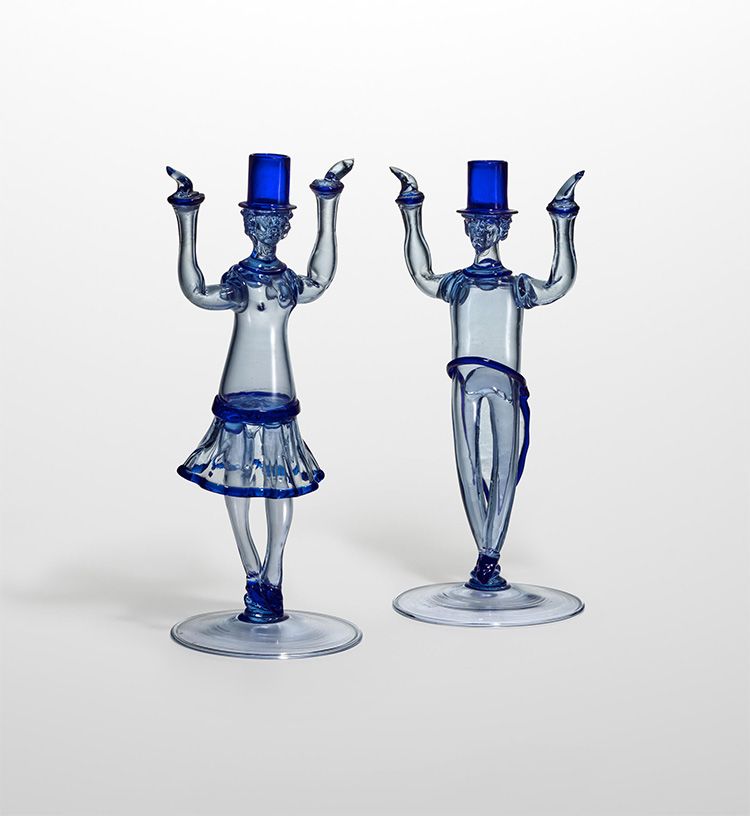
Lot 22. Carlo Scarpa; Pair of Rare Figural Candelabra, circa 1929. Estimate: $8,000 - $12,000
Lot 22. Carlo Scarpa; Pair of Rare Figural Candelabra, circa 1929. Estimate: $8,000 - $12,000

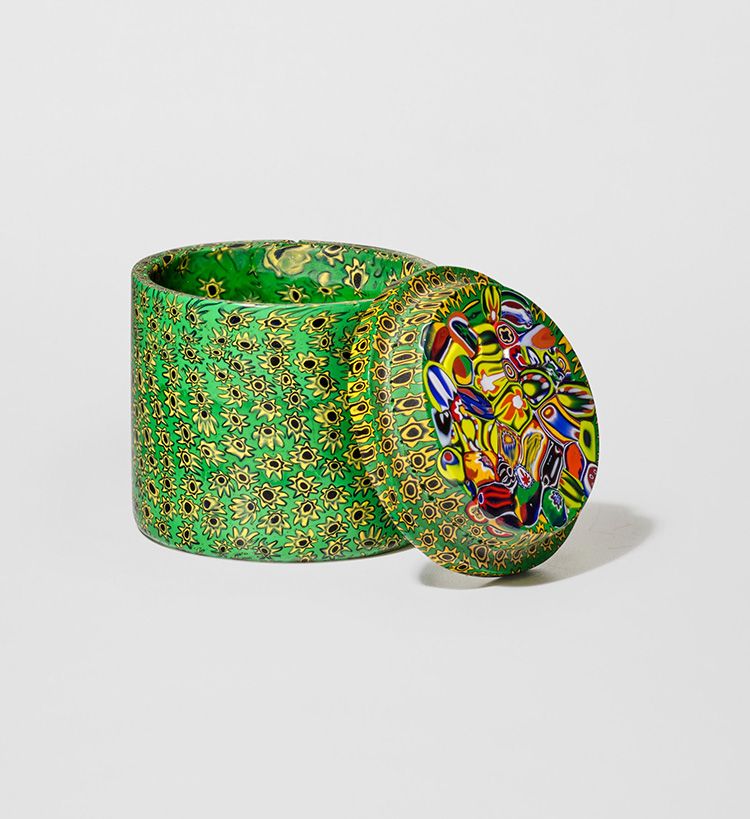
Lot 5. Ulderico Moretti, Attributed to; Murrine Box and Cover, 1926. Estimate: $8,000 - $12,000
Lot 5. Ulderico Moretti, Attributed to; Murrine Box and Cover, 1926. Estimate: $8,000 - $12,000

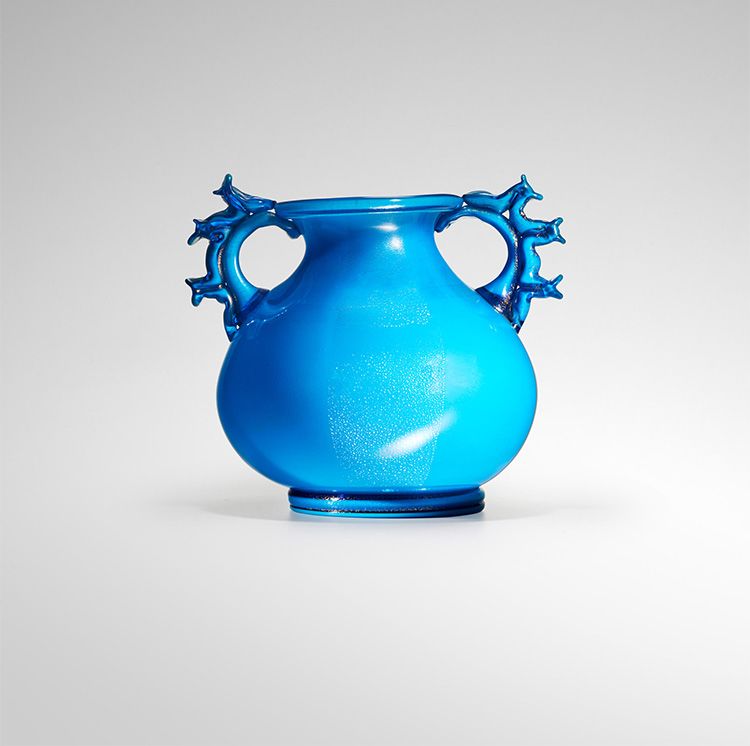
LOT 25. Napoleone Martinuzzi; Rare Velato Vase, circa 1928. Estimate: $8,000 - $12,000
LOT 25. Napoleone Martinuzzi; Rare Velato Vase, circa 1928. Estimate: $8,000 - $12,000

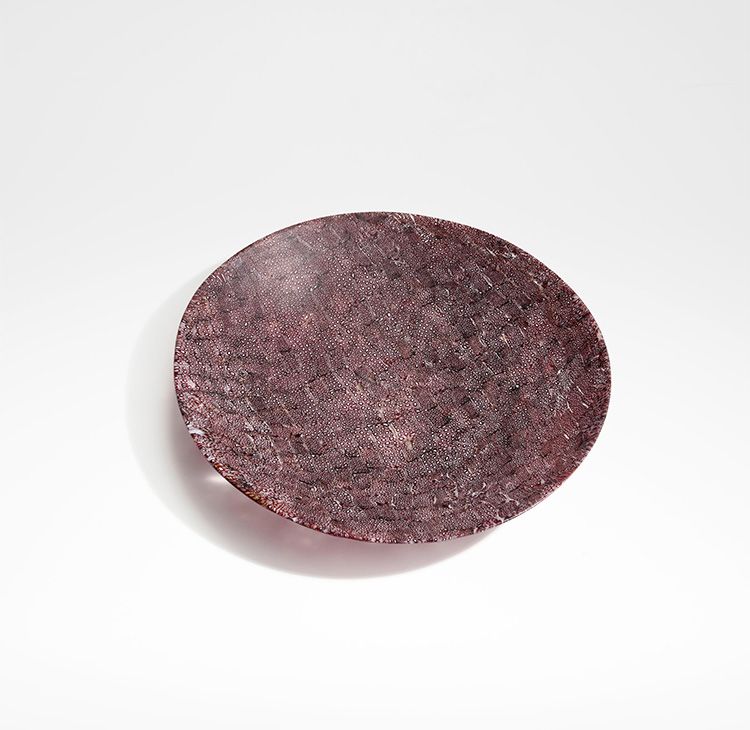
LOT 76. Paolo Venini; Murrine Plate, circa 1957. Estimate: $5,000-$7,000
LOT 76. Paolo Venini; Murrine Plate, circa 1957. Estimate: $5,000-$7,000

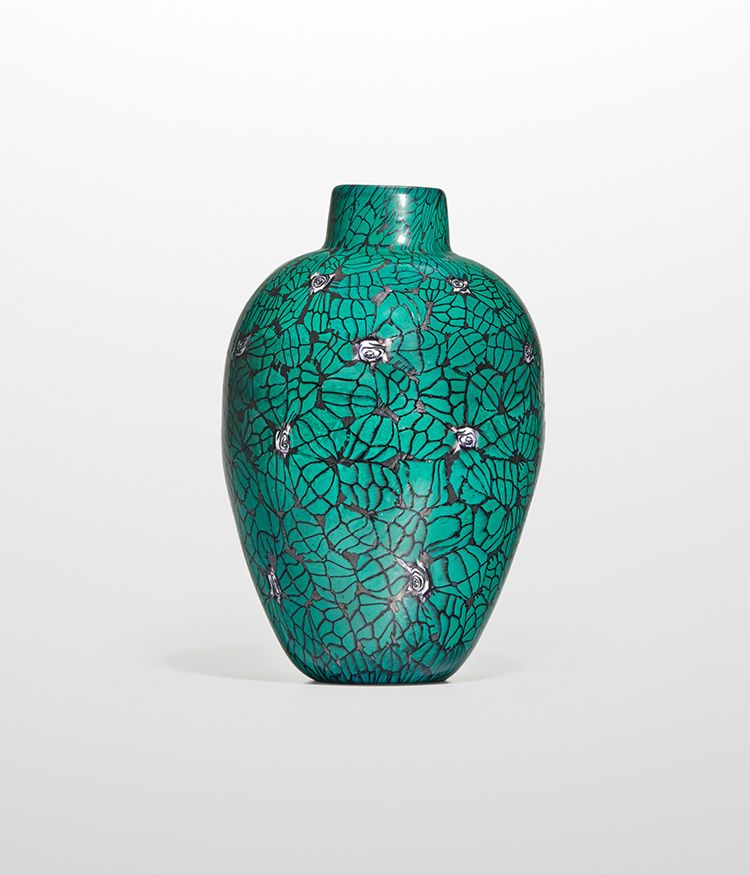
Lot 18. Vittorio Ferro; Murrine Vase, circa 1955. Estimate: $2,000 - $3,000
Lot 18. Vittorio Ferro; Murrine Vase, circa 1955. Estimate: $2,000 - $3,000


 Built with Shorthand