
Collecting 101
5 Things to Know About Pocket Watches
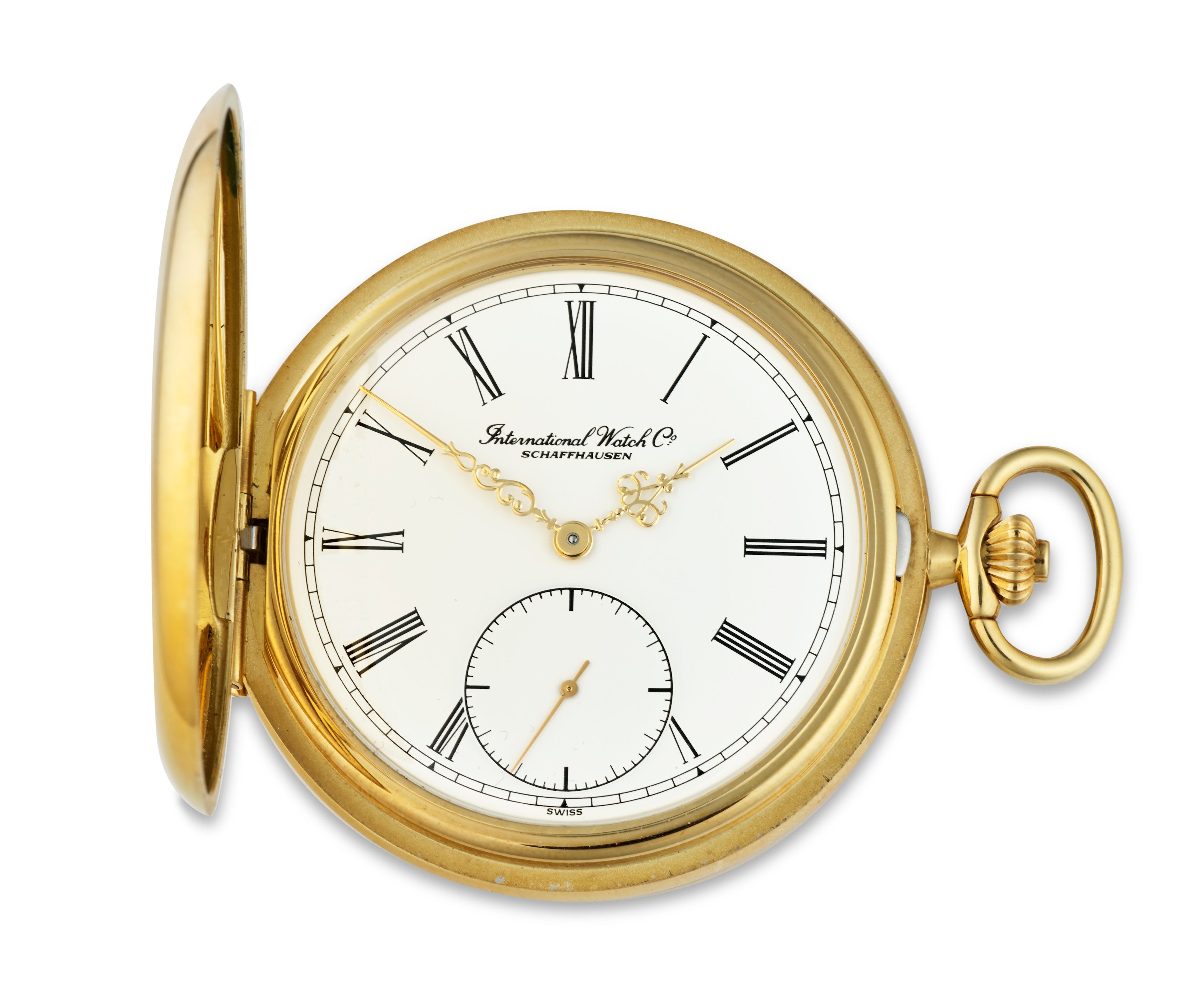

Specialist Penelope Andrews looks back at the origins of timekeeping, the evolution of the pocket watch, and shares her top tips for collecting – illustrated with highlights sold at Bonhams.
Thinking of selling your pocket watch or collection? Submit it online for a free auction estimate.
1.
History
Pocket watches were first created in the 16th century, at which point they were so expensive that they became desirable status symbols that were only afforded by an elite few, such as royalty and merchants.
Pocket watches continued to be fashionable up until the First World War when they were superseded by the wristwatch, popularised by soldiers in the trenches who strapped their watches to their wrists for practicality. These early wristwatches were called trench watches. One of the most famous early wristwatch designs was the Cartier Tank of 1917.
2.
Important Watchmakers
It is impossible to talk about British watchmaking without mentioning Thomas Tompion (1639–1713), the father of English clockmaking best known for the unparalleled accuracy of his inventions. From Tompion the story continues with two of his apprentices, Edward Banger (c. 1628- 1720) and George Graham (1673–1751). Banger produced extremely few pocket watches under his own name and only three are still known to exist, one of which came under the hammer at Bonhams in 2019 for £8,812.
The following generation were known for the creation of inventive new movements. Thomas Mudge (1715–1794) learned his trade under the aforementioned George Graham. Without his invention of the lever movement, the world of watchmaking would not be the one we know today - an extremely fine pocket watch by Thomas Mudge sold for £32,562 in 2019. At the same time, Josiah Emery (c.1731/32–1794) continued to work on the newly discovered lever escapement - now used in almost all mechanical watches - and perfected it while following in Mudge’s footsteps. One of the best examples of innovation in a pocket watch movement to come to the market recently was the early lever escapement with anti-friction wheels by Emery, which realised £117,500 in 2018.
3.
Object & Ornamentation
Watches tended to follow the fashion and ethos of the period in which they were made. In the mid 17th Century, a pious austerity dominated the style of objects, with frivolous or extraneous decoration generally being frowned upon. However, by the 1680s, this view changed and watches started to be covered in religious engravings or colourful enamels. In the 1700s, they were repoussé (a metalwork technique which involved hammering a relief design into the back of the piece) with Baroque motifs and by 1735, they fully embraced the excess of the Rococo period. Pocket watches continued to follow popular trends until their gradual decline in the 1900s.
One of the main changes in the style of pocket watches came about as watchmakers shifted from independently making individual pieces in their own workshop to watches being manufactured by brands such as Frodsham Breguet, Rolex and Patek Philippe. This process of industrialisation allowed for designs to evolve and for watches to become more affordable.
4.
On the Market
Pocket watches are such intricate, beautiful pieces of craftsmanship; they tell the history of time and when they tick, they seem to have a life of their own. It is a very varied collecting field, there is always something new to be discovered and pocket watches are easily accessible at auction. At Bonhams, pieces start from around £500, but after that the sky's the limit – the rarest and most impressive examples can fetch hundreds of thousands of pounds at auction.
'' The market for pocket watches is very strong at the moment: one of the most recent auctions at Bonhams saw 60% of pocket watches sell for more than their high estimate. There has been some fluctuation over the years but, generally speaking, pieces made by a famous name with an exceptional quality of movement will always command premium prices. ''
As with any antique, provenance is always important. There are copies that one needs to be aware of, but some of them are historic themselves. Thomas Tompion watches have been copied for hundreds of years so even if the copy is not a real Tompion pocket watch, it may still be 150 years old, and valuable. It is important to look out for ‘marriages’ - this means that a pocket watch has had its movement put into a new case at some point in its history. This was often done when fashions changed or when the case needed to be melted down for the value of the gold and is not the same as a forgery. This is something a specialist can help with to identify the true provenance and value of your watch.
5.
Collecting & Care
Collectors who might be new to the category should begin by looking for good quality pieces made by slightly lesser known makers that offer very good value at entry level prices. Before buying it is important to find out all you can about the piece and to ensure it is in full working order. It is also essential to understand if there have been any restorations and whether the piece bears any significant hallmarks. A specialist can help with this and offer further advice about buying pocket watches on the secondary market.
Pocket watches are easily damaged when dropped, so it is important to handle them with as much care as you would any other valuable object. It is also important to avoid any water damage as many parts are made from corrodible material. Most people keep them in a bank safe or in their jewellery box if they are not being used, but for serious collectors there are bespoke storage cases available. As a general rule, it is best to keep them in a dark place with a relatively stable temperature and low humidity. Should any damage or malfunctions occur, it is important to have your piece assessed and repaired by a reputable watchmaker.


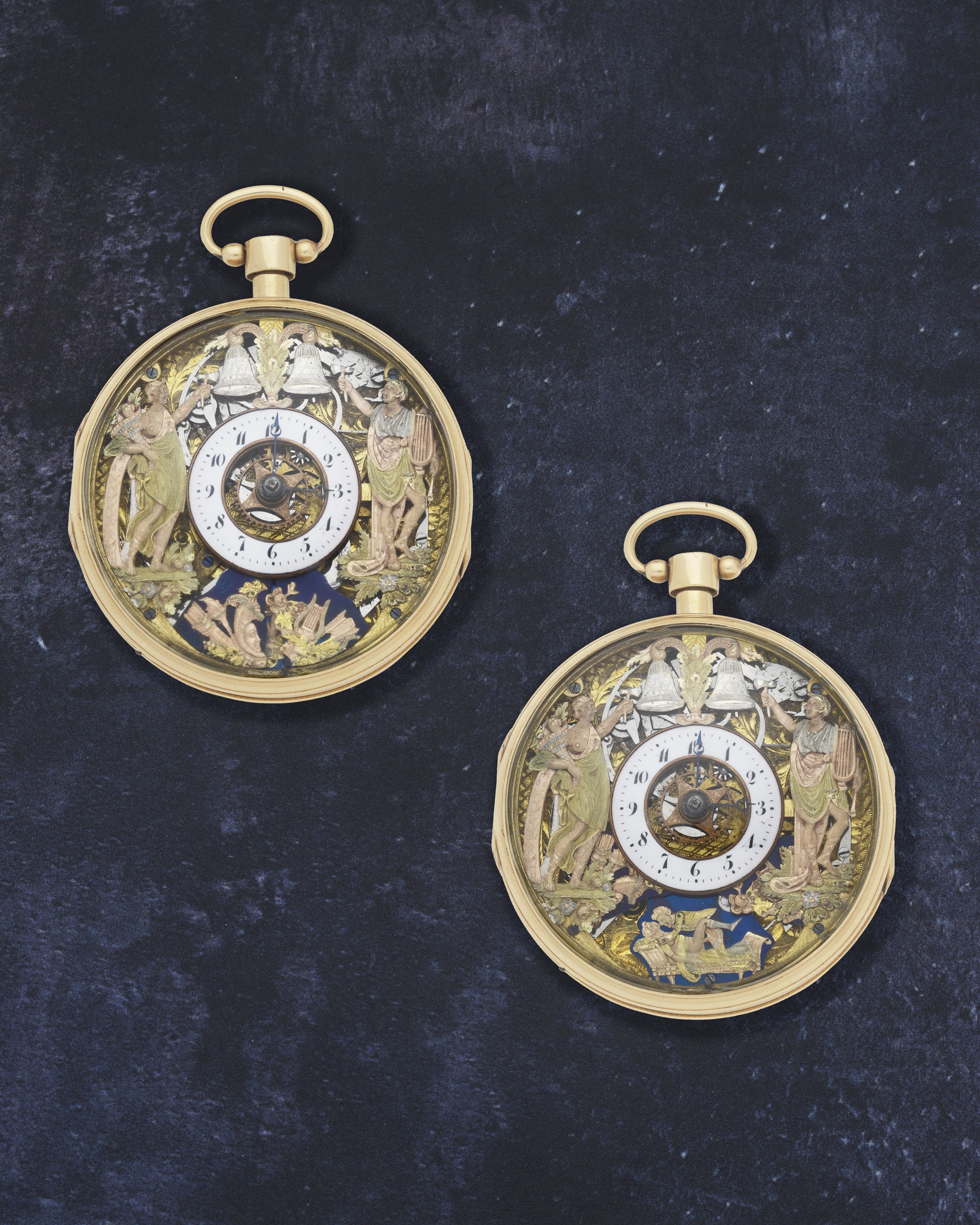
Lot 26. Frères Duchène & Comp. A Genève. A rare and unusual 18K gold key wind semi-skeletonised open face jacquemart automaton quarter repeating pocket watch with concealed erotic scene CIRCA 1830. Sold for €25,500 inc. premium
Lot 26. Frères Duchène & Comp. A Genève. A rare and unusual 18K gold key wind semi-skeletonised open face jacquemart automaton quarter repeating pocket watch with concealed erotic scene CIRCA 1830. Sold for €25,500 inc. premium

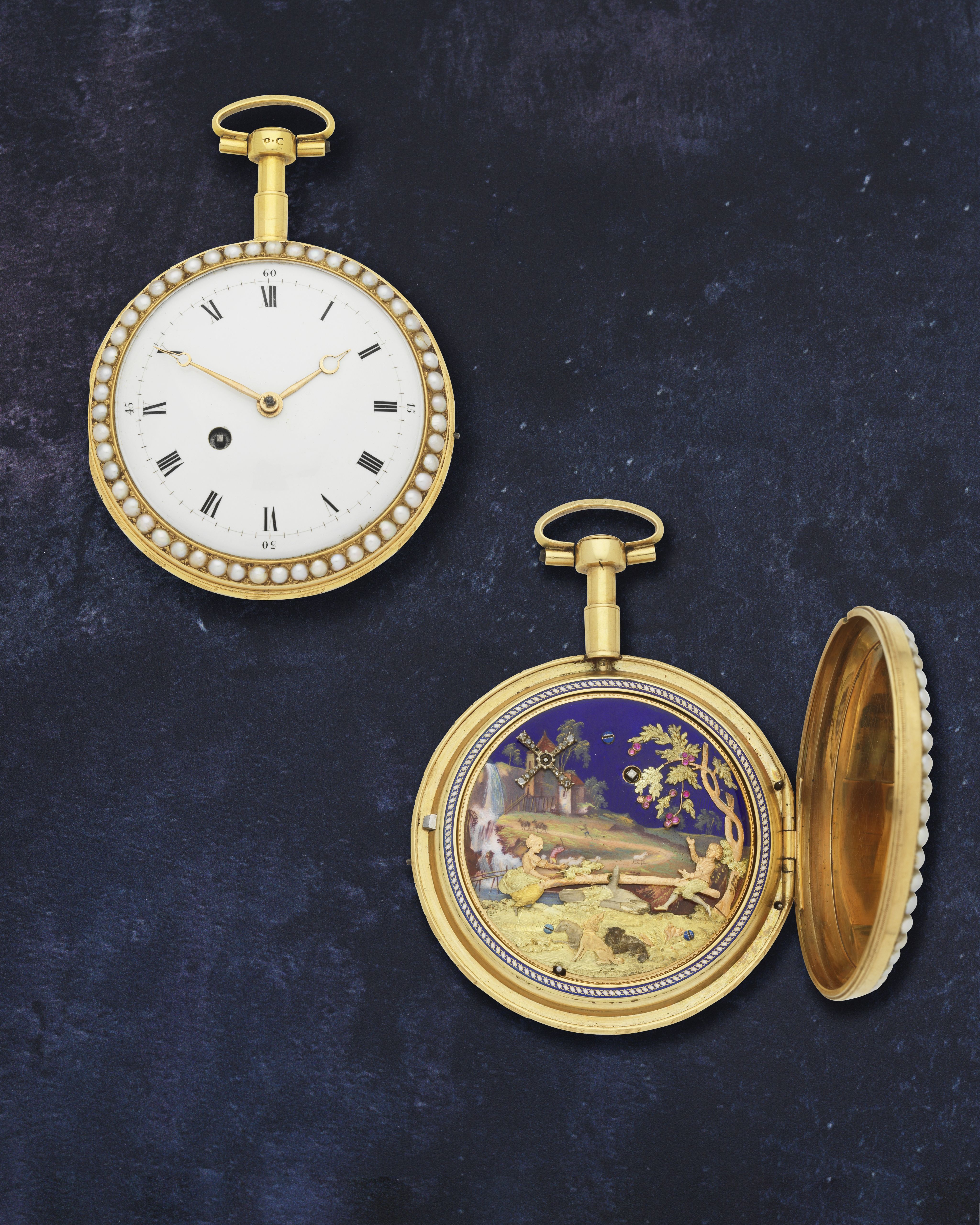
Lot 29. An exceptional, fine and rare 18K gold key wind open face automaton pocket watch with enamel, seed pearl and diamond decoration, CIRCA 1870. Sold for €63,375 inc. premium.
Lot 29. An exceptional, fine and rare 18K gold key wind open face automaton pocket watch with enamel, seed pearl and diamond decoration, CIRCA 1870. Sold for €63,375 inc. premium.

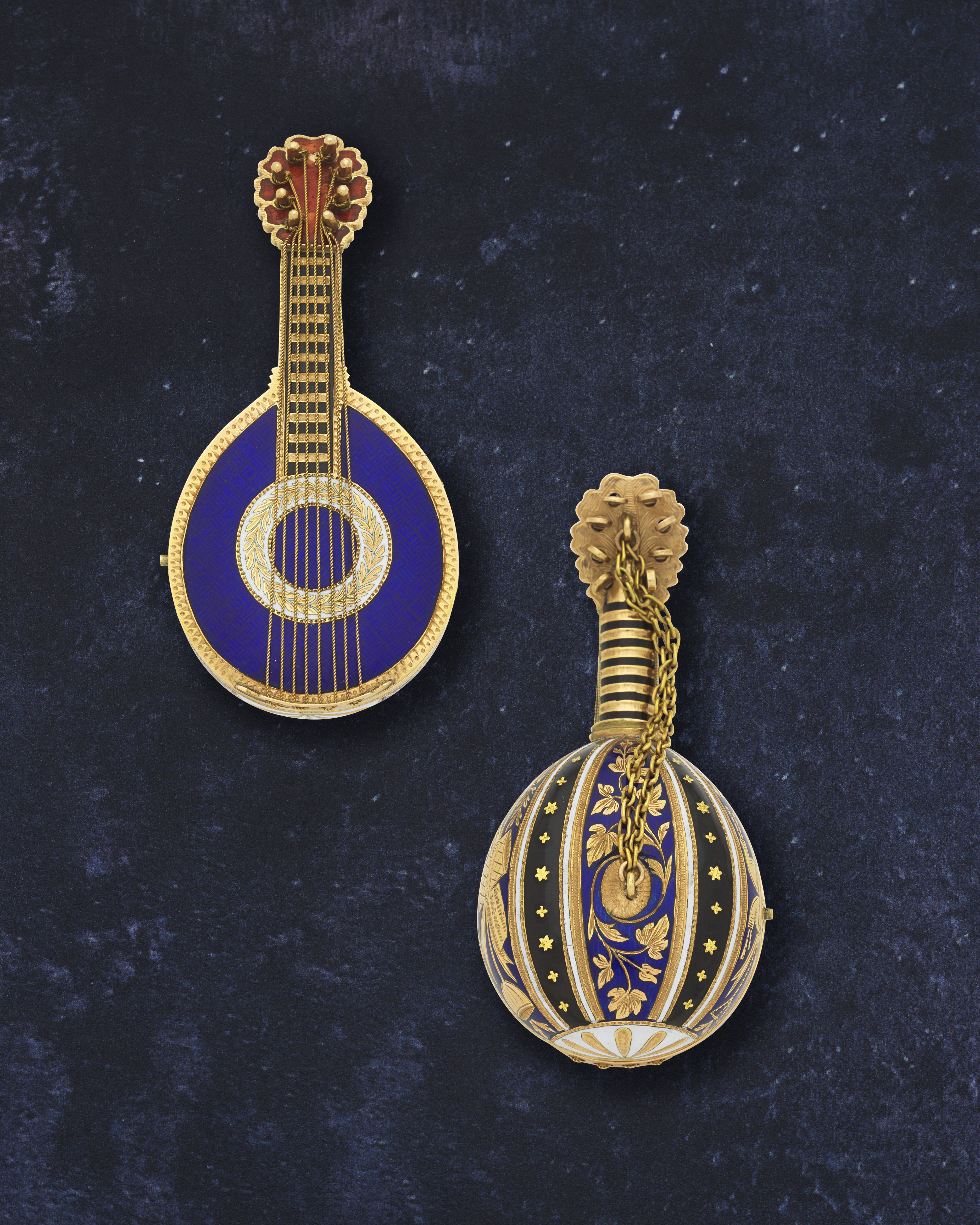
Lot 20. An 18K gold and enamel key wind concealed watch in the form of a mandolin, CIRCA 1830. Sold for €3,825 inc. premium.
Lot 20. An 18K gold and enamel key wind concealed watch in the form of a mandolin, CIRCA 1830. Sold for €3,825 inc. premium.

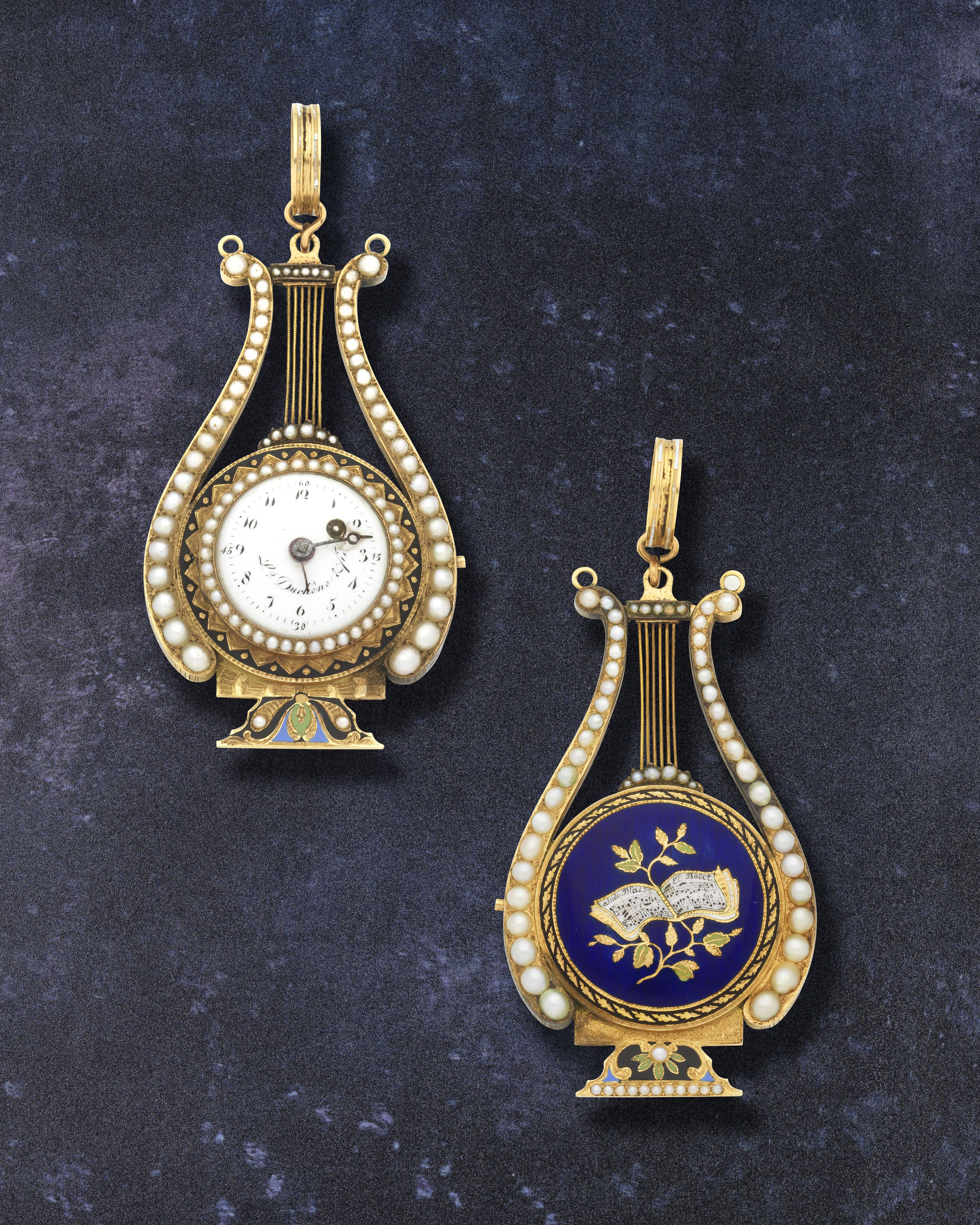
Lot 21. Duchene e Fils. An 18K gold, enamel and seed pearl set key wind watch in the form of a lyre, CIRCA 1820. Sold for €4,462.50 inc. premium.
Lot 21. Duchene e Fils. An 18K gold, enamel and seed pearl set key wind watch in the form of a lyre, CIRCA 1820. Sold for €4,462.50 inc. premium.

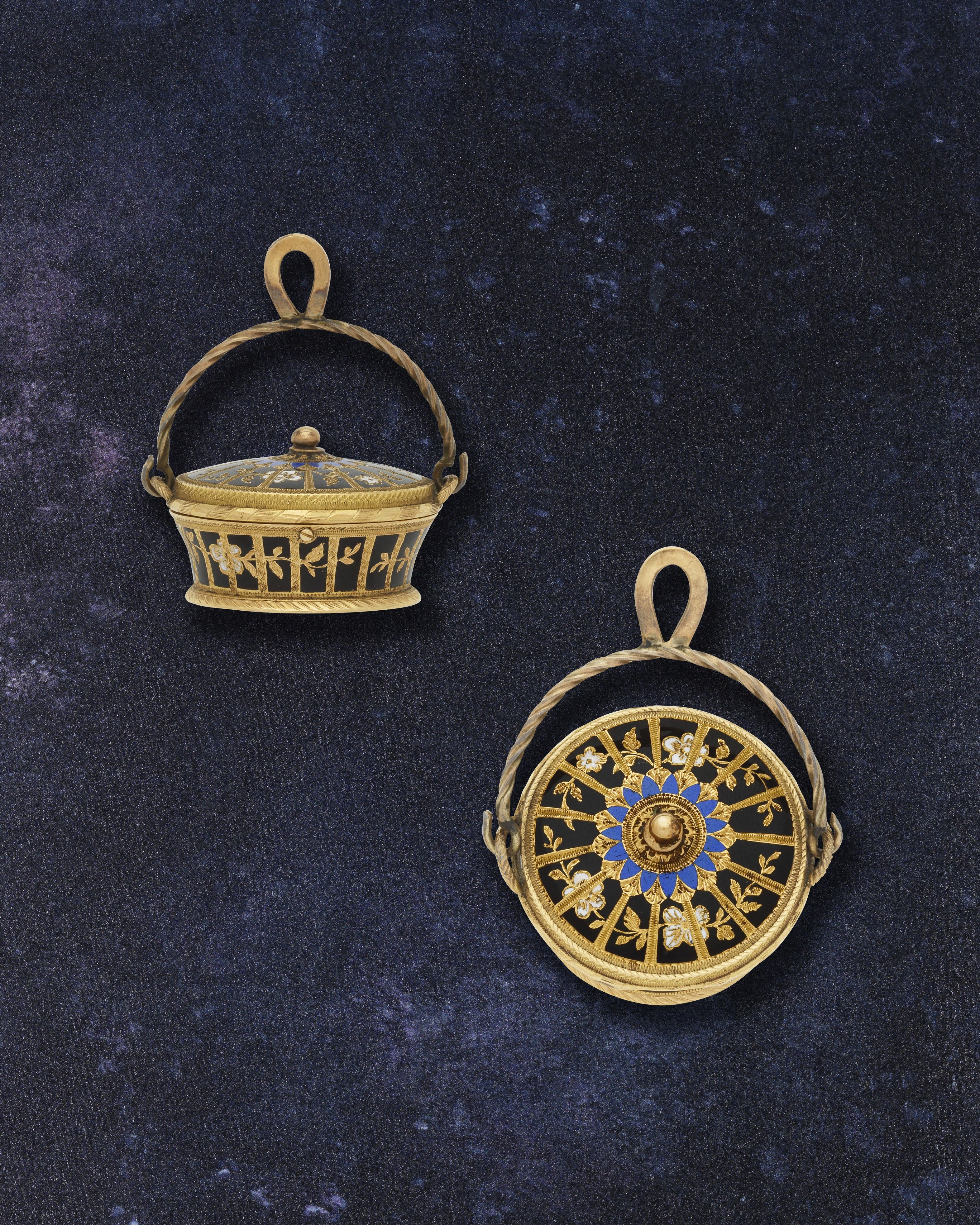
Lot 25. Jn Roberts, Soret. A rare 18K gold and enamel key wind concealed watch in the form of a basket, CIRCA 1830. Sold for €5,737.50 inc. premium.
Lot 25. Jn Roberts, Soret. A rare 18K gold and enamel key wind concealed watch in the form of a basket, CIRCA 1830. Sold for €5,737.50 inc. premium.

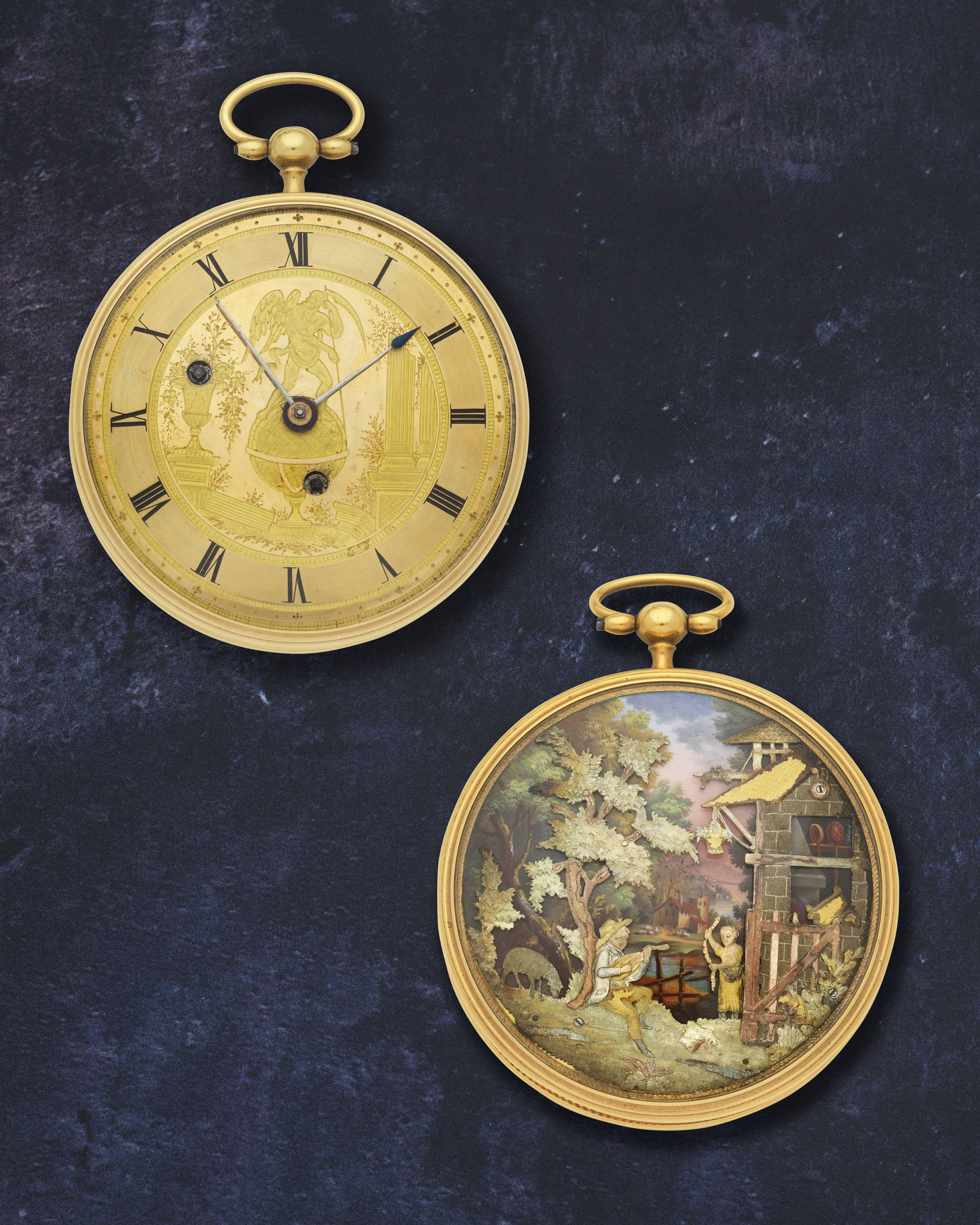
Lot 28. An exceptional, fine and rare 18K gold key wind open face musical automaton pocket watch, CIRCA 1810. Sold for €63,375 inc. premium.
Lot 28. An exceptional, fine and rare 18K gold key wind open face musical automaton pocket watch, CIRCA 1810. Sold for €63,375 inc. premium.
Stay updated with our Watches auctions
Create an account with Bonhams to follow your favourite collecting categories and get email alerts when new auctions are open for bidding.
For more from our global Watches team, follow @bonhamswatches on Instagram.
 Built with Shorthand