
Collecting 101
Oscar Wilde
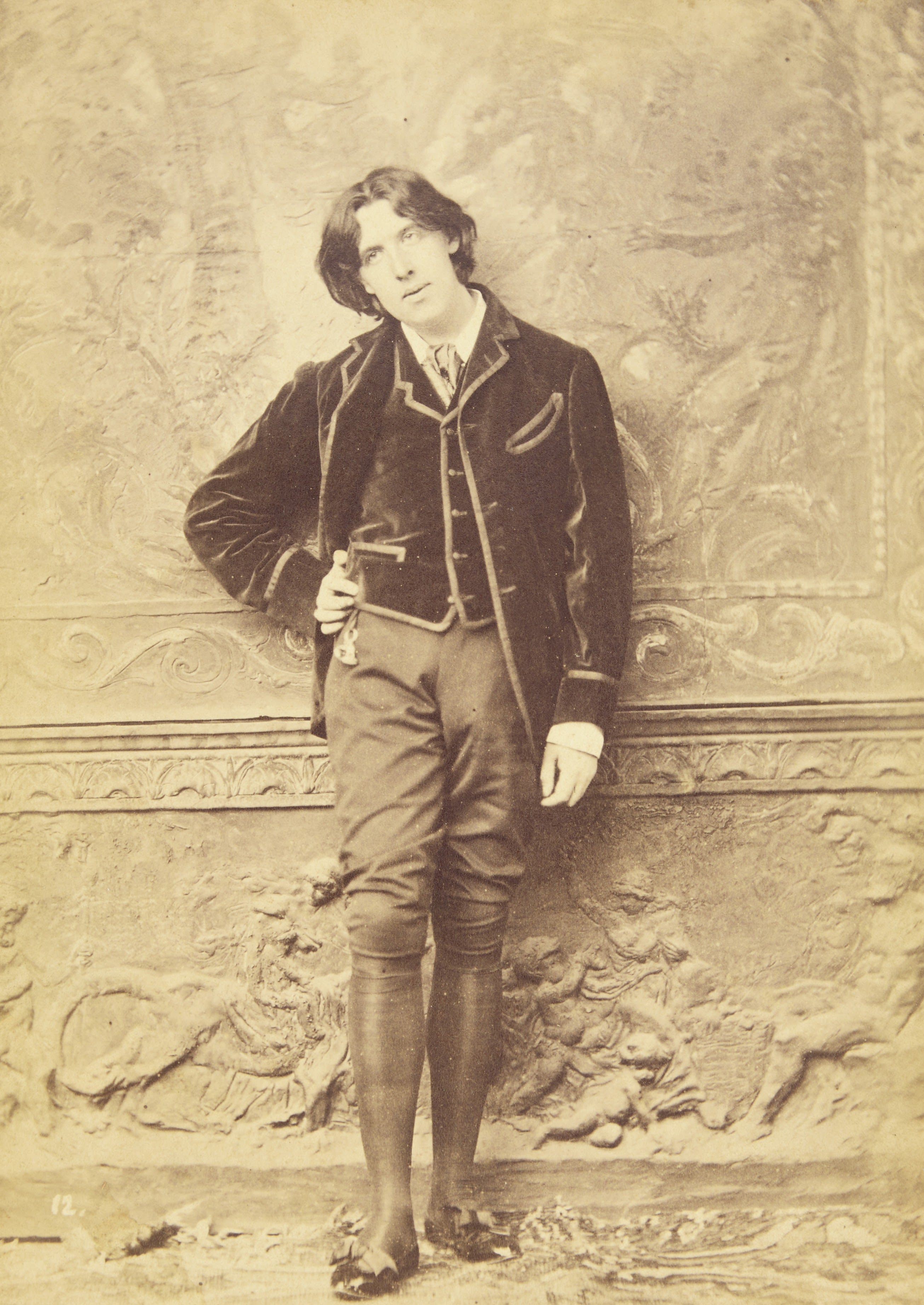

In the 125 years since Oscar Wilde’s death, the public has remained captivated by his literary successes and personal scandals.
Oscar Wilde certainly lived by his own rule, honing his incisive wit and eccentric style to become one of the first modern celebrities. He was a prolific writer, producing a rich body of work in his short life, from plays to poetry, essays to fairy tales. Punished by Victorian society for his sexuality, today he is treasured as a cultural icon.
Here, we chart the major moments in the life of a celebrated and vilified writer, illustrated with works from Oscar Wilde: The Collection of Jeremy Mason.

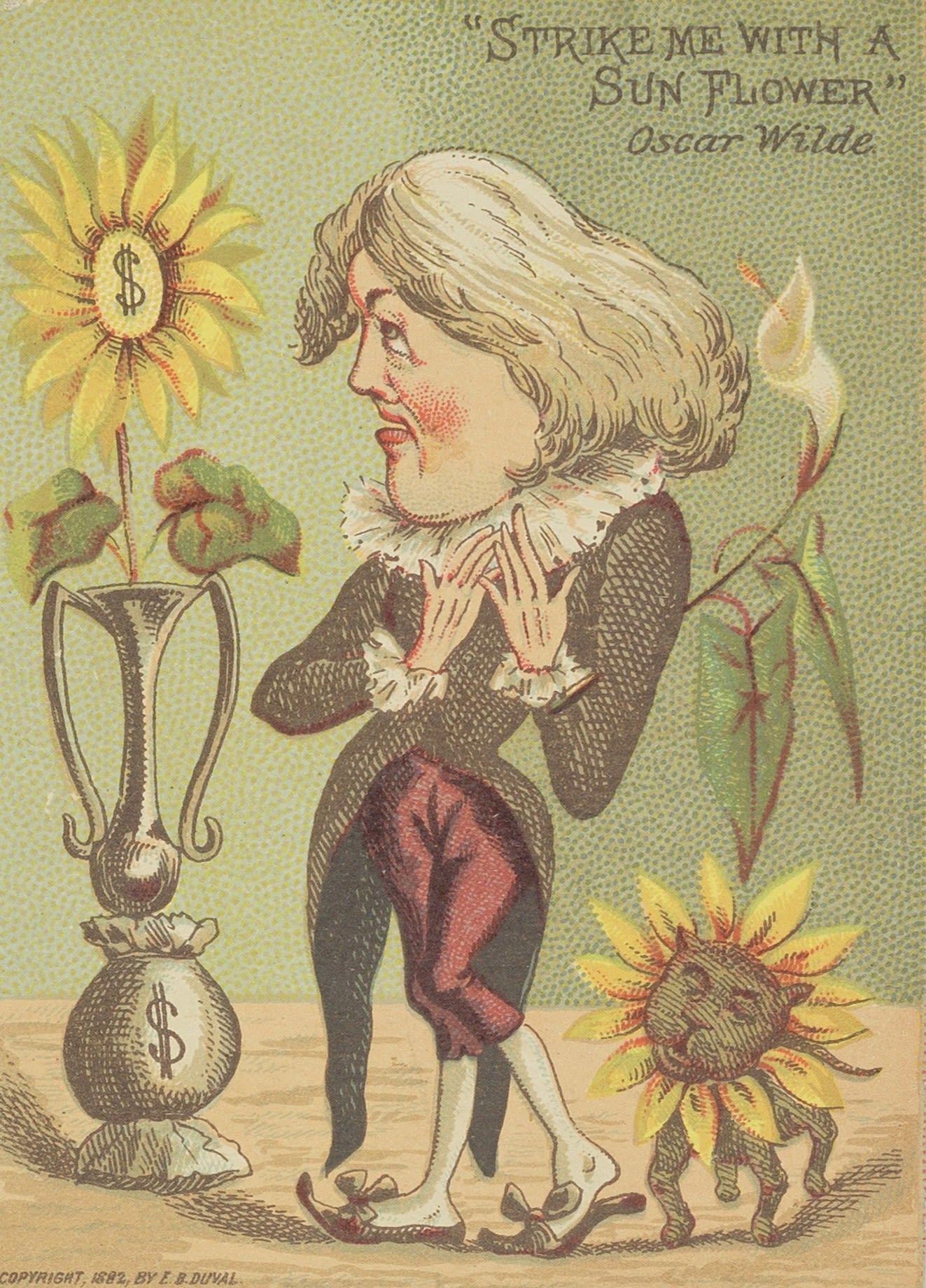
1. The Early Years
In 1854, Oscar Fingal O'Flahertie Wills Wilde was born in Dublin to prosperous parents. Young Oscar shone at boarding school and won a scholarship to the prestigious Trinity College in 1871. He left with the Berkeley Gold Medal in Greek and another scholarship – this time to Magdalen College at Oxford.
Here he met cultural pioneers John Ruskin and Walter Pater, and set about cultivating his reputation as a decadent dandy. But under the foppish exterior, a fierce intellect was thriving: he graduated with a double first in Classics and won the Newdigate Prize for poetry.
Wilde was clearly an outstanding scholar, but a quiet life of academia was never on the cards; the temptations of London were calling…

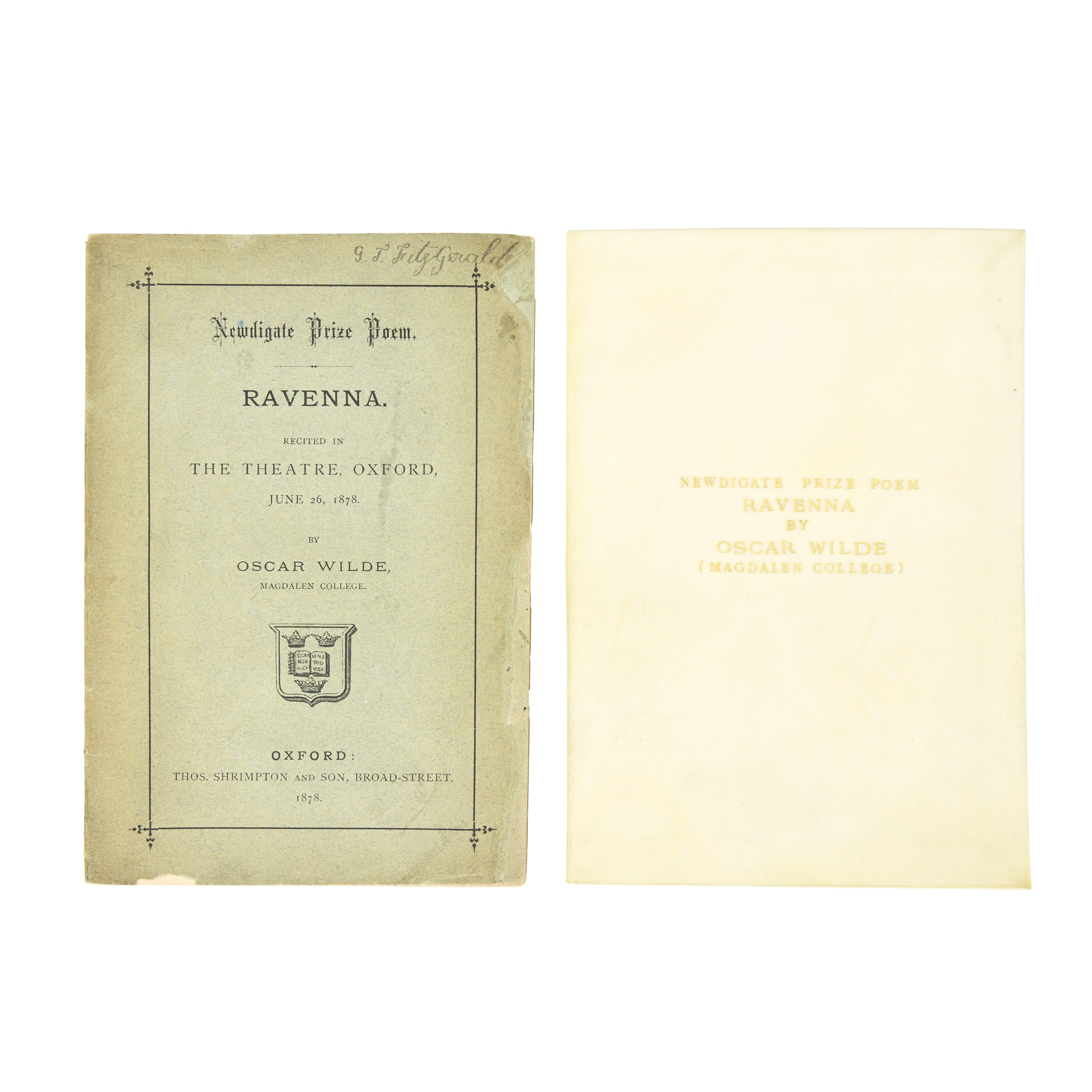
Wilde (Oscar), Newdigate Prize Poem, Ravenna, FIRST EDITION, Oxford, Thos. Shrimpton & Son, 1878. Estimate: £600 - £800.
Wilde (Oscar), Newdigate Prize Poem, Ravenna, FIRST EDITION, Oxford, Thos. Shrimpton & Son, 1878. Estimate: £600 - £800.
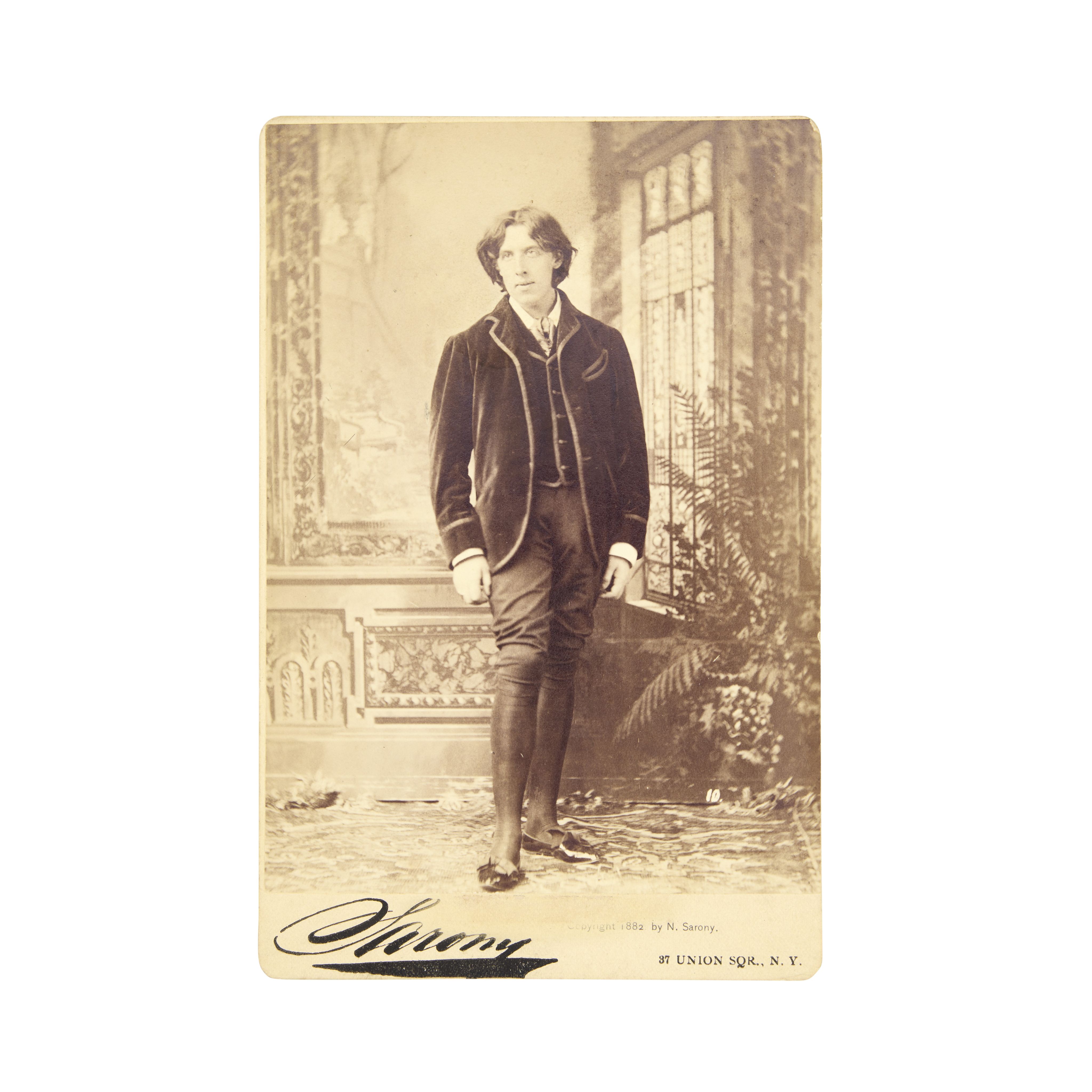
Sarony (Napoleon), Cabinet card photograph of Oscar Wilde, taken in New York, 1882. Estimate: £1,500 - £2,500.
Sarony (Napoleon), Cabinet card photograph of Oscar Wilde, taken in New York, 1882. Estimate: £1,500 - £2,500.
2. Rising Star
In the early 1880s, Wilde moved to London and quickly established himself as a flamboyant figure in the capital’s artistic circles, instantly recognisable in swathes of fur and velvet, topped off with a wide-brimmed hat. He became the very embodiment of the Aesthetic movement, which extolled art for art’s sake: the pursuit of beauty, free from any ethical obligations. Wilde’s dazzling wit and style garnered him much attention, but commercial and critical success was by no means instant. It wasn’t until the mid-1880s that his fortunes started to turn: he married Constance Lloyd in 1884, and they quickly had two sons. Wilde turned his hand to children’s stories which delighted readers, and the collection The Happy Prince and Other Tales was published in 1888.
The 1890s was a whirlwind of success: it was the most fruitful decade of the writer’s life – and would ultimately be his last. It started with the publication of his only novel, The Picture of Dorian Gray, in 1891, which shocked Victorian sensibilities with its dangerous hedonism. In the same year, Wilde started work on what would become his first theatrical hit: ‘Lady Windermere’s Fan’. Over the next few years, he established himself as a renowned playwright and produced his masterwork, ‘The Importance of Being Earnest’, in 1895.
Yet the public image of Oscar Wilde – celebrated writer, husband, father – could not hold. He was living a double life in the city’s underbelly, and he would soon bear the consequences.
3. Fall From Grace
1891 was a pivotal year for Wilde: alongside the publication of Dorian Gray, it was also the year that he met Lord Alfred Douglas, and embarked on a love affair that would bring about his downfall. In 1895, Douglas’s father, the Marquess of Queensberry, accused Wilde of sodomy; Wilde then sued him for criminal libel. The trial was a scandal, the press and public whipped up into hysteria over the salacious details of the writer’s private life. Wilde lost the case, and was arrested for gross indecency. Found guilty, he was sentenced to two years hard labour in prison. Those two years took their toll: he was forced to declare bankruptcy, his health failed and he contracted meningitis.
While prison may have broken Wilde financially and physically, his intellect was undimmed and he was inspired to create two of his major works. He penned a 55,000 word letter to Douglas, now known as De Profundis, and considered one of the greatest love letters ever written. On his release in 1897, he produced The Ballad of Reading Gaol, a powerful indictment of the penal system. He wrote the poem in France, where he had fled to the same night he was freed. Exiled and impoverished, Wilde died in a cheap Parisian hotel in 1900, at the age of 46.

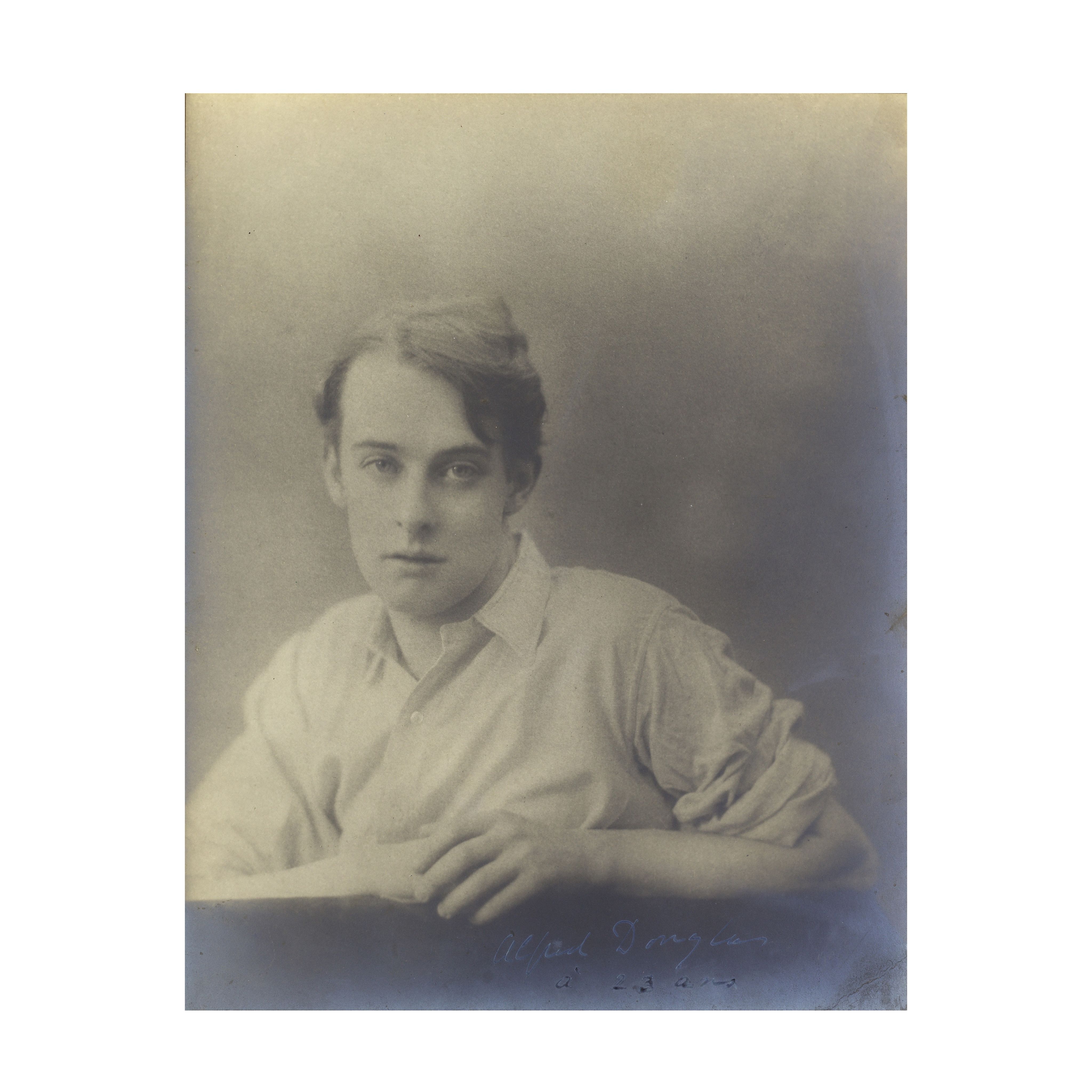
Douglas (Lord Alfred), Portrait photograph of Lord Alfred Douglas, by Cameron Studio, SIGNED BY THE SITTER, [c.1893]. Estimate: £1,000 - £2,000.
Douglas (Lord Alfred), Portrait photograph of Lord Alfred Douglas, by Cameron Studio, SIGNED BY THE SITTER, [c.1893]. Estimate: £1,000 - £2,000.
“There is only one thing in the world worse than being talked about, and that is not being talked about”

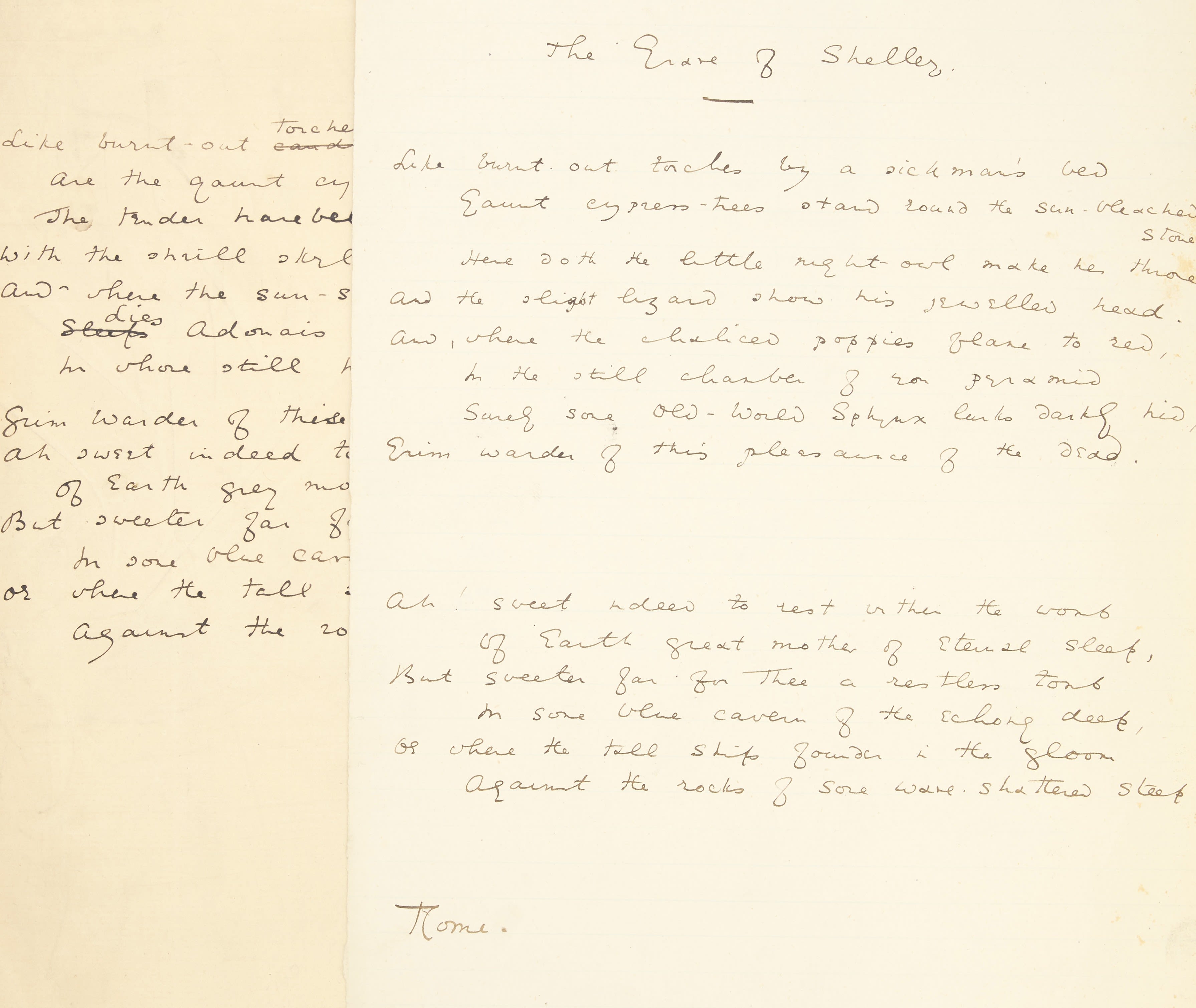
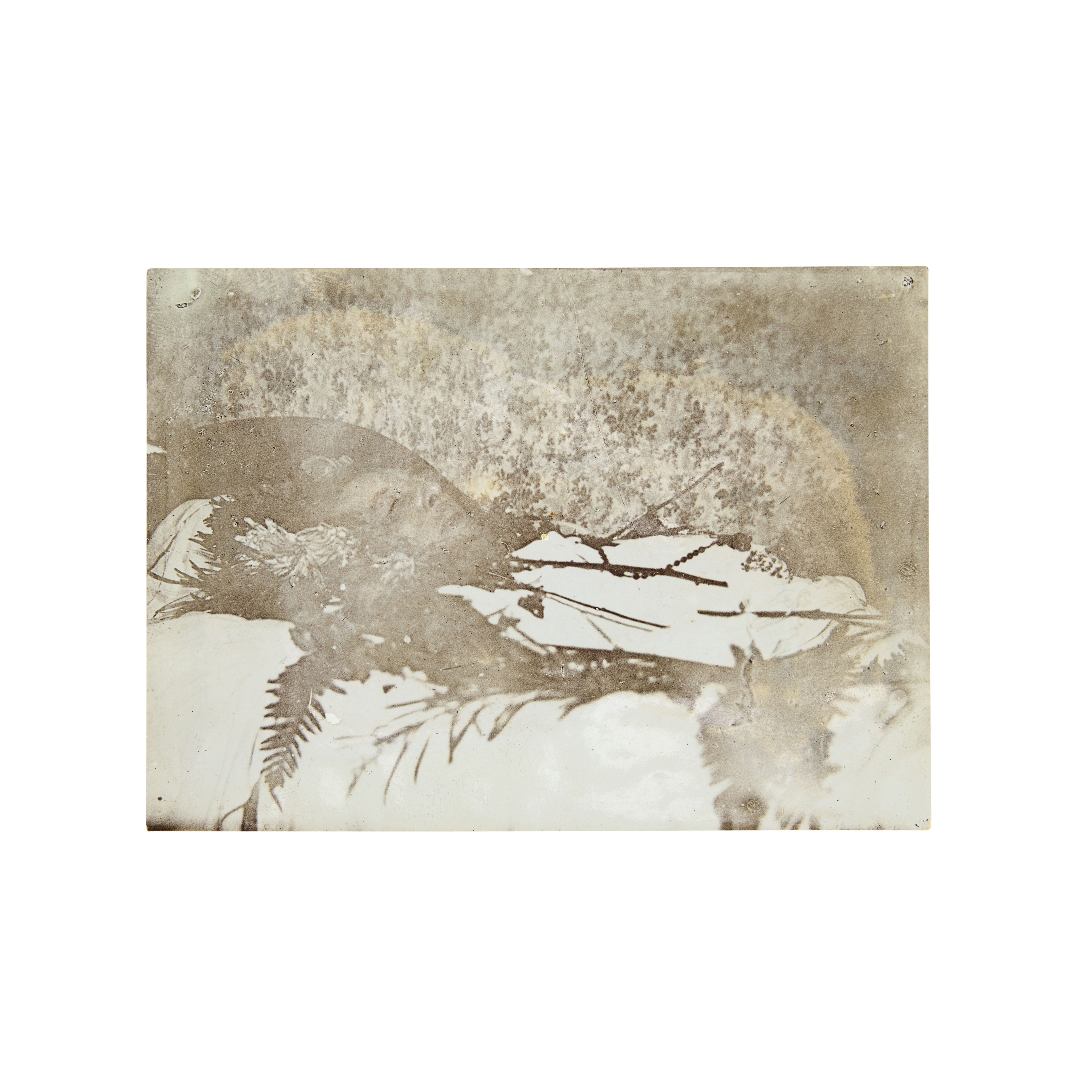
Gilbert (Maurice), The last photograph of Oscar Wilde, on his death bed, 30 November 1900. Estimate: £2,000 - £3,000.
Gilbert (Maurice), The last photograph of Oscar Wilde, on his death bed, 30 November 1900. Estimate: £2,000 - £3,000.
4. Legacy
Following his death, Wilde’s plays remained popular, but his ruined reputation left him largely ignored in British culture. Yet in other parts of the world – Europe, North America and beyond – he became a major literary icon. In the 1960s the UK caught on: the literary establishment reassessed Wilde and his works, and deemed them worthy of academic study. At the same time, a new generation started to identify with his personal struggles. In a decade when sexual freedom and civil liberties were being fought for, Wilde was transformed from a Victorian writer to a modern cultural hero.
He remains an important figure in popular culture and an icon for gay rights. The subject of countless biographies, he’s been portrayed in films by Stephen Fry and Rupert Everett, and in plays such as The Judas Kiss. He’s affectionately caricatured in Dave Sim’s comic books Melmoth and Jaka’s Story, and even makes an appearance on the cover art of Sgt. Pepper’s Lonely Hearts Club Band. As he wrote in Dorian Gray, “There is only one thing in the world worse than being talked about, and that is not being talked about.” He would surely be gratified to know that, over a century later, we’re still talking about him.
5. On the Market
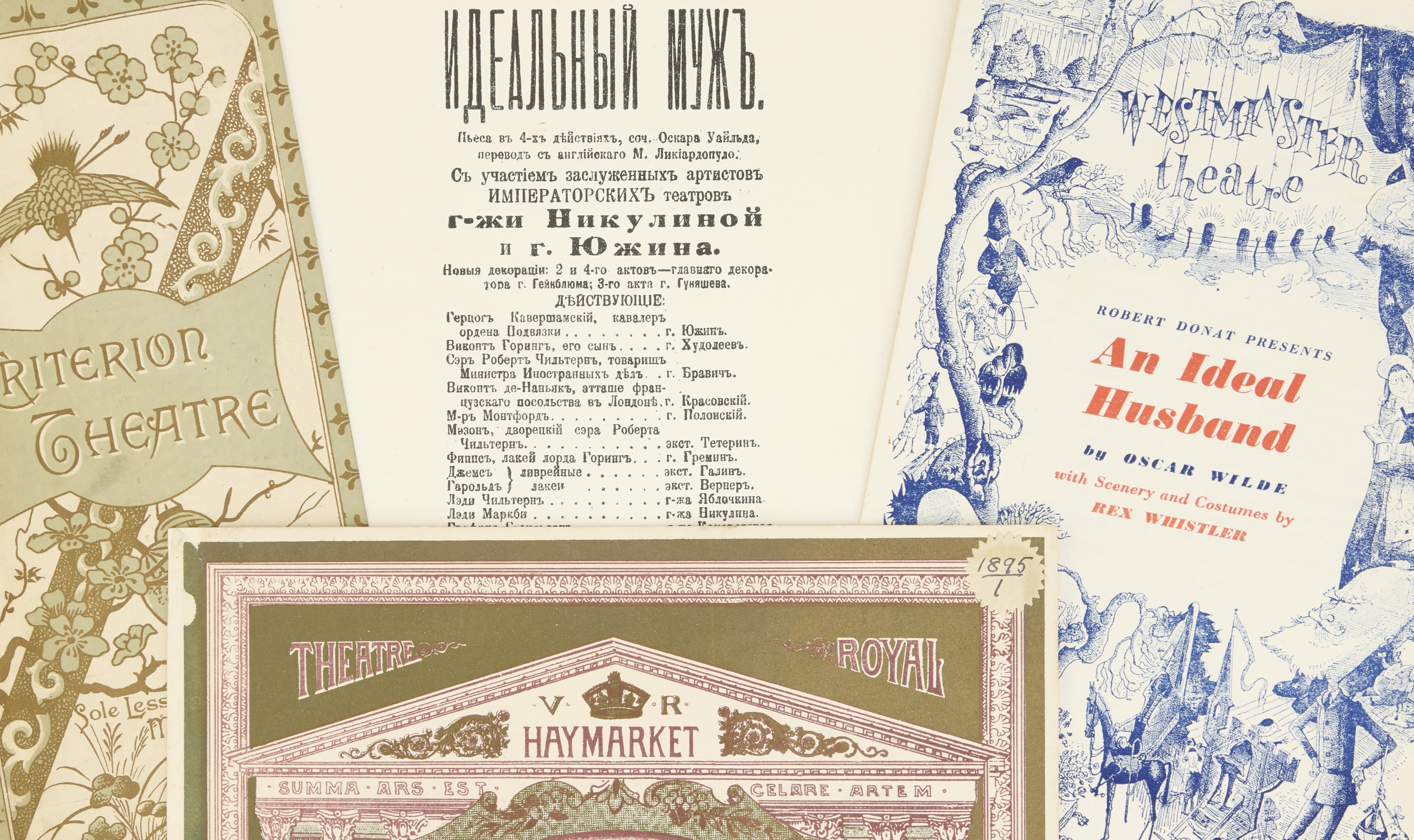
Wilde published several of his works in numbered, limited editions, with each copy being signed by him. These can be had at auction for around £7,000 upwards, and are perennially appealing for collectors. His first published book, a poem called ‘Ravenna’ that he recited at Oxford, was printed in 1878 and is typically less than £1,000 at auction. And then, as in our upcoming auction, there are all sorts of ephemera like advertisements and cartoons featuring Wilde’s image, which are a very easy entry point, as well as various strikingly-illustrated posthumous editions of his works. The key thing, as always, is to look for items in the best possible condition or of the greatest rarity.
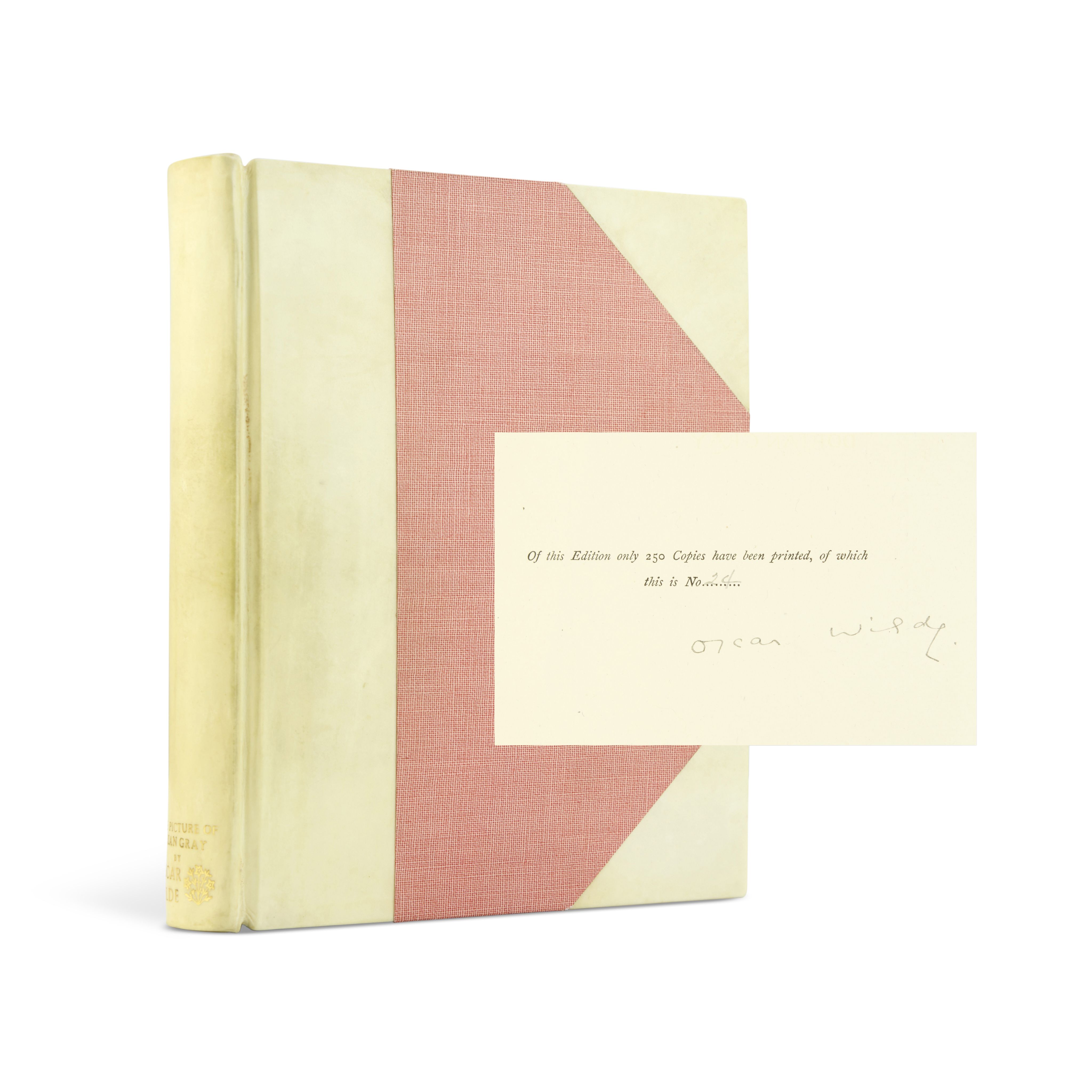
Wilde (Oscar), The Picture of Dorian Gray, First edition, Number 24 of 250 large paper copies signed by the author, Ward and Lock, 1891. Estimate: £12,000 - £18,000.
Wilde (Oscar), The Picture of Dorian Gray, First edition, Number 24 of 250 large paper copies signed by the author, Ward and Lock, 1891. Estimate: £12,000 - £18,000.
Oscar Wilde: The Collection of Jeremy Mason features the remarkable collection of noted Wilde collector, bibliophile, and former dealer in Oriental antiques, Jeremy Mason.
Watch as Jeremy gives us an insight into his fascinating collection of books and ephemera, showcasing the many aspects of Wilde's extraordinary life.

Oscar Wilde:
The Collection of Jeremy Mason
18 February
London, Knightsbridge
Stay updated with our auctions
Register with Bonhams to follow your favourite lots and receive alerts when new auctions open for bidding.
Subscribe here
 Built with Shorthand