
Collecting 101
Classical Chinese Huanghuali Furniture
Written by Dr. Edward Luper
Specialist, Chinese Works of Art, London

1.
What is huanghuali furniture?
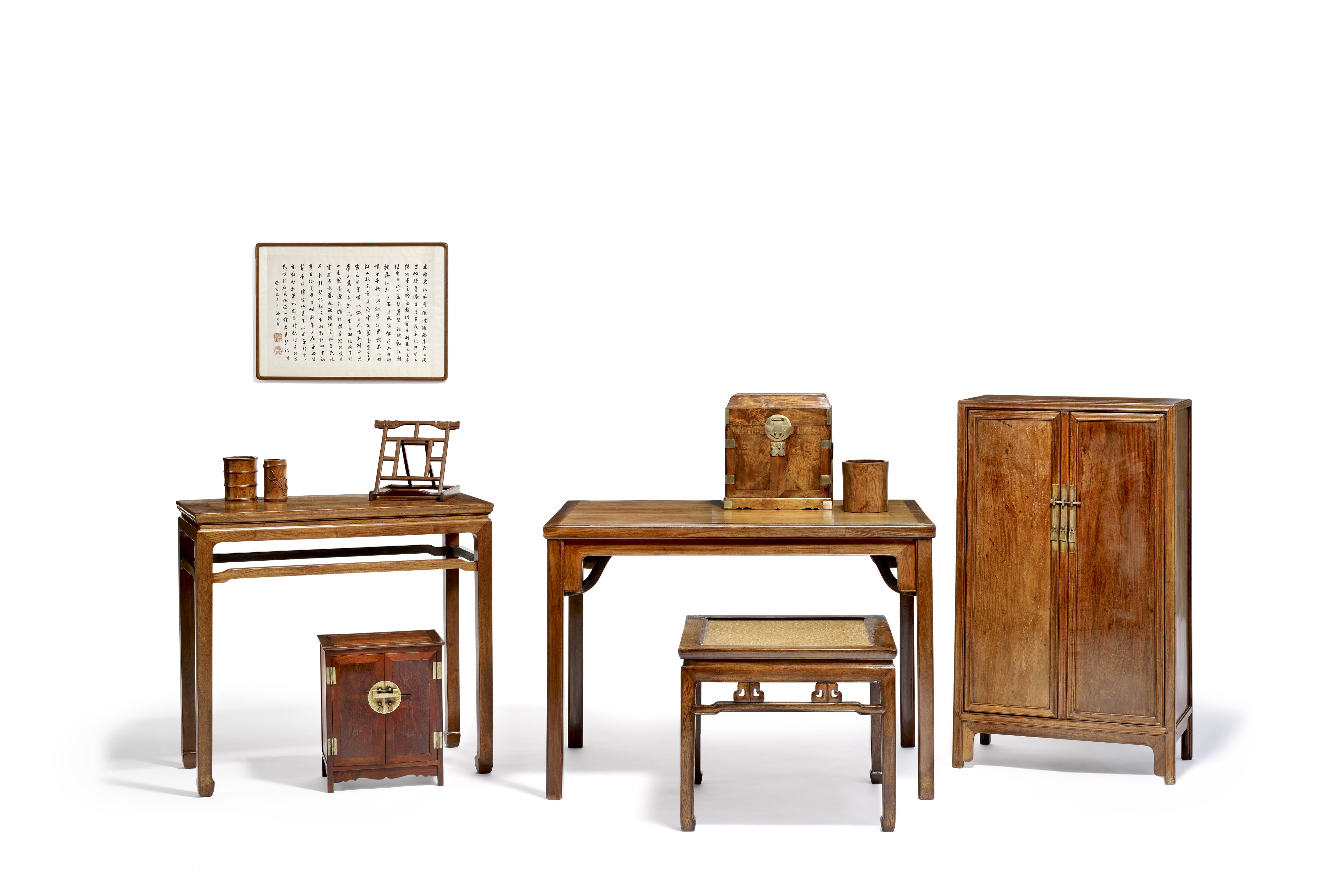
Huanghuali furniture (meaning ‘yellow flowering pear’), renowned for its exquisite craftsmanship and subdued elegance, was especially prized by China’s scholarly elite from the Ming dynasty (1368-1644) to Qing dynasty (1644-1912). Joined without the use of nails or glue, its distinct yellowish hue and durability embodies centuries of Chinese craftsmanship and literati aesthetics.
Huanghuali furniture is crafted from the rosewood tree Dalbergia odorifer, native to sub-tropical southern China and Southeast Asia. The hardwood tree typically takes several decades – sometimes as much as 50 to 100 years – to reach maturity, this slow growth contributes to the rarity and value of huanghuali wood, as well as the preciousness of the furniture crafted from it.

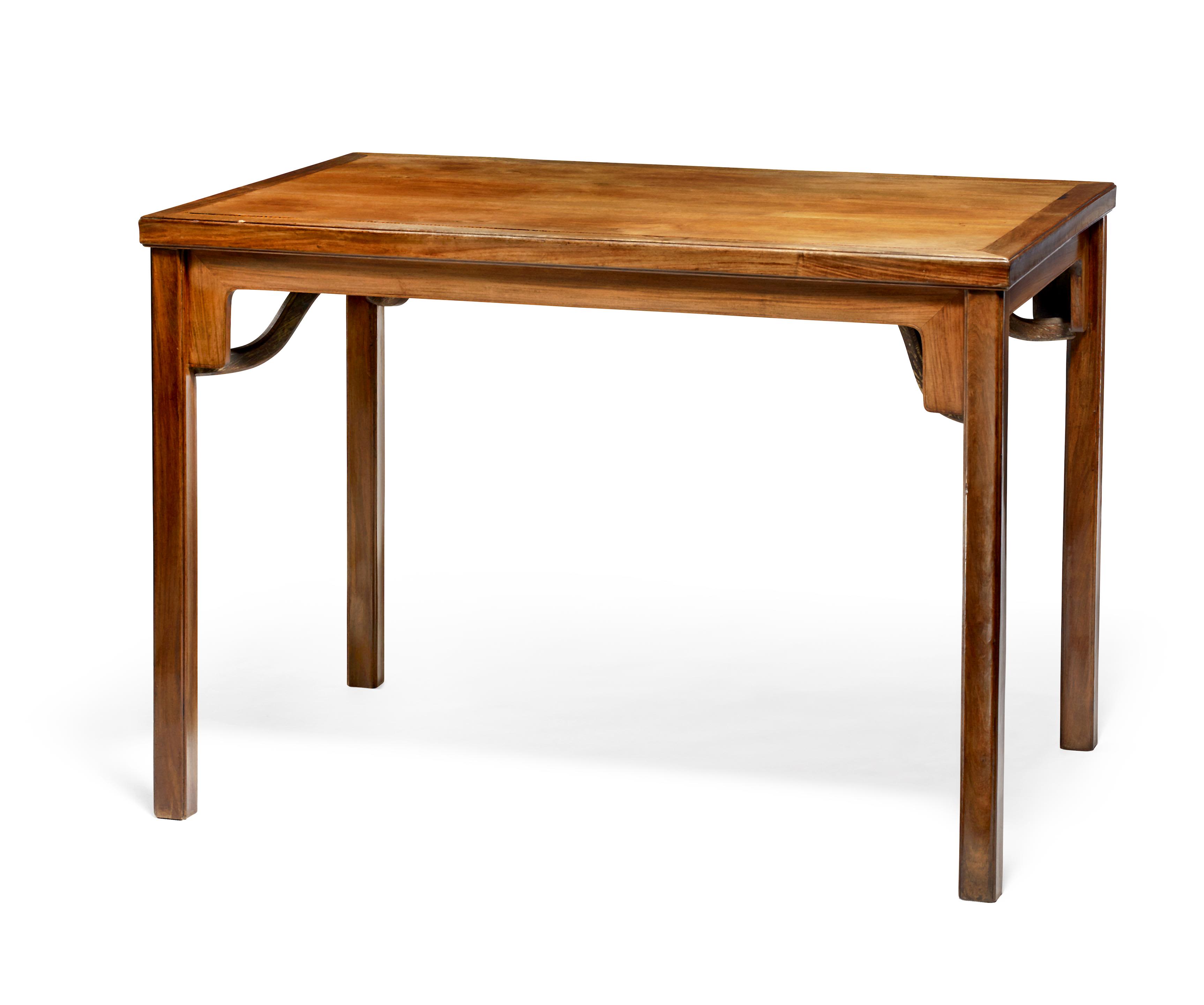
A RARE HUANGHUALI RECESSED-LEG 'GIANT'S ARM' BRACES TABLE, 17th/18th century, £50,000 - £80,000
A RARE HUANGHUALI RECESSED-LEG 'GIANT'S ARM' BRACES TABLE, 17th/18th century, £50,000 - £80,000
2.
Types of huanghuali furniture
Huanghuali furniture encompasses various forms, including tables, chairs, stools, cabinets, beds, chests and brush pots.
The classic huanghuali furniture forms emerged during the late Ming dynasty (16th/17th centuries) during a time of increased trade, economic prosperity and urbanisation. The literati class – scholars, officials and intellectuals – retreated to their studios away from the chaos of court politics and patronised a refined and understated style of furniture with clean lines, minimal ornamentation, intricate joinery and refined proportions.
Later, Qing dynasty furniture, while largely following Ming-dynasty forms, tended to be slightly more elaborate, with added carvings and decorative motifs.
Chairs
The huanghuali ‘horseshoe’ armchair, characterised by its distinctive horseshoe-shaped backrest, is a classic example of Ming dynasty furniture design. Its gently curving forms create a sense of elegance and fluidity in its silhouette. The smooth lines and balanced proportions of the chair contribute to its overall aesthetic appeal, evoking a sense of harmony and beauty.

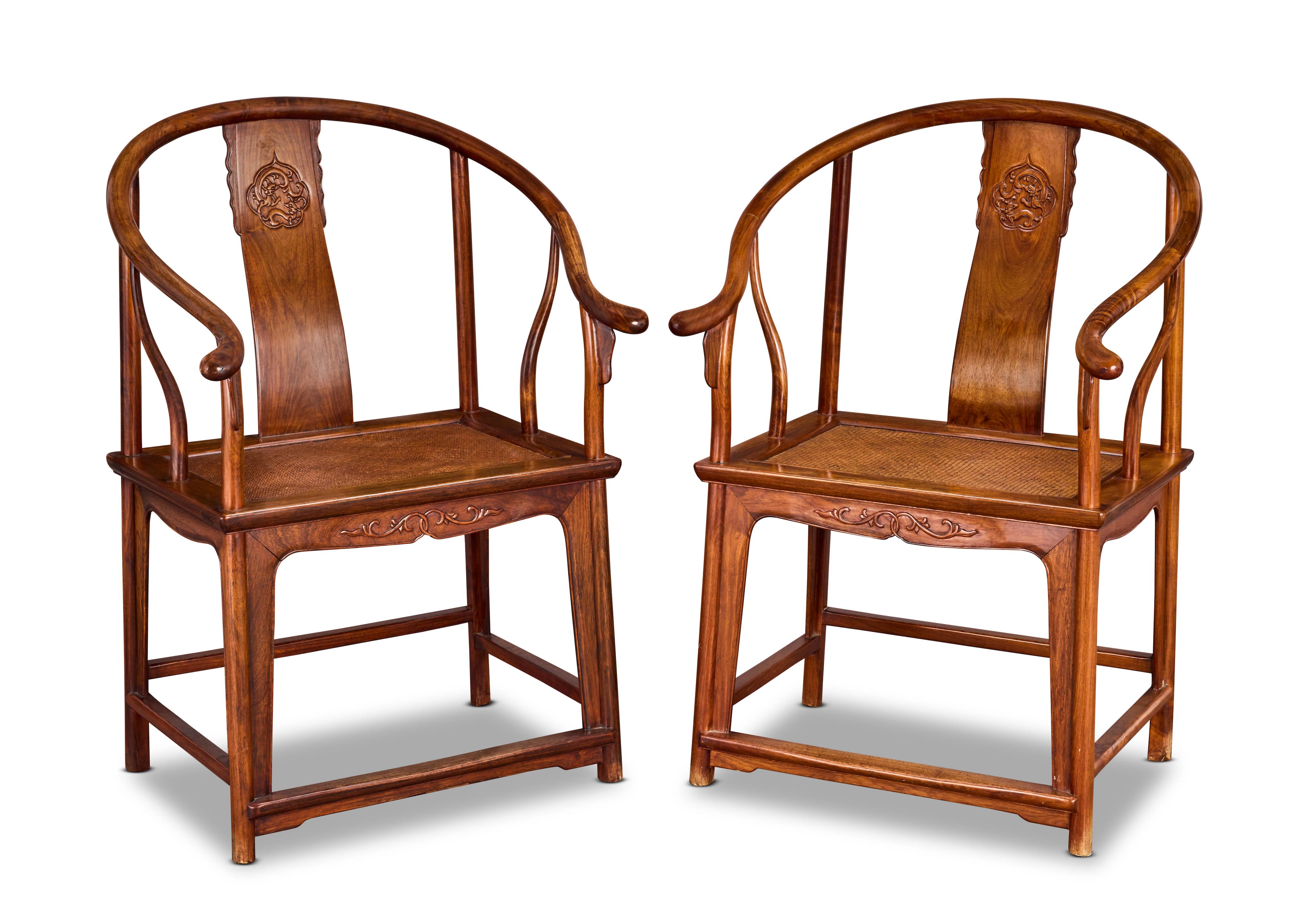
A PAIR OF HUANGHUALI HORSESHOE-BACK ARMCHAIRS, QUANYI, 17th century, £60,000 - £80,000
A PAIR OF HUANGHUALI HORSESHOE-BACK ARMCHAIRS, QUANYI, 17th century, £60,000 - £80,000
In addition to horseshoe chairs, there are also ‘official’s hat’ or ‘yokeback’ chairs, so named because the crest rail resembling the protruding wings of the hats worn by Ming dynasty officials, or a farmer’s yoke.
Furthermore, there are folding chairs, which would have belonged to the elite and used for formal and informal occasions: at home, in the garden, and when travelling for leisurely pursuits or military campaigns. These chairs are relatively scarce due to wear.

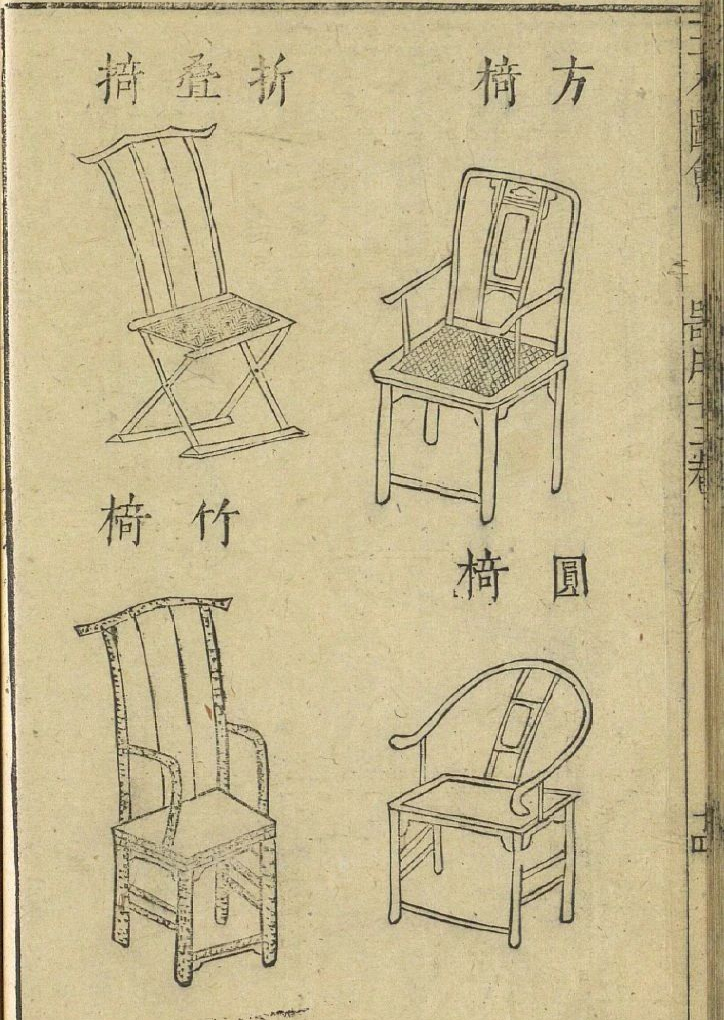
Sancai tuhui [Assembled pictures of the three realms], Wanli period version, Qiyong shier juan [Twelve volumes of useful objects]
Sancai tuhui [Assembled pictures of the three realms], Wanli period version, Qiyong shier juan [Twelve volumes of useful objects]

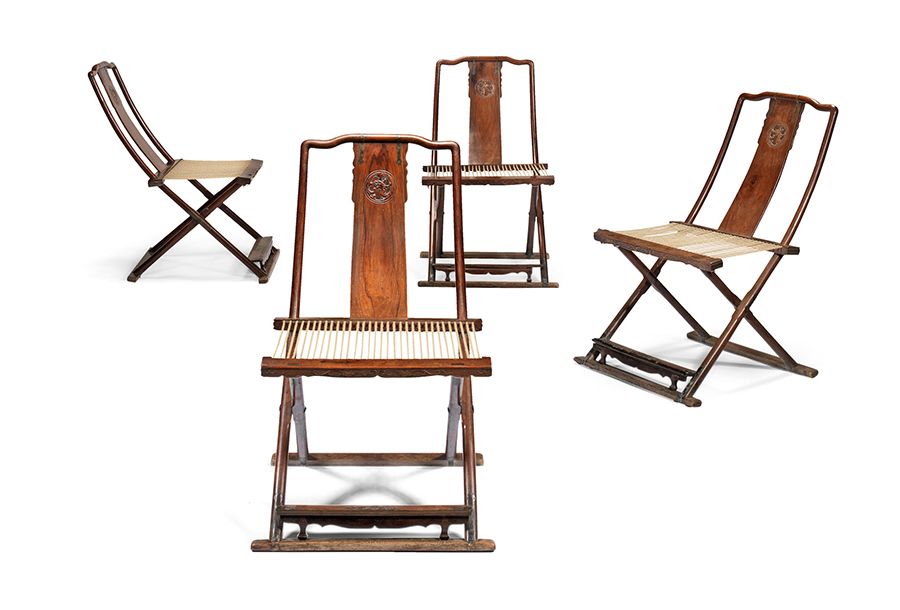
An important and exceptionally rare set of four huanghuali folding chairs, Jiaoyi. Sold for £5,296,250 inc. premium in London, 9 November 2017.
An important and exceptionally rare set of four huanghuali folding chairs, Jiaoyi. Sold for £5,296,250 inc. premium in London, 9 November 2017.
Cabinets
Two distinct styles of cabinets stand out: square corner (‘fangjiaogui’) and round corner (‘yuanjiaogui’).
This distinction in the shape of the corner stiles contributes to the overall aesthetic and visual impression of each cabinet style: square corner stiles exude a sense of solidity and geometric precision, enhancing their architectural appeal. Rounded corner stiles, in contrast, convey a softer and more organic aesthetic, adding a touch of elegance and warmth to their design.

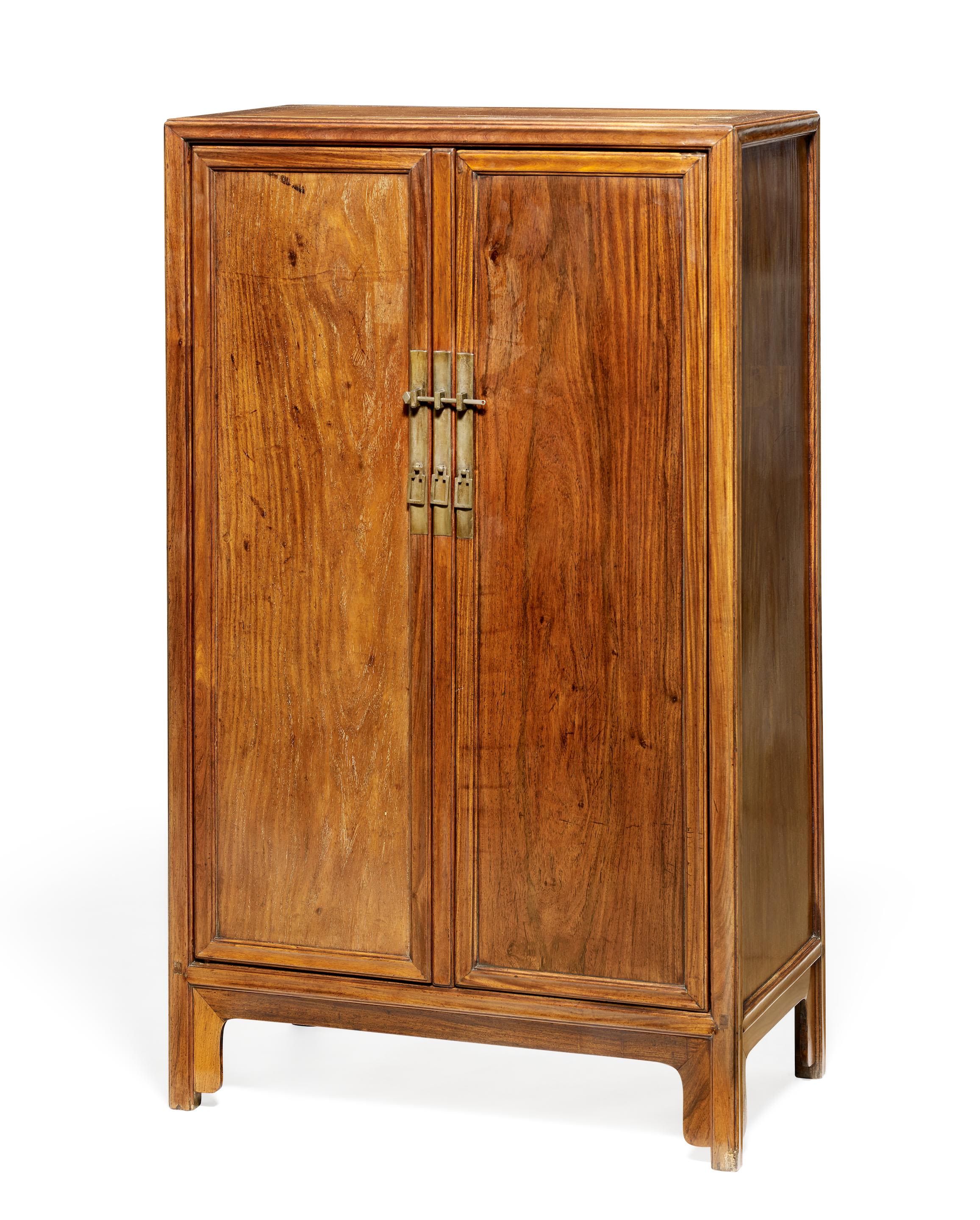
A HUANGHUALI SQUARE-CORNER CABINET, FANGJIAOGUI, 17th century, £50,000 - £80,000
A HUANGHUALI SQUARE-CORNER CABINET, FANGJIAOGUI, 17th century, £50,000 - £80,000
Cabinets also often have tapering sides. This effect creates a sense of movement and dynamism in its form, drawing the viewer's eye towards the centre and creating a feeling of stability and height. The gradual narrowing of the sides adds a touch of elegance and refinement to the cabinet's silhouette, softening its appearance and imbuing it with a sense of gracefulness.
Tables
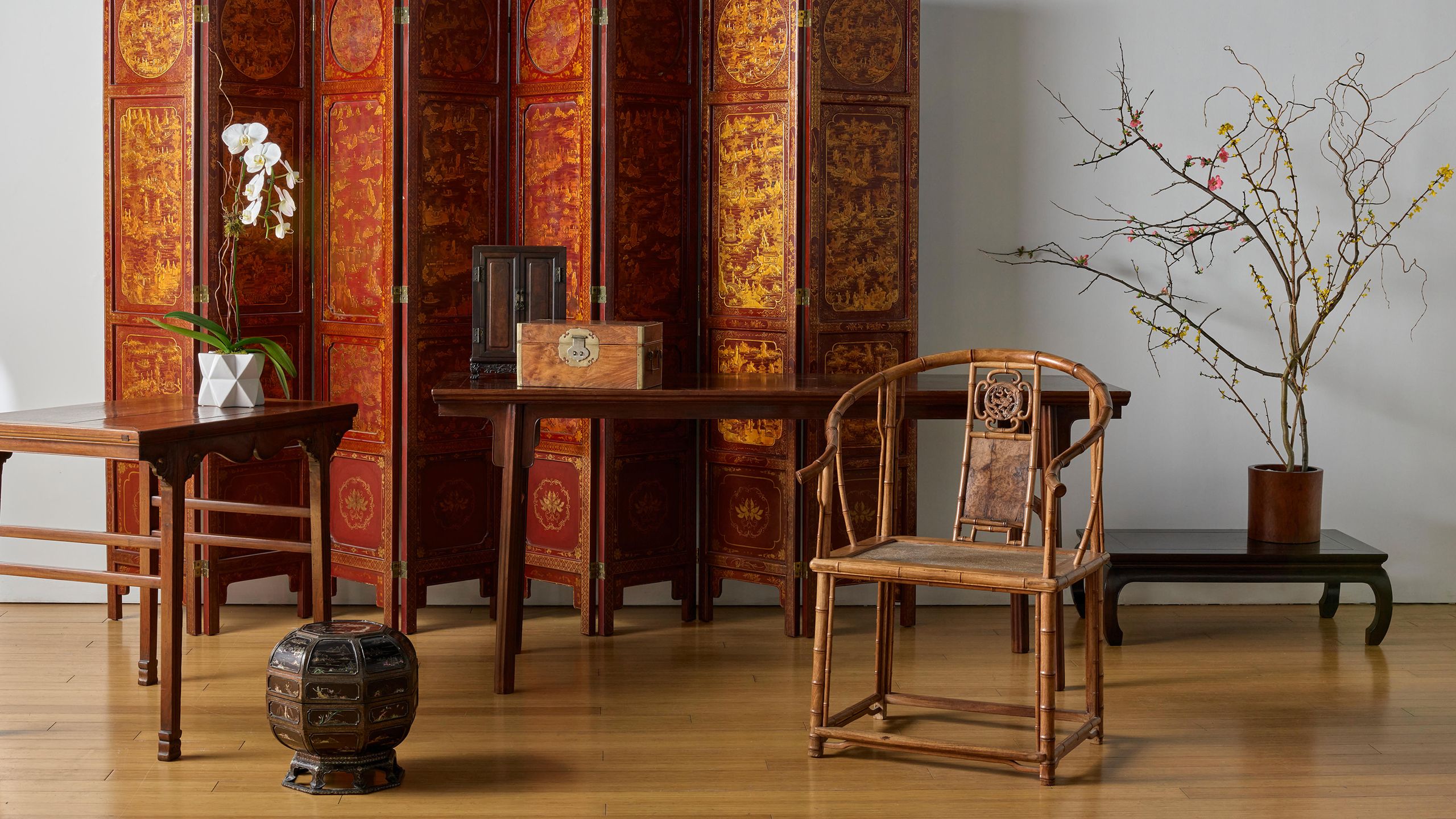
Huanghuali tables serve as focal points in both traditional and contemporary interiors. Their versatility allows them to function as dining tables, painting tables, desks, or decorative accents, seamlessly blending functionality with artistic beauty.
These tables often feature clean lines and minimalist design. Indeed, the Ming-period carpenters' manual, the Lu Ban Jing, describes the, as a 'character one' table – looking like the Chinese character for ‘one’ written as a single horizontal stroke – succinctly describing its elegant form.
There are also tables with ‘giant’s arm’ braces: curved buttresses that resemble arms which support the underside of the table. These braces eliminated the need for the more commonly seen humpback stretchers and allowed for more legroom.

3.
Key characteristics to look for in huanghuali furniture
Wood grain and colour: Genuine huanghuali wood exhibits a distinct yellowish-brown hue with a subtle golden sheen. The wood grain is typically fine, straight, and evenly distributed, showcasing the natural beauty of the timber. Variations in colour and grain patterns can indicate the age and quality of the piece. Look also for wear on the feet and underneath pieces of furniture (these are good signs of age).
Joinery and construction: Traditional huanghuali furniture is assembled without nails or glue, only using intricate joinery techniques such as mortise and tenon joints, dovetails, and tongue and groove joints. Carefully examine the joints for precision, tightness, and craftsmanship. Hand-cut joints and natural irregularities such as slight gaps between surfaces imply age by shrinkage and suggest authenticity.

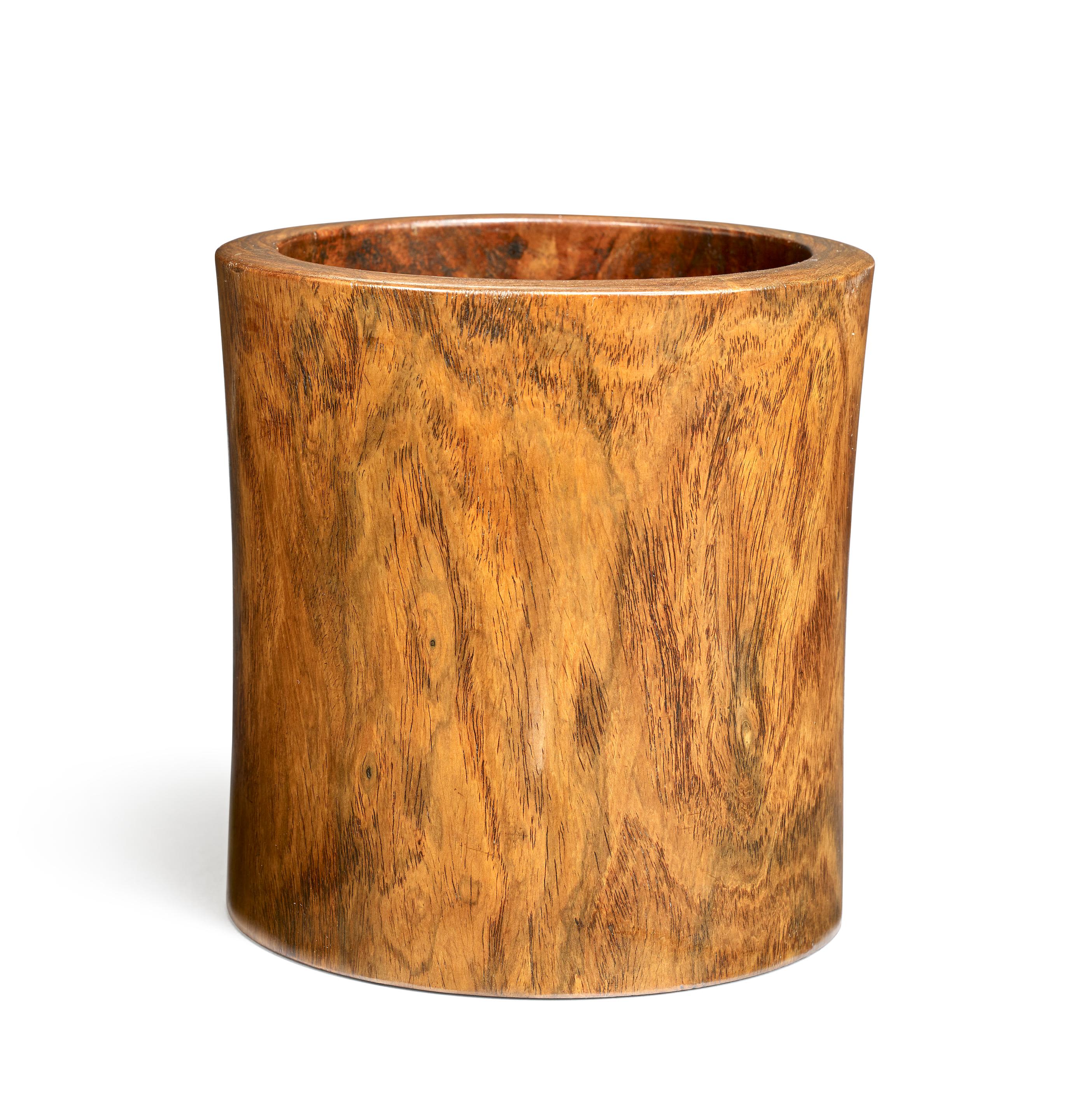
A HUANGHUALI BRUSHPOT, BITONG, 17th/18th century, £3,000 - £5,000
A HUANGHUALI BRUSHPOT, BITONG, 17th/18th century, £3,000 - £5,000
Ghost Faces and Peaks: Ghost faces (‘gui mian’) and peaks (‘feng jian’) are unique characteristics found in huanghuali wood grain patterns. Ghost faces appear as ethereal, swirling figures within the wood grain, resembling human faces or mythical creatures. Peaks manifest as subtle ridges or peaks along the wood grain. These natural phenomena are highly prized by collectors and add to the aesthetic allure of huanghuali furniture.
Provenance and documentation: Authentic huanghuali furniture often comes with documentation or provenance tracing its history, ownership, and authenticity. Look for labels, inscriptions, or certificates from reputable sources verifying the piece's age, origin, and authenticity. Historical records, auction catalogues, and expert appraisals can also provide valuable insights into the provenance of huanghuali furniture.

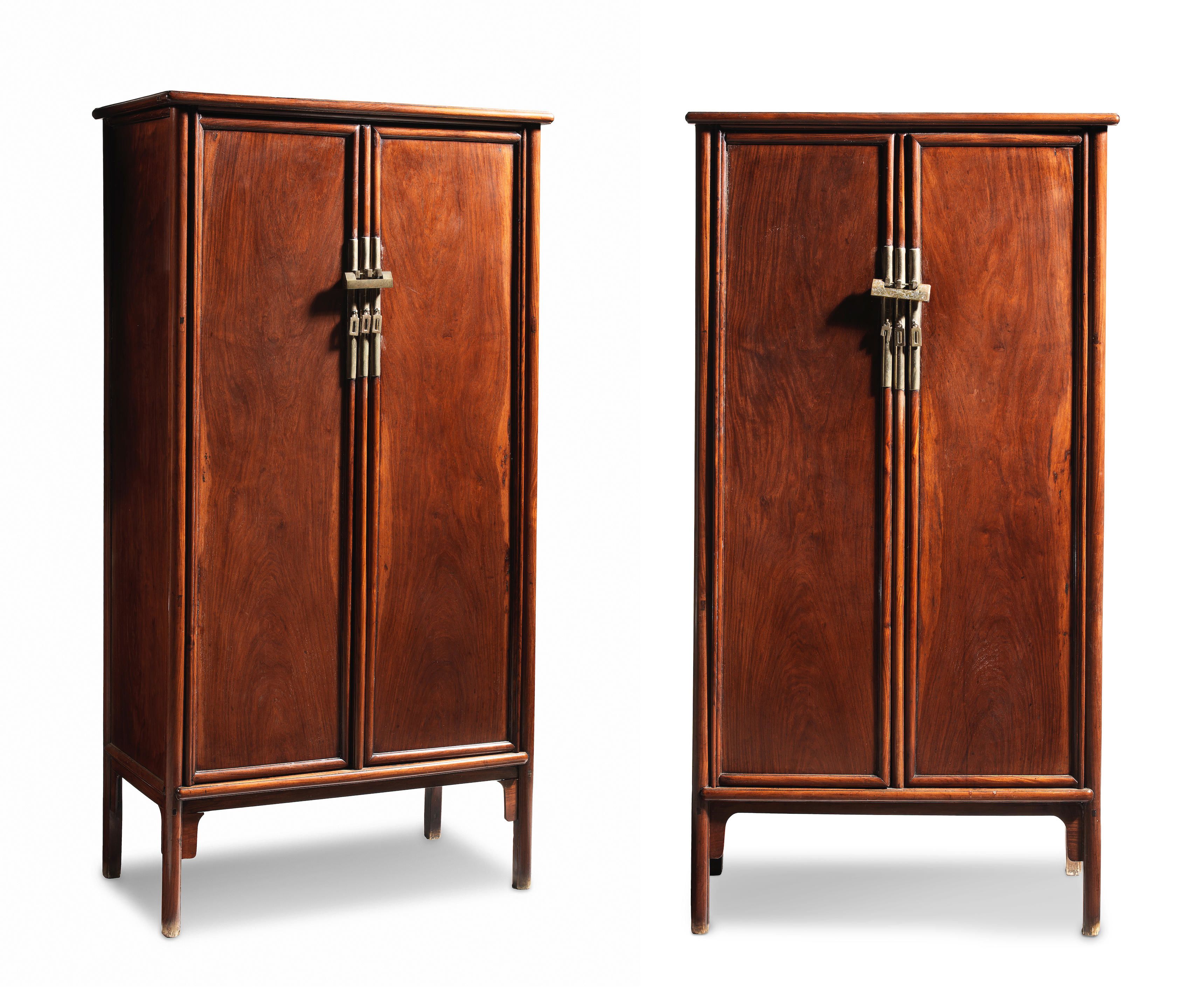
An important and exceedingly rare pair of large huanghuali tapering cabinets, yuanjiaogui, Ming Dynasty, 16th/17th century, sold for £1,688,750 inc. premium in London on 9 November 2017.
An important and exceedingly rare pair of large huanghuali tapering cabinets, yuanjiaogui, Ming Dynasty, 16th/17th century, sold for £1,688,750 inc. premium in London on 9 November 2017.
4.
The legacy of huanghuali furniture
Huanghuali furniture holds a revered place in the annals of Chinese art and design, with numerous examples housed in prestigious museums worldwide. Notable collections include those at the Palace Museum in Beijing, the Metropolitan Museum of Art in New York, and the Victoria and Albert Museum in London.
Furthermore, the influence of Chinese furniture can be seen in modern designs, such as Danish designer Hans Wegner's iconic 'Wishbone' chair, which drew inspiration from the horseshoe-backed chair mentioned above.
Stay updated with our Chinese art auctions. Create an account with Bonhams to follow your favourite collecting categories and get email alerts when new auctions are open for bidding. Register now

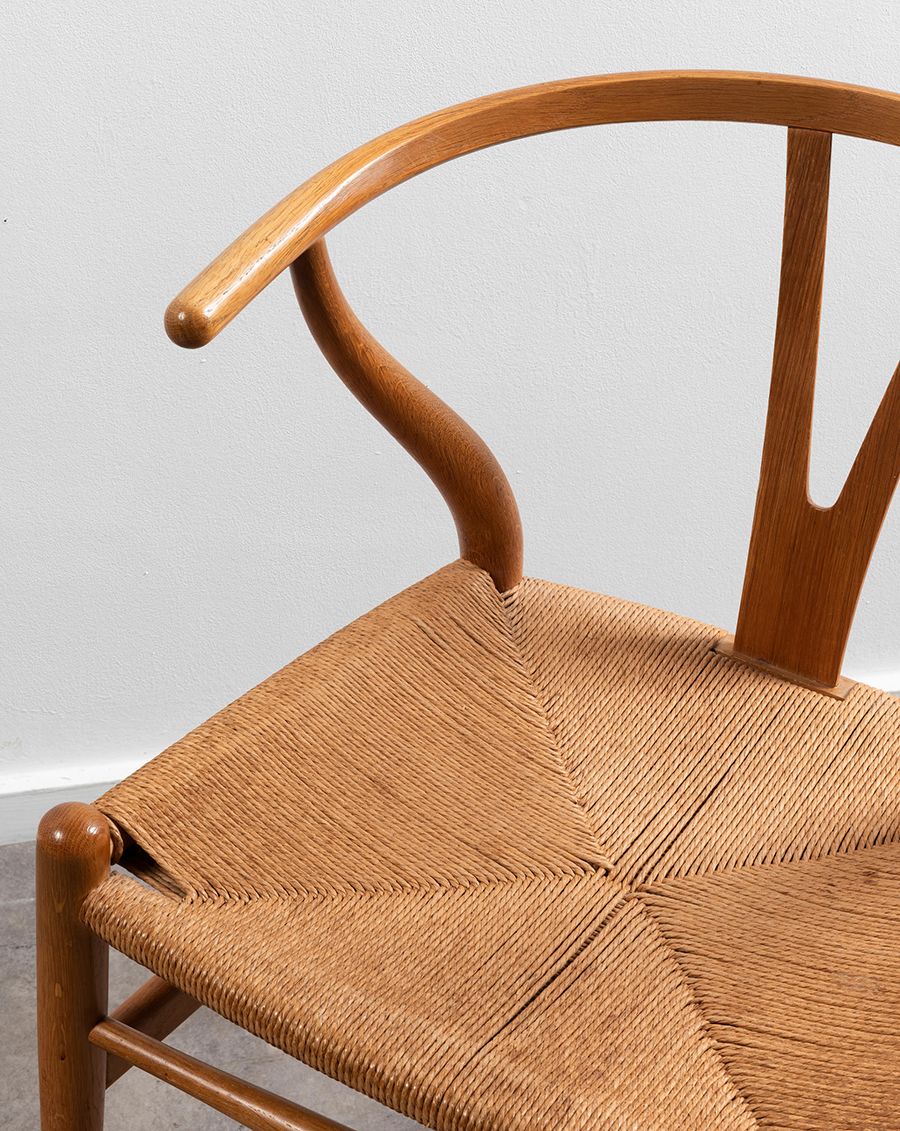
Hans J. Wegner (1914-2007), Detail from a set of 12 Wishbone chairs. Sol for €12,160 inc. premium in Brussels, 5 June 2023.
Hans J. Wegner (1914-2007), Detail from a set of 12 Wishbone chairs. Sol for €12,160 inc. premium in Brussels, 5 June 2023.
5.
Huanghuali furniture on the market
In recent years, the demand for authentic huanghuali furniture has surged, driven by collectors, connoisseurs, and enthusiasts alike. However, due to its rarity and high value, genuine pieces command premium prices in the antique market.
Bonhams was fortunate to present a series of huanghuali furniture pieces that garnered record-breaking prices, including those from the esteemed Marchese Taliani de Marchio (1887-1968) in 2017. This exceptional collection featured a set of four huanghuali folding chairs, from the 16th/17th century, which was sold for £5.2 million and a pair of large huanghuali cabinets, 16th/17th century, which sold for £1.6 million. These pair of cabinets were published and illustrated by the renowned art historian Gustav Ecke in his book Chinese Domestic Furniture (1944), further adding to their historical significance.
More recently, The Mary and Cheney Cowles Collection of Classical Chinese Furniture achieved over $7 million, led by a huanghuali 'Wannian Taiping' yokeback armchair and a Ming-dynasty huanghuali recessed-leg wine table, both selling for over $1.9 million each.
Despite the challenges of authentication and market dynamics, the allure of huanghuali furniture persists, ensuring its continued presence and prominence in the global marketplace for fine art and antiques.

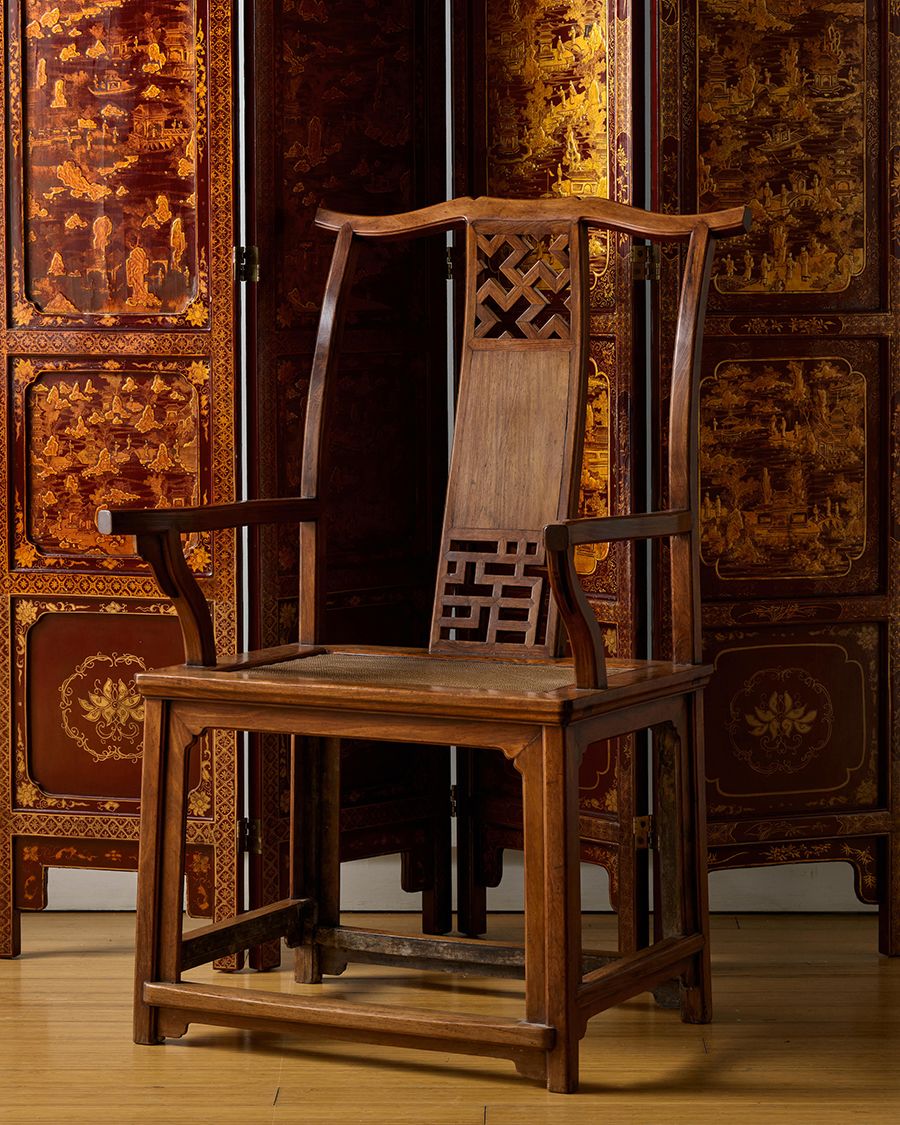
A very rare huanghuali 'Wannian Taiping' yokeback armchair, Guanmaoyi. Sold for US$1,980,375 inc. premium in New York on 20 March 2023.
A very rare huanghuali 'Wannian Taiping' yokeback armchair, Guanmaoyi. Sold for US$1,980,375 inc. premium in New York on 20 March 2023.
Register to bid in Fine Chinese Art
Our upcoming auction on 7 Nov in London, New Bond Street features a distinguished Danish private collection of Huanghuali furniture, and objects for the Scholar's desk.
For the latest news and auction highlights, follow @bonhamschinese on Instagram
 Built with Shorthand