
Collecting 101
Hardstone Dials
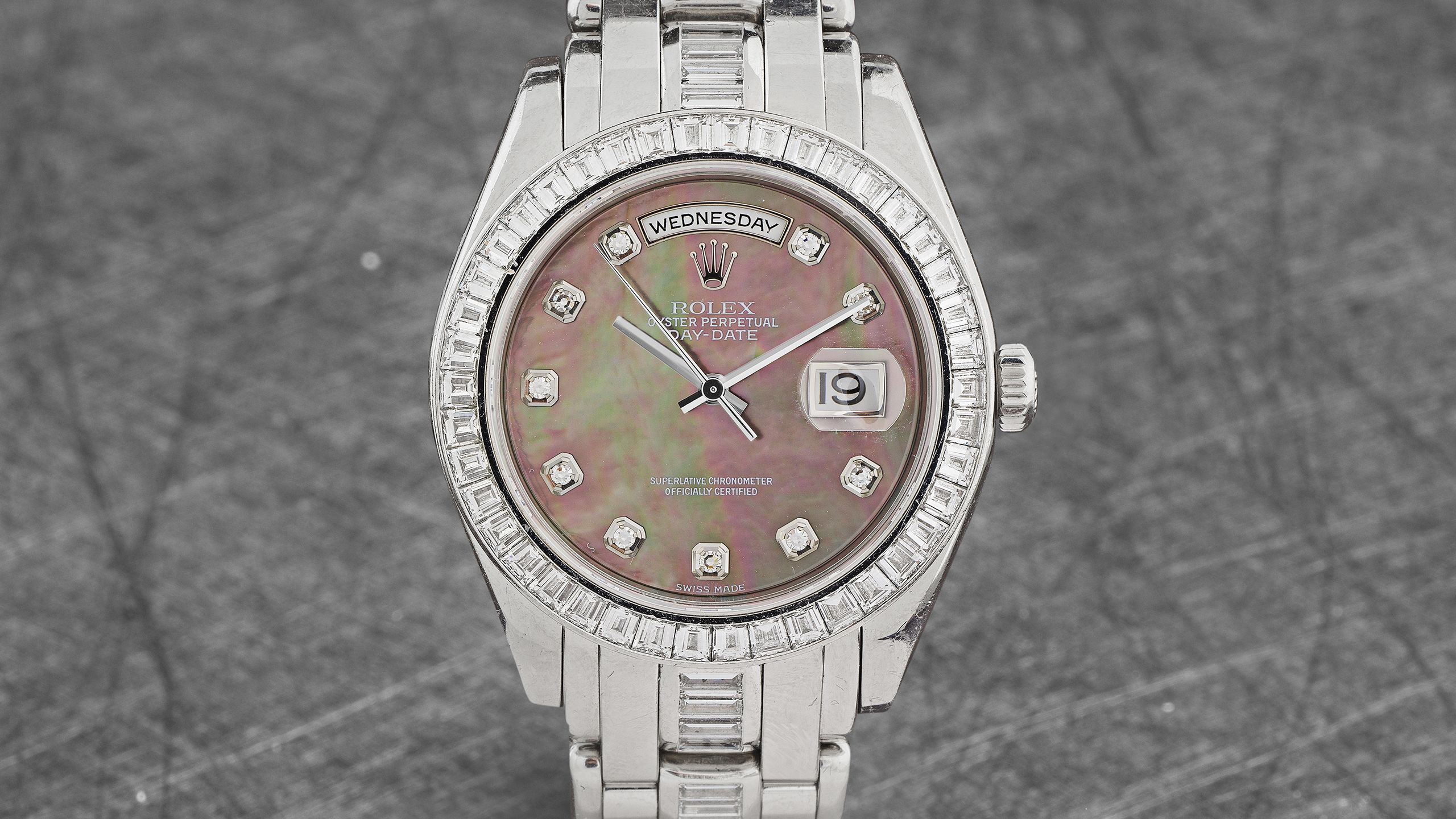

Watch manufacturers have been using hardstones for dial making for decades. Though the variety of materials such as malachite, tiger's eye, onyx and lapis lazuli give each design a unique look and feel, there is one thing that all hardstone dials have in common: they are all extremely challenging to produce.
The dials need to be carved from a large stone of excellent quality, and each slice needs to be exceedingly thin in order to produce a usable dial. When executed successfully, these can result in truly exceptional timepieces.
Hardstone dials are making a comeback! Illustrated with our highlights sold at Bonhams, take a look at 5 of our favourite materials used in the manufacturing of watch dials.
Looking to sell your watch or collection?
Submit it online for a free auction estimate.

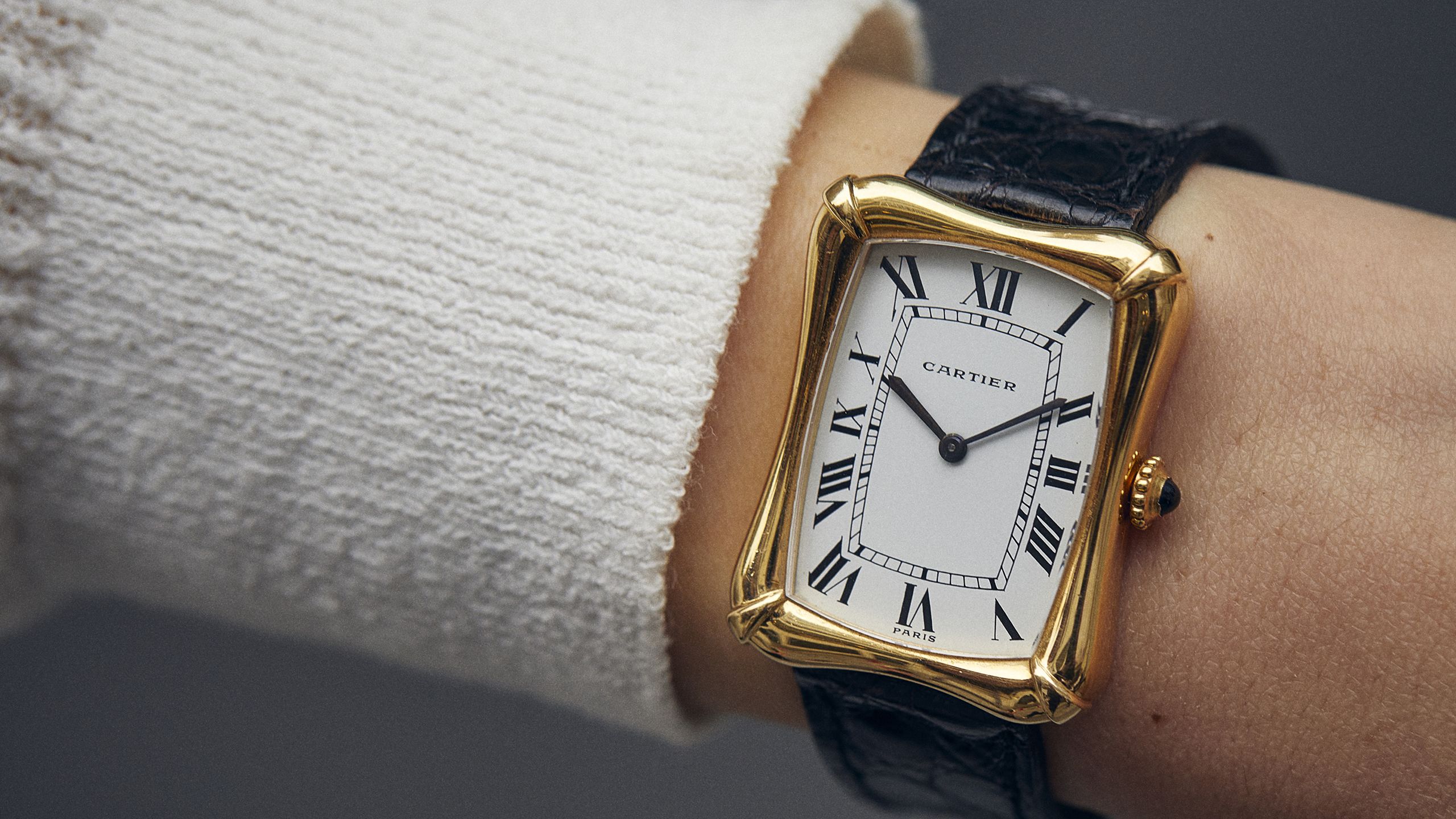
1.
Lapis Lazuli
The king of stones and the stone of kings, semiprecious Lapis Lazuli has been treasured since antiquity for its intense blue colour. Incorporated into jewellery, sculpture, horology, decorative objects and paint pigments, the vibrancy of Lapis Lazuli has captured the imagination of humans for centuries.
The eye-catching qualities of the stone have been put to great use by manufacturers such as Piaget, Chopard, Audemars Piguet and Patek Philippe. The 70s and 80s in particular saw the heyday of semi-precious stone dials, and the Piaget Beta 21 is an interesting example of combining the conflicting arms of Haute Horology and the modern era of the quartz movement.
2.
Meteorite
Meteorites have a fascinating appeal for collectors across all categories. The otherworldly nature and origin of these billion-year-old rocks from outer space make for truly arresting dials that are, literally, out of this world. Rolex in particular have utilised this incredible and finite material in their Daytona, Day-Date and more recently in 2019 their GMT ranges.
There are three types of meteorites: the ferrous type, primarily composed of iron and nickel, is the most commonly used to produce watch components. Instantly recognisable for its geometric striations, the Widmanstätten pattern is naturally occurring on meteorite dials, making each one completely unique.
It is believed that much of the meteorite used by Rolex derives from the Gibeon meteorite in Namibia. The Gibeon, discovered in 1838, is now protected by law from further harvesting meaning the supply already in the hands of watchmakers is of a finite amount.
3.
Coral
Creamy whites, blush pinks, vibrant oranges, rich reds - coral can be found in many shades and is the common name given to Corallium rubrum.
Unlike other stones and minerals, coral is an organic gemstone formed by living organisms in tropical and subtropical waters. These organisms leave branch-like, skeletal structures behind when they die, which have been used in jewellery, sculpture and works of art for centuries.
The durable nature and intense colours of coral appealed to many watch designers in the 1970s and 80s, and many unusual timepieces can be found from this period. Makers such as Piaget, Chopard and to a lesser extent Rolex often appear when searching for hard stone dials, often using coral and other stones to accentuate their dress watches.
As coral is usually formed into cabochons, it is more often found on the bezel of wristwatches where it is easier to apply and form. As such, full coral dials are a rare find and make for really striking pieces.
4.
Malachite
Rich shades of green, interspersed with swirling and concentric veins of paler green, makes Malachite instantly recognisable. It is usually found in copper ore deposits, which are responsible for Malachite's dark green colour. For such a vivid and eye-catching stone, it is remarkably more accessible than other less assuming stones. This is in large part because there are higher quantities of the raw stone naturally available and it is often harvested as a by-product of the copper industry.
Whilst Malachite's low level of hardiness provides a distinct advantage when initially shaping the dials, its soft and fibrous nature means that poor handling of the material can lead to it cracking and chipping if knocked. However, with a watch malachite is relatively safe, as the dial is anchored in place and effectively cushioned by the case around it. Similar to Lapis Lazuli, Malachite was incorporated in many experimental designs from the 1970s and 80s, each one with its own unique dial.
5.
Mother of Pearl
To this day, Mother-of-Pearl has remained one of the most consistently used and popular materials for watch dials, with manufacturers at all levels incorporating the material into their designs. From full dial single sheets to intricately placed segments, Mother of Pearl is wonderfully effective in adding depth to a watch.
Almost any shelled mollusc can, by natural processes, produce some kind of "pearl" when an irritating microscopic object becomes trapped within the mollusc's mantle folds and the conditions are correct. To protect themselves from these microscopic irritants the molluscs form an iridescent substance commonly known as nacre which coats the inner layer of the shell. It is these layers that are then harvested as Mother-of-Pearl.
Far more available than pearls, Mother-of-Pearl has been used to decorate precious objects for centuries. Nowadays Mother of Pearl appears regularly in watch dials from brands such as Rolex, Breguet and Patek Philippe to Harry Winston and Audemars Piguet to name but a few.
The nature of these materials, and many others, make hardstone dials truly unique and characterful, as well as impervious to change over time. Whilst manufacturers today still experiment with semi-precious materials, they do so on a much smaller scale, preferring enamel to hardstone to create the same vivid hues with a more controlled design. As such, these watches tend to trickle through auctions rather than appear in high volumes, and each one is generally different to the last.
When it comes to purchasing a watch with an unusual dial, always look for cracks in the material. Whilst these can sometimes be invisible to the naked eye, once cracked these fractures cannot really be repaired, just stabilised.
Thinking of selling your hardstone dial watches? Submit your piece online for a free auction estimate.

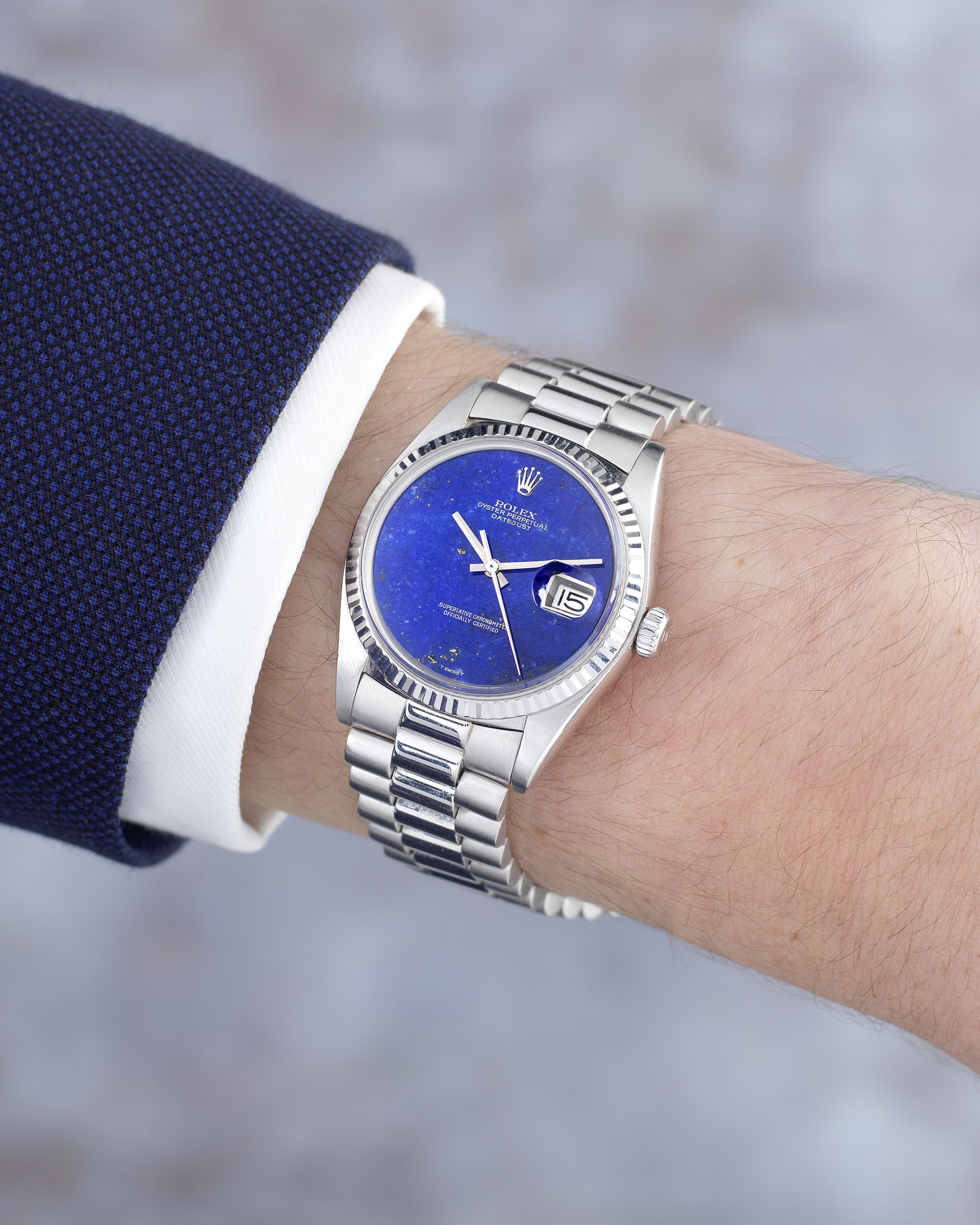
Lot 30. Rolex. A Fine and Rare 18k White Gold Automatic Calendar Bracelet Watch with Lapis Lazuli Dial. Sold for £60,250 inc. premium.
Lot 30. Rolex. A Fine and Rare 18k White Gold Automatic Calendar Bracelet Watch with Lapis Lazuli Dial. Sold for £60,250 inc. premium.

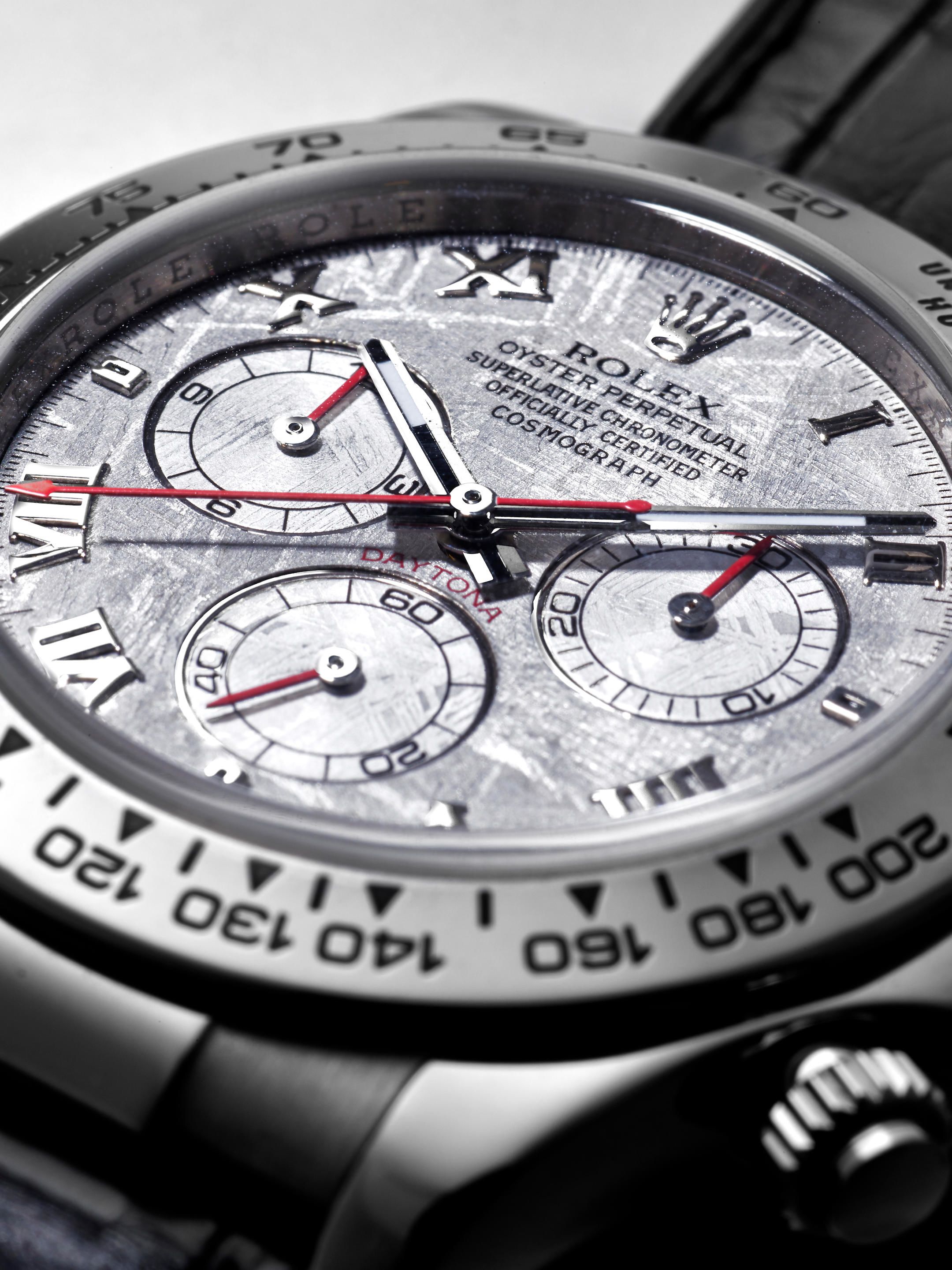
Lot 1108. Rolex | Cosmograph Daytona, REF.116519, A Rare White Gold Chronograph Wristwatch With Meteorite Dial And White Gold Indexes, CIRCA 2015. Sold for HK$281,600 inc. premium.
Lot 1108. Rolex | Cosmograph Daytona, REF.116519, A Rare White Gold Chronograph Wristwatch With Meteorite Dial And White Gold Indexes, CIRCA 2015. Sold for HK$281,600 inc. premium.

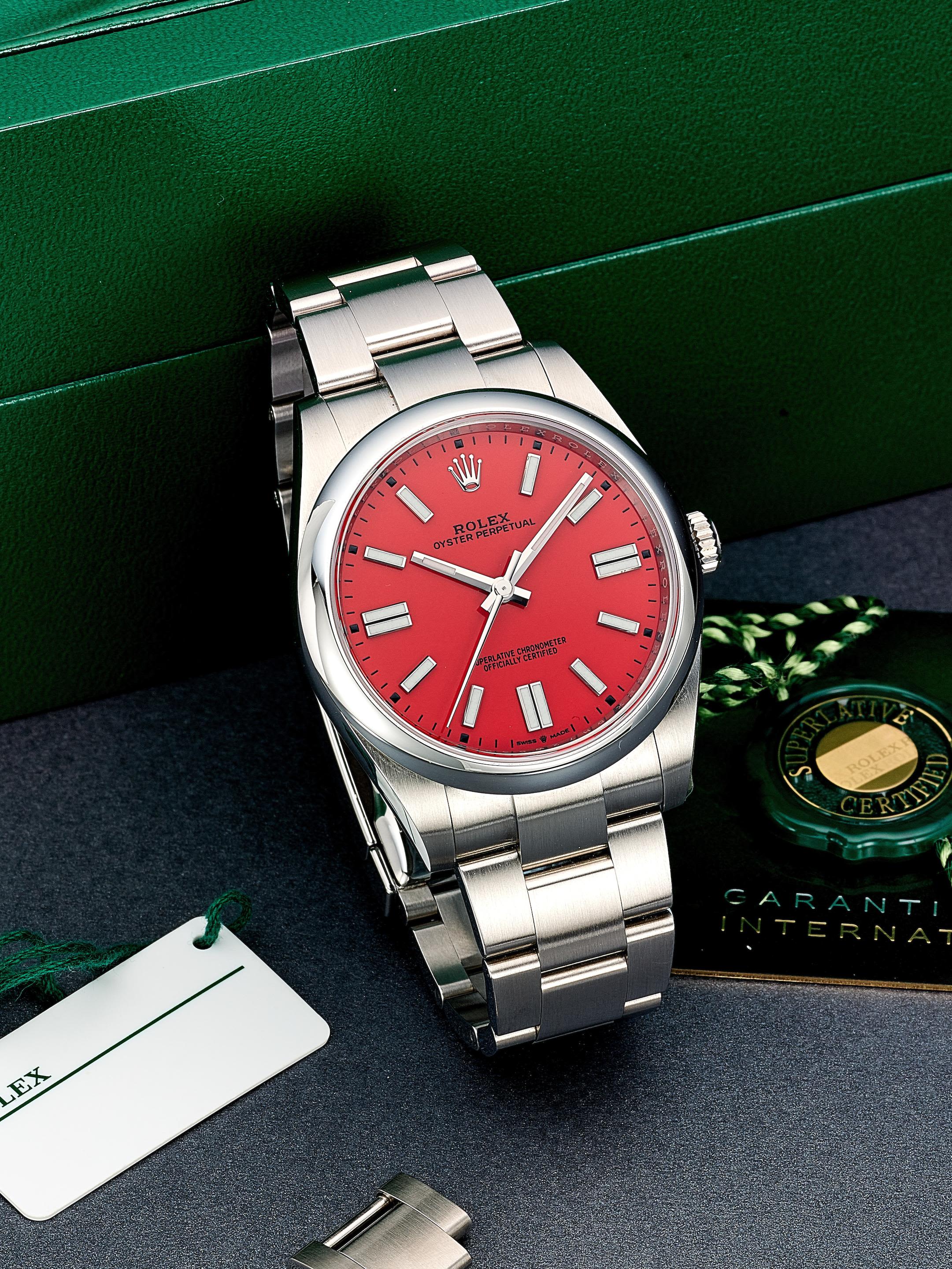
Lot 60. A Rolex | Oyster Perpetual, REF.124300, A Stainless Steel Bracelet Watch With "Coral" Red Lacquer Dial, CIRCA 2020. Sold for HK$128,000 inc. premium.
Lot 60. A Rolex | Oyster Perpetual, REF.124300, A Stainless Steel Bracelet Watch With "Coral" Red Lacquer Dial, CIRCA 2020. Sold for HK$128,000 inc. premium.
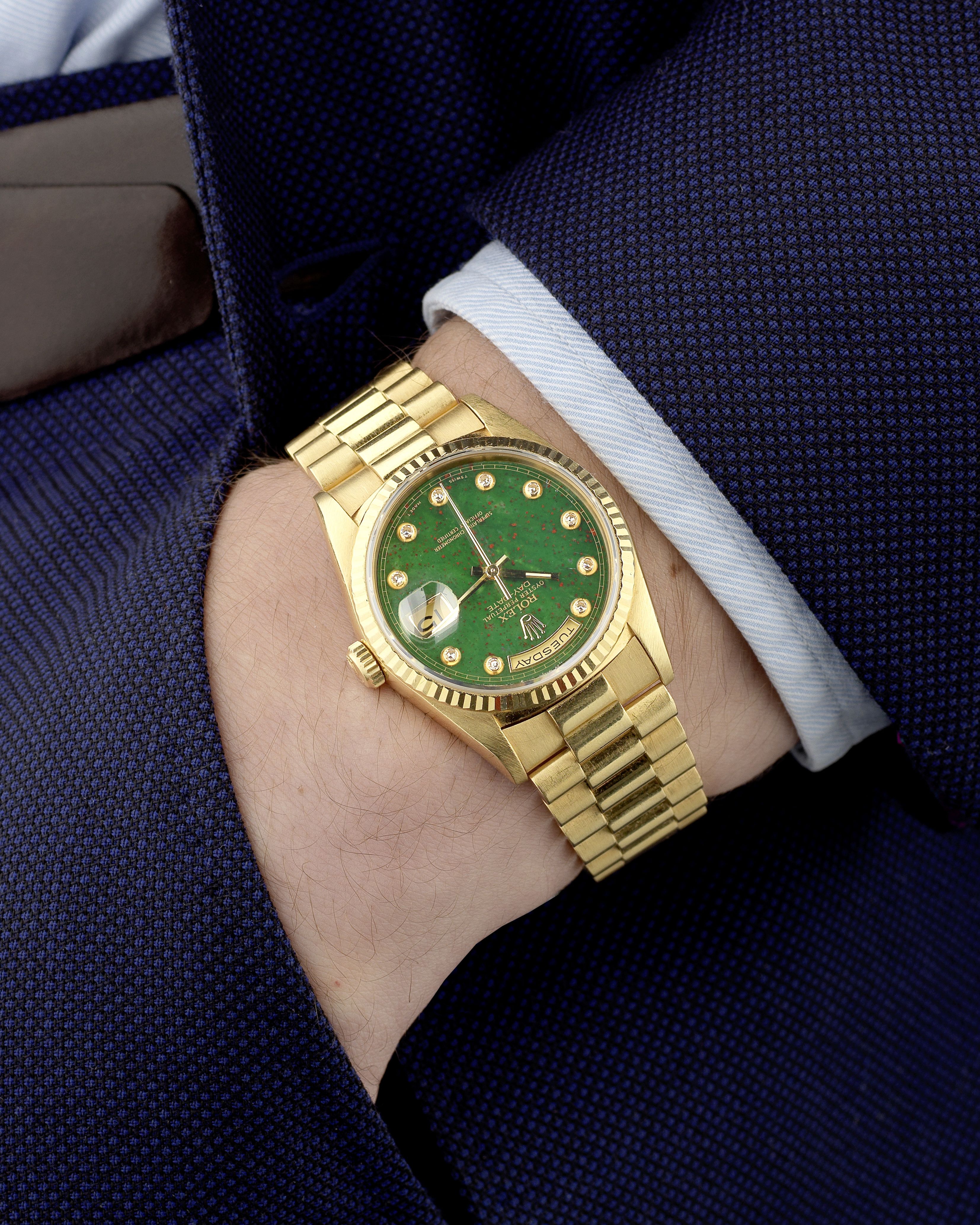
Lot 31. Rolex. A Fine and Rare 18k Gold Automatic Calendar Bracelet Watch with Diamond Set Bloodstone Dial. Sold for £45,250 inc. premium.
Lot 31. Rolex. A Fine and Rare 18k Gold Automatic Calendar Bracelet Watch with Diamond Set Bloodstone Dial. Sold for £45,250 inc. premium.
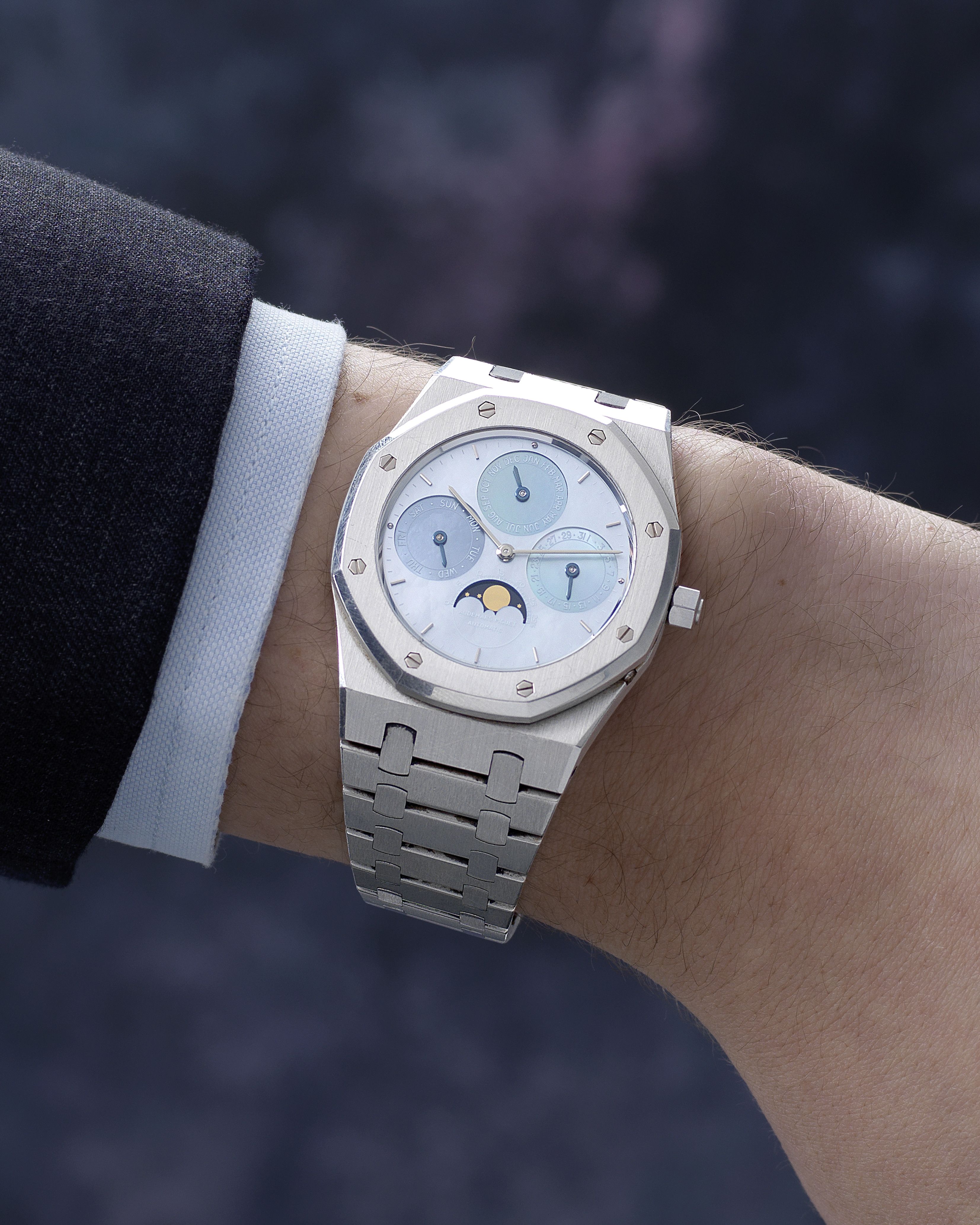
Lot 63. Audemars Piguet. An Exceptionally Rare and Fine Platinum Automatic Perpetual Calendar Bracelet Watch with Moon Phase and Mother of Pearl Dial. Sold for £275,250 inc. premium.
Lot 63. Audemars Piguet. An Exceptionally Rare and Fine Platinum Automatic Perpetual Calendar Bracelet Watch with Moon Phase and Mother of Pearl Dial. Sold for £275,250 inc. premium.
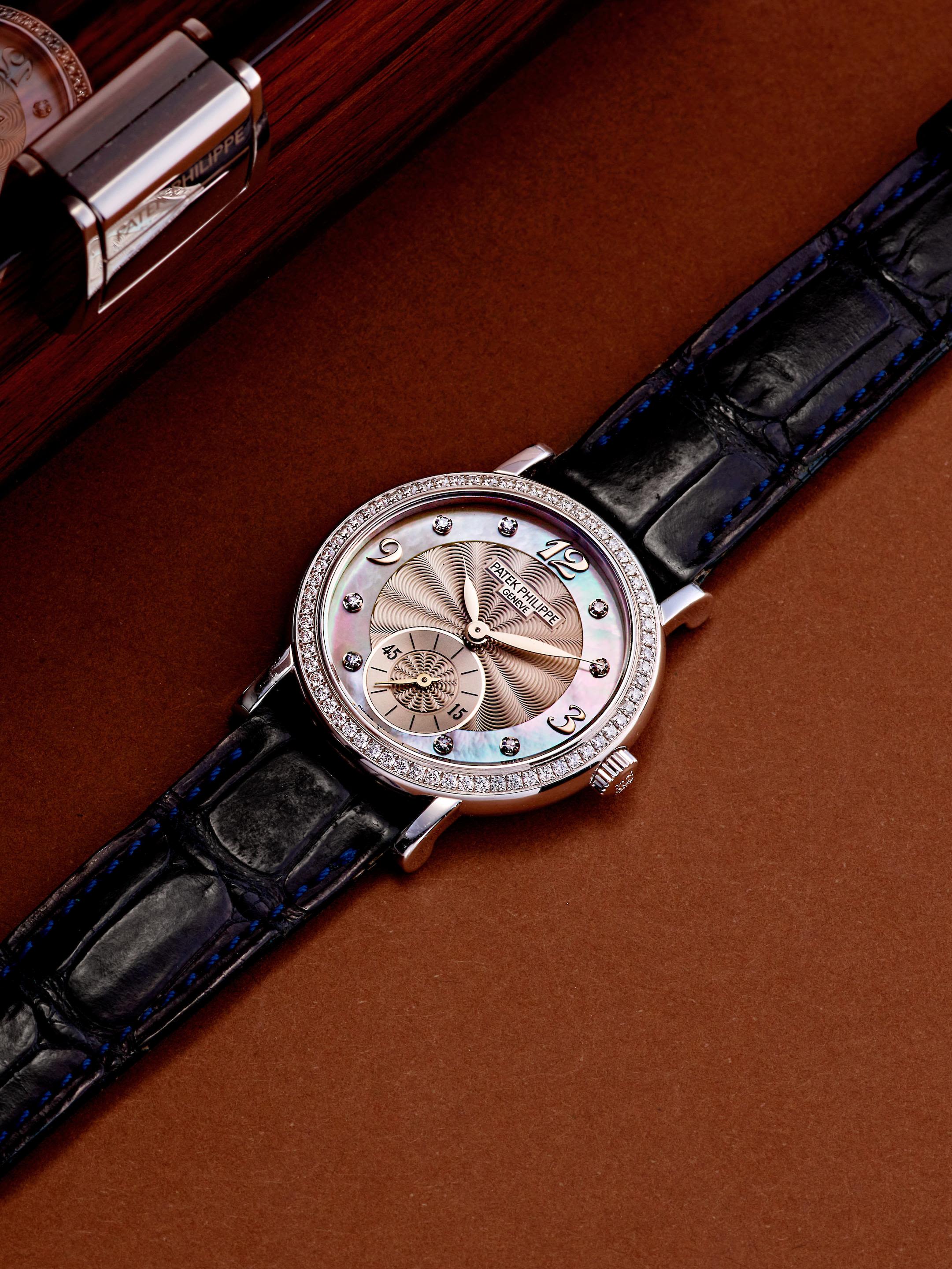
Lot 912. Patek Philippe | Calatrava, REF.4959G, A Fine Lady's White Gold And Diamond-Set Wristwatch With Mother-Of-Pearl Dial, CIRCA 2005. Sold for HK$102,400 inc. premium.
Lot 912. Patek Philippe | Calatrava, REF.4959G, A Fine Lady's White Gold And Diamond-Set Wristwatch With Mother-Of-Pearl Dial, CIRCA 2005. Sold for HK$102,400 inc. premium.
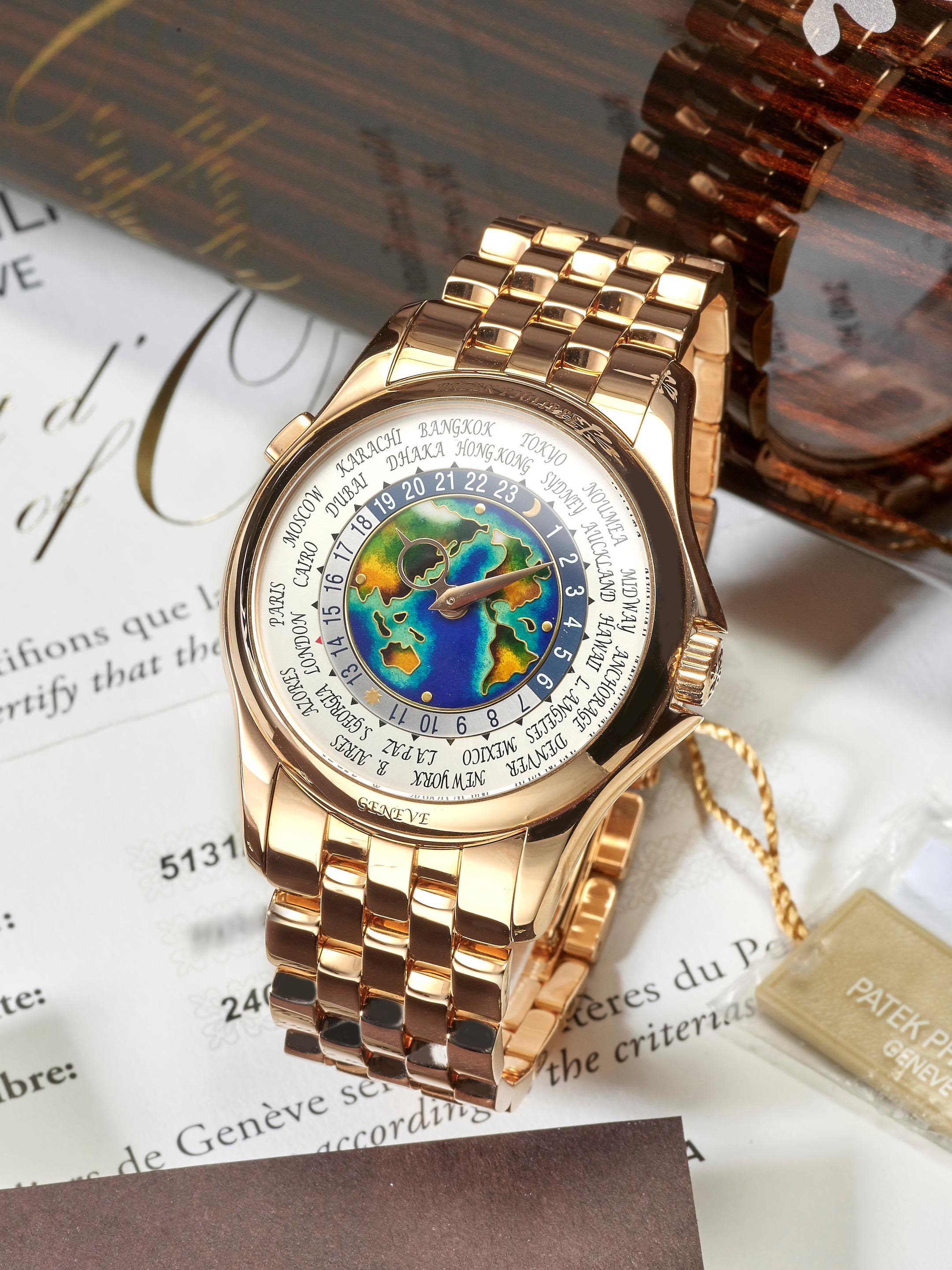
Lot 937. Patek Philippe | World Time, REF.5131/1R-011, A Possibly Unique New Old Stock Pink Gold World Time Bracelet Watch With Cloisonné Enamel Dial, CIRCA 2017.
Lot 937. Patek Philippe | World Time, REF.5131/1R-011, A Possibly Unique New Old Stock Pink Gold World Time Bracelet Watch With Cloisonné Enamel Dial, CIRCA 2017.
Stay updated with our Watches auctions
Create an account with Bonhams to follow your favourite collecting categories and get email alerts when new auctions are open for bidding.
For more from our global Watches team, follow @bonhamswatches on Instagram
 Built with Shorthand