
Collecting 101
5 Things to Know
About The Bloomsbury Group
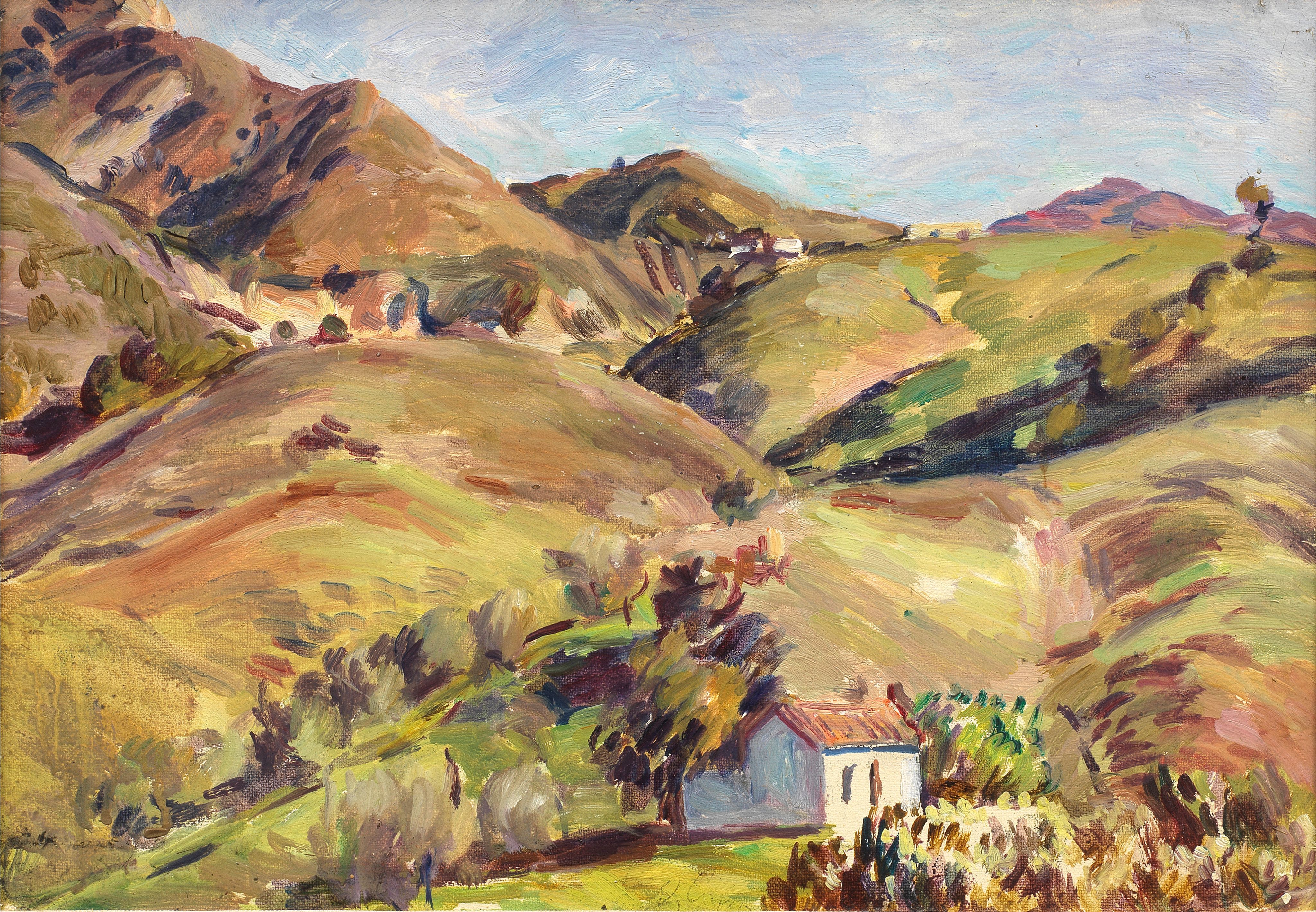

Between the early 1900s and 1930s, a group of artists, writers and intellectuals blazed a creative trail across the streets of central London. Members included key exponents of British modernism such as Vanessa Bell, Virginia Woolf, Duncan Grant and Roger Fry. Together they were called The Bloomsbury Group, and with their artistic flair, passionate friendships and thirst for experimentation, they fascinated and outraged the British public in equal measure.
Ahead of our dedicated Bloomsbury Group online sale taking place in April 2024, we learn more about this fascinating group, who, according to the writer Dorothy Parker, “lived in squares, painted in circles, and loved in triangles”.
Thinking of selling in this auction?
Submit an item for a free and confidential valuation via our sell hub.

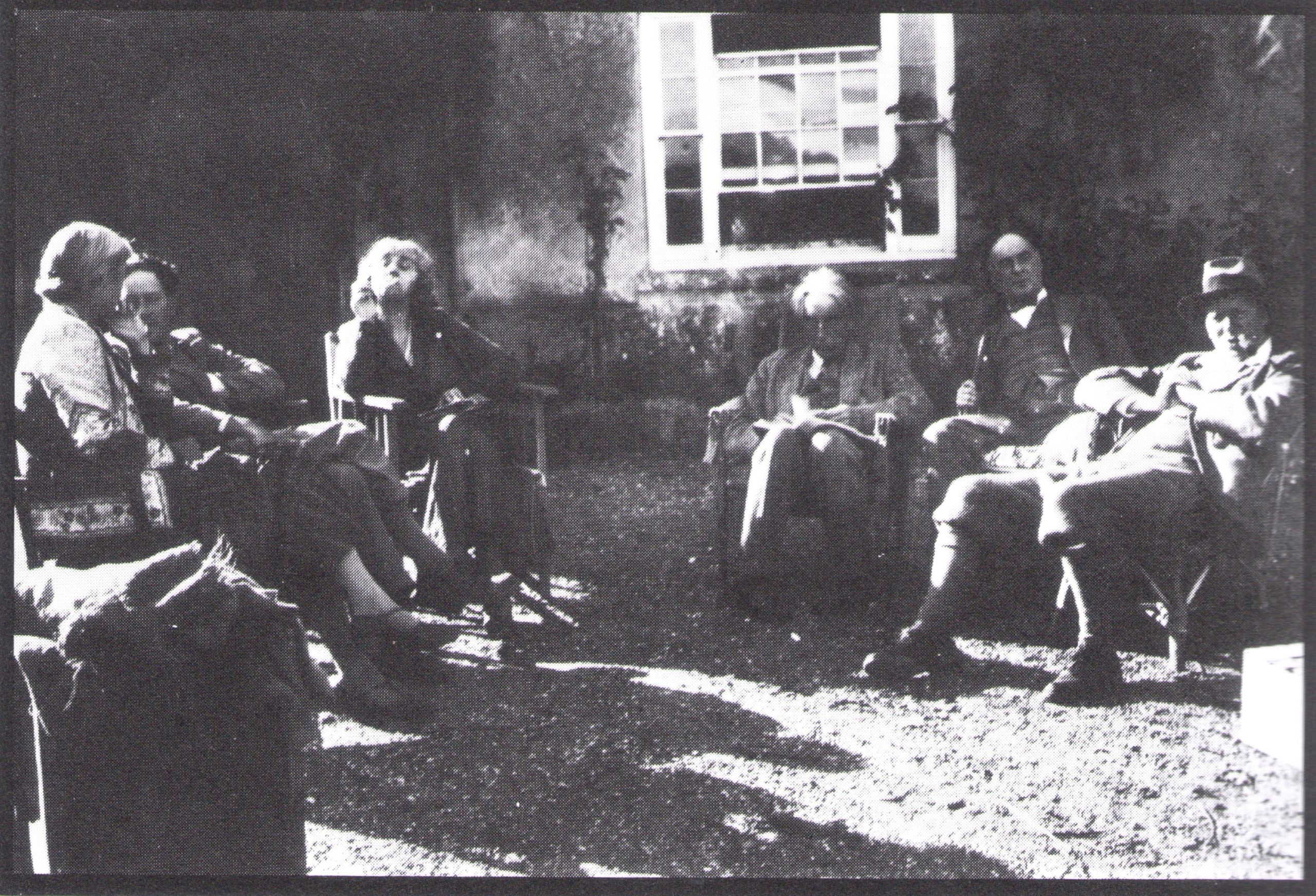
Black and white negative of a seated group on the terrace in front of the house at Charleston, Firle, Sussex, 1933 © Tate | From left to right: Vanessa Bell, Duncan Grant, Molly McCarthy, Roger Fry, Desmond MacCarthy and Clive Bell
Black and white negative of a seated group on the terrace in front of the house at Charleston, Firle, Sussex, 1933 © Tate | From left to right: Vanessa Bell, Duncan Grant, Molly McCarthy, Roger Fry, Desmond MacCarthy and Clive Bell
1.
Origins
The Bloomsbury Group began taking shape around 1905, when a cluster of artists and intellectuals started to meet at 46 Gordon Square, the London home of the painter Vanessa Bell, her sister, the writer Virginia Woolf, and their brothers, Thoby and Adrian Stephen. This gathering of minds generated a lively exchange of ideas and creativity underpinned by their friendships.
The set, known for their avant-garde thinking and progressively liberal stances towards politics and sexuality, was in fact divided into two subgroups. The visual artists got together on Fridays to talk about their work, discuss the coming and goings of the international art scene, and organise exhibitions at small London galleries such as the Baillie and the Alpine Club Gallery. This group included Bell and her friends from art school, as well as Duncan Grant, Roger Fry and the art critic Clive Bell, who married Vanessa in 1907.
Meanwhile, the group of writers met on Thursdays. Members of this sub-set included the Woolfs (Virginia and her husband, Leonard), E. M. Forster, Lytton Strachey and the economist John Maynard Keynes.
As an informal collective, there were several less frequent members who formed the larger Bloomsbury group, including the artists Dora Carrington and Simon Albert Bussy, as well as psychoanalysts James and Alix Strachey.

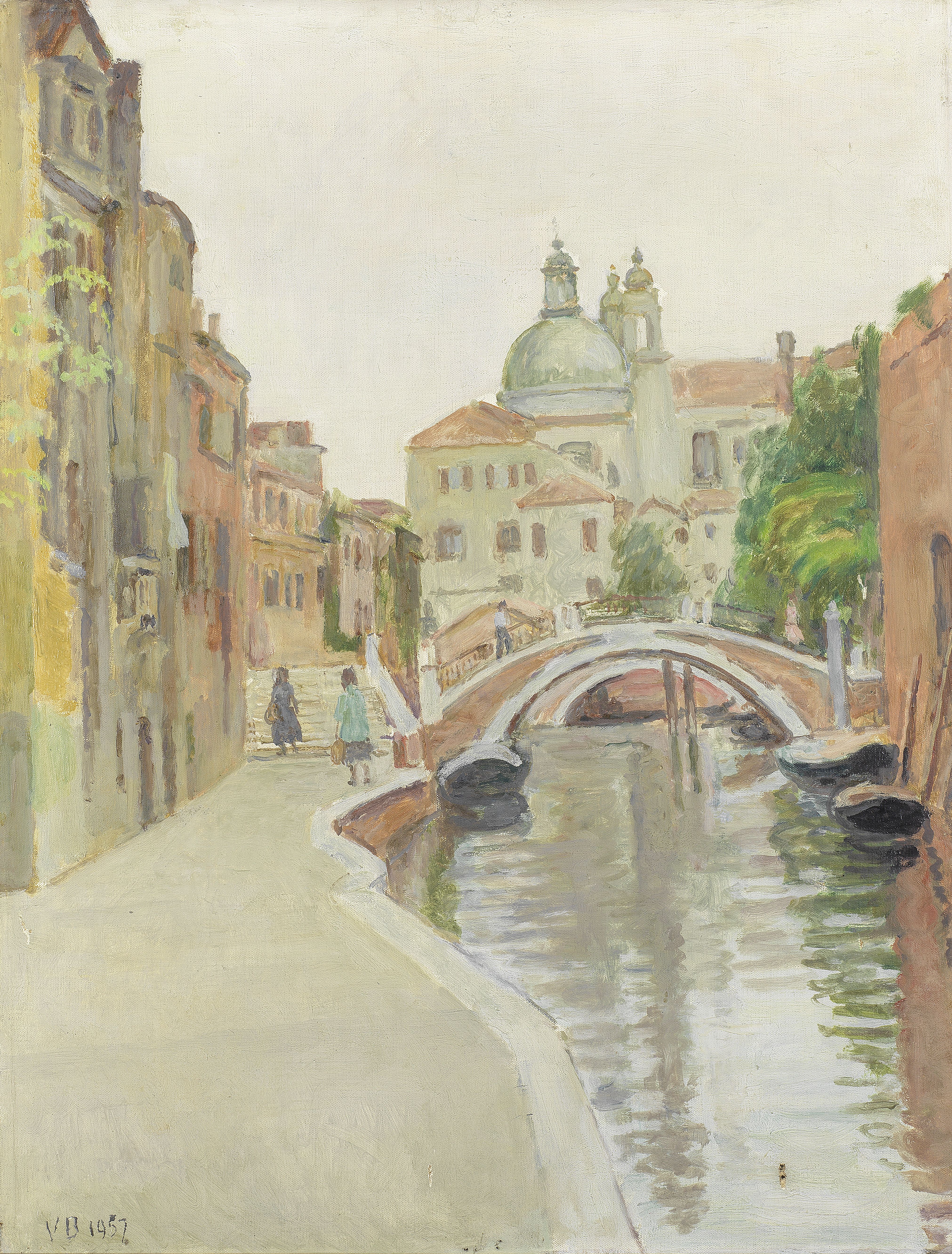
Vanessa Bell (British, 1879-1961), Venice. Estimate: £8,000 - £12,000.
Duncan Grant (1885-1978), Dancers, 1912. Estimate: £120,000 - £180,000. Offered in Modern British Art, 22 November 2023, London, New Bond Street
Stay updated with our auctions. Create an account with Bonhams to follow your favourite collecting categories and get email alerts when new auctions are open for bidding. Register now
2.
Collaboration and Cross-Influence
The artists of the group had a playful approach to painting. They often chose to tackle the same subjects, which allowed them to compare the different modes and sensibilities each brought to the canvas. They also used art to explore their friendships and relationships through loving and well-observed portraits.
They often collaborated on each other’s works, challenging the notion of the individualistic artist. The seven murals for the dining room of the Borough Polytechnic in South London (now South Bank University) are a fantastic example. Roger Fry received the commission in 1911, taking the concept of 'London on Holiday' as a starting point. Depicting leisurely scenes in London such as swimming in the Serpentine Lake and playing football in Hyde Park, the oil on canvas murals were painted by Fry alongside Duncan Grant, Bernard Adeney, Frederick Etchells, Macdonald Gill and William Rutherston. They are currently housed in the Tate collection.

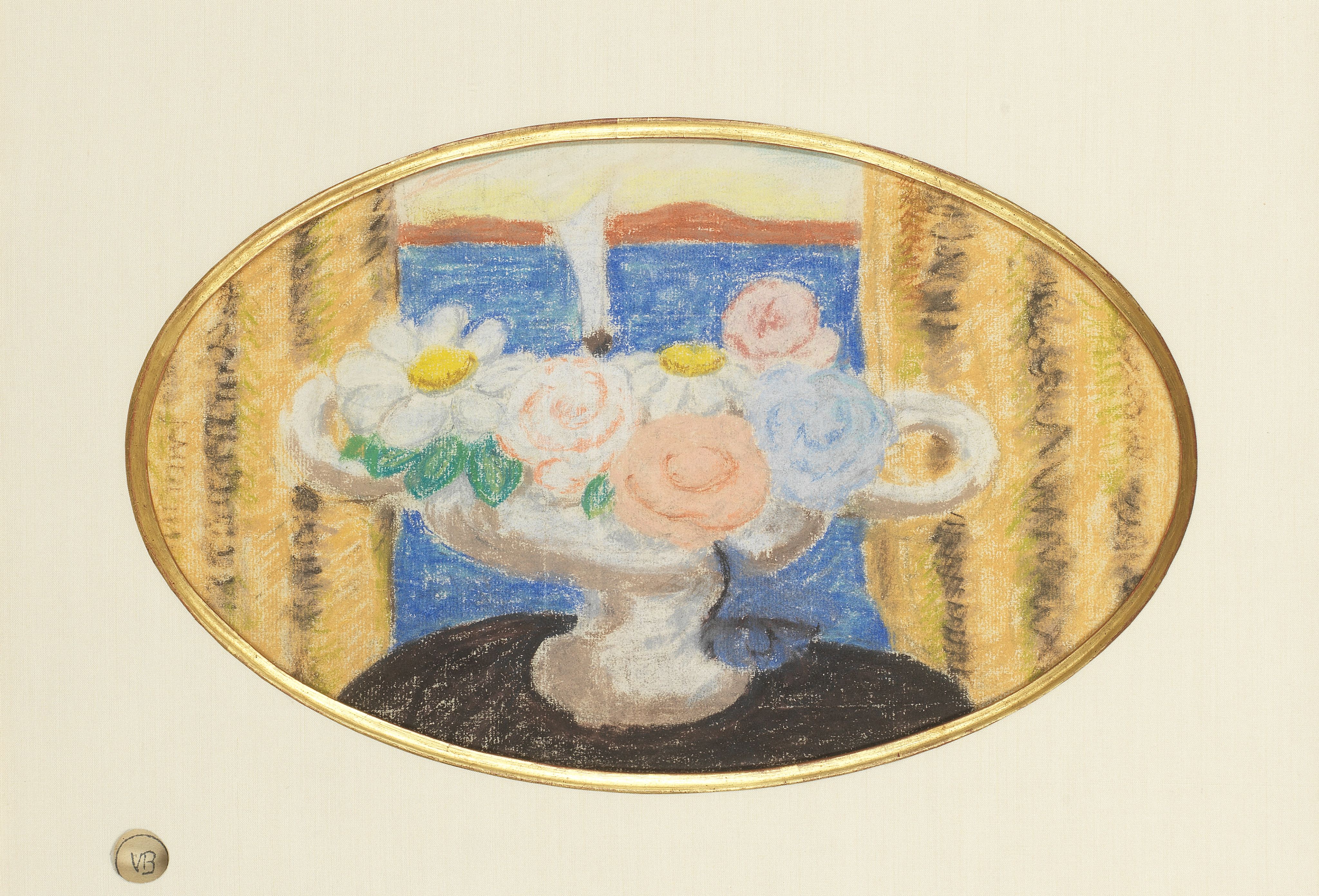
Vanessa Bell (British, 1879-1961), Flowers on a Tabletop by a Window. Estimate: £4,000 - £6,000.
Duncan Grant (1885-1978), Still Life, circa 1917-1918. Estimate: £20,000 - £30,000. Offered in Modern British Art, 22 November 2023, London, New Bond Street
3.
Abstraction
In the years preceding the First World War, abstraction was gaining traction as one of the most exciting styles of the avant-garde. The Bloomsbury artists, who championed modernism in the UK, were quick to adopt the style and begin experimenting with more abstract shapes, focusing their efforts on the idea of 'form over content'.
In this they were influenced by the latest European movements such as Cubism, whose foremost proponents included Picasso, Jean Cocteau and the music composer Eric Satie. Post-Impressionism (a term, in fact, coined by Roger Fry) was particularly influential for the Bloomsbury Group. Fry organised the Second Post-Impressionist Exhibition at the Grafton Galleries in London in 1912, which introduced the work of Picasso, Matisse, Braque and Cézanne to the British public, juxtaposing their work with paintings by Fry himself, Vanessa Bell, Duncan Grant and Wyndham Lewis. Dancers by Duncan Grant, which sold for £216,300 this November, was first exhibited in this important exhibition where it was acquired by Bloomsbury associate Hilton Young.
The catalogue of the exhibition featured an essay by Clive Bell titled The English Group in which he introduced his theory of 'significant form', which he defined as combinations of lines, colours, and forms 'that stir our aesthetic emotions'.

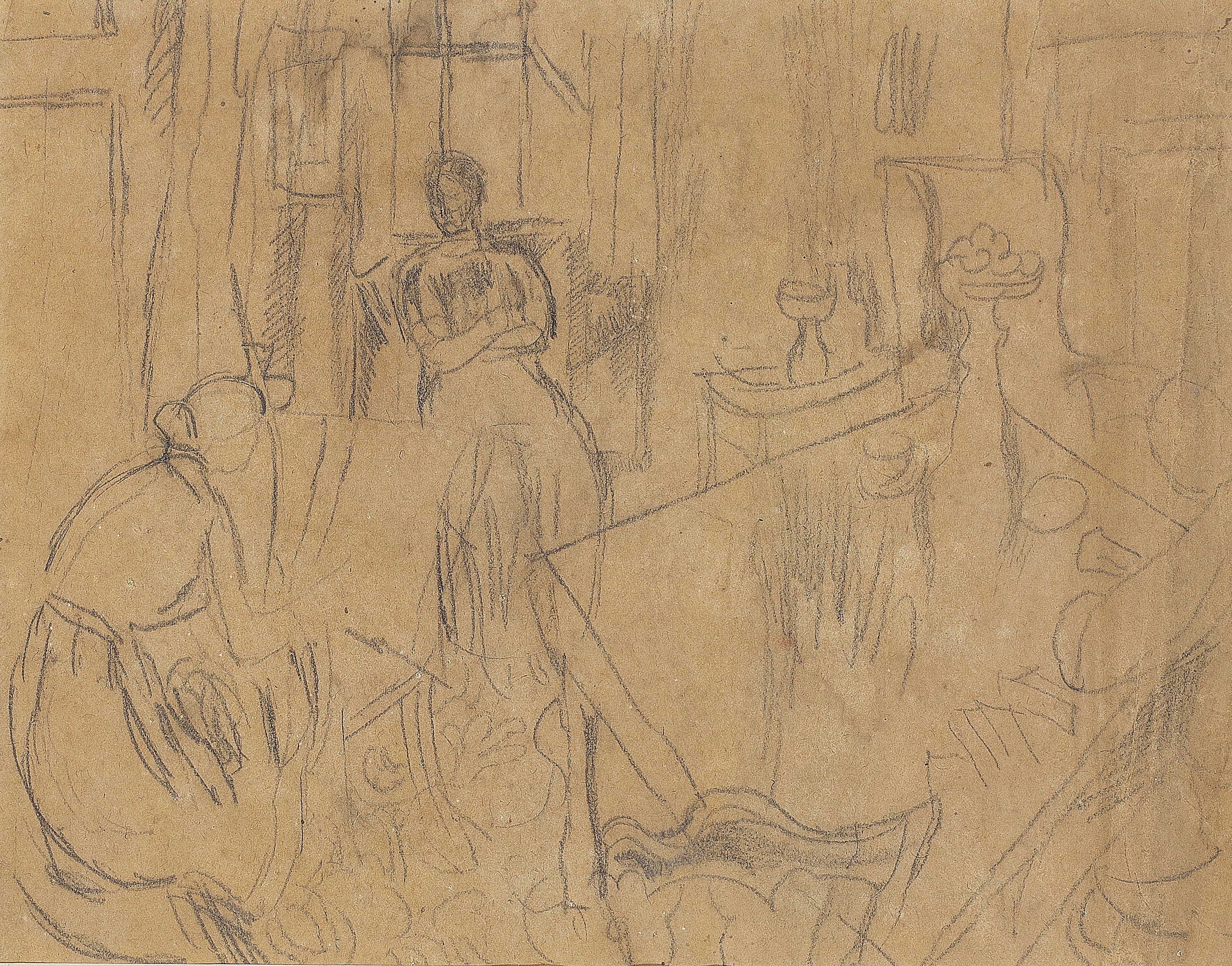
Duncan Grant (British, 1885-1978). Estimated: £1,000 - £1,500.
Duncan Grant (1885-1978), Still life with Apples and Decanter, 1948. Estimate: £12,000 - £18,000. Offered in Modern British Art, 22 November 2023, London, New Bond Street
4.
Decoration
These were artists not afraid of the adjective “decorative” - on the contrary, decoration was an important aspect of their work. Vanessa Bell often painted on fabrics and furniture, and her cover designs for her sister’s books are widely known and loved, from To the Lighthouse to Mrs Dalloway. Bell also designed tiles for King’s College Garden Hostel, while Duncan Grant designed ceramics, textiles and theatrical sets.
The most significant decorative enterprise to emerge from the group, however, was the Omega Workshops, kickstarted in 1913 by Roger Fry with Bell and Grant. Their aim was to create beautiful and functional objects that dissolved the boundaries between arts and crafts. These were similar ideas to those championed by William Morris, although Fry was keen to focus on aesthetics rather than politics. The Workshops produced furniture and textiles, unsigned and marked only with the symbol Ω (the Greek letter omega), as proof of their collaborative attitude. Occasionally, some of these precious items come to the market: in 2014, Bonhams London sold a group of Omega Workshop original woodcut prints for £4,000.

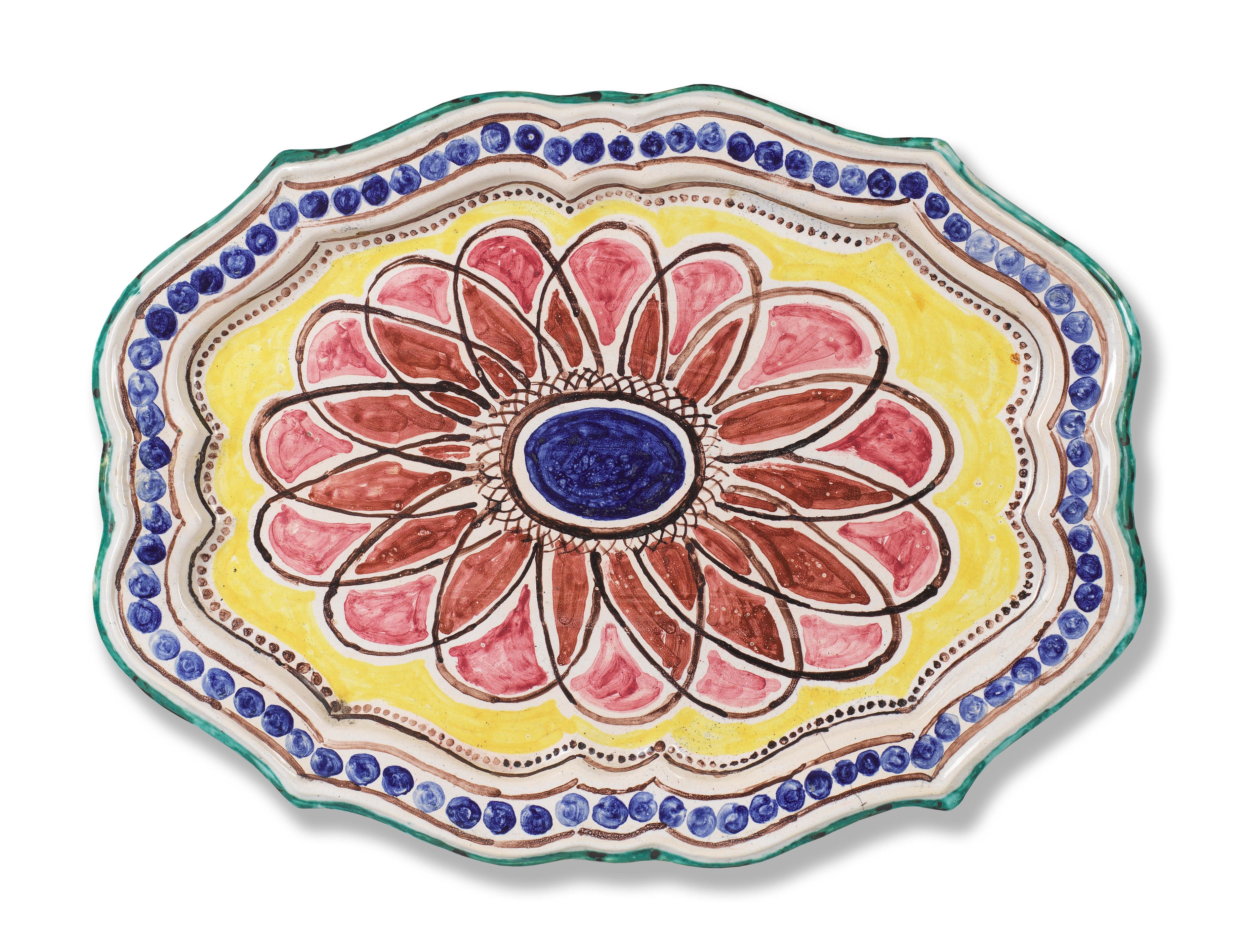
Phyllis Keyes (British, 1881-1968) and Vanessa Bell (British, 1879-1961). Estimate: £1,500 - £2,000.
Vanessa Bell (1879-1961), Turkish Box, 1934. Estimate: £20,000 - £30,000. Offered in Modern British Art, 22 November 2023, London, New Bond Street
5.
On the Market
The varied production of the Bloomsbury artists can be found in collections of major international museums. The Tate Gallery owns a number of works by Vanessa Bell, Duncan Grant, Clive Bell and Roger Fry, while the Victoria & Albert Museum holds an important array of decorative works by members of the group, from furniture pieces to tiles.
The lives and work of the Bloomsbury Set have captured the imagination of art lovers for decades, and the fascination they exert seems to be only increasing. This can be seen in the rising prices that their pieces have fetched in recent sales; in July 2020, Bonhams London sold Roger Fry’s 1911 portrait of E. M. Forster for just over £325,000, setting a world record for the artist. In that same year, a rare self-portrait by Vanessa Bell sold for £56,312.50, well above its estimate of £20,000 - 30,000. More recently, in November 2022, Duncan Grant's portrait Vanessa Bell in a Yellow Shawl, sold for £327,900, breaking the record for any of the Bloomsbury artists at auction.
Yet the multifaceted output of the group means there’s a wide range of works both in terms of media and price point, suitable for collectors with different interests or budgets. For example, buyers interested in Duncan Grant could begin with one of his evocative sketches which start at around £2,000, while his completed paintings can usually sell in the five figures.
For those wanting to know more about the Bloomsbury Group, a visit to Charleston - the modernist home and studio of Bell and Grant in Sussex - is a must, as is Amy Licence’s book Living in Squares, Loving in Triangles: The Lives and Loves of Virginia Woolf and the Bloomsbury Group.

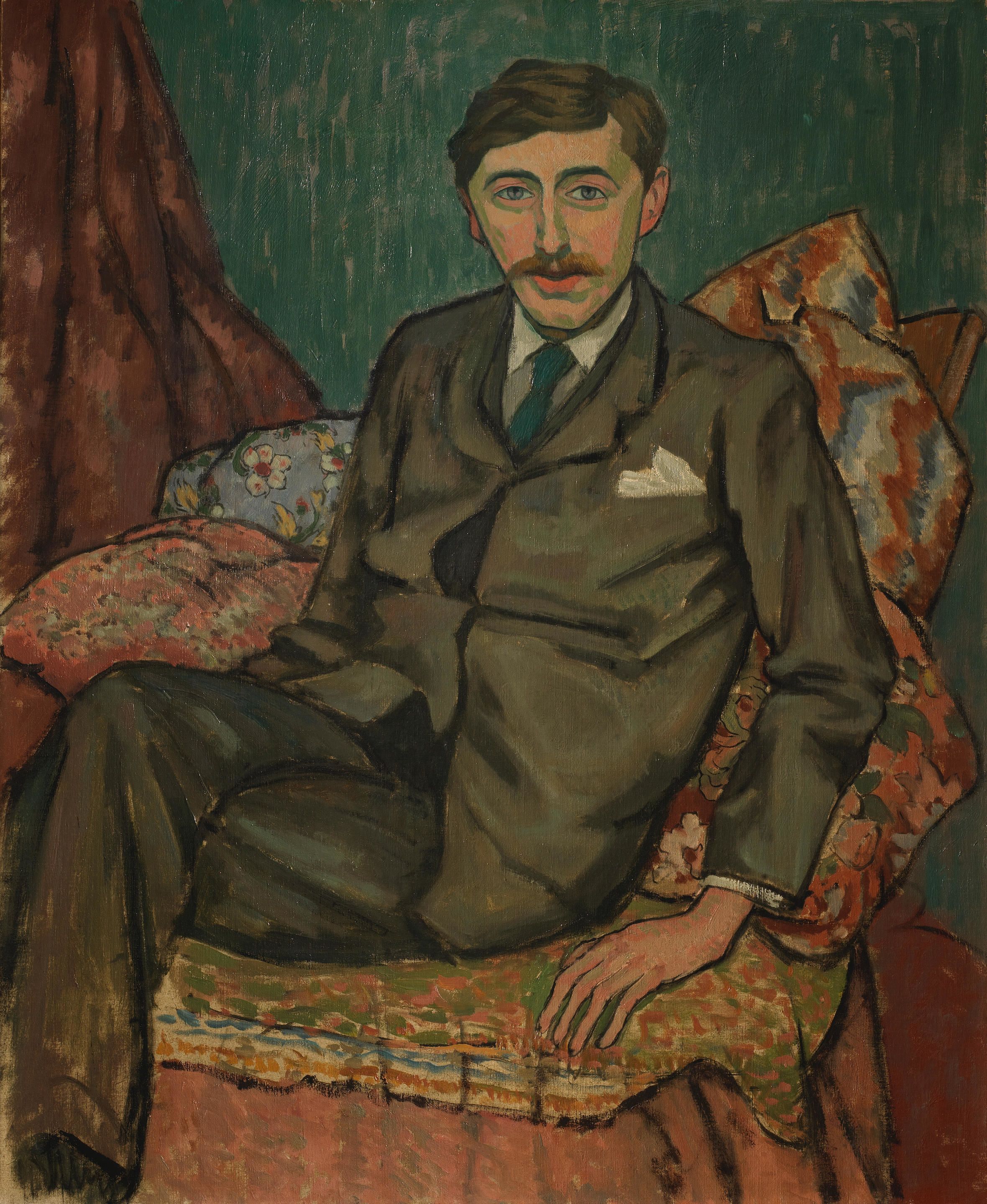
Roger Fry (1866-1934), Portrait of E.M. Forster, 1911. Sold for £325,062.50 in Modern British and Irish Art, 1 July 2020, London, New Bond Street
Roger Fry (1866-1934), Portrait of E.M. Forster, 1911. Sold for £325,062.50 in Modern British and Irish Art, 1 July 2020, London, New Bond Street
For the latest news and auction highlights, follow @bonhamsmodbrit on Instagram
 Built with Shorthand