
Collecting 101
4 Things to Know About Silver
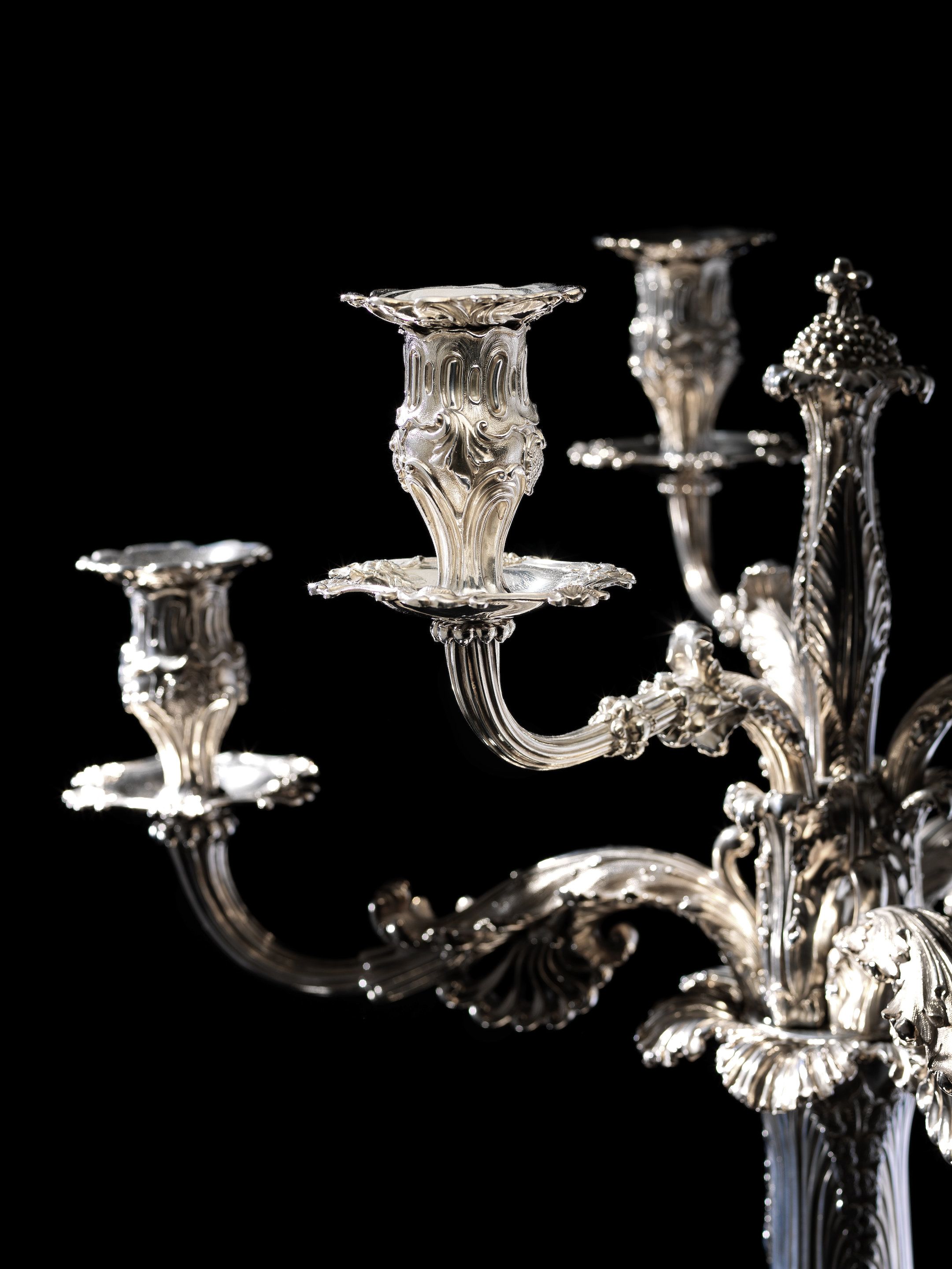

From Georgian cutlery to Art Deco candelabra, silver is an ubiquitous presence in the most elegant of interiors. Both functional and decorative, this beguiling material has been used by craftspeople for centuries to produce bespoke pieces and everyday objects.
Here, Ellis Finch, Head of the London Silver Department at Bonhams, gives us a brief introduction to the category and offers essential advice for new collectors, illustrated with lots offered in Silver and Objects of Vertu on 18 October in London, Knightsbridge.
1.
Hallmarks and Makers’ Marks
First introduced in Britain in the 14th century, the hallmark system is a way of denoting the purity of silver. The first hallmark was the leopard’s head which was used by the Goldsmiths’ Hall in London to show a piece was made in the city and was of sterling quality – which means that it was at least 92.5% silver by weight. In the US, it was common for silver to be marked with ‘sterling’ or ‘pure’ or with the number ‘925’ to denote the purity of the material, rather than a symbol.
The hallmark is usually accompanied by a letter or symbol which indicates the date of manufacture as well as a unique maker’s mark, which can give an enormous amount of information about a piece and help determine its value.
An 18th century Irish standard was declared for specific hallmarks on all Irish silver. Before 1923, Dublin had to use the same silver marking laws that England and Scotland were under. When the Free State was formed in 1922, the silver laws were able to be governed within Dublin. Even with this change, all silver crafted in Dublin continued to bear the town mark of a crowned harp.
"Silver has been skilfully crafted into numerous forms and objects. It can provide a tantalising link into history and can be admired for its functionality and design."

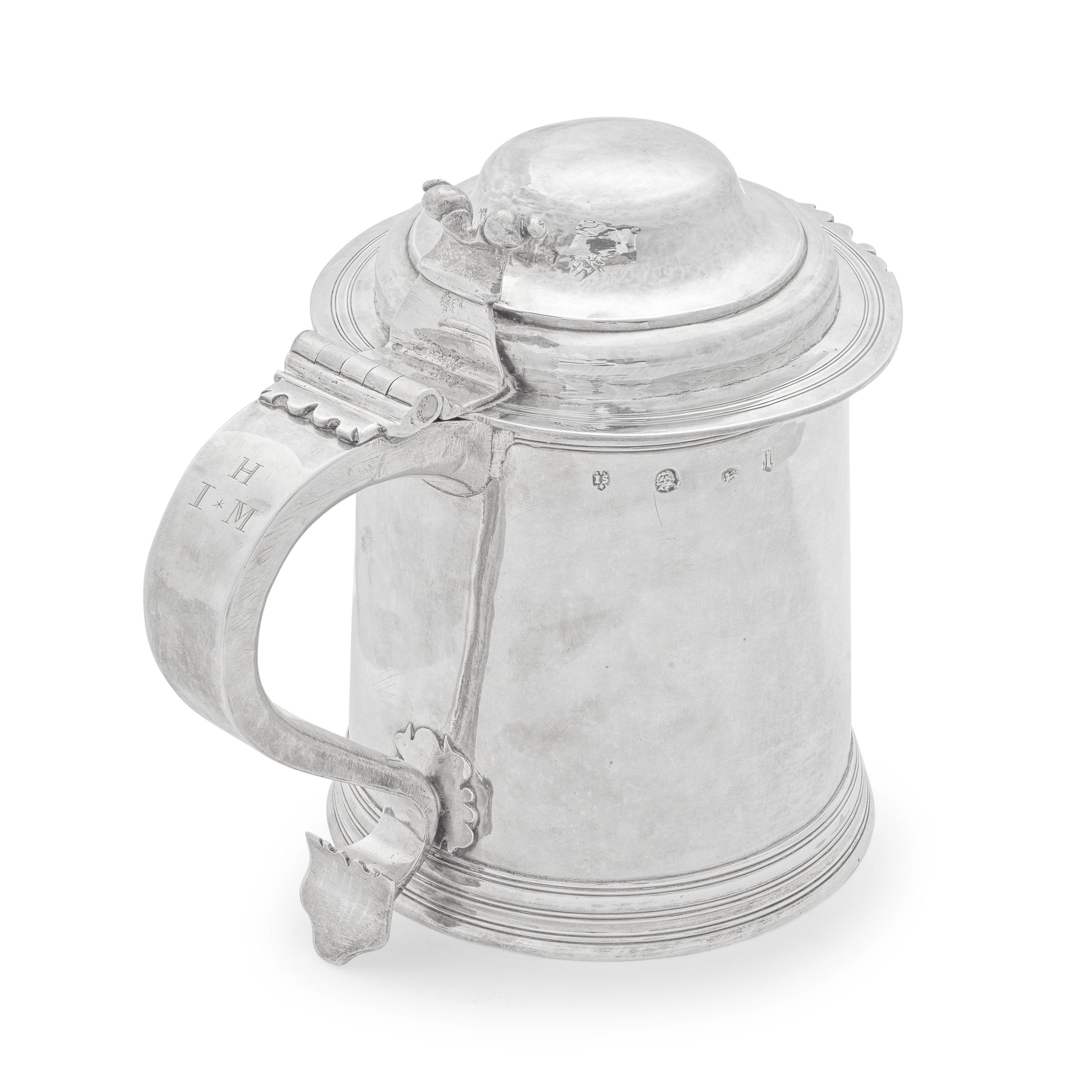
Lot 345. A William and Mary silver lidded tankard, maker's mark IS, London 1694. Estimate: £1,800 - £2,400.
Lot 345. A William and Mary silver lidded tankard, maker's mark IS, London 1694. Estimate: £1,800 - £2,400.
Stay updated with our Silver auctions. Sign up to receive your weekly newsletter of global auctions, stories and more from Bonhams and our sister companies. Subscribe now
2.
Form and Function: Period Style and Design
Prized for its versatility and hard-wearing qualities, silver has been used for functional objects for centuries. For those who could afford it, a whole table service – from cutlery to plates – could be commissioned in this precious material, along with wine coolers, candlesticks, soup tureens and salvers. However just because silver was functional did not mean that it had to be plain, which is evident in the workmanship displayed in the Paul Storr candelabrum on offer. As techniques and skills developed, makers such as Charles Frederick Hancock began creating more elaborate pieces which were distinguished by a higher level of detail and craftsmanship, and were not intended for everyday use.
Around the turn of the 20th century, there was also a renewed interest in the styles of the past. Across Europe, Revival styles dominated the decorative arts with many craftsmen recreating centuries of designs for a new generation of collectors. There really is a style for every taste, from maximalism to minimalism, silver really does have it all.

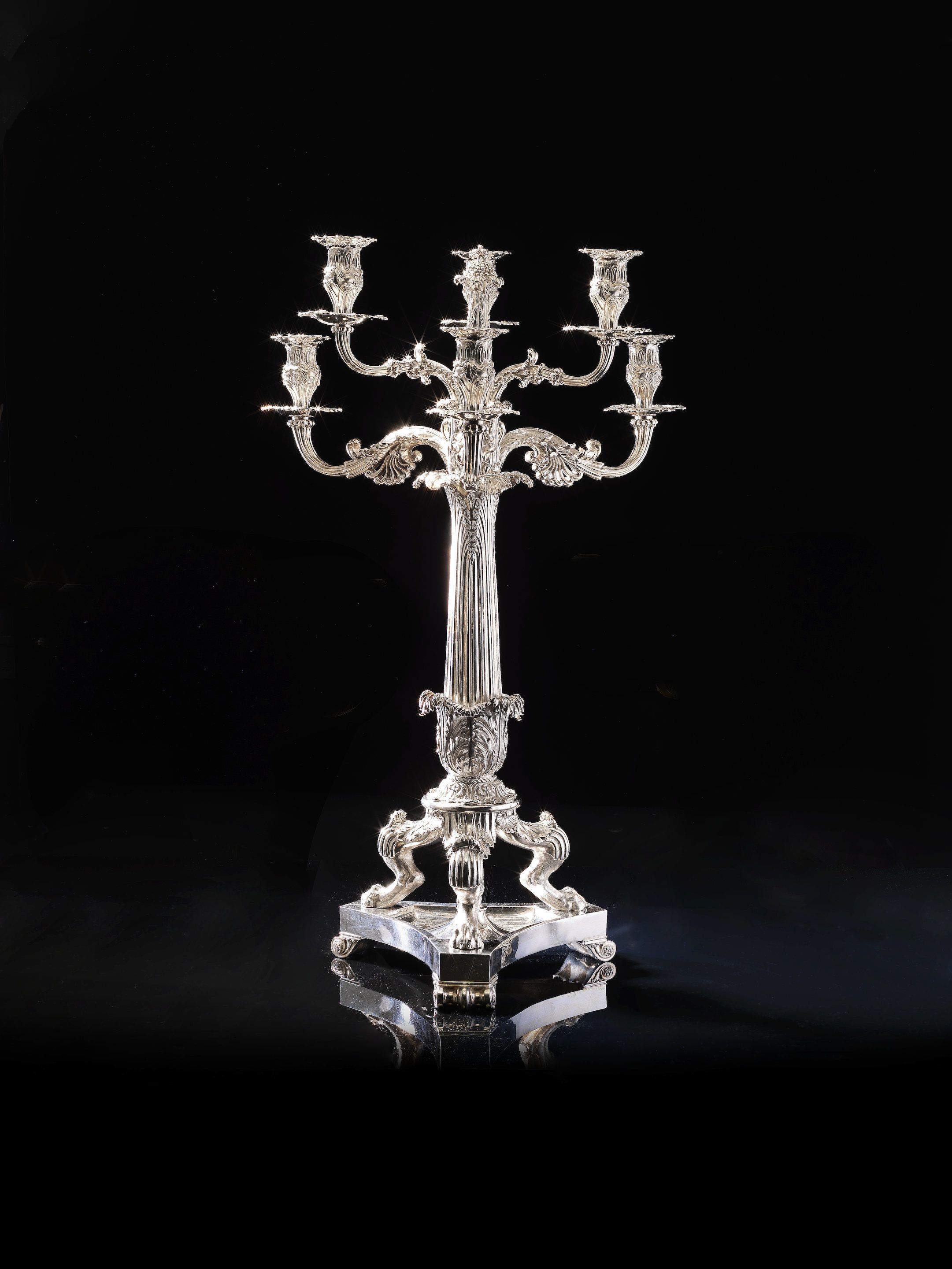
Lot 323. Paul Storr: A George IV large silver six-light candelabrum, London 1828, underside of base stamped 198. Estimate: £40,000 - £60,000.
Lot 323. Paul Storr: A George IV large silver six-light candelabrum, London 1828, underside of base stamped 198. Estimate: £40,000 - £60,000.
3.
Provenance
When considering the value of any antique, a specialist will take into account not just its design, age and material but also its provenance. Often a piece that has been specially commissioned by a significant figure, or been held in an important collection for many years, will achieve higher prices at auction. With silver, this provenance is often demarcated by an engraving which indicates the owner or donor.
As well as maker’s marks and inscriptions, some pieces of antique silver are also engraved with armorial crests and mottos belonging to the family who commissioned a piece or service. These phrases and heraldic marks are essential in tracing the history of an object. Not all silver will bear marks of provenance but most pieces will be accompanied by documents that can tell prospective collectors about their history.
It’s also important to note that hallmarks are not a guarantee of provenance, as these can be faked. If there are ever any doubts collectors should always reach out to a specialist. There may be other sources that confirm a piece’s history, such as lesser known markings, or archives that will contain photographs or records of original ownership. Collectors can be reassured when buying silver at auction as lots will always be accompanied by a full report on condition and provenance.

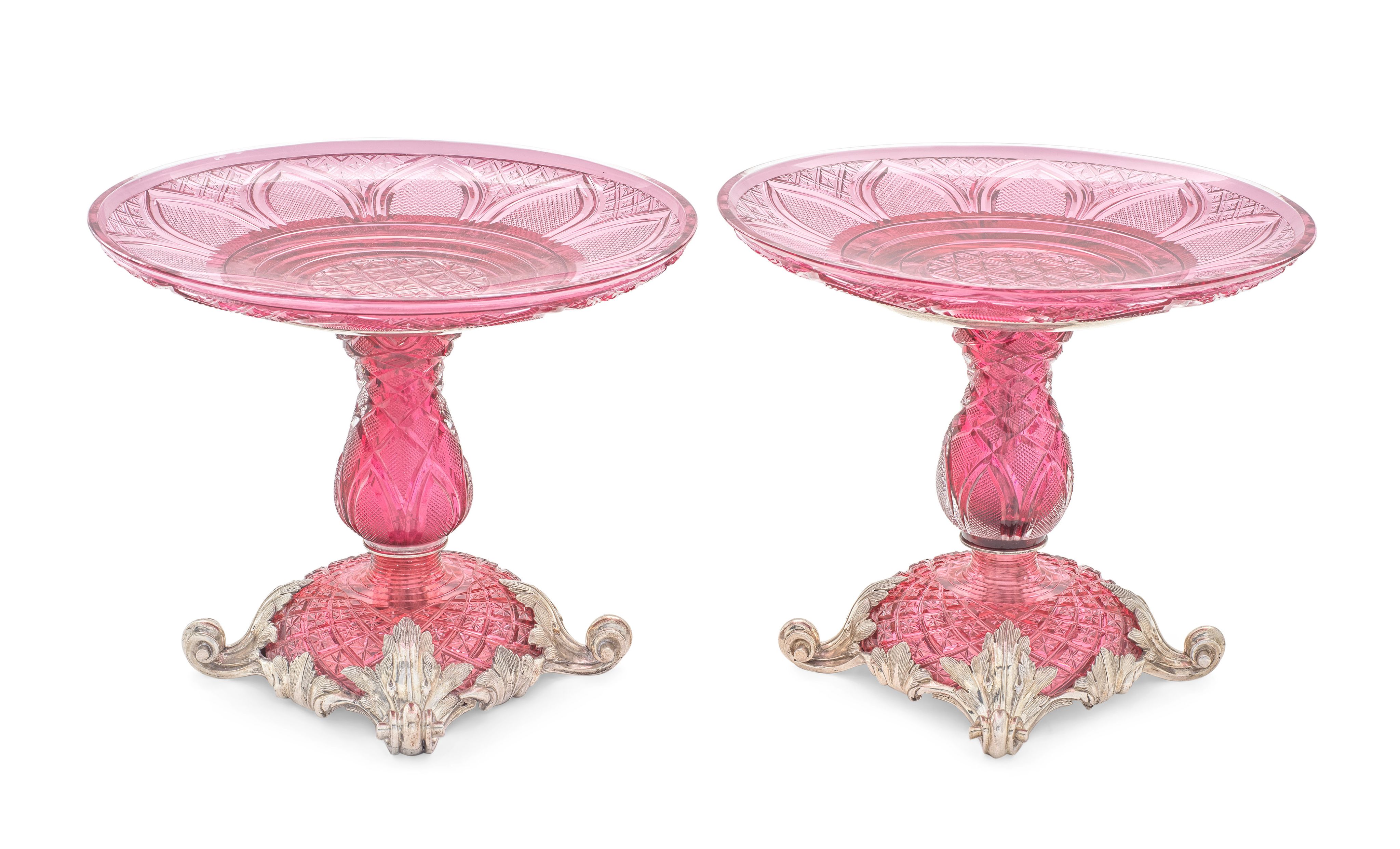
Lot 137. A pair of silver mounted ruby glass dessert tazzas from the dowry of Grand Duchess Olga Nikolaevna Romanova by Carl Johan Tegelsten, assay master Dmitry Ilyich Tverskoy, St Petersburg 1846. Estimate: £5,000 - £7,000.
Lot 137. A pair of silver mounted ruby glass dessert tazzas from the dowry of Grand Duchess Olga Nikolaevna Romanova by Carl Johan Tegelsten, assay master Dmitry Ilyich Tverskoy, St Petersburg 1846. Estimate: £5,000 - £7,000.
4.
On the Market
The market for silver is strong, though different time periods and styles tend to come in and out of fashion. In the past year we have seen a higher demand for silver from the late 19th century to the present day, especially for high quality and decorative pieces of English and American silver. Georgian silver is generally not as popular as it was 20 years ago, but it has started making a comeback over the last few years. Makers such as Paul Storr, Garrard’s, Cartier and Tiffany have maintained their popularity as they are synonymous with luxury – quality always sells!
Throughout the category, value is determined first and foremost by makers; those that are both well-known and rare command the highest prices. Secondly, decoration and skill have a significant impact on estimates as the market always favours quality. The level of precision and attention to detail are strong indicators of an artisan dedicated to their craft. Finally, as with jewellery, there is always an intrinsic value because the material itself is worth something independent of the design. Consequently, when the base price of silver as a metal is high, general household silver will bring higher prices.
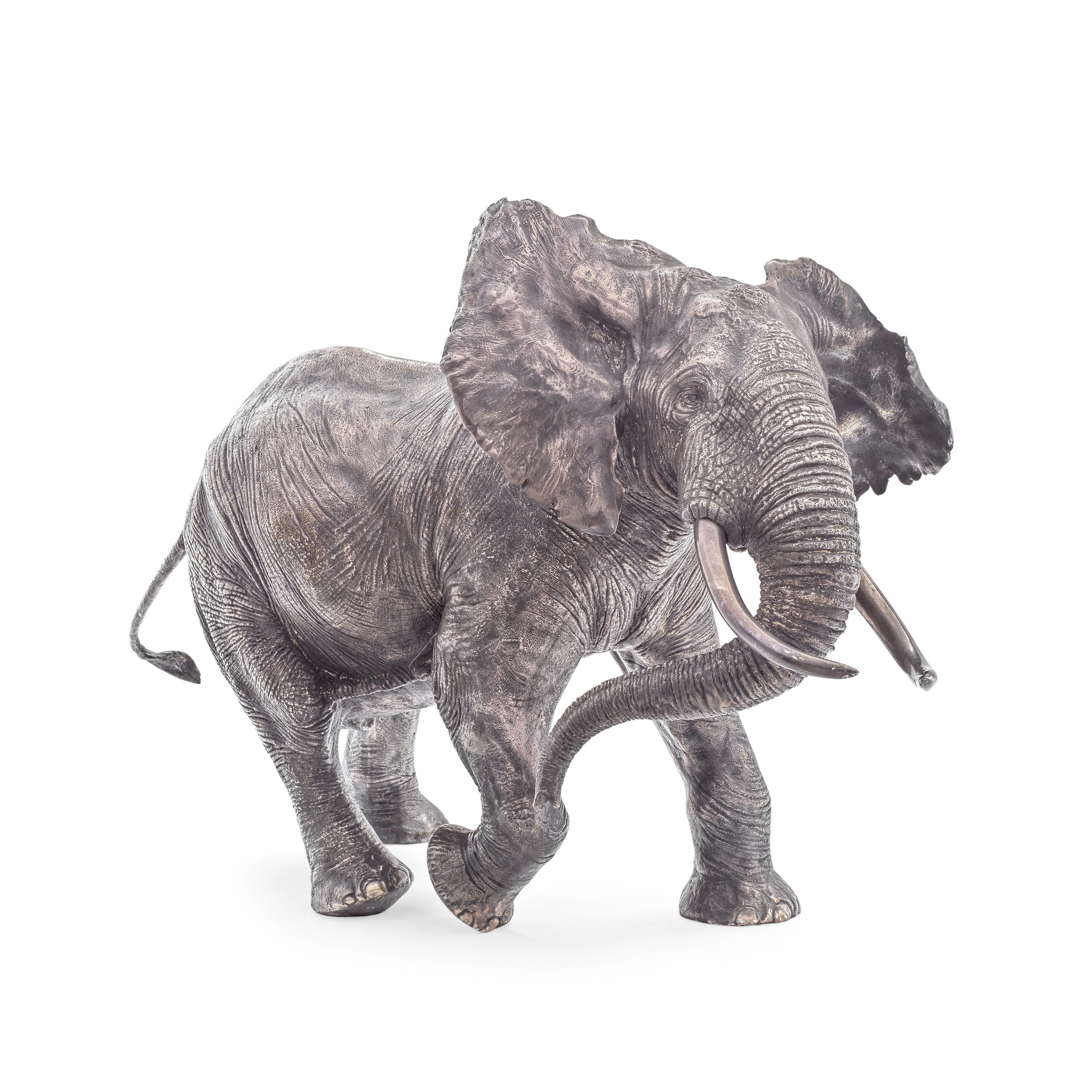
Lot 235. A monumental silver African bull elephant, designed and modelled by Victor Hayton for the World Wildlife Fund, maker's mark for Hamilton and Inches, Edinburgh 1997, signed 'Hayton', limited edition numbered 2 of 5, script '94 and additional mark. Estimate: £10,000-£15,000.
Lot 235. A monumental silver African bull elephant, designed and modelled by Victor Hayton for the World Wildlife Fund, maker's mark for Hamilton and Inches, Edinburgh 1997, signed 'Hayton', limited edition numbered 2 of 5, script '94 and additional mark. Estimate: £10,000-£15,000.
Browse all lots in our upcoming Silver and Objects of Vertu auction on 18 October.
 Built with Shorthand