
Brush with greatness
Who are the true radicals of contemporary Chinese art? The painters shaking up the noble tradition of working in ink, Michael Goedhuis tells Susan Moore
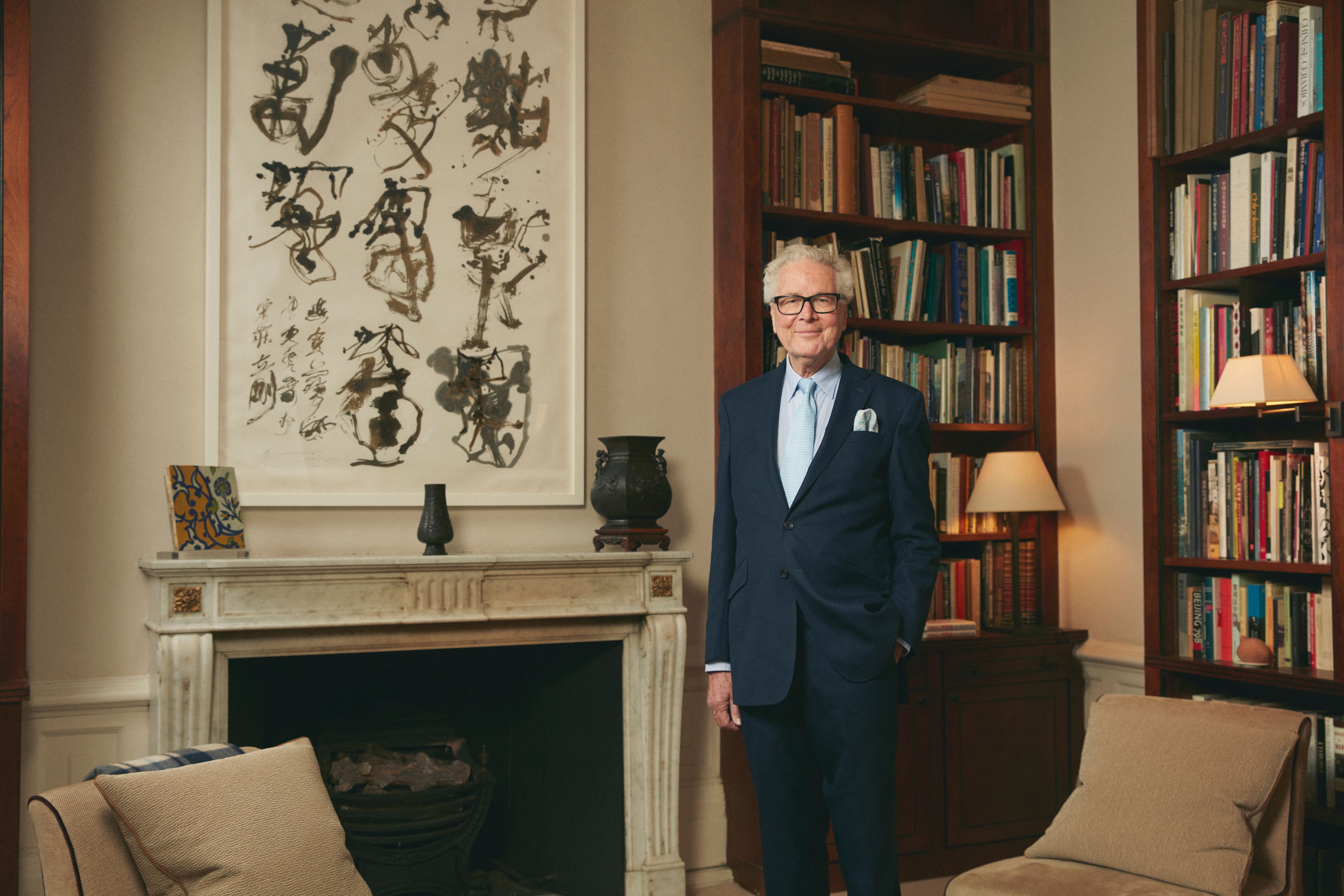

Michael Goedhuis has long been fascinated by contemporary Chinese ink painting. Perhaps this was inevitable. The Dutch-born, London-based private dealer has collected works on paper – Italian and French Old Master drawings – all his adult life. Moreover, after moving from investment banking into the art trade in 1975 – courtesy of Jacob Rothschild, who then owned leading London dealers Colnaghi – Goedhuis masterminded major sales of Persian, Mughal and Ottoman miniatures and manuscripts. All are arts of ink, pigment and brush. When Michael’s focus shifted further east to China and Japan at the end of the 1980s, bronze joined ink painting as a focal interest. Now Goedhuis is drawing from his substantial collection of contemporary Chinese ink paintings and antique bronzes to offer a selection in the Brush and Bronze sale at Bonhams in London in May.
‘Brush’ refers to a select group of Chinese ink paintings by some 20 or so key artists spanning the last four decades; ‘Bronze’ to what Goedhuis calls China’s second Bronze Age, the sculptures and vessels produced from the Song dynasty (960-1279) to the Qing (1644-1911). The two have more in common than one might expect. At the dealer’s London home and office where we meet, both surround us – in all their rich diversity.
Goedhuis himself is punctilious, promptly rising to his feet as I am ushered in. Cosmopolitan, cultivated, and well and widely educated, his courtesy and charm – like his immaculate tailoring – seem pure Old World. Yet the perfect manners belie an entrepreneurial instinct that has led Goedhuis to a career seeking out and promoting the overlooked and undervalued. In 2001, he staged what he describes as the first major show of Chinese contemporary art and design in the West: ‘China without Borders: Chinese Contemporary Art’, which drew 2,800 visitors to the opening night at Sotheby’s New York. On behalf of four investors, he went on to amass, exhibit and publish a second significant group of more than 250 works, the Estella Collection – he was reading Charles Dickens’ Great Expectations at the time of its inception.
Both exhibitions included dissident artists active in or outside China. They were artists who had embraced the Western idioms of oil painting, video, conceptual and performance art, Ai Weiwei, Cai Guo-Qiang, Zeng Fanzhi and Zhang Xiaogang among them. “These overtly political artists were heralded as brave and subversive, but their work was primarily intended for a Western audience and art market,” Goedhuis explains. “It is the progressive ink painters who are truly revolutionary and culturally subversive. They are the most idealistic and intellectually daring of all contemporary Chinese artists.”

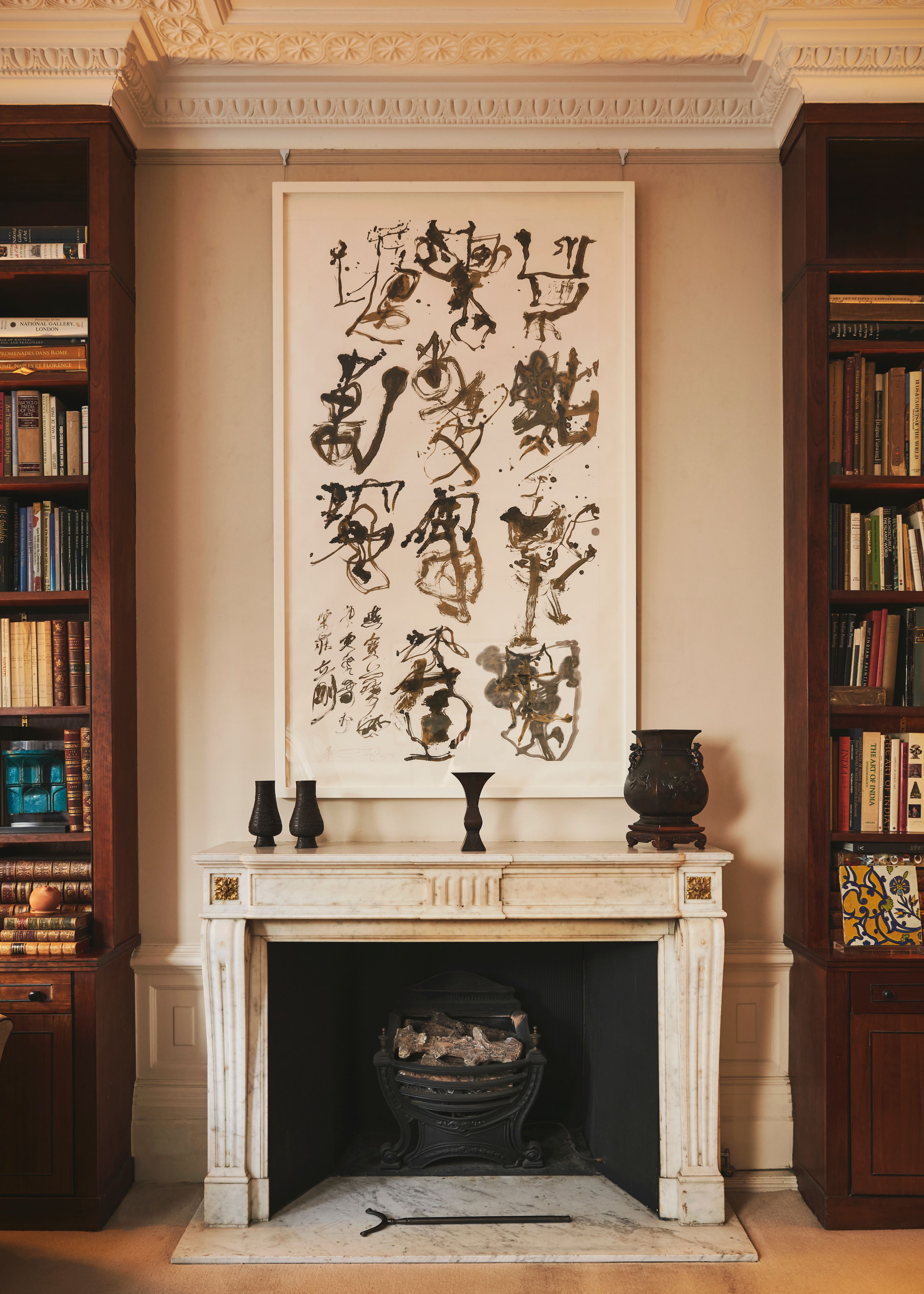
Hanging over the mantelpiece: Wei Ligang (born 1964) Chinese Poem-Bronze Script, 2010 Ink and acrylic on paper 70¾ x 37¾in (180 x 96cm) Estimate: £8,000 - 10,000 ($10,000 - 13,000)
Hanging over the mantelpiece: Wei Ligang (born 1964) Chinese Poem-Bronze Script, 2010 Ink and acrylic on paper 70¾ x 37¾in (180 x 96cm) Estimate: £8,000 - 10,000 ($10,000 - 13,000)


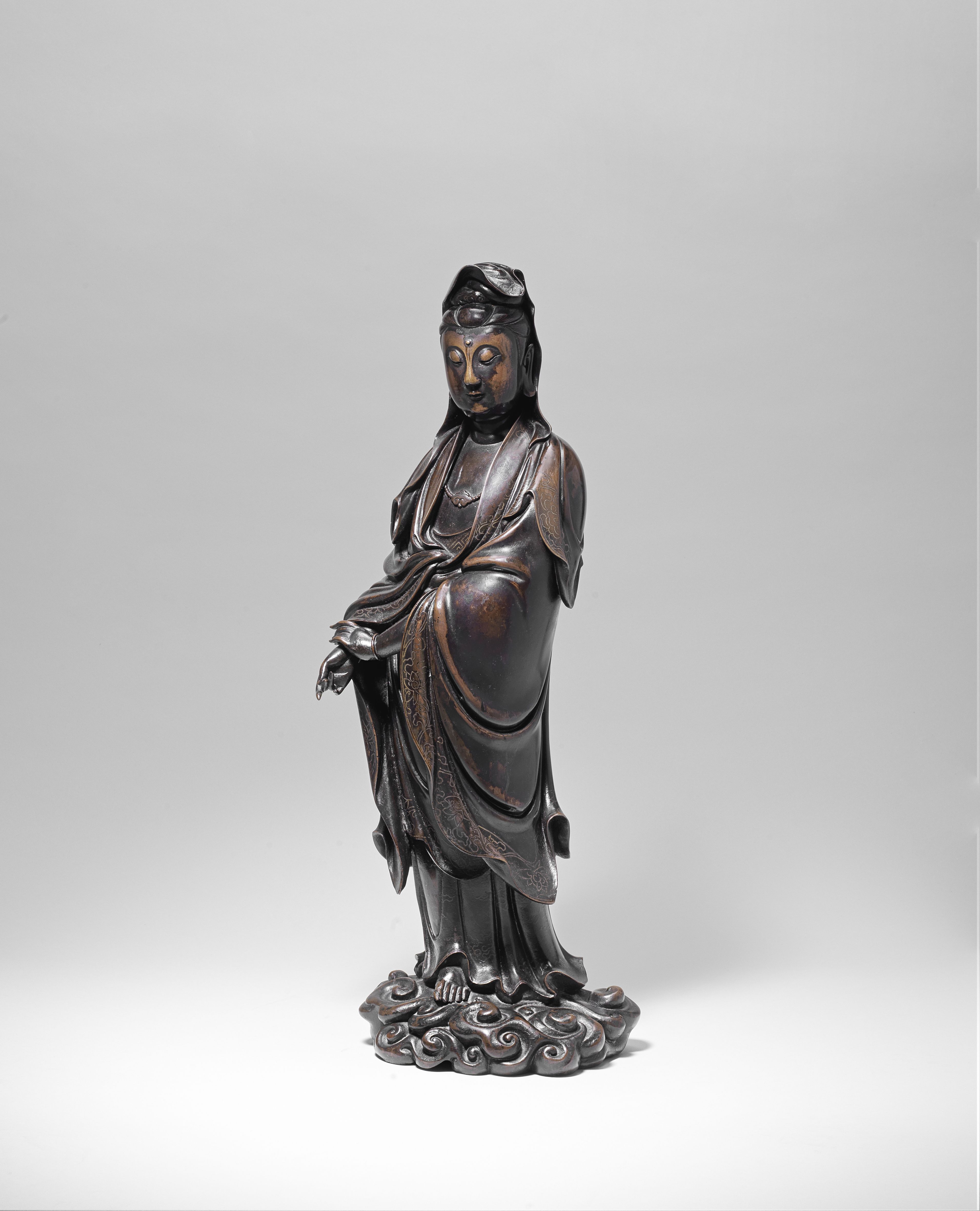
A rare and important silver-inlaid bronze figure of Guanyin He Chaozong four-character mark, Ming Dynasty 60cm (23½in) high Estimate: £100,000 - 200,000 ($120,000 - 250,000)
A rare and important silver-inlaid bronze figure of Guanyin He Chaozong four-character mark, Ming Dynasty 60cm (23½in) high Estimate: £100,000 - 200,000 ($120,000 - 250,000)
He sees these painters as the successors to the ‘literati’, the gentleman-scholars who, for centuries, practised the pre-eminent Chinese art of calligraphy, and its associated arts of painting, poetry and music, as a means of self-expression and cultivation. “Just as Picasso, Braque and Cézanne studied the Old Masters in order to create a new pictorial language in the early 20th century, these ink painters connected with literati culture to formulate fresh, new work that is relevant to, and meaningful for, the world of today,” he explains.
Some, like fastidious Liu Dan, take traditional motifs, carefully source the highest-quality traditional materials, then use them to explode the boundaries of Chinese ink painting: his expressively gnarled tree in Old Cypress from the Forbidden City (2007) is isolated from its landscape for scrutiny in obsessive and painstaking detail.
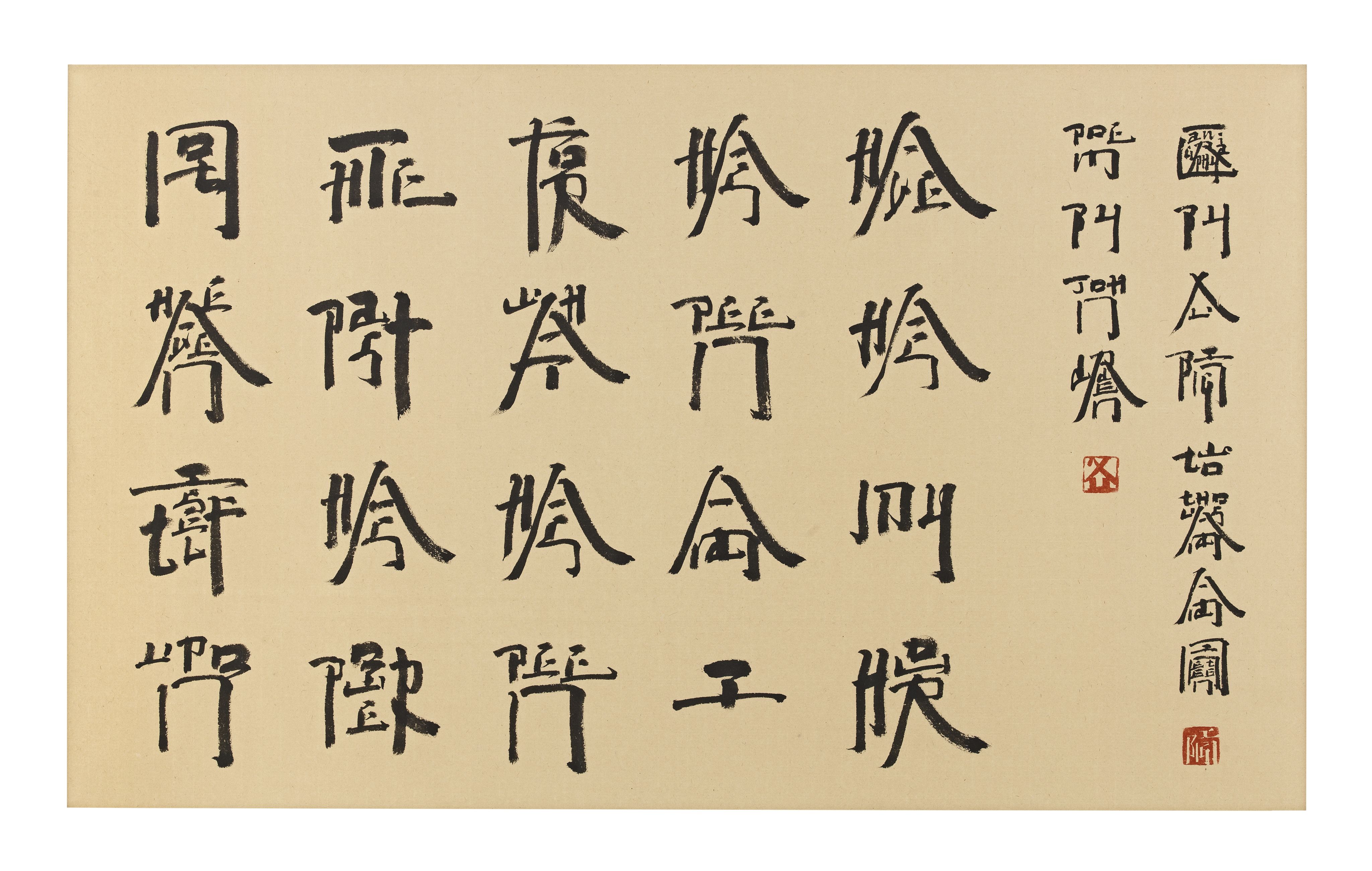
Li Huayi’s meditative misty mountains, Landscape (2010-11), draw on Northern Song dynasty paintings but emerge out of the serendipity of splashed ink. The iconoclastic Wei Ligang similarly plays with traditional calligraphy, abstracting characters to break the structures of text, with Chinese Poem-Bronze Script (2020) introducing colour and figurative detail.
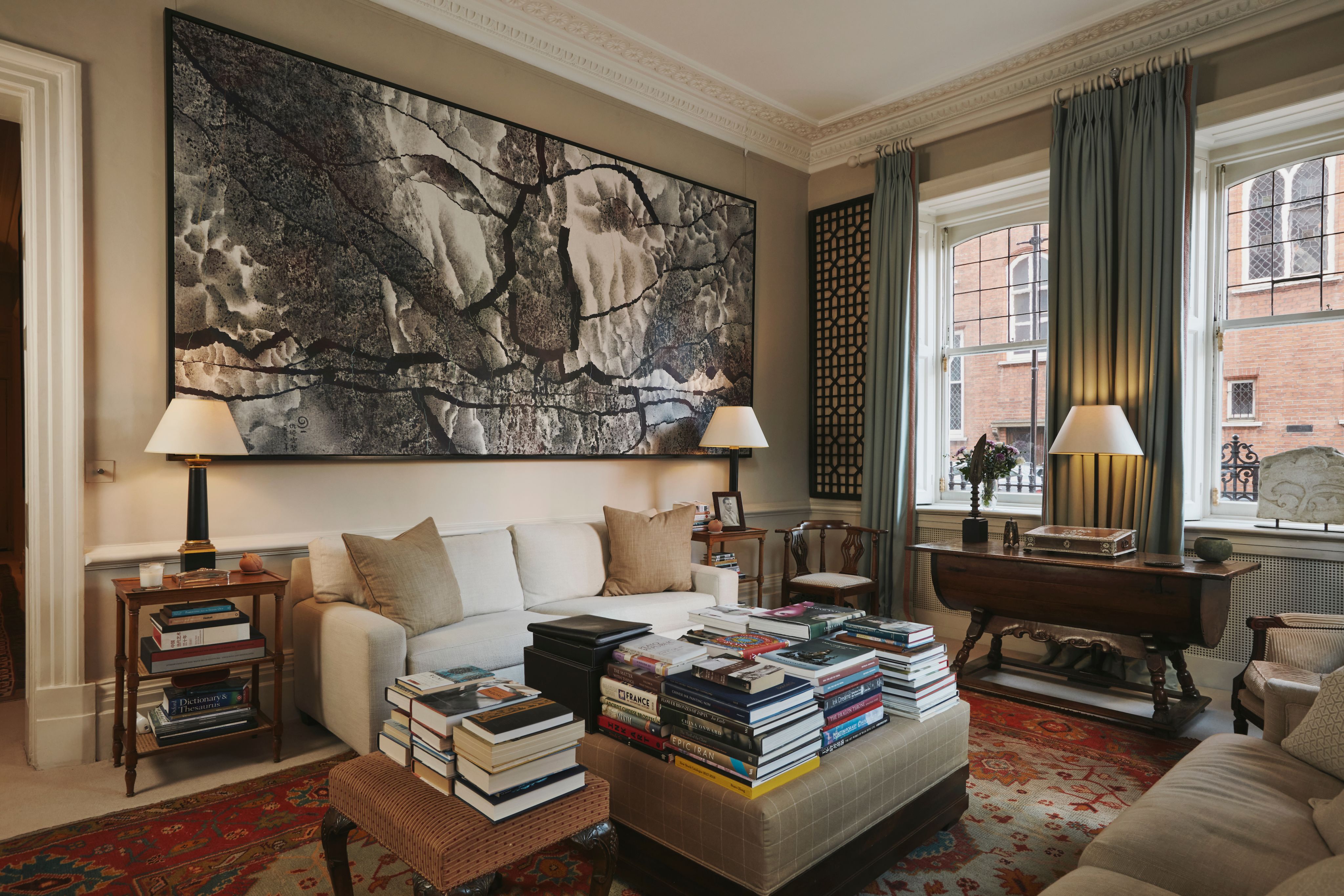
“Other works do not look like ink paintings,” says Goedhuis, gesturing to Qiu Deshu’s monumental ink and acrylic Self Portrait (Spirit) of 1997-98 behind him on the sofa. Qiu, a former Red Guard, was severely censored after founding in Shanghai in 1980 the Grass Grass group of artists, which promoted independence and originality. His signature technique of ‘fissuring’ evolved during this dark period. Working with often vivid colours, he literally deconstructed and reconstructed ink painting by tearing and collaging his paper, the lines – gaps or fissures between the sheets – becoming a metaphor for the cracks in the human soul and in society. “These artists were not afraid to take account of the past in order to make sense of the present,” Goedhuis declares emphatically. Many of them work in several media.

It is the ‘literati’ tradition that connects the Goedhuis bronze sculptures and vessels to the ink paintings. These intimate, domestic bronzes were first produced for the studios of the gentlemen-scholars, initially inspired by the complex and mysterious archaic ritual wine and food vessels that began to be excavated during the Song period. Unlike those objects, made several thousand years earlier, these later vessels tended towards pleasingly simple forms. Like ink painting and calligraphy, however, they were admired not only in their own right, but for the train of poetic and intellectual associations they evoked.
“It is a totally fascinating but long-neglected field,” enthuses Goedhuis, who staged a pioneering exhibition and accompanying publication, Chinese and Japanese Bronzes, AD 1100-1900, at Colnaghi Oriental in London in 1989. “It is only recently that the great historic collections in the West – such as the V&A in London and the Musée Cernuschi in Paris – have begun to research and publish their holdings. Museum interest is growing in these later bronzes, but they remain really good value.”
While the earliest pieces in the sale include a garlic-mouth hu, a spare, pear-shaped wine vessel, from the Han dynasty (206 BC-AD 220), the lion’s share dates to the Song, Ming and Qing. Arguably the grandest and most distinguished of the sculptures is the rare and early, signed and silver-inlaid figure of the Buddhist bodhisattva Guanyin, standing on a cloud-scroll base.
“The Bonhams sale is a way for me to do two things,” concludes Goedhuis. “One is to reach an audience I do not know. The second is to promote and ignite interest in these two fields.” He continues: “I would like to help raise the appreciation of contemporary Chinese ink artists for a new generation.”
His secret weapon in reaching a younger audience may well be the multi-talented Tim Yip. Although best known as an award-winning designer and art director for film, opera, ballet and theatre – he won both an Oscar and a BAFTA for his work on Ang Lee’s Crouching Tiger, Hidden Dragon – Yip trained as a photographer in Hong Kong and has maintained an ever-evolving visual art practice throughout his career. Fittingly, his work is grounded in traditional Chinese art and philosophy and Goedhuis, who has previously exhibited Yip’s works on paper, will unveil a new artwork by the artist specially for the sale.
Susan Moore writes for the Financial Times and Apollo. Her biography of Baron Hans Heinrich Thyssen-Bornemisza is due out this year.

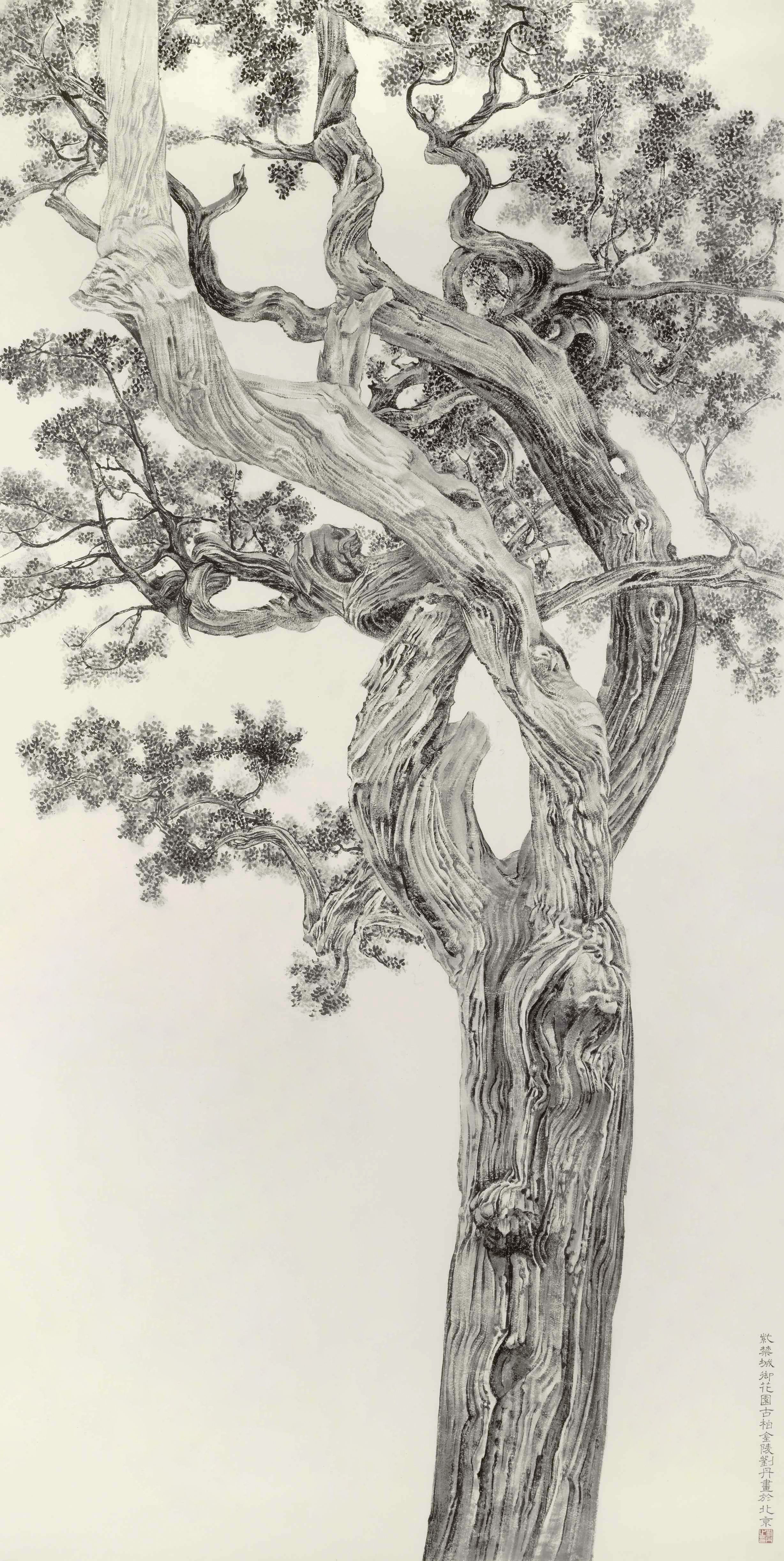
Liu Dan (born 1953) Old Cypress from the Forbidden City, 2007 Ink on Xuan paper 102 x 54in (259.1 x 137.2cm) Estimate: £200,000 - 300,000 ($250,000 - 400,000)
Liu Dan (born 1953) Old Cypress from the Forbidden City, 2007 Ink on Xuan paper 102 x 54in (259.1 x 137.2cm) Estimate: £200,000 - 300,000 ($250,000 - 400,000)
Michael Goedhuis: Brush and Bronze
Follow our upcoming auction on 17 May in London to get a notification when lots are open for registration and bidding. For enquiries, contact Asaph Hyman on +44 (0) 20 7468 5888 or asaph.hyman@bonhams.com
 Built with Shorthand