
Boy wonder
Everyone could see his talent, but Messi was too small for professional football. Those 850 goals might never have happened but for three signatures on a humble napkin, says Sid Lowe.

The tiny, mute kid who would be a deity had just boarded a plane for only the second time in his life and now all he could do was wait. Lionel Andrés Messi, who would change football forever, had arrived in Europe on a Sunday. It was 17 September 2000, he was 13, barely 4ft 10in high, and he didn’t say a word, but as soon as he had a ball at his feet everyone knew: this was a gift, he was a gift. A game was arranged so that the technical secretary at Futbol Club Barcelona could watch him play. He is name is Charly Rexach and he was late – Charly is always late – but it didn’t matter: by the time he had arrived, walked round the pitch and taken up his place on the bench, he knew too.
“We have to sign this kid right now,” he said then. “Anyone would have said the same,” he says now.
Only they didn’t. Barcelona were in chaos, a mess. So Messi was back in Argentina, his trial period up. Barcelona had made assurances but nothing had actually happened. October passed, November passed. The kid’s father was getting angry, threatening to take his son somewhere else. Maybe even Madrid, some turning point that. Still no one was actually doing anything. December was slipping by, destiny too, until Rexach decided to act. Alone if need be, but things couldn’t go on like this. “I’ll go down in Barcelona’s history,” he says, a quarter of a century later.
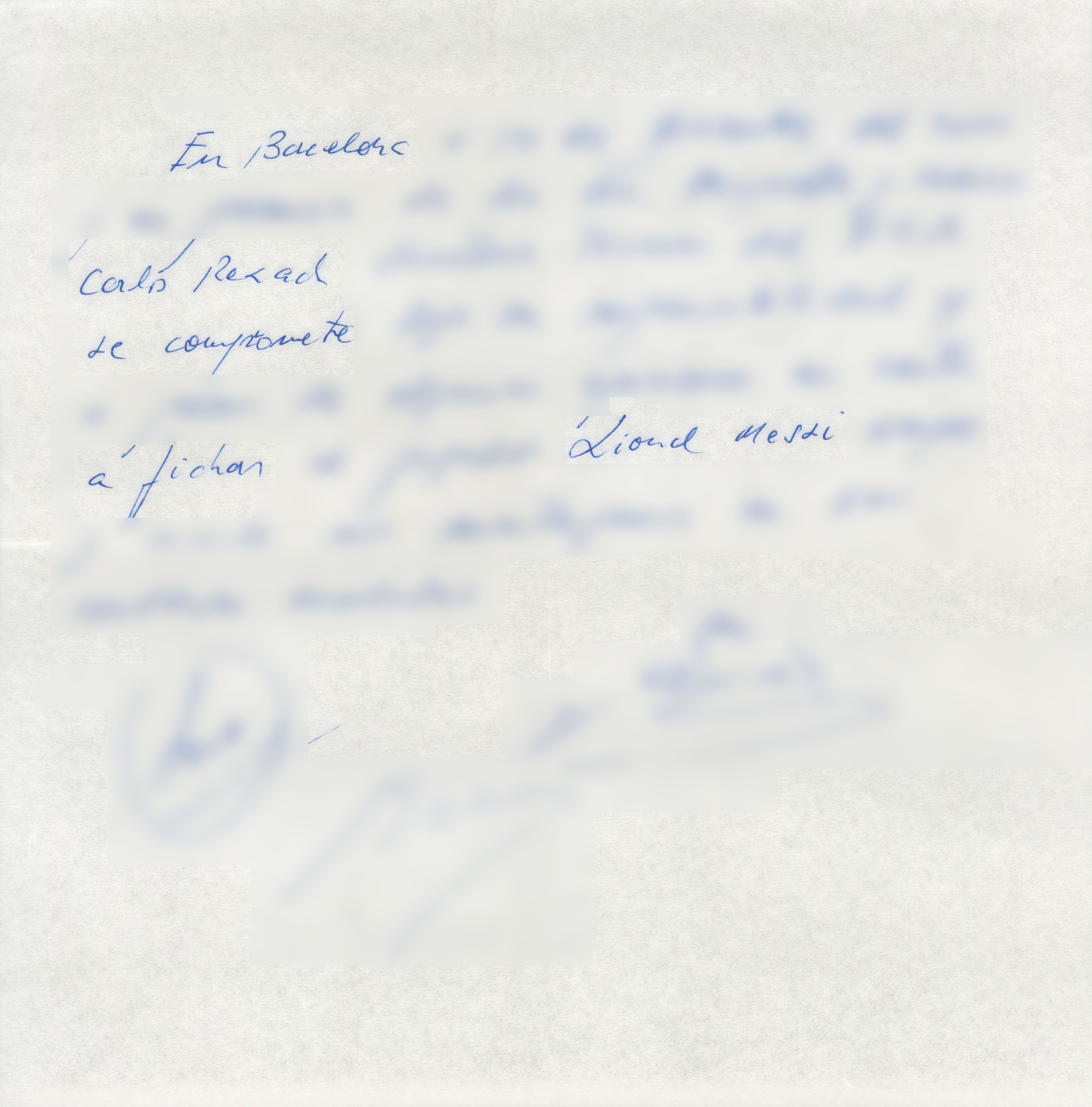
Born in Pedralbes, the smart neighbourhood up the hill from the Camp Nou, Rexach joined Barcelona aged 12 and spent half a century there, on and off. He played for the first team for 17 years and has been coach, assistant coach, technical secretary and presidential adviser. But that’s not why he will go down in Barcelona’s history. No, he will go down in Barcelona’s history, and everyone else’s too, because one day he signed Messi – on a serviette. A tiny, huge piece of history, now offered by Bonhams in The Famous Napkin sale. It is not much to look at but it is everything. Which is fitting, somehow.

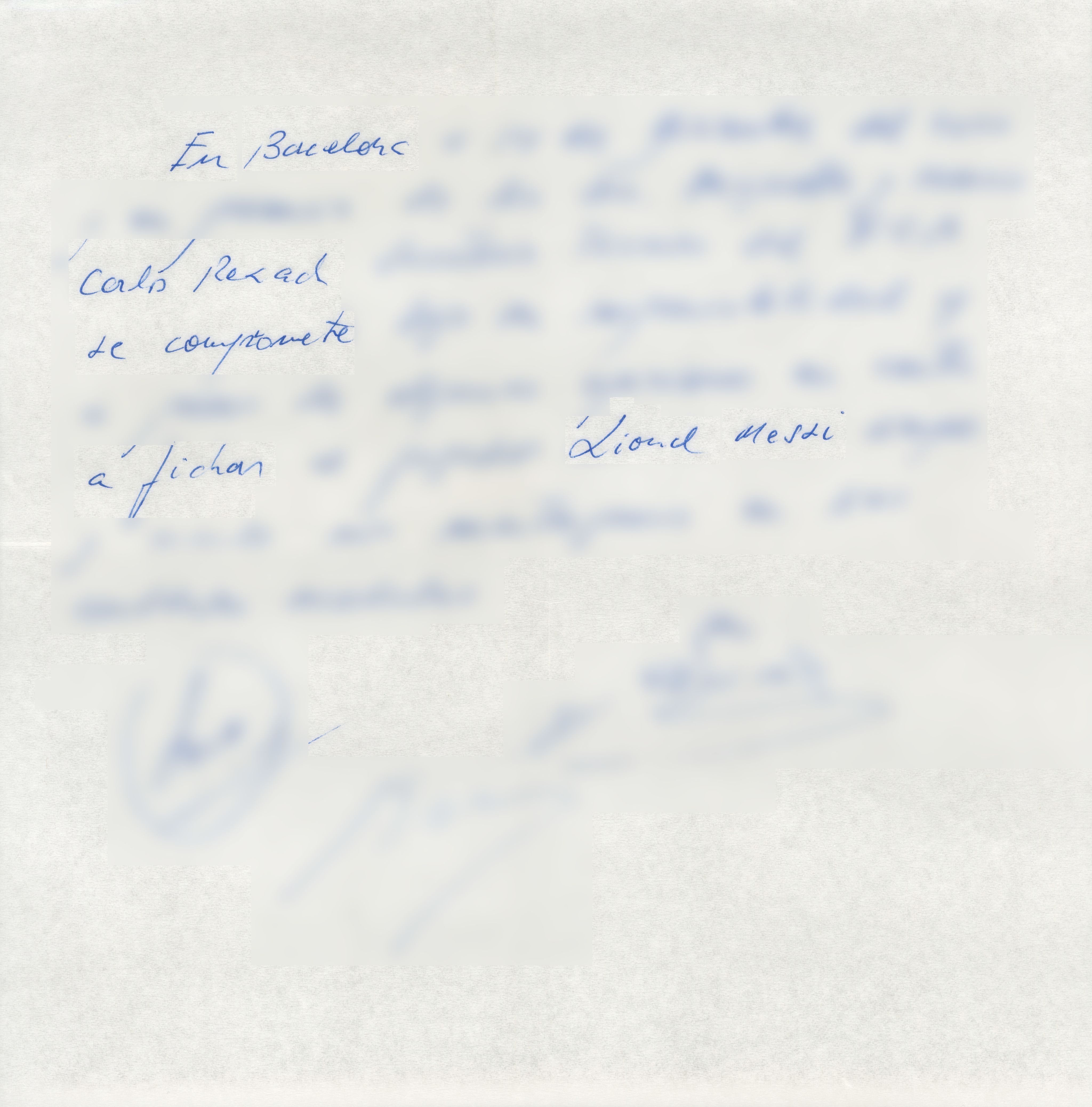
The napkin on which a commitment was made to Messi for a contract from FC Barcelona, Estimate: £300,000 - 500,000
The napkin on which a commitment was made to Messi for a contract from FC Barcelona, Estimate: £300,000 - 500,000
Without that, what would have been? Of him, of all of them? Rexach talks about Messi as having landed just right. He needed to be nurtured, to find his place. Catalonia became home. Without Barcelona, he might not have been the same; without him, Barcelona wouldn’t be. From the start, things changed. In the academy the kids were told to play one-touch or even mig-toc, as Rexach and Guardiola and Xavi would call it: half-a-touch. Messi was told, well, to do what he could do. Don’t let go until he knew it was right; the ball could be barely be in a better place than at his feet.
One day Ronaldinho saw him and said: “This kid will be even better than me.” At that time, that hardly seemed likely, but he was right. Barcelona had only won one European Cup. Messi then won four of them. There were ten league titles. He wasn’t a goalscorer but he was Europe’s top goalscorer six times. He was the best player every year for 15 years, an entire generation spent making the ridiculous routine. The ball didn’t need kicking, it seemed; instead it followed him like a faithful, enthusiastic puppy.
In the beginning, Johan Cruyff said Messi would probably win five, six or seven Ballon d’Ors, which seemed absurd but fell short. Widely seen as the world’s finest footballer, perhaps ever, Messi may still be underrated, stupid though that sounds. He has had many victims, including himself. His ‘bad’ seasons were brilliant, the only man held to his standards. “Messi is Maradona every day,” Jorge Valdano likes to say, and even Maradona wasn’t that. When Messi finally left Barcelona, in tears, he had been at the club for 21 years and still it was too soon. He will be back one day.

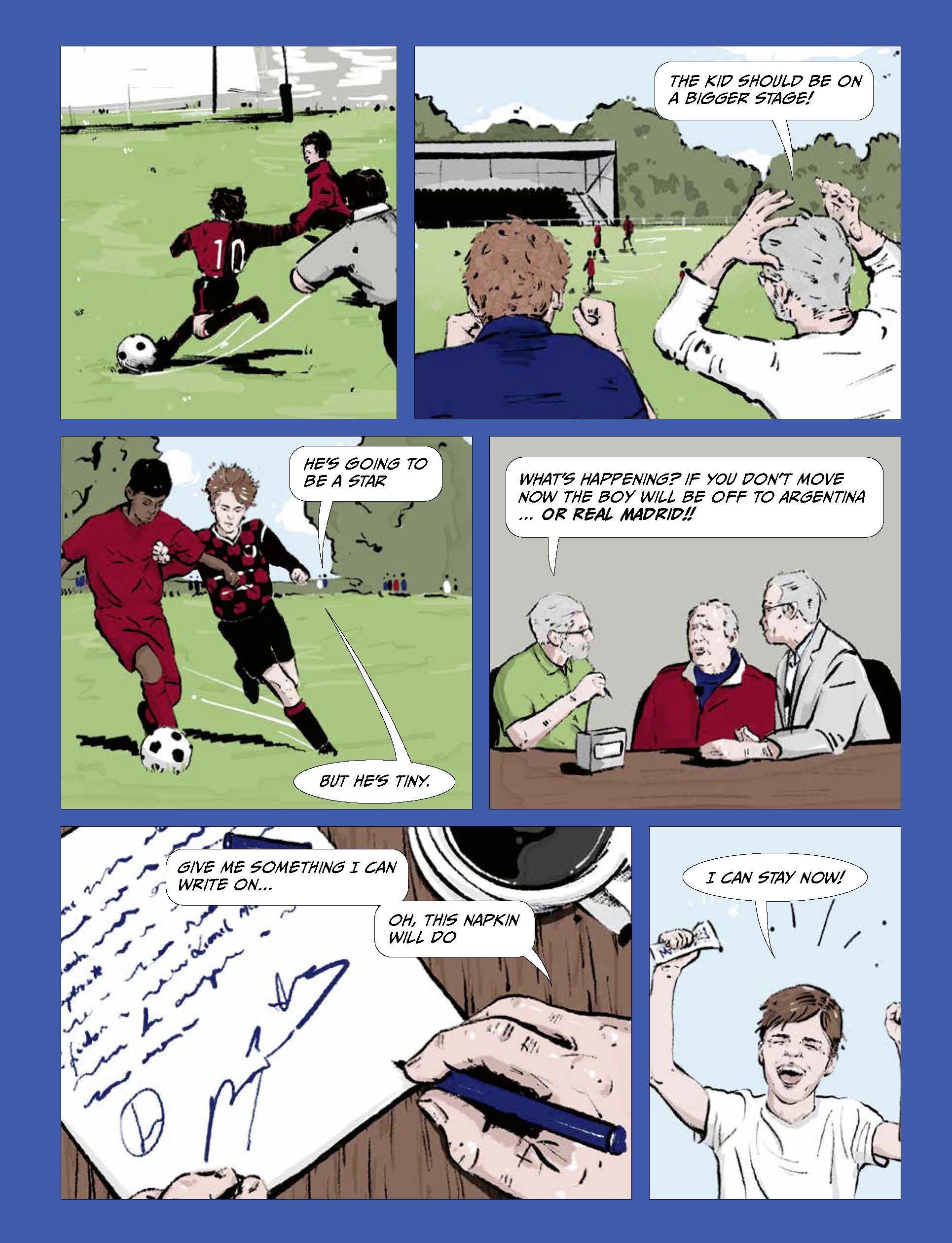
The Lionel Messi story: more thrilling than Roy of the Rovers. Illustration by James Hatcher
The Lionel Messi story: more thrilling than Roy of the Rovers. Illustration by James Hatcher

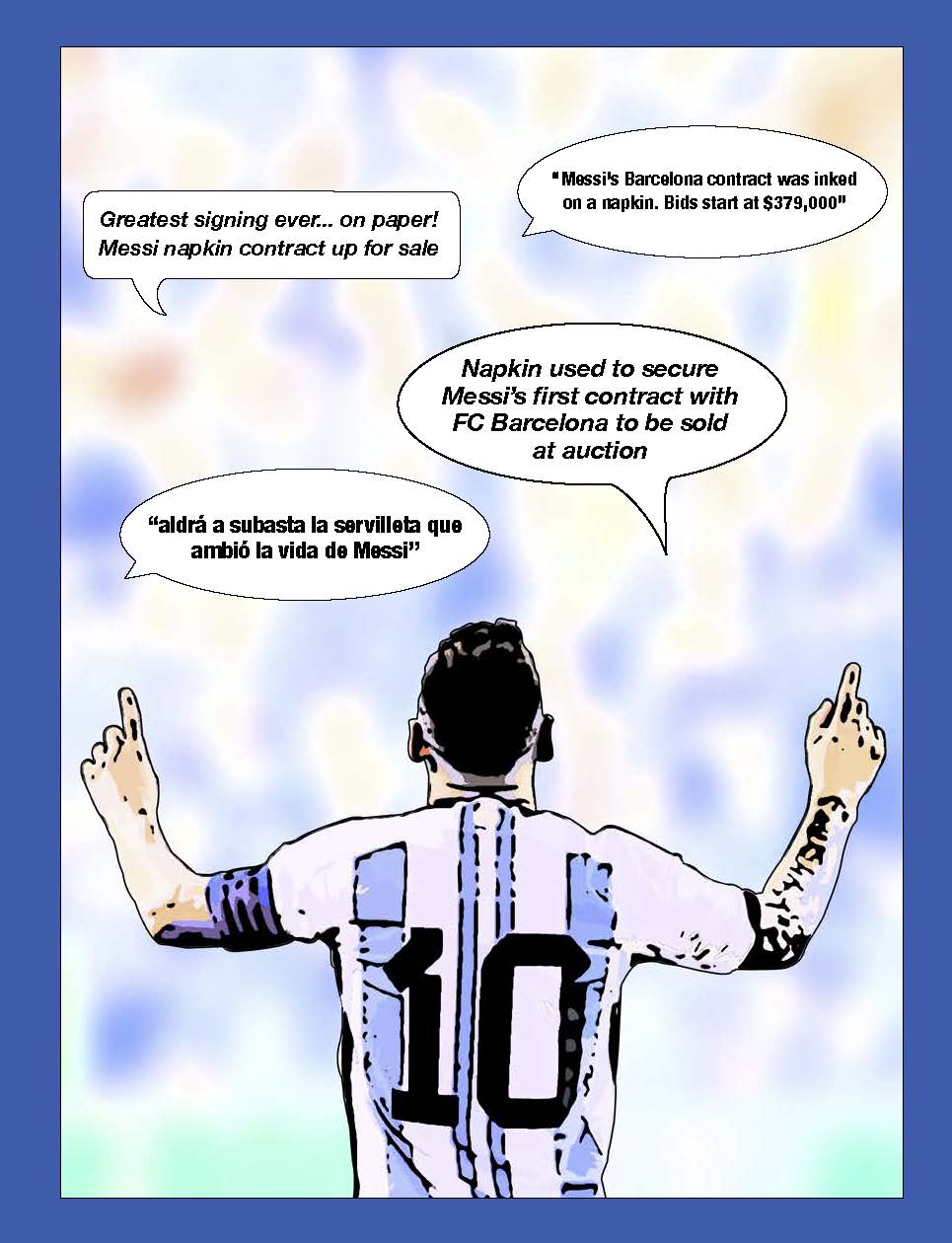
"Widely seen as the world’s finest footballer, perhaps ever, Messi may still be underrated," says Sid Lowe
"Widely seen as the world’s finest footballer, perhaps ever, Messi may still be underrated," says Sid Lowe
All that was in the future once, and might not have been in the future at all. Messi had first crossed the Atlantic an unknown. He did so silently, which is how he did most things. He hadn’t been that keen to go, but his grandmother had encouraged him, pushed him. He would dedicate every goal he ever scored to her: 850 of them, all the way to the World Cup final.
On board with him were his father Jorge and a man called Fabián Soldini; waiting for him in at El Prat Airport was Horacio Gaggioli. This child was gifted, Gaggioli had been told. He had been sent videos of him playing in Argentina – you will have seen them too by now, a bit fuzzy but the genius already there – and had arranged for Messi to have a trial at Barcelona. Gaggioli was acting as intermediary between his partners in Argentina, who had discovered Messi, and Barcelona. He had arranged the trial with Josep María Minguella, who had told Rexach that this kid was like Diego Maradona.
Minguella knew: he was the one who had brought Maradona to Barcelona 20 years earlier.
Barcelona had their doubts. Sure, Messi looked good, and he came with the right people, but he had growth issues: a paediatric endocrinologist had said he needed a course of hormone treatment that was a lot of money to spend on a kid. It was also the reason he was available at all: Newell’s Old Boys, his club in Argentina, couldn’t afford the treatment. Had he not been small, maybe he would not have been so big. At Barcelona, in Europe, all around the world, he would be gigantic. But, in 2000, you didn’t just sign a 13-year-old from across the ocean.
Even Gaggioli was unsure when he saw him in the flesh for the first time, waiting there at El Prat: he was so small. He wondered if maybe he had been duped, if he was going to be made to look a little silly. “I thought to myself: ‘This small child can’t play football. He’s tiny. His leg looked like a finger. They’re going to break this kid’s legs’.”

The players they put him up against weren’t much more impressed… until he got on the pitch. Gerard Piqué and Cesc Fàbregas were among them. They saw him in the dressing room and laughed. He taped up his ankles and didn’t say a word. They called him enano, ‘dwarf’. The coach asked them not to kick him, he was so small.
They would have to catch him first.
Sign him. Now.
And yet. Barcelona had to find work for his father, pay him around €50,000 a year. They had to pay for the hormone treatment that, painfully, Messi injected into his legs every day: $1,000 a month. Messi was moved into the Hotel Rallye, and would later live in a flat on the Gran Vía de Carlos III with his family. From the windows of the Rallye, you can see the Camp Nou barely 50 yards away. But getting inside there was different: there’s a nice story about Messi not even getting tickets to see them against Milan – even after they had agreed to sign him. And even that was hard. He had returned to Argentina with no guarantees, the feeling that this wasn’t going to happen after all. Everything dragged on. Nothing was happening.
On 14 December 2000, Rexach met Minguella and Gaggioli for lunch at the Pompeia Tennis Club. “We’ll go elsewhere,” Gaggioli warned him. Rexach couldn’t let that happen. He pulled out a napkin from the plastic holder and started scribbling: “...Carles Rexach, FC Barcelona’s sporting director, hereby agrees, under his responsibility and regardless of any dissenting opinions to sign the player Lionel Messi...”
Both men signed it, history handwritten. History grasped too. Gaggioli took it away, kept it. He had it locked in a vault, more valuable than anything else in there, like some biblical artefact, without which nothing would be the same. Once in a while, he would take it out, showing it carefully, oh so carefully.
There’s a fascination in reading it, and perhaps that line above all: Regardless of any dissenting opinions.
It is some line. Against him? Against this kid who would be a deity and could have been different. The quiet kid they laughed at and the man who won it all, the athlete who eclipsed all others, the greatest story ever told, closing with the World Cup in his hands and opening with a serviette in someone else’s – his fate in those hands, too. Football’s fate, all that we know. Lionel Messi had been and now he had gone again, boarding a plane back to Argentina, all that legend left waiting. Something had to to be done. And so it was written.
Sid Lowe writes about Spanish football for The Guardian.
Stay updated with our auctions. Sign up to receive your weekly newsletter of global auctions, stories and more from Bonhams and our sister companies. Subscribe now
The Famous Napkin auction
For enquiries, contact Ian Ehling on ian.ehling@bonhams.com or +1 212 644 9094.

 Built with Shorthand