
Bowie, Duffy
& The Mona Lisa
of Pop
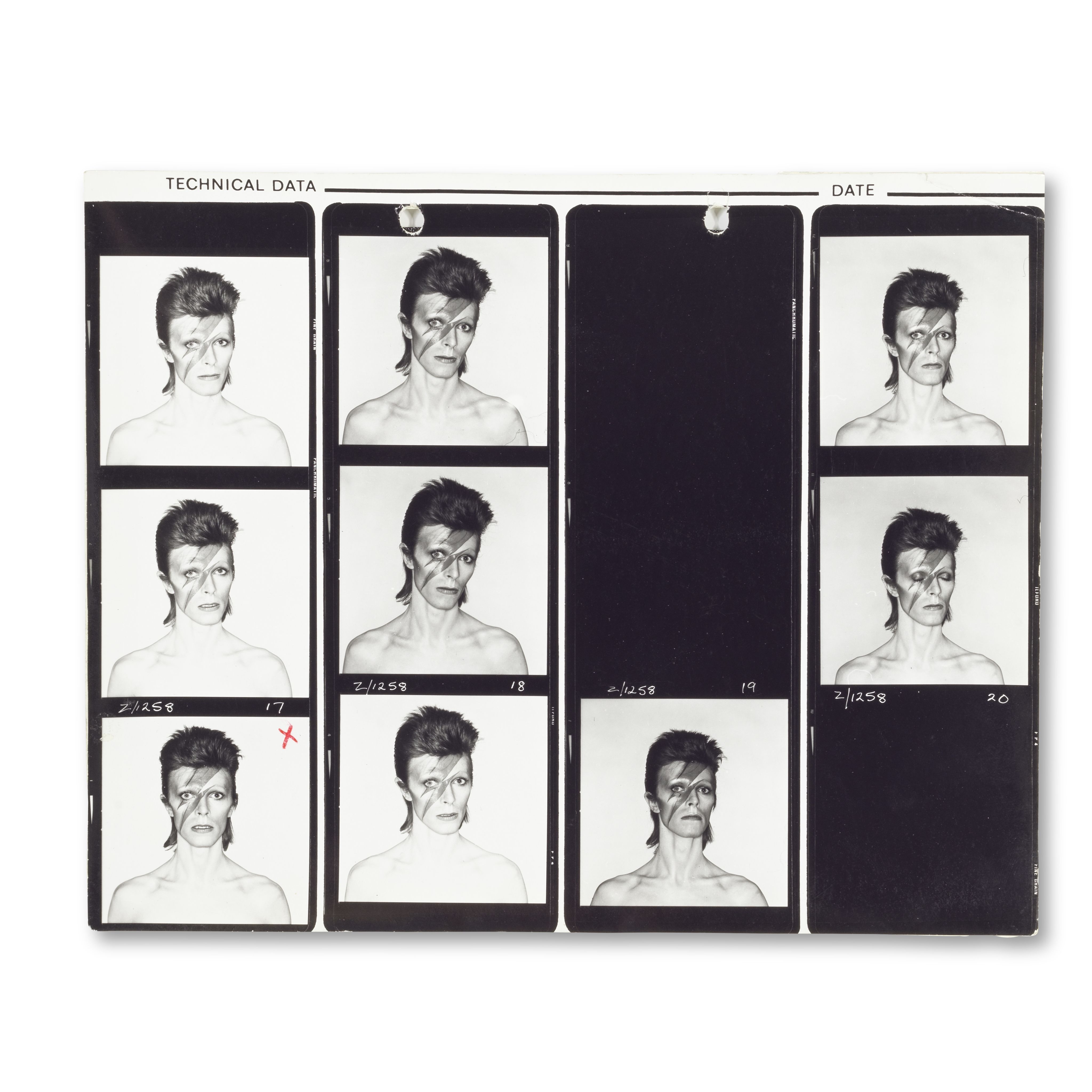

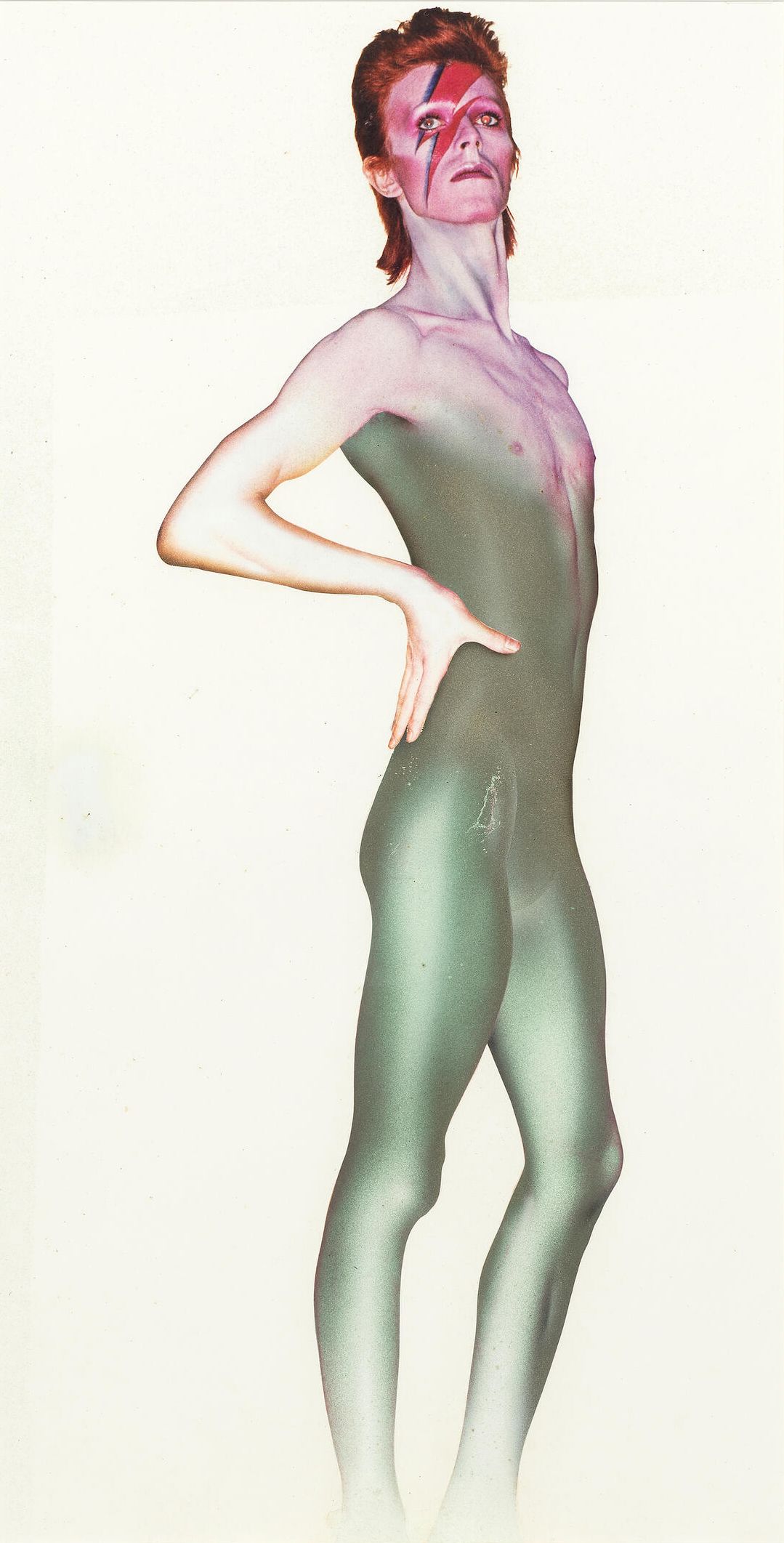
Few images define the collision of art, music, and fashion in the 20th century quite like Brian Duffy’s photograph of David Bowie for Aladdin Sane, often referred to as The Mona Lisa of Pop. Here, the photographer’s son and archivist, Chris Duffy, revisits that defining day in the studio, and discusses his father’s long-standing creative collaboration with Bowie.
How did this iconic image come to life?
David Bowie surrounded himself with people who could elevate his ideas and bring creative energy to his projects, and that’s where he and Duffy connected. When Duffy shot Aladdin Sane, he didn’t wake up thinking, I’m going to create an iconic image. It was simply the right time, the right place, and the right talent.
The session came together at the last minute, taking place at Duffy’s studio in Swiss Cottage on a crisp day in January 1973. Bowie appreciated Duffy’s unique vision, so they discussed ideas in advance. For Aladdin Sane, Bowie was fascinated by Elvis and the idea of a “flash” motif. If you look at early Ziggy performances, Woody Woodmansey's drum kit features a flash – not identical to the Aladdin design, but from the same concept.

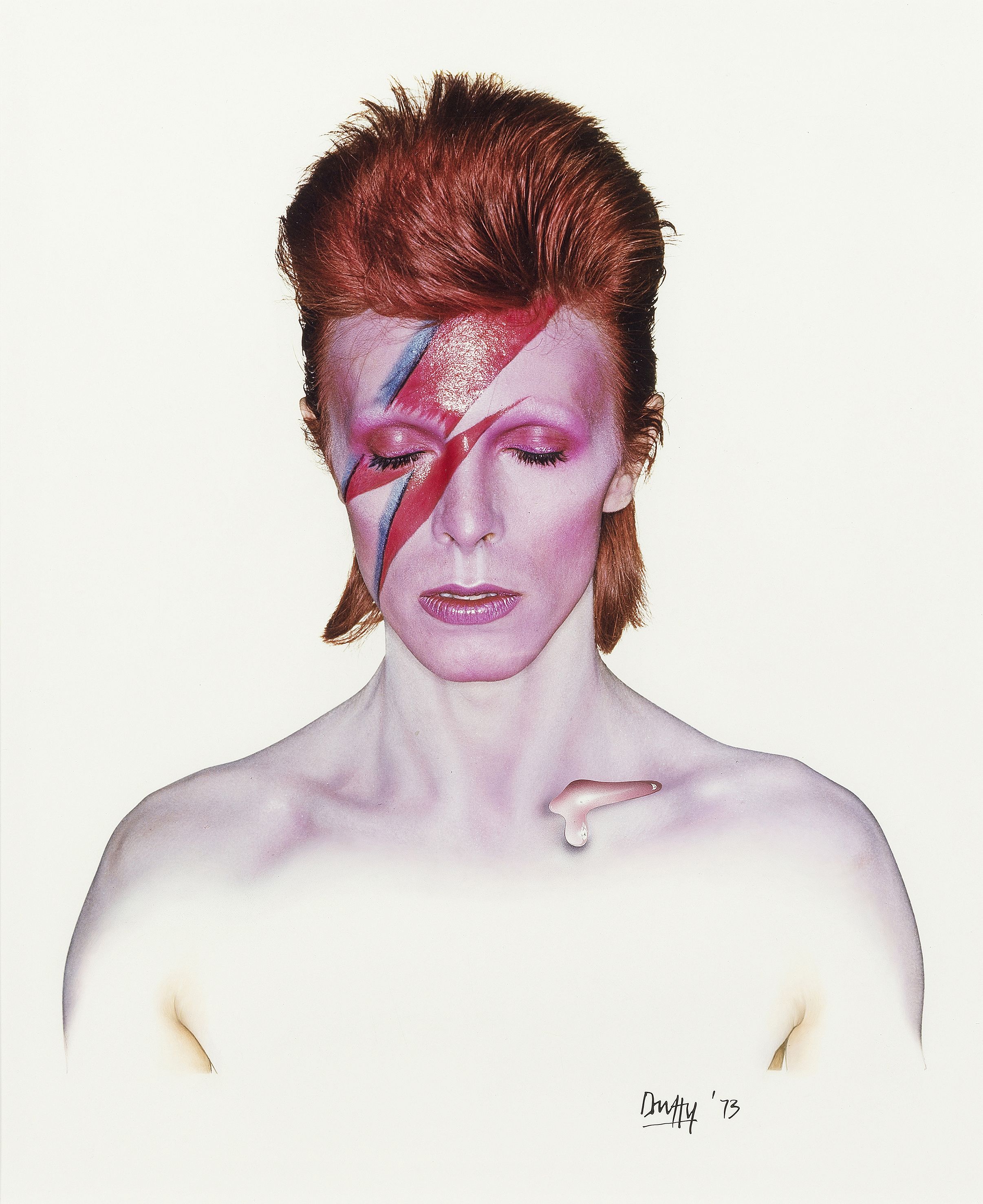

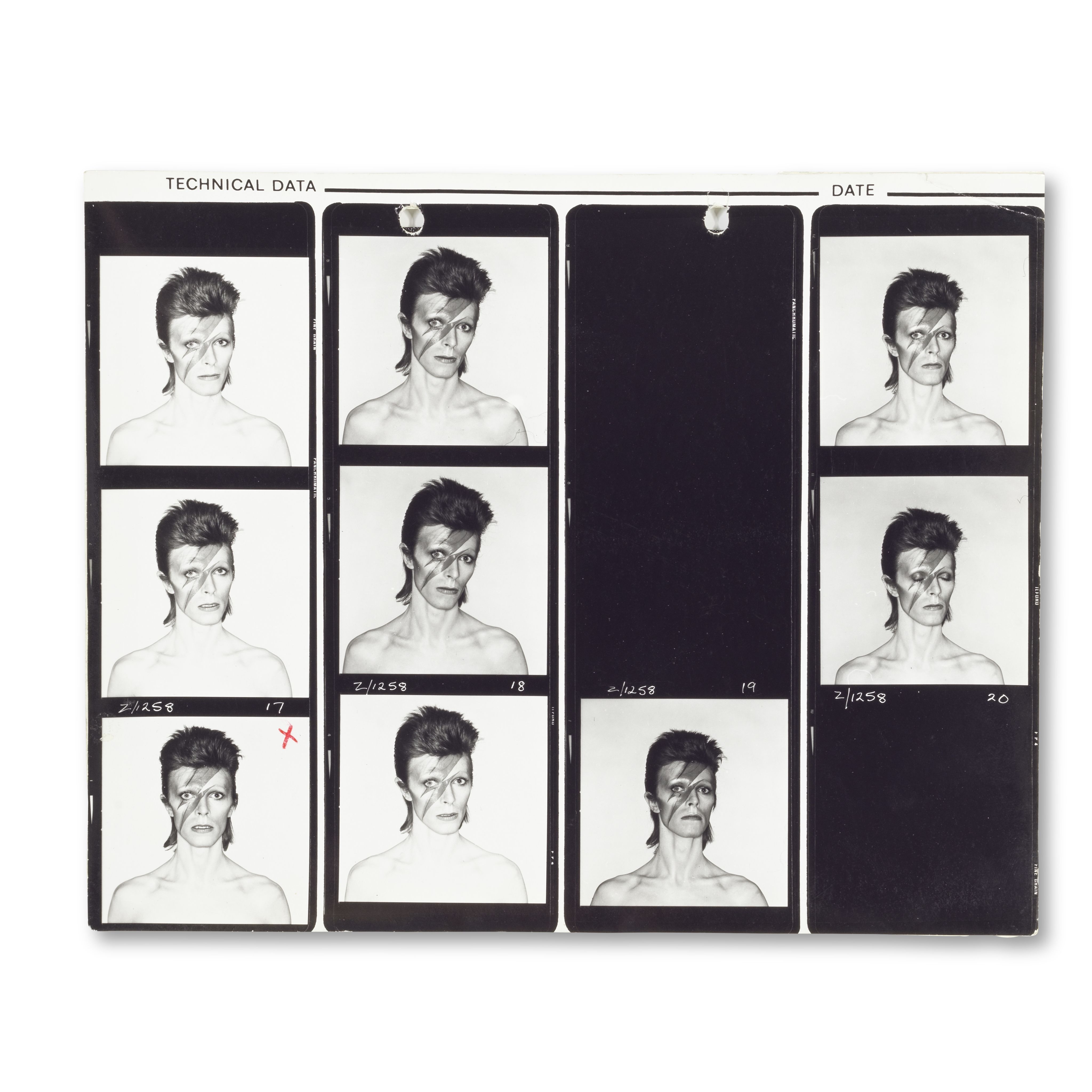
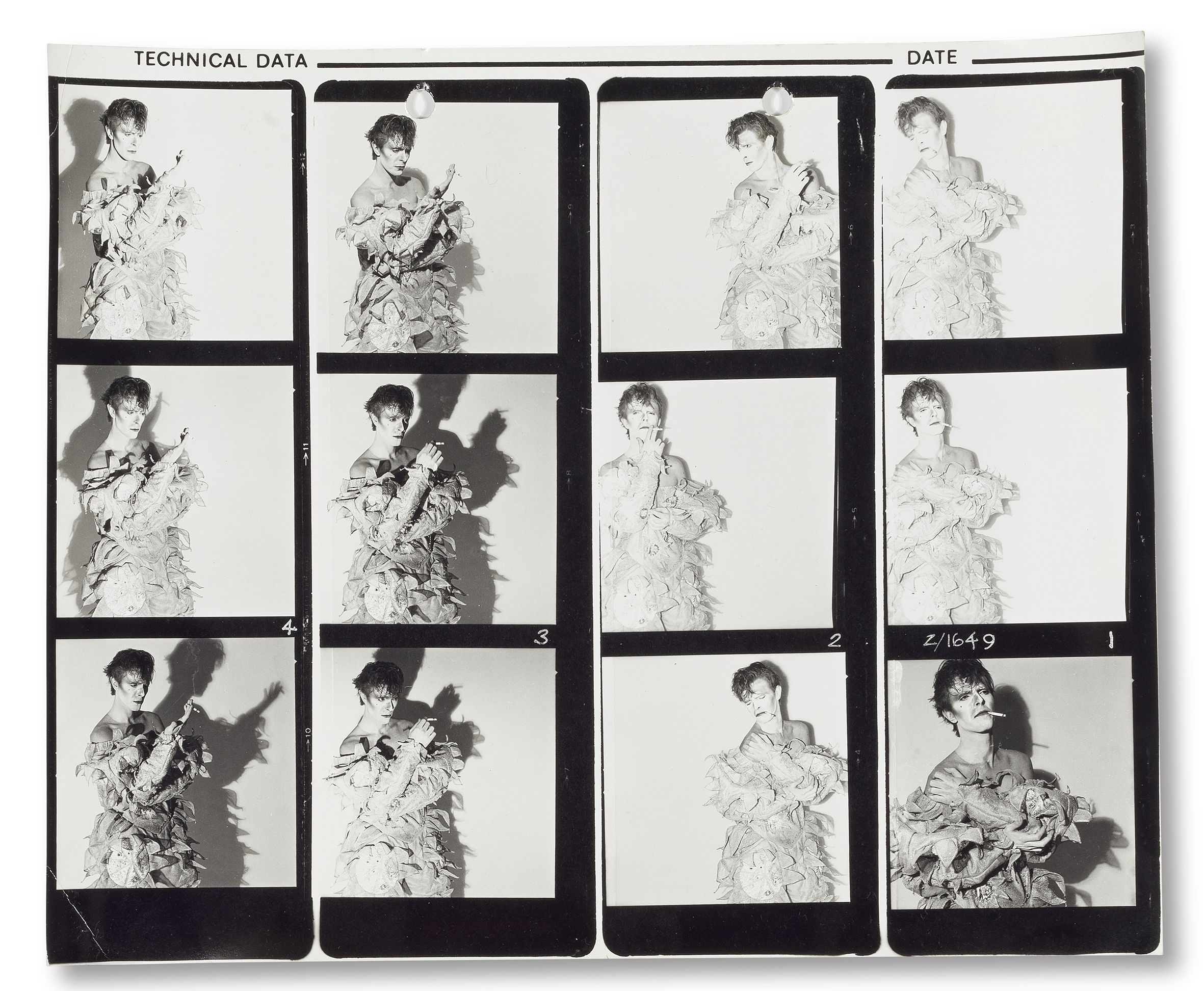
Brian Duffy, The only surviving contact sheets of David Bowie for his Aladdin Sane album cover, 1973. Estimate £6,000-8,000. Photo Duffy © Duffy Archive & The David Bowie Archive ™.
Brian Duffy, The only surviving contact sheets of David Bowie for his Aladdin Sane album cover, 1973. Estimate £6,000-8,000. Photo Duffy © Duffy Archive & The David Bowie Archive ™.
The colour scheme was inspired by a National Panasonic rice cooker that Duffy had in his studio which had a red and blue flash on it. Bowie loved it and said, “Brilliant - Let’s do that. Pierre La Roche who was the make-up artist hired for the day began painting a small flash on Bowie’s cheekbone, but Duffy soon intervened and grabbed a red lipstick from La Roche’s make-up box, drew the shape himself, and instructed Pierre to fill it in. The final design of the flash was, in fact, Duffy’s.
When Duffy asked Bowie what the album was called, he replied, “A Lad Insane.” Duffy misheard it as Aladdin Sane. That was how the album got its title – a moment of spontaneous brilliance.
Can you tell us about the water droplet?
Once the image had been captured, Duffy wanted to add an element of mystique and Surrealism, and the inspiration for the water droplet on Bowie’s collarbone came from a unique moment. In 1973, my mother, who had four children to look after, was helped by Sally Arnold, our au pair - who later went on to work for the Jaggers. When Sally visited us wearing a Rolling Stones tongue pendant, Duffy became fascinated by the idea of a symbol or piece of jewellery associated with an album – something iconic.
So he brought in airbrush artist Philip Castle to create the teardrop shape on Bowie’s collarbone. That’s how the emblem came about: phallic, fluid, emotional and full of layered meaning. Much has been written about what it represents, but for Duffy, it began as a visual device that never quite evolved into the piece of jewellery he imagined.

How did Duffy and David influence each other's creative process?
They both shared a deep understanding of art history and spoke on a wavelength few could match. Duffy was exceptionally well-read and could argue any point, even one he didn’t believe, just to test ideas. Bowie connected with that energy. Duffy often said, “You have to burn your bridges to move forward.” Bowie embodied that – killing off Ziggy Stardust at the height of his fame because he refused to be trapped by one persona. That constant reinvention defined his career.
Their collaboration spanned nine years, beginning in 1972 with Ziggy Stardust. When Bowie performed “Starman” on Top of the Pops, he looked straight into the camera - and it felt like he was singing to everyone watching. That moment launched him.
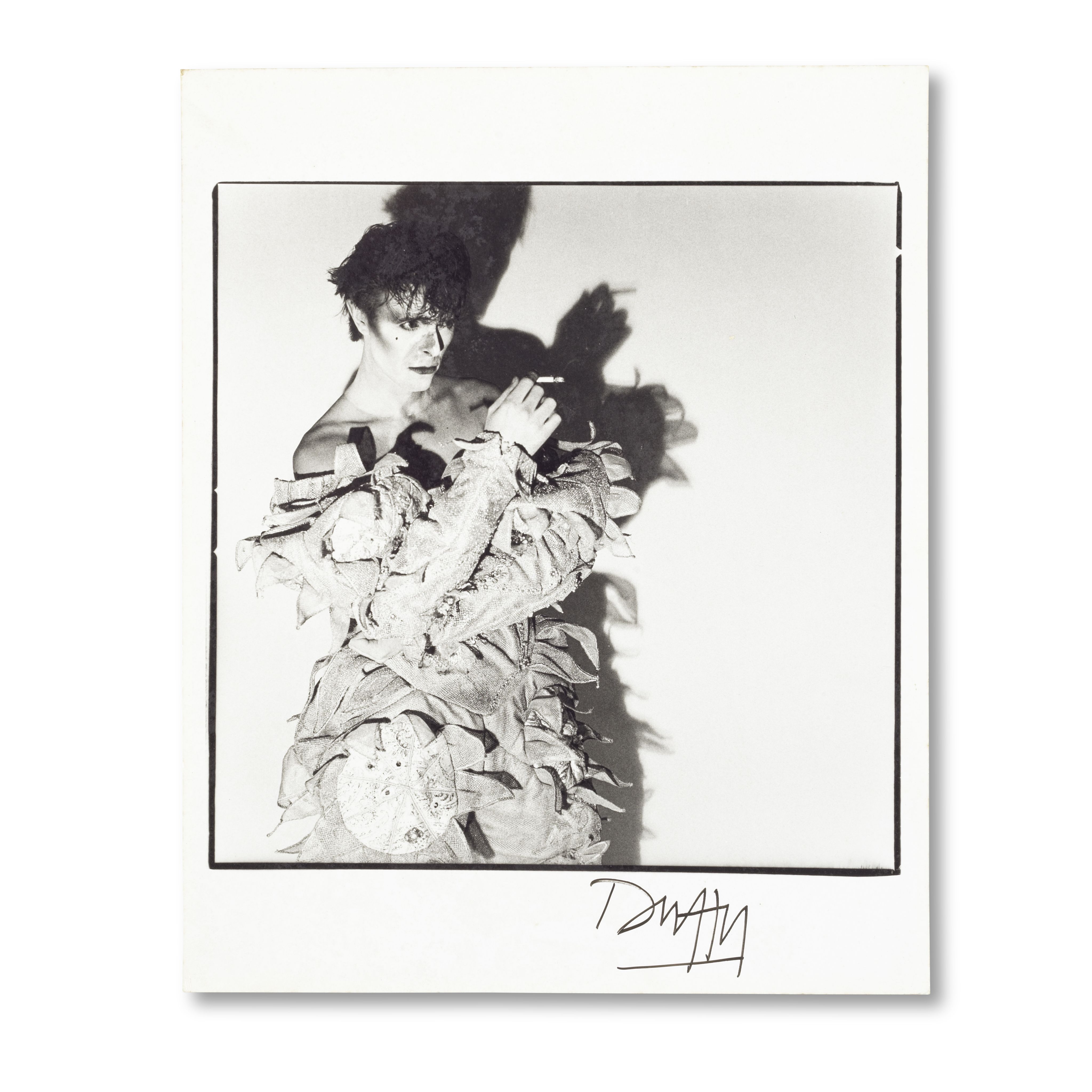
With Aladdin Sane, they unknowingly created a cultural icon. Later came The Man Who Fell to Earth (1976), Lodger (1979), and Scary Monsters (1980) – each marking a new transformation. For Scary Monsters, he even convinced Duffy, who had retired from photography, to come back and shoot the cover in my studio. Bowie was sharp, witty, and had a fantastic sense of humour.
"Bowie killed Ziggy Stardust at the height of his fame because he refused to be trapped by one persona. That constant reinvention defined his career..."
How Did You Start Working Alongside Your Father?
For me, it started in a darkroom on Warren Street, working in a photo lab, cutting and processing film rolls for photographers I didn’t know. I was fascinated by the images that passed through my hands; tiny, captured moments of something larger. It felt like the next logical step to pick up the phone and ask my dad, the photographer Duffy, for a job.
He said no. Duffy already had two assistants and didn’t need a third. But after a few persistent months, he eventually relented: I could join the studio as the third assistant, sweeping floors and making coffee. And that’s how I began my journey. One that would take me around the world, from fashion shoots to advertising campaigns, from the streets of London to sun-drenched islands and back again. One day we’d be in Scotland shooting a Citroën ad; the next, in London capturing a portrait for The Sunday Times. Then it might be fashion in Paris for Elle, or a Clairol campaign in the Caribbean – before heading back to the studio for beauty work with Harpers & Queen.
Between 1973-1979, I had the privilege of working alongside one of the most technically accomplished and creatively fearless photographers of his generation – my father. Whether it was black-and-white printing, mastering flash and lighting, or working with every camera format under the sun, Duffy approached every assignment like a general practitioner of photography. He was able to turn his hand (and eye) to anything, with clarity, instinct, and originality.
That’s when I knew the next step was to strike out on my own. I began by photographing my contemporaries: Adam Ant, Spandau Ballet, and Sade. I was good friends with Steve Strange and soon became involved in the whole New Romantic movement.

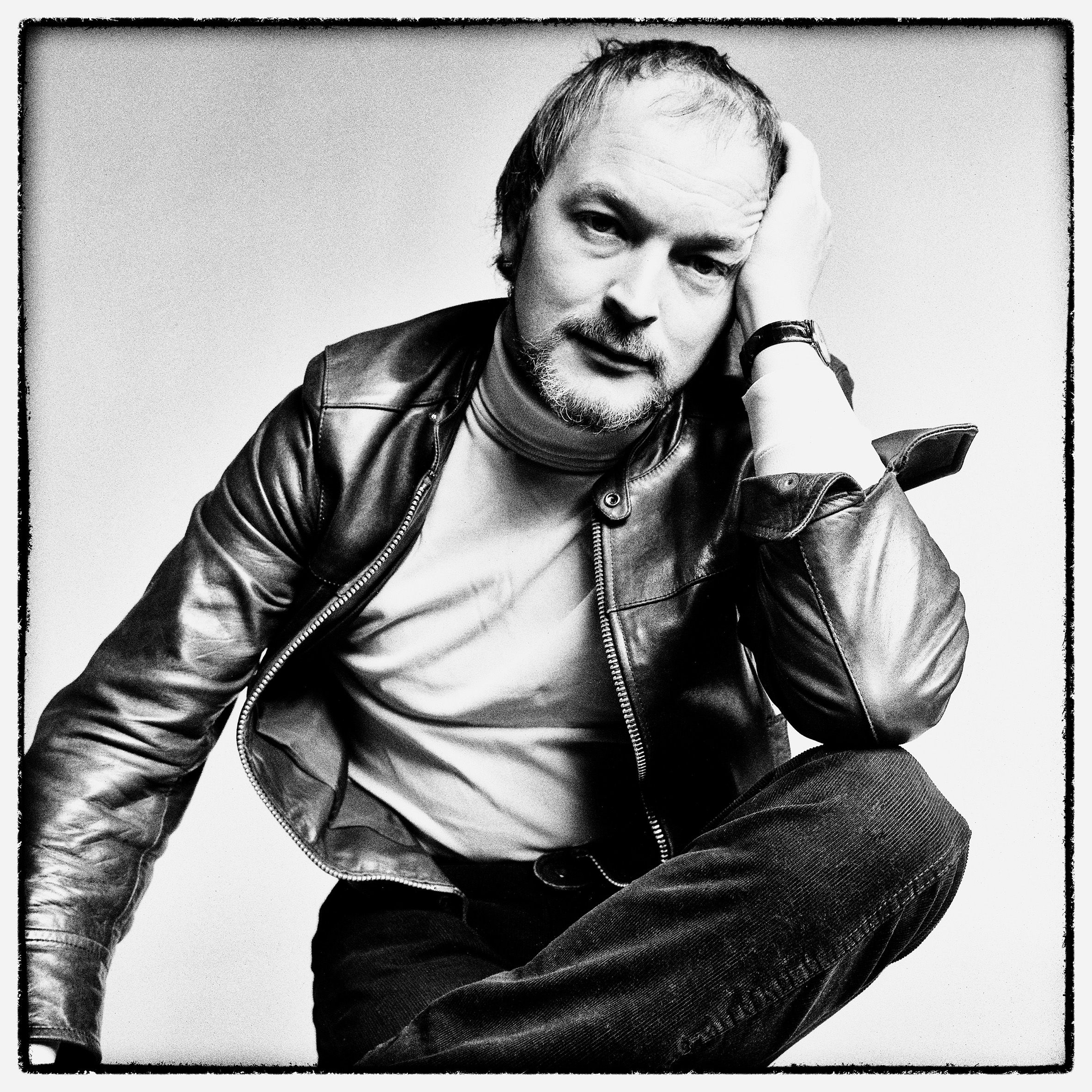
Brian Duffy © Duffy Archive.
Brian Duffy © Duffy Archive.

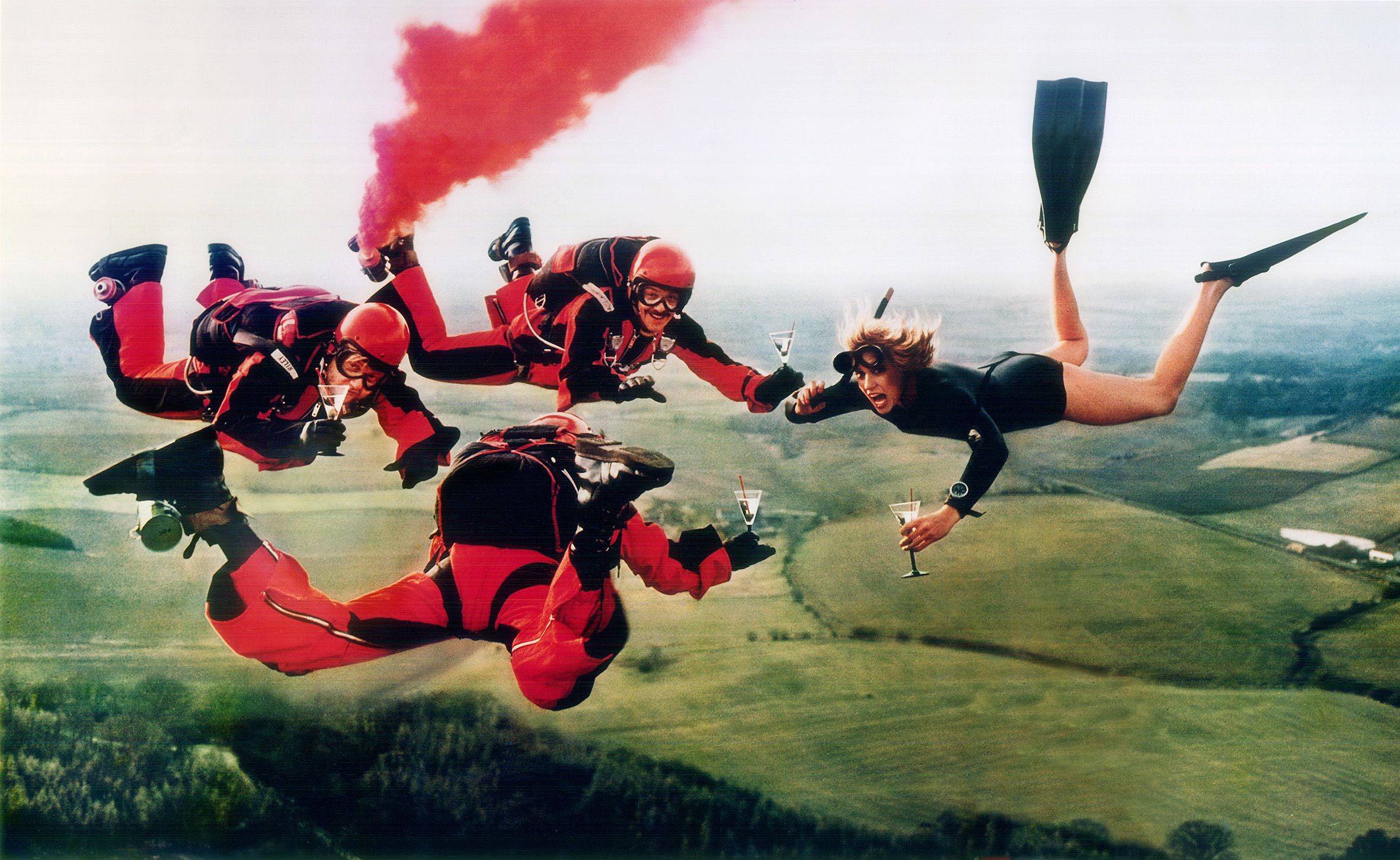
Smirnoff Skydivers, 1978. Photo Duffy © Duffy Archive
Smirnoff Skydivers, 1978. Photo Duffy © Duffy Archive
"Back then, viewers trusted that photographs didn’t lie. Today, anything is visually possible, and people are aware of that; the truth and magic are lost."
Chris Duffy

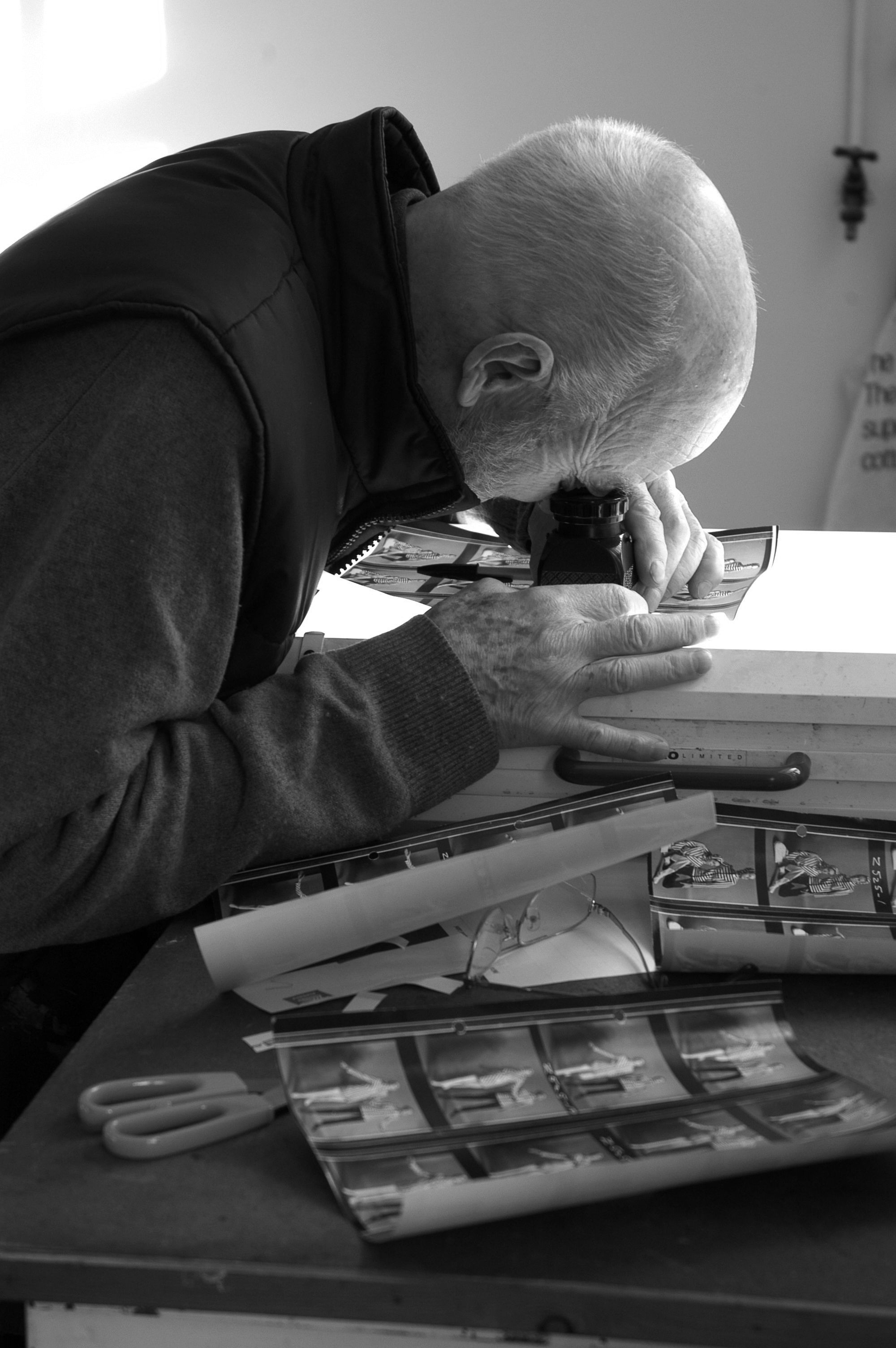
Brian Duffy. Photo Chris Duffy. © Duffy Archive
Brian Duffy. Photo Chris Duffy. © Duffy Archive
What is your lasting memory of that time in the studio?
Working with Duffy was an incredible experience. He would call us “general practitioners”, and would often remind us that we’d be one of the last of an era of photographers who worked the way he did.
It was an analogue period. Every image you saw was what the photographer saw through the lens. Duffy understood perspective, lighting, and composition in a way that’s rare today. Nowadays you can take a photo, check it instantly, and edit whatever you don’t like in Photoshop. Back then, the camera never lied; it captured the truth.
How has the craft of photography changed over the years?
Traditional photography exists in a metaphysical space. With someone like Cartier-Bresson, each image represents a moment in time. Not half a second before, not half a second after. There’s immediacy and truth in those pictures.
Digital photography has expanded the envelope of believability. We once shot a Smirnoff advert of a model who appeared to be skydiving while holding a cocktail with no parachute. People asked how we did it - did she land in a net? Was it real? Back then, viewers trusted that photographs didn’t lie. Today, anything is visually possible, and people are aware of that; the truth and magic are lost.
We utilised a local skydiving team, supported by 40-foot poles with simulated wind supplied by a Volkswagen engine with a propeller. The film then had the poles touched out with ink. Today, it can all be done in Photoshop.
What does it mean to you to uphold Duffy’s legacy?
Initially, Duffy didn’t want to do anything with his work, but with his health declining, and my persistence, he eventually agreed. Together we began cataloguing everything, and it soon became clear how extraordinary his body of work was, and how much people wanted to see it!

I’ve been incredibly fortunate to work with my father’s archive. Today, Duffy’s work is held in multiple galleries and museums worldwide, and collectors continue to seek it out. Even now, when I look back at those images, they still feel fresh and contemporary. They perfectly capture their eras, yet remain timeless.
Stay updated with our auctions
Register with Bonhams to follow your favourite collecting categories and get email alerts when new auctions open for bidding. Subscribe here.
 Built with Shorthand