
Boiling point
The CoBrA artists arose in fury from the ashes of the Second World War. Collector Karine Huts tells Lucinda Bredin what the movement means to her
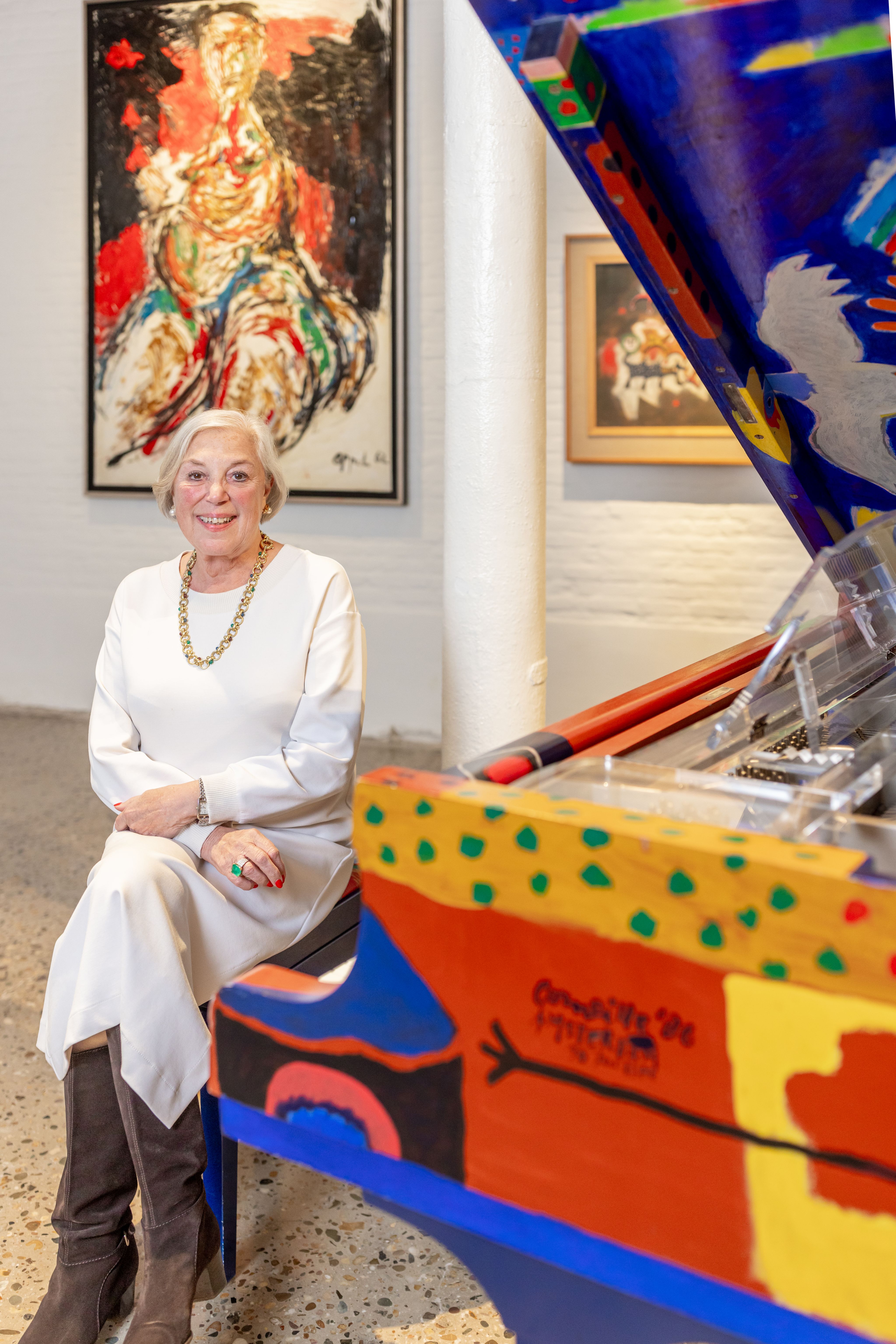

As a definitive survey of works from the CoBrA Depot is offered at auction on 3 December, Lucinda Bredin meets the collector who has amassed the leading collection of the movement. Comprising nearly 200 works by artists such as Asger Jorn, Karel Appel and Pierre Alechinsky, CoBrA and Modern Art reflects the extraordinary dynamism of post-war Europe.
It’s often behind the façade of a terraced house where you find the great surprises. We are in Antwerp in a no-man’s land between the old city and a baffling ring road that, with one false turn, funnels cars in the wrong direction to spit them out the other side of the river. However, take a side street and there’s a row of blank-faced houses alongside large turn-of-the-century industrial units. A turn of the key and one steps from the street into the world of the 1950s: Scandinavian furniture, green floorboards, a vintage television transmitting jumpy black-and-white images, and large, vibrant paintings on the walls. This is the CoBrA Depot, a gallery space devoted to the works and publications of the anarchic art movement that began with a bang and manifesto in 1948, only to dismantle itself three years later in 1951.
The collection features some 200 works by all the leading exponents of this Northern European movement: Karel Appel, Pierre Alechinsky, Corneille, Asger Jorn… indeed, there are so many works that a sizable proportion are displayed on racks in a stacked hang. I know this because a gallery assistant slowly pulls out one of the wire panels to reveal a series of seminal, museum-quality masterpieces. The colours, paint-laden brushstrokes and jangly shapes jostle together on the same mesh square. It’s quite a sight. Oh, and there’s a piano here that was transformed by Corneille.

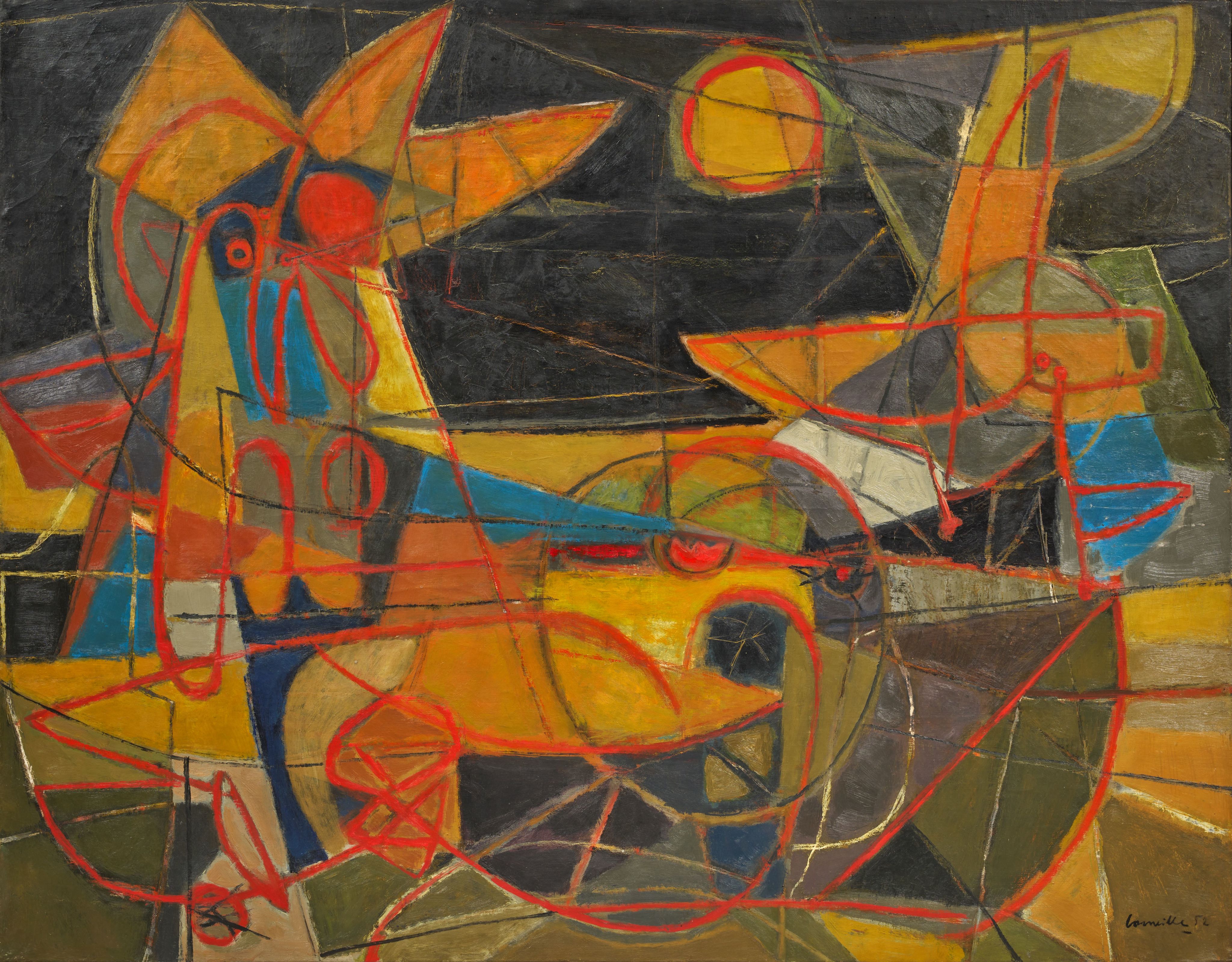
Corneille (1922-2010), Peinture, 1952. From the Personal Collection of Karine Huts
Corneille (1922-2010), Peinture, 1952. From the Personal Collection of Karine Huts
Stay updated with our auctions. Sign up to receive your weekly newsletter of global auctions, stories and more from Bonhams and our sister companies. Subscribe now

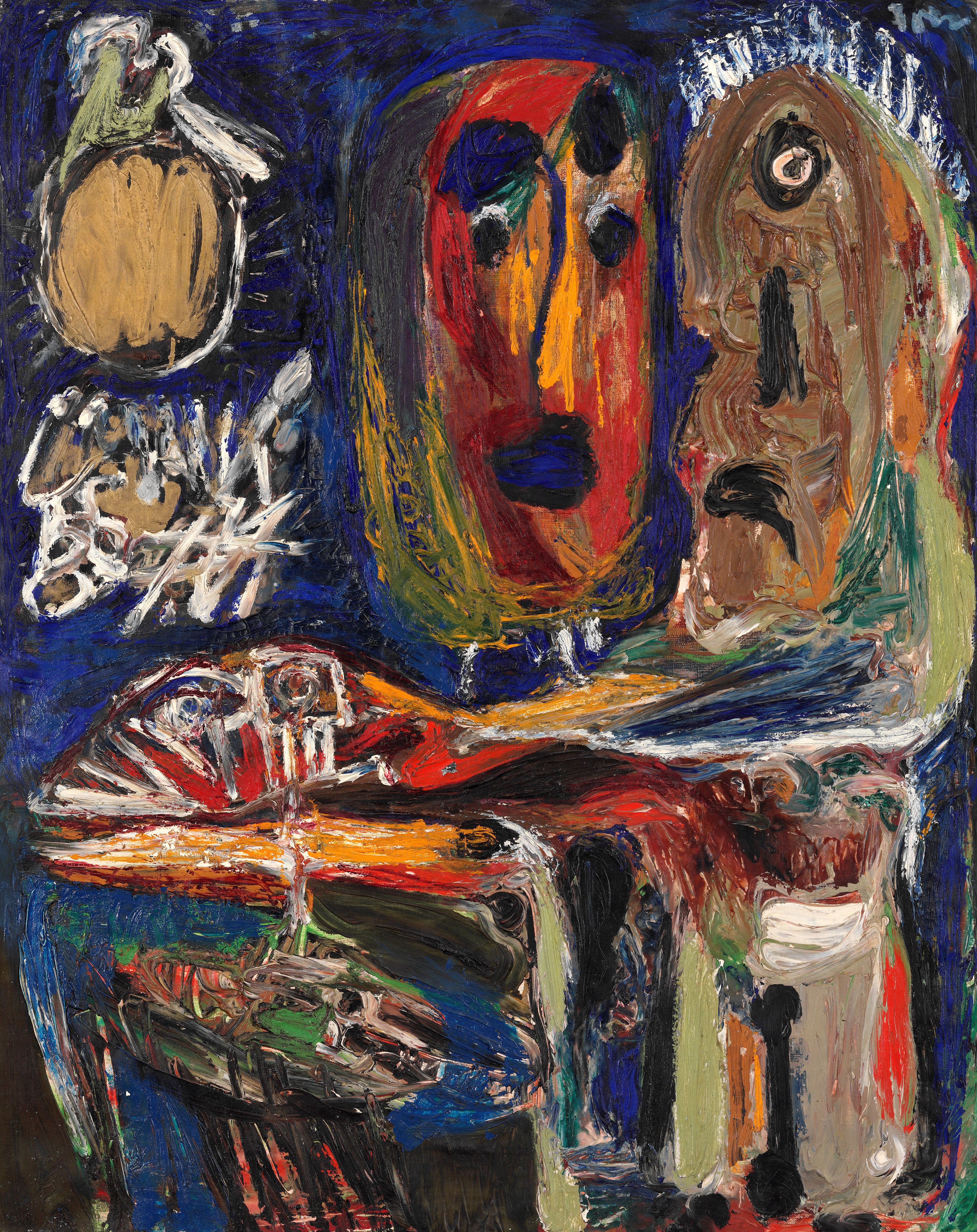
Asger Jorn’s Le Forgeron avuegle d’une mythe muet from the collection of the Huts family
Asger Jorn’s Le Forgeron avuegle d’une mythe muet from the collection of the Huts family
The CoBrA Depot is the brainchild of Karine Huts who, with her husband Fernand Huts, has one of the most impressive collections of CoBrA art. In the mid-1990s, the Huts family bought some works by the CoBrA artists from a fellow politician. Fernand – owner of Katoen Natie, one of the best-known companies in Belgium – was at that time in Parliament, and this collection was, if you like, a high-wattage starter pack on which to build.
The couple have not stopped adding to it since then. For Karine, the movement is “the European answer to the Abstract Expressionism of the Americans”. CoBrA – the name is an amalgamation of the first letters of the three Northern European cities: Copenhagen, Brussels and Amsterdam – exploded into life after the Second World War. As Karine says, “The three countries had had a traumatic occupation under the Nazis, having been isolated from each other and the rest of Europe. And suddenly there was this wonderful idea of cross-border cooperation and healing together. The movement was a band of friends saying let’s go back to basics. These artists were done with all those schools, academies, all the -isms. They wanted to return to their souls. They wanted to rewrite rule books, but also to do away with books.”
We are sitting in Karine’s home on the outskirts of Antwerp – where, incidentally, a Jackson Pollock hangs on the walls, along with old masters and a wondrous work by Léon Spilliaert, the first painting she bought. There are other collections she and her husband have created – there’s a staggering display of Coptic textiles in another space, Art HQ, that could have been plucked from a museum – but one senses that the CoBrA collection is particularly close to her heart. As she says, “There are very few art movements that have set out to change the world.”

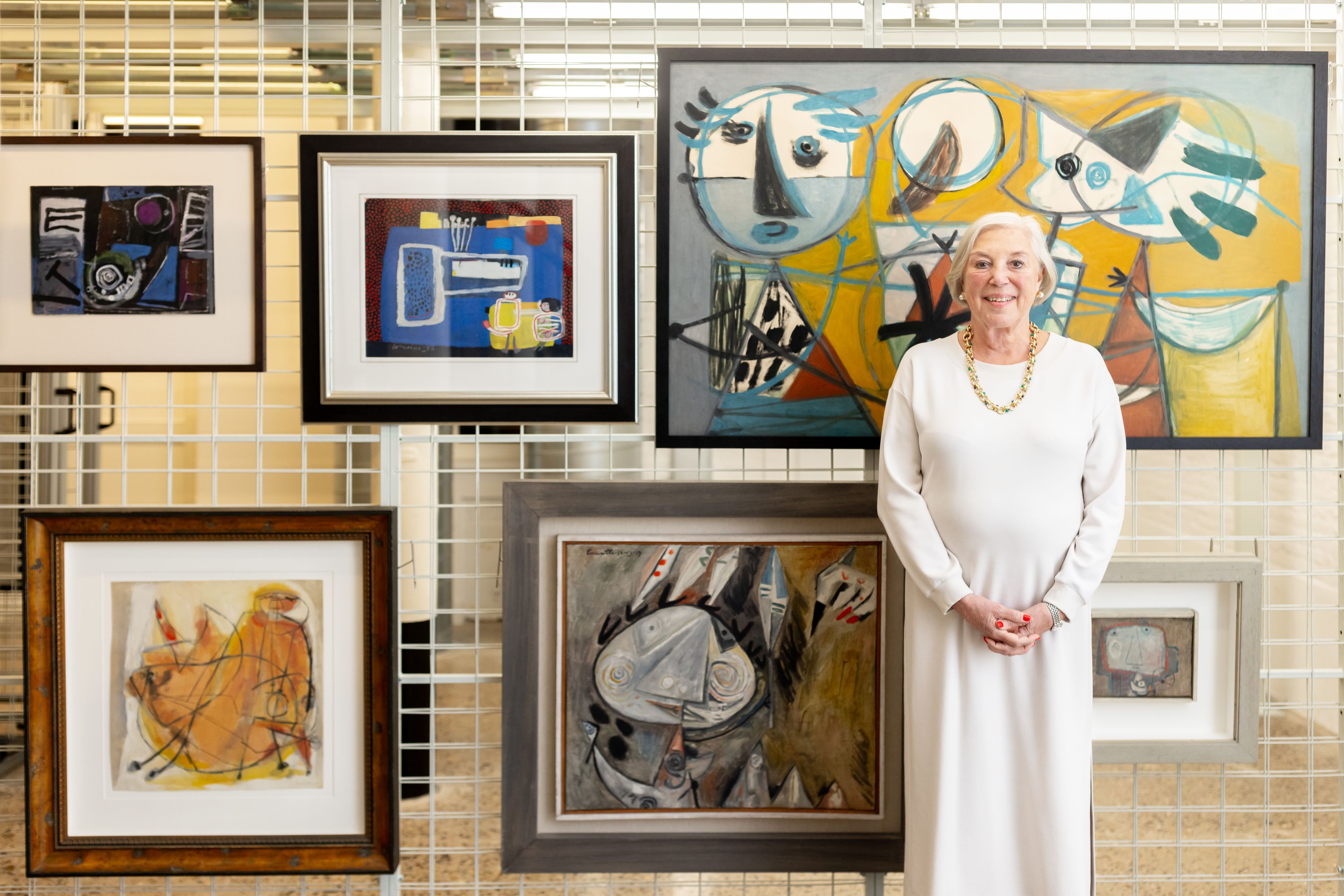
The manifesto drawn up by the core members of CoBrA – Karel Appel, Constant, Corneille, Christian Dotremont, Asger Jorn and Joseph Noiret – was signed in a Paris café in 1948. It did not disappoint. It was a throat-grabbing call to arms entitled La Cause était entendue (‘The case is closed’), which trumpeted: “If you don’t go to extremes, why even go?”. The rallying point was experimentation, spontaneity and freedom of expression. The group cast around for inspiration, and realised that children’s artwork encapsulated all these qualities, as did that of those who were then regarded as being on the fringes: mental health patients and untrained artists, those uncorrupted by the heavy hand of instruction. Karine has written in an essay ‘The Art of Intuition’: “CoBrA paintings really were primitive and annoyingly childish at times. The colours they used seemed second-rate. And, to make matters worse, they smeared their garish primary tones almost formlessly over the canvas. But it was about returning to the source.” She stands by those sentiments – and points out that one of the group’s detractors, Jean Dubuffet, was in fact “the grandfather” of the movement. She says, “Dubuffet didn’t like CoBrA, but he was the first to go back to childhood and savage adolescence.”
Why does Karine think the group came to a juddering halt in 1951? “Well, the artists couldn’t keep their rage at boiling point for their whole life. I mean they had to eat, and I think reality overtook them. Appel saw what happened in America and how small a movement it was compared to Abstract Expressionism. I think he found the group confining – he wanted to extend his boundaries and his borders. He wanted to move on. There is a saying that somebody who is not a rebel at 20 doesn’t have a heart. If he is still a rebel at 40, he doesn’t have a head.”

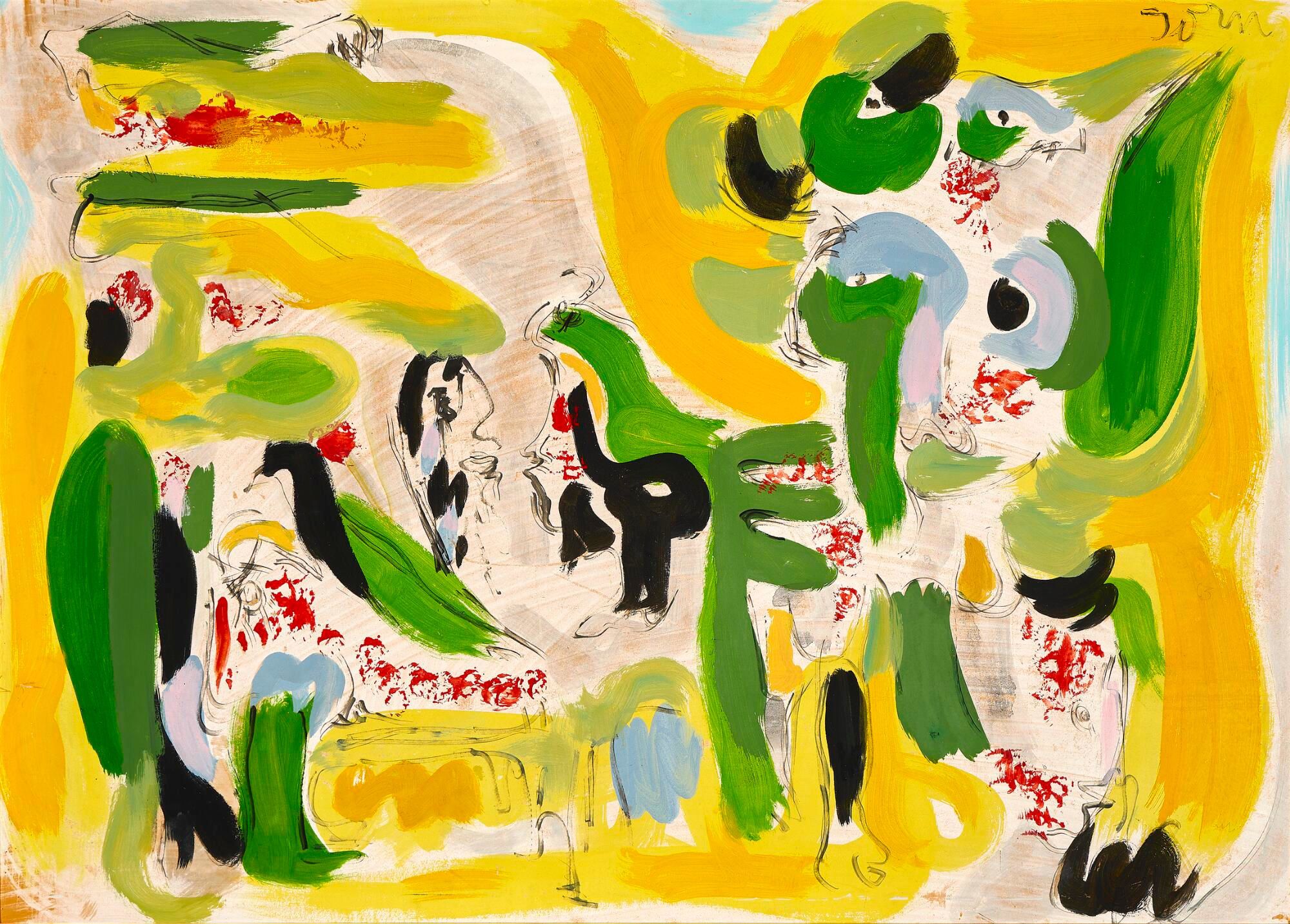
Asger Jorn: Untitled, 1953. Estimate: DKK1,500,000 - DKK2,000,000 (£170,000 - £220,000)
Asger Jorn: Untitled, 1953. Estimate: DKK1,500,000 - DKK2,000,000 (£170,000 - £220,000)

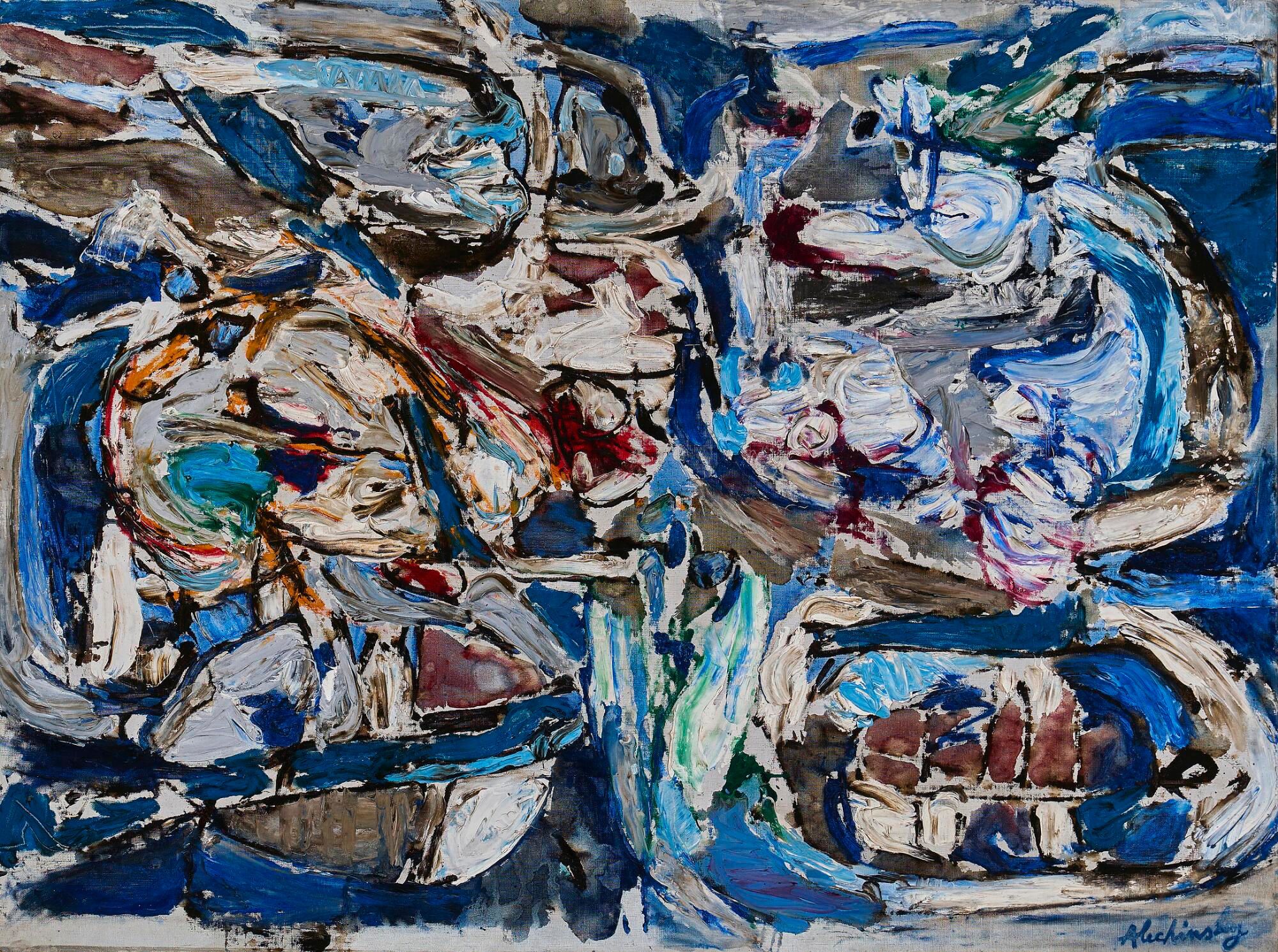
Pierre Alechinsky: "Les inondés", 1959. Estimate: DKK2,000,000 - DKK2,300,000 (£220,000 - £260,000)
Pierre Alechinsky: "Les inondés", 1959. Estimate: DKK2,000,000 - DKK2,300,000 (£220,000 - £260,000)
This extraordinary movement has seen a lot of attention in the past three years. One manifestation has been the dedicated CoBrA sale at Bruun Rasmussen. In December, it will offer Les inondés by Pierre Alechinsky, one of Karine’s favourite artists. No collection would be complete without a Karel Appel, and the forthcoming sale has one from 1964.
For Karine, CoBrA has had an extraordinary impact on the cultural history of the world – and on her. “It was the only contemporaneous response to American Abstract Expressionism, so it is important for that reason alone. But, for me, its more personal: the CoBrA movement arose out of the ruins of Europe. A shared feeling emerged, of togetherness. It is not the subject matter of the works, so much as the colours and their spontaneous, primal approach. CoBrA paintings represent the art of intuition, and so there is always something to discover.”
Lucinda Bredin is Editor of Bonhams Magazine
Register to bid in CoBrA and Modern Art at Bruun Rasmussen
Browse all lots in our upcoming sale on 3 December. For enquiries, contact Niels Raben on nr@bruun-rasmussen.dk or +45 8818 1181.
 Built with Shorthand