
Fine clocks? Tick
Like a Swiss watch, they say. But with Britons behind the most significant clockwork innovations, perhaps the adage needs updating? Simon de Burton makes the case
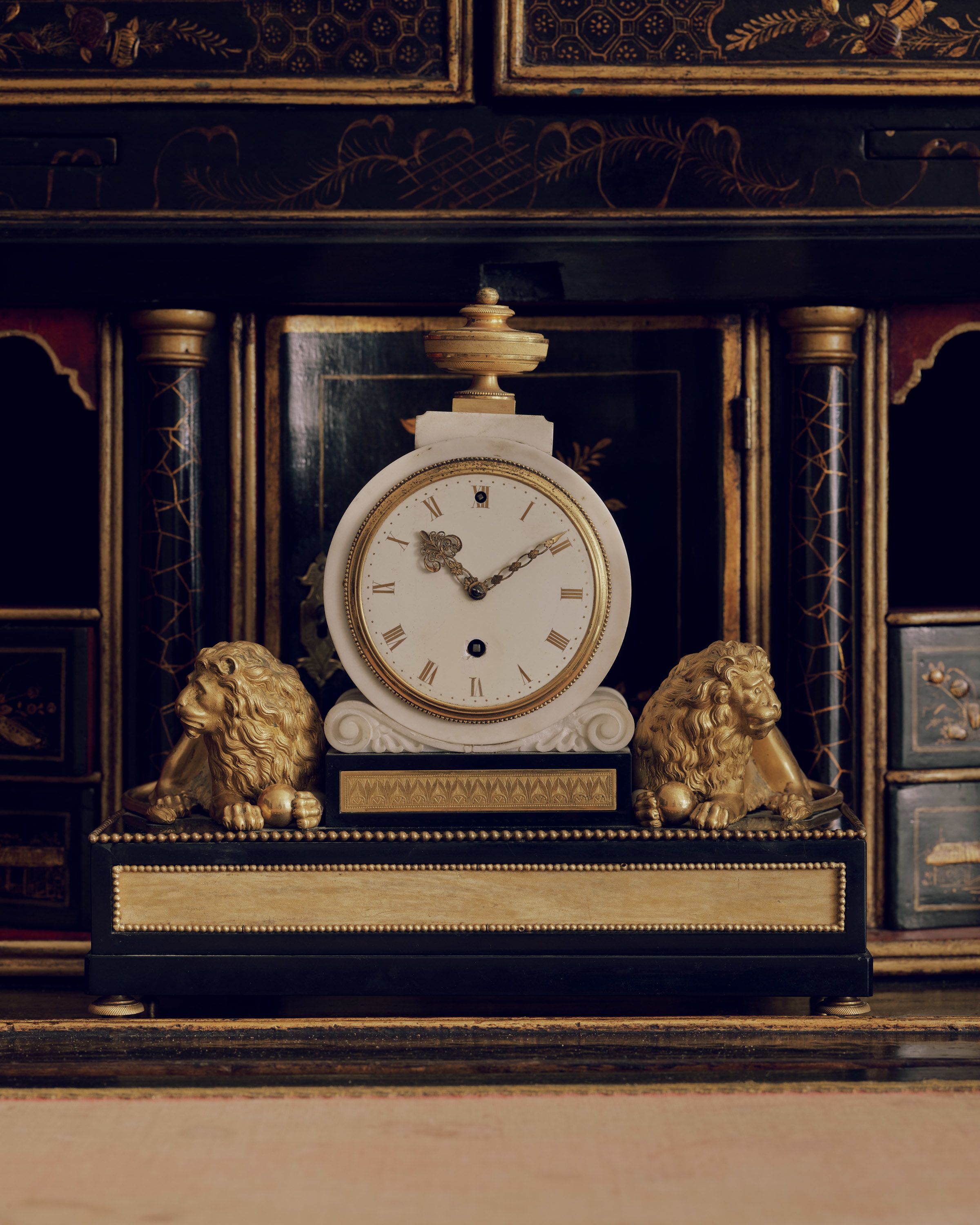

Master at work
Thomas Tompion’s attention to detail and quality control were way ahead of his competitors, with nothing leaving his workshop until he was totally happy with it. For example, all of the functions of this clock can be started, regulated or stopped through the dial. Look at the large sector below ‘XII’: behind it (hidden for transportation) is a dummy pendulum, designed to swing in its slot as a means of showing that the clock is ticking. But, using this dummy, the clock can be started and stopped without having to turn the clock around and open the back door to access the working pendulum inside
Hot stuff
Although marked 0-60, this dial is nothing to do with counting minutes or seconds. The blued steel hand is connected to levers that engage with the pendulum, allowing fine-tuning of the clock. Most useful in summer or winter, it might also be used if the clock were moved to a warmer room
Tolls for thee?
Most modern owners delight in the fact that every hour they can experience the same sound that someone heard in London three centuries ago. But ‘S/N’ stands for ‘Strike’ or ‘Not strike’: this lever allows you to select whether or not the clock strikes every hour.
In the dark
Pulling this cord makes the clock repeat the time to the nearest 15 minutes. If it were 10:50, for instance, the cord would make the hour bell strike ten times (for ten o’ clock) followed by three blows on the smaller bell for three sets of 15 minutes past the hour. Before artificial light was readily available, this was an invaluable aid if you wanted to know the time in the middle of the night. Unlike almost any other maker, Tompion made his repeating system so that it could be activated from either side of the case.
Gives no quarter
Modern clocks divide the hours into halves and quarters (‘half past two’, ‘quarter to three’), but in the 17th century a smaller division was also used – the ‘half quarter’. Careful inspection of this chapter ring reveals small motifs halfway between the quarters, at 7 ½, 22 ½, 37 ½ and 52 ½ minutes past. These early clocks are a fascinating reminder of this old system.
The Swiss guard their horological achievements with such zeal that it would be easy to believe they invented time itself. But a trip to the Worshipful Company of Clockmakers’ permanent display in London’s Science Museum proves it was the English who came up with all the important ideas.
Robert Hooke invented the balance spring ( c.1660). George Graham introduced the sweep second hand (1700s). Thomas Mudge created the lever escapement (1765). Even the revered tourbillon – so revered, in fact, that modern watches often show off the mechanism as part of their design – was conceived by Cornishman John Arnold, although it was subsequently perfected and patented by his Prussian friend Abraham-Louis Breguet.
So it’s no surprise that the ultimate aim of many a clock collector is to own timepieces signed by two of the giants of English horology: Thomas Tompion and Joseph Knibb.
But such is the rarity of a Tompion or a Knibb that few connoisseurs realise their ambition – which makes it all the more remarkable that the Alan Elliot Collection of Fine English clocks, offered by Bonhams in December, includes two of the former and one of the latter.

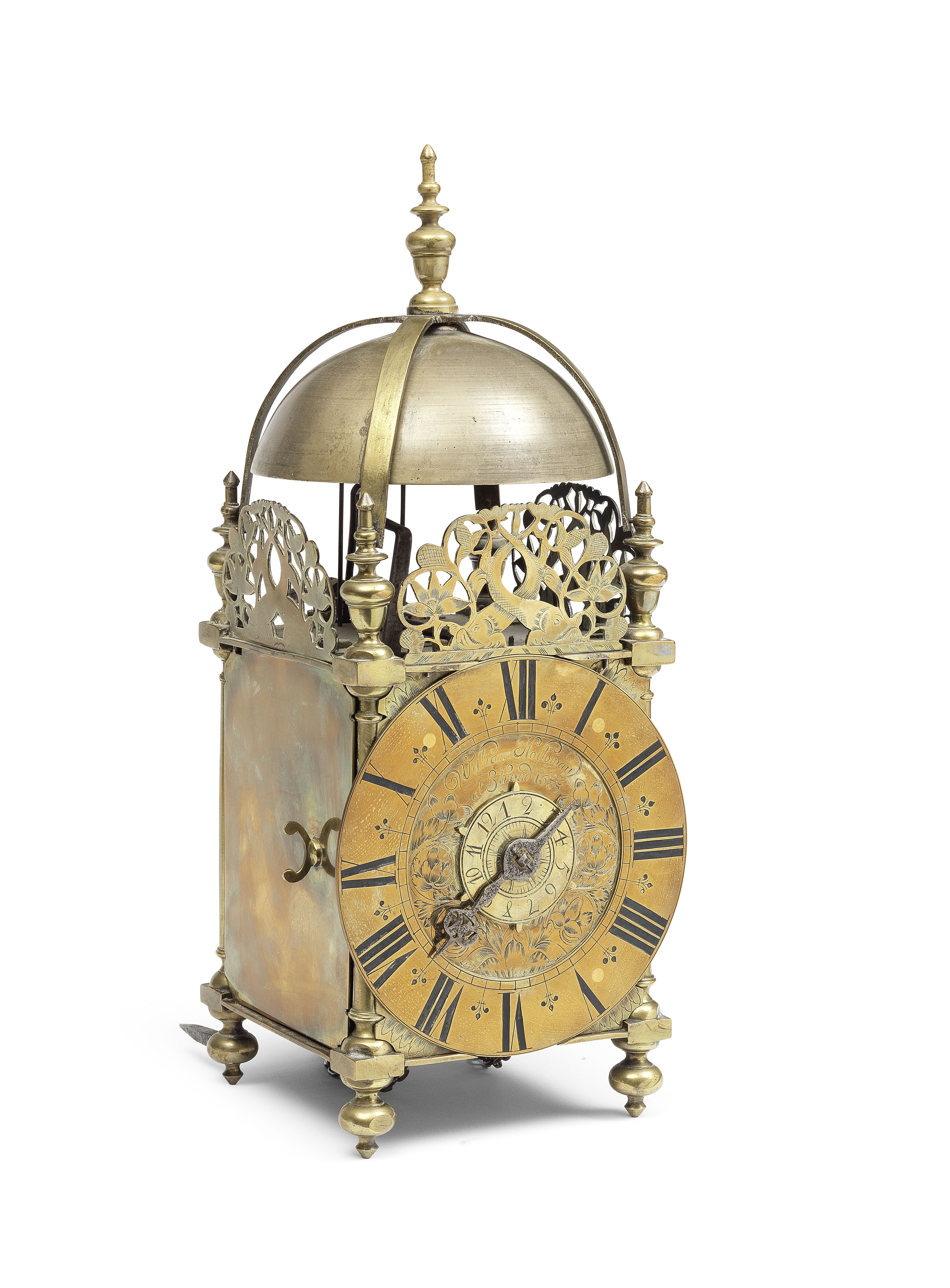
Lot 74. A late 17th-century brass striking lantern clock William Holloway, Stroud, 1685. Estimate: £4,000 - 6,000
Lot 74. A late 17th-century brass striking lantern clock William Holloway, Stroud, 1685. Estimate: £4,000 - 6,000

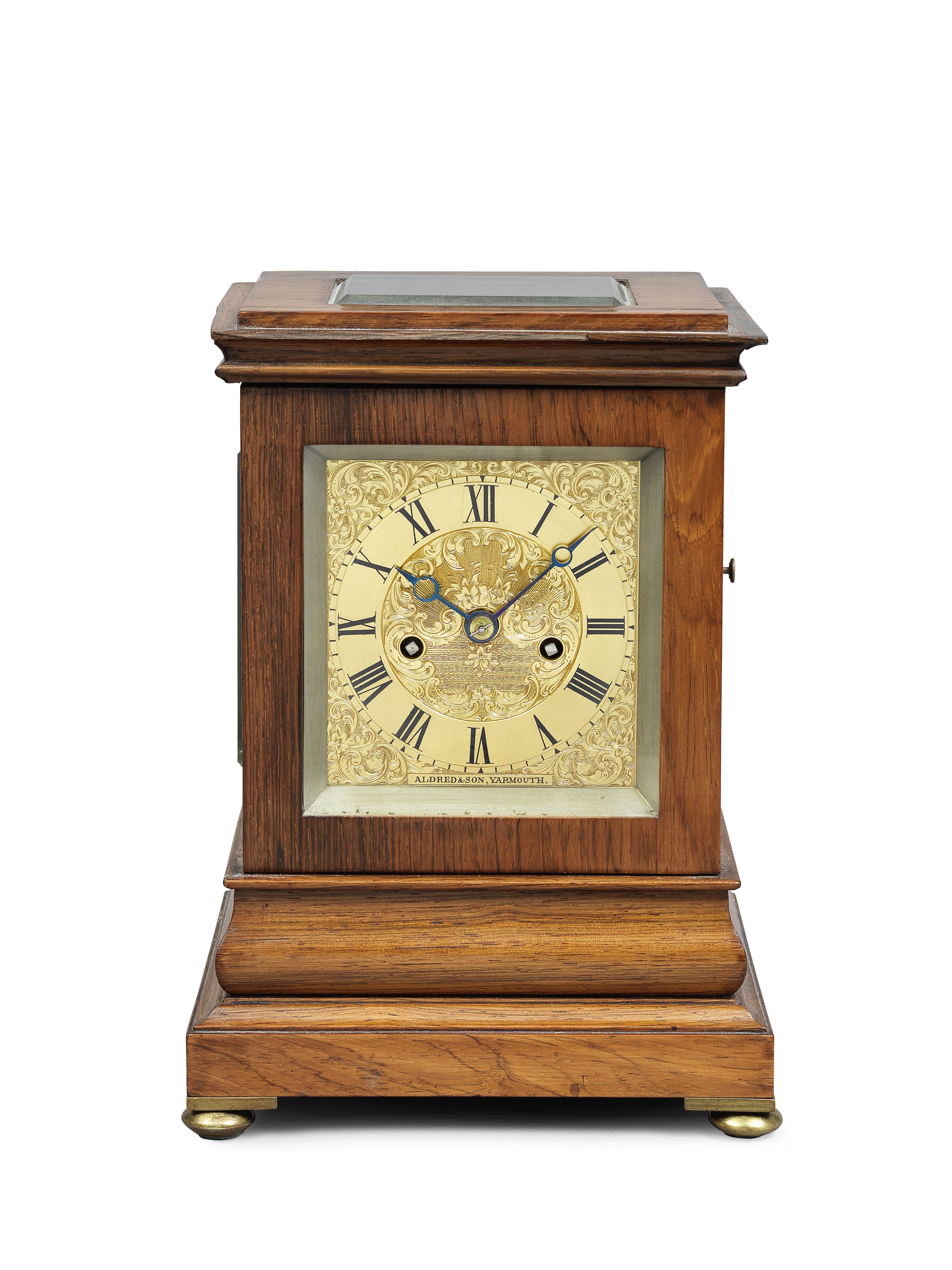
Lot 75. A late 19th-century rosewood striking and repeating ‘four glass’ library clock Aldred & Son, Yarmouth. Estimate: £2,000 - 3,000
Lot 75. A late 19th-century rosewood striking and repeating ‘four glass’ library clock Aldred & Son, Yarmouth. Estimate: £2,000 - 3,000
The two Tompions comprise his ebony table clock, number 198 from around 1692, and an early 18th-century walnut long-case clock made during a brief partnership with Edward Banger, husband of his niece.
The Knibb also takes the form of a long-case clock, this time featuring the maker’s ingenious ‘Roman’ striking system that conserves power by using a high-pitched bell to signify a single hour and a deeper one to signify multiples of five – thus saving 9,216 hammer blows during the clock’s three months of autonomy, compared with a conventional mechanism that strikes each hour individually.
As well as sharing a genius for horological innovation, Tompion and Knibb shared an epoch, having lived almost parallel lives through what is widely regarded as the ‘golden era’ of clockmaking: Tompion was born in 1639 and died in 1713; Knibb was born in 1640, died in 1711. And, as these brief histories of the two men demonstrate, there were several other coincidences in their careers.

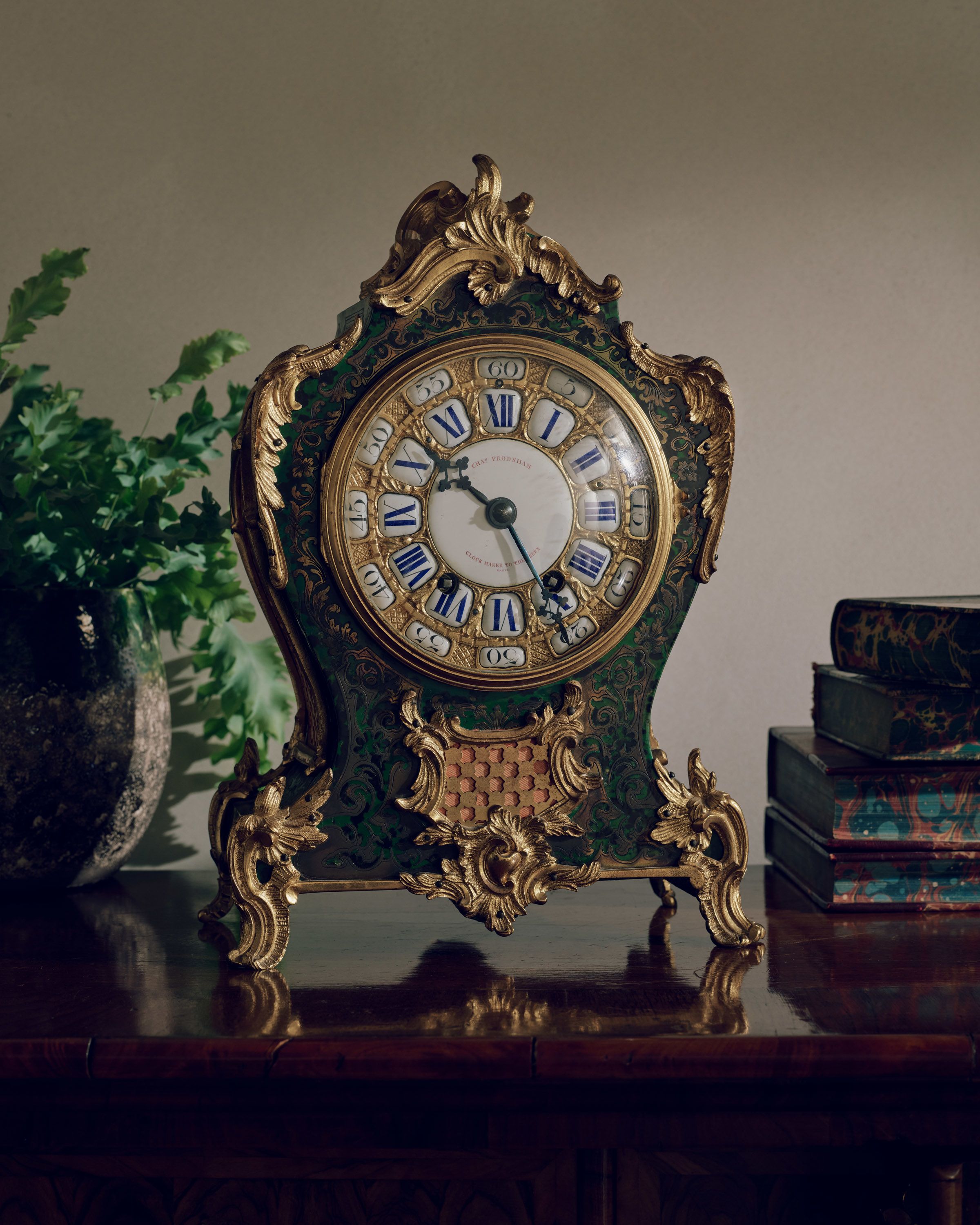
THOMAS TOMPION
Tompion was born in Northill, Bedfordshire, the son of a blacksmith. It is clear, therefore, that he didn’t learn his trade from his father, so how he settled on a life in horology is a mystery.
What is known is that by the time he moved to London in 1671, he was so accomplished in his craft that he was made a Brother of the Clockmakers’ Company. Within three years, he had prospered sufficiently to be able to buy a workshop on the corner of Water Lane and Fleet Street, at which he hung his sign of ‘the dial and three crowns’.
In the same year, Tompion became friendly with the aforementioned Robert Hooke, who held the post of Curator of Experiments with the Royal Society.
Hooke introduced Tompion to the astronomer John Flamsteed and to the mathematician Sir Jonas Moore who, between them, provided Tompion with the understanding necessary for him to devise an innovative balance-spring regulator that led to his watches becoming coveted far and wide. Indeed, Hooke himself bought one and showed it to King Charles I, paving the way for a string of royal commissions.
By the late 1670s, Tompion’s clocks had found their way into the Royal Observatory, and his clients included the aristocracy and well-to-do business people of the era, all of whom coveted the robust, reliable and often complex mechanisms that had become trademarks of his timepieces.
Helpfully for scholars, Tompion began to number his clocks in around 1680, often stamping both the movements and the cases, enabling them to be understood in chronological order and more easily identified.
Regardless of the numbering, Tompion’s clocks can often be pinpointed as having been made before or after 1690 simply by their appearance. The aesthetic of ‘pre-’ models was generally one of restrained elegance; ‘post-’ examples were more flamboyant, in keeping with the style of Tompion’s second royal patron William III, who appreciated the elaborate designs favoured by the French. The arrival of Queen Anne to the throne, however, saw Tompion’s clocks revert to a more sober look.
Regardless of what they were housed in, his mechanisms were always of unimpeachable quality and masterful workmanship.
He died in November 1713 and, befitting the man they call ‘the father of English clockmaking’, he was honoured by having his body was laid to rest in Westminster Abbey

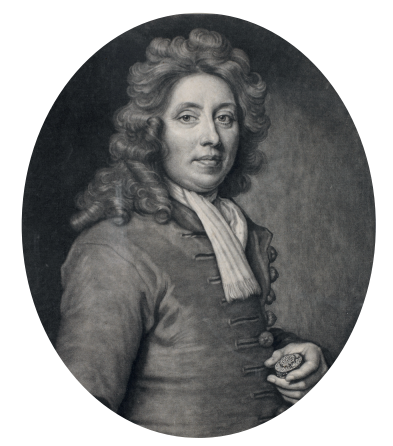
J Smith (after Godfrey Kneller), Portrait of Thomas Tompion, Automatopaeus
J Smith (after Godfrey Kneller), Portrait of Thomas Tompion, Automatopaeus

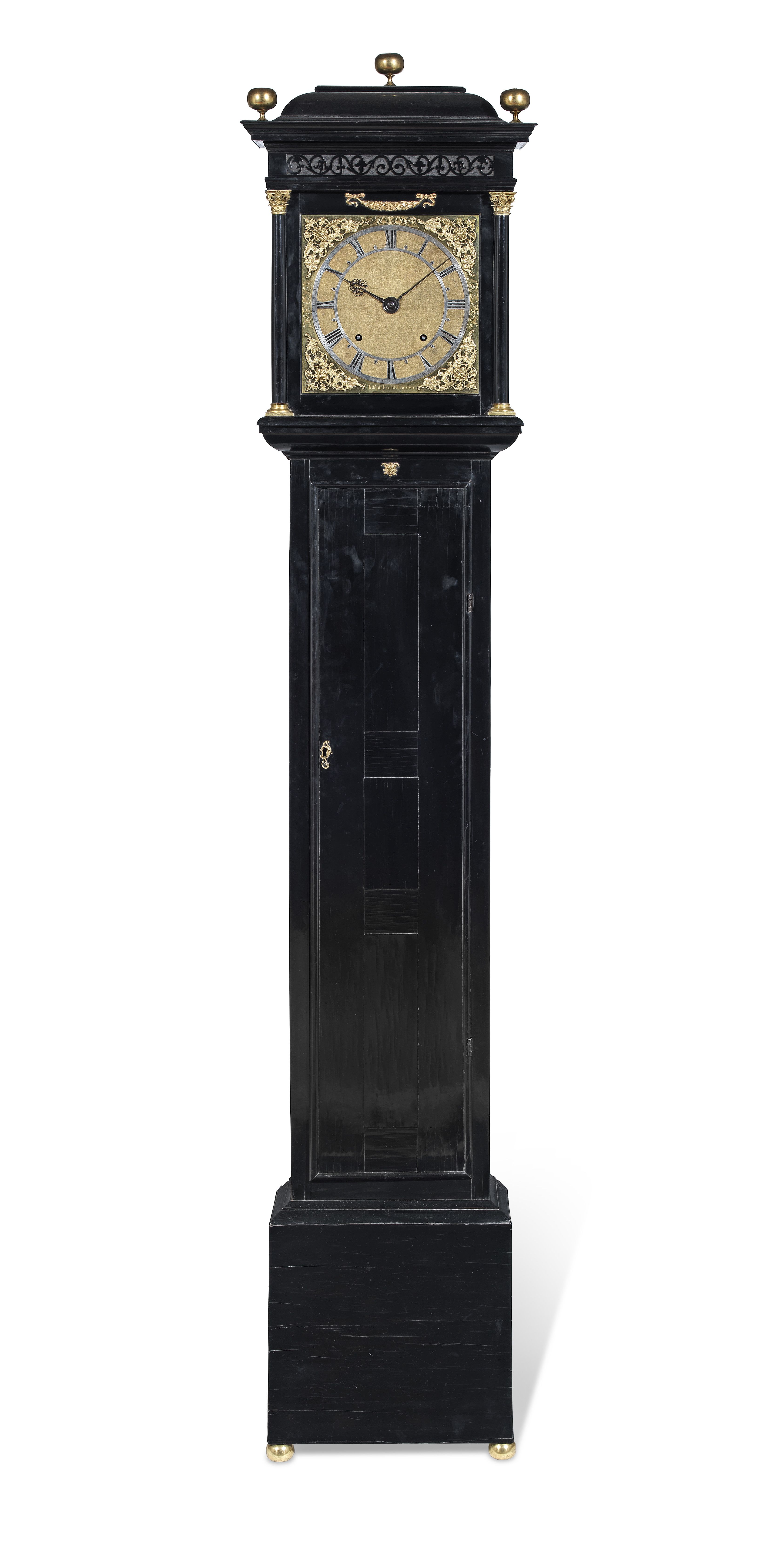
Lot 81. A late 17th-century ebony veneered long-case clock of three-month duration with ‘Roman’-striking and one-and-a-quarter second pendulum Joseph Knibb, London. Estimate: £120,000 - 180,000
Lot 81. A late 17th-century ebony veneered long-case clock of three-month duration with ‘Roman’-striking and one-and-a-quarter second pendulum Joseph Knibb, London. Estimate: £120,000 - 180,000
JOSEPH KNIBB
Unlike Tompion, Knibb came from a well-established family of clockmakers on the borders of Buckinghamshire. He served an apprenticeship at his cousin Samuel’s workshop in Newport Pagnell.
Knibb established his own business in Oxford at the young age of 22 and he, in turn, employed his brother John as an apprentice during the late 1660s.
But, at the turn of the next decade, Knibb left for London, probably to take over the work left behind by his cousin. Samuel had moved there in 1663, only to die at the young age of 45 – although not before establishing himself as a master of his craft, who created two clocks for use in Windsor Castle at the behest of Charles II.
Like Tompion, Knibb hung his sign – ‘the dial’ – above a workshop in Fleet Street, only 350 metres away from that of his equally brilliant contemporary.
It was during his time in London that Knibb was at his most prolific and innovative, making table clocks, night clocks, wall-hanging clocks and lantern clocks, as well as inventing the striking mechanism used in the Alan Elliot long-case clock offered by Bonhams.
But, despite his undisputed brilliance as a horologist, Knibb’s business went into a gradual decline, with competition having increased and styles changed. In the end, he had to sell off all the stock from the Fleet Street workshop through an advertisement in The London Gazette. He then retired to Buckinghamshire in 1697, buying the 230-acre Green End Farm in Hanslope, where he continued small-scale production until his death 14 years later.
Knibb bequeathed the farm to his younger brother and former apprentice, John, whose main base was in Oxford. Evidence survives, however, suggesting that John continued his older and more-famous sibling’s work at Green End: his only clock known still to exist is signed ‘John Knibb Hanslapp’.
Simon de Burton writes about motoring and watches for the Financial Times
 Built with Shorthand