
Life in colour

Rachel Jones is a painter for the modern era. Her visceral abstract visual language grapples with the psychologies of colour, brushstroke and repeated motif, and she often extrapolates her ideas into other realms – installation, sound, performance. One of the youngest to be shown in Hayward Gallery’s Mixing It Up: Painting Today at the end of 2021, and with a Chisenhale Gallery exhibition ahead of her, Jones is an artist whose style is deeply nuanced, but it also screams. I have a powerful memory from last year of gathering in the name of Black karaoke and Rachel Jones, as part of her collaboration with project space Harlesden High Street. Named Blessings Pon Blessings, the installation, sound and musical performance piece was inspired by lyrics from the Mr Vegas song ‘I Am Blessed’ and paid homage to Jones’s upbringing. Immersed in the small space in Harlesden, complete with metallic streamer curtains and ’90s R ’n’ B hits shaking the walls, listening to Jones duet with her mother – the work dragged the viewer collar-first into the interior life of Black British womanhood. While being coerced to sing, my eyes darted around the pop cultural and art references that wallpapered the space – posters Jones encountered during her time at Glasgow School of Art, affirmations of self-love, Black joy, and a love for Black community and culture. Works by Carrie Mae Weems, Cheyenne Julien and Lynette Yiadom-Boakye seemed to dance to the throb of Jamelia’s ‘Superstar’ as it played.
Jones prioritises the Black audience, as she explained in an illuminating interview with Louisa Buck in The Art Newspaper ahead of her exhibition SMIIILLLLEEEE at Thaddaeus Ropac, London. “The titles give opportunities to… think about language that is familiar to me or ways that I might speak with certain friends and family, and giving that a space to be shared and accessed, but without being exclusive... changing the tone and planting the idea of there being a voice behind it.” When we look at her paintings, we are living as Rachel Jones, embedded in her consciousness.

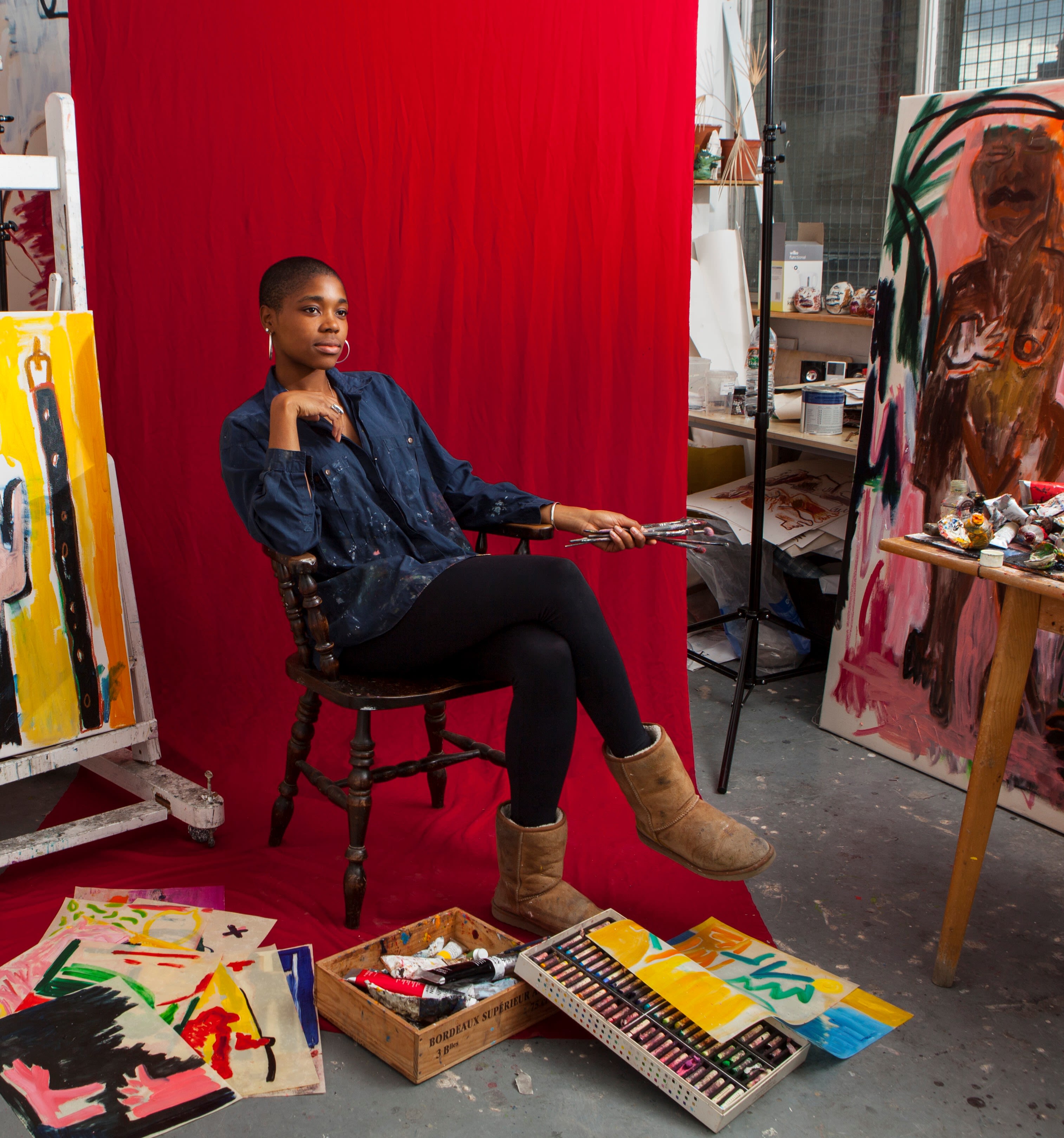
This idea runs through her work. She is encouraging us to throw away the handbook and to see with our very own eyes. Jones elaborates in the same interview on how she hopes the viewer feels when looking at her work: “The dream is for you to have that moment of thinking about the image or colour and then to go outside of that, and think about how it relates to things that are from your own life or from your own understanding of art.” She is speaking to a legacy of abstraction in a way that is deeply personal. In her work, there is no escaping the artist – nothing is merely at surface level. Viewing her work is at once seduction and assault – afterwards, we step back, look again.
Jones also asserts the motif of the mouth and teeth regularly, encouraging them to be seen as a symbolic and literal entry point to the self. The mouth is fundamental to human activity. It is consumption, speech, breath, romance; it is communication, interaction, almost a door to the soul. It is a site of pleasure and pain – we taste, kiss, talk, sing, shout with it. It can be a portal to hell – as in the medieval hellmouth – or an entrance to delight.
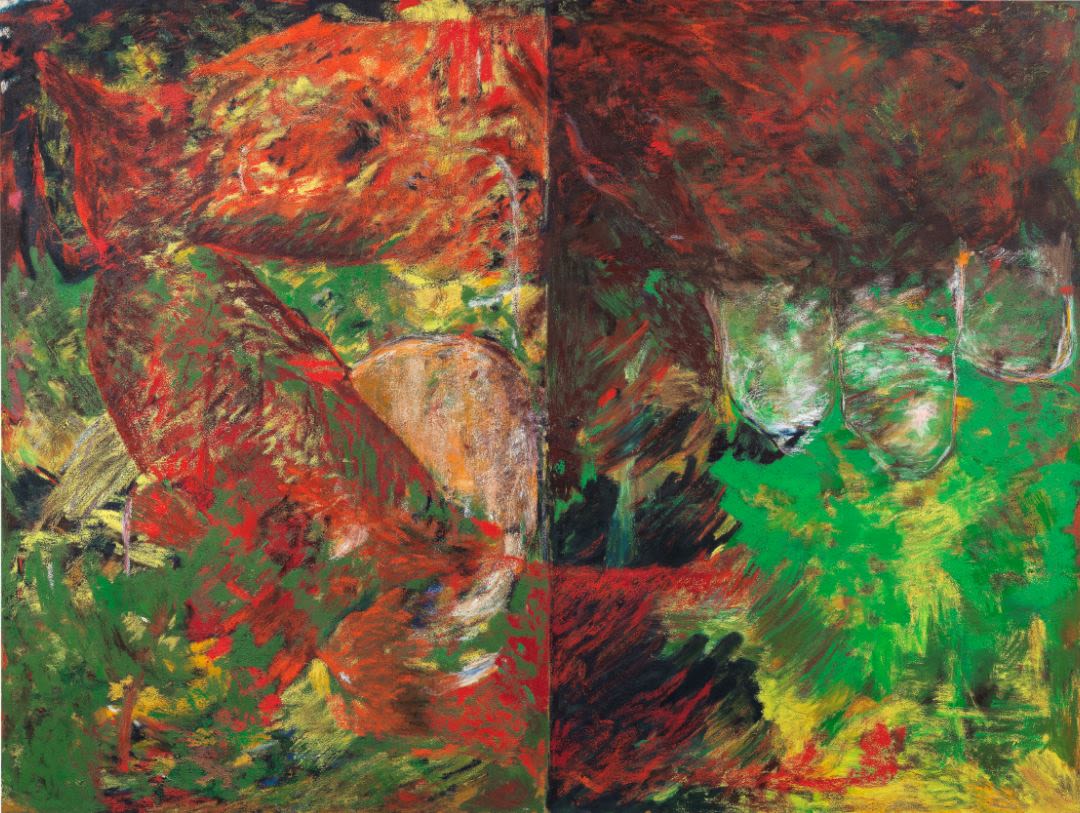
Teeth are strongly symbolic for the Black community, relating to tooth adornments like grills and gold caps. Jones ushers us into this realm by, in her words, “using motifs and colour as a way to communicate ideas about the interiority of Black bodies and their lived experience”. And, as the pigments run wild in her paintings, it is the recurrent motif of the teeth that seems to resist colour – often as subtle but assured pale lines, as seen in Spliced Structure (7) (2019), which was offered by Bonhams in London’s Post-War & Contemporary sale back in March 2022. Here hazy, loosely drawn incisors seem to hang from lips of juicy terracotta and fiery orange.

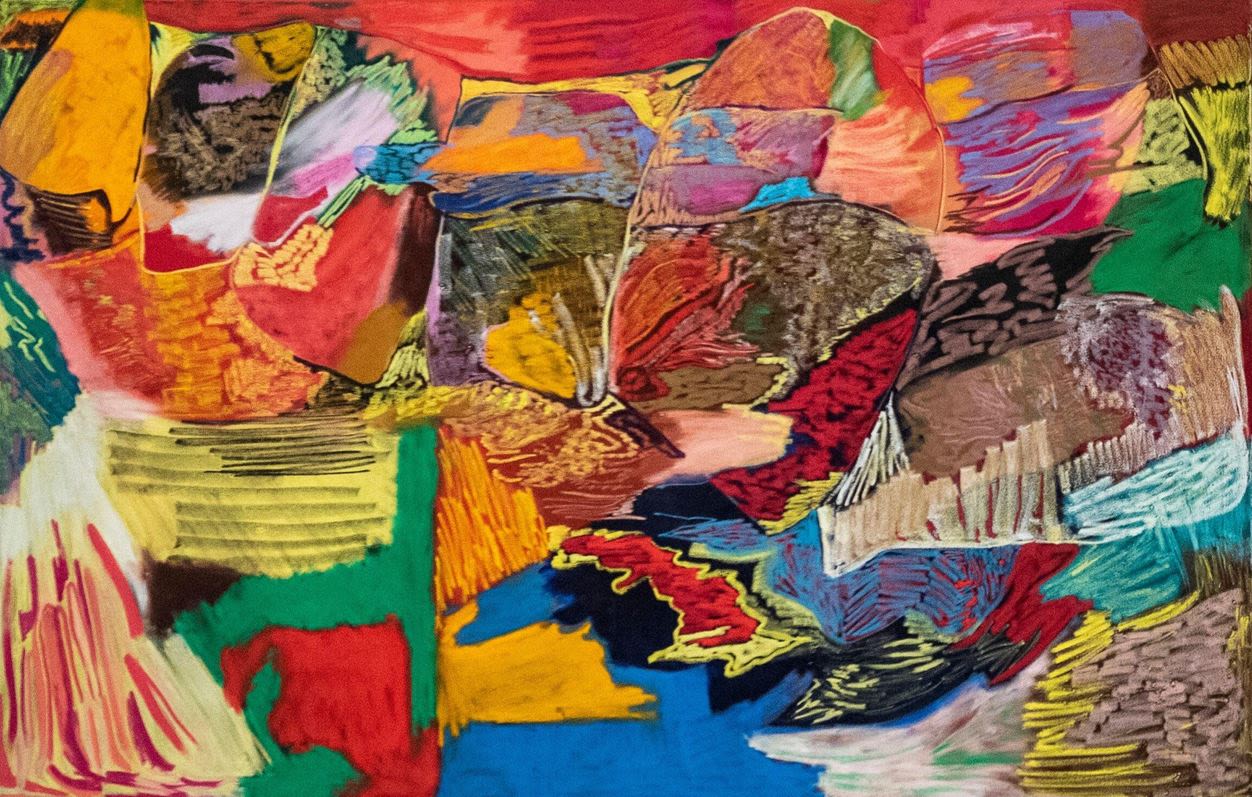
A work from Rachel Jones’s 2021 series, “lick your teeth, they so clutch”, exhibited in 2021 at the Hayward Gallery
A work from Rachel Jones’s 2021 series, “lick your teeth, they so clutch”, exhibited in 2021 at the Hayward Gallery

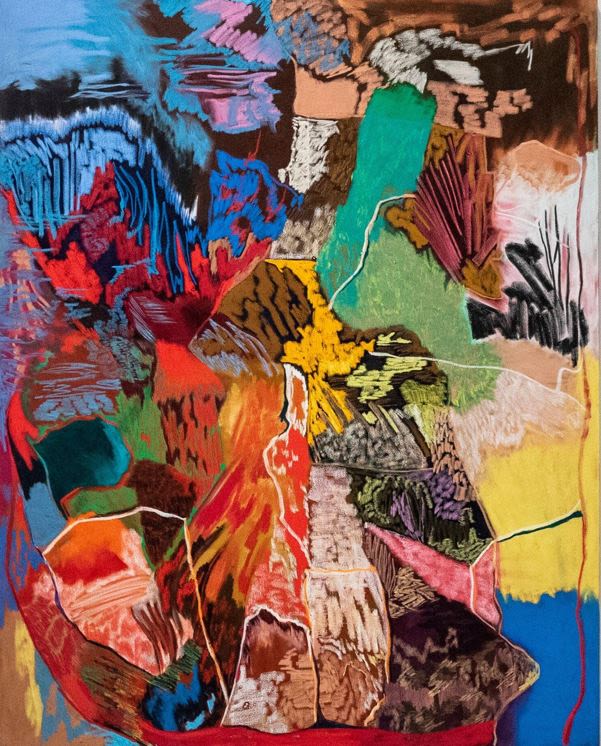
A work from Rachel Jones’s 2021 series, “lick your teeth, they so clutch”, exhibited in 2021 at the Hayward Gallery
A work from Rachel Jones’s 2021 series, “lick your teeth, they so clutch”, exhibited in 2021 at the Hayward Gallery
Jones’s paintings are really large drawings, with pastel and oil stick creating urgent movement. In use, oil sticks are more like pastel rather than the heavy impasto of oil paint. This material is crucial to Jones, who applies thirsty, dry and chalky pastel and layers it with lustrous, thick oil-stick liquid to create depth. Her cross-hatching and a combination of both short and long strokes evoke weaving – and these are the things that you see first. Then figuration tiptoes in, as we seek reason in her undulations of colour. “There’s also this attraction to the idea that it is oil,” Jones suggests. “It’s the same substance that paint is, so there’s this crossing again, this liminal thing of being neither one thing or the other, but both.”
Historically, abstract painting – with its focus on formal subtleties, colour and subliminal messaging – did not fit tidily into the narrative of revolution that was typified in the 1960s by social realism, yet it was a vital component of the era. The expectation that Black artists would create representational art that reflected the Black experience continued through the ’60s – and it lingers.
Following the rise of figuration, the enduring fascination with abstraction rests in how it sparks our curiosity about the furthest reaches of our imaginations and the potential to create something unique. And the legacy of Black abstraction is finally being explored with gusto by painters like Jones.
This is important, as it develops meaning around the Black experience without being didactic. In removing specificity, the artist is freed to flesh out the nuances. Detached from reality, we are presented with entirely new terms with which to understand the world.
Rachel Jones’s work is both literal and metaphorical. In painterly revolt against the historical neglect of the Black experience, her juicy, tactile, abstracted imagery makes intimate, inner experience explicit, as she aims to “seduce, assault and convey the inexplicable nature of my interiority as a Black woman”. Rousing and riling us, she stirs our emotions to find a place of freedom.
Aindrea Emelife is an independent art curator and art historian.
Stay updated with our auctions
Create an account with Bonhams to follow your favourite collecting categories and get email alerts when new auctions are open for bidding.
For the latest news and auction highlights, follow @bonhamscontemporary on Instagram
 Built with Shorthand