
Punching up

Valentine Hugo was quite a woman. An only child and artistic prodigy, she was born in 1887, in the dregs of one century, and she was sufficiently radical to participate fully in the most exciting times of the next, in the world’s most exciting city, with the world’s most exciting people. The city? Paris. The time? The giddy pre-war years. Her peers and friends? Picasso, Max Ernst, Salvador Dali.
Hugo was the only one who owned a car, so naturally she drove the rest of them around. She exhibited at the same Surrealist salons; she was married to the great-grandson of Victor Hugo, but had a tempestuous affair with the father of Surrealism, André Breton – on one occasion punching him in the mouth.
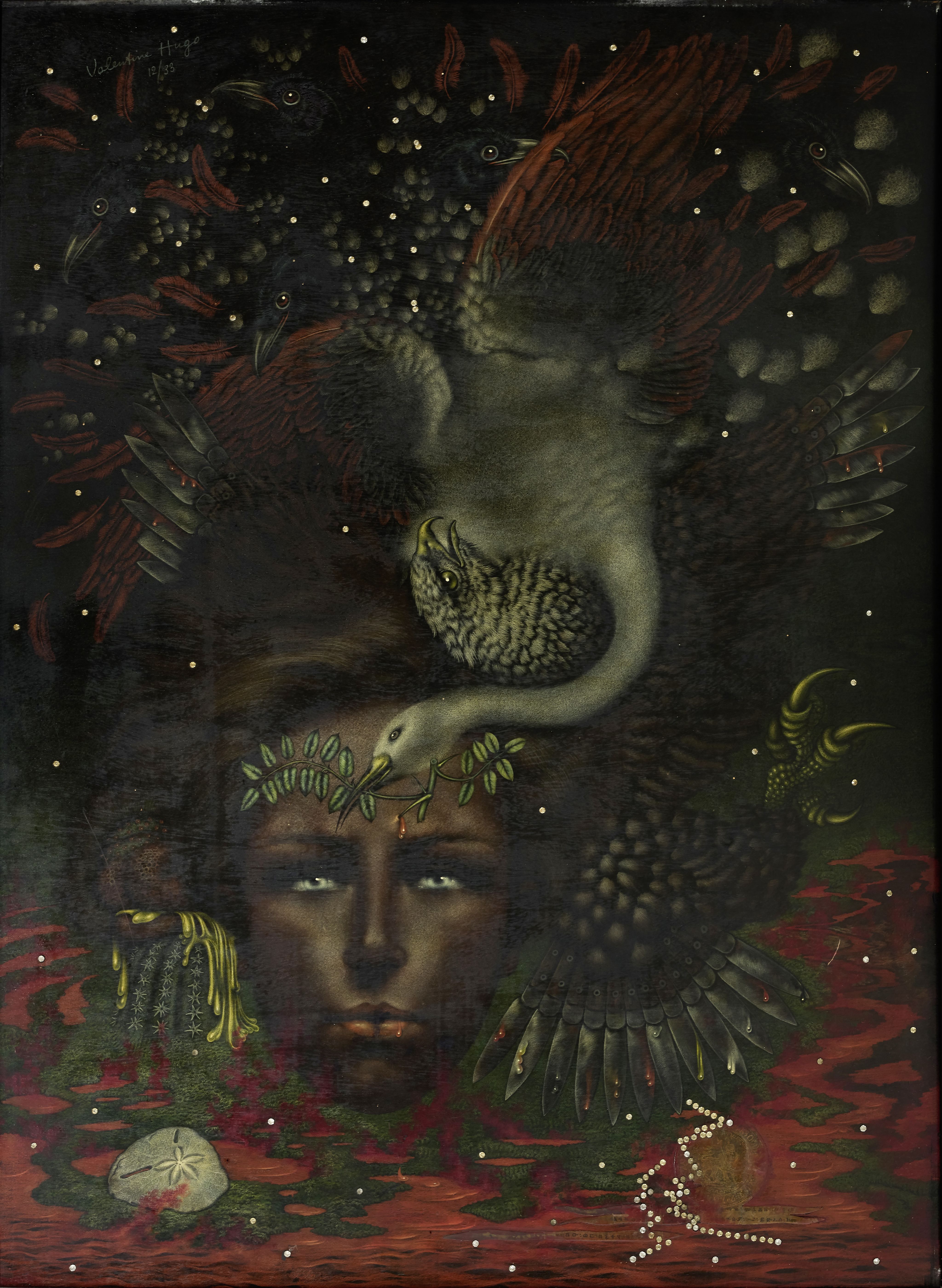
There weren’t many women in the Surrealist movement, but Valentine Hugo more than makes up for that. In 1913, her work hung at the Théâtre des Champs-Elysées during the infamous premiere of Stravinsky’s The Rite of Spring, during which the audience actually rioted. In 1917, she worked on Parade for Jean Cocteau and the Ballets Russes, that legendary show for which Erik Satie provided the music and Pablo Picasso the costumes. In the programme notes, written by Apollinaire (of course), the word ‘Surrealism’ is coined for the first time, and Hugo was a paid-up member of the gang. She did everything: engraving, drawing, poetry, the ‘exquisite corpse’ game (basically the Surrealists’ intellectual form of Consequences), but – most of all – painting, particularly her masterpiece in oils, the portrait of the Symbolist poet Arthur Rimbaud. This painting is offered by Bonhams in New Bond Street’s The Mind’s Eye / Surrealist Sale in March.

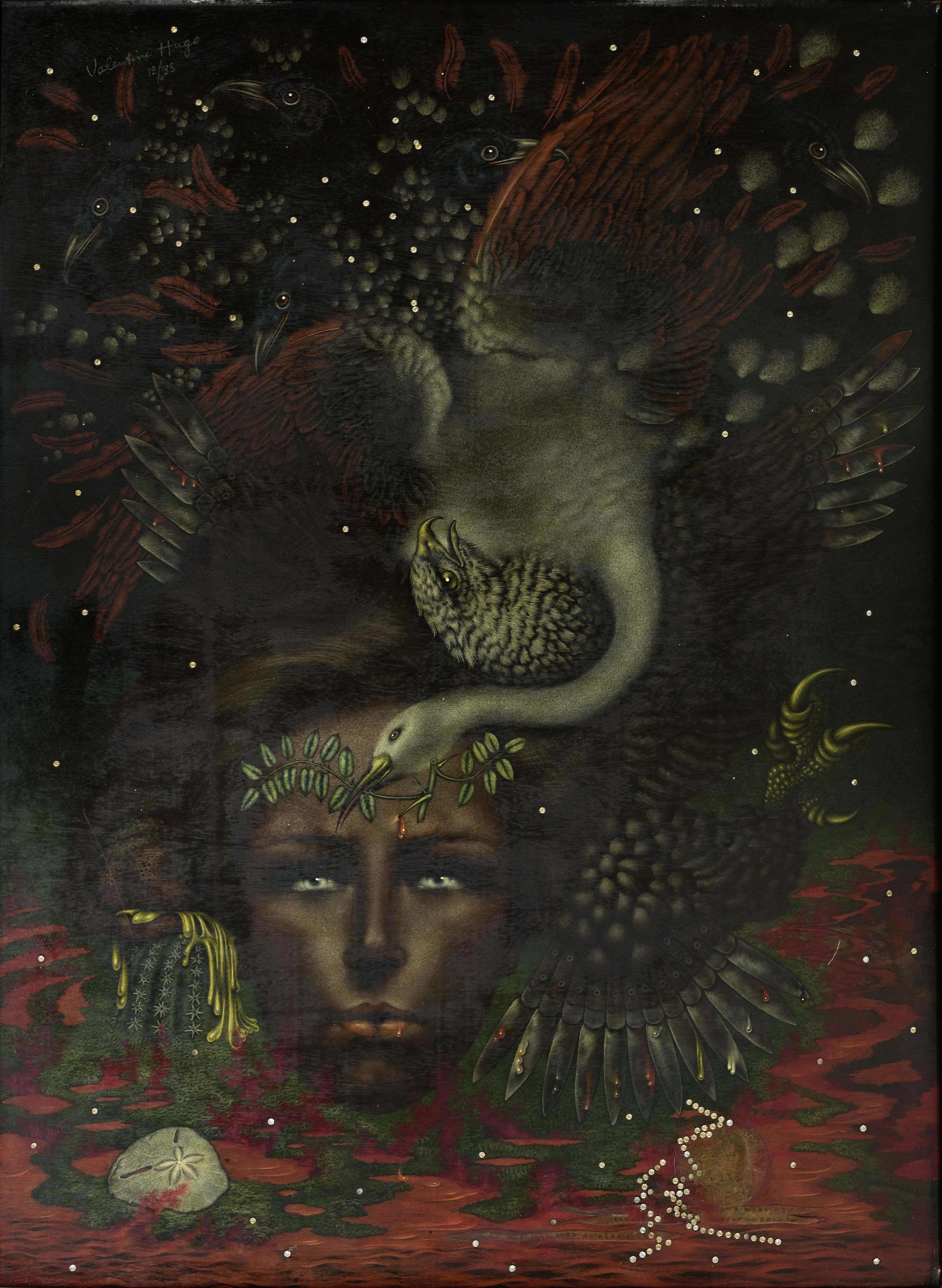
Valentine Hugo (1887-1968). Portrait d’Arthur Rimbaud, painted in 1933. Estimate: £400,000 - 600,000 ($550,000 - 800,000)
Valentine Hugo (1887-1968). Portrait d’Arthur Rimbaud, painted in 1933. Estimate: £400,000 - 600,000 ($550,000 - 800,000)

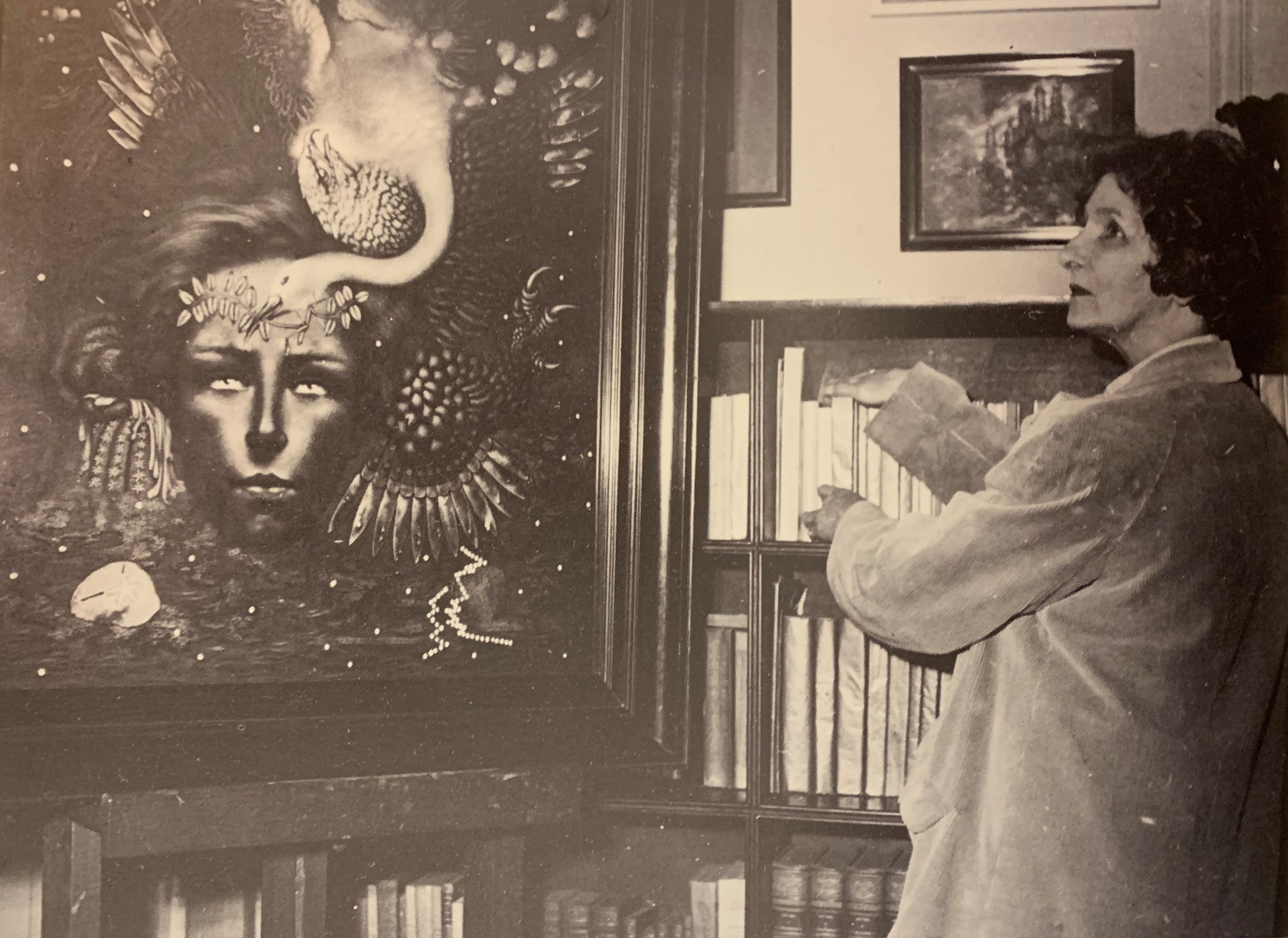
Valentine Hugo with Portrait d’Arthur Rimbaud, which was to be one of her greatest masterpieces
Valentine Hugo with Portrait d’Arthur Rimbaud, which was to be one of her greatest masterpieces
It was Breton, incidentally, who gave her the idea of portraying the doomed French artist whose work, centred as it was on an alternative reality defined by dreams and the unconscious, foreshadows so much of Surrealism. In a radio interview of 1950 with the journalist Georges Charbonnier, Valentine Hugo starts by explaining her love for painting and her disdain for artists who merely copy nature, as opposed to those who are “madly in love with paint, as material and colour.” She then goes on to explain how the inspiration for the picture came after she had told André Breton a few years earlier how she had dreamed of Rimbaud, and that he had encouraged her to do the work.
As it is, the work is dated 1933, two years after Breton and Hugo had split. Theirs had been a violent and unhappy union, resulting in a split lip (him) and a suicide attempt (her). After they had parted, he would never refer to her again. Even worse, he had already left her out of the catalogue of colleagues in his seminal work Le Surréalisme et la Peinture; perhaps here she has painted her revenge.

The portrait seems calm, yet look a bit more deeply at it and violence is not far away. Sparkling rhinestones glitter from its surface; feathers turn into knife blades, blood spills from the surfaces and strange nautical objects speak of an underlying narrative. Is Rimbaud, the father of Symbolism, representing Breton, the father of Surrealism? Is the white swan or crane, carrying piercing leaves in its beak, meant to represent Valentine Hugo? Cocteau called her his “little swan”; maybe this is Hugo herself, at once gouging the flesh of Rimbaud/Breton and, at the same time, in the fatal grasp of an eagle whose feathers turn into knives?
Maybe the painting is at heart a biography of the poet, an artist who led a wild and bohemian life and who was once famously shot in the hand by his fellow poet and lover Paul Verlaine. Perhaps the eagle is Verlaine himself. The painting is weirdly modern, looking almost as if it has been painted using an airbrush, and it also deeply Surreal, with strange liquid oozing from it and a river of blood swirling beneath the calm face of the poet. There is a burrowing sand dollar on one side, customarily used as a symbol of Christianity. Why? Who knows.
What is clear is that the use of collage in the oil painting is a sign of the times. Adding materials onto the surface of a painting was all the rage in those days. The rhinestones, Hugo says to Charbonnier, were inspired by “Picasso, and Max Ernst, and so many others who had for a long time placed all sorts of things on their pictures – paper, fabric and wood.”

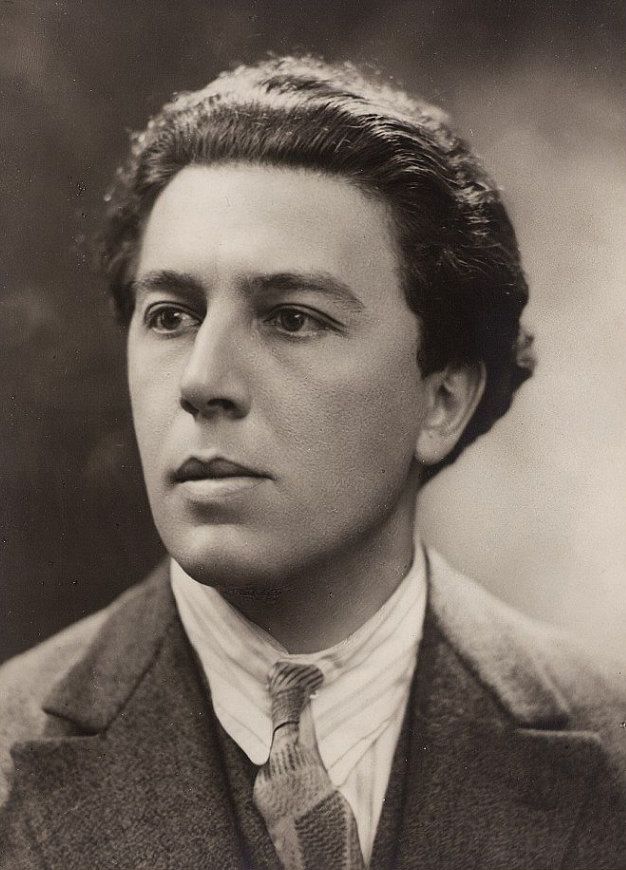
André Breton in 1927, aged 31, as photographed by Henri Manuel, official photographer of the French government
André Breton in 1927, aged 31, as photographed by Henri Manuel, official photographer of the French government

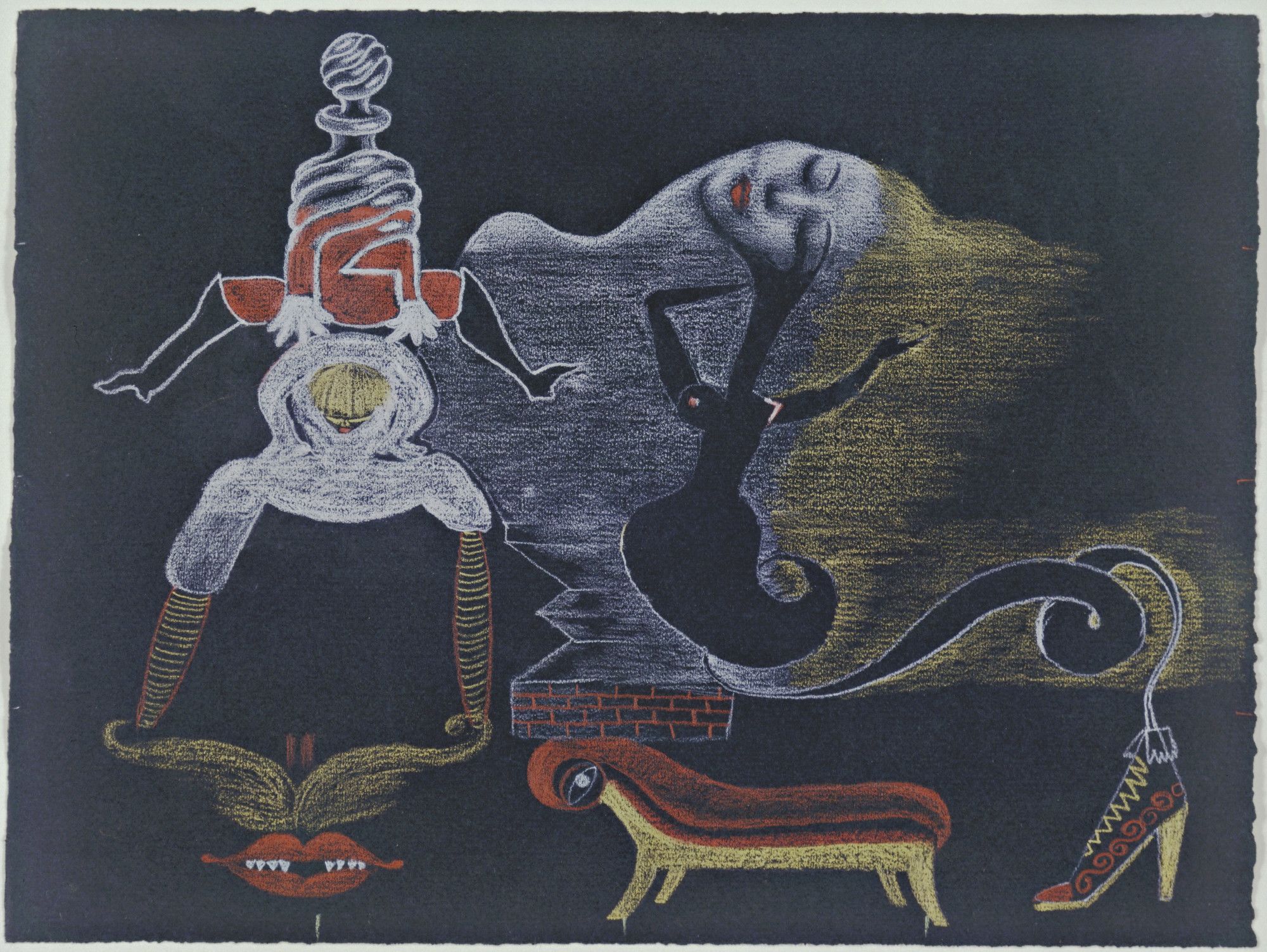
Exquisite Corpse (Cadavre Exquis), created by Hugo and Breton with Tristan Tzara and Greta Knutson, Landscape, c.1933, now in the Museum of Modern Art, New York
Exquisite Corpse (Cadavre Exquis), created by Hugo and Breton with Tristan Tzara and Greta Knutson, Landscape, c.1933, now in the Museum of Modern Art, New York

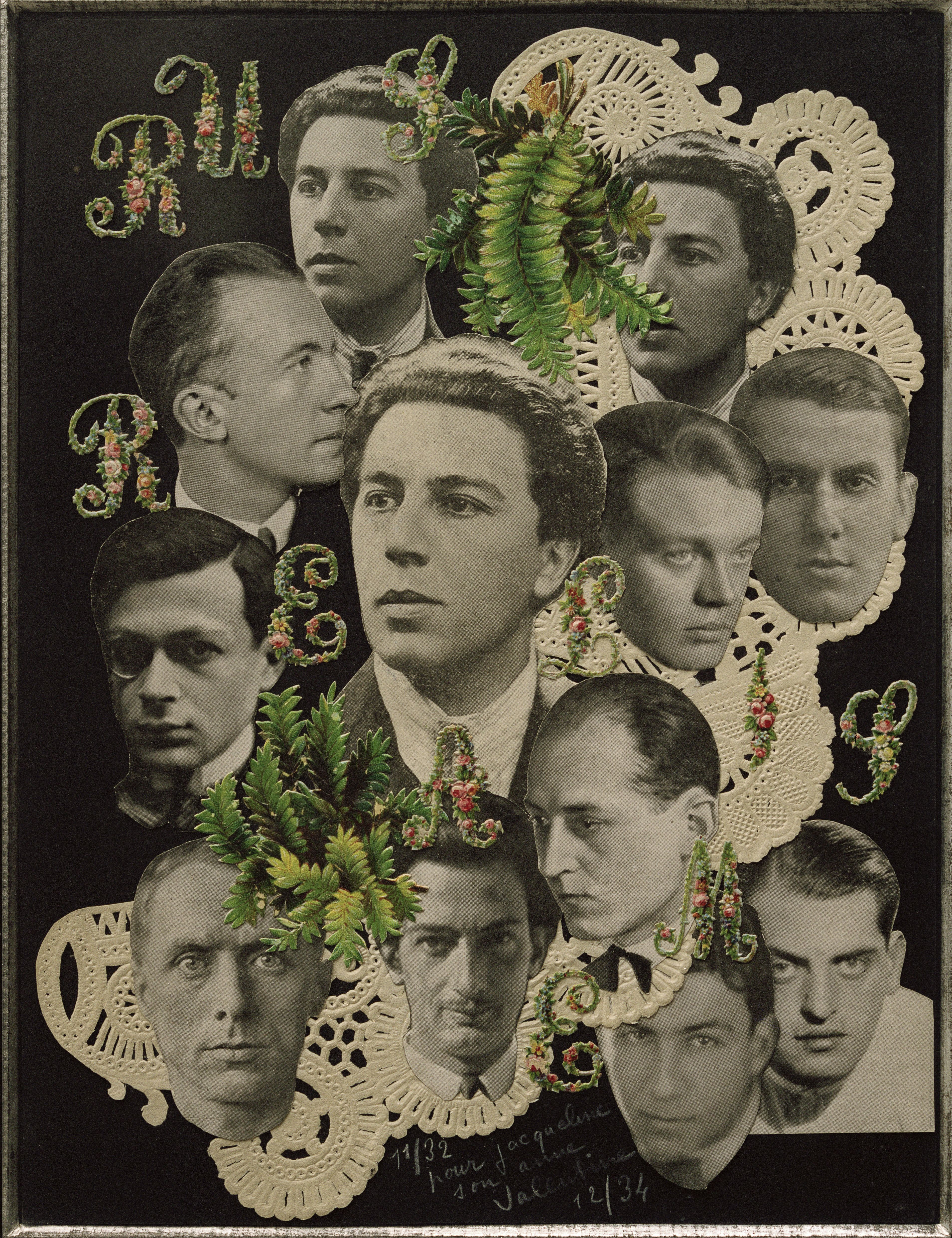
Surréalisme, a 1932 photocollage showing leading Surrealists Breton, René Char, René Crevel, Benjamin Péret, Luis Buñuel, Pierre Unik, Salvador Dalí, Max Ernst, Tristan Tzara and Paul Eluard, from the Bibliothèque Paul Destribats. Valentine Hugo is notably absent
Surréalisme, a 1932 photocollage showing leading Surrealists Breton, René Char, René Crevel, Benjamin Péret, Luis Buñuel, Pierre Unik, Salvador Dalí, Max Ernst, Tristan Tzara and Paul Eluard, from the Bibliothèque Paul Destribats. Valentine Hugo is notably absent

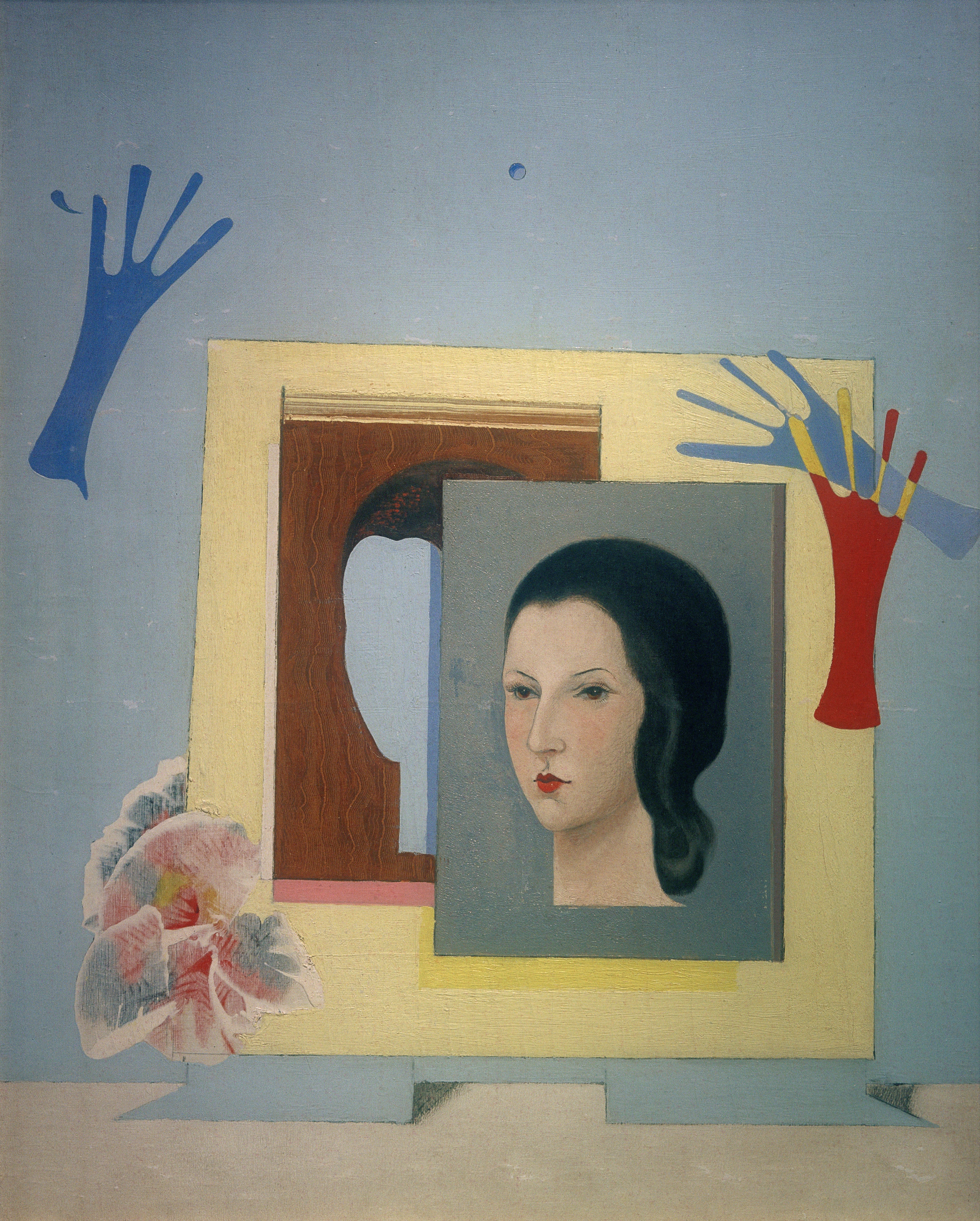
Max Ernst’s Portrait of Valentine Hugo, c.1932
Max Ernst’s Portrait of Valentine Hugo, c.1932
Hugo explains candidly that the stones are “like flies around the face of Rimbaud.” She also refers to the collage at the bottom of the picture, which is the seal of Menelik II, king of the former Ethiopian independent province of Shewa (now part of Ethiopia). The reason for this is straight from the life of Rimbaud, as it is next to excerpts from a letter written by Menelik to Rimbaud concerning a disastrous moment in the poet’s life. In 1885, Rimbaud had been party to a financial deal with the king that involved the sale of old weapons, a deal which Menelik eventually reneged on and which signalled the start of the poet’s decline and eventual death in Marseilles at the age of 37.
How very fitting that Hugo’s imposing work has resurfaced almost exactly a century after the Surrealists first embarked on their mission to overturn contemporary culture and consciousness, and, in a sense, invent the modern world. “Though the Surrealists were regarded by the French bourgeoisie as anarchists,” the Paris-based reporter Janet Flanner wrote in The New Yorker in 1962, “they operated as prophets, for prophesy is what most modern art over the past 40 years has turned out to be, even when not Surrealistic.”
As with Surrealism, the legacy of Rimbaud is tangled and dramatic, but also prophetic, as his work has inspired artists throughout the 20th and 21st centuries, from Henry Miller to The Clash via Bob Dylan, Jim Jarmusch, and Patti Smith. Both in its subject matter and style, Valentine Hugo’s compelling and bewitching work brings the viewer close to the dreams, ambitions and fears of both the Symbolists and the Surrealists, artists and dreamers who were responsible for some of the most important and arresting cultural currents in the world for the last hundred years. It is also a vibrant and haunting reminder of the work of a talented artist who absolutely played her part in a crucial art historical moment, but who might have been literally written out of history thanks to the bitterness of a former lover. Well, here she has her own back – in some style. My funny Valentine indeed.
Rosie Millard, previously the Arts Editor of the New Statesman and BBC Arts Correspondent, has regular columns in The Times, The Independent, New Statesman and Art Review.


 Built with Shorthand