
Art that bites
Radical, youthful and in possession of a sexily dangerous name, CoBrA was the avant-garde movement that had it all, writes Adrian Dannatt
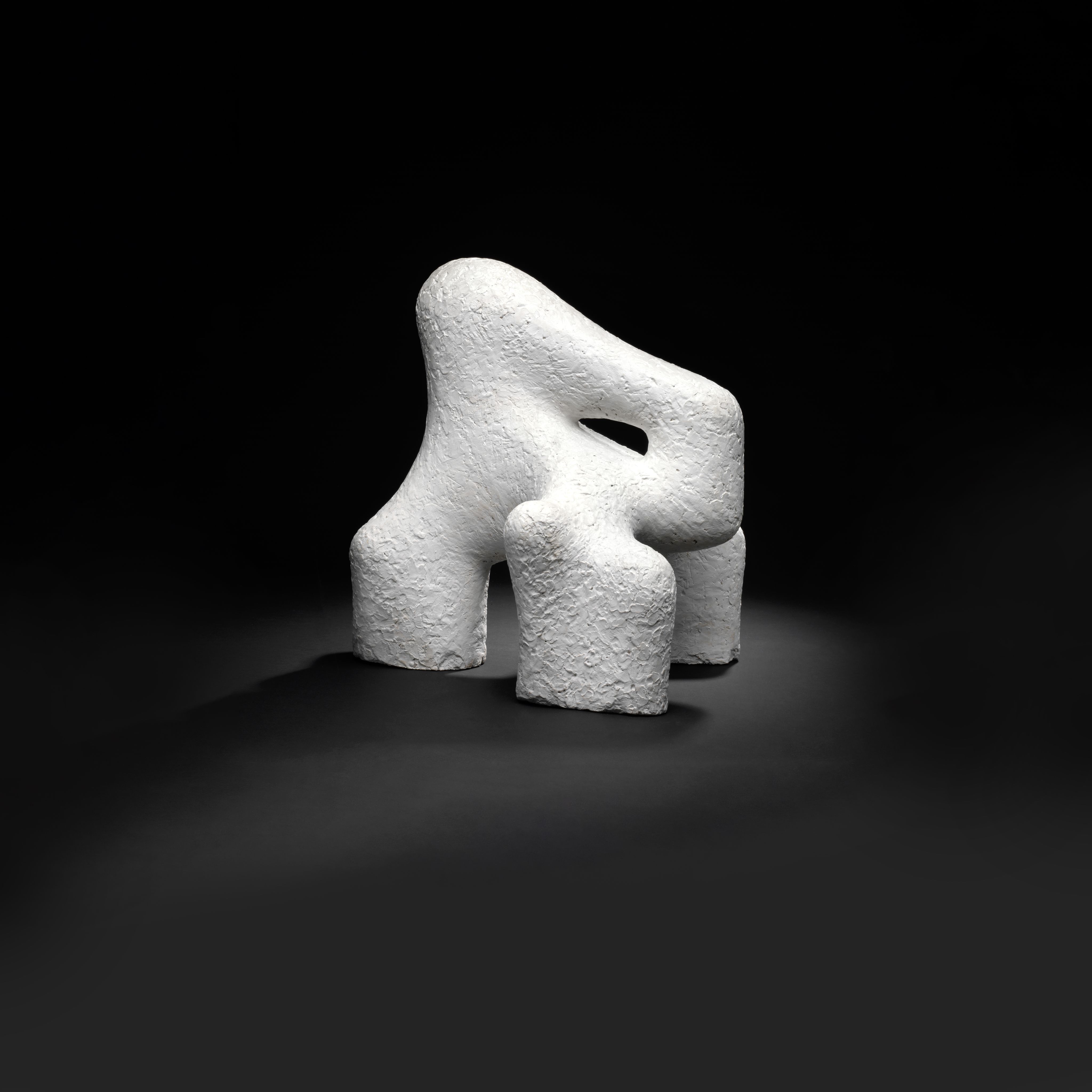

Nothing is more exciting than a brand new art ‘movement’, as thrilling for the general public as for historians, gallerists and collectors: photogenic and ideally angry young artists, some outrageous manifesto, and a sexy and memorable title. CoBrA was not only a great name, hissing with ophidian menace, but also genuinely radical, declaring that art must be made by absolutely everyone – by children, the homeless, the mentally ill, untaught folk artisans – rather than being limited to just those pompous products of official state art schools.
CoBrA was also truly international, named after the three cities of its main members: Copenhagen, Brussels and Amsterdam, hence the idiosyncratic capitalisation to make clear the geography of the acronym. CoBrA dramatically launched itself on to an exhausted Europe on 8 November 1948 with the punchy declaration La Cause était entendue (“The case is closed”) promoting an aesthetic of unanticipated painterly savagery. As the manifesto declared: “If you don’t go to extremes, why even go?”.
Hardly surprisingly, this revolutionary band of hungry artists, mainly in their late 20s, soon found themselves as fêted as reviled, with all the attendant notoriety and publicity such movements require to ensure wider success. As with any such movement, there eventually emerged from the ranks some who became better known – famous, indeed – and, in the case of Karel Appel, Corneille, Constant Nieuwenhuys, Pierre Alechinsky and Asger Jorn, one might dare to add wealthy. Sadly, there were also those whose renown dipped over the decades, and some who almost vanished. Pleasingly, some of these lesser known figures have recently come to the fore and their works are now actively sought. Such is the case for Ernest Mancoba from the Transvaal, the sole African participant. Although he lived to the age of 98, Mancoba has had incredibly few works come to the market, but Ernest’s wife Sonja Ferlov Mancoba, one of the few women in CoBrA, is represented by the classic biomorphic sculpture Koncentration in the Bruun Rasmussen sale CoBrA – Powerful Voices of Post-war Europe in Copenhagen in December.

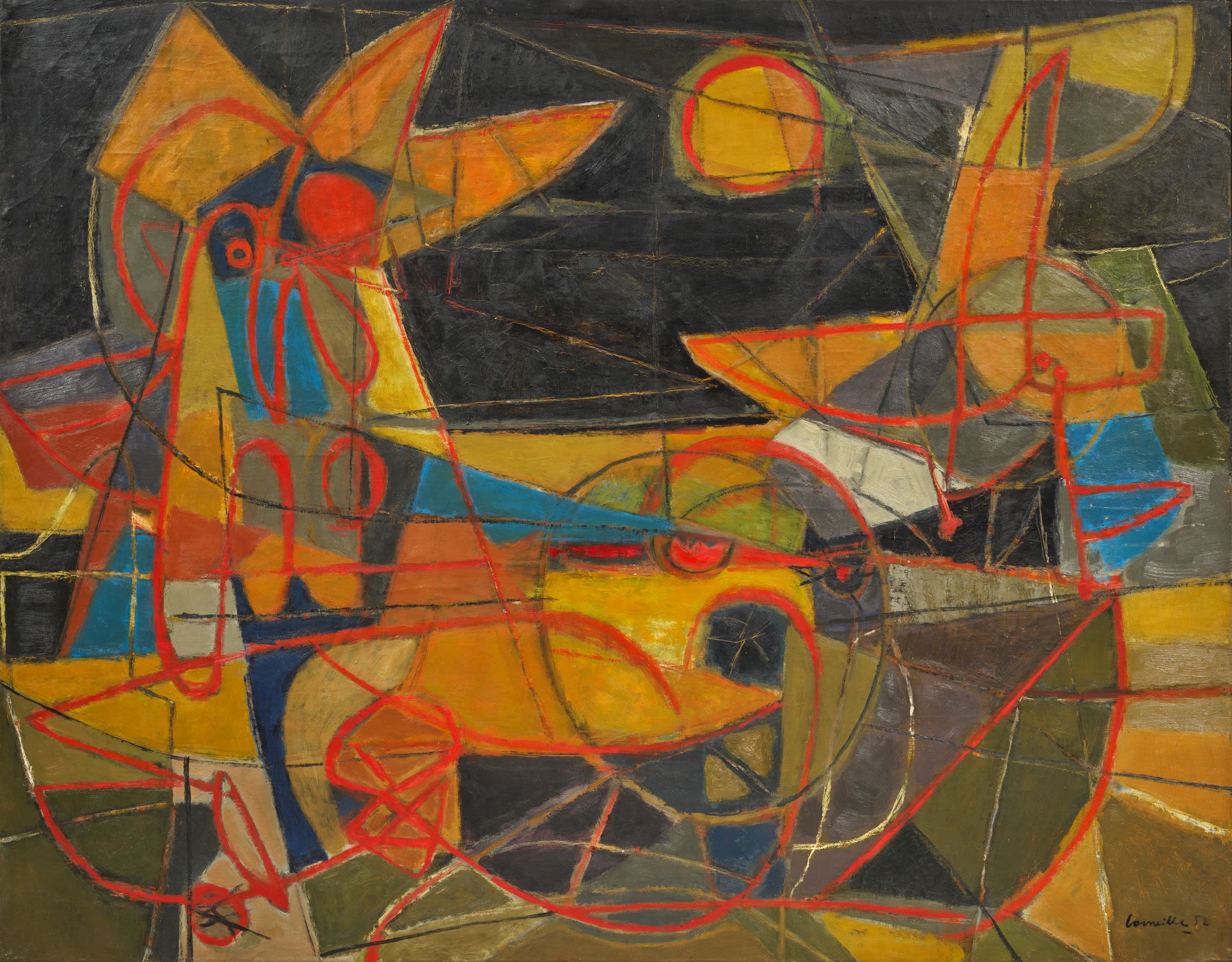
Lot 658. Corneille, Peinture, 1952. Estimate: DKK2,000,000 - 2,500,000 (€270,000 - 335,000)
Lot 658. Corneille, Peinture, 1952. Estimate: DKK2,000,000 - 2,500,000 (€270,000 - 335,000)

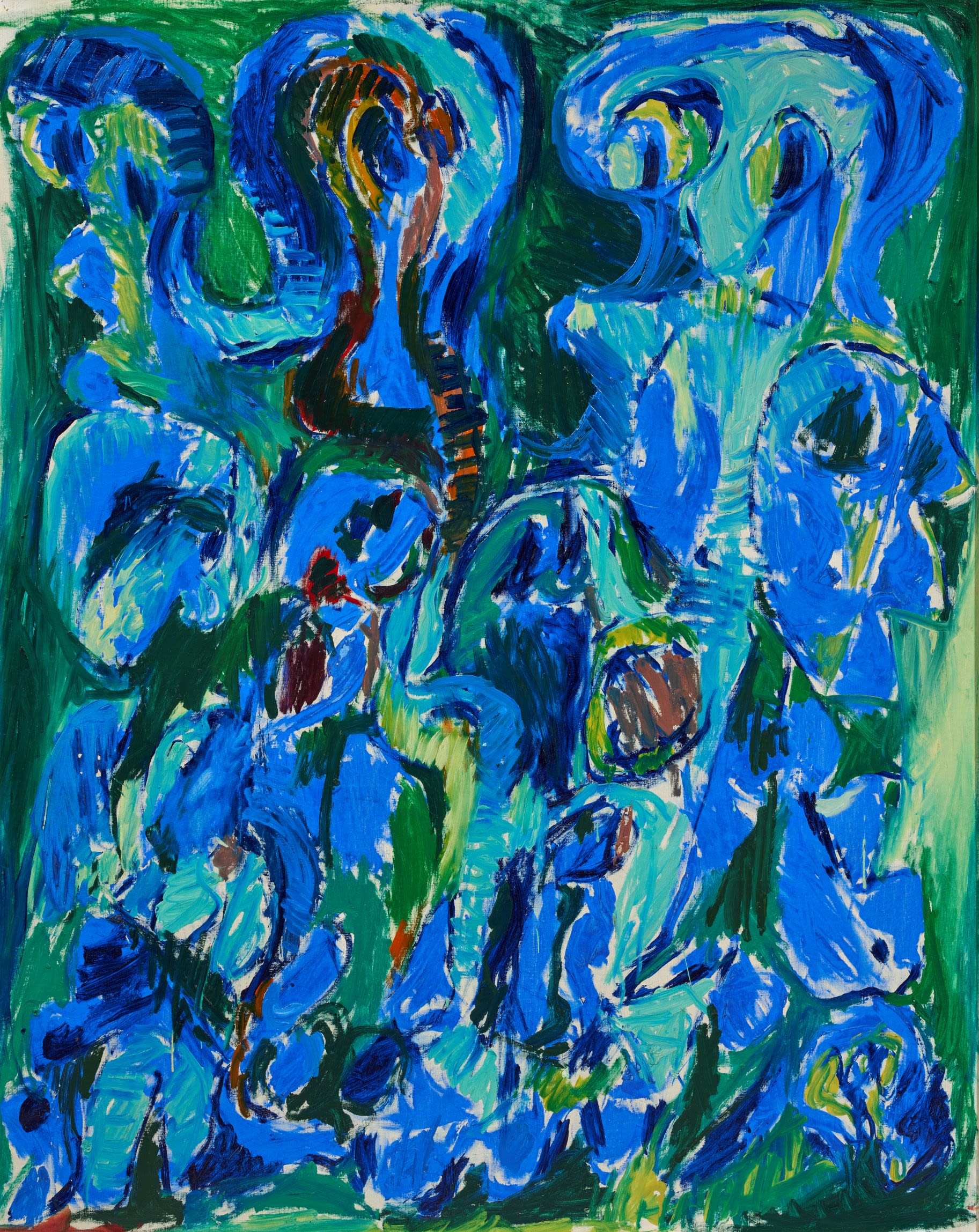
Lot 665. Pierre Alechinsky, Au Tholonet, 1966. Estimate: DKK1,400,000 - 1,650,000 (€190,000 - 220,000)
Lot 665. Pierre Alechinsky, Au Tholonet, 1966. Estimate: DKK1,400,000 - 1,650,000 (€190,000 - 220,000)
CoBrA was that rare thing, a genuine collaborative art movement with a coherent and convincing group identity and politics. As such, it was the first bona fide movement to form in Europe since the birth in 1924 of Surrealism, to which it was closely allied: CoBrA partly came out of the militantly political Revolutionary Surrealist Group formed in 1947 in Brussels, where the International Conference of Revolutionary Surrealism took place later the same year. The Danish artist Jorn became involved with the Revolutionary Surrealists, who then decided to merge with the Dutch Experimental Group, which comprised Corneille, Karel Appel, and Constant and Jan Nieuwenhuys. In 1948, a delegation consisting of Constant, Christian Dotremont, Appel, Jorn, Corneille and Joseph Noiret (the kid brother of the band at only 21) went down to Paris, still the assumed capital of the global art world, to sign at the Café Notre-Dame the official creation of CoBrA.
As with Surrealism, many of the key participants were poets rather than painters, such as the young Noiret and Dotremont, who had personally come up with the name of the group and written the manifesto. However, CoBrA considered Surrealism far too rigid and doctrinaire, and the group was likewise opposed to the theoretical rules of formal abstraction. Instead, it was strongly linked to the emergent ‘Art Brut’ proposed by Jean Dubuffet, which welcomed every form of visual expression however wild and uncontrolled. CoBrA believed in the free use of every sort of medium, from fabrics to ceramics, and refused any limitations, in materials as much as imagination; it might be said to have harnessed the fiery energy and spontaneity of the American Abstract Expressionism to an altogether more figurative exposition of existential anxiety.
CoBrA, in its most loosely defined sense, expanded its membership to more than 50 participants, including such rarities as female artists like Else Alfelt, perhaps Dora Tuynman and also arguably Lotti van der Gaag, as well as two British members William Gear and Stephen Gilbert. The group not only published a regular review of great graphic panache (now much sought after by bibliophiles) but surprisingly rapidly found itself with a full-scale exhibition at the highly prestigious Stedelijk Museum, just a year after CoBrA’s founding. This instant success, and the inherently fractious nature of any such gathering of precocious creators, ensured this period of cohesion was brief. By 1951, just three years after its formal foundation, CoBrA declared itself dead.
Though it lasted only a short time, CoBrA remains of prime historical importance. Not least, it is the last internationally significant art movement to have come out of Belgium, Holland and Denmark, countries that have subsequently produced individual artists of global renown, but no further identifiable groups of shared intent. Certainly within northern Europe, CoBrA has remained a central point of reference, with an eponymous museum just outside Amsterdam. (There is also an archive of nearly 2,000 CoBrA works in Fort Lauderdale, Florida, and Asger Jorn’s own museum in Silkeborg, Denmark.)
A cultural lodestar, with hardly a year going by without a major museum show devoted to one or other of its artists, CoBrA has naturally remained highly visible and desirable to private collectors. For decades, Bruun Rasmussen has been right at the centre of this market. It was their specialist Niels Raben who realised, back in 1988, that the 40th anniversary of the founding of both CoBrA and the Copenhagen-based auction house should be celebrated in a special way, by putting together a classic cluster of such works.
Wisely suspecting that another auctioneer might have the same idea, Raben organised a pre-emptive sale for February 1988, followed by a second in November, the month the CoBrA manifesto was actually signed. Both were resounding successes and Bruun Rasmussen has continued the tradition of regular CoBrA sales since then, with renewed vigour since the auction house was brought into the Bonhams network.
Other key works being offered include Karel Appel’s 1958 painting The Big Animal Swallows the Small One, and a painting Jorn completed off the coast of Tunis in 1948 – that annus mirabilis again – and powerful larger paintings by Appel and Alechinsky, but there are particularly striking lots by lesser-known figures such as Carl-Henning Pedersen and Egill Jacobsen, both from 1949 when the group was in its prime. Appropriately for an auction jointly curated by Bruun Rasmussen, Bonhams and Bukowskis in Stockholm, the sale exhibition has been touring Paris, Brussels, Amsterdam and Copenhagen in a victory lap of the classic CoBrA cities.
Ultimately, the fate of an art movement depends on how useful and inspiring – essentially how exciting – subsequent generations of artists continue to find it. Can it sustain itself as a motor for change after its initial burst of life? CoBrA has proved itself impressively resilient, echoing through the work of contemporary art-world stars including, but by no means restricted to, the likes of Eddie Martinez, Mark Bradford, Jadé Fadojutimi, Bjarne Melgaard and Jonathan Meese. One exemplary exhibition, organised in Los Angeles in 2015 by top contemporary curator Alison Gingeras, gathered a dazzling roster of talents under the title The Avant-Garde Won’t Give Up: CoBrA and its Legacy. CoBrA’s reverberations down through the 20th century and out into our own, like still-radioactive waves spreading from that revolutionary Big Bang in 1948, show no sign of fading. In the pugnacious words of Sonja Ferlov Mancoba, “Art is like a stick we hold in our hand. Both to help us stand upright, to walk, and to defend ourselves.”
Adrian Dannatt is a collector and critic whose most recent book is Doomed and Famous (Sequence Press).

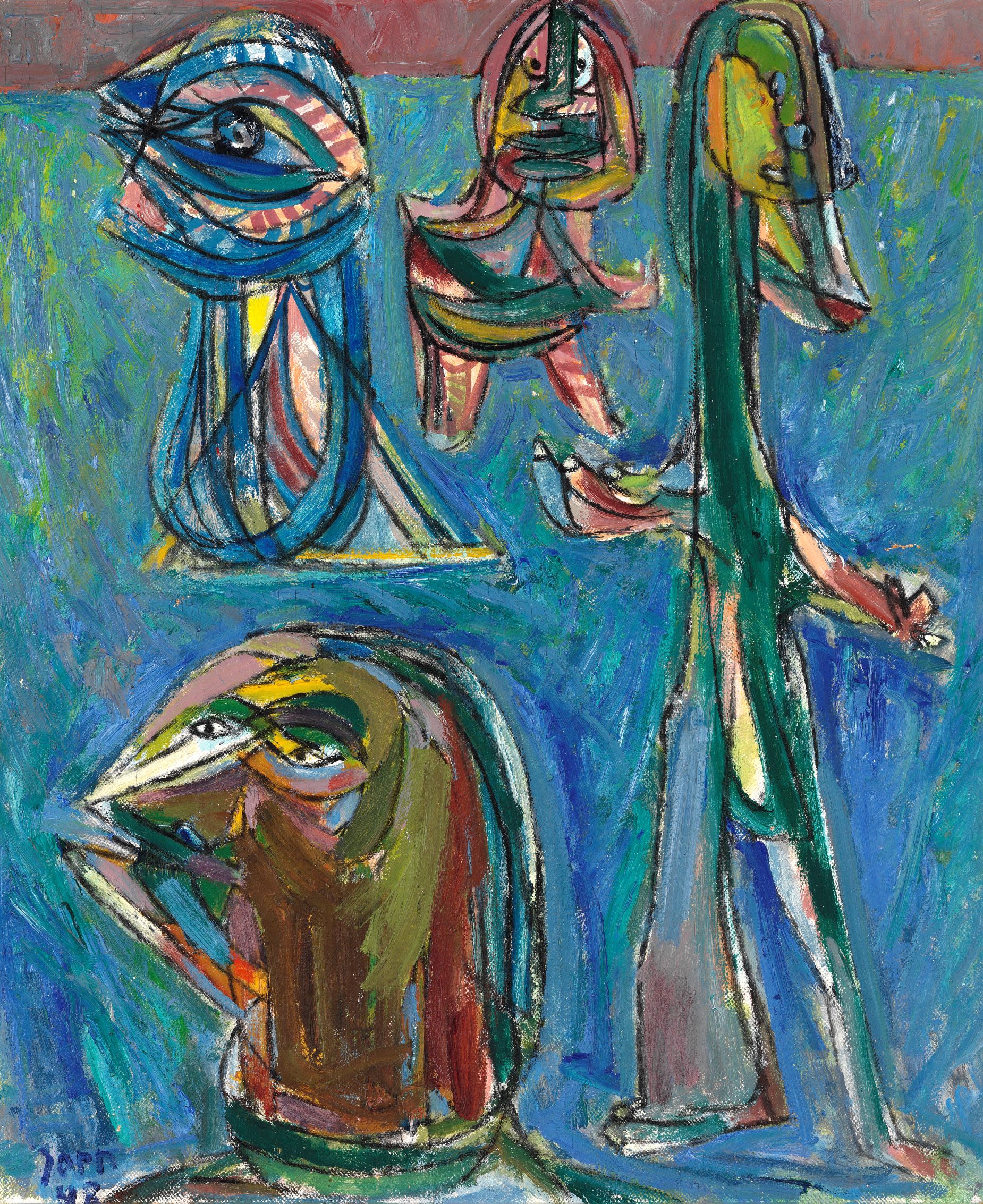
Lot 618. Asger Jorn, Together but not content, 1948. Estimate: DKK400,000 - 500,000 (€54,000 - 67,000)
Lot 618. Asger Jorn, Together but not content, 1948. Estimate: DKK400,000 - 500,000 (€54,000 - 67,000)
 Built with Shorthand