
Artist 101
5 Things to Know About
Jewad Selim
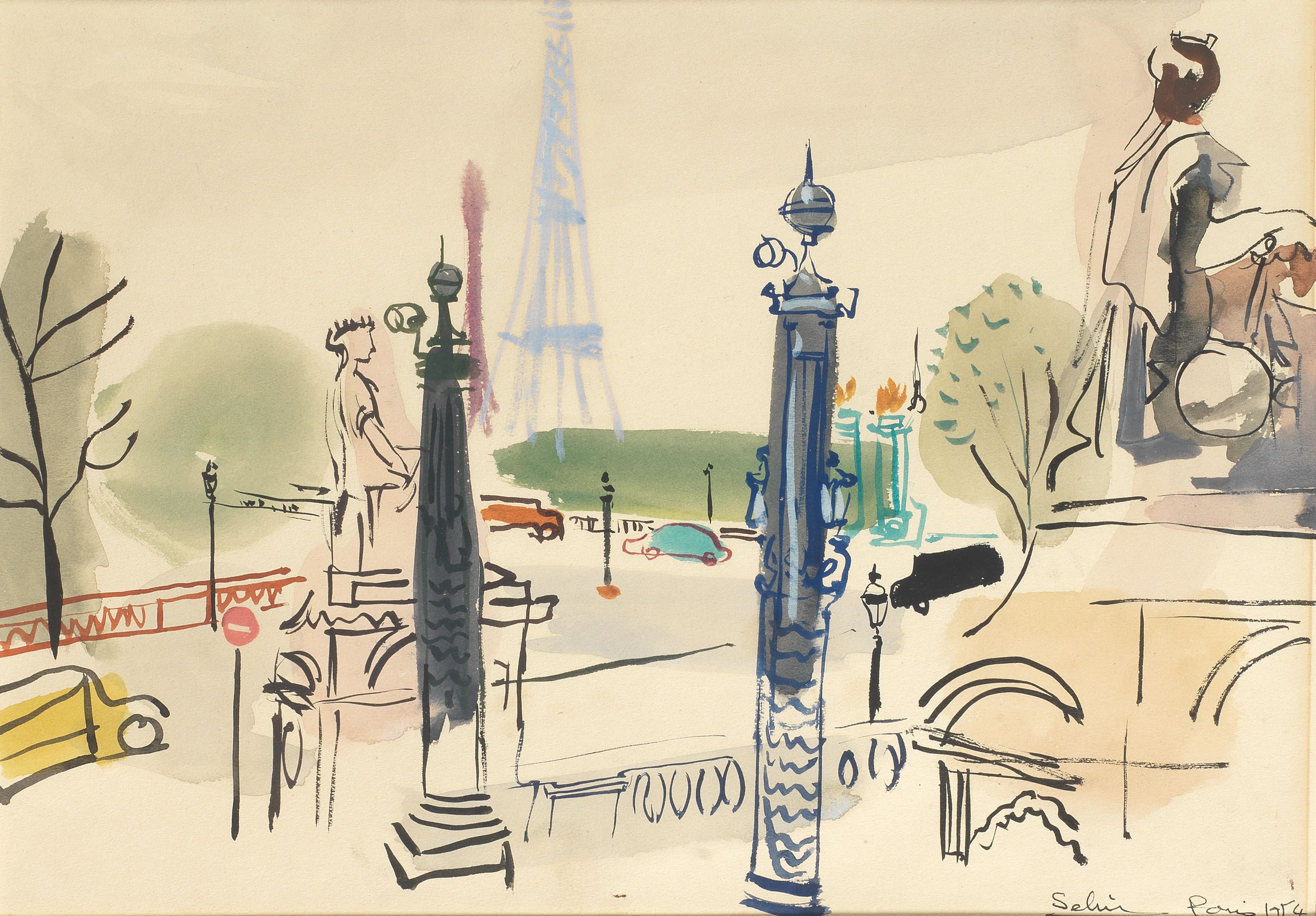

Jewad Selim (1919-61) is widely considered to be the founding father of modern Iraqi art. During his relatively short life, Selim forged a new visual identity for 20th-century Iraqi art through his own work and his co-founding of the Baghdad Modern Art Group.
A distinctive fusion of Iraqi history and global modern trends set Selim apart in the story of Arab art. His pivotal contribution proved that art has the power to blend and transcend cultures, sentiments that continue to inspire interest in his work today.
Illustrated by lots offered in Bonhams' upcoming online auction, Sketches from Baghdad, live until 23 February.

1.
Background & Early Career
Selim was born in Ankara, Turkey to Iraqi parents and moved to Baghdad in 1921. A career in the art world was inevitable for him; his father was an accomplished amateur painter and his brother and sister also became respected artists in their own right.
Selim travelled to Europe on government scholarships to cultivate his art education; first to Paris (1938-39) and later to Rome (1939-40). As The Second World War took hold of the continent, his studies were halted and he was forced home to Baghdad. In 1946, he returned to Europe and enrolled at London's prestigious Slade School of Art where he met his future wife and fellow art student, Lorna.
Returning to Baghdad in 1949, he became Head of the Department of Sculpture at the city’s Institute of Fine Arts. There, armed with all he had absorbed from 20th-century western art, and a deep affinity with his country’s history, he inspired students to draw on their Iraqi heritage and simultaneously form a new artistic identity.
2.
Signature Style
During his time in Europe, Selim gained exposure to new waves of European styles and concepts. He was particularly struck by the work of 20th-century trailblazers like Cezanne, Miró, Matisse, Picasso and most notably, British sculptor Henry Moore, who was a visiting teacher during his studies at Slade.
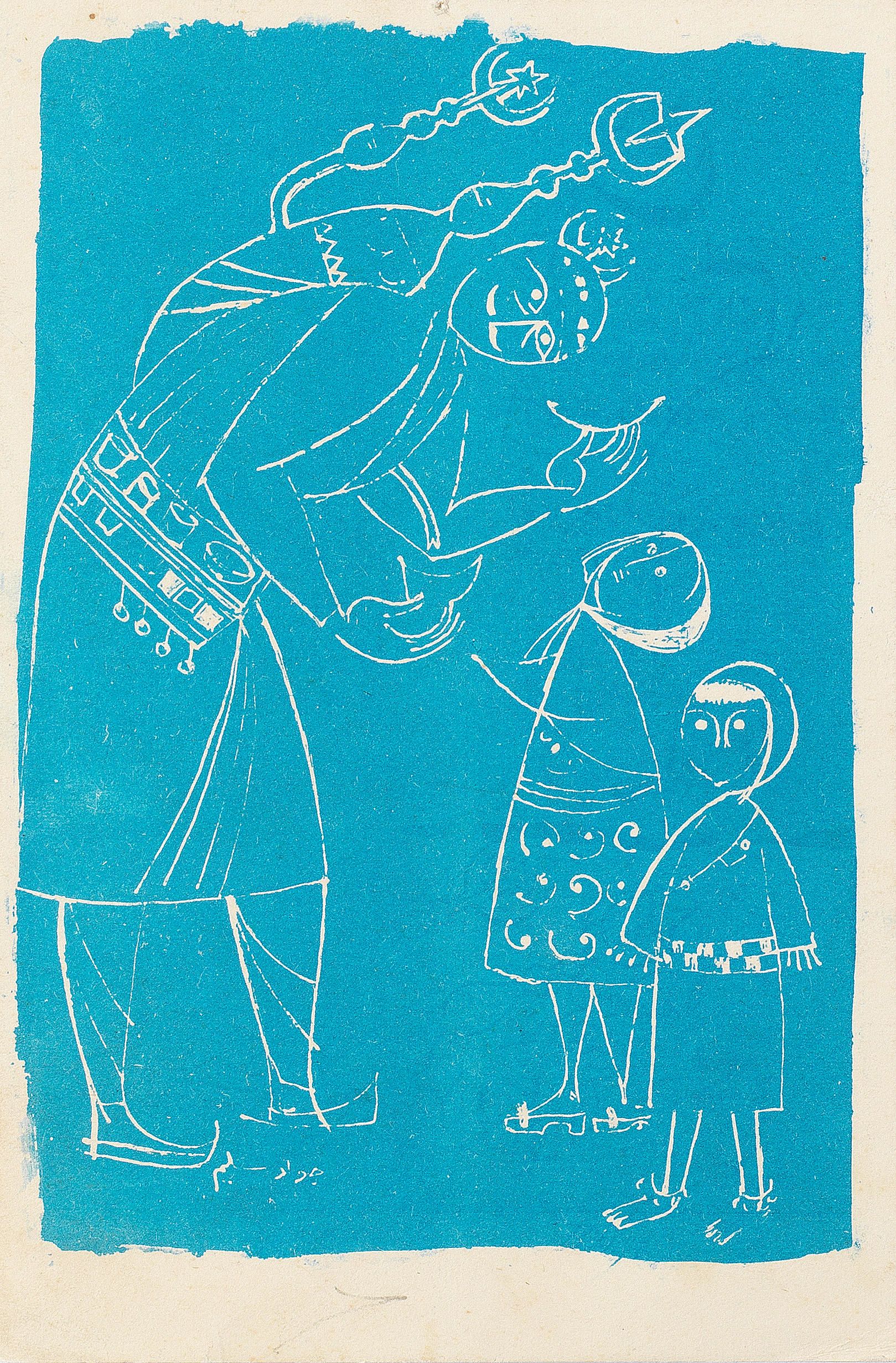
Infused with the influence of Impressionism, post-Impressionism, Expressionism and Cubism, Selim created semi-abstract figurative paintings imbued with an appreciation for the gravity of colour and its potential. His energetic scenes capture and reimagine the dynamism of domestic life through blocks of bold colour: lively street markets, tile-lined interiors, traditional ceramic vessels and animated characters. In his painting and sculpture, fundamental geometric shapes like circles and squares are recurring motifs alongside the crescent, a prominent symbol in Islam.
This created a patchwork of modern Baghdad in art form: its extravagance, deep spiritualism and daily rhythms. Though Selim’s work embodied the modern social and political landscape of the time, he never lost sight of its history. He frequently referred to Ancient Mesopotamian, Egyptian and Arab Islamic arts, Assyrian and Babylonian architectural features, and drew links between Iraq's ancient civilisations and its contemporary vision.
3.
The Baghdad Modern Art Group
On his return to Baghdad in 1949, Selim began fusing his Western influences with nationalistic sensibilities. In 1951, this fusionist approach was solidified in The Baghdad Modern Art Group (Jama'et Baghdad lil Fen al-Hadith), a movement he co-founded alongside his student, artist Shakir Hassan Al-Said.
The group was both forward-thinking and retrospective in its vision. It valued the rich legacy and heritage paved by Iraq’s artistic forefathers, yet created something in tune with contemporary cultural narratives. As they asserted in their manifesto: ‘A new trend in painting will solve the [artistic] identity problem in our contemporary awakening by following the footsteps of the thirteenth century [Iraqi] painters. The new generation of artists finds the beginning of a guiding light in the early legacy of their forefathers.’
This sparked something of an awakening for 20th-century Iraqi art. Through its manifestos, membership and wide-reaching exhibitions, The Baghdad Modern Art Group would come to embody the ‘golden age’ of Arab modernism and is credited with paving the way for subsequent Iraqi movements including New Vision and The One Dimension Group.
4.
Death & Legacy
In the 1950s, Selim made the bold decision to focus exclusively on sculpture. This culminated in his most notable work, Monument for Freedom (1960-61), commissioned by the Iraqi government and erected in Tahir Square, Baghdad. The work sought to symbolise a new world and became the largest monument built in Iraq for 2,500 years.
Created in collaboration with architect Rifat Chadirji, Monument for Freedom would prove notable for another reason. Selim was provided with a wildly unrealistic timeline to complete the work, which resulted in a disagreement between the artist and the leader of the republic, Brigadier General 'Abd al-Karim Qasim. Under intense pressure to deliver the commission, Selim suffered a heart attack and died one week later aged 42.
The artist’s premature death sent shockwaves through the Iraqi creative community. But a new wave of artists emerged in its wake, eager to maintain the artist’s legacy of bringing global influences to Iraq, and introducing the world to Iraqi art. Among those who have been inspired by Selim’s work are Dia Azzawi, Ismail Fattah, Suad Al-Attar, Mahmoud Sabri and Mohammed Ghani Hikmat.
5.
On The Market
In the 1950s, Selim’s work began to go global, a position which the artist’s legacy continues to maintain today. His solo touring show of the United States resulted in widespread critical acclaim. One seminal work created for the exhibition was Woman Selling Material (1953), a work that encapsulates the vibrancy of 20th century Iraqi life. This rare and sought after piece of Iraqi art history was created at the pinnacle of the artist’s career and achieved £221,000 inc. premium at Bonhams in 2017.
The artist's paintings and sculptures continue to achieve broad market interest and impressive results at Bonhams. In 2015, a portrait of celebrated Iraqi poet and academic, Lamia Abbas Amara sold for £176,500 inc. premium against a pre-sale estimate of £60,000 – 100,000, setting a world record at the time.
In 2021, a new exceptional result was reached, this time for sculpture. Mother and Child, created in macassar ebony and metal wire, sold for £444,000 inc. premium, against an estimate of £60,000 – 100,000. More recently, in November 2021, a new world record was set for Selim at Bonhams when Good and Evil, An Abstraction sold for £838,750 inc. premium, against an estimate of £120,000 - 250,000, reflecting the strong market for his work at the moment.

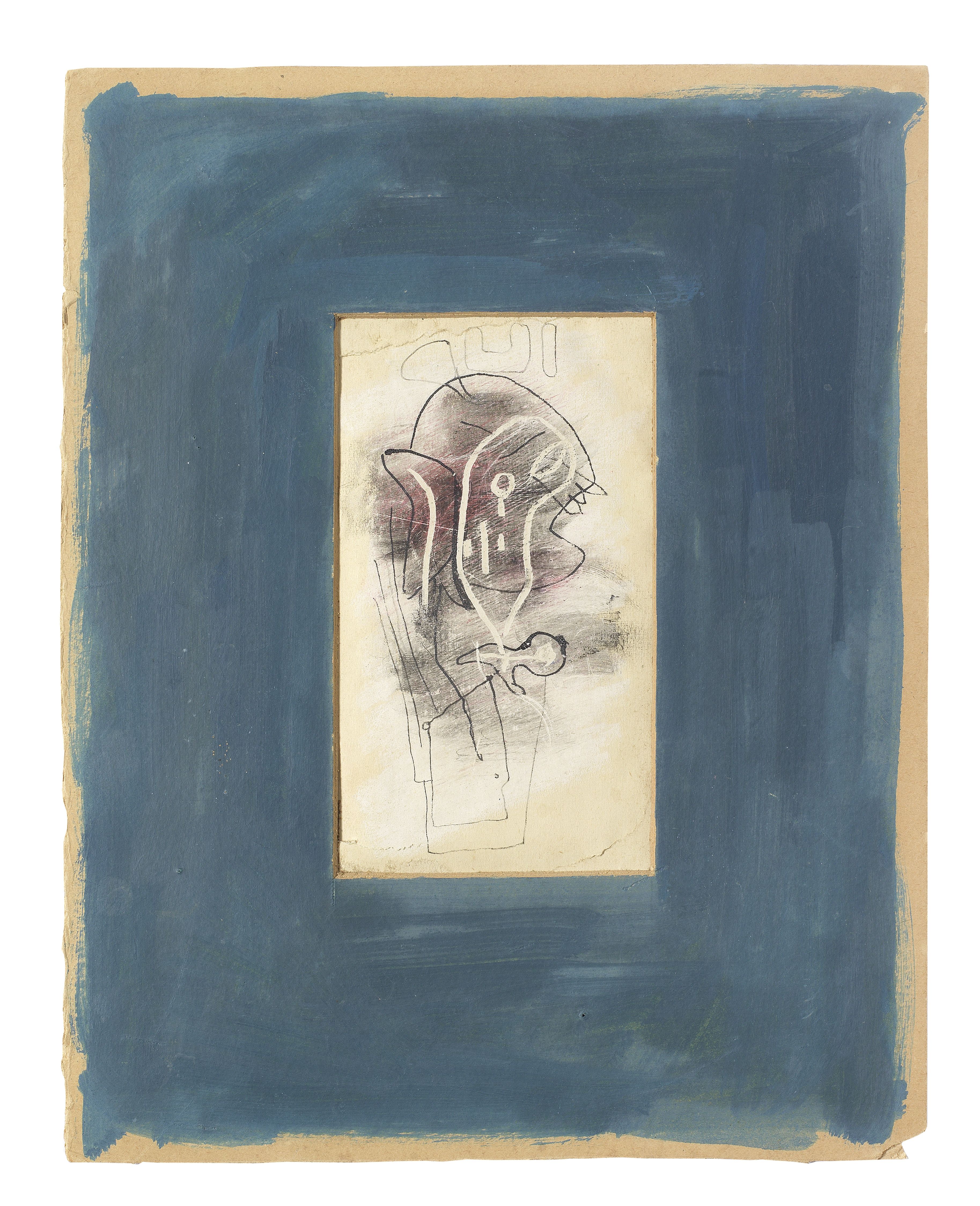
Lot 18. Jewad Selim, Number 15. Estimate: £ 2,000 - 3,000.
Lot 18. Jewad Selim, Number 15. Estimate: £ 2,000 - 3,000.

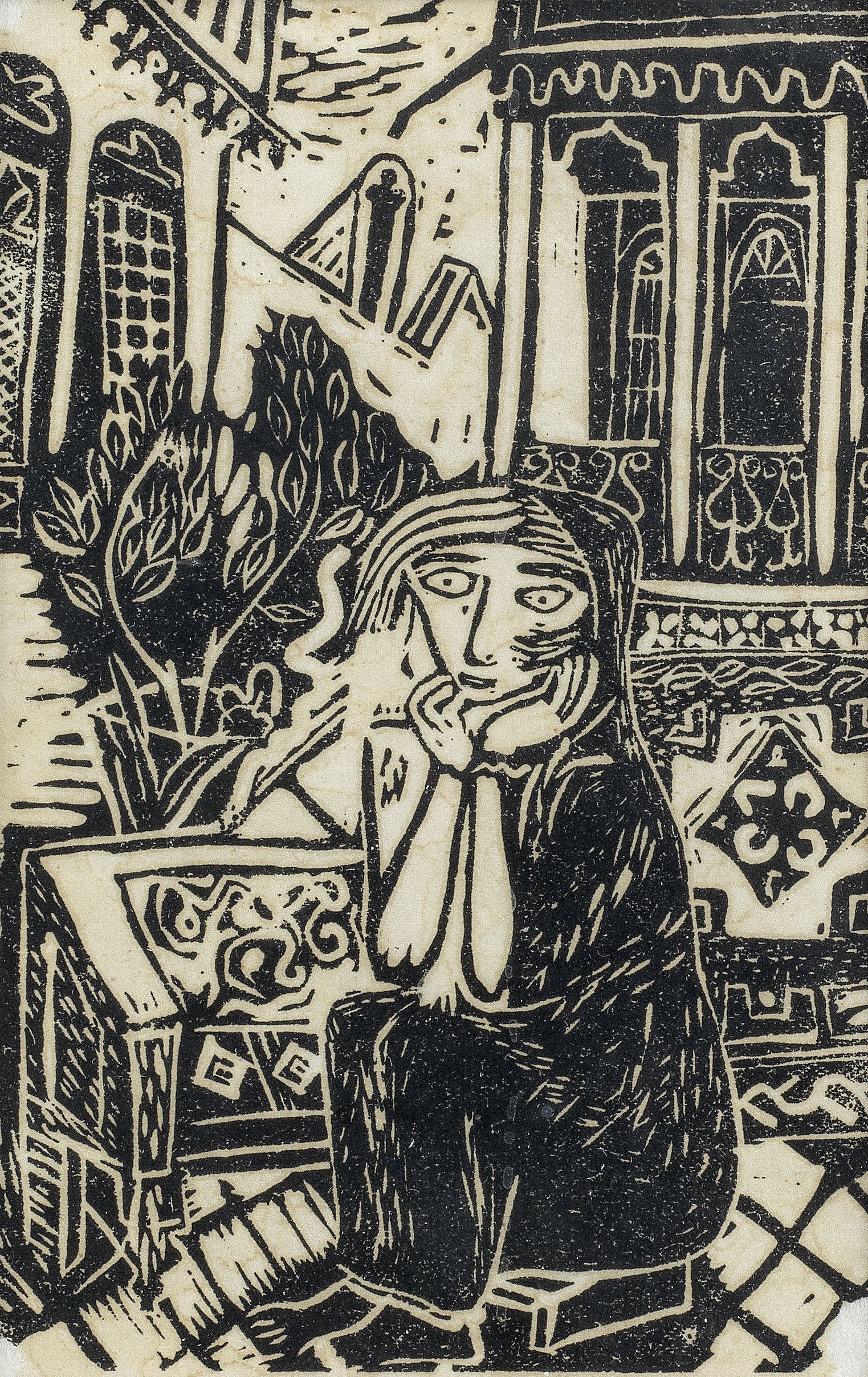
Lot 16. Jewad Selim, Prostitute. Estimate: £ 2,000 - 3,000.
Lot 16. Jewad Selim, Prostitute. Estimate: £ 2,000 - 3,000.

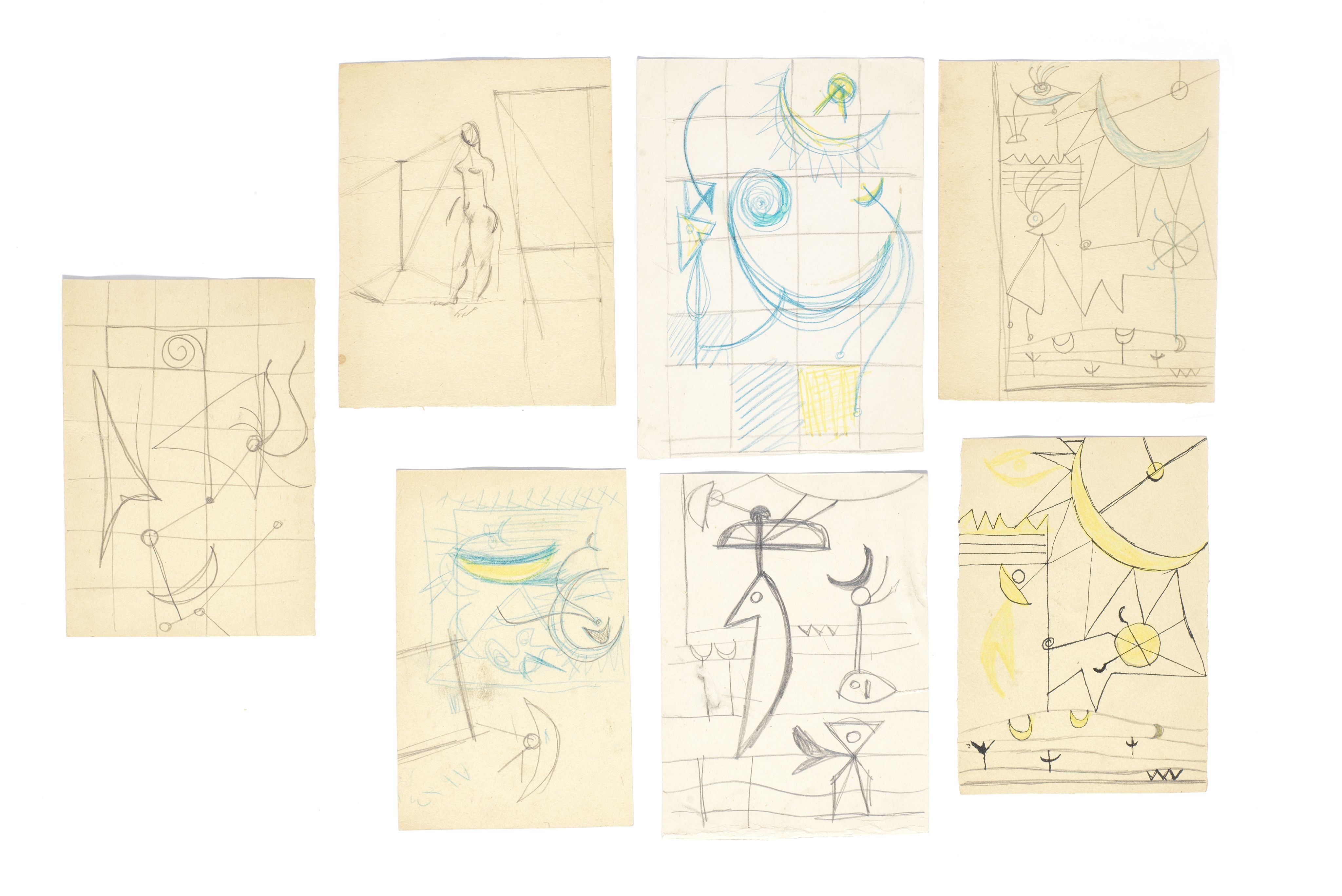
Lot 9. Jewad Selim, Seven Studies approximately 17 x 14cm each. Estimate: £ 6,000 - 10,000.
Lot 9. Jewad Selim, Seven Studies approximately 17 x 14cm each. Estimate: £ 6,000 - 10,000.

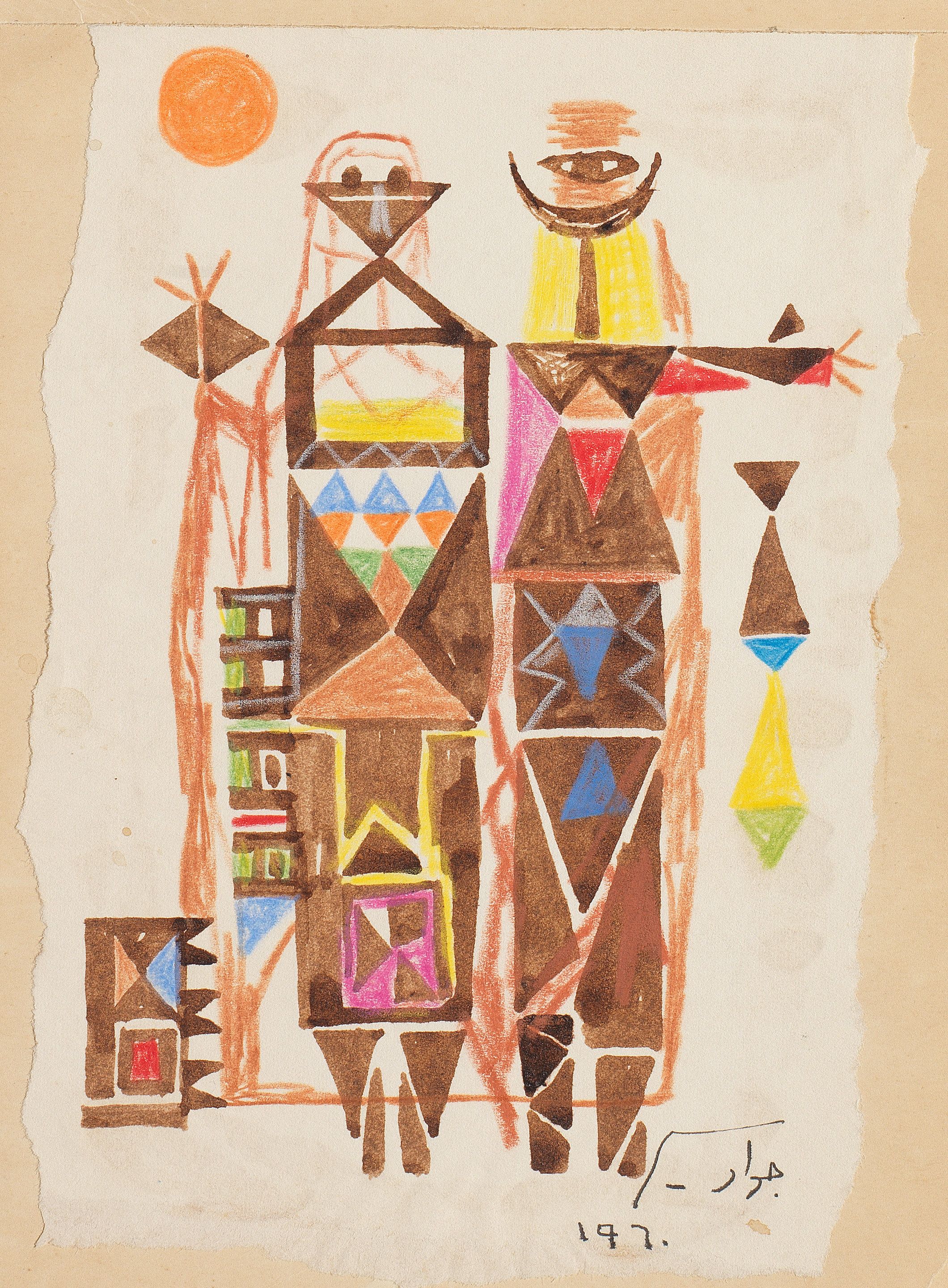
Lot 30. Jewad Selim, The Couple. Estimate: £ 2,000 - 3,000.
Lot 30. Jewad Selim, The Couple. Estimate: £ 2,000 - 3,000.

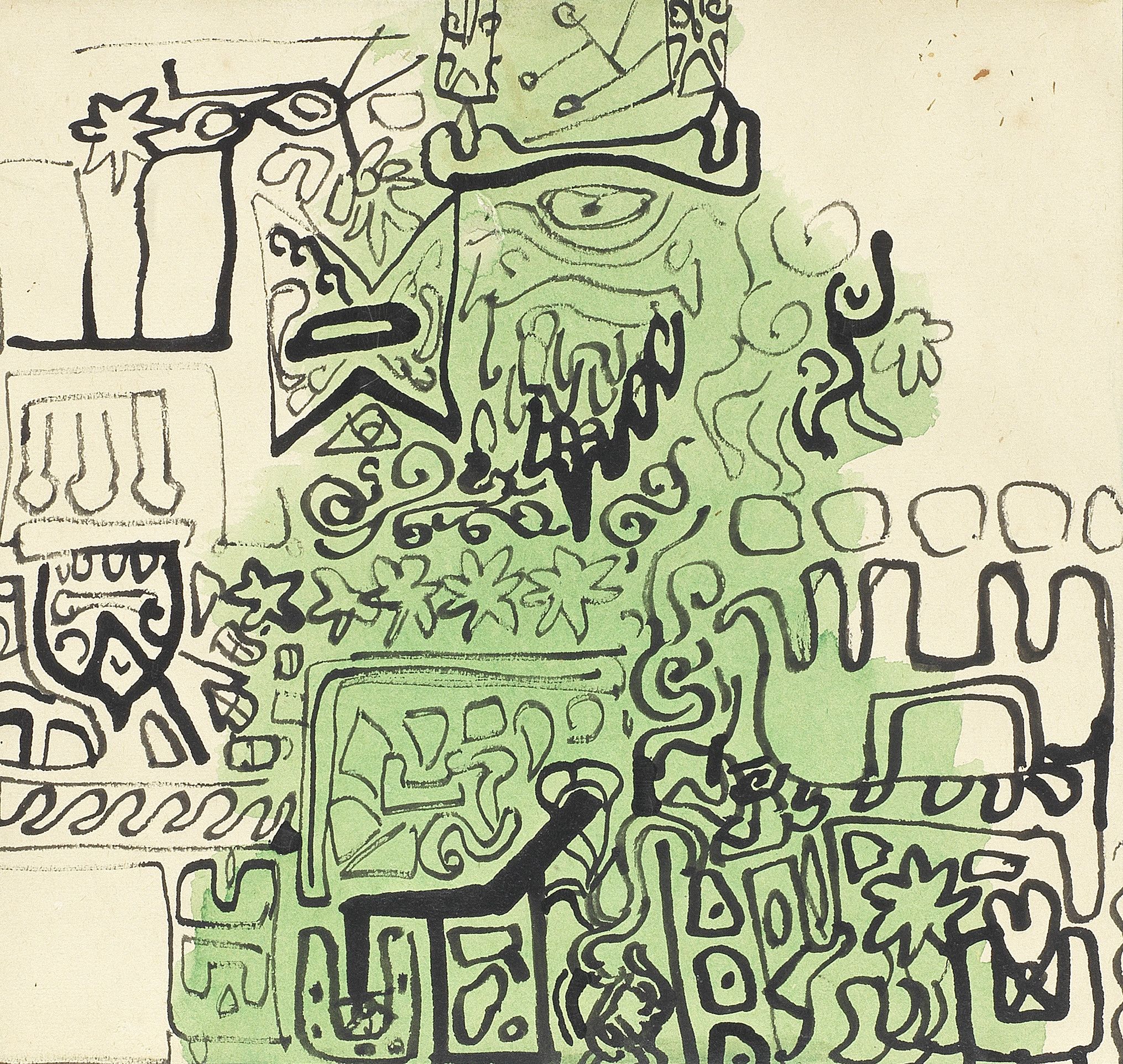
Lot 4. Jewad Selim, Abstraction. Estimate: £ 2,500 - 4,500.
Lot 4. Jewad Selim, Abstraction. Estimate: £ 2,500 - 4,500.

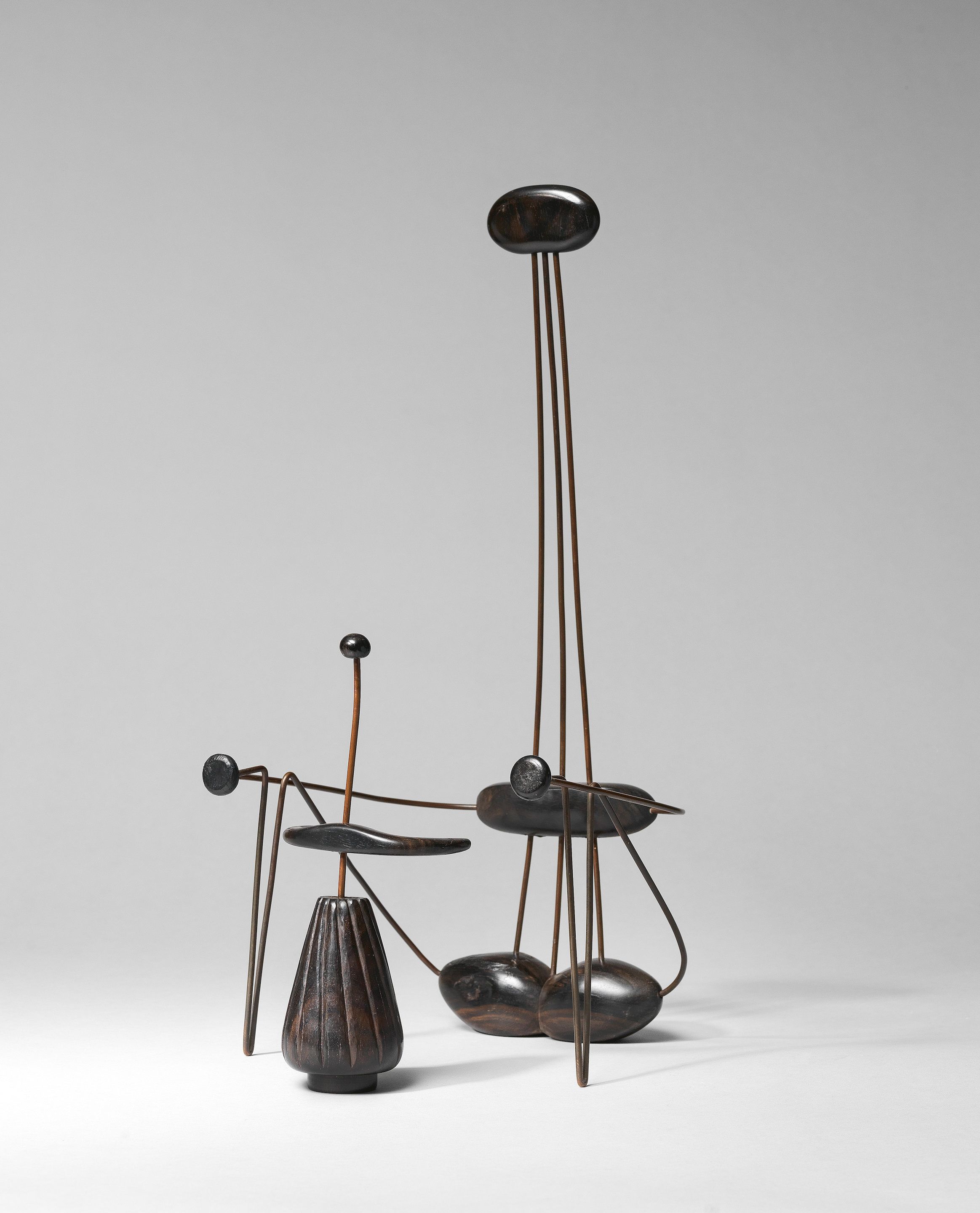
Jewad Selim, Mother and Child. Sold for £ 444,000 inc. premium, 2021.
Jewad Selim, Mother and Child. Sold for £ 444,000 inc. premium, 2021.

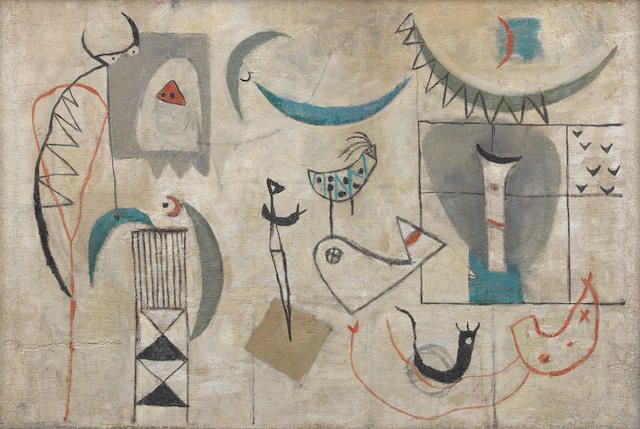
Jewad Selim, Good and Evil, An Abstraction. Sold for £ 838,750 inc. premium, 2021.
Jewad Selim, Good and Evil, An Abstraction. Sold for £ 838,750 inc. premium, 2021.
Sketches from Baghdad is an online auction ending on 23 February. To find out more, browse the catalogue online or contact noor.soussi@bonhams.com.


 Built with Shorthand