
Artist 101
Helen Frankenthaler
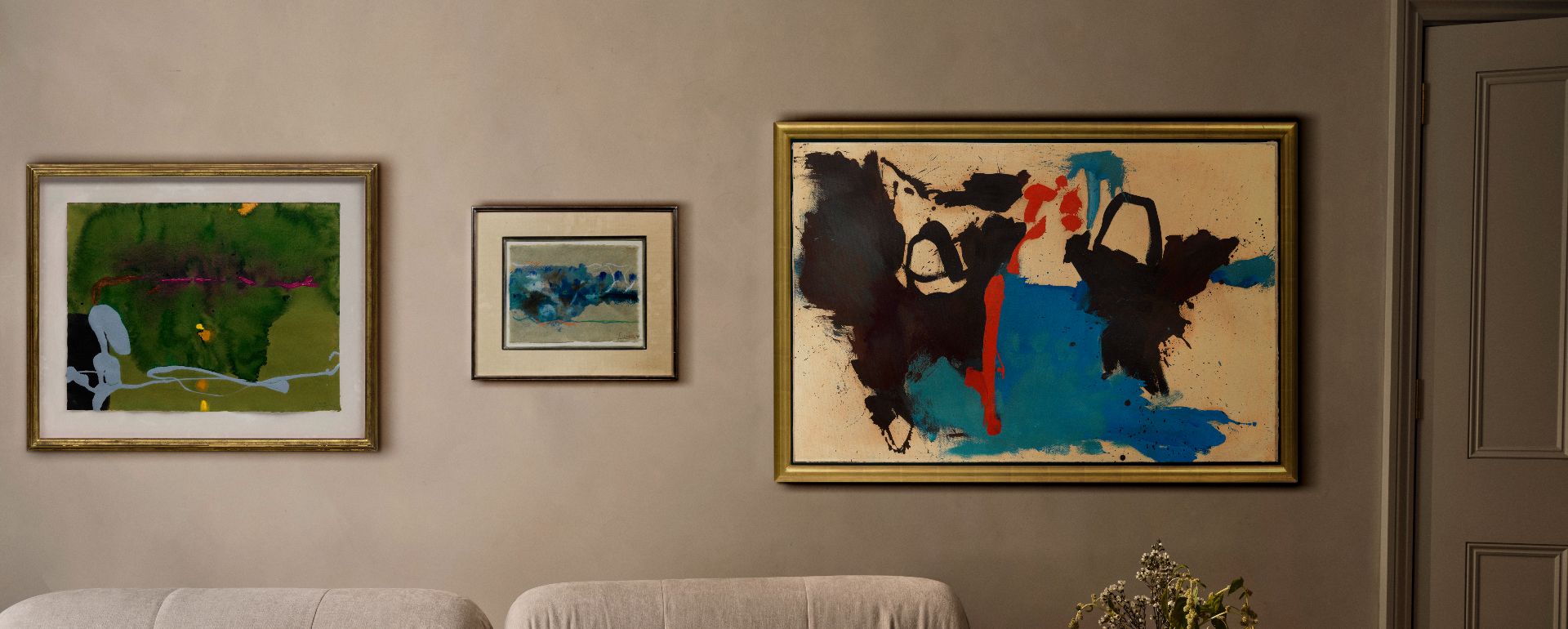

Helen Frankenthaler was one of the most influential artists of the 20th century. With her invention of the ‘soak-stain’ technique, she inspired her fellow Abstract Expressionists and took the movement in a new direction.
Ahead of our Post-War & Contemporary Art auction this October which features several exceptional works by Frankenthaler, here are seven things you should know about the artist’s six-decade career and legacy.
1.
New York artistic social circle
Born and raised in Manhattan, Frankenthaler became part of the febrile art scene in 1950s New York. Her artistic talent was fostered from a young age; at fifteen, she was sent to the Dalton School where she was taught by the Mexican painter Rufino Tamayo, before studying under Paul Feeley at Bennington College in Vermont. Upon graduating in 1949, Frankenthaler moved back to New York and met the prominent art critic Clement Greenberg, who ushered her into the city’s thriving artistic social circle. The young artist studied privately with Hans Hofmann and fraternised with leading Abstract Expressionists including Willem de Kooning, Jackson Pollock and Joan Mitchell.
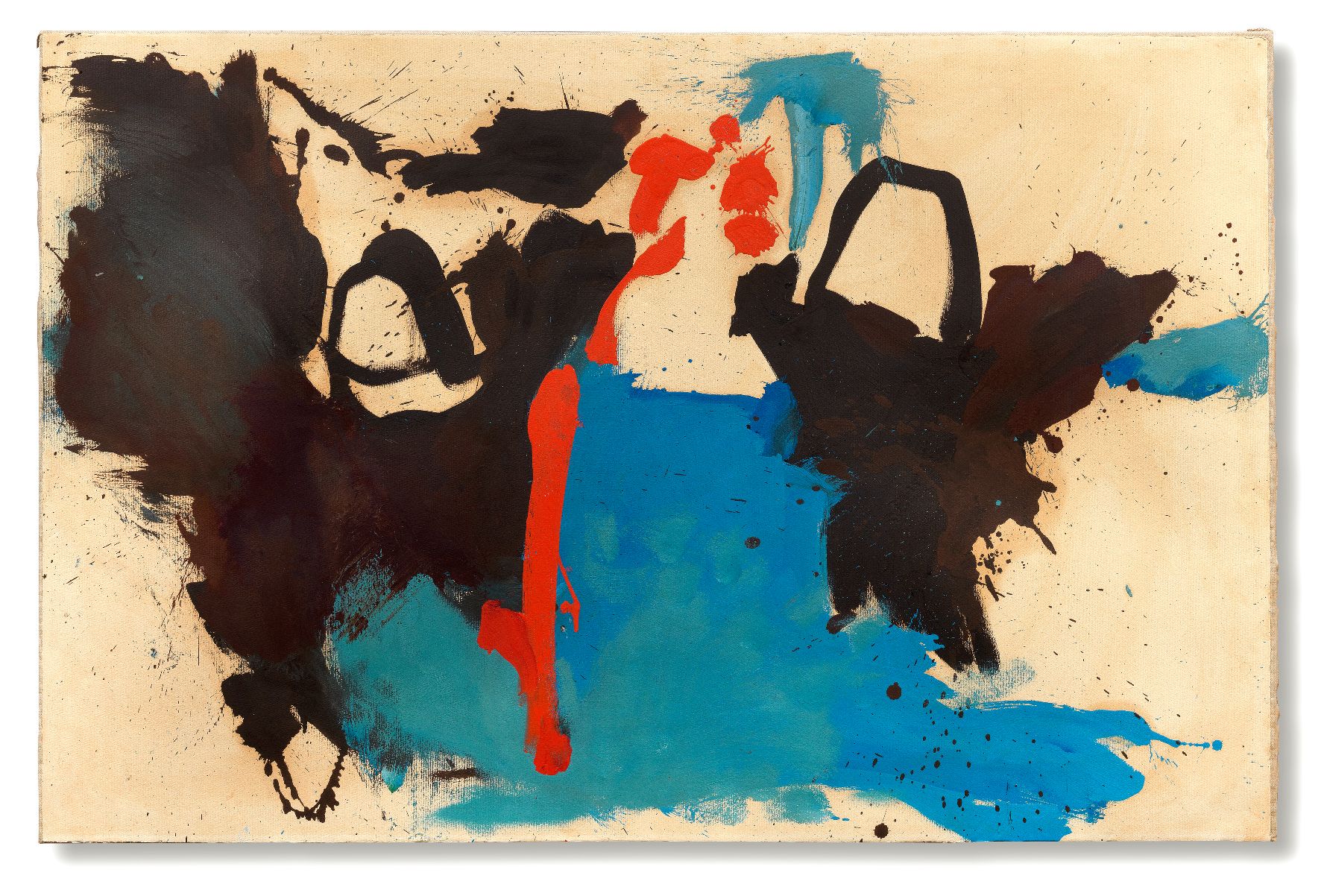
Lot 2. Helen Frankenthaler, Untitled, circa 1958-1961. Estimate: £150,000 - 250,000
2.
Soak-stain technique
One of Frankenthaler’s major contributions to American Abstraction is her invention of the ‘soak-stain’ technique. It began in 1952 when the 23-year-old artist experimented with a new method of Abstract painting. Inspired by Pollock, she laid a large canvas on the floor and applied paint from all angles. Pollock famously used thick household paint for his ‘drip’ technique and created his ‘action paintings’ via zealous splashes and a kinetic practice. Conversely, Frankenthaler created a wholly new effect by thinning oil paint with turpentine. Tilting the wet canvas, she would let the pigments move and disperse naturally with the help of gravity, encouraging the paint to soak into the fabric of the unprimed canvas and form luminescent colour washes. This technique fused canvas and paint in a way never before seen, and became her signature.
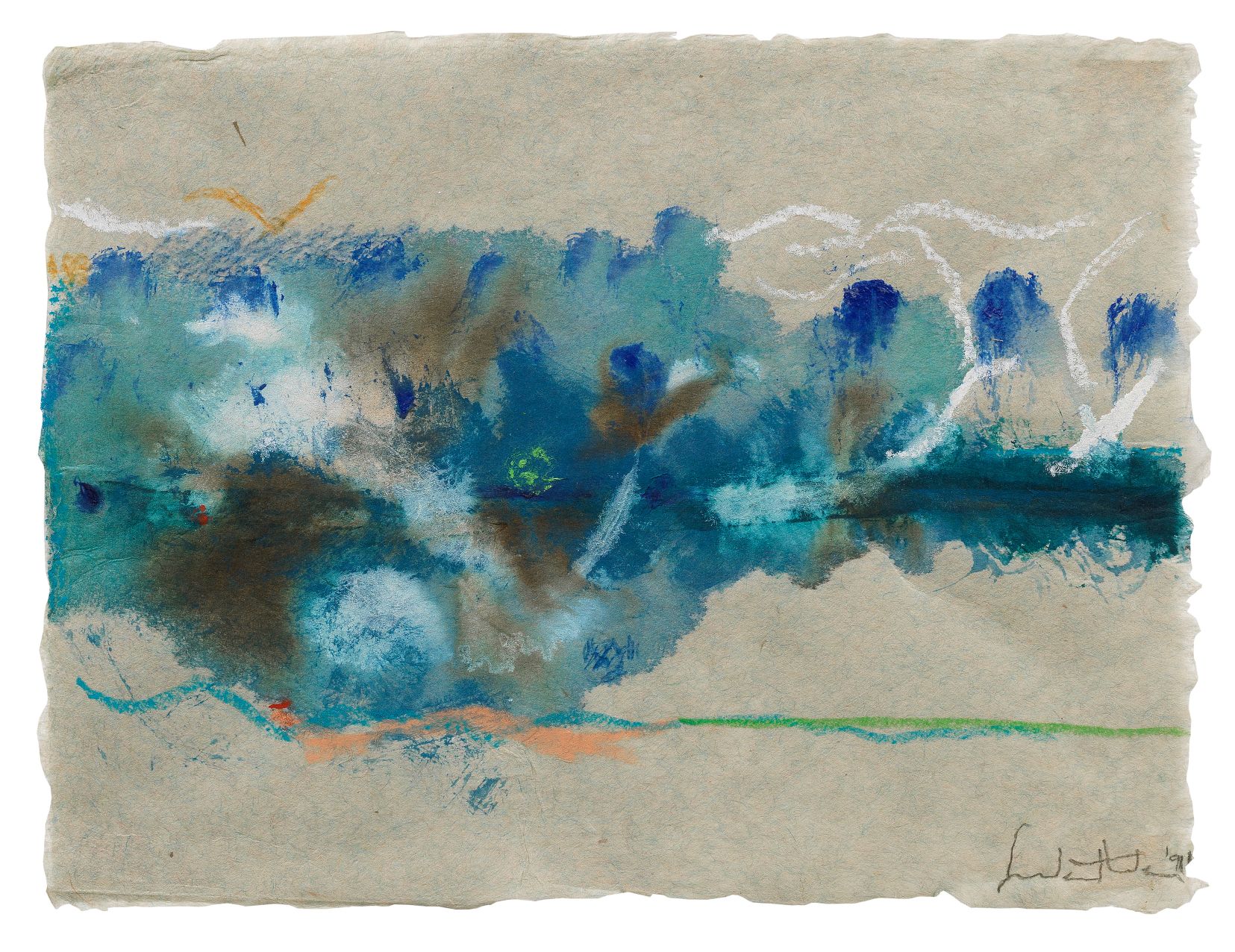
Lot 6. Helen Frankenthaler, Untitled, 1991. Estimate: £10,000 - 15,000
3.
Mountains and Sea
Mountains and Sea (1952) was Frankenthaler’s first major painting and the first example of her soak-stain technique. The work was inspired by a visit to Nova Scotia; she recalled that the region’s landscapes “were in my arms as I did it ... I was trying to get at something - I didn't know what until it was manifest.” When fellow artists Morris Louis and Kenneth Noland saw it, they were inspired by her innovation and adopted her technique. Today, this monumental painting hangs in the National Gallery of Art in Washington D.C.
4.
Colour field painting
Frankenthaler’s innovation of the soak-stain technique brought about the second wave of colour field painting. This term refers to the application of large areas ('fields') of colour to the canvas. It was first developed as a branch of Abstract Expressionism by Still, Newman and Rothko in the late 1940s, as they eschewed all attempts at figuration and focused solely on expression through colour. Championed by Greenberg as well as Frankenthaler’s technique, the approach was revived by a new generation of artists in the late 1950s. In 1964, Greenberg curated an exhibition titled Post-Painterly Abstraction at the Los Angeles County Museum of Art, which showcased thirty-one of the most prominent colour field painters, including Frankenthaler.
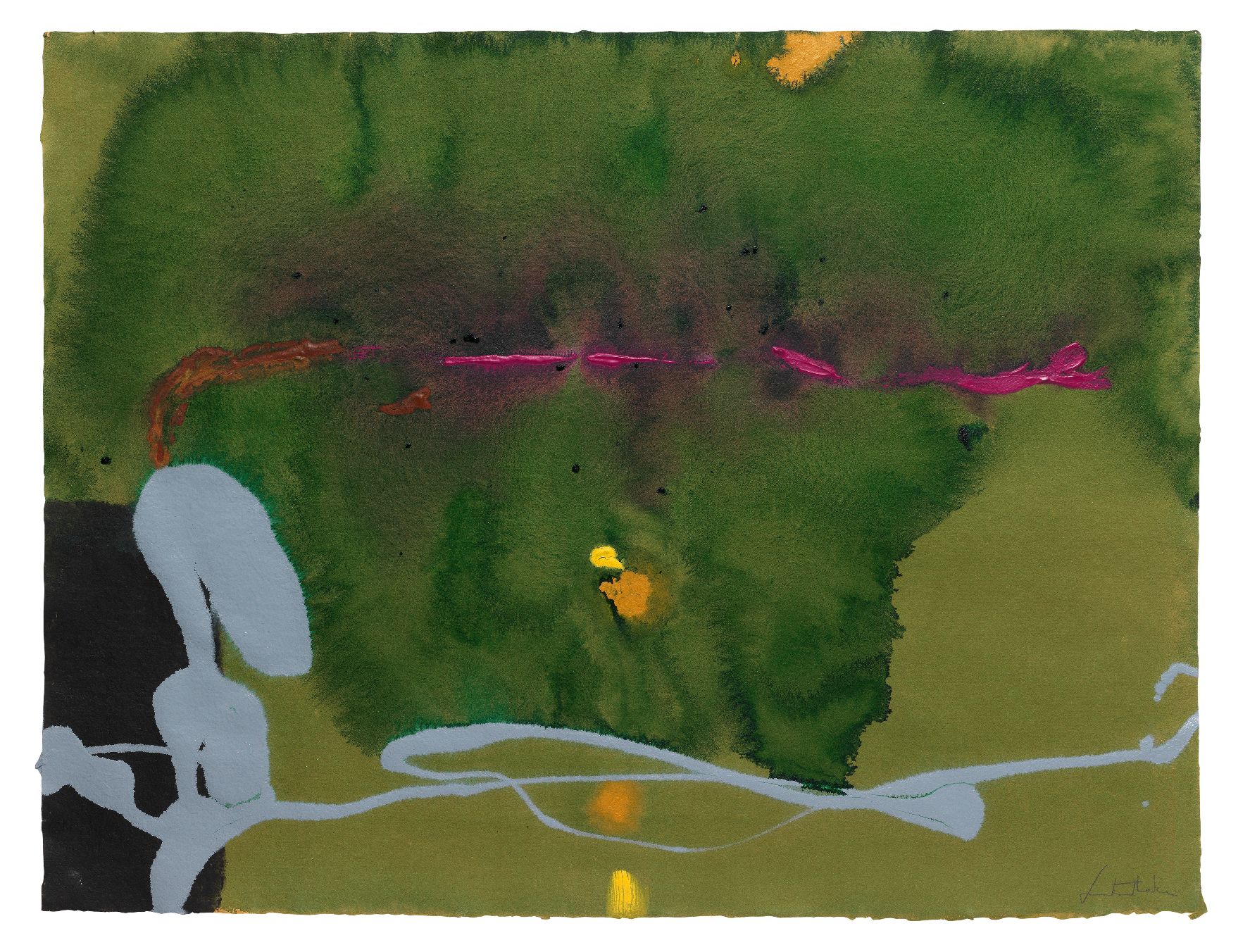
Lot 1. Helen Frankenthaler, Untitled, 1994. Estimate: £50,000-70,000
5.
'As if it’s happened at once'
While Frankenthaler is best known for the soak-stain technique she developed at the start of her career, she never stopped innovating. In the 1960s, she moved from oil paint to acrylic, exploring the possibilities of this new material. In the 1970s, she created her first woodcuts and became a trailblazer in this medium over several decades of experimentation, as showcased in the exhibition, Helen Frankenthaler: Radical Beauty, at Dulwich Picture Gallery in 2021. While her body of work is diverse, a key thread runs through her career. Regardless of medium, Frankenthaler’s works are characterised by their spontaneity. For her, “a really good picture looks as if it’s happened at once.”
6.
It’s a man’s world
Frankenthaler was born into an upper-middle-class world of privilege, encouraged by progressive parents to pursue her artistic ambitions. She was, however, born with one major social disadvantage - she was a woman participating in what was largely deemed a ‘man’s world’. While she was mentored by prominent male figures within the Abstract Expressionist movement, it was with a patrician – and often patronising – attitude. Frankenthaler wasn’t alone in this; there were many women artists of the Abstract Expressionist movement, including Lee Krasner, Grace Hartigan, Joan Mitchell, Elaine De Kooning and more. Representative of the general attitude towards female artists, Frankenthaler's contemporary Krasner was infamously told by her teacher Hans Hofmann about her work: “this is so good you would not believe it was done by a woman.”
Today, art history is being rewritten to include traditionally overlooked female artists, who are celebrated in major publications and exhibitions, including Bonhams’ Dreaming in Colour in London and The Medium is the Message: Women Artists in Contemporary Art in New York.
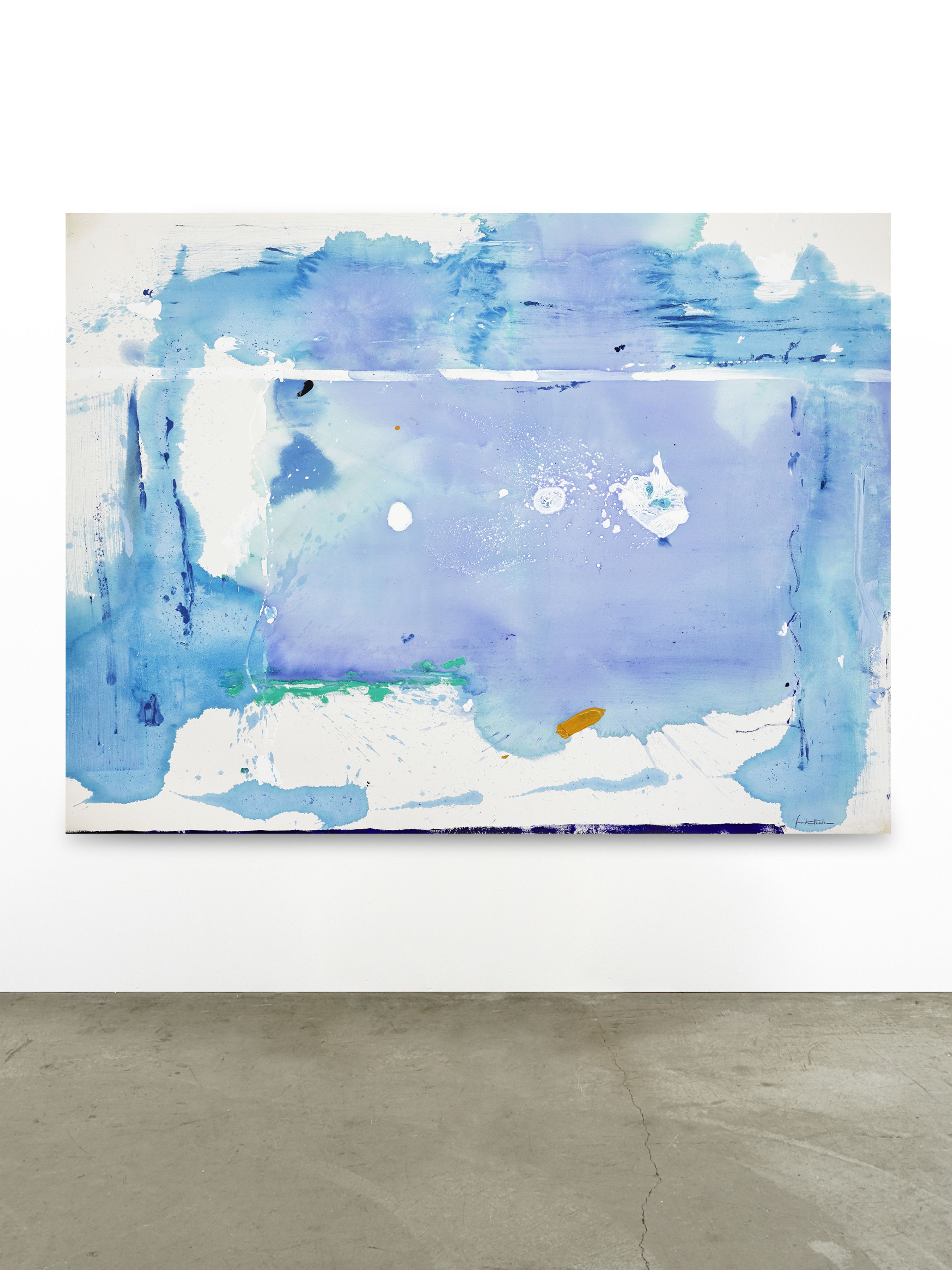
Helen Frankenthaler, Summer Angel, 1984. Sold for US$ 907,500 (£ 856,437) inc. premium
7.
Frankenthaler today
Frankenthaler’s work can be found in the collections of many international institutions including the Museum of Modern Art in New York, the Centre Pompidou in Paris, and the Tate Modern in London. Her reputation has grown in recent years and she is now finally recognised as a pioneering member of Abstract Expressionism. Accordingly, her work performs well on the secondary market, with large works achieving high prices: for instance, Summer Angel, an acrylic on canvas that spans almost 3m in length, achieved over $900,000 at Bonhams New York in 2017. Later works on paper offer a more accessible entry point, with our upcoming Post-War & Contemporary Art auction offering a 1991 mixed media on paper for £10,000 – £15,000, alongside larger works that span £50,000 – £250,000.
A selection of works by Helen Frankenthaler will be going under the hammer as part of our Post-War & Contemporary Art auction on 13 October 2022. Browse the auction here.

Lot 2. Helen Frankenthaler, Untitled, circa 1958-1961. Estimate: £150,000 - 250,000
Lot 2. Helen Frankenthaler, Untitled, circa 1958-1961. Estimate: £150,000 - 250,000

Lot 6. Helen Frankenthaler, Untitled, 1991. Estimate: £10,000 - 15,000
Lot 6. Helen Frankenthaler, Untitled, 1991. Estimate: £10,000 - 15,000

Lot 1. Helen Frankenthaler, Untitled, 1994. Estimate: £50,000-70,000
Lot 1. Helen Frankenthaler, Untitled, 1994. Estimate: £50,000-70,000

Helen Frankenthaler, Summer Angel, 1984. Sold for US$ 907,500 (£ 856,437) inc. premium
Helen Frankenthaler, Summer Angel, 1984. Sold for US$ 907,500 (£ 856,437) inc. premium


 Built with Shorthand