
A Closer Look
The Bedchamber Sword of Tipu Sultan
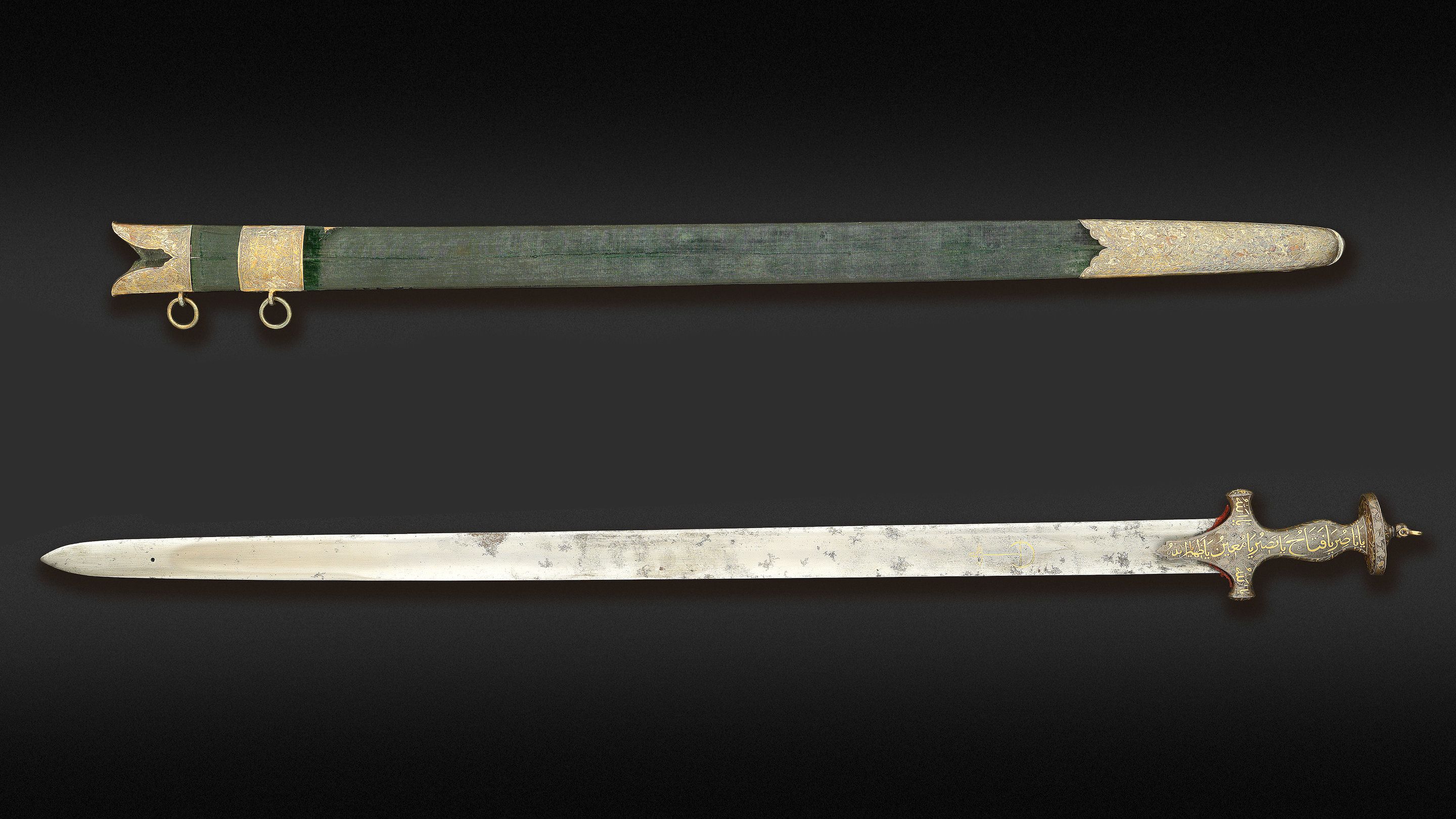

Take a closer look at Indian ruler Tipu Sultan’s legendary ‘Bedchamber Sword’—sold for over £14million in our Islamic and Indian Art auction on 23 May in London—its history, inscriptions and meanings.
The most important weapon associated with the ‘Tiger of Mysore’
Tipu Sultan ruled the Kingdom of Mysore in Southern India between 1782 and 1799. He is remembered as one of the most creative, innovative and capable rulers of the pre-colonial period and put up a strong resistance against the British East India Company. In 1799, the Company army, led by Major General Baird—a former inmate of Tipu’s prisons—laid siege to Tipu’s capital of Seringapatam. The city was overrun and the ‘Tiger of Mysore’ was himself killed during the action.
The ‘Bedchamber Sword’ was found in his private apartments following the battle. It is undoubtedly the most important weapon that can be directly associated with Tipu and, in being presented to Baird as a trophy following the battle, can almost be seen as the symbol of the sultan himself—his power and authority being yielded to the British General in defeat.
Take a closer look:
The extremely rare calligraphic hilt is, in itself, a masterpiece of late-18th century Indian manufacture, intricately inlaid in gold with fine calligraphic invocations to God.
The English inscription to the blade, presumably added by Baird or a descendant, explains how it was found in Tipu Sultan’s bedchamber following the fall of Seringapatam and presented to the General as a trophy of his victory.
On the spine of the blade, a gold inlaid inscription reads shamshir-e malik or ‘The Sword of the King’.
A further inlaid design to the blade depicts the Orb and Parasol, a mark which was applied to the finest swords produced by Imperial Mughal swordsmiths.
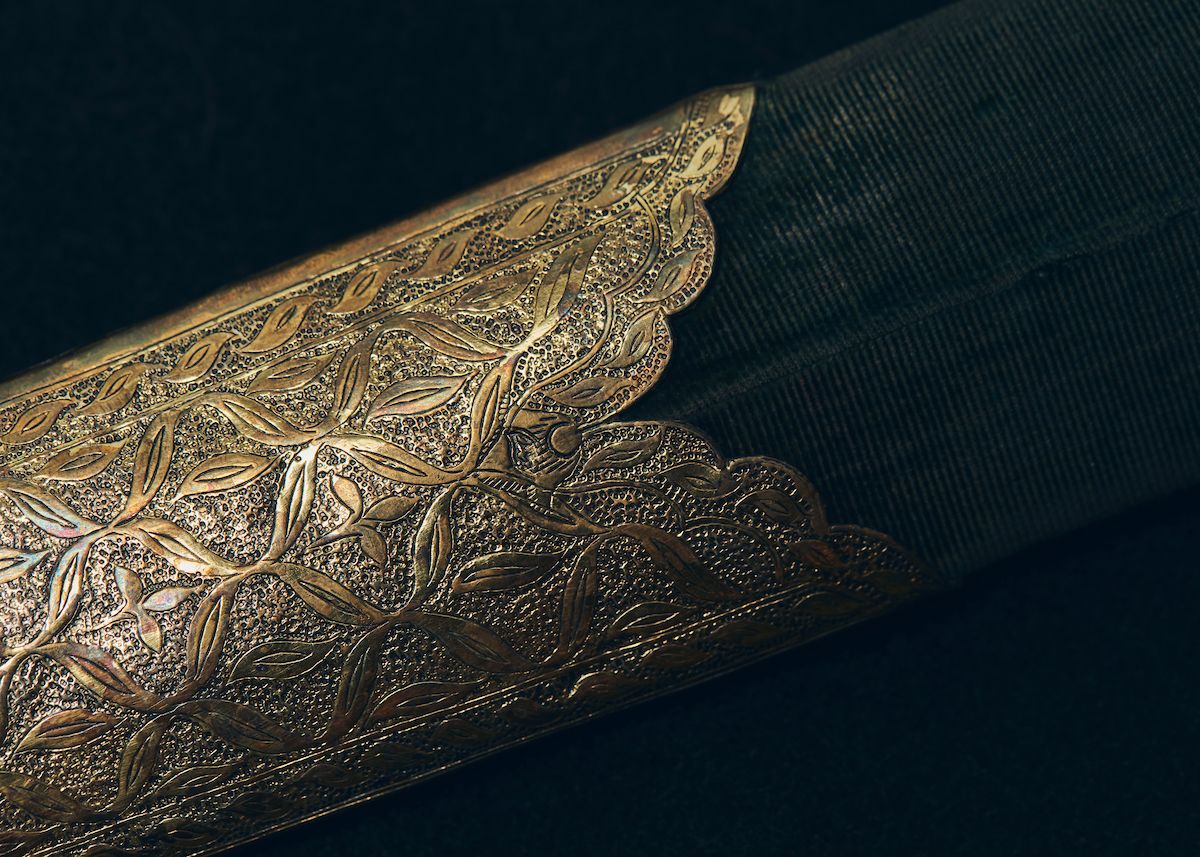
The silver mounts of the scabbard are engraved with the sultan’s favourite decorative motif: tiger stripes symbolising his identification with the tiger. The chape (protective fitting at the bottom of the scabbard) is also impressed with the Haider control mark, signifying that it was made in the Royal Workshop at Seringapatam.

This extraordinary lot, one of the world’s rare artefacts went under the hammer on 23 May, achieving £14,080,900 against an estimate of £1.5-£2million.
For more information, contact oliver.white@bonhams.com
Stay updated with our auctions
Sign up to receive your weekly newsletter of global auctions, stories and more.
 Built with Shorthand