
Collecting 101
Western Modernism: 5 Artists to Know
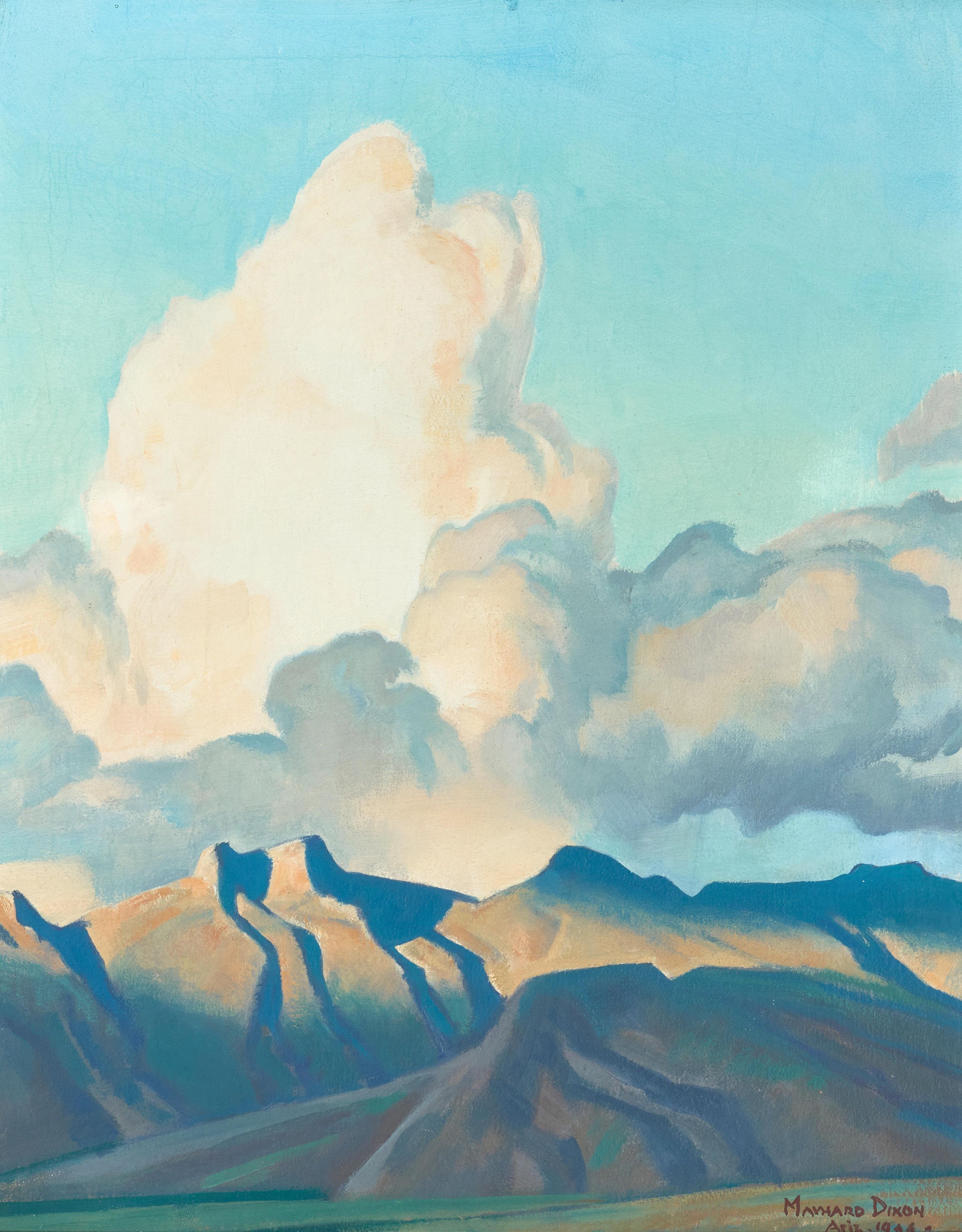

Much like its European counterpart, Western Modernism in America reflected the seismic sociocultural shifts in the early decades of the 20th century. The movement took off following The Armory Show in 1913, where visitors – accustomed to the conventions of American social realism – were stunned by this new wave of radical expression.
Soon after, a selection of artists in the American West began to abandon historical precedents in response to the rapidly evolving changes in the art world. This fostered a movement that fused the fervour of Fauvism, Cubism and Expressionism and philosophical ideas like Theosophy and Transcendentalism with the distinctive light-drenched and vast Western landscape.
Here, Western Art specialist Katherine Halligan spotlights five artists who blazed a trail in Western Modernism.

1.
Raymond Jonson (1891-1982)
Born in Iowa to a family of Swedish immigrants, artist, educator, and curator Raymond Jonson spent his career in pursuit of pure abstraction. When The Armory Show travelled to Chicago in 1913, Jonson was exposed to the dynamism of Cubism and Futurism, and importantly, the spiritual work of Wassily Kandinsky. Jonson spent his early career in Chicago, producing graphic art for a small theatre group. In 1922, the artist visited Santa Fe, a trip that would prove pivotal. Inspired by the staggering beauty of the environment, and seeking a less frenetic pace of life, he moved to New Mexico in 1924. There, he co-founded the Transcendental Painting Group in Santa Fe – a collective seeking to transcend objective painting and embrace spiritualism – and would spend 28 years teaching at the University of New Mexico, Albuquerque. As his work evolved, representational landscapes, portraits and direct symbolism were deserted in favour of abstract compositions that captured rhythm, order, spirituality and the subconscious. His innovative approach also extended to media. Influenced by the Bauhaus artists, Jonson began to incorporate airbrush technique into his work in 1938. This allowed him to cultivate a purely objective experience, moving freely between concept and application without the intervention of a paintbrush. The invention and availability to artists of acrylic polymer paint in 1957 was another watershed moment for the artist and Polymer No. 7 (1958) is a key example of Jonson’s capabilities in continued material experimentation. Polymer was Jonson’s main medium by 1960, often enhanced with added aggregates including sawdust, sand, wood shavings and powdered Plexiglas, in the artist’s interest in achieving visual and physical texture and patterning.
2.
Dorothy Brett (1883-1976)
Dorothy Brett was born into a British aristocratic family and had a sheltered upper-class childhood. She was first exposed to the American West at a London performance of Buffalo Bill’s Wild West show, which initiated a lifelong fascination. Contrary to her parents’ expectations, she pursued a career in art, studying at the Slade School of Art and joining the famed Bloomsbury group of English writers, artists and philosophers; experiences that liberated Brett from the stiff shackles of Victorian England. She became friends with D.H. and Frieda Lawrence, who, after travelling to Taos in 1923 at the invitation of arts patron Mabel Dodge Luhan, persuaded Brett to join them a year later. Together, they envisioned a utopian art society in New Mexico, starting with a rural ranch owned by Luhan, where Brett demonstrated a flair for carpentry. The Lawrences returned to England in 1925, but Brett remained alone on the ranch in near poverty, making a modest income selling her paintings of the local Pueblo Peoples to tourists. The artist later moved to Taos and was granted US citizenship in 1938. She became an admired personality and her work began attracting the attention of national museums. Her celebrated mature work, including the oil painting Santo Domingo Corn Dance (1959) sold by Bonhams for a record price of $69,062.50 in 2021, features a purely rendered, mystical depictions of an important Pueblo ceremony.
3.
Bror Julius Olsson Nordfeldt (1878-1955)
Swedish-born artist and educator Bror Julius Olsson Nordfeldt is best known for wide-ranging depictions of seascapes and New Mexico's Indigenous cultures. Nordfeldt immigrated to Chicago aged 14, initially working as a typesetter for a Swedish-language newspaper, and later attending the Art Institute of Chicago in 1899. Following further studies and work in Europe, he was drafted in San Francisco during World War I and, as part of his service, was assigned to paint camouflage on merchant ships. After the war, he moved to Santa Fe where, alongside teaching at prestigious colleges, he honed a distinctive approach to modernism. Contrary to his earlier, more academic style, this period saw the artist take on new modes of expression that nodded to Fauvism and Japanese woodblock prints. These were achieved through spatial distortion, expressive movement, flattening of forms and a colour palette to mirror the intensity of light in the American southwest, evident in Shepherd and dog (1937), which sold for $40,000 in 2015 and Ortiz Grocery (Santa Fe) (1936), which achieved $17,575 in 2020. His prints and paintings captured a broad range of subjects, from the rugged Santa Fe landscape to deeply human depictions of Native American ceremonies. Nordfeldt was one of the founding members of the Indian Artists Fund, an organisation that fostered and preserved the art and heritage of the Pueblo Peoples.
4.
Emil Bisttram (1895-1976)
Hungarian-born artist Emil Bisttram immigrated to New York aged 11 and began his career in advertising. He soon pivoted from commercial art to fine art, studying extensively in New York before becoming an accomplished teacher in his own right. He visited Taos, New Mexico for the first time in 1930, initially struck by the dramatic shifts in light and colour, and the sheer vastness of the landscape. He then travelled to Mexico, supported by a Guggenheim grant, to study fresco painting with world-renowned muralist Diego Rivera, after which he settled permanently in Taos. During the Great Depression, Bisttram worked on several public mural commissions, and in 1932, established the Heptagon Gallery and Taos School of Art. By the end of 1938, Bisttram founded the pioneering Transcendental Painting Group alongside Raymond Jonson. During this time, his work was becoming increasingly non-objective, though representation still played a role. His dreamlike paintings – dynamic, graphic and rationalist – are often composed of intersecting shapes filled with vibrant gradated colour and straddled the realms of representation and abstraction. He was interested in theories surrounding dynamic symmetry, the intersection of science and ancient knowledge, and Transcendentalism, but also the landscape and vernacular of New Mexico. He often returned to Taos’ Ranchos Church as a subject, which is depicted in a striking 1974 painting, which sold for $25,312 in 2021.
5.
Cady Wells (1904-1954)
Artist and art patron Cady Wells was born and raised in Southbridge, Massachusetts. Though affluent, Wells’ youth and early education were sporadic and rebellious; he dropped out of numerous boarding schools and refused to align himself with his parents’ conservative values. When he was sent to the Evans Ranch School in Arizona in 1922, he was enamoured with the mountain and desert-rich landscape and began depicting his surroundings.
Following early classical training in music and a later shift to stage design, Wells committed to painting in his late twenties. His style - semi-abstract and gestural - was deeply influenced by the landforms of his environment, exemplified in pieces like the gouache Abstract composition (circa 1950), which is estimated to achieve $3,000 - $5,000 at auction. Wells also drew on Japanese and Chinese philosophies and aesthetics, as well as the work of artists including Raymond Jonson, and Georgia O'Keeffe.
His art career was put on hold while he served in the US Army during World War II. On his return to New Mexico, he restored a Spanish style home near Santa Fe and became a prominent social figure in the region. Wells was also a generous benefactor and contributor to the community, helping to found the Jonson Gallery and donating a collection of 200 Santos to the Museum of New Mexico.
To learn more about our Western Art department follow @bonhamswestern on Instagram.

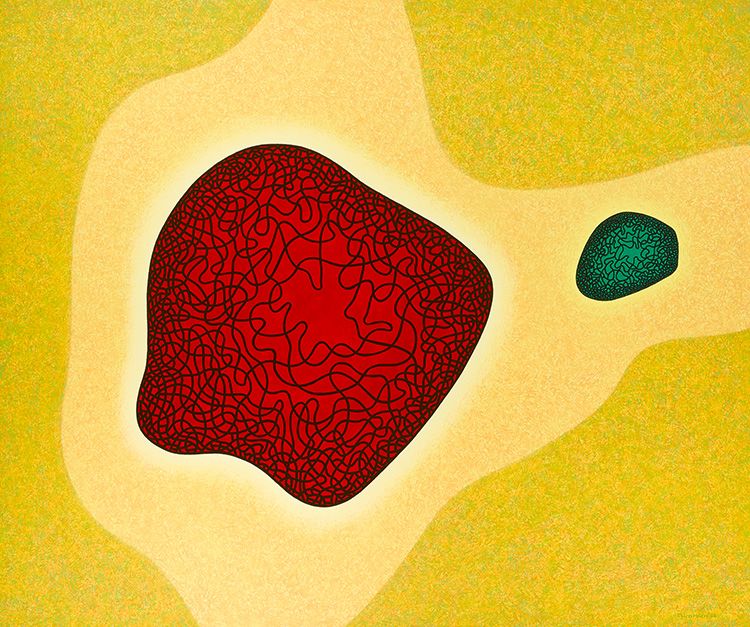
Lot 125. Raymond Jonson (1891-1982); Polymer No. 7. Estimate: $20,000 - $30,000
Lot 125. Raymond Jonson (1891-1982); Polymer No. 7. Estimate: $20,000 - $30,000

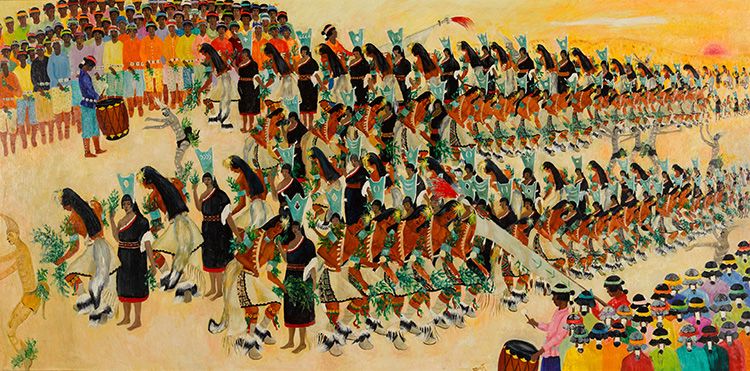
Lot 4. Dorothy Brett; Santo Domingo Corn Dance, 1959. Sold for $69,062.50
Lot 4. Dorothy Brett; Santo Domingo Corn Dance, 1959. Sold for $69,062.50

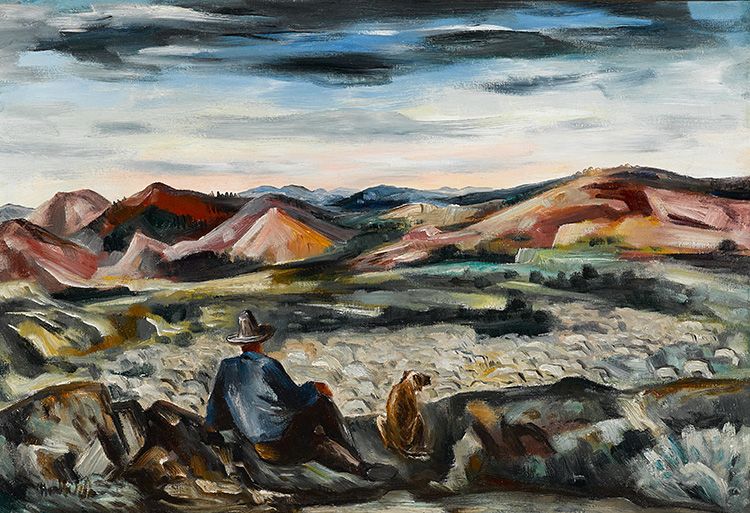
Lot 88. Bror Julius Olsson Nordfeldt; Shepherd and dog, 1937. Sold for $40,000
Lot 88. Bror Julius Olsson Nordfeldt; Shepherd and dog, 1937. Sold for $40,000

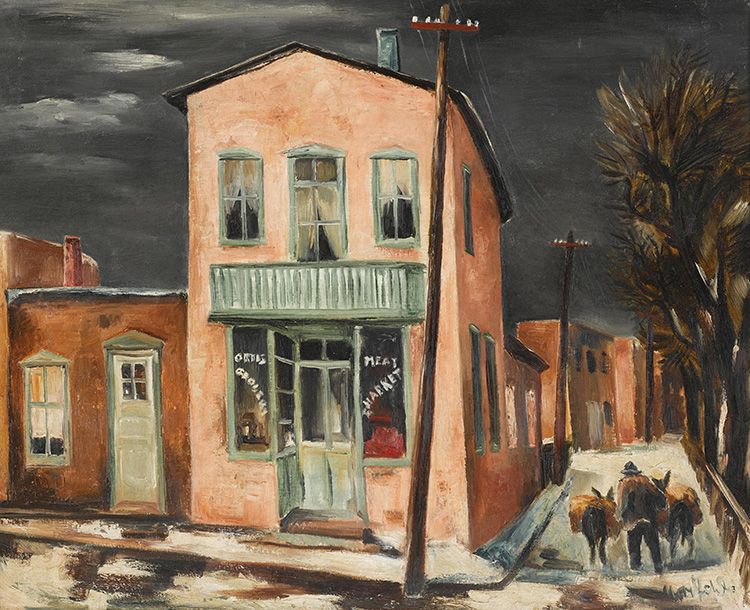
Lot 141. Bror Julius Olsson Nordfeldt; Ortiz Grocery (Santa Fe), 1936. Sold for $17,575
Lot 141. Bror Julius Olsson Nordfeldt; Ortiz Grocery (Santa Fe), 1936. Sold for $17,575

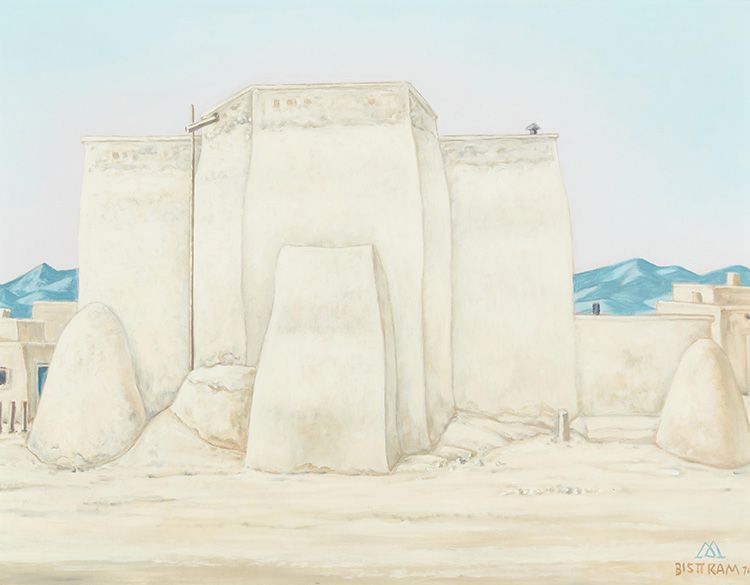
Lot 27. Emil Bisttram; Ranchos Church Taos, 1974. Sold for $25,312
Lot 27. Emil Bisttram; Ranchos Church Taos, 1974. Sold for $25,312

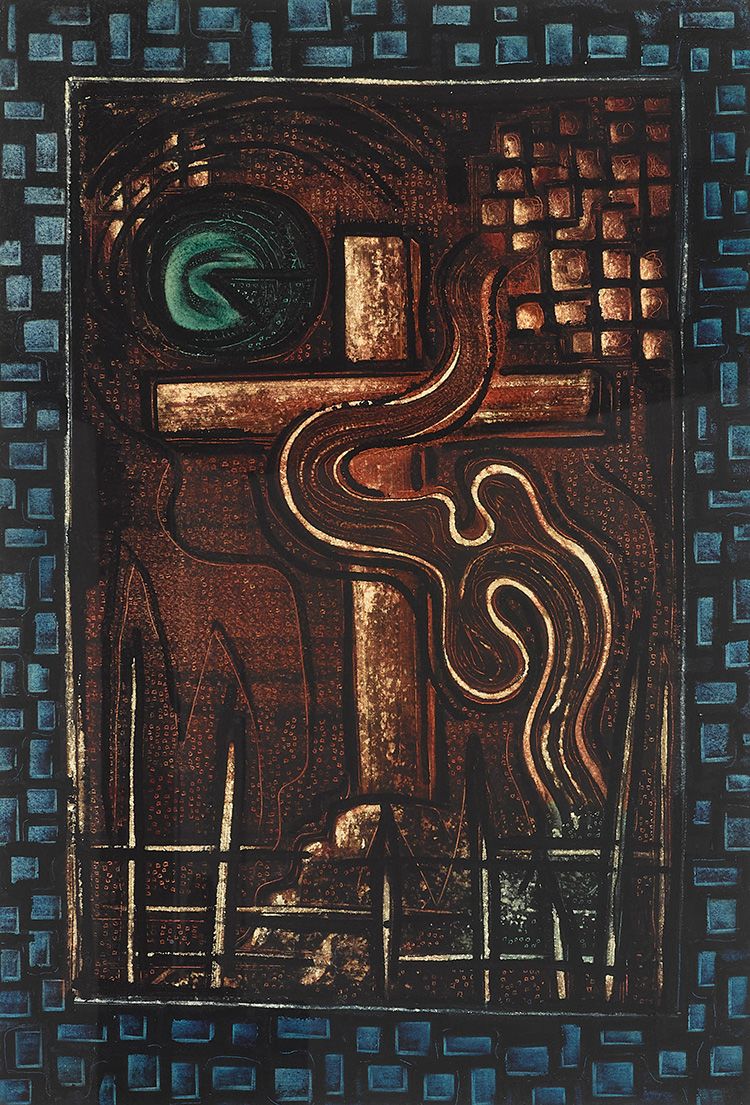
Lot 122. Cady Wells; Abstract composition, circa 1950. Estimate: $3,000 - $5,000
Lot 122. Cady Wells; Abstract composition, circa 1950. Estimate: $3,000 - $5,000


 Built with Shorthand