
A Closer Look At
Max Pechstein’s Sonnenflecken

Turn-of-the-century avant-garde Europe pulsed with confidence and optimism. As the only formally trained member of Die Brücke, the German Expressionist group founded in 1905, Max Pechstein swiftly became one of its most important and influential exponents.
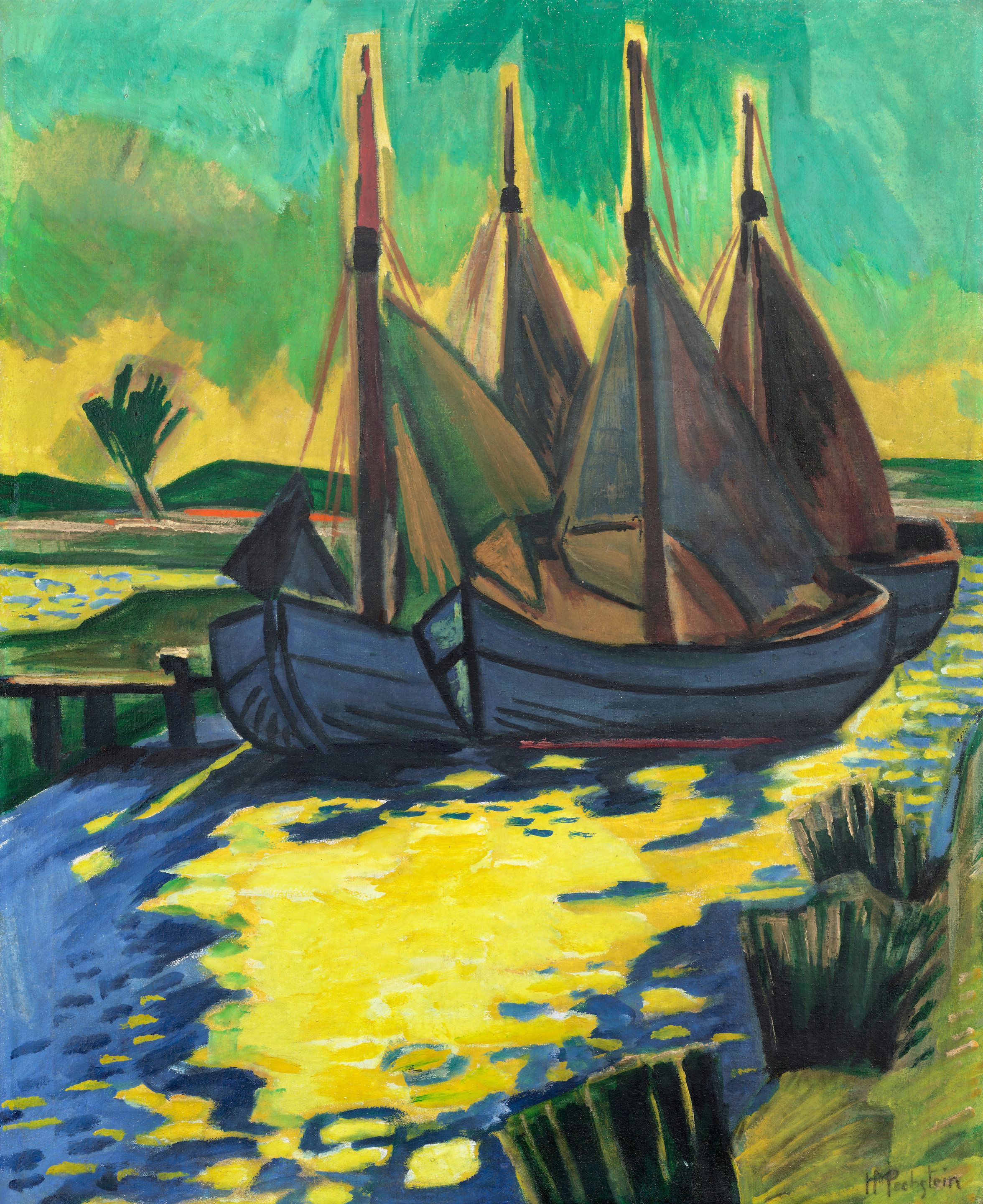
Ahead of our Impressionist & Modern Art auction on 6 December, we take a closer look at Sonnenflecken — a painting that majestically captures Pechstein's exaltation of the sun and simple coastal life through the lens of the Expressionist avant-garde.
"I drown everything in color, my brain is filled only with paintings, and the idea of what to paint drives me from one place to the other"
Max Pechstein was a key leader of Die Brücke, experimenting with audacious color and revolutionary abstraction in parallel to the Fauve movement, which concurrently dominated French artistic circles.
Pechstein produced a multitude of stark, introspective woodcut self-portraits while simultaneously creating incredibly expansive, sumptuous landscapes and waterscapes. He relied upon close observation of the environment, and injected his painterly interpretations with intense, bright color and prismatic abstraction.
This vision of the radical beauty of nature followed his early phase which was centered more on being a member of Die Brücke: establishing the identity of the Expressionist artistic movement, developing conceptual treatises, and changing the trajectory of art history alongside contemporaries such as Wassily Kandinsky, Ernst Ludwig Kirchner, and Gabriele Munter. Pechstein’s oeuvre was classified from 1933 by the Nazis as Degenerate Art, underscoring his provocative, Modernist impetus.
In the year that Sonnenflecken was painted, that Pechstein reached the apex of his fame. He was the first and only (for several years) Expressionist artist of his generation to be admitted into the Prussian Academy, a stamp of formal approbation from the institutional sphere.
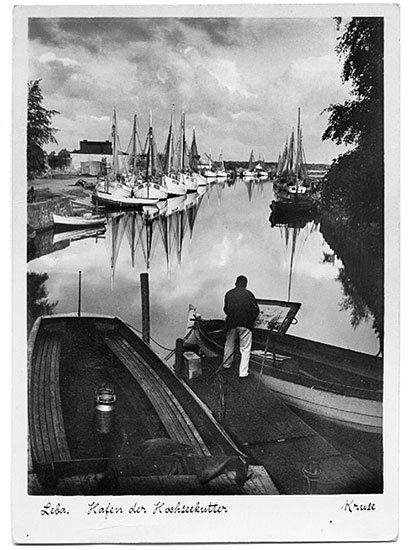
Sonnenflecken is a masterwork within a series of boldly colored Expressionist landscapes painted by the artist during the early 1920s. It likely belongs to the series of Colorist landscape paintings which Pechstein executed in and around Leba – a small village on the Baltic coast of what is now Poland – from July to September 1922.
The painting is emblematic of a period of great productivity and creativity in Pechstein's life – a rebirth, as he called it. During the inter-war years, Pechstein utilized a luscious color palette of saturated yellows, reds, blues, and greens and the application of black contours, drawing inspiration from French Fauve painting as well as the works of Paul Cézanne and Vincent van Gogh.


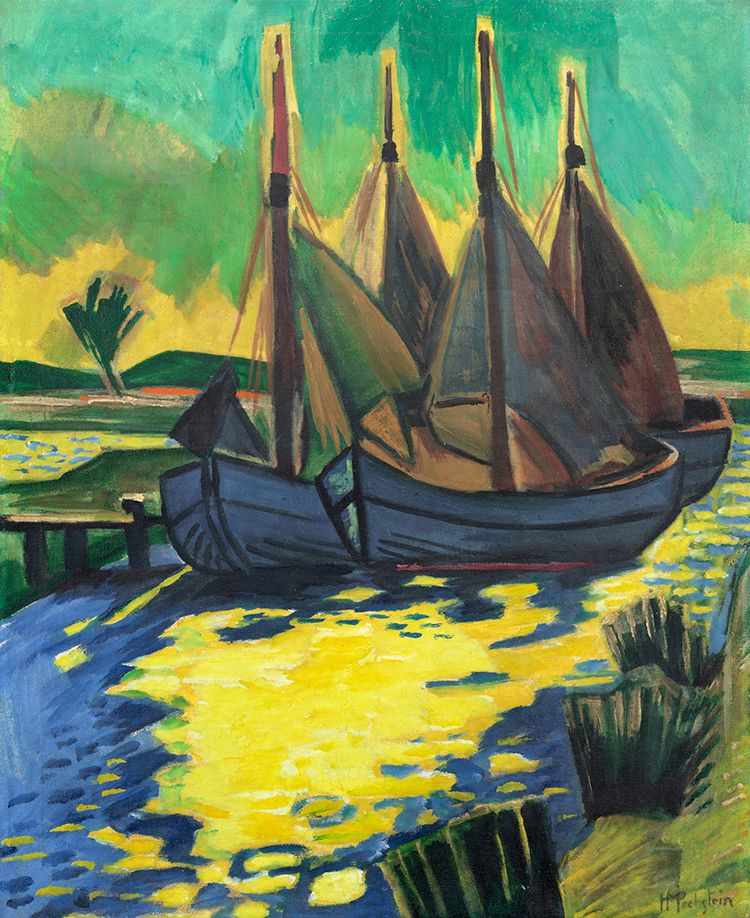
Lot 9. Max Pechstein, Sonnenflecken. Estimate: $1,000,000 - $1,500,000
Lot 9. Max Pechstein, Sonnenflecken. Estimate: $1,000,000 - $1,500,000
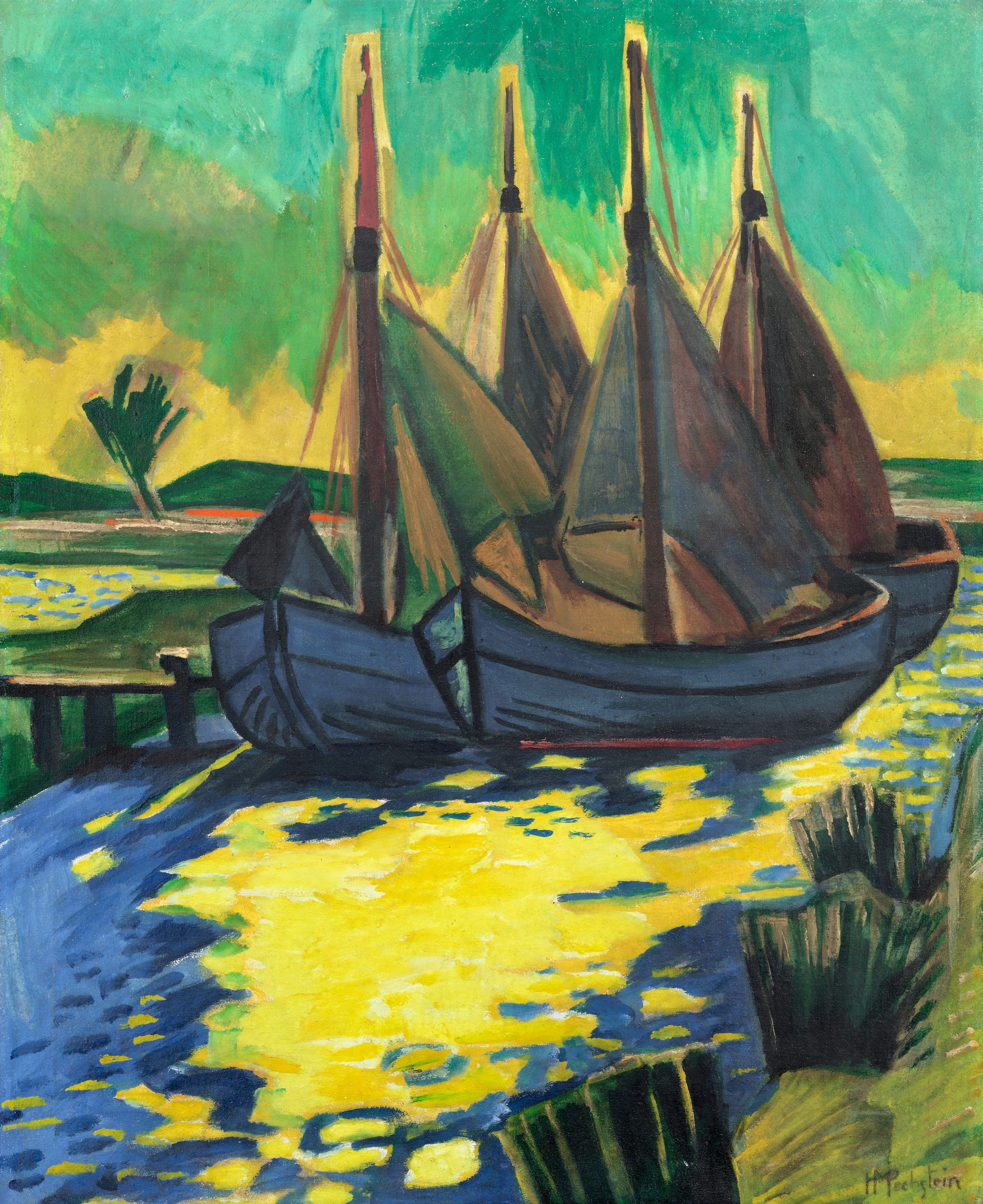
Sonnenflecken exemplifies Pechstein's formal explorations of the time. The large-scale canvas is dominated by a blaze of vibrant color, and a marked contrast is created between the flatness of the picture plane and abundance of rich detail.
Pechstein’s landscapes and waterscapes of Leba, such as Sonnenflecken, are distinguished by dazzling play of light and an almost hallucinatory use of pure, bold color. He was fascinated by the atmospheric and climatic changes of the coastal region and felt a deep connection to the area and its people.
Here, he has depicted a river of intense blue and yellow pigment – striking complementary colors – flanked by verdant fields and foliage, with intensity and vigor.
Under the vivid gold and emerald sky, the sailboats and water come alive with energetically applied, angular streaks of color, immersing the viewer in Pechstein’s unique vision of the world.
The fundamental pictorial elements of Sonnenflecken, such as distortion of form and perspective and stridency of color and vision, and the bold and simplified forms and distinctive black outlines brilliantly exemplify Pechstein's continuous experimentation with the lexicon of Expressionism applied to a region, a culture, a season, an atmosphere, a feeling so profoundly beloved by the artist.
Register to bid in Impressionist & Modern Art before 6 December and follow @bonhams_impressionists on Instagram for more exciting news.


 Built with Shorthand