
A Closer Look
Kepler Explores Planetary Motion
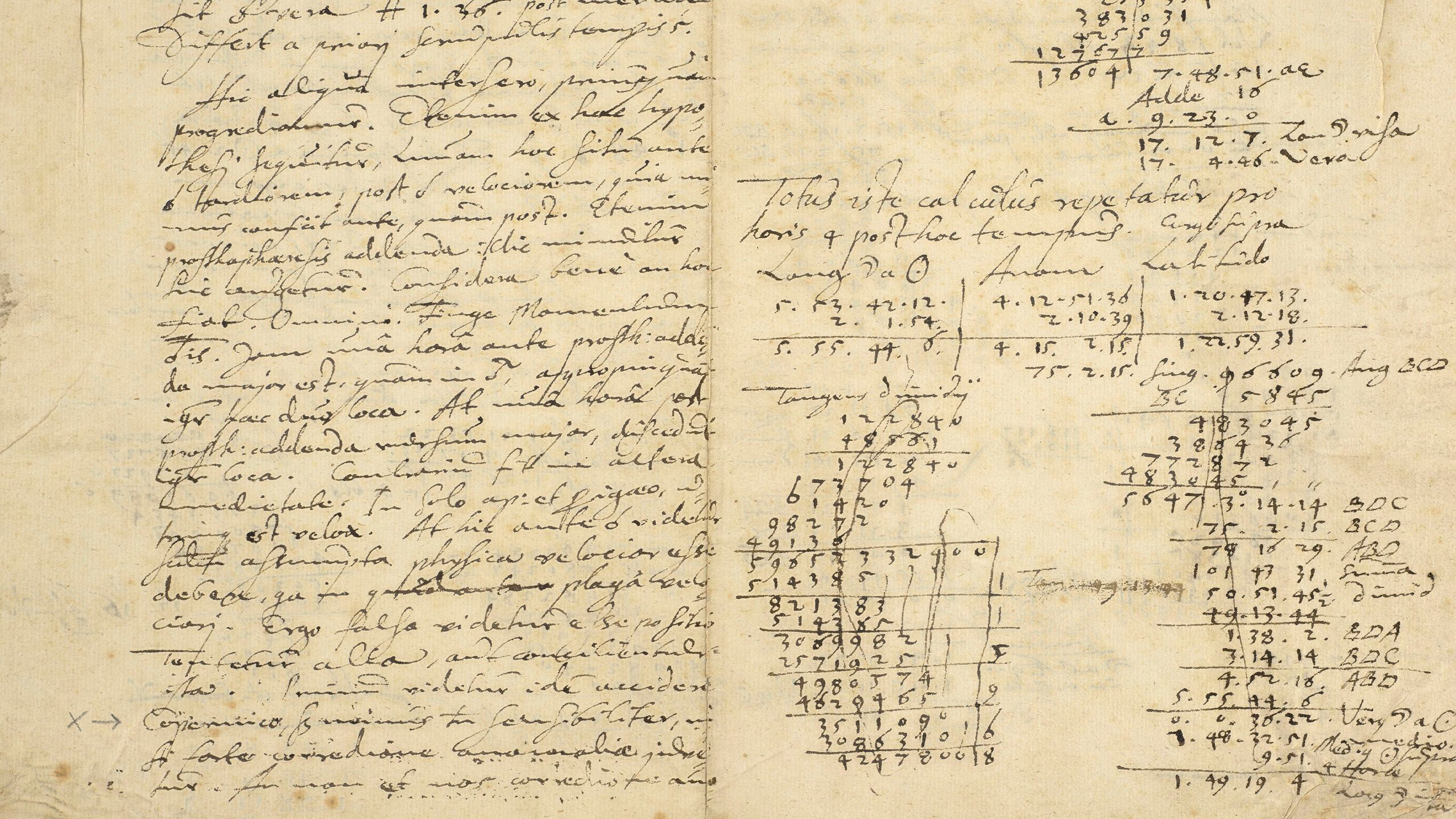

Leading our Fine Books and Manuscripts auction on 13 December 2022 in New York was a fantastic scientific manuscript by Johannes Kepler, the father of modern astronomy, in which he uses Danish astronomer Tycho Brahe’s data in an investigation of solar and lunar orbits, and noting the work of Copernicus.
Only two scientific manuscripts by Kepler have appeared at auction in nearly a century – the other, Kepler on the movement of planets, was sold at Bonhams in October 2022 for a record price.
Here, we take a closer look at this incredibly rare and significant piece of history.

The Astute Collector
“The one thing that can grant a slight inkling of this incomprehensible process of creation is the handwritten pages and particularly those not yet intended for the press, those sprinkled with corrections, the tentative first outlines, from which gradually the future valid form crystallizes … It was a pleasure to me to hunt them down at auctions, a joyous effort, to follow a scent to the most hidden places, and at the same time a kind of science….”
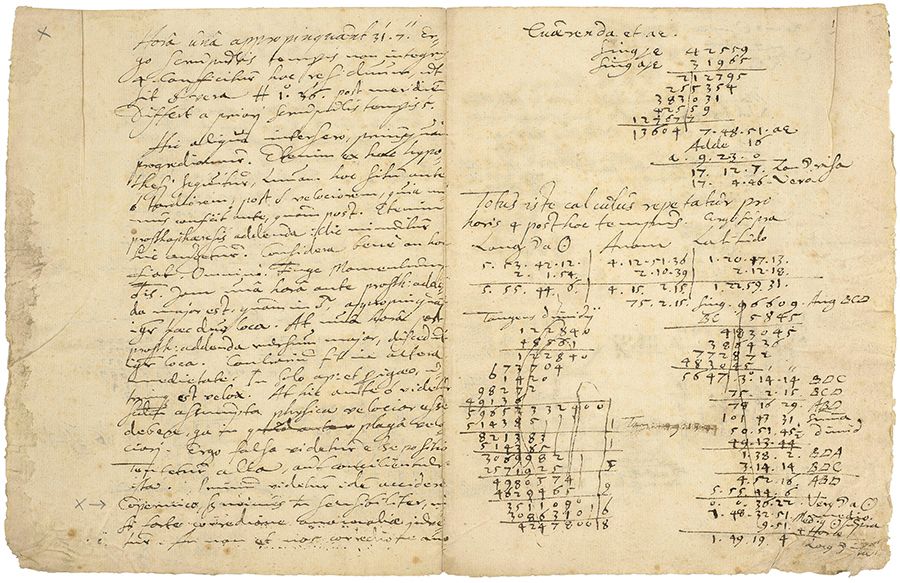
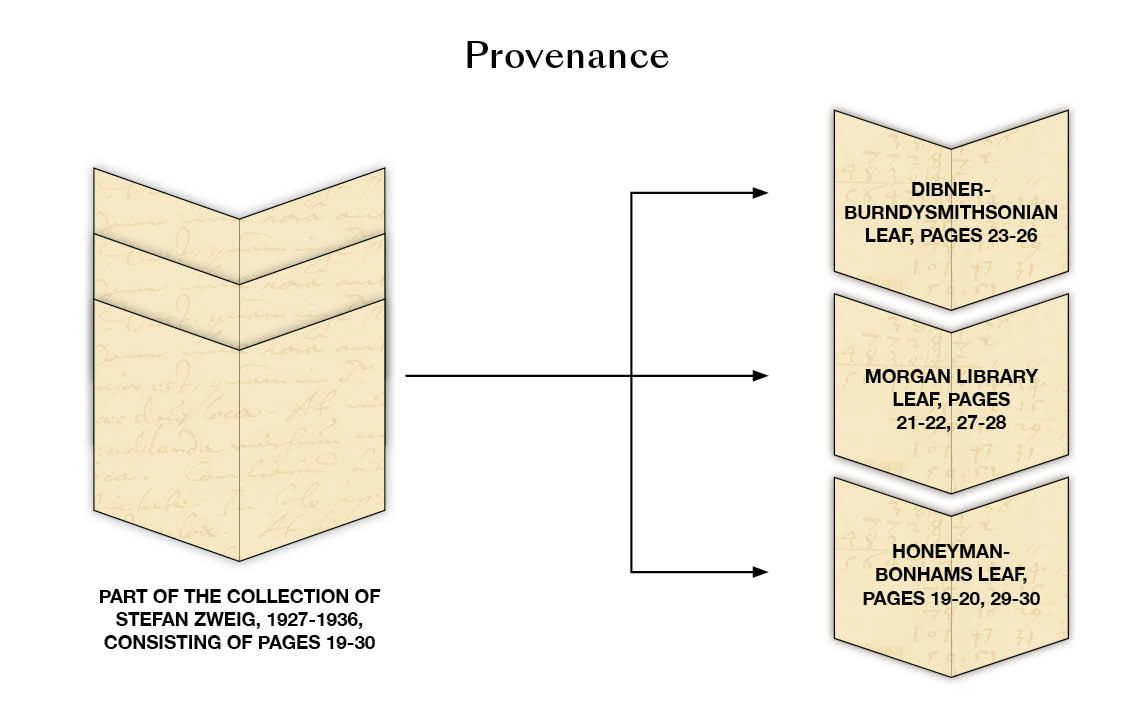
The four pages offered in our auction originally belonged to a fragment of 12 pages, comprising pages 19-30 of a larger manuscript. Sold in Berlin in 1927 by Henrici, they next appeared in the renowned collection of Austrian writer Stefan Zweig and encapsulate Zweig’s desire to find the best example of the author’s writing.
In 1936, these four pages appeared in Hinterberger's Katalog IX of Zweig's collection, consigned from his exile in London. Considered the best leaf – particularly for its mention of Copernicus – they are the only pages of this important scientific manuscript remaining in private hands. From the original 12 pages in Zweig's collection, four are now at the Morgan Library and four are in the Smithsonian collection.
A true rarity, the upcoming lot is one of only two scientific Kepler manuscripts recorded at auction in the last 100 years. The other, an autograph scientific manuscript by Kepler on the movement of planets, sold for $882,375 on 25 October 2022 in New York, a new auction record.


Investigating Planetary Motion
Kepler's manuscripts are notoriously hard to decipher and transcribe. These notes were not produced for publication, and he tends to follow a thought as it occurs to him, instead of proceeding in order.
Likely written during his early years in Prague after Brahe's death, these four pages are Kepler's examination of the variation of a planet's rate of motion at different stages of its orbit, a line of thought that led to his renowned Laws of Planetary Motion. The calculations relate to the longitude of the moon and the sun, and the movement of the moon within its orbit.
Here he further notes that Copernicus was the first to work on this problem.
The subject and format of the leaves closely resemble Kepler's early 17th-century writings and calculations relating to the orbit of Mars and the moon. Although the present manuscript does not mention Mars, the investigations occurred concurrently with the lunar/solar investigations evinced here. Using raw data from Brahe's tables, which he helped compile and completed upon Brahe's death, and comparing it with his own data, Kepler can be seen exploring the relative orbits of the bodies.
Kepler finished up his studies on Mars in 1605, and completed a manuscript detailing his findings, but his manuscript was not published until 1609 as his revolutionary Astronomia nova, setting forth his first two laws defining planetary orbits and marking the beginning of modern astronomy.
Browse all lots in our Fine Books and Manuscripts auction on 13 December 2022. For more exciting news from the team, follow @BonhamsBooks on Instagram.
 Built with Shorthand