
LONG READ
Tobacco Containers & Accessories: A Social History
An introduction about The British American Tobacco Collection
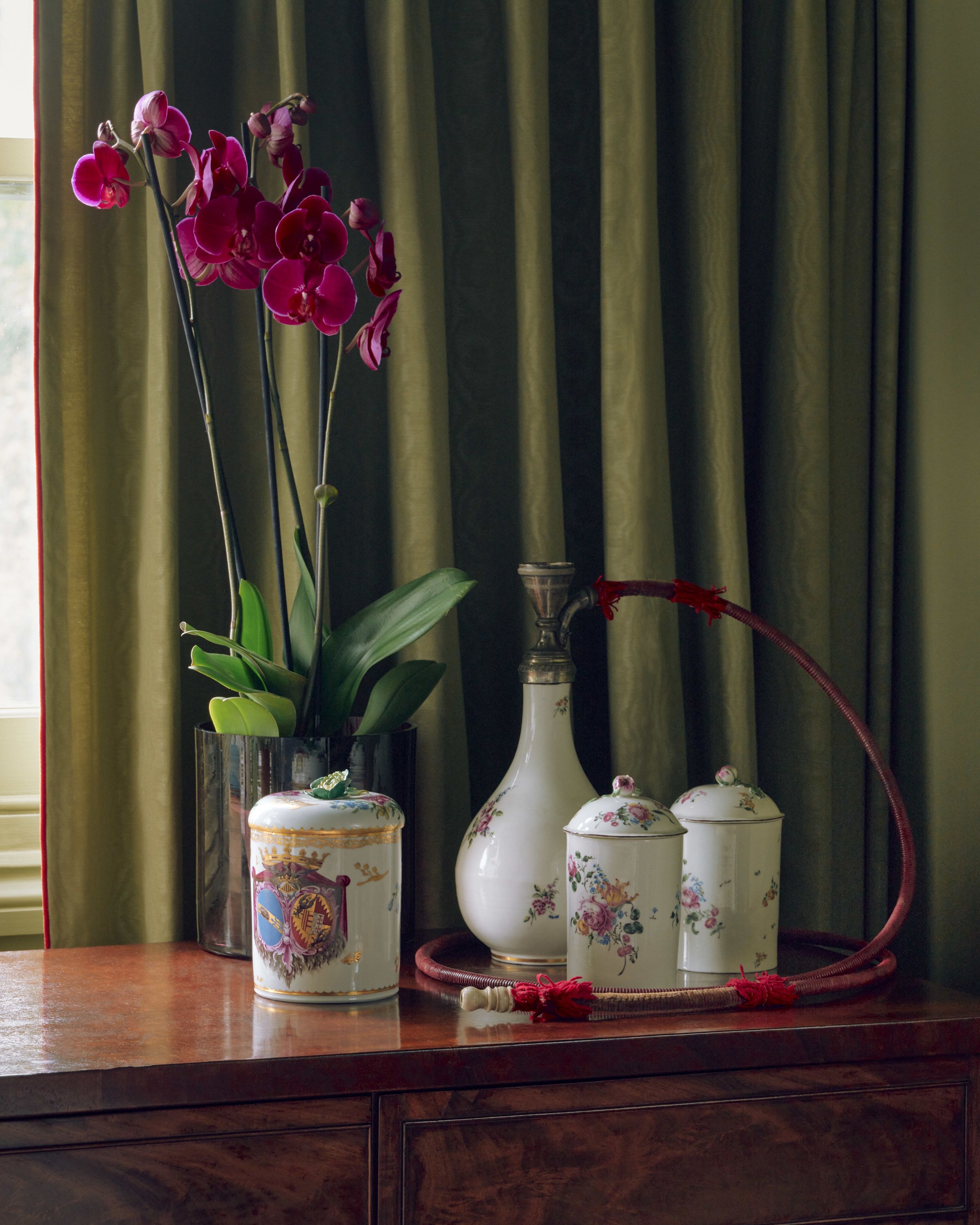

Protestants preferred pipe-smoking and Catholics snuff-taking: 18th-century European tobacco habits played a key part of court life and porcelain production. Ahead of the sale of the British American Tobacco Collection, Sebastian Kuhn, Director of European Ceramics in London, explores more.
Although the smoking of tobacco was first encountered by Europeans on Christopher Columbus’ voyage of discovery in 1492, it took at least another century or so before tobacco consumption became widespread in Europe. Thereafter it became intricately interwoven in European social, cultural and economic life and an important part of the world of refinement at the highest levels of society.
The British American Tobacco Collection of Eighteenth-Century Tobacco Containers & Accessories is a unique record of the important social history of tobacco shown through the accessories required for its use. It also documents how pottery and porcelain makers combined form, function, and breath-taking artistry to produce useful objects from the everyday to the exquisite.
Paradoxically, the mysterious tobacco plant was first propagated in Europe for its medicinal or curative properties. Jean Nicot, the French ambassador to Portugal after whom the plant was named (Nicotiana tabacum), is credited with the introduction of tobacco to Europe in 1559. He sent samples to the French Queen, Catherine de Medici, who pronounced that it cured her debilitating migraines; and for a time, tobacco enjoyed a vogue as a cure for all manner of ailments
By the early 17th century, however, the supposed medicinal benefits of tobacco had been debunked, though that did nothing to hinder the spread of its use throughout Europe. The sometimes-violent disapproval of certain rulers, such as King James I, Pope Urban VII—who in 1724 issued a Papal Bull excommunicating those who took snuff in church—and Czar Michael of Russia, did little to inhibit the growing popularity of tobacco. Nor were the citizens of Berne, who added a tobacco prohibition to the Ten Commandments, any more successful.

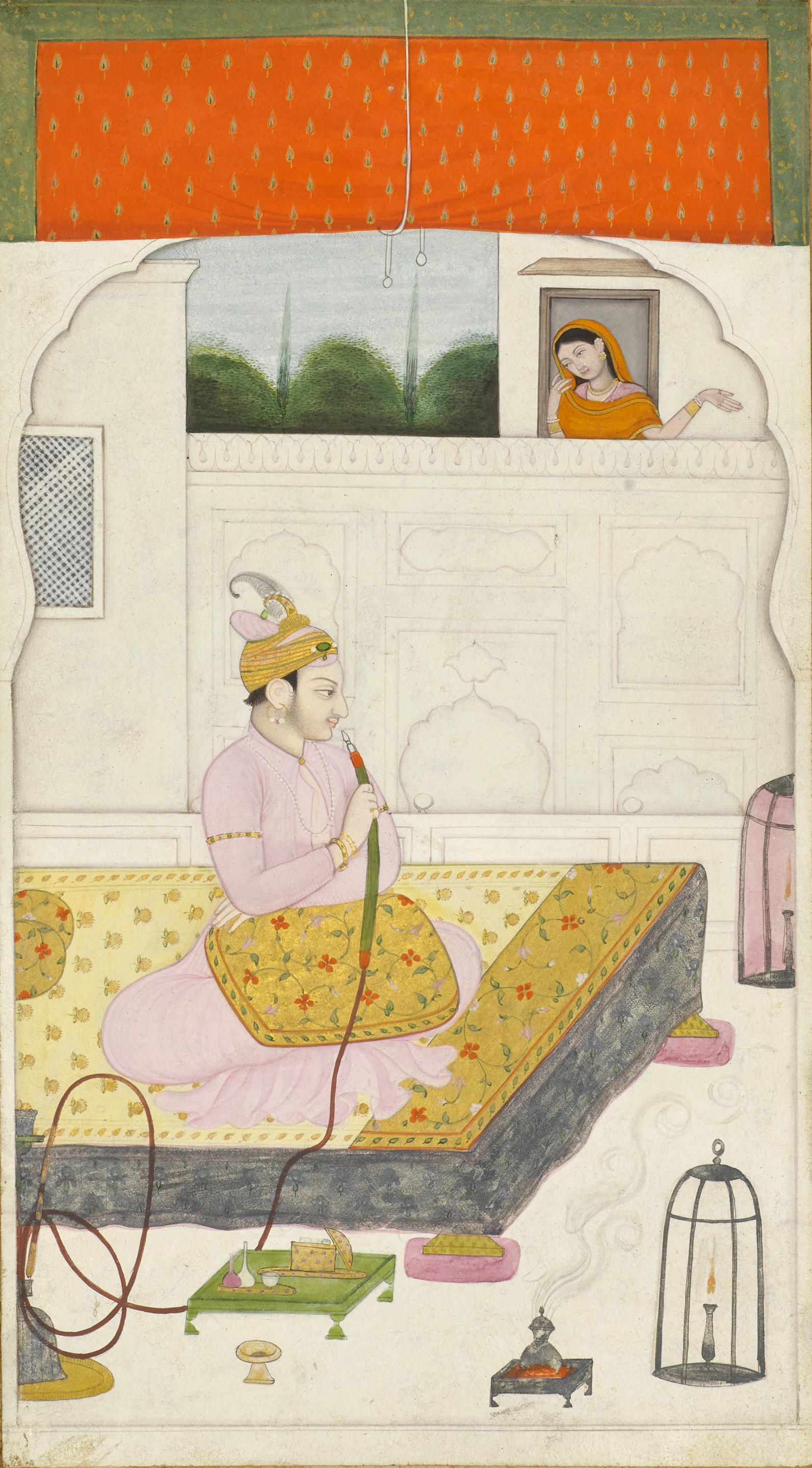
Guler, circa 1780. A Prince Smoking a Hookah on a Terrace.
Guler, circa 1780. A Prince Smoking a Hookah on a Terrace.
Other rulers were content to reap financial benefits from the trade in tobacco, while some, such as the Prussian king Friedrich Wilhelm I (r. 1713-40), elevated smoking to an important part of court life. The king held informal meetings, known as ‘Tabakskollegium’, during which participants were required to smoke simple clay pipes or risk the monarch’s displeasure. They were also extended the unusual privilege of speaking more freely on political questions.
This preference for pipe-smoking over snuff extended to other Protestant lands across Northern Europe as well and explains why larger tobacco boxes were produced there. Such boxes could be prominently displayed as a convivial invitation for visitors to fill their pipes.
Snuff of dreams
The Catholic countries of southern Europe, by contrast, preferred snuff—perhaps encouraged by Louis XIV, who generally abstained altogether—so that their fine clothes and wigs did not reek of smoke. Consequently, the French porcelain makers specialised in boxes and jars for the storage of snuff rather than loose tobacco.
The French court was the arbiter of elegance in the 18th century and as its taste and fashions spread across Europe, snuff-taking became an important social grace and an increasingly elegant and elaborate ritual—even in the Protestant courts. As such, it played a role in personal as well as diplomatic relationships. Friedrich Wilhelm’s son, Frederick the Great—famously Francophile in his tastes—was renowned for his exquisite collection of snuff boxes. Frederick’s arch enemy, the Saxon Prime Minister, Count Heinrich von Brühl—perhaps not coincidentally—owned probably twice as many as the Prussian king (more than 850 snuff boxes were recorded in his posthumous inventory).


Calouste Gulbenkian Foundation, Lisbon – Calouste Gulbenkian Museum, photo: Catarina Gomes Ferreira.
Calouste Gulbenkian Foundation, Lisbon – Calouste Gulbenkian Museum, photo: Catarina Gomes Ferreira.
Prestige in porcelain: Meissen, Du Paquier and Sèvres
The elevation of snuff-taking to an important social ritual in the 18th century neatly coincided with the European discovery of the secret of porcelain manufacturing. Since the 16th century, Chinese porcelain had been considered a precious and almost mystical material and was avidly collected by European princes as a measure of their prestige, most notably by Augustus the Strong of Saxony/Poland, who admitted that he had succumbed to the ‘maladie de porcelain.’ Such was the prestige of porcelain that it was considered a suitable gift between monarchs, and was ideal for the elegant rituals around tobacco consumption. Snuffboxes, tobacco jars and boxes, hookahs and pipes were all made in porcelain: prestigious accessories that were suitable for public or semi-public display at the highest levels of society.
Meissen was not the first European factory to produce tobacco accessories. Alongside the early French soft-paste factories, the Du Paquier manufactory in Vienna (founded in 1718—eight years after Meissen) appears to have been the first to make snuff boxes and tobacco boxes. The magnificent tobacco box with its original tamper and leather case is one of the grandest and most elaborately decorated examples of Du Paquier porcelain to survive, evidence of the importance of tobacco in the refined and luxurious world of the Viennese court.
The greatest ever patron of Meissen tobacco accessories remains without doubt Count Brühl. Given the vast number of snuff boxes he owned, it is no surprise that he also ordered large numbers of tobacco jars, purchasing no fewer than 17 between 1733 and 1738.

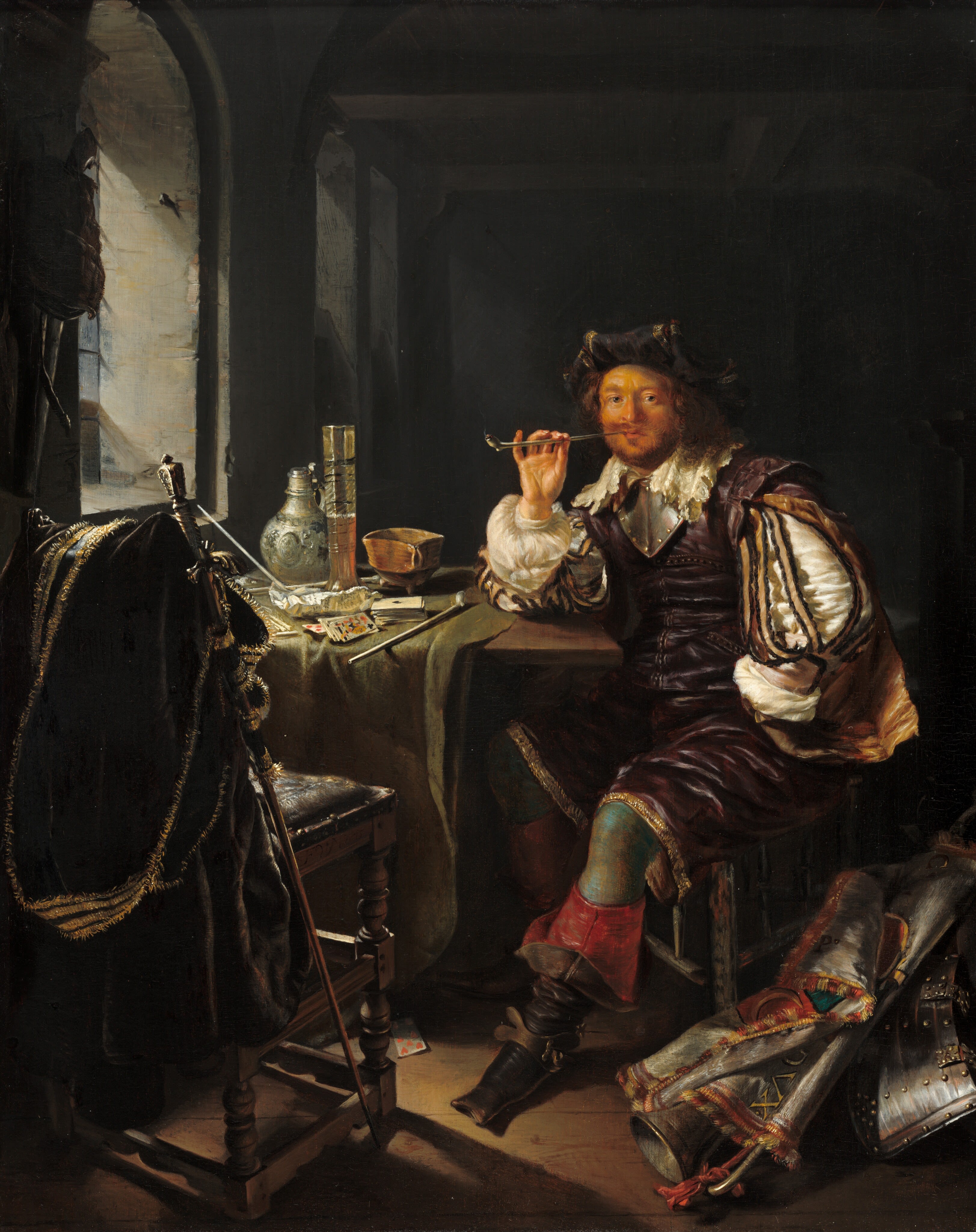
Frans van Mieris (Dutch, 1635 - 1681) A Soldier Smoking a Pipe, c. 1657/1658.
Frans van Mieris (Dutch, 1635 - 1681) A Soldier Smoking a Pipe, c. 1657/1658.
For the first half of the 18th century, Meissen was the dominant factory in Europe in both quality and taste. From the late 1740s, however, French rococo taste spread across Europe and the French royal porcelain factory at Vincennes/Sèvres became the most fashionable. The patronage of the French court, from the king and his family and the influential royal mistresses, such as Madame de Pompadour, to the marchands-merciers and their aristocratic clientele, ensured that Sèvres porcelain was at the forefront of good taste and quality.
The importance of tobacco is evident in the exquisite tobacco jars and accessories in the British American Tobacco Collection: from the only surviving hookah made for the Turkish market and the early and rare tobacco jars made at Vincennes; to the extraordinary documentary example of 1767 on which tobacco and associated implements are depicted in a dated scene; and finally, the jar and cover with its original porcelain spoon—one of only four recorded.

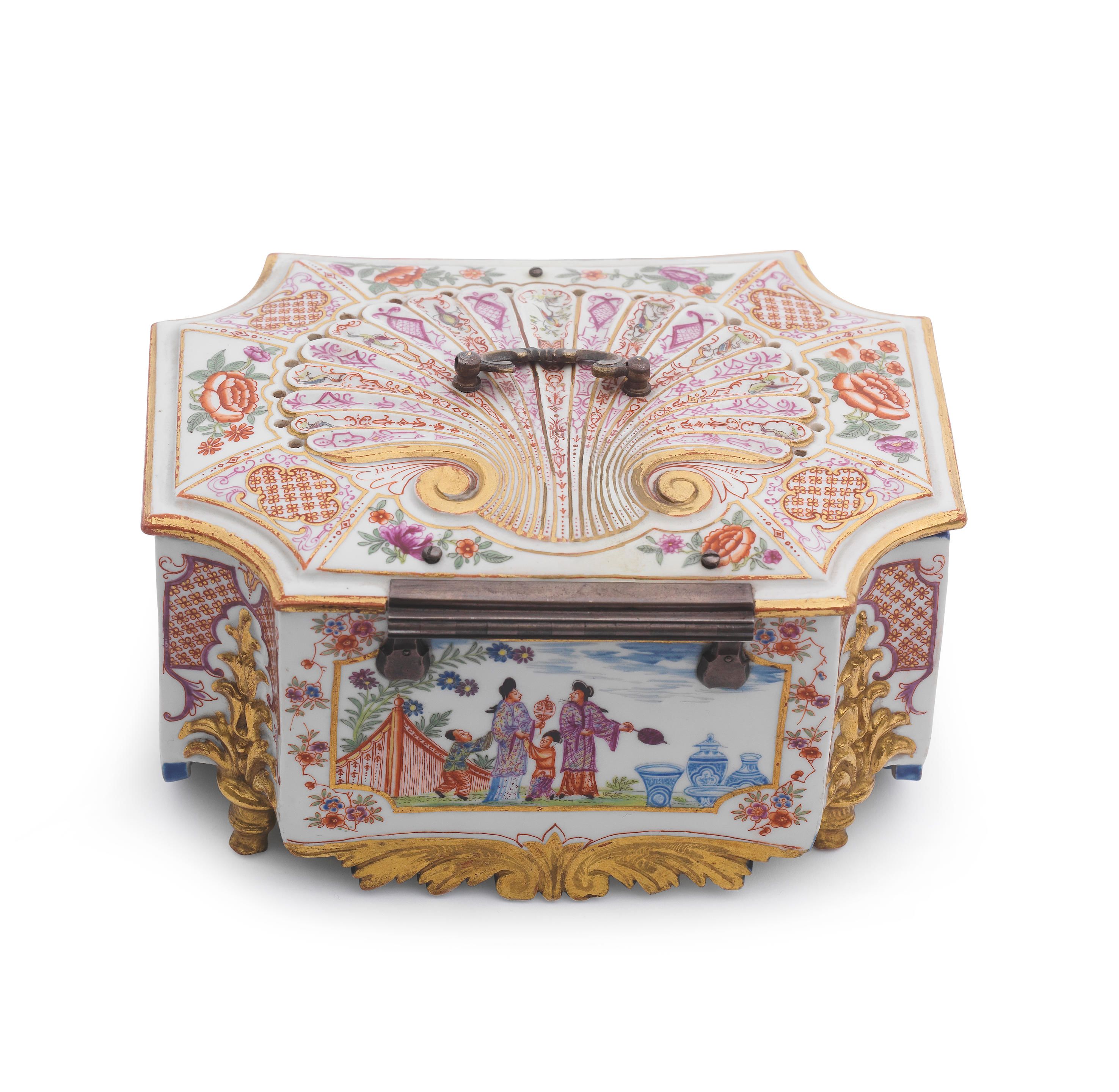
An extremely rare Du Paquier rectangular tobacco box with hinged cover and tamper in a contemporary fitted leather case, circa 1730. Estimate: £40,000 - £60,000.
An extremely rare Du Paquier rectangular tobacco box with hinged cover and tamper in a contemporary fitted leather case, circa 1730. Estimate: £40,000 - £60,000.
Though less lavishly decorated than the Sèvres examples, the tobacco jars and boxes from the smaller French porcelain makers, some still in their original wooden boxes and with precious silver mounts, are all objects that underscore the important role of tobacco in an era of refinement and elegance. The prestige attached to these objects is nowhere more evident than on the magnificent tobacco jar made for the nobleman, Niccolò Marcantonio Errizo, Venetian Ambassador to the Holy See, whose arms, together with those of his wife, Matilde Bentivoglio, are prominently displayed on the front of the jar; perhaps a gentle reminder to his guests while filling their snuff boxes of their host’s noble lineage, wealth and exquisite taste.
Register to bid in
500 Years of European Ceramics
Our upcoming auction on 6 December in London features the best of European ceramics from 16th century maiolica to Sèvres, Meissen, and more. The sale also includes the British American Tobacco Collection of Eighteenth-Century Tobacco Containers & Accessories.
You May Also Be Interested In
The Classics: Discover timeless works of art
November - December 2023 | London

 Built with Shorthand